
Best E-Signature Software in 2026: 8 Tools Compared

Key facts8 tools compared: SignWell, DocuSign, PandaDoc, Dropbox Sign, signNow, Adobe Acrobat Sign…
- 8 tools compared: SignWell, DocuSign, PandaDoc, Dropbox Sign, signNow, Adobe Acrobat Sign, BoldSign, Yousign
- SignWell (best for: Small teams wanting value): $10/mo (free tier)
- DocuSign (best for: Brand trust, enterprise): $10/mo (annual)
- PandaDoc (best for: Sales proposals + quotes): $19/mo (free tier)
- Dropbox Sign (best for: Dropbox users, clean UX): $15/user/mo
Most e-signature tools do the same core thing: collect a legally binding signature on a PDF. The hard part is everything around it. Envelope caps that throttle you mid-month, seat minimums that double your bill, audit trails that hold up in a dispute, and pricing pages built to hide the real number until you're already in a sales call.
I compared eight of the most-used platforms on how they handle a two-party contract: signing order, field options, branding, and the real per-month cost once the fine print lands. DocuSign, the name everyone defaults to, is no longer the obvious answer for small teams.
The short version: SignWell is the best value for most small teams, DocuSign is the safest pick when counterparties expect a trusted brand, and PandaDoc wins if your documents are proposals and quotes that need signing, not just signatures.
Quick comparison
| Tool | Best for | Starting price | Standout |
|---|---|---|---|
| SignWell | Small teams wanting value | $10/mo (free tier) | Unlimited docs on cheapest paid plan |
| DocuSign | Brand trust, enterprise | $10/mo (annual) | Most recognized, 1,000+ integrations |
| PandaDoc | Sales proposals + quotes | $19/mo (free tier) | Full document creation, not just signing |
| Dropbox Sign | Dropbox users, clean UX | $15/user/mo | Simplest signing flow on this list |
| signNow | Cheapest per-seat at scale | $8/user/mo (annual) | Lowest per-user cost for teams |
| Adobe Acrobat Sign | Heavy PDF workflows | $14.99/mo | Built into the Acrobat ecosystem |
| BoldSign | Developers, API-first | $0 (25 envelopes) | Free tier with real volume |
| Yousign | EU / eIDAS compliance | €23/mo | Certified QTSP for qualified signatures |
SignWell: the best value for most small teams
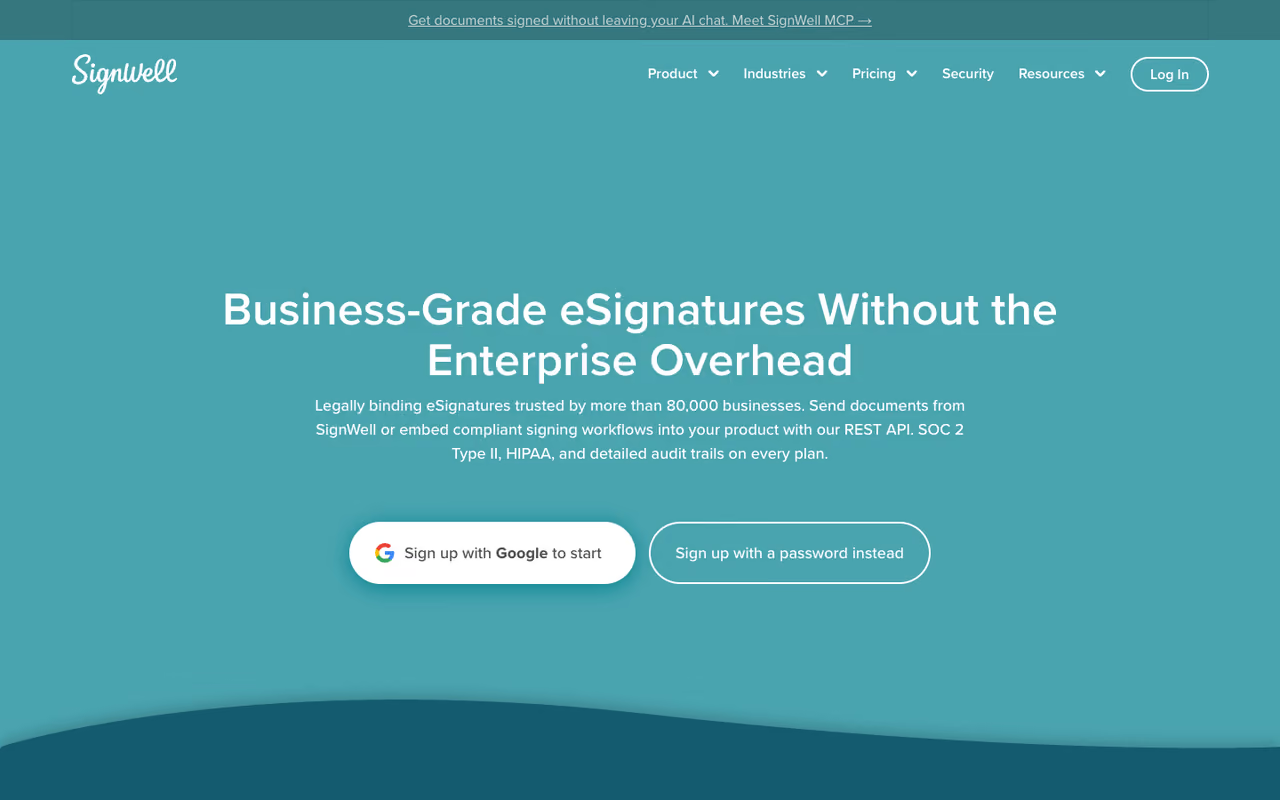
SignWell is what I'd hand to a small business that wants DocuSign's core functionality without DocuSign's bill. The interface is clean, signing order and field placement take seconds, and reminders are automatic.
Here's the part that matters. The Light plan is $10/month ($12 billed monthly) and includes unlimited documents for one sender. Most tools at this price cap you at a few dozen sends. The free plan gives you 3 documents a month, enough to evaluate it before paying. The Business plan at $30/month covers 3 senders with unlimited templates.
The best value for freelancers and small teams sending more than a handful of contracts a month, offering unlimited documents for one sender at $10/month. The trade-off is brand recognition, since some signers trust a DocuSign email over a tool they've never heard of.
The standout: Unlimited documents on a $10 plan is rare. With API access on paid tiers, it covers a lot of ground for the money.
Where it falls short: Brand recognition. Send a contract to a Fortune 500 procurement team and some signers will trust a DocuSign email over a tool they've never heard of. That's real friction in enterprise sales, even though SignWell's signatures are just as legally valid.

DocuSign: still the default when trust is the product
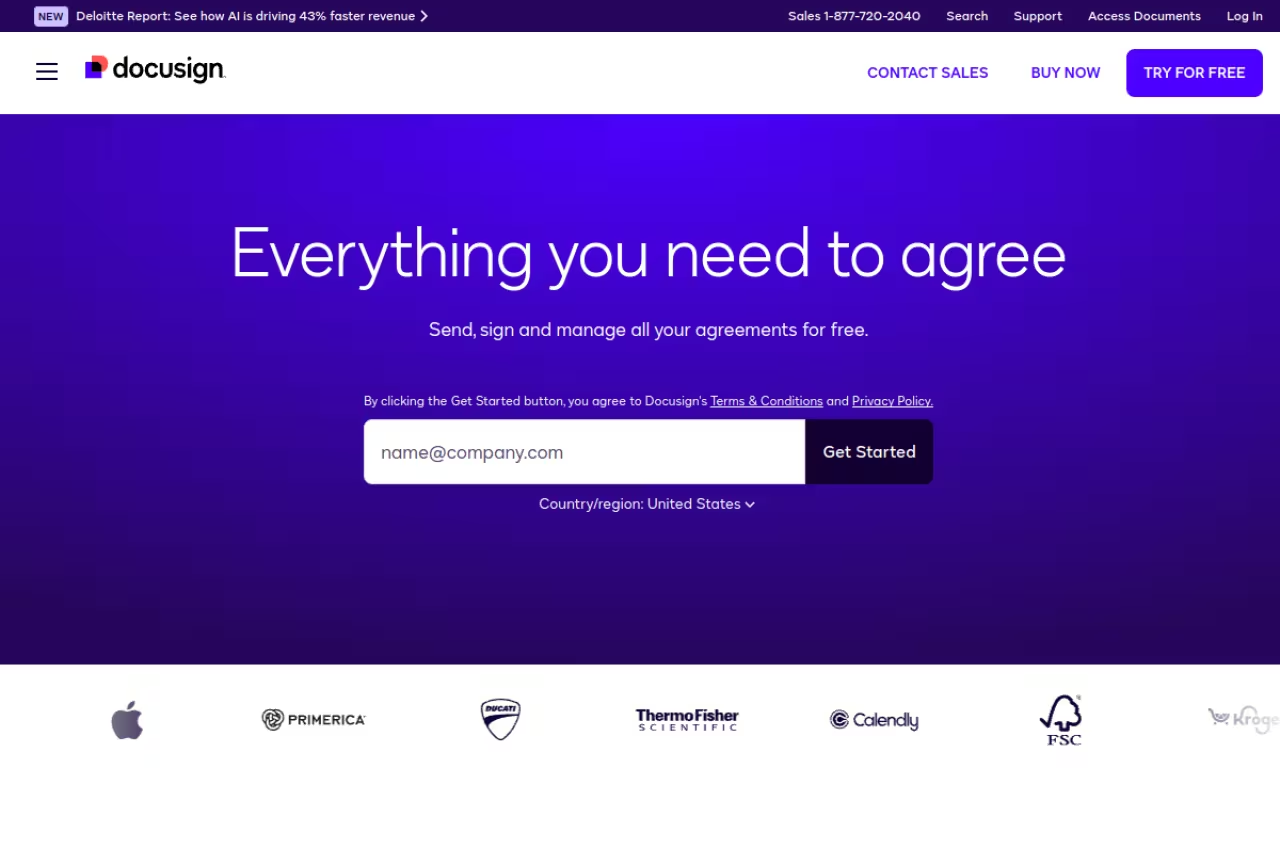
DocuSign processes the majority of the world's e-signature volume, and that ubiquity is the actual feature. When a signer sees a DocuSign envelope, they sign without hesitation. That trust shortens deal cycles in a way that's hard to put a number on.
Pricing has quietly improved. On the official pricing page, Personal runs $10/month annually (5 envelopes a month), Standard is $25/user/month, and Business Pro is $40/user/month, both capped at 100 envelopes per user per year. Watch that envelope cap. It catches teams off guard, and overages move you to pay-as-you-go pricing.
Still the default when trust is the product, suited to larger organizations, regulated industries and teams whose counterparties expect a familiar name. You pay partly for the logo, and the 100-envelope-per-user-per-year cap is restrictive for high-volume teams.
The standout: 1,000+ integrations and the deepest ecosystem of any signing tool. If it connects to your CRM, ERP, or storage, DocuSign almost certainly has a native path.
Where it falls short: The 100-envelope-per-user-per-year cap on Standard and Business Pro is restrictive for high-volume teams, and you'll pay more than cheaper tools for the same signing action. You're partly paying for the logo. For heavy contract work, weigh it against a dedicated contract management platform.

PandaDoc: when the document matters as much as the signature
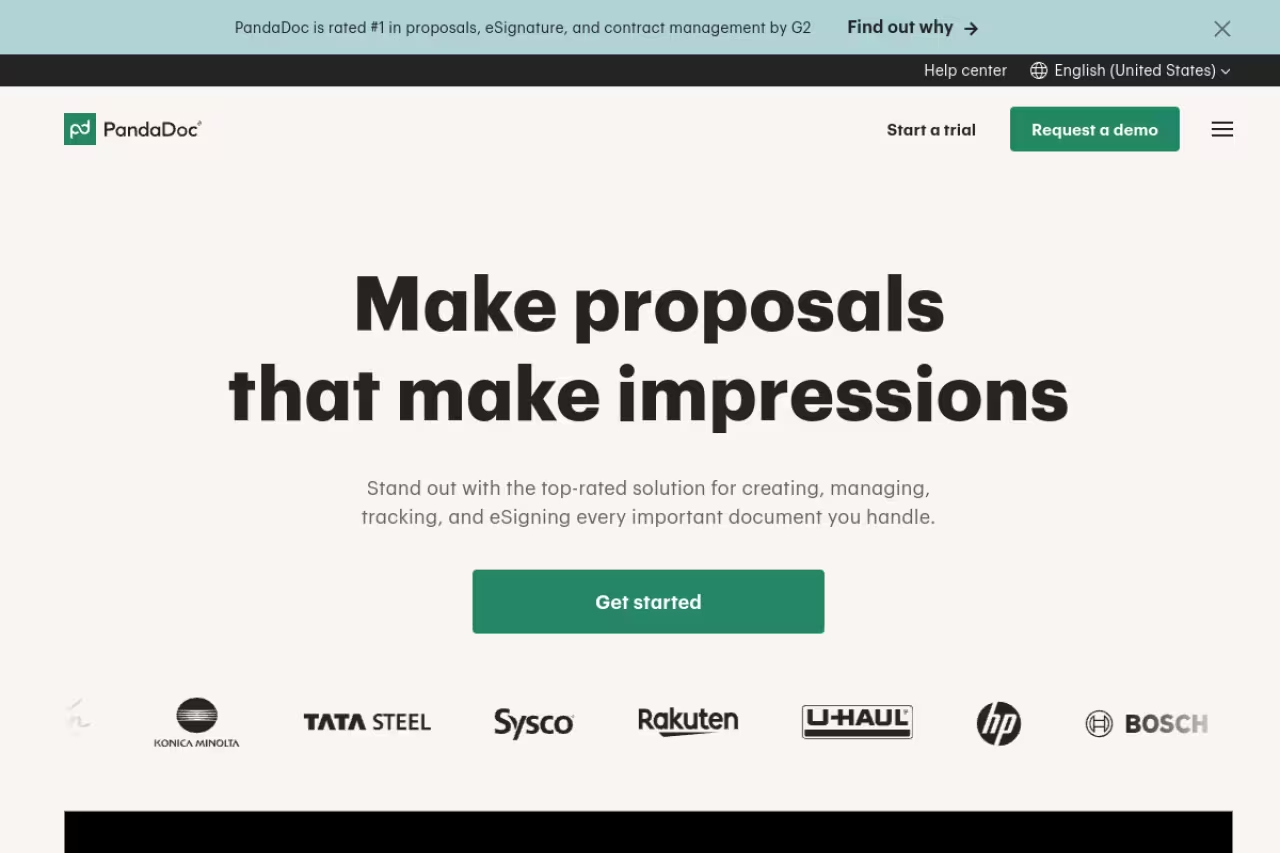
PandaDoc isn't really an e-signature tool. It's a document tool that signs. The difference shows the moment you build a proposal: drag-and-drop blocks, pricing tables, a content library, real-time tracking that tells you when a prospect opened the quote and how long they stared at the price.
The pricing starts with a usable free plan (unlimited e-signatures, 60 documents a year). Starter is $19/month and Business is $49/seat/month, where CRM integrations, custom branding, and approval workflows live. For sales teams, the Business tier is the real product.
Pick PandaDoc when sales and revenue teams need proposals and quotes that look polished, with tracking and document building in one place. If all you need is a signature on an existing PDF, the $49/seat Business plan is hard to justify.
The standout: End-to-end document creation. You build, send, track, and sign in one place, which kills the PDF-export-then-upload dance. Pair it with your proposal writing workflow and the whole quote-to-close loop tightens.
The catch: If all you need is a signature on an existing PDF, PandaDoc is overkill and the $49/seat Business plan is hard to justify. It earns its price only when you're using the document-building side. For pure signing, look lower on this list.

Dropbox Sign: the simplest flow on this list
Dropbox Sign (formerly HelloSign) has the cleanest signing experience of any tool here. There's almost nothing to learn. If your files already live in Dropbox, the integration is effortless.
Essentials is $15/user/month for one user. The Standard plan is $25/user/month but requires a 2-seat minimum, so your real floor is $50/month even if you're a solo operator who needs Standard's branding and team features. That minimum is the kind of detail that surfaces only after you've started a trial.
The simplest signing flow here, ideal for Dropbox-native teams and anyone who values a frictionless signer experience over depth. The Standard plan's 2-seat minimum inflates the entry price, and feature depth trails PandaDoc and DocuSign.
The standout: Speed and simplicity. The signer flow is the least confusing of the tools here, which matters more than people admit. Confused signers don't sign.
Where it falls short: The 2-seat minimum on Standard inflates the entry price for small teams, and feature depth trails PandaDoc and DocuSign. It's a signing tool, full stop, with no document-creation ambitions.
Setting up signing the first time is fiddly. If you're standardizing your whole document stack, a Dupple X membership gets you templates and workflow playbooks for building contract, proposal, and onboarding flows that convert.

signNow: the cheapest per-seat option at scale
signNow (owned by airSlate) is the price play. The Business plan is $8/user/month on annual billing, Business Premium is $15/user/month, and Enterprise is $30/user/month. For a team of 10+ that just needs reliable signing, that per-seat number is hard to beat.
You get templates, signing order, in-person signing, and a decent mobile experience. The trade-off is polish. The interface feels more utilitarian than SignWell or Dropbox Sign, and some advanced features sit behind pricier tiers.
The price play for mid-size teams that need many seats and care more about the monthly invoice than a slick interface, at $8/seat on annual billing. The interface is utilitarian, and the cheapest tier omits some workflow features.
The standout: Lowest per-user cost of the mainstream tools. At $8/seat annually, scaling to a large team stays affordable.
The catch: Annual billing is where the $8 price lives. Month-to-month is closer to $10, and the cheapest tier omits some workflow features you might assume are standard. Read the tier breakdown before you commit a team.
Adobe Acrobat Sign: if you live in PDFs already
Adobe Acrobat Sign makes sense for teams already paying for Acrobat. Signing is built into the PDF tools you use daily, so there's no separate app to adopt. Individual plans run $14.99 to $24.99/month on annual billing, and team plans go from $16.99 to $29.99/user/month with a two-license minimum.
For document-heavy operations, having editing, OCR, and signing in one suite saves a step. You're not exporting to a second tool to collect a signature.
Makes sense for teams already inside the Adobe ecosystem, with PDF editing, OCR and signing in one suite and no extra vendor. Outside Adobe it is not the most cost-effective option, and the pricing tiers are confusing.
The standout: Native PDF editing plus signing in one place. If you process and mark up documents before sending them, this removes a step.
Where it falls short: Outside the Adobe ecosystem, it's not the most cost-effective standalone signing tool, and several features (HIPAA support, advanced integrations, branding) live in higher tiers or cost extra as add-ons. The pricing tiers are also more confusing than most.

BoldSign: the developer's pick
BoldSign is built for teams that want to embed signing into their own product or automate it via API. The free Essential plan includes 25 envelopes a month for one user, real usable volume, not a teaser. Paid web plans start at $5/user/month (Growth) and $15/user/month (Business, unlimited envelopes).
The API is the headline. Embedded signing, webhooks, and a free sandbox make it a strong fit when signing is part of an automated workflow rather than a manual send.
The developer's pick for teams embedding signing into their own product or automating it via API, with a free plan of 25 envelopes a month. The web app is less refined than consumer-focused tools, so skip it if you never touch code.
The standout: A free plan with 25 envelopes a month and a full API sandbox. Few competitors give you that much before asking for a card.
The catch: The web app, while solid, isn't as refined as the consumer-focused tools, and the deeper value only shows if you're using the API. If you never touch code, you're leaving the best part on the table. It pairs well with broader workflow automation tools if you're wiring signing into a pipeline.

Yousign: for EU and eIDAS-grade signatures
Yousign is a French certified Trust Service Provider on the EU Trust List, which means it can issue Qualified Electronic Signatures (QES) that carry the legal weight of a handwritten signature across all EU member states under eIDAS. For regulated European industries, that's a requirement, not a nice-to-have.
The Plus plan is around €23/month with unlimited standard signatures. QES is sold separately as a per-signature add-on, roughly €10 to €15 per qualified signature depending on bundle size. That cost adds up, but for documents that legally demand QES, there's no shortcut.
The choice for EU-based teams in regulated sectors like finance, real estate and legal that need qualified eIDAS signatures. Per-signature QES pricing gets expensive at volume, and US teams without EU exposure have cheaper options.
The standout: True eIDAS QES capability as a certified QTSP. Most US-first tools can't issue these.
Where it falls short: Per-signature QES pricing gets expensive at volume, and if you only need standard e-signatures, you're paying for compliance infrastructure you won't use. US teams with no EU exposure have cheaper options.
How to choose
Don't start with the tool. Start with the document and the counterparty.
If the signature is the whole job (NDAs, simple contracts on existing PDFs), pick on price and signer experience: SignWell for value, signNow for the lowest per-seat cost at scale, Dropbox Sign for the cleanest flow.
If the document needs building (proposals, quotes, sales contracts), PandaDoc earns its premium by replacing two tools with one. Pure signing tools slow you down here.
If trust is the bottleneck (enterprise procurement, regulated counterparties), DocuSign's brand recognition shortens cycles. For the EU, Yousign's eIDAS QES is non-negotiable for documents that legally require it.
If you're a developer, BoldSign's free tier and API beat everything else for embedding signatures into your own product.
Then run the actual numbers for your send volume. A $15/user tool with a 2-seat minimum costs more than a $10 unlimited plan, and a cheap plan with a 100-envelope annual cap can cost you in overages. The sticker price is rarely the real price. For the full stack of business tools beyond signing, our top tools directory is a good next stop.
FAQ
What is the best e-signature software in 2026?
For most small teams, SignWell offers the best value with unlimited documents starting at $10/month. DocuSign remains the safest choice when you need brand recognition with counterparties, and PandaDoc is best if your documents are sales proposals that need building, not just signing. The right pick depends on your send volume and whether the signature or the document is the real job.
Are electronic signatures legally binding?
Yes. In the US, electronic signatures are legally binding under the ESIGN Act and UETA, provided there's intent to sign and a record of consent. In the EU, eIDAS recognizes three tiers, with Qualified Electronic Signatures (issued by certified providers like Yousign) carrying the same legal weight as handwritten signatures. All the tools here produce legally valid signatures for standard business use.
Is there a free e-signature tool?
Yes, several. PandaDoc's free plan includes unlimited e-signatures and 60 documents a year. BoldSign's free tier gives you 25 envelopes a month plus API access. SignWell's free plan covers 3 documents a month. For occasional signing, these free tiers handle real work without a subscription.
Is DocuSign worth the price?
It depends on what you're buying. DocuSign costs more than tools like SignWell or signNow for the same signing action, and the 100-envelope-per-user-per-year cap on its main plans is restrictive. You're partly paying for the trust its brand carries with signers and its 1,000+ integrations. For enterprise and regulated work, that's worth it. For a small team sending standard contracts, cheaper tools do the same job.
What's the cheapest e-signature software for a team?
signNow's Business plan at $8/user/month on annual billing is the lowest per-seat cost among mainstream tools, which makes it attractive as your headcount grows. SignWell's Business plan at $30/month covers 3 senders with unlimited documents, often cheaper than per-seat pricing for very small teams. Compare your real seat count against both models before deciding.
Do I need a separate tool for contracts and signatures?
Not necessarily. If your contracts are standard documents you just need signed, a dedicated e-signature tool is enough. If you're managing contracts through their full lifecycle (drafting, negotiation, renewal), a contract management platform or AI contract review tool adds review and tracking that pure signing tools don't. Match the tool to how much of the contract process you actually own.
Related guides
Some offers on this page may be paid placements or contain affiliate links.
