
The Best Contract Management Software in 2026

Key facts8 tools compared: Ironclad, Juro, PandaDoc, ContractSafe, DocuSign CLM, Concord, LinkSquares…
- 8 tools compared: Ironclad, Juro, PandaDoc, ContractSafe, DocuSign CLM, Concord, LinkSquares, Agiloft
- Ironclad (best for: Enterprise legal teams): ~$40k-$200k+/yr
- Juro (best for: Startups and scaleups): ~$15k-$60k/yr
- PandaDoc (best for: Sales contracts and proposals): $19-$49/user/mo
- ContractSafe (best for: Repository-first teams): ~$5.4k-$9.8k/yr
Most contract software demos look identical. A clean repository, an AI side panel, a slick redlining view, a promise to cut your turnaround time in half. Then you buy it, your team ignores it, and six months later your contracts are still living in email threads and a shared drive nobody trusts.
The gap between a good demo and a tool people actually use is where this category lives or dies. This guide compares most of the platforms below, drawing on legal and ops teams running them, and digs through the real (often hidden) pricing. The honest truth: the "best" contract management software depends almost entirely on whether you're a 15-person startup or a 2,000-person enterprise, and whether legal or sales owns the workflow.
If you want the short answer: Ironclad is the strongest pure CLM if you have the budget and a legal team to run it. Juro is the one I'd hand to a fast-moving startup that wants contracts done in the browser. And PandaDoc wins if your "contracts" are really sales proposals and quotes that need a signature. Here's the full breakdown.
Quick comparison
| Tool | Best for | Price | Standout |
|---|---|---|---|
| Ironclad | Enterprise legal teams | ~$40k-$200k+/yr | Workflow automation depth |
| Juro | Startups and scaleups | ~$15k-$60k/yr | Browser-native editing, flat user pricing |
| PandaDoc | Sales contracts and proposals | $19-$49/user/mo | Proposal + CPQ + e-sign in one |
| ContractSafe | Repository-first teams | ~$5.4k-$9.8k/yr | Simple, searchable, fast to deploy |
| DocuSign CLM | Existing DocuSign shops | ~$25k-$100k+/yr | Native e-signature footprint |
| Concord | Mid-market all-in-one | ~$400-$700/mo + seats | Unlimited e-signatures |
| LinkSquares | In-house legal analytics | ~$10k-$75k+/yr | AI term extraction and reporting |
| Agiloft | Complex, custom workflows | Custom (mid-high) | No-code configurability |

Ironclad: the enterprise standard
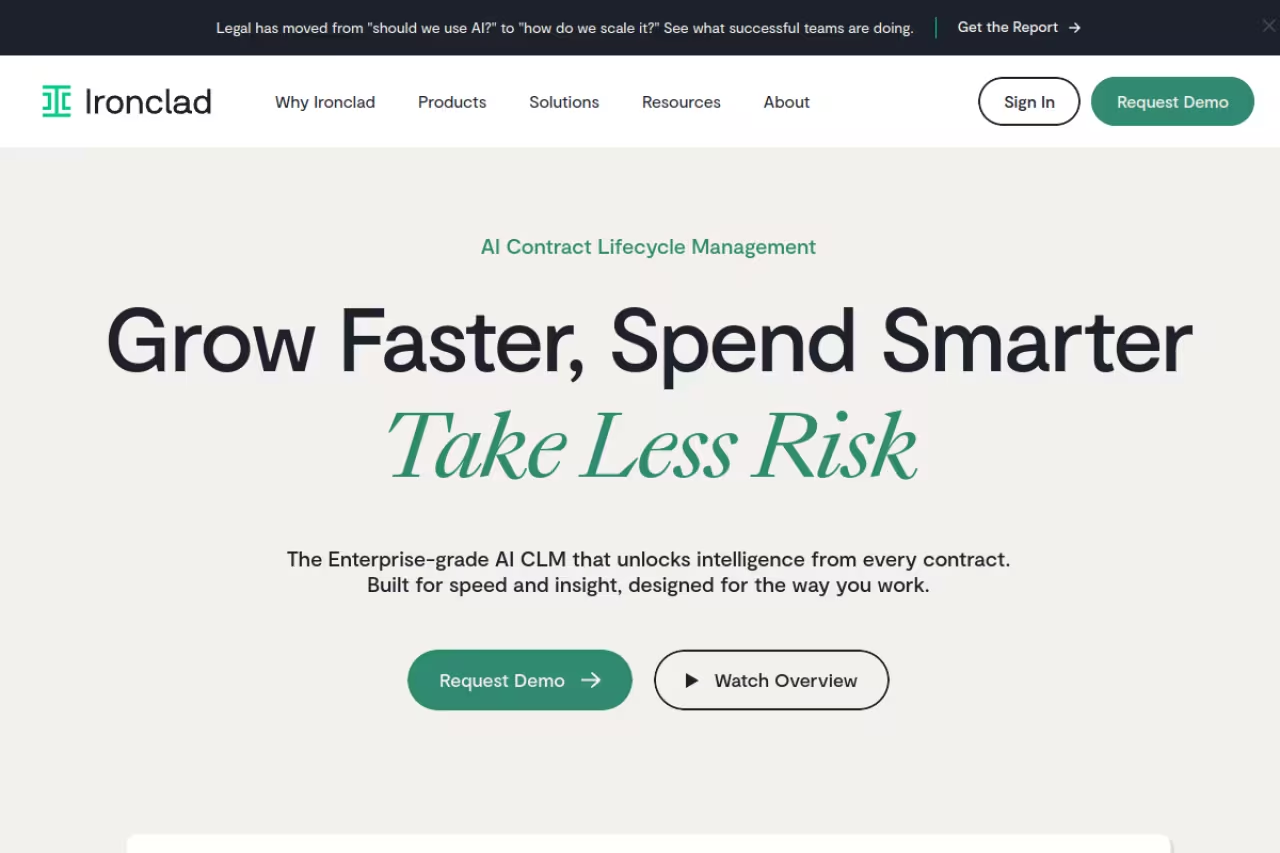
Ironclad is what most people picture when they hear "CLM." It's a workflow-driven platform where legal teams build the rules once (who approves what, which clauses are non-negotiable, when something needs sign-off) and then let business teams self-serve contracts inside those guardrails. The AI Assist feature handles redlining suggestions, clause extraction, and contract Q&A.
The enterprise standard for legal-led teams with real contract volume and the headcount to configure workflows, with very granular approvals. It is overkill and not cheap for small teams, and setup often takes weeks.
Ironclad was named a Leader in the 2024 Gartner Magic Quadrant for Contract Lifecycle Management, and that's the league it plays in.
Pricing is fully custom and quote-based. Based on aggregated buyer data, mid-market deployments with 10-30 users commonly land in the $40,000-$80,000 first-year range, and enterprise quotes with 50+ users and advanced AI routinely cross $200,000. Implementation fees of $5,000-$50,000 stack on top.
The standout is depth. Few tools match how granular Ironclad's approval workflows and conditional logic get. If your process has 14 steps and three legal reviewers depending on deal size, Ironclad models that cleanly.
The catch: it's overkill for small teams, and it's not cheap. You need someone who owns the system. Drop Ironclad on a 20-person startup with no legal ops person and it becomes expensive shelfware. The setup time alone (often weeks) is a real commitment.

Juro: contracts that live in the browser
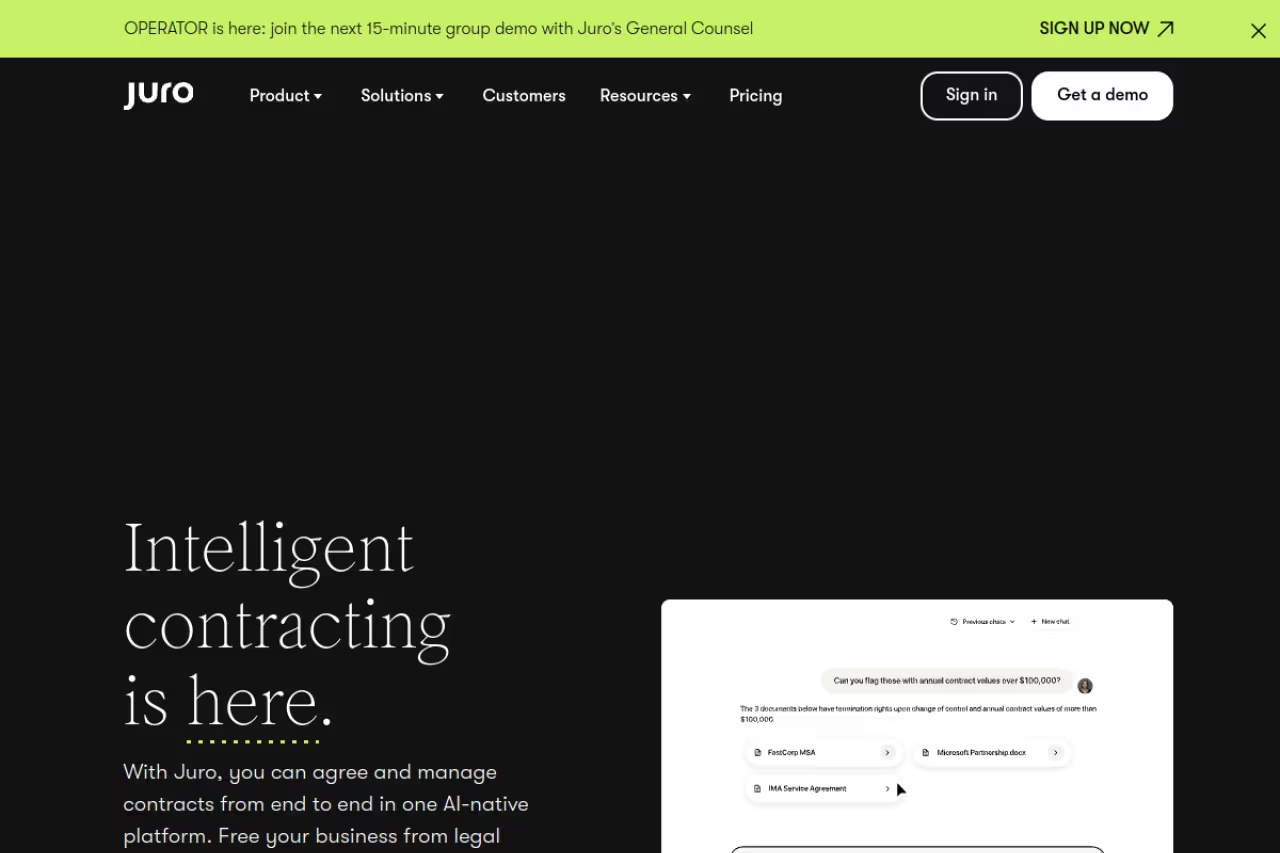
Juro took a different bet: instead of treating contracts as Word files you shuffle around, it makes them native web documents you draft, negotiate, sign, and store in one place. No download-edit-reupload loop. For teams sick of version chaos in email, that alone is worth a lot.
Best for: startups and scaleups, especially where sales, HR, and ops generate a lot of standard contracts and legal wants control without becoming a bottleneck. The editor is genuinely pleasant, and the AI can draft, summarize, and review clauses inline.
Juro doesn't publish list pricing, but every plan includes unlimited users, which is the headline. While competitors charge $30-$80 per user per month, Juro's flat model means cost doesn't balloon as more people touch contracts. Verified transaction data puts typical annual deals in the $15,000-$60,000 range, with mid-tier customers often around $18,000-$35,000. New customers who sign the same month they demo get 20% off the first year.
The standout is that flat user pricing combined with the browser-native editing. It removes the two biggest frustrations of legacy CLM at once.
Where it falls short: Juro is built around high-volume, repeatable contracts. If your work is bespoke, heavily negotiated, $50M agreements with bespoke clauses every time, the templated approach matters less and you lose some of the value. Deep integrations (Salesforce, Workday) also cost extra on top of the base.
A pleasant pick for startups and scaleups where sales, HR, and ops generate lots of standard contracts, all drafted, signed, and stored in the browser. Bespoke, heavily negotiated agreements get less value, and deep integrations cost extra.
If you're evaluating the AI review side of these tools specifically, our guide to the best AI contract review tools goes deeper on accuracy and clause detection.
PandaDoc: when your contracts are really proposals
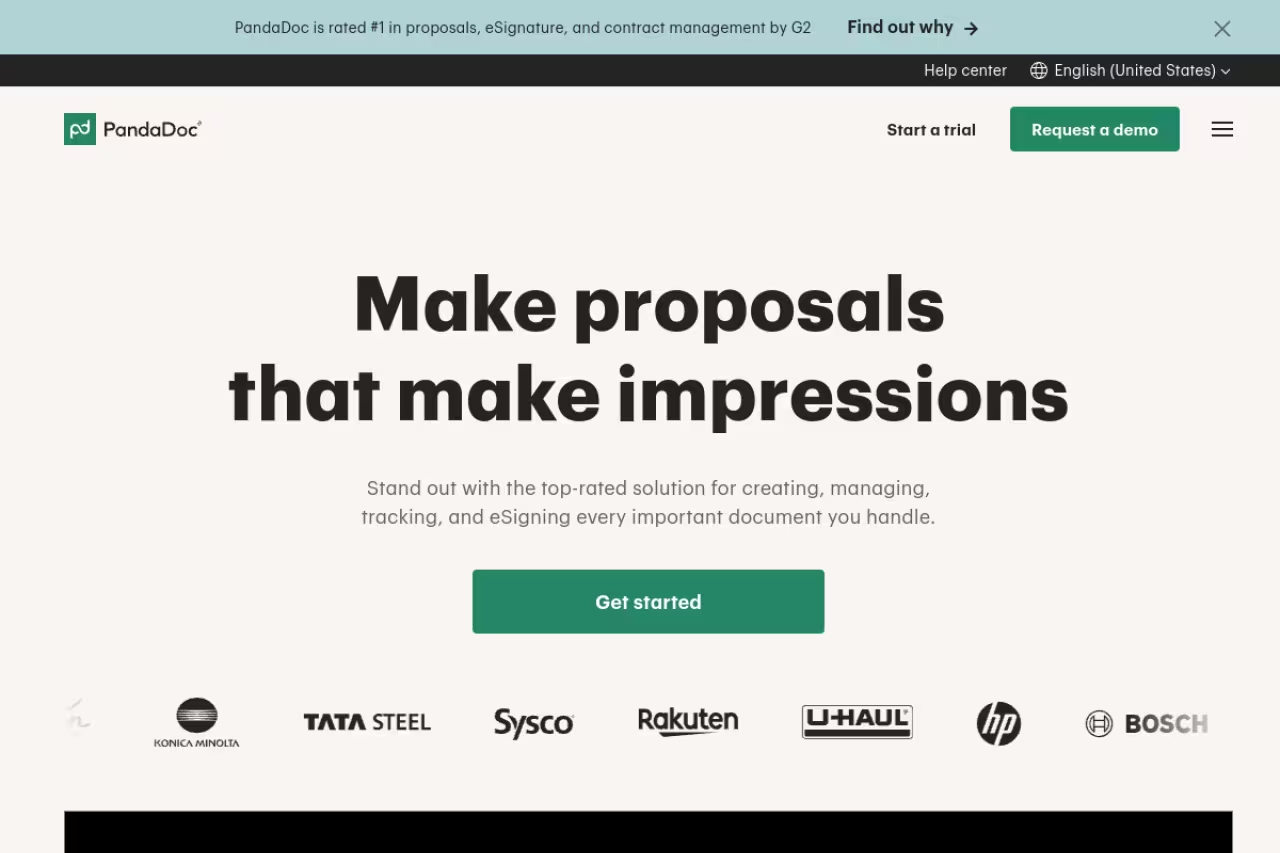
PandaDoc isn't a pure CLM, and that's the point. It's a document automation platform that bundles proposals, quotes, CPQ (configure-price-quote), payment collection, and e-signature. For a sales team, that's often exactly the "contract" workflow they care about: send a branded proposal, get it signed, collect payment.
Use it when your contracts are really sales proposals, quotes, and SOWs for sales teams, agencies, and SMBs. Seat-based costs climb with reps, branding removal needs the Business tier, and it isn't for legal teams managing master agreements.
This is the one tool here with honest public per-seat pricing. There's a Free plan (60 documents/year, unlimited seats), Starter at $19/user/month billed annually, Business at $49/user/month, and custom Enterprise. Annual billing saves up to 46% versus monthly. Verified purchase data puts the median customer at about $16,447/year.
The standout is the all-in-one revenue document stack. CPQ plus payments plus e-sign in one tool means your sales reps stop bouncing between four apps to close a deal.
The catch: it's seat-based, so costs climb fast as you add reps, and some basics are gated. Removing PandaDoc branding requires the Business tier, and programmatic document generation via the API costs around $5 per document. It's also not the tool for a legal team managing master agreements and obligations. If proposals are your actual bottleneck, pair this with our best AI proposal writing tools roundup.
ContractSafe: the repository that just works
ContractSafe is the antidote to over-engineered CLM. It's repository-first: get every contract into one searchable place, set renewal reminders so nothing auto-renews by surprise, and add light workflow (approvals, e-sign, intake forms) on top. It's the tool teams choose when they want to stop losing contracts, not redesign their entire process.
A repository that just works for small to mid-sized teams who need organization and visibility over heavy automation, with transparent pricing. It is not built for complex multi-stage negotiation, so you may outgrow it.
Pricing is refreshingly transparent and based on repository size, not seats (all plans include unlimited users). Plans run roughly $5,400 to $9,780 per year, with the entry Organize plan starting around $375/month when prepaid annually. For a category where most vendors hide everything behind "contact sales," that clarity is a feature.
The standout is speed to value. You can be up and running in days, and the AI-assisted search and field extraction make a messy contract pile genuinely findable.
Where it falls short: it's not built for complex, multi-stage negotiation or deep CPQ. If you need conditional approval chains across departments, you'll outgrow it. It's a great repository and a light workflow tool, not an enterprise CLM.
DocuSign CLM: built on the signature everyone already has
DocuSign CLM extends DocuSign's e-signature dominance into full lifecycle management: contract creation, negotiation, automated routing, obligation tracking, and renewals. In 2024 DocuSign wrapped its broader suite under "Intelligent Agreement Management" (IAM), with CLM as the heavy-duty tier.
A convenient step-up for organizations already deep in DocuSign eSignature that don't want a new vendor. Each step adds cost, and it has historically felt less cohesive than purpose-built rivals like Ironclad.
Pricing is quote-based and lands around $25,000 to $100,000+ per year for real deployments, with enterprise builds going well past $200,000 once you stack eSignature, IAM, and CLM together.
The standout is the existing footprint. Most US in-house teams already use DocuSign for signatures, so the sales and adoption story ("you already trust us for signing, here's the rest") is easy.
The catch: it's a step-up sell, and each step adds cost. The CLM product has historically felt less cohesive than purpose-built rivals like Ironclad, and configuration can be involved. You're buying convenience and an existing relationship more than best-in-class workflow design.
Concord: the unlimited-signature mid-market pick
Concord covers the full lifecycle (drafting, negotiation, approval, e-sign, storage) and leans into being approachable for mid-market teams that don't have a dedicated legal ops function. Its calling card is unlimited e-signatures on every plan, which removes a sneaky cost most signature tools charge for.
A solid mid-market all-rounder with unlimited e-signatures on every plan, for companies wanting one tool without enterprise complexity. Power users coming from Ironclad or Agiloft will find the automation shallower.
Concord's Essentials plan starts at $399-$499/month billed annually for five users, with additional seats around $39-$49/month. Business and Enterprise tiers go up from there with higher per-user rates.
The standout is genuinely the unlimited signing. If you send a lot of agreements, not metering signatures is a real budget win.
Where it falls short: it's a jack-of-all-trades. Power users coming from Ironclad or Agiloft will find the automation and configurability shallower. It's a solid all-rounder, not the deepest tool in any single dimension.
Spending hours every week wrangling contracts, proposals, and the AI tools around them? Dupple X curates the workflows and tools that actually save operators time, so you stop testing everything yourself.

LinkSquares: AI analytics for in-house legal
LinkSquares was built by lawyers frustrated with not being able to answer "what's in our contracts?" quickly. Its strength is AI-powered term extraction and reporting across your whole portfolio, so legal can surface renewal dates, liability caps, and risky clauses without reading every agreement.
Purpose-built for in-house legal teams who want to know what is inside thousands of signed contracts, with strong AI analytics. Modular pricing can mean buying two products, and costs can creep 20 to 40% above the quote.
It's sold modularly (the Analyze repository/analytics product and the Finalize workflow product, separately or together). Pricing starts around $10,000/year for basics, with mid-market buyers near a $31,000 median and enterprise past $75,000. Add-ons for e-sign, API, and advanced AI can push the total 20-40% above the quote.
The standout is the analytics layer. If your pain is "I have 4,000 signed contracts and no idea what's in them," LinkSquares is purpose-built for that.
The catch: the modular pricing means you can end up buying two products to get the full picture, and costs creep with add-ons. It's analytics-led, so teams wanting a smooth front-end drafting and negotiation flow might find that side less polished than Ironclad or Juro.

Agiloft: maximum flexibility, more setup
Agiloft is the no-code/low-code option for organizations whose contract process is genuinely unusual. Instead of fitting your workflow to the software, you configure the software to match your workflow, including complex approval chains, custom data models, and compliance rules. It consistently rates well on Gartner Peer Insights for adaptability.
Pick Agiloft for procurement, legal, and ops teams with unusual processes that off-the-shelf tools can't handle, since it can be configured to nearly anything. That flexibility costs you longer setup and admin expertise.
Pricing isn't public and sits in the mid-to-high enterprise range, comparable to Ironclad and DocuSign CLM, scaled by users, contract volume, and integrations.
The standout is configurability. There's very little Agiloft can't be molded to do, which is why heavily regulated and process-heavy organizations like it.
Where it falls short: that flexibility is also the cost. Setup takes longer, and getting the most out of it often means real configuration work or admin expertise. If you want something opinionated and fast to deploy, this is the opposite philosophy.
How to choose
Skip the feature checklist for a second and answer three questions.
Who owns contracts? If legal owns the process and has the headcount to run a system, look at Ironclad, Agiloft, or LinkSquares. If sales owns it, PandaDoc or Concord fit the actual workflow better.
What's your real bottleneck? Losing contracts and missing renewals points to a repository tool (ContractSafe, LinkSquares Analyze). Slow drafting and negotiation points to Juro or Ironclad. Slow proposals and quotes points to PandaDoc.
What's your scale and budget? Under 50 people with standard contracts, Juro or ContractSafe will serve you for a fraction of enterprise cost. Thousands of employees with complex agreements justify Ironclad or Agiloft. Already living in DocuSign? CLM is the path of least resistance.
The biggest predictor of CLM success isn't features, it's adoption. The tool your team actually opens beats the powerful one they avoid. Pick for the workflow people will use daily, not the one with the most impressive demo. For the broader stack around contracts, our best AI legal tools and best AI document processing tools guides are worth a look, and you can browse more in our top AI tools directory.
FAQ
What is the best contract management software in 2026?
There's no single winner, but Ironclad is the strongest enterprise CLM, Juro is the best fit for startups and scaleups, and PandaDoc leads for sales-driven contracts and proposals. The right choice depends on who owns contracts in your company and whether your bottleneck is drafting, signing, or storage.
How much does contract management software cost?
It ranges widely. Transparent SMB tools like PandaDoc start at $19/user/month and ContractSafe runs about $5,400-$9,780/year for unlimited users. Enterprise platforms like Ironclad and DocuSign CLM are quote-based and commonly land between $40,000 and $200,000+ per year once you add implementation fees.
Do I need a full CLM or just a contract repository?
If your problem is losing contracts and missing renewals, a repository-first tool like ContractSafe or LinkSquares Analyze solves that for far less money. You only need full CLM (with negotiation, conditional approvals, and CPQ) when your contract process has real complexity and multiple approval stages.
Is AI in contract management software actually useful?
The useful parts are clause extraction, term search ("find every contract with auto-renewal"), and first-draft redlining suggestions. Those genuinely save legal teams time. Treat AI-drafted clauses as a starting point, not final language, and keep a human reviewing anything with legal or financial risk.
Can sales teams use contract management software, or is it just for legal?
Plenty of tools are built for sales-led contracts. PandaDoc and Concord are designed so reps can send proposals, quotes, and agreements without legal touching every one. Juro and Ironclad let legal set guardrails so business teams self-serve safely. The key is matching the tool to who actually sends the contracts.
What's the easiest contract management software to set up?
ContractSafe and PandaDoc are the fastest to deploy, often live in days. Concord and Juro are moderate. Ironclad, Agiloft, and DocuSign CLM are the heaviest setups, often taking weeks and benefiting from a dedicated admin or implementation partner.
Want to keep up with the tools reshaping legal, sales, and operations? Dupple X gives you the curated stack and the workflows behind it, without testing 20 platforms yourself.
Related guides
Some offers on this page may be paid placements or contain affiliate links.
