
Best Email Marketing Software in 2026: 8 Tools Compared

Key facts8 tools compared: Omnisend, MailerLite, Brevo, Klaviyo, Kit, ActiveCampaign, HubSpot, beehiiv
- 8 tools compared: Omnisend, MailerLite, Brevo, Klaviyo, Kit, ActiveCampaign, HubSpot, beehiiv
- Omnisend (best for: Smaller Shopify stores): Free 500 emails/mo; $16/mo
- MailerLite (best for: Most small businesses and creators): Free up to 250 subs; $12/mo paid
- Brevo (best for: Volume senders and transactional email): Free 300 emails/day; $9/mo
- Klaviyo (best for: Serious ecommerce): Free to 250 profiles; ~$30/mo at 1k
Most "best email marketing software" lists read like they were written by someone who opened a free trial for ten minutes. I run email for a living, so I went the other way: I compared pricing pages, documentation, and public user reviews for deliverability, automation depth, and what actually shows up in the inbox versus what gets eaten by spam filters.
Here's the tension. The tool that's perfect for a Shopify store doing $50k a month is a terrible fit for a solo newsletter writer, and both are wrong for a B2B team that lives inside a CRM. Pricing models are deliberately confusing too. Some bill by contacts, some by emails sent, and the "cheap" plan often turns expensive the moment your list grows.
If you want the short version: MailerLite is my top pick for most people. It's the rare platform that's genuinely cheap, genuinely easy, and still good enough to grow into. But the right answer depends on what you're sending and to whom, so below I break down eight tools by who they actually fit. This guide is for founders, marketers, and operators picking a platform they'll live with for years, not a weekend.
Quick comparison
| Tool | Best for | Starting price | Standout |
|---|---|---|---|
| Omnisend | Smaller Shopify stores | Free 500 emails/mo; $16/mo | Ecommerce automations out of the box |
| MailerLite | Most small businesses and creators | Free up to 250 subs; $12/mo paid | Cleanest editor at the lowest price |
| Brevo | Volume senders and transactional email | Free 300 emails/day; $9/mo | Bills by emails, not contacts |
| Klaviyo | Serious ecommerce | Free to 250 profiles; ~$30/mo at 1k | Revenue attribution and predictive data |
| Kit | Creators and newsletters | Free to 10k subs; $39/mo at 1k | Free plan no one else matches |
| ActiveCampaign | Automation-heavy B2B | $15/mo at 1k (annual) | Deepest automation builder |
| HubSpot | Teams that want CRM + email in one | Free tier; $9/mo per seat | Email tied to a full CRM |
| beehiiv | Paid newsletters and media | Free to 2,500 subs; $43/mo | Monetization built in |

Omnisend: the value-priced ecommerce pick
Omnisend is the pick for smaller Shopify stores when Klaviyo's price tag makes them flinch. It covers the ecommerce essentials (abandoned cart, browse abandonment, welcome flows) with pre-built automations that switch on in minutes rather than get built from scratch, and its native MCP connector now lets marketers pull store data straight into AI tools without exporting a thing.
Who it's best for: smaller and mid-sized ecommerce stores that want a fast setup and multichannel reach (email plus SMS plus web push) without a steep ramp.
The free plan gives 500 emails a month to 250 contacts. The Standard plan starts at $16/mo for 500 contacts and scales (roughly $65/mo at 5,000), with an email allowance of 12x your contact count. The Pro plan starts at $59/mo and adds unlimited email plus SMS credits equal to the plan price, though as of May 2026, new Pro subscriptions meter SMS separately at volume-based rates starting around $0.007 per message, so heavy SMS senders should model that on top of the base cost. Stores switching over also get a free 5-day migration to move lists and flows across.
The standout is time-to-value. The automations come ready out of the box, so a new store can have its core revenue flows live the same afternoon, and Omnisend still runs up to 35% lower than Klaviyo at comparable contact volumes, with a 4.6 out of 5 rating on G2 backing that up.
Where it falls short: the segmentation and analytics aren't as deep as Klaviyo's. Once you want sophisticated predictive targeting, you'll feel the ceiling. For most stores under 10,000 contacts, that ceiling is far enough away not to matter.
The value pick for smaller and mid-sized ecommerce stores that want fast setup and email, SMS and web push without Klaviyo's price. Segmentation and analytics are shallower, but for most stores under 10,000 contacts you will not hit that ceiling.

MailerLite: the best all-rounder for most people
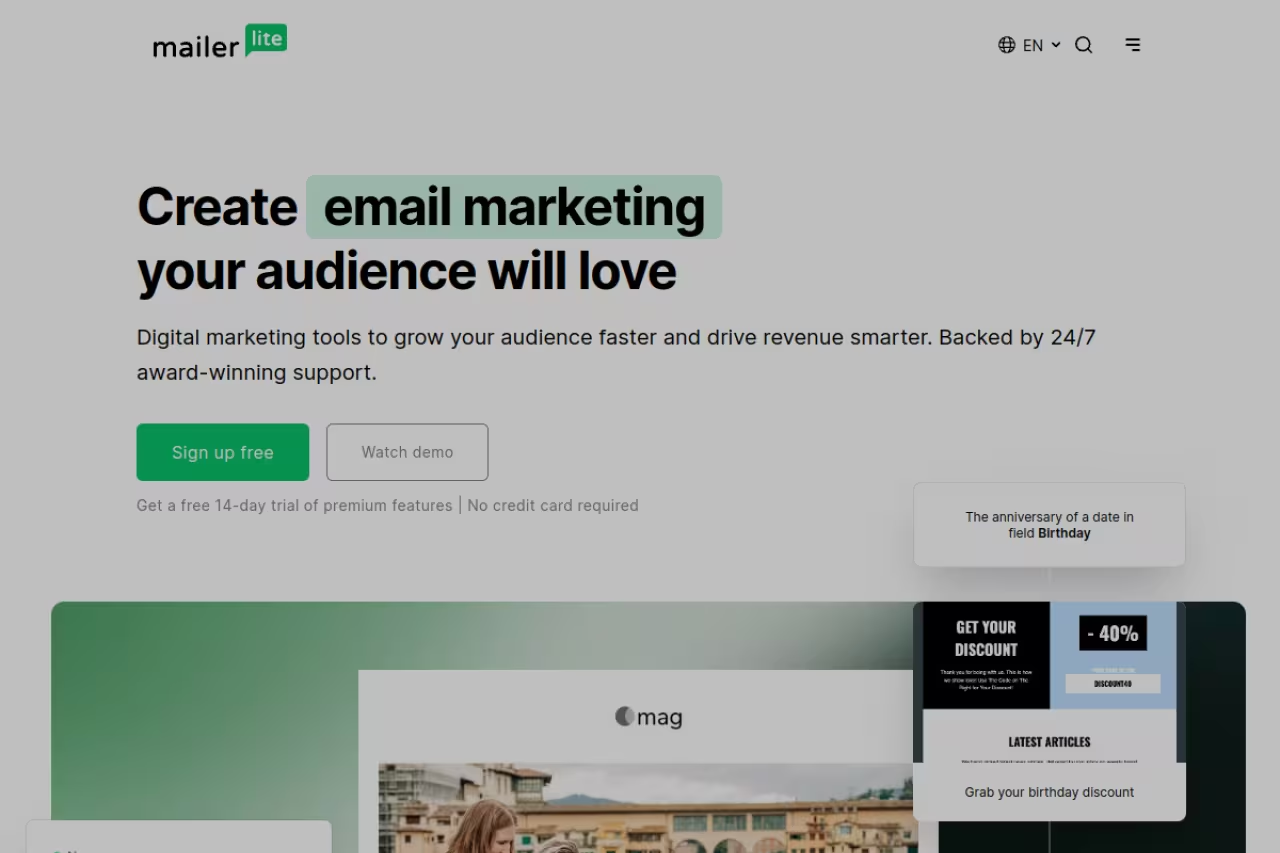
MailerLite is what I recommend when someone asks "just tell me what to use." It's an email platform with a drag-and-drop editor, automations, landing pages, and a basic website builder, and the whole thing feels lighter and faster than the alternatives on this list.
Who it's best for: small businesses, freelancers, creators, and anyone who wants to send good-looking email without a learning curve.
The pricing is the headline. The free plan covers up to 250 subscribers and 2,500 emails a month, with two user seats. The paid Growing Business tier (the rebranded "Comfort" plan) starts around $12/mo at 500 subscribers and unlocks unlimited monthly emails, while the Advanced tier runs about $25/mo and adds a fuller automation toolkit. Compared to what Mailchimp charges for similar list sizes, this is roughly half the price.
The standout is the editor. It's clean, the templates don't look dated, and the AI writing assistant is actually useful for first drafts instead of being a gimmick.
The catch: the free plan locks the nicer templates and adds MailerLite branding, and the application process for a new account is stricter than most (they manually review signups to keep deliverability high). If you import a sketchy purchased list, expect to get rejected. That's a feature, not a bug, but it surprises people.
My default recommendation for small businesses, freelancers and creators who want good-looking email without a learning curve, thanks to a clean editor and a generous free plan. Manual signup review is strict, and the free plan adds MailerLite branding.

Brevo: best when you send a lot of email
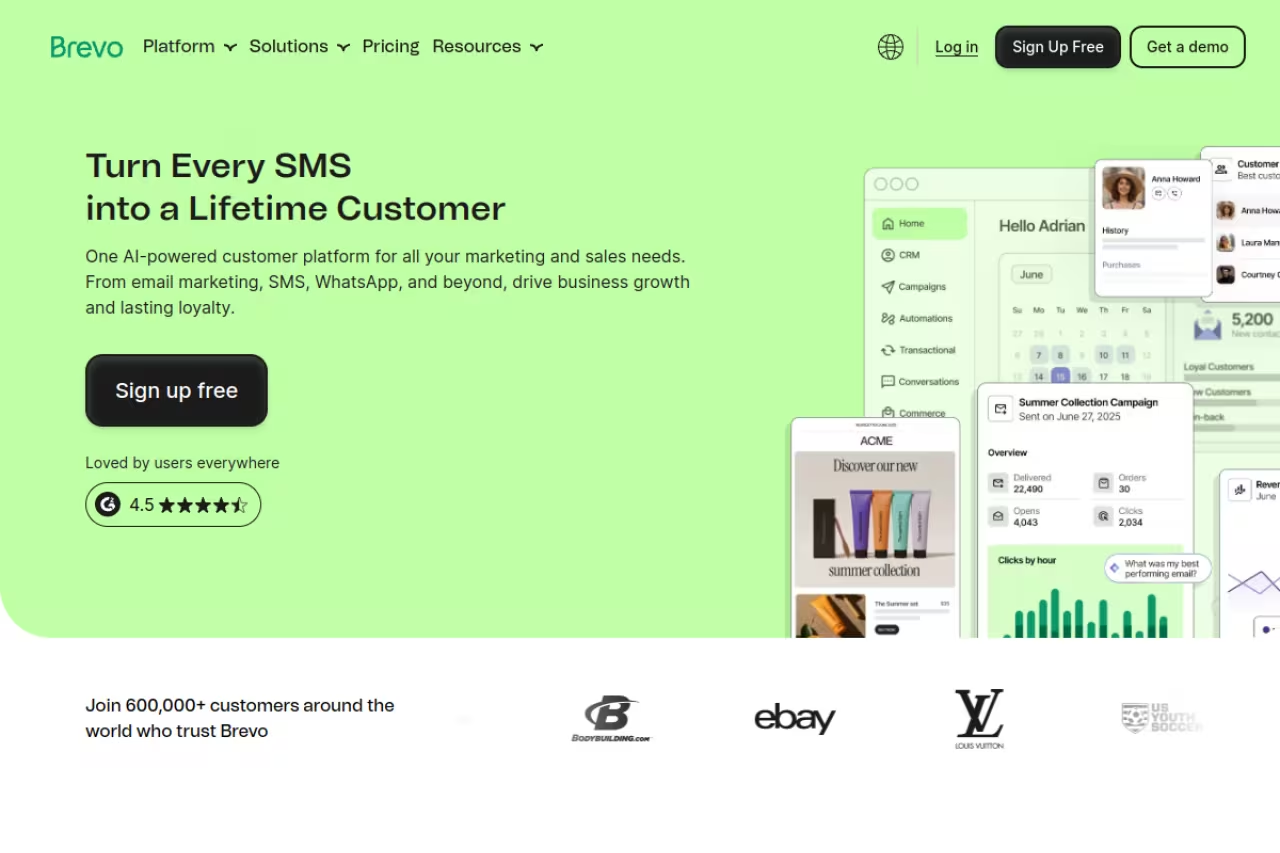
Brevo (formerly Sendinblue) plays a different pricing game. While most tools bill by how many contacts you store, Brevo bills by how many emails you send. If you have a big list but only email it occasionally, that math works heavily in your favor.
Who it's best for: businesses with large contact lists, anyone sending transactional email (receipts, password resets), and teams that want email plus SMS plus a light CRM in one place.
The free plan gives you 300 emails a day with unlimited contacts, which is genuinely unusual. The Starter plan begins at $9/mo for 5,000 emails and removes the daily limit, and the Business plan (around $18/mo at the 5,000-email tier) adds marketing automation, A/B testing, and send-time optimization.
The standout is that contact-agnostic model. You can sit on a 200,000-person list and pay nothing to store it.
Where it falls short: the email editor isn't as polished as MailerLite's, and the interface tries to do a lot (marketing, sales, conversations, transactional), so it can feel busy. Some of the better deliverability features are gated behind higher tiers.
Go with Brevo if you have a large list but send occasionally, since it bills by emails sent and the free plan allows unlimited contacts. The editor is less polished than MailerLite's, and better deliverability features sit on higher tiers.

Klaviyo: best for serious ecommerce
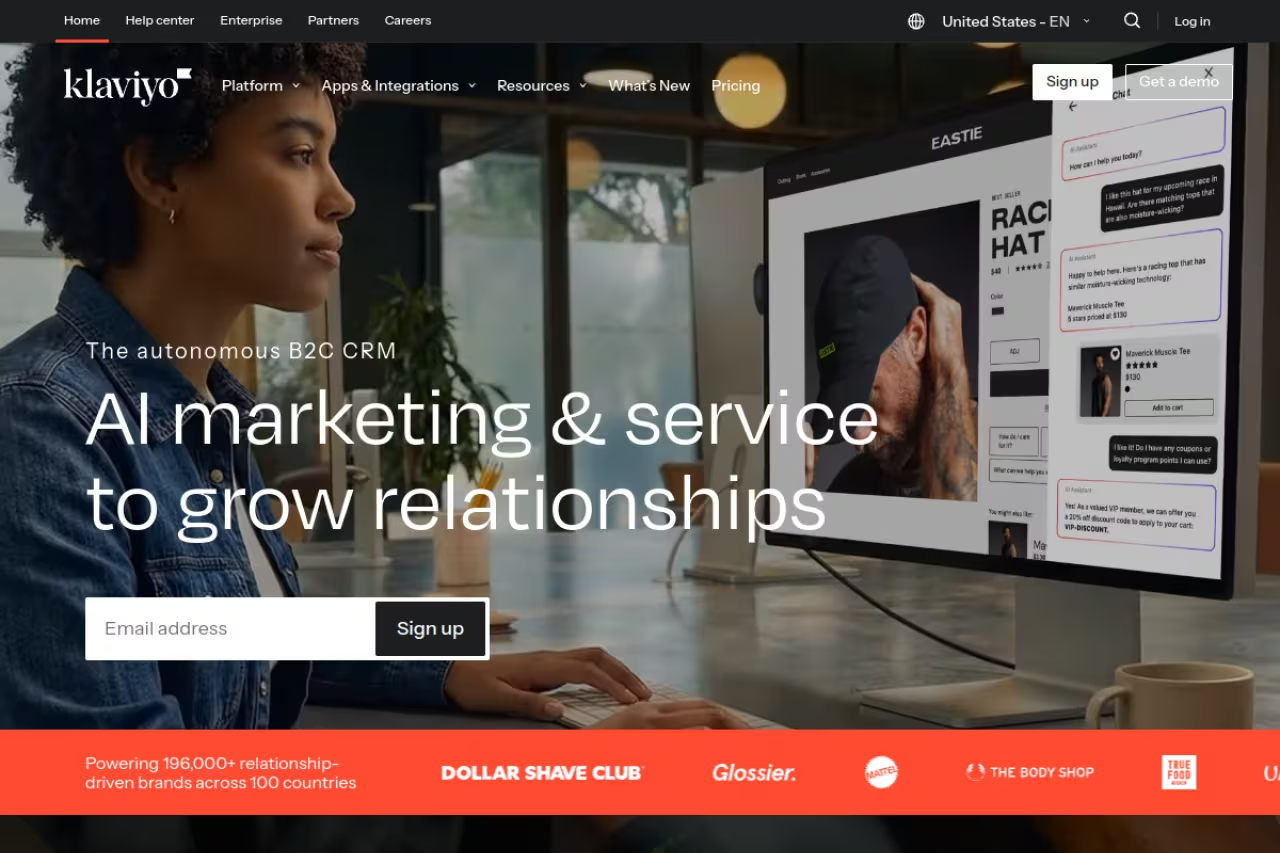
Klaviyo is the platform ecommerce brands graduate to once email becomes a real revenue channel. It plugs directly into Shopify, BigCommerce, and Magento, then uses that store data to build segments and automations that the general-purpose tools simply can't match.
Who it's best for: ecommerce stores past the early stage, especially anyone doing five figures a month or more where email-driven revenue justifies the cost.
The platform ecommerce brands graduate to once email is a real revenue channel, tying every email to sales with predictive targeting. Costs climb fast as your list grows, so it is overkill for a small brand that mostly sends newsletters.
Pricing scales with your list. The free plan covers up to 250 active profiles and 500 email sends a month. Paid email starts around $30/mo at 1,000 profiles, climbs to roughly $150/mo at 10,000, and SMS is billed separately on top. It's not cheap, and it's not pretending to be.
The standout is the data. Klaviyo ties every email to revenue, so you can see exactly which flow drove which sale. Predictive features like estimated customer lifetime value and churn risk let you target people based on behavior most tools never capture.
The catch: you pay for that power, and the cost can climb fast as your list grows. For a brand under a few thousand contacts that mostly sends newsletters, Klaviyo is overkill. If email isn't driving meaningful revenue yet, start cheaper and migrate later. I cover this trade-off more in our guide to the best AI email marketing tools.

Kit: best for creators and newsletters
Kit (the platform formerly called ConvertKit) is built for people who sell themselves: writers, course creators, coaches, and independent operators. It treats subscribers as a single audience you tag and segment, rather than juggling separate lists, which fits how creators actually work.
Who it's best for: newsletter writers and digital creators who want to grow an audience and sell products to it.
The free Newsletter plan is the most generous I found anywhere: up to 10,000 subscribers with unlimited landing pages, forms, and broadcasts. The paid Creator plan starts at $39/mo for 1,000 subscribers (cheaper billed annually) and adds automations and integrations. Note that Kit raised prices roughly 35% in late 2025, so older guides understate the cost.
The standout is the free tier. Few platforms let you reach 10,000 subscribers without paying a cent.
The catch: the free plan includes only one automation and no third-party integrations, so it's a starting point, not a forever home. The email editor is also deliberately plain. Kit's philosophy is that simple text emails convert better, which is often true, but if you want richly designed campaigns, look elsewhere.
A strong home for newsletter writers and creators, with a free plan that reaches 10,000 subscribers. That plan includes only one automation and no third-party integrations, the editor is deliberately plain, and prices rose roughly 35% in late 2025.

ActiveCampaign: best for deep automation
ActiveCampaign is the tool I reach for when the requirement is "automation that does exactly this complicated thing." Its visual automation builder handles branching logic, conditional waits, and CRM-driven triggers that most email tools can't express.
Who it's best for: B2B teams, agencies, and anyone whose email strategy depends on behavioral automation rather than one-off broadcasts.
Pick ActiveCampaign when the brief is complicated behavioral automation, with branching logic and CRM-driven triggers most tools cannot express. The learning curve is real, and it is the wrong tool if you just send a weekly newsletter.
Pricing (billed annually) starts at $15/mo for the Starter plan at 1,000 contacts. Plus runs $49/mo, Pro $79/mo, and the jumps get steep as your list grows: at 10,000 contacts, Starter is around $149/mo. Monthly billing costs roughly 20% more.
The standout is the automation builder. Once you've built complex flows in ActiveCampaign, going back to a simpler tool feels like losing a limb.
Where it falls short: it's more than most small senders need, and the learning curve is real. You'll spend time before you ship your first sophisticated automation. If you just want to send a weekly newsletter, this is the wrong tool and you'll resent paying for capability you never touch.

HubSpot: best when email lives inside your CRM
HubSpot makes sense when email is one piece of a bigger sales-and-marketing machine. Because the email tool sits on top of HubSpot's CRM, every send is tied to a contact record, deal stage, and full activity history. For sales-led teams, that context is the whole point.
Who it's best for: B2B teams already using (or planning to use) a CRM, where marketing and sales need to share the same contact data.
There's a free tier with basic email and CRM tools (HubSpot-branded), and the Marketing Hub Starter runs about $9/mo per seat billed annually, including 1,000 marketing contacts. The catch arrives fast: Marketing Hub Professional jumps to roughly $890/mo, so the gap between "starter" and "real automation" is a cliff, not a ramp.
The standout is integration. Email, CRM, forms, and reporting share one source of truth, which kills the data-sync headaches that come from stitching separate tools together.
Where it falls short: price. The free and Starter tiers are fine for light use, but the moment you need serious marketing automation, you're looking at a big jump. HubSpot is a platform decision, not just an email decision. If you only need email, you're overpaying. If you want a CRM too, see our roundup of the best CRM for B2B.
HubSpot fits B2B teams that want email tied to CRM contact records and deal history. Price is the problem, with Marketing Hub Professional jumping to roughly $890/mo, so it is overpaying if all you need is email.

beehiiv: best for paid newsletters and media brands
beehiiv was built by people who ran one of the biggest newsletters in the world, and it shows. It's purpose-built for newsletter operators who want to grow an audience and make money from it, with monetization baked in rather than bolted on.
Who it's best for: newsletter creators and media brands who plan to monetize through subscriptions, ads, or referrals. (Full disclosure: we run our own newsletters here, so I have strong opinions on this category.)
The free Launch plan covers up to 2,500 subscribers with unlimited sends and three publications. The Scale plan starts at $43/mo and unlocks paid subscriptions, ad network access, and Boosts. The Max plan begins at $109/mo and removes beehiiv branding.
The standout is the 0% take rate on paid subscriptions. Substack charges 10% of your subscription revenue; beehiiv charges nothing on top of your plan. At scale, that difference is enormous.
The choice for newsletter creators and media brands monetizing through subscriptions, ads or referrals, with a 0% take rate on paid subscriptions. It is laser-focused on newsletters, so skip it for transactional email, ecommerce flows or CRM needs.
The catch: beehiiv is laser-focused on newsletters, so it's not the tool for transactional email, ecommerce flows, or anything resembling a CRM. If you're picking the channel to grow a media audience, browse our list of the best AI newsletters to advertise in or model after. If you need general marketing email, look elsewhere on this list.
How to choose
Skip the feature checklists. Answer three questions instead.
What are you sending? Ecommerce promotions tied to a store point to Klaviyo or Omnisend. Creator newsletters point to Kit or beehiiv. General business email points to MailerLite or Brevo. Automation-heavy B2B points to ActiveCampaign or HubSpot.
How does your list grow versus how often you send? If you have a big list you email rarely, Brevo's send-based pricing wins. If you email a small list often, a contact-based tool like MailerLite is cheaper. Run the numbers at your projected 12-month list size, not today's, because switching platforms later is painful.
How much automation do you actually need? Be honest. Most people overbuy here. If your real plan is a weekly newsletter plus a welcome sequence, you don't need ActiveCampaign's branching logic, and paying for it is wasted money.
My default advice: start with MailerLite or Brevo unless you have a specific reason not to. They're cheap, they're capable, and migrating to a heavier tool later is far easier than the reverse. If you're building the broader stack around your email, see our top tools directory and our take on AI marketing automation.
Want a faster way to keep up with which tools are actually worth switching to? Dupple X tracks the AI and marketing tool space so you don't have to test everything yourself. Start a trial here.
FAQ
What is the best email marketing software for beginners?
MailerLite, for the combination of price and simplicity. The free plan covers up to 250 subscribers, the editor is the easiest of the tools on this list, and the templates look current. Brevo is a close second if you expect a large list, since its free plan supports unlimited contacts with a 300-email daily cap. Both let you learn the basics without paying upfront.
Is there a genuinely free email marketing tool?
Yes, several. Kit's free Newsletter plan is the most generous at up to 10,000 subscribers. Brevo offers 300 emails a day to unlimited contacts. MailerLite covers 250 subscribers, beehiiv covers 2,500, and Klaviyo and Omnisend both have free tiers capped around 250 contacts. Free plans usually add the provider's branding and limit automations, so treat them as a starting point rather than a permanent solution.
How much does email marketing software cost?
For a list of about 1,000 contacts, expect $9 to $30 a month on entry-level paid plans. MailerLite and Brevo sit at the cheaper end (around $9 to $15), Klaviyo and HubSpot run higher once you need their advanced features, and Kit starts at $39/mo at that list size. Costs climb as your list grows, so always check the price at your projected size, not just the headline starting number.
Klaviyo or Mailchimp for ecommerce?
For a real ecommerce store, Klaviyo. It's built around store data, ties every email to revenue, and offers predictive segmentation Mailchimp can't match. Mailchimp is more of a general-purpose tool that does light ecommerce; it's friendlier for beginners but you'll outgrow it. If Klaviyo feels too expensive early on, Omnisend is the cheaper ecommerce-native alternative.
Does email marketing software affect deliverability?
It helps, but it isn't magic. Reputable platforms maintain shared sending infrastructure, authentication (SPF, DKIM, DMARC), and reputation monitoring that improve your odds. Even so, global inbox placement sits around 84%, meaning roughly one in six marketing emails never reaches the inbox. Your list hygiene, sending consistency, and content matter as much as the tool. Platforms with strict signup review, like MailerLite, tend to protect deliverability better because they keep spammers off shared IPs.
Can I switch email platforms later without losing subscribers?
Yes. You can export your subscriber list (contacts, tags, segments) from almost any platform and import it elsewhere. What doesn't transfer cleanly is automations, templates, and historical engagement data, which usually have to be rebuilt. That rebuild cost is exactly why choosing for your 12-month list size up front saves real pain later.
Related guides
Some offers on this page may be paid placements or contain affiliate links.
Across our whole catalogue the median is $24 a month and 33% of tools advertise a free tier. Figures are the lowest recurring monthly price quoted in our own review of each tool, read on 2026-08-19. Full method and every category.
