
The Best AI Proposal Writing Tools in 2026

Key facts9 tools compared: PandaDoc, Proposify, Qwilr, Cobl, Inventive AI, Loopio, Better Proposals…
- 9 tools compared: PandaDoc, Proposify, Qwilr, Cobl, Inventive AI, Loopio, Better Proposals, Storydoc, Claude / ChatGPT
- PandaDoc (best for: All-in-one sales docs): Free; Starter $19/user/mo
- Proposify (best for: Design-led agency proposals): Basic $19/user/mo; Team $41
- Qwilr (best for: Interactive web proposals): Starter $35/user/mo; Scale $75
- Cobl (best for: Mid-market RFP / bid teams): From €49/mo
Writing a proposal is the part of winning work that nobody enjoys. You've already had the call, you know roughly what the client needs, and now you have to turn that into a polished document that says the right things in the right order without sounding like a template. Most people lose hours here, and a lot of deals go cold in the gap between "send me a proposal" and actually sending it.
AI changed the math. The good tools now draft a first version from your notes, pull approved language from a content library, and handle the formatting so you ship in an afternoon instead of a week. The catch is that "AI proposal tool" covers two very different things: document builders that bolt AI writing onto a nice editor, and AI-native systems built to answer 200-question RFPs. Pick the wrong category and you'll either overpay for machinery you don't need or hit a wall the moment a real RFP lands.
If you want one answer: PandaDoc is the safest pick for most sales teams and agencies. It does proposals, quotes, contracts, and e-signatures in one place, and it's priced for normal humans. But the right tool depends on whether you're sending pretty client proposals or grinding through formal RFPs, so here's the full rundown after comparing each one.
Quick comparison
| Tool | Best for | Price (annual) | Standout |
|---|---|---|---|
| PandaDoc | All-in-one sales docs | Free; Starter $19/user/mo | Proposals + quotes + e-sign in one tool |
| Proposify | Design-led agency proposals | Basic $19/user/mo; Team $41 | Pixel-level template control |
| Qwilr | Interactive web proposals | Starter $35/user/mo; Scale $75 | Web pages, not PDFs, with live analytics |
| Cobl | Mid-market RFP / bid teams | From €49/mo | AI deal workspace that works inside Claude and ChatGPT |
| Inventive AI | AI-native RFP responses | Custom (demo) | Auto-shredding + conflict detection |
| Loopio | Enterprise RFP teams | From ~$20k/yr | Deep content library + SME workflows |
| Better Proposals | Freelancers, small teams | Starter $13/user/mo | Dead-simple, fast, cheap |
| Storydoc | Story-driven, animated decks | Starter ~$20/user/mo | Interactive scrollytelling |
| Claude / ChatGPT | DIY drafting from scratch | $20/mo | Total flexibility, zero structure |

PandaDoc
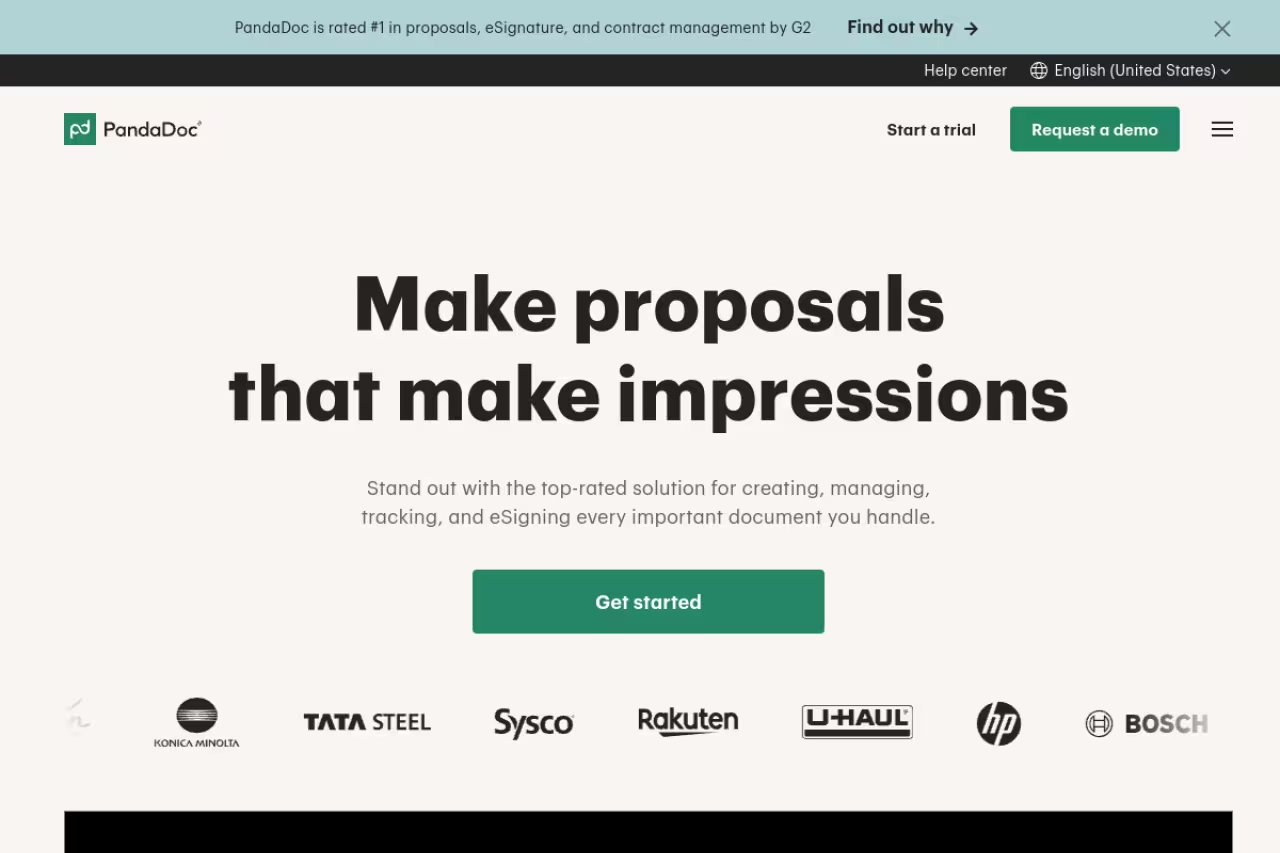
PandaDoc is the tool I'd hand to most teams that send proposals regularly. It's a document platform first: you build a proposal, drop in a pricing table that calculates itself, add an e-signature block, and the client signs without leaving the page. AI sits on top to help draft sections and rewrite clunky paragraphs.
Who it's best for: sales teams and agencies that want proposals, quotes, and contracts under one roof instead of stitching together three subscriptions.
The tool I'd hand most teams that send proposals regularly: proposals, self-calculating pricing tables and e-signatures in one link, with a real free plan. The AI writing is competent, not brilliant, so you still drive the structure.
Pricing is the honest part of the appeal. There's a real free plan (60 documents a year, unlimited e-signatures), then Starter at $19/user/month and Business at $49/user/month on annual billing, per the official pricing page. CRM integrations, approval workflows, and custom branding live on Business, which is where most teams land.
The standout is the all-in-one workflow. A client clicks the proposal, sees an interactive quote, picks options, and signs, all in one link. You get notified the second they open it.
The catch: the AI writing is competent, not brilliant. It's fine for tightening copy and generating boilerplate, but it won't out-think a good writer, and you still drive the structure. If you came expecting an AI that writes the whole thing while you sleep, this isn't that.

Proposify
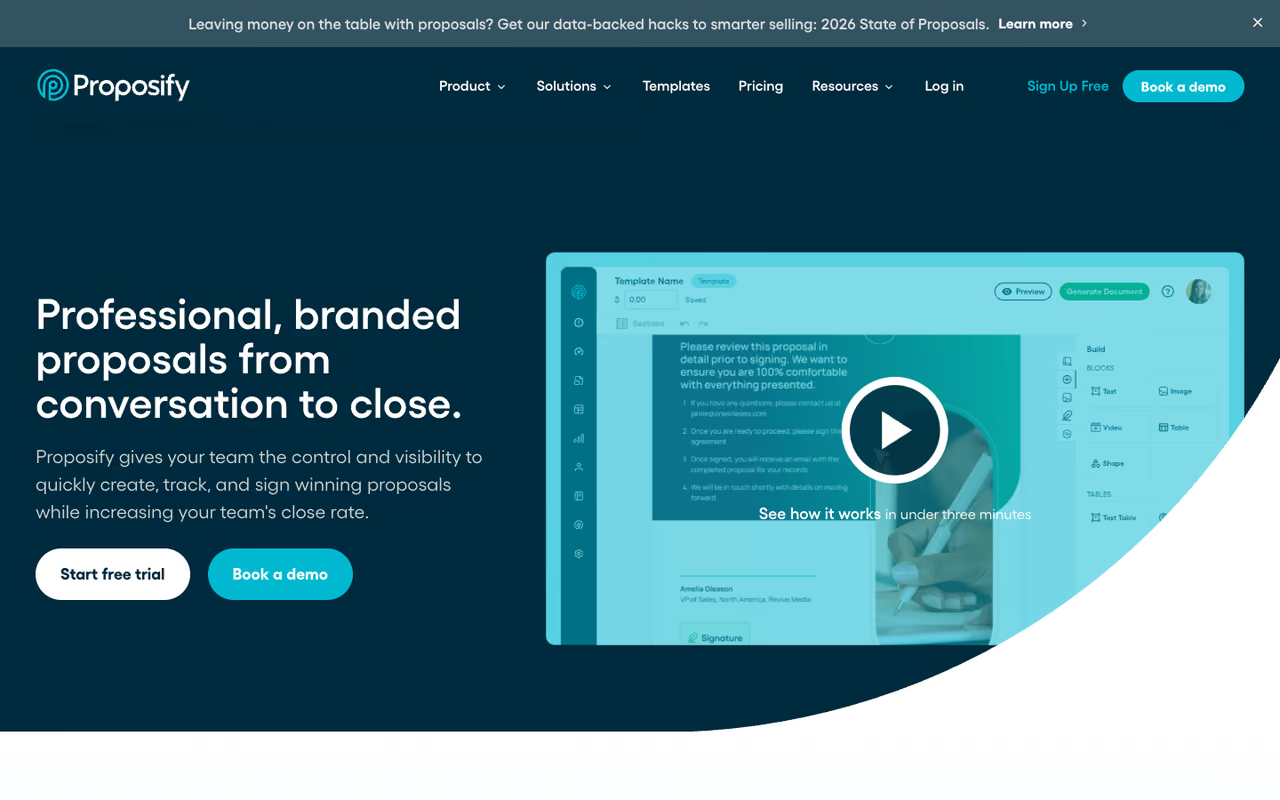
Proposify is what design-conscious agencies reach for. The editor gives you genuine control over layout, typography, and branded templates, so your proposals look like they came from a studio rather than a form. Its AI writing assistant can prompt, draft, refine, and fix grammar inline as you build.
Who it's best for: agencies and consultancies where the proposal itself is part of the pitch and has to look the part.
According to Proposify's pricing, Basic runs $19/user/month annually but caps you at 10 document sends a month with a $0.50 overage per send. Team at $41/user/month bumps that to 30 sends plus CRM sync, approval workflows, and analytics. Business is custom and starts around $3,900/year.
The standout is template control. If brand consistency matters and you have a real visual identity, Proposify lets you lock it down so every rep ships on-brand.
Where it falls short: those send limits sting. Ten or thirty sends a month sounds generous until a busy month blows past it, and overages add up. For high-volume teams the unit economics get awkward fast.
Proposify is what design-conscious agencies and consultancies reach for when the proposal itself is part of the pitch. Template control keeps every rep on-brand, but the send limits sting, with 10 sends a month on Basic and overages adding up.

Qwilr
Qwilr throws out the PDF entirely. Your proposal is a responsive web page with embedded video, interactive pricing the client can toggle, and accept-and-pay built in. It feels modern in a way static documents can't, and you see exactly how long someone spent on each section.
Who it's best for: teams selling deals where presentation and interactivity move the needle, like SaaS, marketing, and creative services.
Pick Qwilr for deals where presentation and interactivity move the needle, like SaaS, marketing and creative services, with section-level analytics. The AI features only live on the Scale tier, so AI drafting means $75/user/month and 10 seats.
Pricing per Qwilr's plans starts at $35/user/month annually for Starter, with Growth at $55 (5-seat minimum) and Scale at $75 (10-seat minimum). The catch worth flagging up front: Qwilr's AI features, the Smart Proposal Engine and AI Prefill, only live on the Scale tier. If AI drafting is your main reason for buying, you're committing to $75/user/month and 10 seats.
The standout is the interactive web format plus genuinely useful analytics. Watching a prospect re-open the pricing section three times tells you where to follow up.
Where it falls short: the AI gate. On Starter and Growth you're paying for a beautiful builder with no real AI assistance, which undercuts the "AI proposal tool" promise unless you go all the way to Scale.

Cobl
Cobl is an AI deal workspace for sales, presales and bid teams: an AI agent that knows your accounts and deals, understands where each opportunity stands, and prepares the next step (proposal, RFP response, or decision-committee brief) with the full context of the deal behind it. It uses your team's shared knowledge (past answers, wins, proposals) and connects to Salesforce, HubSpot, and Google Drive, and works inside Claude and ChatGPT via MCP.
Who it's best for: mid-market RFP and bid teams.
A fit for mid-market RFP and bid teams that want an AI agent carrying the full deal context into each proposal, RFP response or brief. It starts at €49/month with a 30-day trial, but it is more than a freelancer sending occasional proposals needs.
Pricing starts at €49/month, with a 30-day free trial that includes full access, per the Cobl pricing page. Custom enterprise pricing is available.
Pros: Deal workspaces with memory, so each proposal or brief starts from the account's full history · Covers the full RFP response set, with export to Word, PowerPoint, Excel and PDF · Works inside Claude and ChatGPT via MCP, plus 100+ integrations including Salesforce, HubSpot and Google Drive
Cons: Built around deals and CRM context, so it's more than a freelancer sending the occasional proposal needs · Enterprise pricing is custom, so larger rollouts go through a sales conversation
Inventive AI
If your work involves formal RFPs rather than friendly sales proposals, the document builders above will frustrate you. Inventive AI is built for the RFP grind. It reads the whole document, auto-identifies every requirement and deadline (the team calls it "shredding"), and drafts answers from your knowledge base.
Who it's best for: sales engineering, security, and bid teams that respond to long questionnaires and security reviews.
The features that earn its place are the quality controls. Conflict detection flags when a drafted answer contradicts something you said earlier or in a past RFP for the same client. An executive-summary agent compresses a 100-page RFP into a two-page brief, and it recommends which internal expert should own each technical answer. The company claims roughly 95% answer accuracy, though I'd treat vendor stats as marketing until you test on your own data.
The catch: pricing is custom and sales-led, so there's no quick self-serve entry. This is a team purchase with a demo and a procurement conversation, not a card-swipe tool.
Go with Inventive AI if you answer formal RFPs and long security questionnaires, where document builders will frustrate you. Pricing is custom and sales-led, so expect a demo and procurement conversation, and test the roughly 95% accuracy claim on your own data.

Loopio
Loopio is the incumbent that big RFP teams already know. Its strength is the content library: a maintained, searchable store of approved answers that the AI pulls from, with workflows to route questions to the right subject-matter experts and keep everything reviewed.
Who it's best for: enterprises running high volumes of RFPs, security questionnaires, and due-diligence requests across multiple departments.
Be ready for enterprise pricing. Reporting from Vendr and others puts Loopio's entry around $20,000/year, scaling well into six figures for large deployments. That buys serious infrastructure, but it's not a tool you evaluate on a Tuesday afternoon.
The standout is library depth and governance. When 40 people need to answer questions consistently and on-brand, Loopio's structure keeps the whole thing from descending into copy-paste chaos.
Where it falls short: the AI. Multiple reviews note Loopio's automated answers struggle with nuanced requirements and surface irrelevant matches that humans then have to fix. You're buying a workflow and a library more than a brilliant writer. For small teams it's overkill and the price is hard to justify.
The incumbent for enterprises running high volumes of RFPs and security questionnaires, with a deep, governed content library. Entry is around $20,000/year, and reviews say the AI struggles with nuanced requirements, so you are buying workflow more than a writer.

Better Proposals
Better Proposals is the antidote to enterprise bloat. It's a lightweight, web-based builder aimed at freelancers, consultants, and small agencies who want a clean proposal out the door without a learning curve. Templates, e-signatures, payment collection, and an AI writing assist are all there.
Who it's best for: solo operators and small teams who send a handful of proposals a month and value speed over deep features.
It's also the cheapest serious option. Pricing starts at $13/user/month on Starter (annual), with Premium at $21 and Enterprise at $42. Premium adds a custom domain, CRM and Zapier integrations, and 50 sends a month.
The standout is simplicity. You can have a polished, on-brand proposal sent within an hour of signing up, which is exactly what a busy freelancer needs.
The catch: it tops out fast. There's no RFP machinery, the AI is basic, and analytics are thin compared to Qwilr or PandaDoc. Once you're scaling a real sales team, you'll outgrow it.
The cheapest serious option, aimed at freelancers, consultants and small agencies who value speed over deep features. You can send a polished proposal within an hour, but it tops out fast, with basic AI, thin analytics and no RFP machinery.

Storydoc
Storydoc leans into the idea that a proposal is a story, not a stack of pages. It turns your pitch into an interactive, animated, scroll-based experience with AI helping generate the content and layout. Think proposals that feel closer to a polished landing page.
Who it's best for: marketers and founders who pitch visually and want engagement data on every scroll and click.
A good fit for marketers and founders who pitch visually and want engagement data on every scroll and click. Watch the add-on costs and note that the interactive format can feel like overkill for a straightforward $5k engagement.
Pricing starts around $20/user/month on Starter with Pro higher (sources vary between roughly $36 and $60/user/month annually), plus a custom Teams tier. AI generation credits reset monthly and don't roll over.
The standout is engagement design and analytics. The interactive format genuinely holds attention longer than a PDF, and you can see precisely where readers drop off.
Where it falls short: watch the add-on costs. Reviewers have reported custom-subdomain charges that weren't obvious at sign-up, so read the fine print before you commit. And like Qwilr, the interactive output is gorgeous but can feel like overkill for a straightforward $5k engagement.
If you're weighing this kind of visual tool, my roundup of the best AI presentation tools covers the deck-first options in more depth.

Claude and ChatGPT
Sometimes you don't need a platform. You need a sharp first draft, fast, and you'll handle the formatting yourself. Claude and ChatGPT are the blank-canvas option, and for one-off proposals they're hard to beat. Paste your notes, the client's brief, and a strong example proposal, then ask for a draft in your voice.
Who it's best for: consultants and small teams who send proposals occasionally and already have a document workflow in Google Docs or Word.
At $20/month each, they're cheaper than any dedicated tool, and the writing quality is the best on this list because that's literally what they do. Claude tends to hold up better for longer, reasoned sections, while ChatGPT is quicker for reformatting on the fly.
The catch: zero structure. No templates, no e-signatures, no analytics, no content library, no sense of whether the client opened it. You're trading workflow for raw writing power, and you bring the discipline. For teams sending dozens of proposals a month, that manual overhead doesn't scale.
Choose Claude or ChatGPT if you send proposals occasionally and already live in Google Docs or Word. At $20/month each they are cheap and write best, but you get zero structure: no templates, e-signatures or analytics.
If you want to push these chat tools further, my guide to generative AI for sales has prompt patterns that work well for proposal drafting too.
Running a lean team and want the top AI tools curated without testing 30 of them yourself? Dupple X tracks what actually works.
How to choose
Skip the feature checklists and answer one question first: are you sending sales proposals or responding to RFPs? They're different jobs.
If you send sales proposals to warm prospects, you want a document builder. Start with PandaDoc for the all-in-one workflow and fair pricing. Pick Proposify if design control is non-negotiable, Qwilr or Storydoc if interactivity wins your deals, and Better Proposals if you're a freelancer who wants cheap and fast.
If you respond to formal RFPs and security questionnaires, a builder will drown you. You need a content library and AI that answers questions at volume. Inventive AI is the AI-native pick worth a demo; Loopio is the enterprise standard if you have the budget and the team size to justify it.
And if you only send a proposal or two a month, don't buy a platform at all. Claude or ChatGPT plus your existing doc tool will cost $20 and out-write half the dedicated apps. Upgrade when the volume actually hurts. For more sales-side AI, my guide to the best AI tools for sales prospecting pairs well with whatever proposal tool you land on, and you can browse our full top AI tools list for adjacent picks.
Frequently asked questions
What is the best AI proposal writing tool in 2026?
For most sales teams and agencies, PandaDoc is the best all-around pick because it combines proposals, quotes, contracts, and e-signatures with a usable free plan. If your work is formal RFPs, Inventive AI or Loopio are stronger because they're built for high-volume questionnaire responses. And for occasional one-off proposals, Claude or ChatGPT at $20/month is hard to beat on writing quality.
Can AI actually write a full proposal that wins deals?
AI writes a strong first draft fast, but it doesn't close deals on its own. The tools draft sections, pull approved language, and handle formatting. You still need to add real pricing, tailor the value to the specific client, and review every claim. Treat AI as a head start, not a finished product.
How much do AI proposal tools cost?
It ranges widely. Lightweight builders like Better Proposals start at $13/user/month and PandaDoc Starter at $19/user/month on annual billing. Mid-tier interactive tools like Qwilr run $35 to $75/user/month, with AI features often gated to the top tier. Enterprise RFP platforms like Loopio start around $20,000/year. ChatGPT and Claude are $20/month flat.
What's the difference between proposal software and RFP software?
Proposal software (PandaDoc, Proposify, Qwilr) helps you build and send polished sales documents to prospects you've already talked to. RFP software (Loopio, Inventive AI) answers long, structured questionnaires by pulling from a library of approved answers and routing questions to internal experts. If you answer hundreds of compliance and security questions, you need RFP software, not a proposal builder.
Are free AI proposal tools any good?
Partly. PandaDoc's free plan is useful for low volume: 60 documents a year with unlimited e-signatures. ChatGPT and Claude both have free tiers that draft solid copy. The gaps show up at scale: no content library, limited analytics, send caps, no team workflows. Free is fine for freelancers sending a few proposals a month, but growing teams hit the ceiling quickly.
Related guides
Some offers on this page may be paid placements or contain affiliate links.
