
Best Free Lead Management Software (2026): 7 Tools Compared

Key facts7 best free lead management tools in 2026, and where each stops being free
- HubSpot CRM's free plan covers 1,000 contacts and 2 users, with the first paid tier at $15 per seat per month.
- Bitrix24 is the only tool here with unlimited free users, capped at 5 GB of storage, with paid plans starting at $49/month for 5 users.
- Zoho CRM's free plan covers 3 users and 5,000 records; its Standard paid plan costs $14 per user per month billed annually.
- Freshsales gives 3 free users with unlimited contacts and a built-in phone; its Growth plan costs $9 per user per month.
- Brevo's free plan offers unlimited contacts with 300 emails per day, charging per email sent rather than per contact.
Most "free" lead management tools are a trap. You sign up, import 800 contacts, and three weeks later you hit a wall: a 2-user cap, a paywall on the one automation you needed, or a contact limit that forces an upgrade right when leads start flowing in. The free plan was bait. The product was the upsell.
So this guide compares the seven tools that actually deliver something usable for $0, checking pipelines, the automations the free tier allows, and exactly where each one stops being free. This is for founders, solo operators, and small sales teams who want to track and work leads without paying yet.
If you want the short answer: HubSpot has the most polished free lead management, and it's my top pick for most people. But if you have a team bigger than two people, Bitrix24 is the only serious option with unlimited free users, and Zoho CRM sits in the middle with a cleaner upgrade path. The rest each win for a specific situation.
Quick comparison
| Tool | Best for | Free plan | Standout |
|---|---|---|---|
| HubSpot CRM | Solo founders, marketing-led sales | 1,000 contacts, 2 users | Polish + lead journey view |
| Bitrix24 | Teams of 3+ on a budget | Unlimited users, 5 GB | Free for the whole team |
| Zoho CRM | Growing teams wanting a clean upgrade | 3 users, 5,000 records | Cheap, sane paid path |
| Freshsales | Phone-heavy sales | 3 users, unlimited contacts | Built-in dialer, free |
| EngageBay | Marketing + sales in one | 250 contacts, all-in-one | Email marketing baked in |
| Brevo | Email-driven lead nurture | Unlimited contacts, 300 emails/day | Pay per email, not per contact |
| Capsule CRM | People who hate clutter | 250 contacts, 2 users | Simplest interface here |
How these rate, aggregated across platforms
Scores from Toolradar, aggregated across G2, Capterra, TrustRadius, Trustpilot and PeerSpot. CRM is the most reviewed software category there is, so these samples are worth taking seriously.
| Tool | Aggregated rating | Reviews |
|---|---|---|
| EngageBay | 4.7 | 1,493 |
| Brevo | 4.6 | 5,959 |
| Capsule CRM | 4.6 | 640 |
| Freshsales | 4.5 | 1,842 |
| Bitrix24 | 4.2 | 1,578 |
| Zoho CRM | 4.1 | 2,885 |
| HubSpot | 3.9 | 19,112 |
The ordering here inverts the one in this article, and it is worth saying why rather than quietly ignoring it.
HubSpot ranks last on aggregate and first in our recommendation. Its 3.9 is made of 4.4 on G2 across 13,374 reviews, 4.5 on Capterra across 4,417, and 1.8 on Trustpilot across 613. Trustpilot collects complaints about billing and contracts; G2 and Capterra collect opinions about the software. The free CRM this article recommends involves no contract, so the low score is measuring something you are not buying. It is still a real warning about what happens when you upgrade, and this guide says so in the HubSpot section.
Zoho's 4.1 across 2,885 reviews is the one genuinely middling score on a large sample, and it fits the common complaint about the product: capable, and heavy to configure.
EngageBay's 4.7 is the highest here, on a sample of 1,493, which is a serious result for a product far less known than the others.

HubSpot CRM: the best free lead management for most people
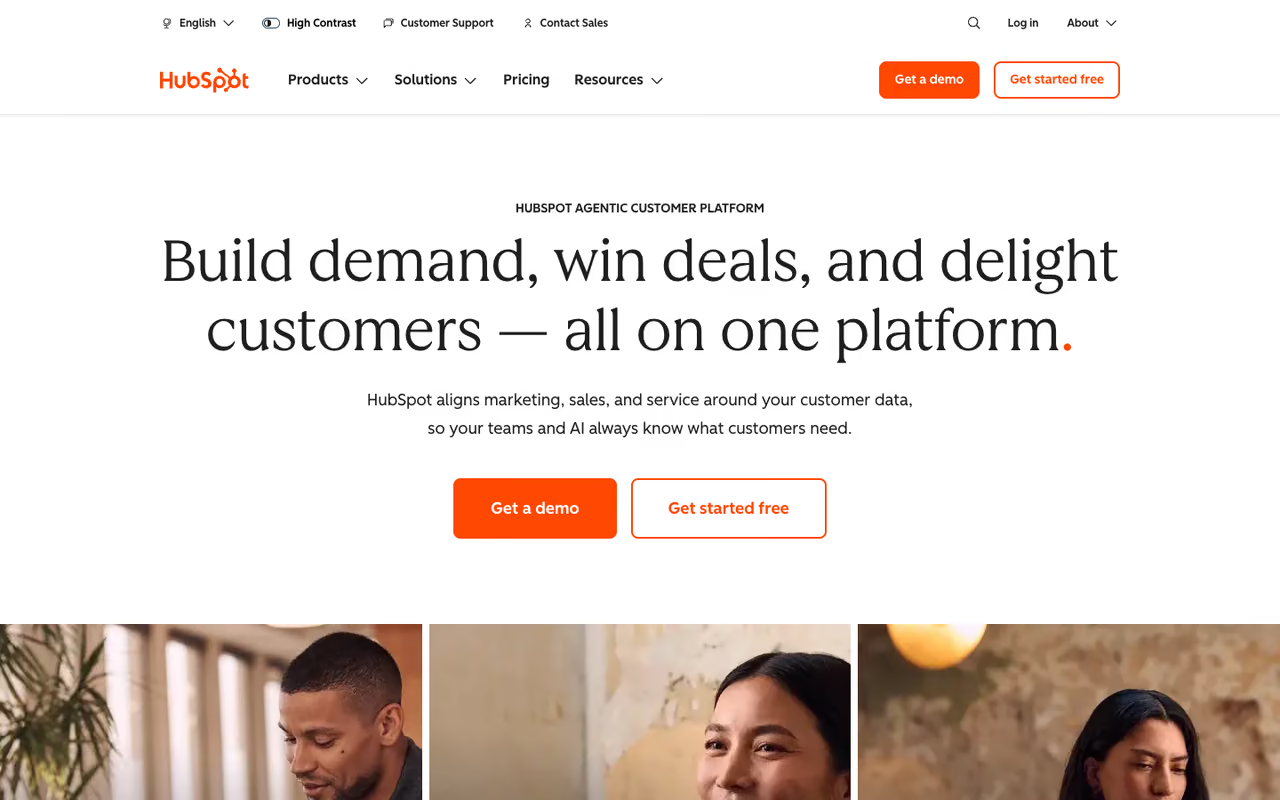
HubSpot CRM is what I reach for when someone asks "what should I use to track leads, for free, without the thing feeling cheap." The free tier gives you contact records, deal pipelines, a lead management view that shows each lead's full journey, email tracking, meeting links, and live chat. Nothing about it screams "free version."
Who it's best for: solo founders and small marketing-led teams who capture leads through forms, content, or email and want everything in one place.
The best free lead management for solo founders and small marketing-led teams who want everything in one place, with a single timeline per lead. The 2-user cap is the real ceiling, and paid plans climb fast once you add Marketing Hub.
free forever for up to 1,000 contacts and 2 users, with no expiration. The cheapest paid step is Sales Hub Starter at $15 per seat per month, which lifts limits and adds sequences and more automation.
The standout: the lead record. Every email open, form fill, page view, and chat sits on a single timeline. When a lead replies, you know exactly what they touched before. For a free tool that context is rare, and it changes how you prioritize who to call first.
The catch: the 2-user cap is the real ceiling. The moment you bring on a second salesperson plus yourself, you're stuck, and HubSpot's paid plans climb fast once you add Marketing Hub. The free plan is generous on features but stingy on seats, which is the reverse of what a growing team needs.

Bitrix24: unlimited free users for the whole team
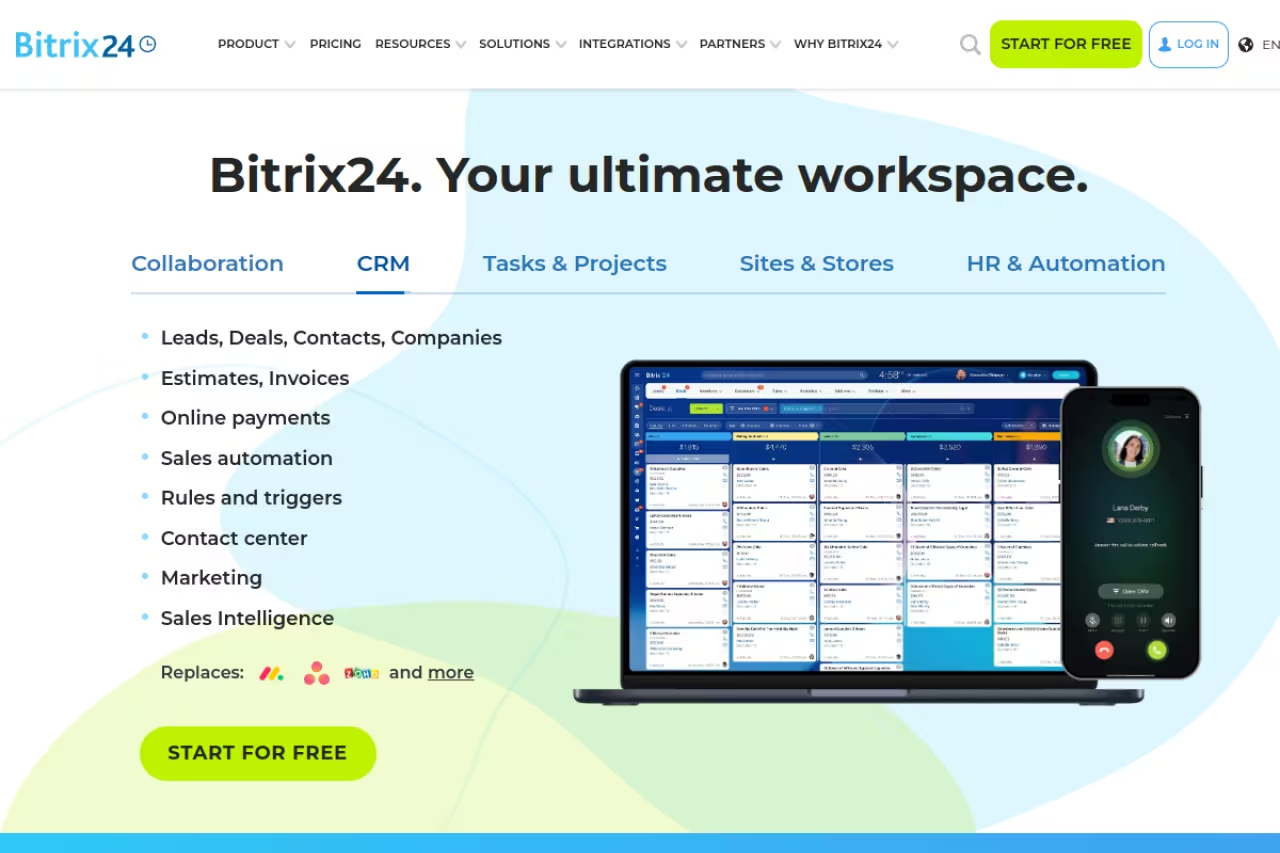
Bitrix24 is the answer to HubSpot's seat problem. Its free plan has unlimited users. Not five, not ten. Unlimited. You can put your entire sales floor on it for $0, which no other established CRM does in 2026. On top of the CRM you get tasks, projects, team chat, and a built-in phone.
Who it's best for: teams of three or more who can't justify paying per seat yet but need everyone working the same pipeline.
Go with Bitrix24 if you are a team of three or more who cannot justify per-seat pricing yet, since the free plan has unlimited users. You trade polish for headcount: the interface is busy, and 5 GB of storage fills up fast.
free with unlimited users and unlimited contacts, capped at 5 GB of storage. The first paid tier, Basic, runs $49/month for 5 users billed annually, adding automation and more storage.
The standout: giving every rep an account at no cost. Shared pipelines, lead assignment rules, and activity tracking work across the whole team on the free tier. For a bootstrapped sales team that alone makes it worth a look.
Where it falls short: the interface. Bitrix24 does so much that the CRM is buried in a busy product with menus everywhere. There's a real learning curve, and onboarding a non-technical rep takes patience. The 5 GB storage cap also fills up fast once you attach files and record calls. You trade polish for headcount, and that's a fair trade only if you'll actually put the team on it.
Zoho CRM: the cleanest path from free to paid
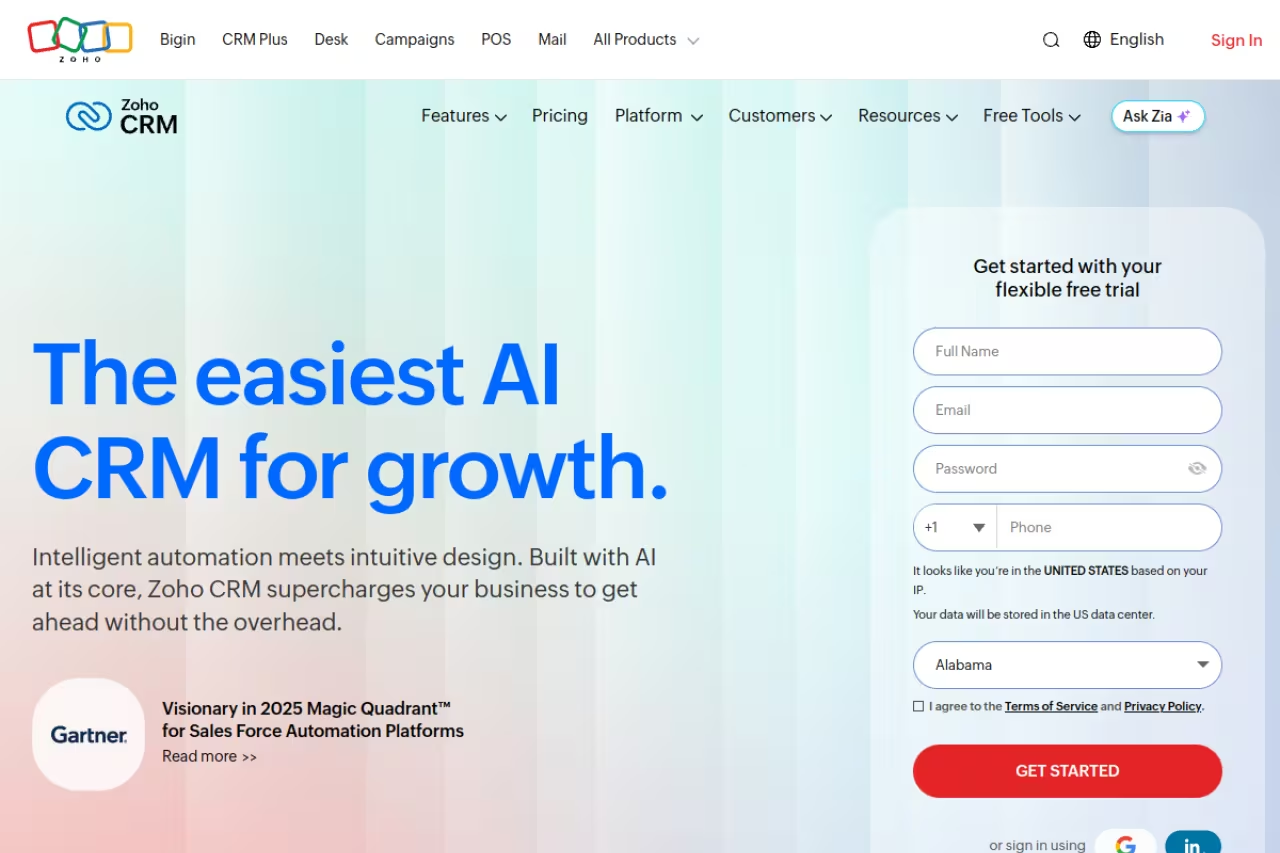
Zoho CRM sits between HubSpot's polish and Bitrix24's headcount generosity. The free edition covers three users and 5,000 records with lead and contact management, tasks, and standard reports. It's not flashy, but it does the core job well and the upgrade math is the most reasonable on this list.
Who it's best for: small teams that expect to grow and want to avoid a painful migration later. You start free, then graduate inside the same product.
A smooth path from free to paid for small teams that expect to grow. The free tier is deliberately bare (3 users, 5,000 records), so treat it as a trial you never have to end, with the $14 Standard plan as the soft step up.
free for 3 users and 5,000 records. The Standard plan is $14 per user per month billed annually ($23 monthly), which adds scoring rules, workflows, multiple pipelines, and mass email.
The standout: the upgrade path. Where HubSpot's jump to a paid plan can sting and Bitrix24's first paid tier is a $49 cliff, Zoho's $14 Standard is a soft step up. You unlock automation and lead scoring without re-platforming, and the rest of the Zoho ecosystem (Books, Desk, Campaigns) plugs in if you go that way.
The catch: the free tier is deliberately bare. No workflow automation, no lead scoring, no mass email, no custom modules. You get a place to store and track leads, but the features that make a CRM save you time all live behind that $14 wall. Treat the free plan as a trial you never have to end, not a destination.
If you're building a lead engine and not just storing names, it's worth thinking about how your CRM connects to the AI tools you already run. I put together a guide to the best AI agents that handle outreach and follow-up, which pairs well with any of these once you outgrow the basics. And for the broader stack, Dupple X is how I keep up with what's worth adopting each week.
Freshsales: free, with a real phone built in
Freshsales is the pick if your leads get worked over the phone. The free plan supports three users and, unusually, unlimited contacts, with contact and deal management plus a built-in phone for call logging. Most free CRMs make you bolt on a dialer. This one ships with it.
Who it's best for: small sales teams doing high-volume calling who don't want a separate phone system.
The pick if your leads get worked over the phone, with a built-in dialer and call logging on the free plan for small sales teams doing high-volume calling. Email-first teams will hit the 100 per day marketing email cap sooner, and Growth is $9 a seat.
free for 3 users with unlimited contacts. The Growth plan is $9 per user per month billed annually ($11 monthly), adding lead scoring, sequences, and workflow automation.
The standout: the native phone and the clean interface. Freshsales is genuinely pleasant to use, less cluttered than Bitrix24, and the call logging on the free tier means every conversation lands on the contact record automatically.
Where it falls short: the free plan caps marketing emails at 100 per day and holds back automation and scoring for the paid tier. If your motion is email-first rather than phone-first, you'll feel the limits sooner. But at $9 a seat, the upgrade is the cheapest real step on this list.

EngageBay: marketing and sales in one free account
EngageBay tries to be HubSpot for people who can't pay HubSpot prices, and on the free tier it mostly pulls it off. You get CRM, email marketing, landing pages, live chat, and a helpdesk in one account. For an early team running both lead capture and lead nurture, having it under one roof is the whole point.
Who it's best for: founders who are doing their own marketing and sales and don't want to wire together five separate tools.
A solid choice for founders doing their own marketing and sales who do not want to wire together five tools: CRM, email, landing pages and chat in one account. 250 contacts is tight and emails carry EngageBay's footer, so plan to pay within a month or two.
the free plan covers 250 contacts with the full all-in-one feature set. Basic is $14.99 per user per month, lifting the cap to 1,000 contacts and adding lead scoring and SMS.
The standout: the breadth. Email sequences, forms, landing pages, and a pipeline all talk to each other on the free plan. For lead nurture, that integration is worth more than any single best-in-class feature.
The catch: 250 contacts is tight. You'll outgrow it quickly if you're actually capturing leads, and the free tier sends branded emails with EngageBay's footer. It's a great way to test the all-in-one model, but plan to pay within a month or two if it's working.

Brevo: when leads live in your email list
Brevo (formerly Sendinblue) flips the pricing model that traps most people. It charges for emails sent, not contacts stored, so its free plan gives you unlimited contacts with a built-in CRM and 300 emails per day. If your lead management is really about nurturing a growing list, that's the right shape.
Who it's best for: email-driven businesses, newsletters, and ecommerce where the contact list balloons but daily send volume stays modest.
Pick Brevo when your leads live in an email list, since it charges for emails sent rather than contacts stored. Unlimited contacts and 300 emails per day are free, but the CRM is light, so it is a nurture tool, not a structured sales process.
free with unlimited contacts and 300 emails per day. Paid Starter begins at $9/month and raises the send limit while removing the daily cap.
The standout: unlimited contacts on the free tier. Every other tool here counts heads. Brevo counts emails, so you can sit on 50,000 leads for free and only pay when you send a lot. For a slow-burn nurture motion that's a genuinely different deal.
Where it falls short: the CRM itself is light. Pipelines and deal tracking exist but they're an add-on to a marketing platform, not the core. If you run a structured outbound sales process with stages and forecasting, this isn't built for that. It's a list-nurture tool with CRM features, not the other way around.

Capsule CRM: the simplest one here
Capsule CRM is for people who open HubSpot, see forty features, and close the tab. It does contacts, a single pipeline, tasks, and not much else on the free plan, and that restraint is the appeal. Two minutes after signing up you understand the whole thing.
Who it's best for: solo operators and consultants who want a tidy place to track a handful of deals without learning a platform.
The simplest one here, for solo operators and consultants who want a tidy place to track a handful of deals. The ceiling is low at 2 users, 250 contacts and 50 MB of storage, and Starter is $18 per user per month.
free for 2 users, 250 contacts, and one pipeline. The Starter plan is $18 per user per month billed annually, which adds email templates, more storage, and reporting.
The standout: clarity. There's no clutter, no setup wizard, no eight onboarding emails. You add a contact, attach a deal, and move it along a pipeline. For someone managing 30 active leads, that's all they ever needed.
The catch: 250 contacts and 2 users is a low ceiling, and 50 MB of storage is barely anything. Capsule is a starting point, not a system you scale on. The moment your list grows or a third person joins, you're paying. But for a single user with a small book, it's the least annoying tool on this page.
How to choose
Pick based on your one real constraint, not the feature list:
- You're solo and want polish: HubSpot. The 1,000-contact, 2-user free plan will carry you a long way, and the lead timeline is the best here.
- You have a team of 3+ and no budget: Bitrix24. Unlimited free users is the only thing that matters at that size, and you can absorb the messy interface.
- You expect to grow and hate migrations: Zoho CRM. Start free, step up to $14 Standard when you need automation, never re-platform.
- You sell on the phone: Freshsales. The built-in dialer on the free tier is the differentiator.
- Your leads are an email list: Brevo. Unlimited contacts, pay per send, not per head.
- You want one tool for marketing and sales: EngageBay, if you stay under 250 contacts.
- You just want simple: Capsule.
One rule I'd push on anyone: don't choose the tool with the most features. Choose the one whose free ceiling matches how you'll actually grow over the next six months. The cost of switching CRMs midway through a busy quarter is far higher than the cost of picking slightly "less" tool that you won't outgrow. If you want a faster way to keep track of which tools are worth adopting as you scale, Dupple X is the shortcut I use, and our top tools roundup covers the rest of the stack.
FAQ
What is the best free lead management software in 2026?
For most people it's HubSpot CRM. The free plan covers 1,000 contacts and 2 users with a genuinely useful lead journey view, email tracking, and deal pipelines, and nothing about it feels stripped down. If you have a bigger team, Bitrix24 is better because its free plan has unlimited users, and Zoho CRM is the pick if you want the cheapest path to paid features later.
Is there a free CRM with unlimited users?
Yes. Bitrix24 is the only established CRM in 2026 with a free plan that allows unlimited users. The trade-off is a 5 GB storage cap and a busier interface than HubSpot or Zoho. For a bootstrapped team that needs everyone on the same pipeline without paying per seat, it's the clear choice.
What's the catch with free lead management tools?
The limit is almost always users, contacts, or automation, and sometimes all three. HubSpot caps you at 2 users, Zoho at 3 users and 5,000 records, EngageBay and Capsule at 250 contacts. Most also lock workflow automation and lead scoring behind the first paid tier. The free plan is real, but it's designed so you upgrade once leads start flowing.
Can free lead management software actually scale a business?
For early stages, yes. You can run a real sales process on any of these free plans up to a few thousand leads or a handful of users. Past that, you'll hit a paywall on contacts or automation, which is where cheap paid tiers like Freshsales Growth ($9/seat) or Zoho Standard ($14/seat) come in. Treat the free plan as a way to prove the workflow before you spend.
Do I need a separate tool for email and lead management?
Not necessarily. EngageBay and Brevo both bundle email marketing with lead management on their free plans, so you can capture, nurture, and track in one account. Brevo is better if your motion is list-based email nurture, while EngageBay suits teams running forms, landing pages, and sequences together. HubSpot also includes email tracking and basic marketing tools on its free tier.
Related guides
Some offers on this page may be paid placements or contain affiliate links.
Across our whole catalogue the median is $24 a month and 33% of tools advertise a free tier. Figures are the lowest recurring monthly price quoted in our own review of each tool, read on 2026-08-19. Full method and every category.
