
Best Bookkeeping Software in 2026 (Compared)

Key facts7 tools compared: QuickBooks Online, Xero, Wave, Zoho Books, Pilot, FreshBooks, Zeni
- 7 tools compared: QuickBooks Online, Xero, Wave, Zoho Books, Pilot, FreshBooks, Zeni
- QuickBooks Online (best for: US small businesses, accountant access): $38 to $275/mo
- Xero (best for: Teams, unlimited users): $25 to $90/mo
- Wave (best for: Freelancers, micro businesses): Free / $16/mo
- Zoho Books (best for: Solo founders under $50k revenue): Free / $15 to $40/mo
Most founders pick their bookkeeping software the same way: they ask one friend, sign up for whatever has the loudest ads, and never look again. Then two years later they're paying $115 a month for features they don't use, or fighting a tool that can't handle their second business entity.
Bookkeeping is the one back-office task you cannot skip. Your taxes, your runway math, your investor updates, all of it runs on whether your books are clean. The good news for 2026 is that the software finally got good at the boring parts. Bank feeds reconcile themselves and AI categorizes transactions. The catch is that "bookkeeping software" now means two different things: a DIY tool you run yourself, or a managed service where real humans (plus AI) do the books for you.
I compared the main options across both camps. If you want the short answer: QuickBooks Online is still the default for most US small businesses because every accountant already knows it. Xero is the better pick if you have a team and hate per-seat fees. Wave is the one to use if your budget is zero. Here's the full breakdown.
Quick comparison
| Tool | Best for | Price | Standout |
|---|---|---|---|
| QuickBooks Online | US small businesses, accountant access | $38 to $275/mo | Biggest ecosystem, every CPA knows it |
| Xero | Teams, unlimited users | $25 to $90/mo | No per-seat charges |
| Wave | Freelancers, micro businesses | Free / $16/mo | Genuinely useful free tier |
| Zoho Books | Solo founders under $50k revenue | Free / $15 to $40/mo | Free plan with real features |
| Pilot | Funded startups wanting it done-for-you | From $99/mo | Managed books, not software |
| FreshBooks | Service businesses, invoicing | ~$23 to $70/mo | Best invoicing and AR |
| Zeni | High-growth startups, AI finance | From ~$549/mo | AI bookkeeping + finance team |
QuickBooks Online: the safe default
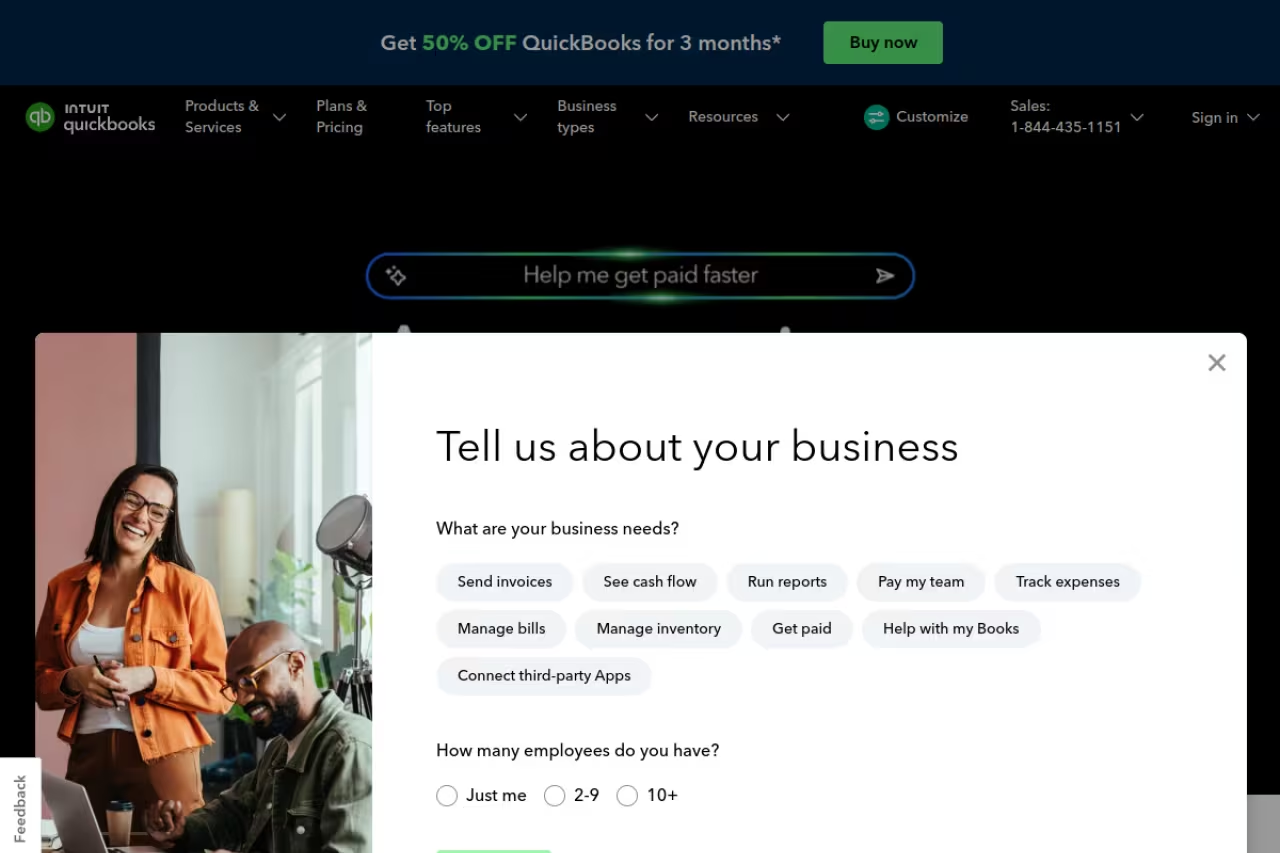
QuickBooks Online is the tool your accountant will assume you're using. That alone is a real reason to pick it. When tax season hits, almost every US bookkeeper and CPA can log into your QuickBooks file without a tutorial, which saves you billable hours and awkward exports.
Plans run from Simple Start at $38/month up to Advanced at $275/month, with Essentials ($75) and Plus ($115) in between, according to NerdWallet's 2026 pricing breakdown. There's also a Solopreneur tier at $20/month for one-person operations. Intuit runs a near-constant 50% off for the first three months, so your real first-quarter cost is lower than the sticker.
The standout in 2026 is the AI layer. The Plus plan now includes AI-powered reconciliation, profit-and-loss insights, and anomaly detection, while Advanced adds a finance agent and forecasting. The integration library is the deepest in the category, so whatever payroll, payments, or e-commerce tool you use probably plugs in.
Who it's best for: US-based small businesses that want their software to match their accountant's defaults.
The catch: It gets expensive fast, and the upgrade prompts are relentless. You'll hit a feature wall ("upgrade to Plus for inventory") at the worst moments, and the per-user model stings once you add a team.
Go with QuickBooks Online if you want software that matches your accountant's defaults. The integration library and AI layer are the strongest in the category, but pricing climbs fast, the upgrade prompts never stop, and per-user costs sting once you add a team.

Xero: the one that doesn't punish you for having a team
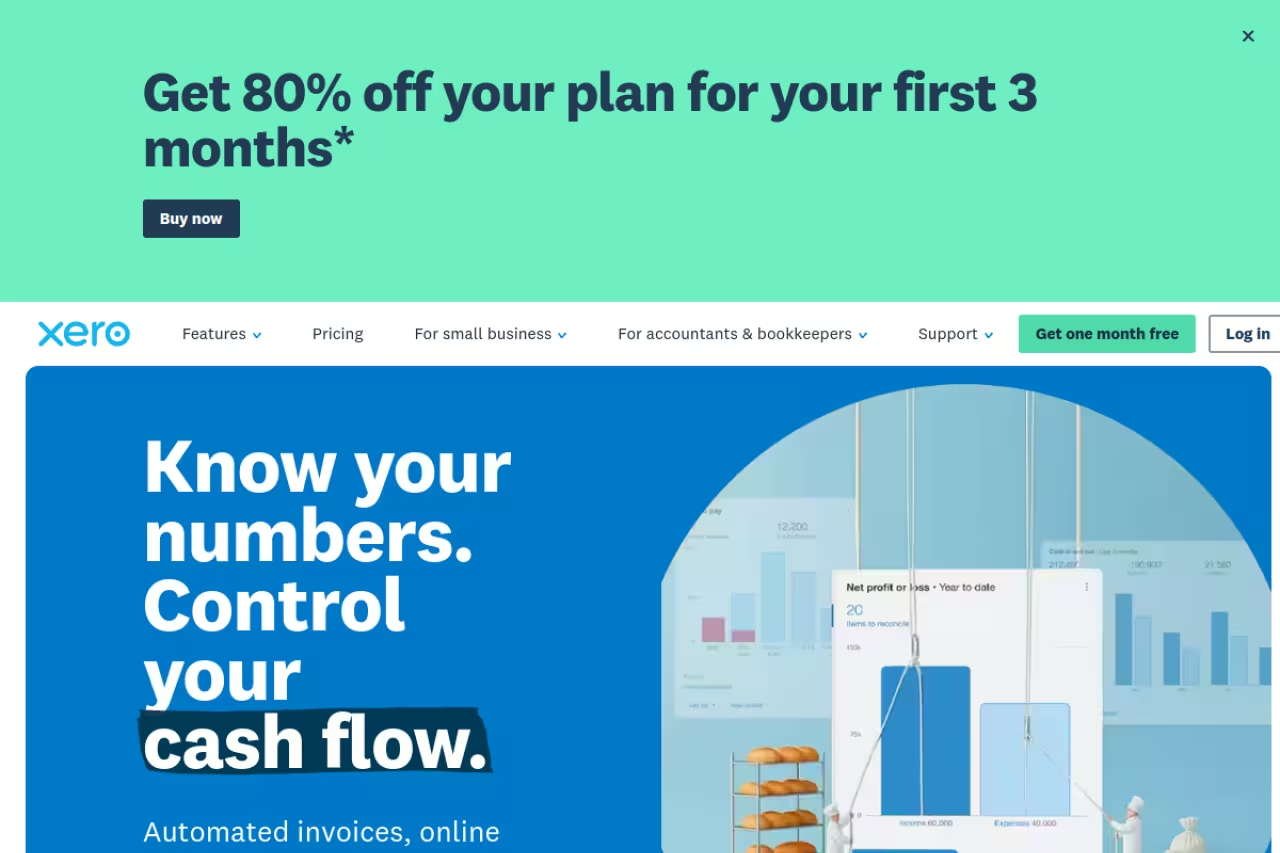
Xero is what I recommend the moment a business has more than one person touching the books. Its single biggest advantage is unlimited users on every plan. Your bookkeeper, your business partner, your assistant, and your accountant all get access at no extra charge. QuickBooks and FreshBooks bill you per seat. Over a year, that gap is real money.
US pricing as of March 2026 is $25/month for Early, $55 for Growing, and $90 for Established, per Xero's published plans. The Early plan caps the number of invoices and bills per month, which trips up new users, so most growing businesses land on Growing.
The interface is cleaner than QuickBooks, the bank reconciliation flow is genuinely pleasant, and multi-currency support on the top tier is strong for anyone selling internationally. Reporting is a close second to QuickBooks for most small-business needs.
Who it's best for: Growing teams, remote-first companies, and anyone doing business across borders.
The catch: The US accountant network is smaller than QuickBooks', so you may need to specifically find a Xero-certified bookkeeper. Payroll isn't built in stateside; you'll add Gusto or a similar tool. And the Early plan's invoice caps feel artificial.
The pick once more than one person touches the books, because unlimited users come on every plan. Multi-currency is strong for international sellers, but the US accountant network is smaller, payroll is not built in, and Early plan invoice caps feel artificial.

Wave: the free option that isn't a trap
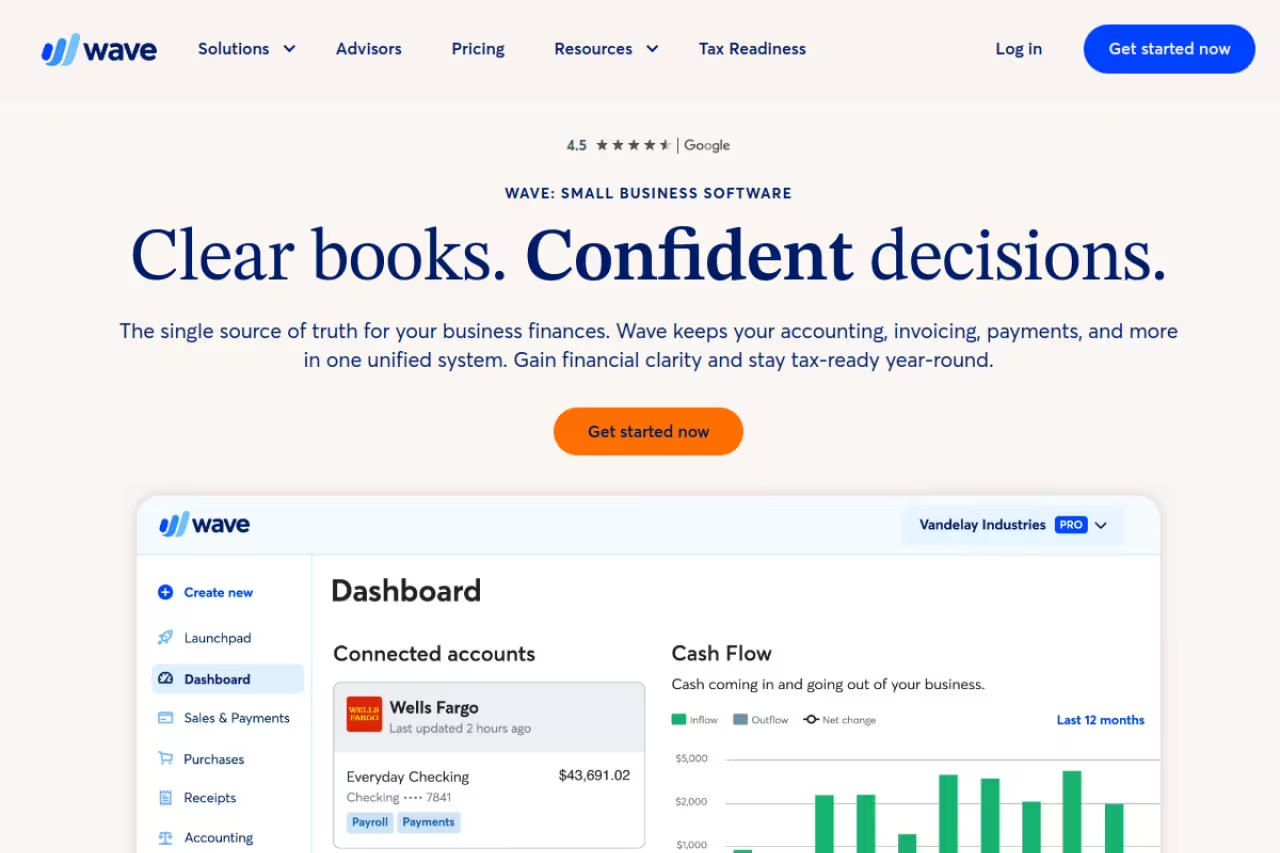
Wave is the rare free tool where "free" actually means usable. The Starter plan costs $0 and includes invoicing, expense and income tracking, receipt scanning, financial reports, and a mobile app. For a freelancer or a side business doing under six figures, that's frequently the entire job.
The Pro plan runs $16/month and adds automatic bank transaction imports, multiple users, and customizable invoices. Wave makes its money on payments instead: card processing is 2.9% + $0.60 per transaction, and ACH is 1% with a $1 minimum, per Wave's own fee schedule. Payroll is a separate add-on starting at $40/month plus $6 per active employee.
Wave handles invoicing, expenses, and year-end reports for a one-person LLC without extra cost. The free tier even covers receipt capture, which used to be a paid feature everywhere.
Who it's best for: Freelancers, contractors, and micro businesses that want clean books without a subscription.
Where it falls short: It doesn't scale. There's no inventory, limited reporting depth, and support is thin on the free tier. Once you need project tracking, multiple entities, or serious integrations, you'll outgrow it. As a starting point, though, nothing beats free that works.
Free that actually works for freelancers, contractors and micro businesses, covering invoicing, expenses and receipt scanning at $0. It does not scale, with no inventory and thin support, so you will outgrow it once you need projects or multiple entities.
Zoho Books: the best free-to-paid path
Zoho Books is the smartest pick for solo founders who want room to grow without overpaying on day one. Its free plan is unusually generous: businesses with under $50,000 in annual revenue get bank reconciliation, expense tracking, recurring invoices, a client portal, and up to 1,000 invoices a year, per Zoho's pricing page.
When you outgrow free, Standard is $15/month and Professional is $40/month (billed annually), with inventory management unlocking at the Professional tier. If you already live inside the Zoho ecosystem (CRM, Mail, Projects), Books slots in without friction.
Who it's best for: Solo founders, early-stage businesses, and existing Zoho users who want a free start with a clear upgrade ladder.
A strong choice for solo founders who want a generous free plan and a clear upgrade ladder, especially inside the Zoho ecosystem. The trade-off is low US accountant familiarity, a dense interface, and a $50,000 revenue cap on free.
Where it falls short: The US accountant familiarity is low, so handing off to an external CPA can mean more explaining. The interface has Zoho's signature density, and the $50k free-plan revenue cap arrives quickly for anything past a side hustle. If you're weighing free options specifically, my best bookkeeping app for small business guide goes deeper on the mobile-first picks.

Pilot: when you'd rather not do it yourself
Pilot is not software you operate. It's a managed bookkeeping service that runs on top of QuickBooks and assigns real humans plus automation to close your books every month. For funded startups where the founder's time is worth more than the savings, paying someone else to handle bookkeeping is often the right call.
Choose Pilot if your time is worth more than the savings and you want humans closing your books. It is a different budget entirely, from $99 to $499 a month with no free trial, and you trust an outside team with your finances.
Pricing starts at $99/month for Essentials (AI-assisted categorization, monthly reconciliation, a year-end tax package, email support) and jumps to $499/month for Core, which adds a dedicated accounting team and a faster close by the 10th business day, per Pilot's pricing. The Custom tier layers on tax filing, payroll, and CFO advisory.
Who it's best for: VC-backed startups and busy founders who want accrual-basis books done right without hiring in-house.
The catch: This is a different budget entirely. There's no free trial, the cost scales with your monthly expenses, and you're trusting an outside team with your finances. A competitor service, Bench, abruptly shut down in late 2024 before being acquired, a reminder that managed services carry vendor risk DIY tools don't.

FreshBooks: built for getting paid
FreshBooks started as invoicing software and it shows. If your business is mostly "do work, send invoice, chase payment," FreshBooks handles that loop better than any general accounting tool. The invoices look professional, the client portal is smooth, and the accounts-receivable tracking actually helps you get paid faster.
Standard pricing is roughly $23/month for Lite (5 billable clients), $43 for Plus (50 clients), and $70 for Premium (unlimited clients), with a custom Select tier on top, per FreshBooks' pricing page. At the time of writing they're running a steep 90% off for three months, so check the live discount first.
Time tracking is built in, which makes FreshBooks a strong fit for agencies and anyone who bills hourly. For invoice-specific workflows, I covered dedicated AI invoice tools in a separate guide.
Who it's best for: Service businesses, freelancers, and agencies where invoicing and time tracking matter most.
The catch: The double-entry accounting is lighter than QuickBooks or Xero, and team members cost extra (around $11/month each). Those client-count caps on lower tiers are easy to hit, and once you do, your only move is to upgrade.
A strong fit for agencies and service businesses that bill hourly, with professional invoices, a smooth client portal and built-in time tracking. Double-entry depth is lighter than QuickBooks or Xero, and team members cost extra.

Zeni: AI-first finance for high-growth startups
Zeni is the most aggressively AI-native option here, aimed at venture-backed startups that need more than bookkeeping. It pairs an AI bookkeeping engine with a dedicated finance team and adds real-time dashboards for cash flow, burn rate, and runway, the metrics a startup board actually asks about. If you're tracking the broader shift toward AI in finance, our best AI expense tracking tools roundup covers adjacent picks.
Aimed at funded startups that want bookkeeping, bill pay and live dashboards for burn and runway in one place. At roughly $549 a month and up, it is overkill for a simple LLC and out of reach for bootstrapped founders.
Pricing starts around $549/month for the Starter plan (pre-revenue companies) and runs to roughly $719/month for Growth, with custom enterprise pricing above that. There's no free trial, and a Fractional CFO add-on starts at $1,599/month for Series A and later.
Who it's best for: Fast-scaling, funded startups that want bookkeeping, bill pay, and live financial dashboards in one place.
Where it falls short: The price puts it out of reach for bootstrapped founders, and it's overkill for a simple LLC. You're paying for the finance-team-plus-AI bundle, so if you only need books reconciled, cheaper options win.
If you want a soft on-ramp to the AI tools reshaping finance work, Dupple X bundles courses and partner deals across hundreds of tools for less than a streaming subscription.
How to choose
Forget the feature checklists for a second. The decision usually comes down to three questions.
Do you want to do the books yourself, or hand them off? If you're hands-on and watching costs, you want software (QuickBooks, Xero, Wave, Zoho Books, FreshBooks). If your time is better spent elsewhere and you have funding, you want a service (Pilot, Zeni).
How big is your team? Solo or two people, almost anything works, so optimize for price (Wave or Zoho Books free, then Xero Early). With more people touching the books, Xero's unlimited users saves the most over time.
What does your accountant use? This matters more than people think. If you have a US bookkeeper or plan to hire one, QuickBooks is the path of least resistance because everyone already speaks it. Picking a tool your accountant doesn't know means paying them to learn it.
My honest default for a typical US small business: start on Wave or Zoho Books while you're tiny, move to QuickBooks Online once you have an accountant, and only switch to Xero if per-seat fees start to hurt. For tooling beyond accounting, our top tools directory covers the rest of the stack.
FAQ
What is the best bookkeeping software for a small business in 2026?
For most US small businesses, QuickBooks Online is the best all-around choice because nearly every accountant supports it and the integration ecosystem is the largest. If you have a team and want to avoid per-seat fees, Xero is the stronger pick. Freelancers on a budget should start with Wave or Zoho Books, both of which have genuinely usable free tiers.
What is the cheapest bookkeeping software?
Wave's Starter plan and Zoho Books' free plan both cost $0 and cover the essentials: invoicing, expense tracking, and basic reports. Wave is fully free with no revenue cap (it earns money on payment processing), while Zoho Books' free tier is limited to businesses under $50,000 in annual revenue. For paid software, Sage Accounting Start and Zoho Standard sit around $10-$15/month.
Do I still need an accountant if I use bookkeeping software?
For day-to-day bookkeeping, no. Modern tools auto-reconcile bank feeds and categorize transactions well enough that many founders handle their own books. But for tax filing, entity structure, and strategic decisions, an accountant still pays for itself, especially as you grow. The software keeps your books clean so the accountant spends less billable time fixing them.
Is QuickBooks or Xero better for bookkeeping?
QuickBooks wins on accountant familiarity, integrations, and reporting depth in the US. Xero wins on price for teams thanks to unlimited users on every plan, plus a cleaner interface and strong multi-currency support. Choose QuickBooks if your accountant uses it; choose Xero if you have several people accessing the books and want to avoid per-seat charges.
Can AI do my bookkeeping automatically?
Partly. AI now handles transaction categorization, bank reconciliation, and anomaly detection inside tools like QuickBooks and Zeni, which removes most of the manual data entry. But AI still makes categorization mistakes that affect your taxes, so a human review at month-end remains important. Fully autonomous, no-oversight bookkeeping isn't reliable yet for anything beyond the simplest businesses.
Related guides
Some offers on this page may be paid placements or contain affiliate links.
Across our whole catalogue the median is $24 a month and 33% of tools advertise a free tier. Figures are the lowest recurring monthly price quoted in our own review of each tool, read on 2026-08-19. Full method and every category.
