
Best Sales Engagement Platforms in 2026: 8 Tools I'd Actually Buy

Key facts8 tools compared: Apollo, Outreach, Salesloft, HubSpot Sales Hub, Reply.io, lemlist, Mixmax…
- 8 tools compared: Apollo, Outreach, Salesloft, HubSpot Sales Hub, Reply.io, lemlist, Mixmax, Klenty
- Apollo (best for: All-in-one for SMB/mid-market): Free, then $49-$119
- Outreach (best for: Enterprise AE teams): ~$100-$140+ (annual only)
- Salesloft (best for: Revenue teams that live in call coaching): ~$125-$165
- HubSpot Sales Hub (best for: Teams already on HubSpot CRM): $100-$150/seat
A sales engagement platform is the difference between a rep sending 12 thoughtful emails a day and 120 sequenced touches across email, phone, and LinkedIn without dropping a single follow-up. The category has changed a lot. What used to be glorified email automation now bundles dialers, contact data, conversation intelligence, and AI agents that draft replies and prioritize accounts for you.
That makes picking one harder, not easier. A 4-person startup and a 200-rep enterprise have almost nothing in common in what they need, yet the vendor pages all read the same. I compared these tools' pricing pages, documentation and public user reviews, pulled current pricing from official pages, and cross-checked the numbers against buyer guides so you don't have to sit through eight demos.
If you want the short answer: for most teams under $5M ARR, Apollo wins because it bundles the contact database and the sequencing in one bill. If you run a large, structured sales org, Outreach and Salesloft are the two that scale. The rest fit specific situations, and I'll tell you which.
Quick comparison
| Tool | Best for | Price (per user/mo) | Standout |
|---|---|---|---|
| Apollo | All-in-one for SMB/mid-market | Free, then $49-$119 | 275M+ contact database built in |
| Outreach | Enterprise AE teams | ~$100-$140+ (annual only) | AI agents that work every deal |
| Salesloft | Revenue teams that live in call coaching | ~$125-$165 | Conversation intelligence and forecasting |
| HubSpot Sales Hub | Teams already on HubSpot CRM | $100-$150/seat | Engagement native to the CRM |
| Reply.io | Outbound SDR teams wanting an AI SDR | $49-$139 | Jason AI autonomous agent |
| lemlist | Cold email and multichannel | $79-$109 | Personalization plus lemwarm warmup |
| Mixmax | Gmail-first sellers | Free, then $29-$69 | Lives inside your inbox |
| Klenty | Budget-conscious outbound teams | Custom, mid-range | Strong cadence automation value |

Apollo: the all-in-one most teams should start with
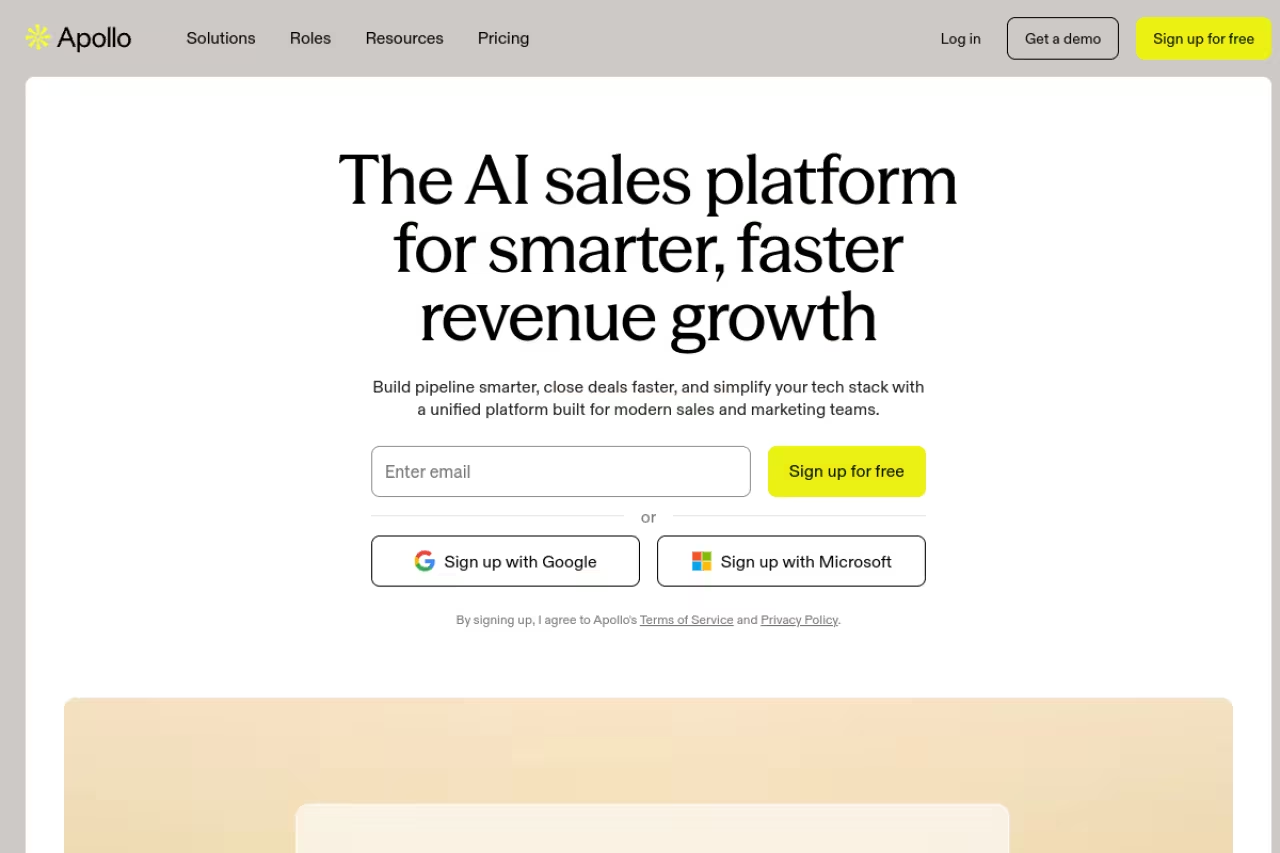
Apollo is the tool I recommend most often, and it's mostly about the math. Other platforms charge you for sequencing, then you pay ZoomInfo or Cognism separately for contact data. Apollo folds a database of 275M+ contacts into the same subscription as the engagement engine. For a small team, that consolidation can cut tool spend by a third or more.
Who it's best for: outbound-first teams under $5M ARR who need to find people and email them from one place.
The all-in-one most teams should start with, ideal for outbound-first teams under $5M ARR that need to find people and email them from one place. The free plan is useful, but credits hide the real cost, which can reach $150 to $400 per user.
there's a genuinely useful free plan. Paid tiers run $49 (Basic), $79 (Professional), and $119 (Organization) per user per month on annual billing, per Apollo's pricing page. Monthly billing pushes those to roughly $59, $99, and $149. The Professional plan adds A/B testing and a dialer, which is the tier most teams actually want.
The standout: you can build a list, enrich it, sequence it, and dial it without leaving the app. The data quality isn't ZoomInfo-grade, but for the price it's hard to beat.
The catch: credits are where the real cost hides. Mobile numbers and certain exports burn credits fast, and overages can push your effective cost to $150-$400 per user once you account for upgrades and add-ons. Budget for that before you commit.
Outreach: the platform built for big, structured sales orgs
Outreach has gone all-in on AI agents. The current homepage headline is blunt: "You didn't hire enough sellers. Now you don't have to." The pitch is that AI agents work every deal and account for every rep at once, handling prospecting, deal management, and forecasting in one system.
Who it's best for: enterprise account executives managing complex, multi-stakeholder pipelines where coaching and forecasting matter as much as the outreach itself.
Built for enterprise account executives managing complex pipelines where coaching and forecasting matter as much as outreach. It handles scale and governance better than anything else here, but it is overkill under 15 reps, with no monthly option and paid onboarding.
Outreach doesn't publish list prices and only sells annual contracts. Based on marketplace data, the Engage base package runs roughly $100-$140 per user per month, with Enterprise tiers at $160+. A 50-seat deployment typically lists around $72,000 a year. Add-ons for meeting intelligence, deal management, and forecasting stack on top, and first-year onboarding can run $5,000-$15,000.
The standout: the platform handles scale and governance better than anything else here. Sequence libraries, team-level reporting, and the AI agent layer are built for orgs where consistency across dozens of reps is the whole point.
The catch: it's overkill for small teams, and the cost reflects that. No monthly option, no cheap entry point, and you'll likely pay for onboarding. If you have fewer than 15 reps, look elsewhere first.
Salesloft: best if call coaching is your edge
Salesloft now calls itself "The Predictive Revenue System," and the positioning is close to Outreach: engagement plus conversation intelligence plus forecasting plus AI agents in one platform. Where it pulls ahead is coaching. If your managers spend real time reviewing calls and developing reps, Salesloft's conversation intelligence is the reason teams pick it.
Who it's best for: revenue teams where call recording, coaching, and deal inspection are part of the weekly rhythm.
also custom and quote-based. The Advanced plan lands around $125-$150 per user per month, and Premier (which adds AI forecasting and pipeline risk scoring) runs roughly $150-$165, according to buyer guides. There's usually a 10-15 seat minimum, and the dialer is a separate add-on, not part of the base tier.
The standout: the deal and forecast tooling is genuinely strong. You get a clear read on which deals are slipping and why, which is the kind of thing that justifies the price for a VP of Sales.
The catch: the seat minimum and the dialer add-on mean the real total cost of ownership is higher than the headline. Small teams can't even buy it, and that's by design.
If your team is past the spreadsheet stage and you're deciding between Outreach and Salesloft, I'd let your coaching culture break the tie. The engagement features are close; the conversation intelligence is where they differ.
Building a modern outbound stack? Dupple X gives you the prompts, playbooks, and tool breakdowns to run AI-assisted sales without the trial-and-error. Start the yearly trial.

HubSpot Sales Hub: the obvious pick if you're already there
If your company runs on HubSpot CRM, adding Sales Hub keeps engagement, deals, and reporting in one place instead of syncing two systems that fight each other. That's the whole argument, and for a lot of teams it's enough.
Who it's best for: SMB to mid-market teams already committed to HubSpot.
The obvious pick for SMB to mid-market teams already committed to HubSpot CRM, with zero integration friction. You are buying convenience rather than best-in-class sequencing, and sequences only arrive at the Professional tier.
sequences and automation are gated at the Professional tier, which runs $100 per seat per month plus a $1,500 onboarding fee. Enterprise is $150 per seat and carries a $3,500 onboarding charge. Note the seat types: full sales seats cost more than core seats for support staff.
The standout: zero integration friction. Your engagement data and your CRM data are the same data.
The catch: sequences aren't available below Professional, so the "cheap HubSpot" plans won't get you here. And as a pure outbound engine, it's less specialized than Apollo or Outreach. You're buying convenience, not best-in-class sequencing.

Reply.io: an AI SDR that does the grunt work
Reply.io is an email-first engagement platform with a built-in dialer, and its differentiator is Jason, an AI SDR agent that can source leads, write messages, and handle replies on its own.
Who it's best for: lean SDR teams that want to automate more of the prospecting workflow without hiring.
A fit for lean SDR teams that want to automate more prospecting without hiring, thanks to the Jason AI SDR in Autopilot or Copilot mode. The AI agent is priced as its own line item, and unsupervised output risks tone-deaf messages at scale.
published plans start at $49 per user per month (Starter, email only), $89 (Professional, multichannel), and $139 (Ultimate, with AI features), per Reply's pricing. The autonomous Jason AI agent is a separate product starting around $500 a month and scaling up by contact tier.
The standout: Jason runs in Autopilot or Copilot mode, so you can let it run fully or approve each step. For a small team, that's like adding a junior SDR who never sleeps.
The catch: the AI SDR is priced as its own line item, so the "$139" headline doesn't include it. And as with any autonomous agent, the output needs review. Let it run unsupervised and you risk sending tone-deaf messages at scale.

lemlist: the cold email specialist
lemlist built its name on personalization (custom images, video, dynamic landing pages) and lemwarm, a respected inbox warmup tool that keeps your deliverability healthy. It's a cold outreach tool first, a full engagement platform second.
Who it's best for: teams running cold email and multichannel campaigns who care about deliverability and personalization.
Go with lemlist if you run cold email and multichannel campaigns and care about deliverability and personalization. Native lemwarm warmup is a real edge, but it is a campaign tool, not a revenue system, and extra mailboxes cost $9 each per month.
Email Pro is $79 per user per month monthly ($63 annual), and Multichannel Expert is $109 ($87 annual), per lemlist's pricing. The multichannel tier adds LinkedIn automation, cold calling, and a unified inbox. There's a 600M+ lead database baked in.
The standout: lemwarm. Deliverability is the silent killer of cold campaigns, and having warmup native to the platform is a real advantage over tools where it's an afterthought.
The catch: it's lighter on the deal-management and forecasting side than the enterprise platforms. Extra sending addresses cost $9 per mailbox per month, which adds up if you run many inboxes. This is a campaign tool, not a full revenue system.

Mixmax: sales engagement that lives in your inbox
Mixmax runs inside Gmail and Outlook, so reps work where they already spend their day. No separate app to learn, no context switching. For inbox-heavy sellers, that's the appeal.
Who it's best for: Gmail-first teams who want sequencing, scheduling, and tracking without leaving email.
Suited to Gmail-first teams who want sequencing, scheduling and tracking without leaving email, with easy adoption. It is one of the cheaper entry points, but heavy cold prospecting at scale will outgrow the inbox-based model.
there's a free plan, then SMB at $29, Growth at $49, and Enterprise at $69 per user per month on annual billing, per Mixmax pricing. That makes it one of the cheaper entry points in the category.
The standout: the meeting-booking and email-tracking features are smooth, and because it's inside Gmail, adoption is easy. Reps don't resist a tool that doesn't change their workflow.
The catch: it's less powerful for heavy outbound at scale than Apollo or Outreach. If your motion is high-volume cold prospecting across channels, you'll outgrow the inbox-based model.
Klenty: the value play for outbound teams
Klenty rounds out the list as a solid mid-range option focused on cadence automation. It does multichannel sequencing across email, calls, LinkedIn, and SMS without the enterprise price tag.
Who it's best for: budget-conscious outbound teams who want strong cadence automation and don't need the full revenue-orchestration layer.
A value play for budget-conscious outbound teams that want strong multichannel cadence automation without the full revenue-orchestration layer. The brand and ecosystem are smaller, so expect fewer integrations and a thinner community than HubSpot or Apollo.
Klenty uses custom quotes that generally sit in the mid range of the category, below Outreach and Salesloft. Check their pricing page for a current quote, since they tune it by team size.
The standout: the cadence engine punches above its price. You get reliable multichannel sequencing and good automation for noticeably less than the top-tier platforms.
The catch: the brand and ecosystem are smaller, so there are fewer integrations and a thinner community than HubSpot or Apollo. You're trading some polish and breadth for cost savings.
If your stack also needs prospecting data, scoring, or enablement content, these engagement platforms are one layer of a bigger picture. We cover the adjacent categories in our guides to the best AI sales tools and AI tools for sales prospecting, and you can browse the full directory of vetted picks on our top tools page.
How to choose
Start with two questions, not a feature list.
Do you already have a contact data provider? If no, Apollo's bundled database probably saves you the most money and the most tabs. If yes (you already pay for ZoomInfo or similar), a pure engagement tool like Outreach, Salesloft, or Klenty makes more sense.
How many reps, and how structured is the org? Under 15 reps with a simple motion: Apollo, Reply, lemlist, or Mixmax. Over 15 reps with managers who coach and a VP who forecasts: Outreach or Salesloft, with coaching culture breaking the tie. Already living in HubSpot CRM: just add Sales Hub and skip the integration headache.
One more filter: deliverability. If you send a lot of cold email, the platform's warmup and sending reputation matter more than any other feature. That's where lemlist earns its spot. A beautiful sequence that lands in spam is worth nothing.
Whatever you pick, run a two-week pilot with real sequences before you sign an annual contract. The demo always looks great. What matters is whether your reps actually use it on a Tuesday afternoon.
FAQ
What is a sales engagement platform?
It's software that helps sales reps run and track outreach across multiple channels (email, phone, LinkedIn, SMS) in structured sequences called cadences. Instead of manually remembering to follow up, reps load prospects into a sequence and the platform schedules each touch, tracks responses, and surfaces analytics. Modern platforms add contact data, dialers, conversation intelligence, and AI agents on top.
What is the best sales engagement platform for a small team?
For most small teams, Apollo is the best starting point because it bundles a contact database with sequencing, so you don't pay separately for data. If you're Gmail-first, Mixmax is cheaper and easier to adopt. If cold email is your main motion, lemlist's deliverability tools are worth the premium over a generic tool.
How much do sales engagement platforms cost in 2026?
It ranges widely. Inbox-based tools like Mixmax start at $29 per user per month. All-in-one platforms like Apollo run $49-$119 per user. Enterprise systems like Outreach and Salesloft typically cost $125-$165 per user per month, sell only annual contracts, and often add onboarding fees of several thousand dollars plus paid add-ons for dialers and forecasting.
Is Apollo better than Outreach?
It depends on your size. Apollo is better for SMB and mid-market teams that need prospecting data and engagement in one affordable tool. Outreach is better for large, structured enterprise sales orgs where forecasting, governance, and coaching across many reps justify the higher cost. They're built for different buyers, so the honest answer is "for which team?"
Do these platforms include contact data, or do I need ZoomInfo?
Apollo, Reply, and lemlist include their own contact databases, so you can prospect inside the tool. Outreach, Salesloft, and HubSpot Sales Hub focus on engagement and expect you to bring your own data, which usually means a separate provider like ZoomInfo or Cognism. Factoring that second subscription in is what makes the all-in-one tools look cheaper than their sticker price suggests.
Can AI replace SDRs with these tools?
Not fully, and not yet. AI agents like Reply's Jason or Outreach's agent layer handle real work: sourcing leads, drafting messages, prioritizing accounts, and triaging replies. They genuinely reduce manual load. But they still need human review for tone, judgment, and edge cases. Think of them as multiplying a small team's output, not removing the need for people. For more on where AI agents stand today, see our guide to the best AI agents.
Related guides
Some offers on this page may be paid placements or contain affiliate links.
Across our whole catalogue the median is $24 a month and 33% of tools advertise a free tier. Figures are the lowest recurring monthly price quoted in our own review of each tool, read on 2026-08-19. Full method and every category.
