
The 8 Best AI Sales Enablement Tools in 2026 (Compared and Ranked)

Key facts8 tools compared: Apollo.io, Gong, Clay, Hyperbound, Lavender, Salesloft, HubSpot Sales Hub…
- 8 tools compared: Apollo.io, Gong, Clay, Hyperbound, Lavender, Salesloft, HubSpot Sales Hub, Nooks
- Apollo.io (best for: All-in-one prospecting + outreach): Free, paid from $49/user/mo
- Gong (best for: Conversation intelligence at scale): Quote-based (per-seat + platform fee)
- Clay (best for: Data enrichment & list building): Free, paid from $167/mo
- Hyperbound (best for: AI roleplay & rep coaching): ~$150-250/user/mo
"Sales enablement" used to mean a content library nobody opened and a slide deck the reps ignored. In 2026 it means something closer to a co-pilot: software that records the call, drafts the follow-up, scores the email, surfaces the next account, and tells your manager which deals are about to slip. The category has quietly eaten half the sales stack.
The problem is the stack itself. The average rep now juggles around eight tools to close a deal, and plenty feel buried by it. Buying more AI without a plan just adds tabs. The question worth asking is not "what's the most powerful platform" but "what actually moves a number without three months of onboarding."
I compared the pricing, documentation, and public user reviews of the main players. If you want one answer: Apollo.io is the best starting point for most teams under 50 reps because it bundles data, sequencing, and AI into one affordable seat. From there it depends on what's broken. Below are the eight tools I'd actually recommend, with real pricing and the honest downside of each.
Quick comparison
| Tool | Best for | Price | Standout |
|---|---|---|---|
| Apollo.io | All-in-one prospecting + outreach | Free, paid from $49/user/mo | 270M+ contact database built in |
| Gong | Conversation intelligence at scale | Quote-based (per-seat + platform fee) | Deal and call analytics nobody beats |
| Clay | Data enrichment & list building | Free, paid from $167/mo | Waterfall enrichment across 100+ sources |
| Hyperbound | AI roleplay & rep coaching | ~$150-250/user/mo | Practice cold calls against your real ICP |
| Lavender | Email coaching for SDRs | Free, Pro $49/mo | Live email scoring as you type |
| Salesloft | Enterprise sales engagement | Quote-based | Rhythm AI prioritizes rep actions |
| HubSpot Sales Hub | CRM-native AI | From $100/seat/mo | AI agents inside your CRM |
| Nooks | Outbound call teams | ~$5,000/user/yr | AI parallel dialer + virtual floor |

Apollo.io: the best all-rounder for most teams
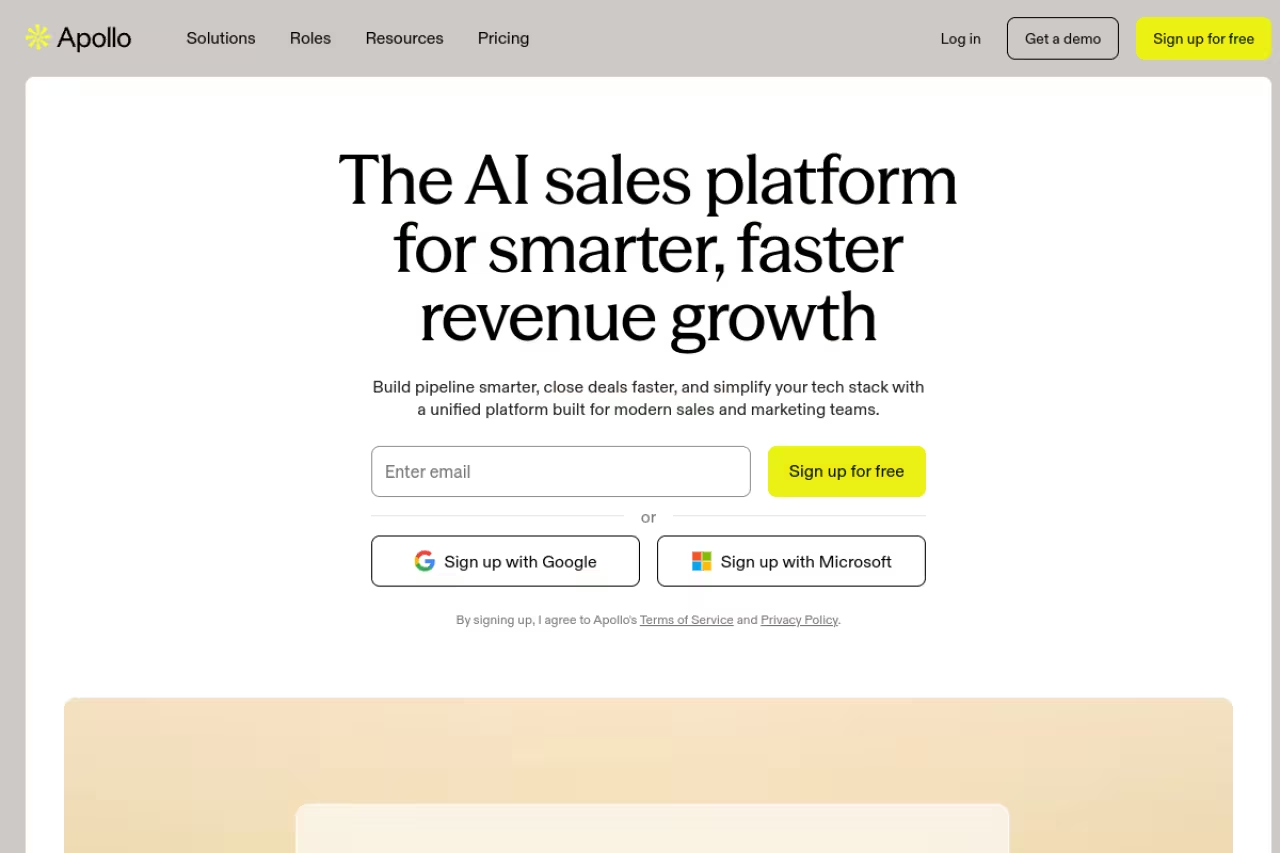
Apollo is what I'd hand a 5-to-50-person sales team that wants to stop paying for four separate tools. It combines a contact database (270M+ people), email and call sequencing, AI email writing, a dialer, and deal intelligence in one seat. Most competitors do one of those things and charge you for the privilege.
Who it's best for: founders and SDR teams running outbound who need data and engagement in one place, without a six-figure contract.
The best all-rounder for founders and SDR teams who want data and engagement in one place without a six-figure contract. Data accuracy is good, not perfect, so verify emails before big sends, and lower-tier credits run out fast.
Pricing is the real draw. There's a usable free plan with monthly email credits and two active sequences. Paid tiers are Basic at $49/user/month, Professional at $79, and Organization at $119 on annual billing (monthly adds roughly 20%). Calling kicks in at Professional. Inside one workflow the AI scores leads, drafts sequences from a prospect's profile, and flags accounts showing buying signals. For the money, nothing else is close.
The catch: data accuracy is good, not perfect. I hit dead emails and stale mobile numbers often enough to want a verification step before big sends, and the credit allowance on lower tiers runs out fast once a few reps export lists daily.

Gong: the conversation intelligence benchmark
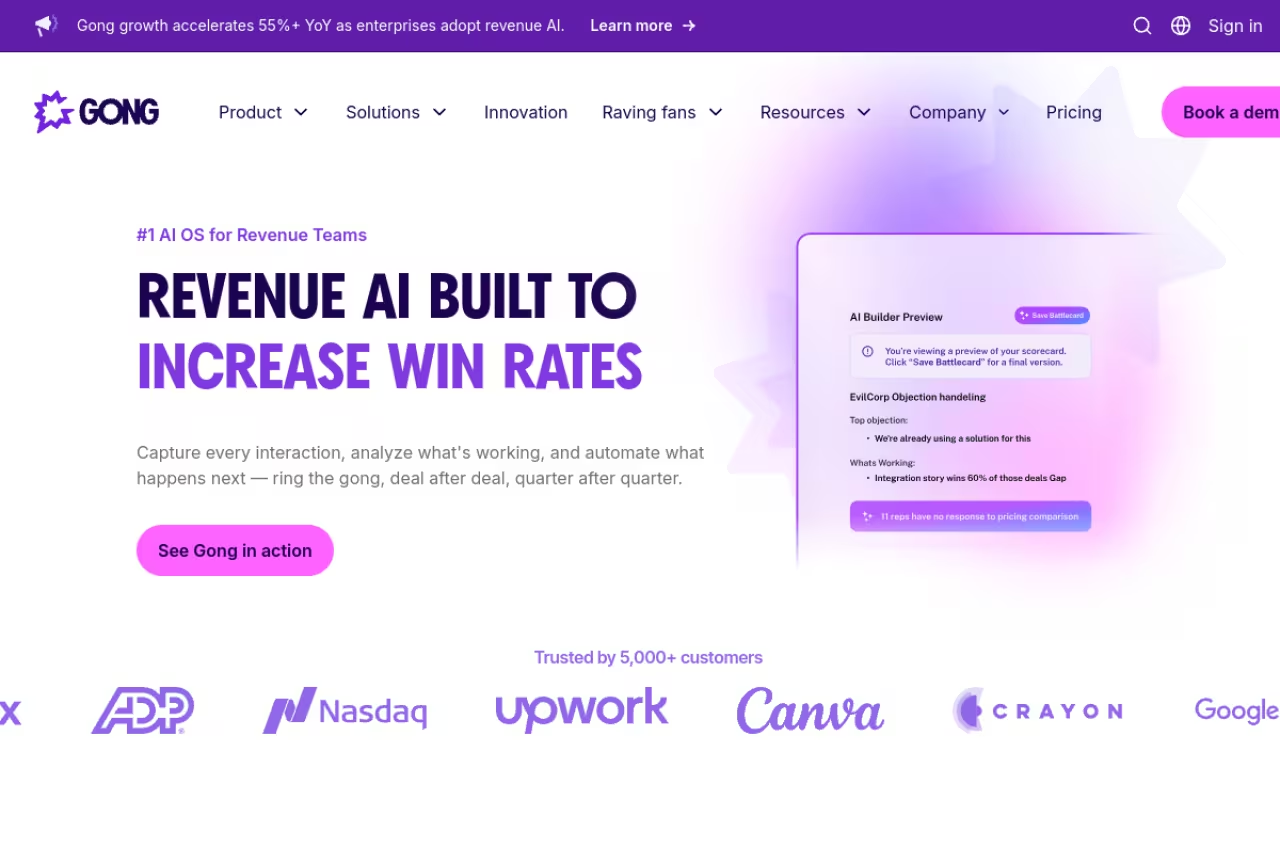
Gong records every call, demo, and meeting, transcribes it, and turns the pile into something a sales leader can act on: which deals are at risk, which talk tracks correlate with wins, where reps talk too much. It's the tool revenue leaders name first when they talk about coaching at scale.
Who it's best for: teams of 20+ reps where a manager can't sit in on every call and you need pattern data across the pipeline, not anecdotes.
Gong is the conversation intelligence benchmark for teams of 20+ reps where managers cannot sit in on every call. It is expensive and heavy, and if managers do not coach off the insights you have bought a very pricey transcription service.
Pricing is the friction. Gong doesn't publish numbers. It's a per-user license plus a platform fee tied to team size, all quote-based, and third-party buyers consistently report effective costs around $1,200 to $3,000 per user per year once onboarding is folded in. The payoff is deal intelligence: Gong's models flag a stalling deal before your rep notices, and the analytics change how teams sell once managers coach off the data.
Where it falls short: it's expensive and heavy. For a team under 15 reps it's overkill. There's also an adoption tax. If managers don't actively coach off the insights, you've bought a very pricey transcription service.

Clay: the enrichment engine power users swear by
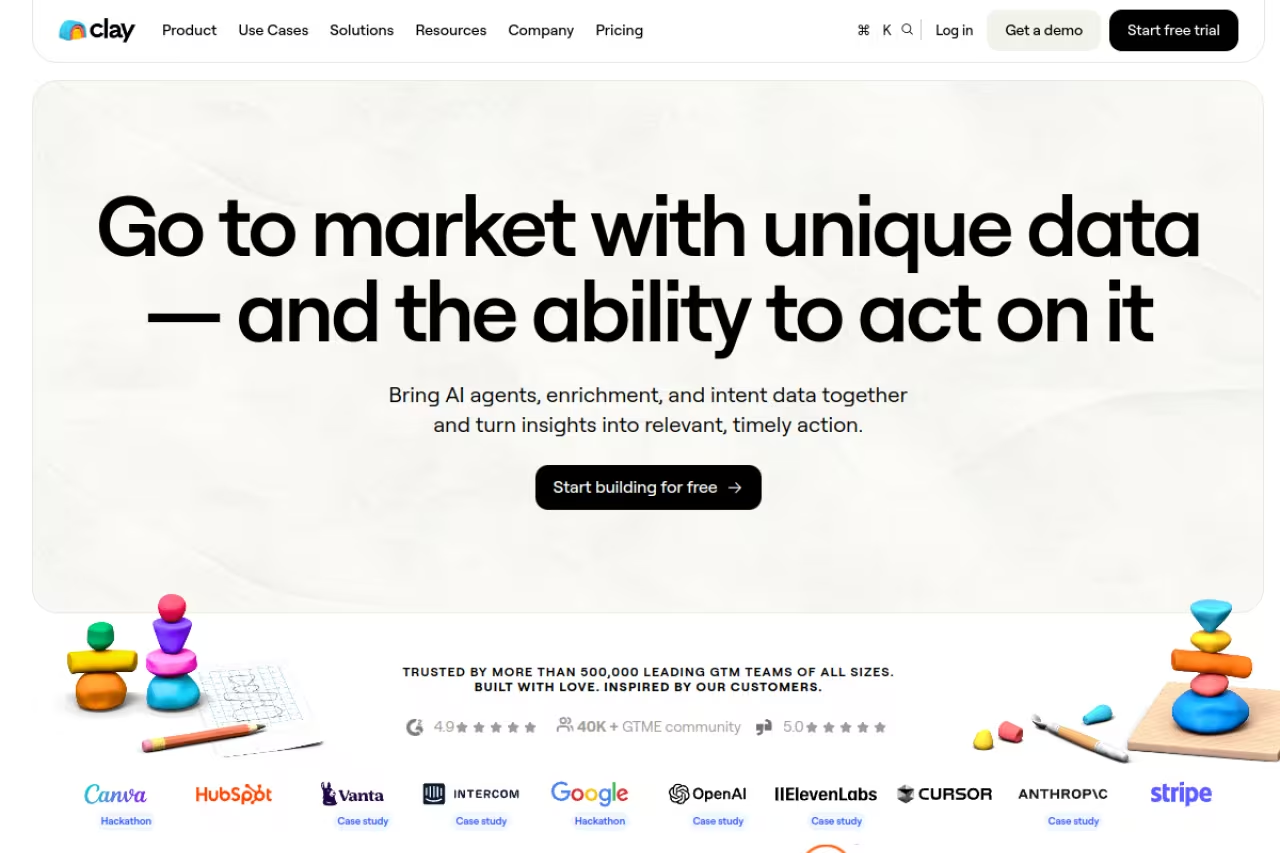
Clay is the spreadsheet that grew an AI brain. You drop in a list of companies or people, and Clay runs "waterfall" enrichment across 100+ data providers, filling in emails, firmographics, tech stack, and signals, then lets you write AI prompts per row to research or draft outreach. It's become the secret weapon of ops-minded marketers and RevOps people who want to build custom prospecting workflows instead of accepting whatever a database hands them.
Clay suits ops-minded marketers and RevOps people who want custom prospecting workflows rather than whatever a database hands them. The learning curve is steep, the credit math is confusing, and you still need Apollo or Salesloft to actually send.
Pricing starts with a free tier (500 actions and 100 credits a month). Paid plans on the current pricing page are Launch from $167/month and Growth from $446/month, with Enterprise custom. The standout is flexibility: because you can call almost any data source and any AI model from a single row, Clay can pull a prospect's recent funding, summarize it, and write a tailored opener in one pass.
The catch: the learning curve is steep, and the credit math is confusing. New users routinely burn a month's credits in a week before they understand the pricing. It's also not an engagement tool. You still need Apollo or Salesloft to actually send.
Sorting the genuinely useful AI tools from the hype is its own job. If you'd rather have that done for you, Dupple X tracks the tools worth your time and sends the short version.
Hyperbound: AI roleplay that builds reps
Hyperbound lets reps practice cold calls, discovery, and objection handling against an AI buyer that talks back in real time. You configure the persona to match your actual ICP, and the AI scores the rep on what you care about. It's one of the more convincing versions of sales roleplay on the market, and it's built for managers onboarding new reps or ramping a team into a new motion, where letting reps practice on live prospects is too expensive.
Pick Hyperbound to ramp new reps by letting them practice cold calls and objection handling against an AI buyer matched to your ICP. It is a training tool rather than a daily driver, and its integrations are thinner than Mindtickle's.
Pricing isn't public. Hyperbound runs demo, growth, and enterprise tiers through sales, with reported figures in the $150-250 per user per month range. Founded in 2024, it's newer than the incumbents but moving fast. The standout is that practice ties back to real pipeline: reps train against personas matching their territory, and managers get scored transcripts instead of vibes. Onboarding ramp time is where teams see the payback.
Where it falls short: it's a training tool, not a daily driver, so the value depends on managers running structured reps. As a younger product, its integrations and reporting are thinner than what an enterprise readiness platform like Mindtickle ships. If you're still building your foundational AI workflows first, our guide to generative AI for sales covers the groundwork.

Lavender: the email coach that lifts reply rates
Lavender is a browser extension that scores your sales emails as you write them and tells you why a message will or won't get a reply: it's too long, too "salesy," reads at too high a grade level, or buries the ask. For SDRs who live in cold email, it's the cheapest high-impact tool on this list.
Who it's best for: individual reps and small SDR teams trying to fix reply rates without a full platform.
The cheapest high-impact tool for individual reps and small SDR teams trying to fix reply rates without a full platform. It is a coach, not a writer, and its short, punchy bias can feel too aggressive for technical buyers.
Pricing is refreshingly transparent: free for 5 emails a month, Starter at $29/month, Pro at $49/month, and Teams at $69/user/month, with roughly 20% off annually. The standout is the real-time feedback loop. You watch the score climb as you cut filler, and your writing actually improves over a few weeks instead of staying dependent on the tool.
The catch: it's a coach, not a writer. It won't research your prospect or build your list, and the scoring leans toward a short-punchy style that not every market responds to. Sellers writing to technical buyers sometimes find the advice too aggressive.
Salesloft: engagement built for the enterprise
Salesloft is a sales engagement platform built around cadences, dialing, and pipeline management, with its Rhythm AI layer that scores buyer signals and tells reps which action to take next. It's the kind of system mid-market and enterprise teams standardize a 100-rep org on when they need governed, repeatable engagement workflows.
A governed engagement platform for mid-market and enterprise teams, with Rhythm reordering each rep's day around the highest-priority actions. It is heavy and priced for teams with a RevOps function, so small teams should look elsewhere.
Pricing is quote-based across Essentials, Advanced, and Premier tiers, with a typical minimum seat count (often 10-15 users) and Rhythm adding roughly 15-30% on top. The standout is Rhythm: instead of a static cadence, it ingests signals from across your stack and reorders each rep's day around the highest-priority actions.
Where it falls short: it's heavy and priced for teams with a RevOps function to run it. For a small team, the setup overhead and contract minimums make it the wrong call. Outreach is the direct rival, and the two are close enough that the deciding factor is usually which one your team already knows.
HubSpot Sales Hub: AI where your CRM already lives
If your CRM is HubSpot, the path of least resistance is HubSpot Sales Hub with its HubSpot AI agents. You get sequences, forecasting, conversation intelligence, and AI prospecting agents without bolting on another system. It's the obvious pick for teams already standardized on HubSpot that want AI features without a second vendor and a second data sync.
Sales Hub Professional runs $100 per seat per month plus a one-time onboarding fee around $1,500. HubSpot AI agents then consume HubSpot credits on top: the Prospecting Agent eats credits per monitored contact, so heavy use adds real cost beyond the seat price. Check the HubSpot pricing page first, because the credit math is where budgets drift. The standout is zero integration friction: the AI works on the data already in your CRM, so there's no syncing contacts and no arguing about the source of truth.
The catch: the AI is good, not best-in-class. Gong still beats HubSpot AI on call analytics and Apollo beats it on data breadth. You're trading capability for the convenience of one system, and the credit-based agent pricing can surprise you at month-end.
The path of least resistance for teams already standardized on HubSpot that want AI without a second vendor or data sync. It is good, not best-in-class, since Gong beats it on call analytics and credit-based agent pricing can surprise you.

Nooks: the AI dialer for outbound floors
Nooks is built for one thing: getting reps more conversations. Its AI parallel dialer calls multiple numbers at once, skips voicemails and bad numbers, and connects a rep only when a human picks up, all inside a "virtual sales floor" where teams dial together. It's for SDR teams whose bottleneck is dials-to-conversations, not data or content.
A specialist for SDR teams whose bottleneck is dials-to-conversations, with parallel dialing that connects a rep only when a human answers. It costs around $5,000 per user per year, so it only justifies itself if calling is core to your motion.
Pricing isn't public but lands around $5,000 per user per year, roughly $417/month per seat. That's premium, and it's the reason Nooks only makes sense if calling is core to your motion. The standout is raw efficiency: parallel dialing plus AI filtering turns an afternoon of 40 manual dials into a few hundred, and the virtual floor keeps remote SDR teams coachable in real time.
Where it falls short: it's a one-trick specialist at a generalist price. If your team isn't doing serious phone volume, you won't justify $5K a seat. Some users also report a slight connection lag when a prospect answers, which on cold calls is the wrong moment for dead air.
How to choose
Skip the feature checklist. Start with the bottleneck.
Small team with no real stack? Start with Apollo for data and outreach and add Lavender for $29 to fix email quality, which covers prospecting, sending, and writing for under $80 a seat. If managers can't see what's happening on calls, the answer is Gong, budget permitting. If enrichment and list quality are the weak link, Clay is the specialist, paired with an engagement tool. If reps are ramping slowly, Hyperbound buys back onboarding weeks. And if you're already deep in HubSpot, let HubSpot AI do the work before you shop elsewhere.
One rule saves teams from the eight-tools-and-overwhelmed trap: buy for the bottleneck you can name and measure today, not the roadmap you imagine. Add the next tool when the current one is fully adopted. For a broader view, browse our top AI tools list or the deeper dive on the best AI tools for sales prospecting.
To keep up with which of these tools is actually shipping useful features versus marketing fluff, Dupple X sends the signal-to-noise version to your inbox. You can also read up on the best AI sales assistants or how to use ChatGPT for sales once your stack is set.
FAQ
What are AI sales enablement tools?
AI sales enablement tools use AI to help reps sell more efficiently: finding and enriching prospect data, writing and scoring outreach, recording and analyzing calls, coaching reps, and surfacing which deals to prioritize. The goal is to remove busywork and put the right action in front of each rep at the right moment.
Is sales enablement the same as sales engagement?
Not quite. Sales engagement (Salesloft, Outreach, Apollo) is about executing outreach at scale: cadences, dialing, sequencing. Sales enablement is broader and now overlaps with it, covering content, coaching, call intelligence, and readiness too. In 2026 most platforms blur the line, which is why the tools above span both.
What is the best AI sales enablement tool for a small team?
For most teams under 50 reps, Apollo.io is the best starting point. It bundles a contact database, sequencing, a dialer, and AI writing into one seat from $49/user/month, with a usable free plan. Add Lavender at $29/month if email reply rates are your weak spot, and you've covered prospecting, outreach, and writing affordably.
How much do AI sales enablement tools cost in 2026?
It ranges widely. Email coaches like Lavender start at $29/month and all-in-one platforms like Apollo run $49-$119 per user per month, while enterprise tools like Gong, Salesloft, and Nooks are quote-based or premium, often $1,200 to $5,000 per user per year once platform fees and onboarding are included. Budget for the credits and add-ons, not just the seat price.
Is Gong worth the price compared to cheaper alternatives?
Gong is worth it for teams of 20+ reps where managers can't sit in on every call and need pattern data across the pipeline. Its deal and call analytics remain the benchmark. For teams under 15 reps it's usually overkill, and a CRM-native option like HubSpot's conversation intelligence will do the job for a fraction of the cost.
Can AI sales tools replace SDRs?
Not yet. In 2026 these tools remove the repetitive parts of the job (list building, data entry, first-draft emails, dialing) and make each rep more productive, but they still need a human to run judgment, handle real conversations, and close. The teams getting the most value treat AI as a force multiplier for their reps, not a replacement.
Related guides
Some offers on this page may be paid placements or contain affiliate links.
