
Best Free CRM Software in 2026: 8 Tools That Cost $0

Key facts8 tools compared: HubSpot, Zoho CRM, Bitrix24, Brevo, Freshsales, EngageBay, Capsule, Agile CRM
- 8 tools compared: HubSpot, Zoho CRM, Bitrix24, Brevo, Freshsales, EngageBay, Capsule, Agile CRM
- HubSpot (best for: Growing teams that want room to scale): Free forever
- Zoho CRM (best for: 1-3 person teams wanting real CRM features): Free forever (3 users)
- Bitrix24 (best for: Teams wanting CRM plus project tools): Free forever (unlimited users)
- Brevo (best for: Email-led businesses): Free forever
Most "free" CRMs are a 14-day trial wearing a costume. You import your contacts, build a pipeline, and three weeks later a paywall slams down right when you've made the thing useful. That's not free. That's a hostage situation.
The good news: a handful of CRMs run genuinely free forever, and some of them are good enough that you might never pay. I've spent the past few weeks comparing each provider's free-tier limits, pricing pages, and documentation to see where each one actually breaks. If you want the short answer: HubSpot has the most generous free tier for a growing team, and Zoho CRM gives a 1-to-3 person team the most real CRM features at $0.
This is for founders, solo operators, and small sales teams who want to stop tracking deals in a spreadsheet without committing to a $20-per-seat bill before they've closed anything. Below is what each free plan really gives you, what it quietly takes away, and the exact point where you'll outgrow it.
Quick comparison
| Tool | Best for | Free plan price | Standout |
|---|---|---|---|
| HubSpot | Growing teams that want room to scale | Free forever | 1M contacts, unlimited users |
| Zoho CRM | 1-3 person teams wanting real CRM features | Free forever (3 users) | Leads, deals, and reports at $0 |
| Bitrix24 | Teams wanting CRM plus project tools | Free forever (unlimited users) | All-in-one work platform |
| Brevo | Email-led businesses | Free forever | Pipeline plus 300 emails/day |
| Freshsales | Sales teams that live on the phone | Free forever (3 users) | Built-in dialer and email |
| EngageBay | Solo marketers wanting one tool | Free forever | Marketing plus sales plus support |
| Capsule | Simple contact-first tracking | Free forever (2 users) | Clean, no-clutter interface |
| Agile CRM | Budget teams needing automation early | Free forever (10 users) | Basic automation on free tier |
The HubSpot number, and the widest split we have measured
We aggregate review scores across G2, Capterra, Trustpilot, TrustRadius and PeerSpot in our own directory, Toolradar, instead of quoting one platform. HubSpot produces the largest disagreement we have found anywhere.
| CRM | Aggregated rating | Reviews |
|---|---|---|
| Pipedrive | 4.4 | 5,991 |
| Freshsales | 4.5 | 1,842 |
| Zoho CRM | 4.1 | 2,885 |
| HubSpot | 3.9 | 19,112 |
HubSpot aggregates to 3.9 across 19,112 reviews. Broken apart: 4.5 on Capterra across 4,417, 4.4 on G2 across 13,374, 4.3 on TrustRadius across 669, and 1.8 on Trustpilot across 613.
A gap of 2.7 points between Capterra and Trustpilot is the widest we have measured in any category, and it is not noise on either side; both samples run into the hundreds or thousands.
The explanation is the same one that recurs across this series, in an unusually stark form. G2, Capterra and TrustRadius verify reviewers as business customers, and most of those people are evaluating whether the CRM does the job they bought it for. Trustpilot is open, and the people who go there about a CRM are overwhelmingly writing about billing, contract terms, or trying to leave. HubSpot's commercial model, where the free tier is generous and the upgrade path is steep, generates a lot of that second kind of experience.
Both numbers are true and they answer different questions. If you are asking whether HubSpot's free CRM will serve a small sales team well, the 4.4 from thirteen thousand business reviewers is the relevant figure, and the answer is yes. If you are asking what happens when you outgrow the free tier and want to renegotiate or leave, the 1.8 is the one telling you something.
Read it as a warning about the commercial relationship rather than about the software, and read the section on HubSpot's upgrade cliff below with that in mind.
HubSpot CRM, the most generous free tier
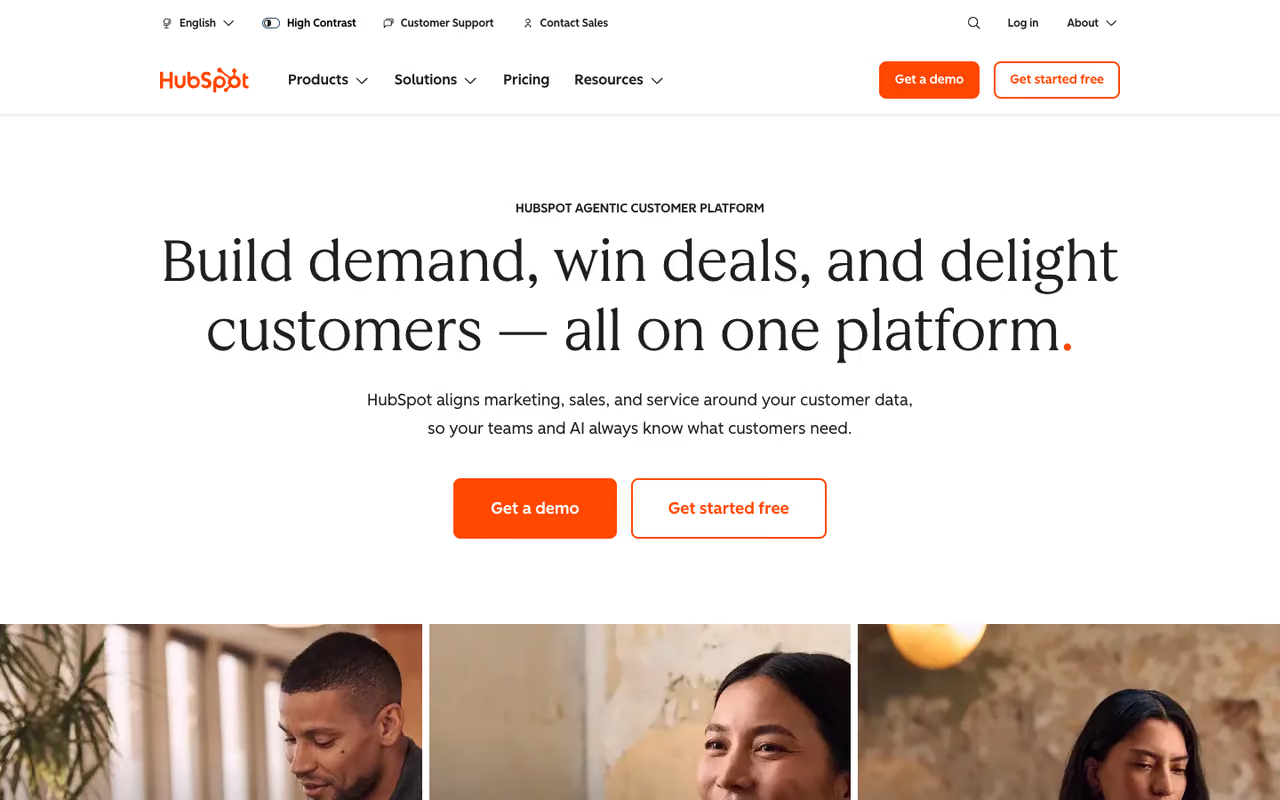
HubSpot CRM is the one I recommend to most people who ask, and it's not close. The free plan supports unlimited users and up to 1 million contacts, which is absurd for $0. You get contact and company records, deal pipelines, email tracking, live chat, forms, and meeting scheduling, all in an interface that doesn't feel like enterprise software from 2009.
The pick for most teams, especially those who expect to grow, with unlimited users and up to 1 million contacts free. The trade-off is that the free plan leaves out automation, sequences and lead scoring, and caps you at one pipeline.
Adding a teammate costs nothing, so you can put your whole company in it on day one.
The free tier is genuinely free forever, no card required. When you do upgrade, the Starter Customer Platform runs $20 per seat per month, which bundles light versions of the marketing, sales, and service hubs.
The catch: the free plan deliberately leaves out the stuff that makes HubSpot powerful. No workflow automation, no sequences, no lead scoring. You're capped at one deal pipeline and 10 custom properties, and your forms and emails carry HubSpot branding. The free CRM is the front door, and HubSpot is very good at making you want to walk through it. For a lot of small teams, the free tier alone covers the job for years.
Zoho CRM, the most real CRM at zero cost
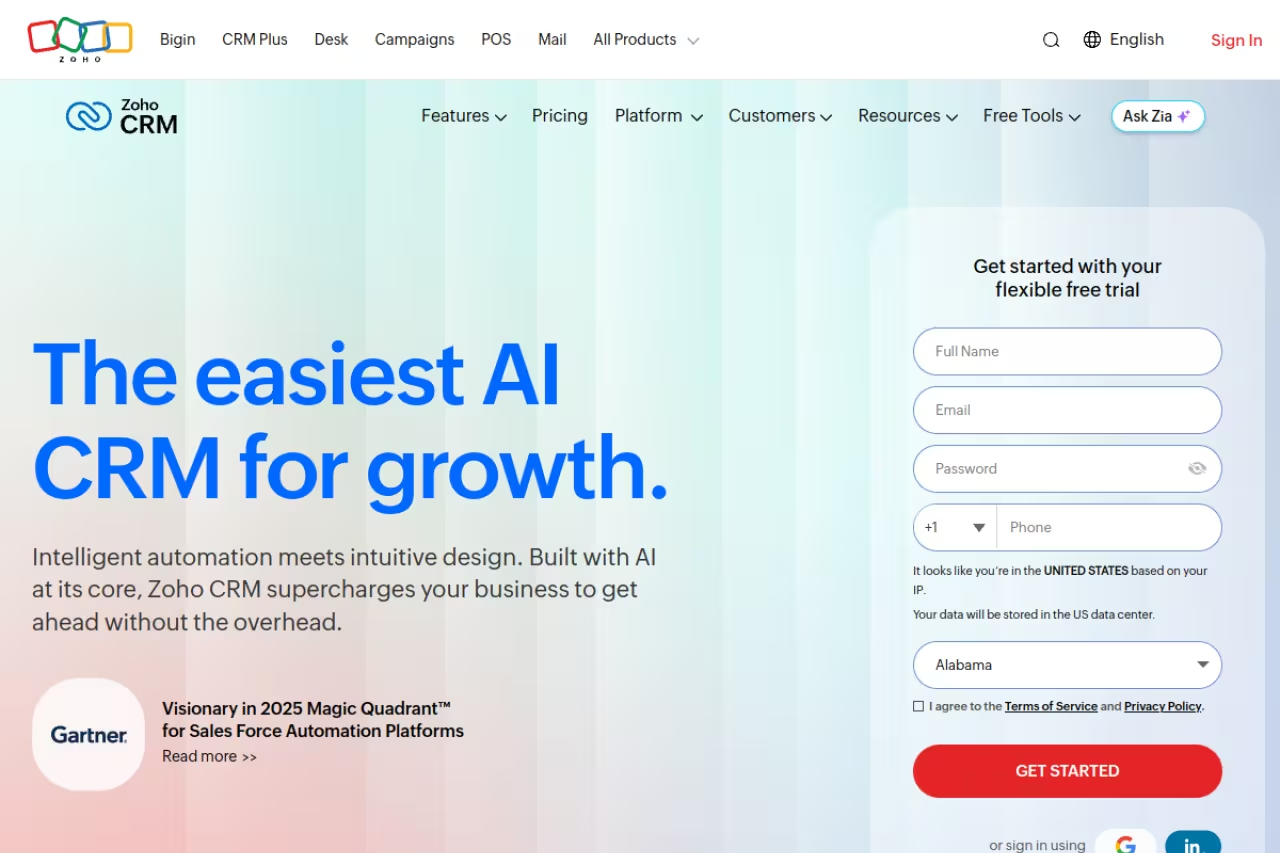
Zoho CRM wins on features-per-dollar, and at $0 that math is hard to beat. The free edition covers up to 3 users and gives you leads, deals, contacts, accounts, basic workflow rules, standard reports, and a solid mobile app. For a 1-to-3 person team that's been managing deals in a Google Sheet, this is a complete starter CRM, not a teaser.
The most real CRM at zero cost for a small founding team of up to 3 users, especially if you already use Zoho Mail, Books or Desk. The 3-user ceiling is the wall, and the interface is dense.
If you already use Zoho Mail, Books, or Desk, the integrations make this an obvious pick.
The free plan is free forever for 3 users. The first paid tier, Standard, costs $14 per user per month billed annually (or $20 monthly), and it unlocks scoring rules, mass email, and more custom fields.
Where it falls short: the 3-user ceiling is the real wall here. Hire a fourth person and you're paying for everyone, not just the new seat. The free tier also limits automation and caps mass email, so once your outreach scales past manual sending, you'll feel the squeeze. The interface is dense too, with more menus than a HubSpot newcomer might expect.

Bitrix24, the free all-in-one work platform
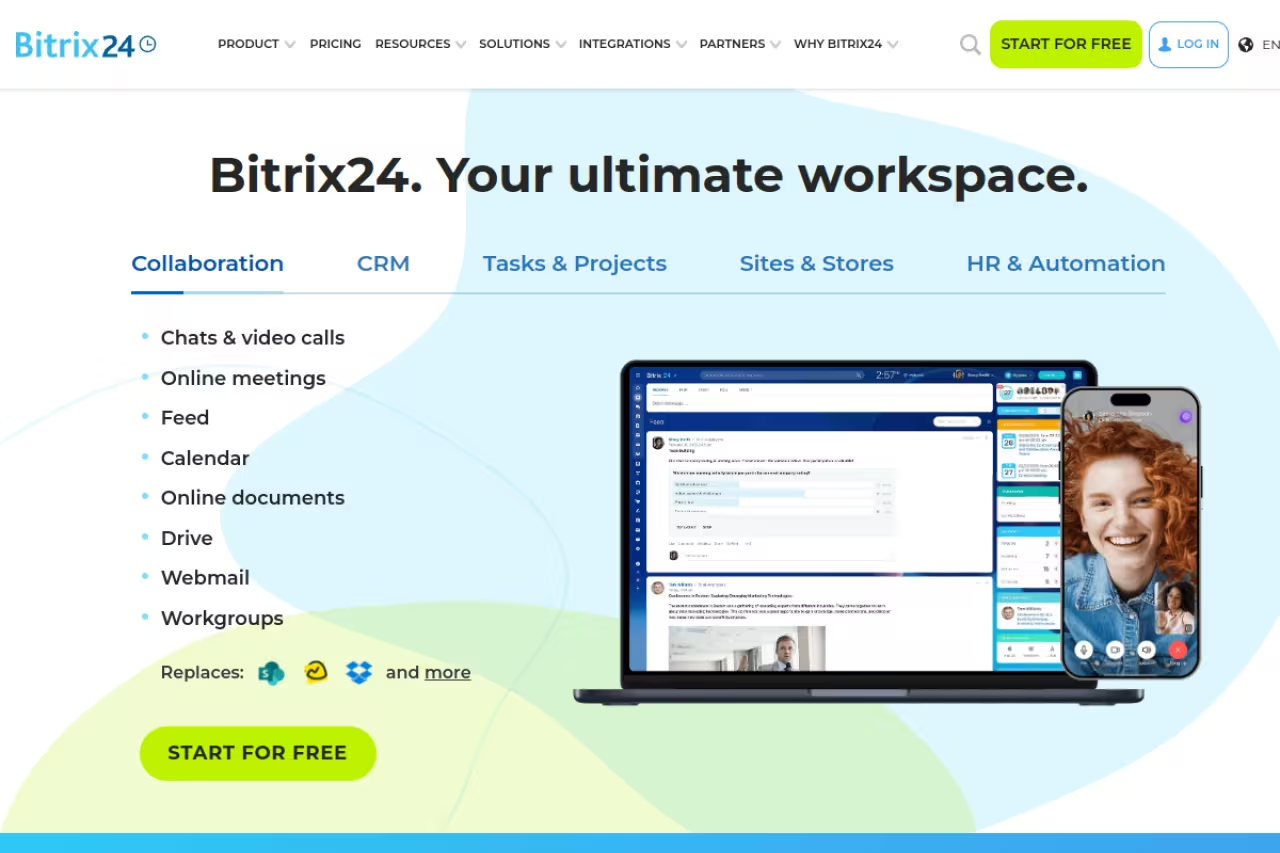
Bitrix24 is the rare free CRM with no user cap. The free plan allows unlimited users, which makes it tempting for a larger team that can't justify a per-seat CRM bill yet. Beyond the CRM (contacts, deals, a basic pipeline), you get tasks and projects, team chat and video calls, a shared calendar, a website and landing-page builder, and 5 GB of storage. It's less a CRM and more an entire work platform that happens to include one.
A good fit for small teams wanting CRM, projects and chat under one login with unlimited users. It is powerful but busy, hard ceilings bite as you grow, and the account auto-deletes if nobody logs in for 50 days.
The free plan is free forever with unlimited users. Paid plans scale by feature and storage rather than per seat, which is unusual and can work out cheaper for bigger teams.
The catch: the free tier has hard ceilings that bite as you grow. You're limited to about 1,000 items per CRM category before text search stops returning results, contact export is disabled, and you're capped at 100 tasks. There's no sales automation, no multiple pipelines, and no telephony. One that surprised me: if nobody logs in for 50 days, the account auto-deletes, with a one-week grace period to restore it. Bitrix24 is powerful but busy, so expect a learning curve.
 if email drives your business
Brevo
Brevo (formerly Sendinblue) started as an email platform and bolted on a CRM, which tells you exactly who it's for. The free plan includes a sales pipeline, contact management, and email marketing with a 300-emails-per-day cap. Crucially, Brevo doesn't charge by contact count, so you can store a large list and pay only when your sending volume climbs.
Go with Brevo if email drives your business and campaigns and deals live in one workflow. The 300-emails-per-day cap is easy to blow through, and the CRM side is lighter than a sales-first tool.
If your "CRM problem" is really a "follow up with my list" problem, Brevo handles both.
The free plan is free forever. Paid tiers start at $9 per month for the Starter plan, which lifts the daily sending limit and removes the Brevo logo from emails.
Where it falls short: the 300-emails-per-day limit is the obvious one, and a single campaign to a modest list can blow through it fast. The CRM side is lighter than a dedicated sales tool, with basic pipeline features and limited reporting. If your day is built around deals rather than newsletters, a sales-first CRM will feel more natural. For email-led businesses, see our roundup of the best AI email marketing tools.
Freshsales
Freshsales is the sales CRM from Freshworks, and its free plan punches above its price. You get up to 3 users, a Kanban view for contacts and deals, contact lifecycle stages, custom fields, and (the standout) a built-in phone and email so your reps can call and log activity without a separate dialer.
The call for small sales teams that work the phones, with a built-in phone and email so reps can call and log activity in one place. The free plan has no reports, and a fourth hire pushes everyone onto a paid plan.
The free plan is free forever for 3 users. The first paid tier, Growth, runs $9 per user per month billed annually, which adds email sequences, pipeline automation, and call recording.
The catch: the free plan has no reports and no sales funnel view in the deals section, so you're flying without dashboards. Automation lives entirely in paid tiers. And like Zoho, the 3-user cap means a fourth hire pushes the whole team onto a paid plan. For teams that have outgrown manual outreach, our best AI sales tools guide covers what comes next.

EngageBay, the all-in-one for solo marketers
EngageBay packs marketing, sales CRM, and a help desk into one free plan, which is unusual at this price. The free tier gives you 250 contacts, 1,000 branded emails a month, a landing-page builder, email marketing, basic CRM, live chat, and a help desk. For a solo founder doing a bit of everything, it removes the need to stitch together three separate tools.
A solid starting point for solopreneurs and tiny teams who want lead capture, email and deal tracking in one place. The 250 contacts fill up fast, and the upgrade nudge comes early.
The free plan supports up to 15 users (the contact limit, not seats, is the real constraint). Paid all-in-one plans start around $14.99 per user per month.
Where it falls short: 250 contacts is tight, and you'll hit it fast if you're actively capturing leads. Advanced automation, lead scoring, and most third-party integrations sit behind paid tiers. The product tries to do a lot, so individual modules aren't as deep as the specialists. It's a fine starting point, but the upgrade nudge comes early.
Capsule, the clean and simple option
Capsule is for people who think most CRMs are bloated, and they have a point. The free plan covers 2 users and 250 contacts with one pipeline, one project board, Gmail and Outlook integration, the mobile app, and 50 MB of storage. The interface is calm and uncluttered, which is the entire selling point.
The antidote for freelancers and two-person teams who find bigger CRMs bloated, with a calm, uncluttered interface. At 2 users and 250 contacts it is the tightest free tier here, with no email marketing or automation.
If you've bounced off HubSpot or Zoho for feeling like overkill, Capsule is the antidote. See also our best CRM for freelancers guide.
The free plan is free forever for 2 users. The Starter plan jumps to $18 per user per month billed annually and lifts contacts to 30,000 with AI content help.
The catch: 250 contacts and 2 users is the tightest combination on this list, so Capsule's free tier is really for very small operations or testing the waters. There's no built-in email marketing or automation on free, and storage is minimal. It does one thing (clean contact and deal tracking) well, and asks you to pay the moment you need more.

Agile CRM, automation on a budget
Agile CRM is worth a look because it offers basic automation on its free tier, which most of this list locks behind a paywall. The free plan supports up to 10 users and 1,000 contacts, with contact management, deal tracking, appointment scheduling, email tracking, and a taste of marketing automation and lead scoring.
Worth a look for budget-conscious teams that want basic automation and up to 10 users free. The interface feels dated and the 1,000-contact cap is modest, so treat it as capable rather than polished.
The free plan is free for 10 users. Paid plans start around $8.99 per user per month and expand contacts, automation, and integrations.
Where it falls short: the interface feels dated next to HubSpot or Freshsales, and some users report the product hasn't evolved much in recent years. The 1,000-contact cap is modest, and the free automation is basic. Treat it as a capable budget option rather than a polished one.
How to choose your free CRM
Pick based on your single biggest constraint, not a feature checklist:
- Team size is your worry? Go HubSpot (unlimited users) or Bitrix24 (also unlimited). The 2-to-3 seat caps on Zoho, Freshsales, and Capsule turn into a bill the moment you hire.
- You want real CRM depth at $0 for a tiny team? Zoho CRM gives you the most actual features for 3 users.
- Email is your main channel? Brevo, because it tracks deals and sends campaigns from the same place.
- You live on the phone? Freshsales, for the built-in dialer.
- You hate bloat? Capsule, for the simplest interface here.
One honest reframe: the best free CRM is the one you'll actually update. A CRM nobody touches is worse than a clean spreadsheet. Start with the simplest tool that fits, and only upgrade when a specific limit (contacts, automation, seats) is genuinely blocking a deal. For a wider view across paid and free, our best CRM software roundup ranks the full field, and best CRM for small business narrows it by company stage.
If you're building a modern AI-driven sales stack, Dupple X and our top tools directory cover the adjacent tools (enrichment, outreach, prospecting) that plug into whichever CRM you land on.
FAQ
What is the best free CRM software in 2026?
For most teams, HubSpot CRM is the best free option because it supports unlimited users and up to 1 million contacts at no cost. If you have a 1-to-3 person team and want deeper CRM features like reports and workflow rules, Zoho CRM's free edition is the stronger pick. Bitrix24 is best if you also want project management and team chat bundled in.
Are free CRMs actually free forever, or just a trial?
The ones on this list (HubSpot, Zoho, Bitrix24, Brevo, Freshsales, EngageBay, Capsule, and Agile CRM) all offer genuinely free-forever plans, not time-limited trials. The catch is usage limits: contact caps, user caps, or feature locks. Tools like folk and many others offer only a 14-day trial with no ongoing free tier, so always check whether "free" means forever or just for two weeks.
What's the difference between HubSpot free and Zoho free?
HubSpot free is more generous on scale: unlimited users and up to 1 million contacts, but with limited features (no automation, one pipeline). Zoho free is more generous on functionality: only 3 users, but those users get real CRM features like leads, deals, workflow rules, and reports. Choose HubSpot if seat count matters most, Zoho if you have a tiny team that needs proper CRM depth.
When should I upgrade from a free CRM to a paid plan?
Upgrade when a specific limit blocks revenue, not before. The common triggers are hitting your contact cap, needing to add users beyond the free seat limit, or requiring automation (sequences, lead scoring, workflows) that the free tier locks. For most small teams, paid plans start in the $9 to $20 per user per month range, so the upgrade is affordable once the free tier is genuinely holding you back.
Can a free CRM handle a small sales team?
Yes, for a small team a free CRM is often enough. HubSpot and Bitrix24 handle unlimited users at $0, and Freshsales gives a 3-person sales team a built-in dialer and deal pipeline for free. The main thing a free plan won't do well is automation at scale, mass email, and advanced reporting. If your team is closing deals manually and tracking a few hundred contacts, a free CRM covers it.
Ready to move faster on your sales stack? Try Dupple X free and pair it with whichever free CRM you choose above.
Related guides
Some offers on this page may be paid placements or contain affiliate links.
Across our whole catalogue the median is $24 a month and 33% of tools advertise a free tier. Figures are the lowest recurring monthly price quoted in our own review of each tool, read on 2026-08-19. Full method and every category.
