
Best AI Email Marketing Tools in 2026 (Compared and Ranked)

Key facts8 tools compared: Omnisend, Klaviyo, Brevo, ActiveCampaign, Mailchimp, GetResponse, Beehiiv…
- 8 tools compared: Omnisend, Klaviyo, Brevo, ActiveCampaign, Mailchimp, GetResponse, Beehiiv, Instantly
- Omnisend (best for: SMS + email ecommerce): Free, $11.20/mo
- Klaviyo (best for: Ecommerce / Shopify): Free, paid ~$45/mo at 1,500 profiles
- Brevo (best for: Budget / volume senders): Free, $9/mo Starter
- ActiveCampaign (best for: Deep automation): $15/mo (annual)
Every email platform now slaps an "AI" badge on the homepage. Most of it is a subject-line generator wired to GPT and a "best send time" toggle that was already there in 2019. The interesting question in 2026 isn't whether a tool has AI. It's whether the AI actually moves a number you care about: open rate, revenue per send, hours saved.
This guide compares these platforms against newsletters, an ecommerce store, and B2B outreach, the three jobs email marketing software actually gets used for, checking what the AI does versus what the marketing copy claims, and reading the current pricing pages line by line (they change constantly and the dynamic calculators hide the real numbers).
If you run an online store, Omnisend is my top pick, email plus SMS in one tool without the Klaviyo bill. Klaviyo is still the pick if the revenue justifies its best-in-class predictive data, Brevo wins on price if you want the cheapest serious automation, and if you live in cold outbound, Instantly is built for a different job entirely. Here's the full breakdown, who each one is for, and where each one quietly costs more than the sticker price.
Quick comparison
| Tool | Best for | Starting price | Standout AI feature |
|---|---|---|---|
| Omnisend | SMS + email ecommerce | Free, $11.20/mo | Plain-language segment builder |
| Klaviyo | Ecommerce / Shopify | Free, paid ~$45/mo at 1,500 profiles | Predictive analytics (CLV, churn risk) |
| Brevo | Budget / volume senders | Free, $9/mo Starter | Send-time prediction by contact |
| ActiveCampaign | Deep automation | $15/mo (annual) | AI automation builder that learns |
| Mailchimp | All-in-one simplicity | $13/mo Essentials | Intuit Assist content assistant |
| GetResponse | Solopreneurs / courses | Free, $19/mo Starter | AI campaign generator |
| Beehiiv | Newsletters / monetization | Free to 2,500 subs | AI writing + growth tooling |
| Instantly | B2B cold outreach | $47/mo Growth | AI sales + reply agents |

Omnisend: ecommerce email plus SMS without the Klaviyo bill
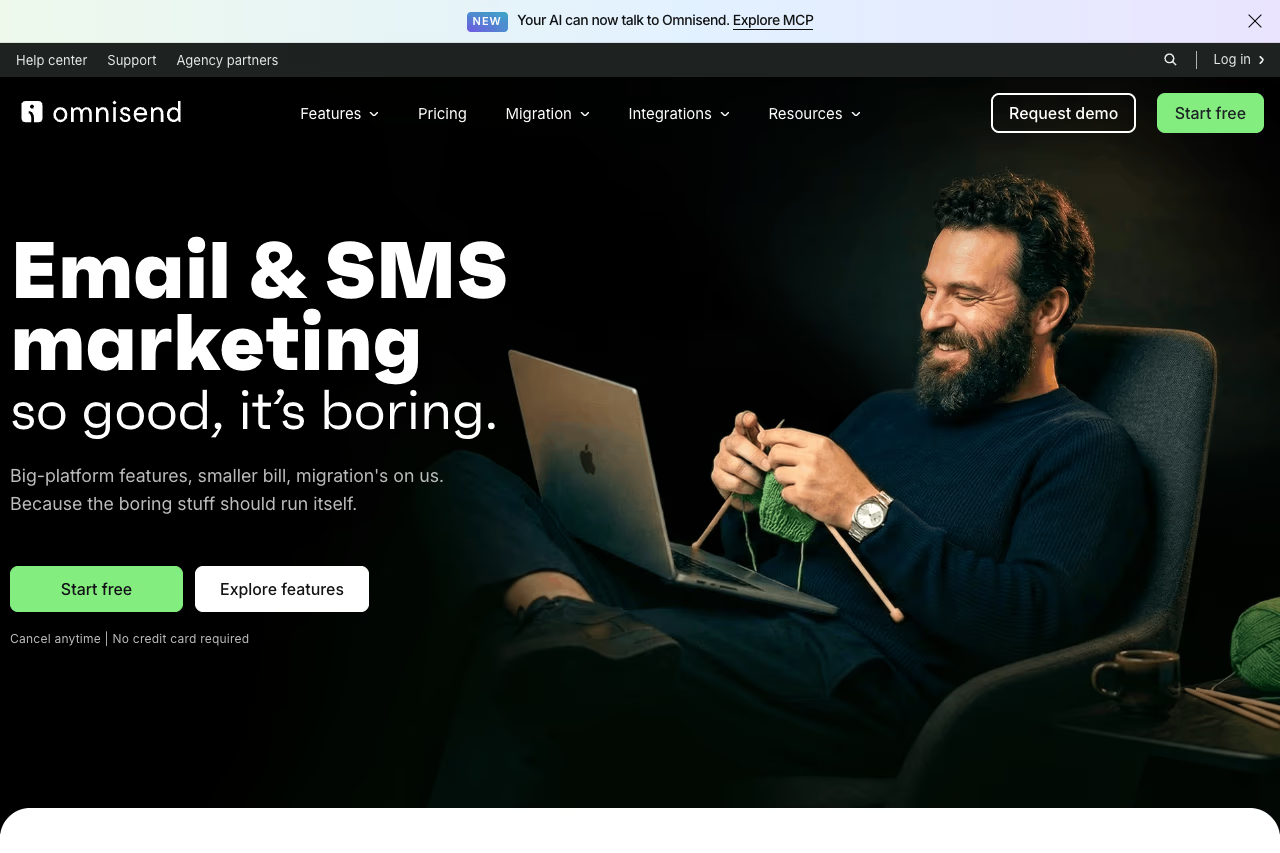
Omnisend is the ecommerce-focused alternative to Klaviyo that tends to cost less at smaller scale. Its AI handles subject lines, an in-email assistant, dynamic content suggestions, and a segment builder you drive with plain-language prompts ("customers who bought twice but not in 60 days").
Who it's best for: small to mid-size online stores that want email plus SMS plus web push in one tool, with pricing that's gentler than Klaviyo's early on.
The free plan gives 500 emails a month to 250 contacts. The Standard plan is $11.20/month (6,000 emails, 500 contacts) and the Pro plan is $41.30/month with unlimited emails to 2,500 contacts plus the AI personalization and product-recommender features.
The standout: the plain-language segment builder. Describing the audience you want and getting it built is faster than clicking through filter menus.
The catch: it's narrower than Klaviyo on the data and predictive side, so for a large, sophisticated store the analytics ceiling is lower. The Pro-tier AI features are where the good stuff lives.
A cheaper alternative to Klaviyo for small to mid-size online stores that want email, SMS and web push in one tool, with a plain-language segment builder. The analytics ceiling is lower for sophisticated stores, and the good AI sits on the Pro tier.
Klaviyo: the ecommerce default for a reason
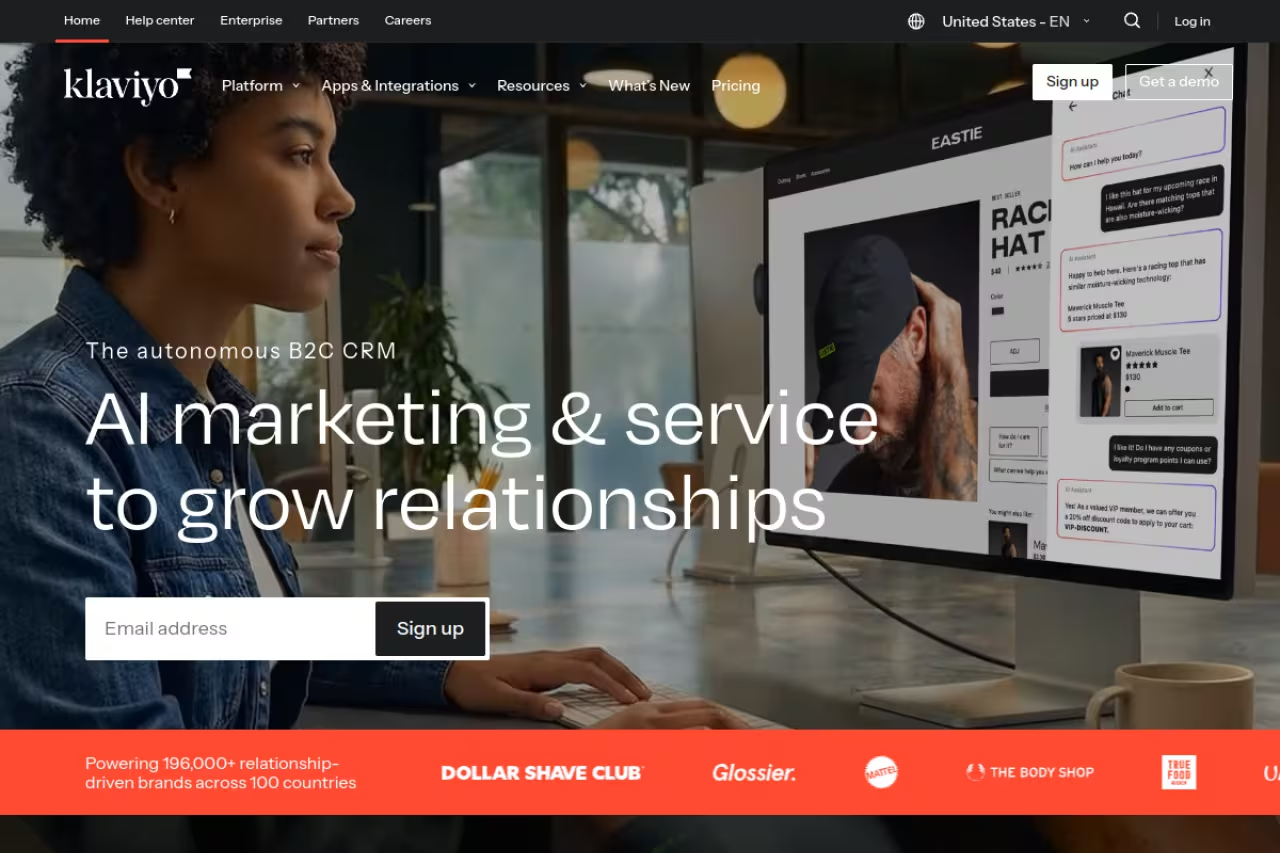
Klaviyo is an email and SMS platform built around customer data, and for online stores it's the one to beat. The reason is the data layer. Klaviyo ingests every event a shopper triggers (viewed product, added to cart, bought, churned) and the AI sits on top of that to predict customer lifetime value, next order date, and churn risk per person. Those predictions feed segments and flows automatically, which is the part competitors fake.
Who it's best for: Shopify and ecommerce brands doing real revenue, where a one-point lift in flow conversion pays the bill many times over.
The ecommerce default for brands doing real revenue, thanks to a data layer that predicts lifetime value, next order date and churn risk per person. The price scales hard and fast as your profile count grows.
Pricing is usage-based on "active profiles" (anyone you can email), which Klaviyo switched to in February 2025. The free plan covers 250 profiles and 500 emails a month. The Email plan scales to roughly $45/month at 1,500 profiles, climbing in $10 to $20 steps as your list grows. There's also a built-in AI subject-line generator and a Marketing Agent for drafting campaigns.
The standout: predictive analytics you can actually act on. "Likely to churn in 30 days" as a one-click segment is worth real money when you build a win-back flow around it.
The catch: the price scales hard and fast. By the time you're past 20,000 profiles you're paying a premium that a small store will feel, and the SMS add-on stacks on top. It's overkill if you send a simple weekly broadcast to a hobby list.

Brevo: the best price-to-power ratio
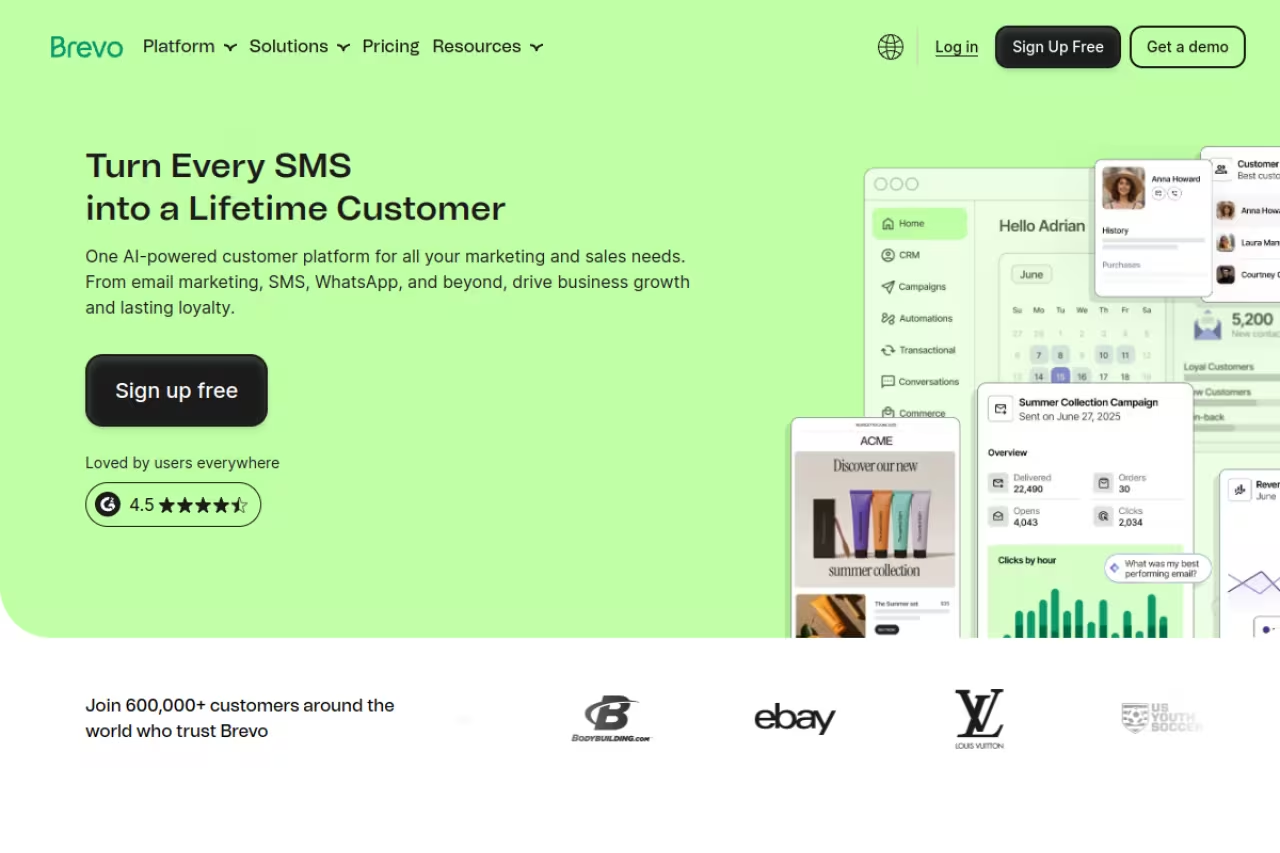
Brevo (the platform formerly called Sendinblue) does one structural thing differently that saves a lot of people a lot of money: it charges by email volume, not by contact count. So if you have a big list but only email occasionally, you stop paying the "list tax" that Mailchimp and Klaviyo charge.
Who it's best for: budget-conscious operators, anyone with a large but lightly emailed list, and teams that want CRM, email, and SMS in one cheap stack.
The free plan gives you 300 emails a day with unlimited contacts. The Starter plan starts at $9/month for 5,000 emails and removes Brevo branding, with steps at $29/month for 20,000 emails. The Business plan (around $65/month) adds the AI send-time prediction (it picks the moment each contact is most likely to open) plus marketing automation.
The standout: contact-unlimited pricing. For a 50,000-person list you mail twice a month, Brevo can be a fraction of the cost of contact-priced rivals.
The catch: removing the logo on the cheapest tiers can be a paid add-on (around $10.80/month), so the "$9" plan isn't always $9. Deliverability and the editor are good, not great, and the interface feels more utilitarian than Klaviyo's.
Strong value for budget-conscious operators with large, lightly emailed lists, since it charges by email volume instead of contact count. The cheapest tiers can carry a paid logo-removal add-on, and the editor and interface are good, not great.

ActiveCampaign: automation that actually learns
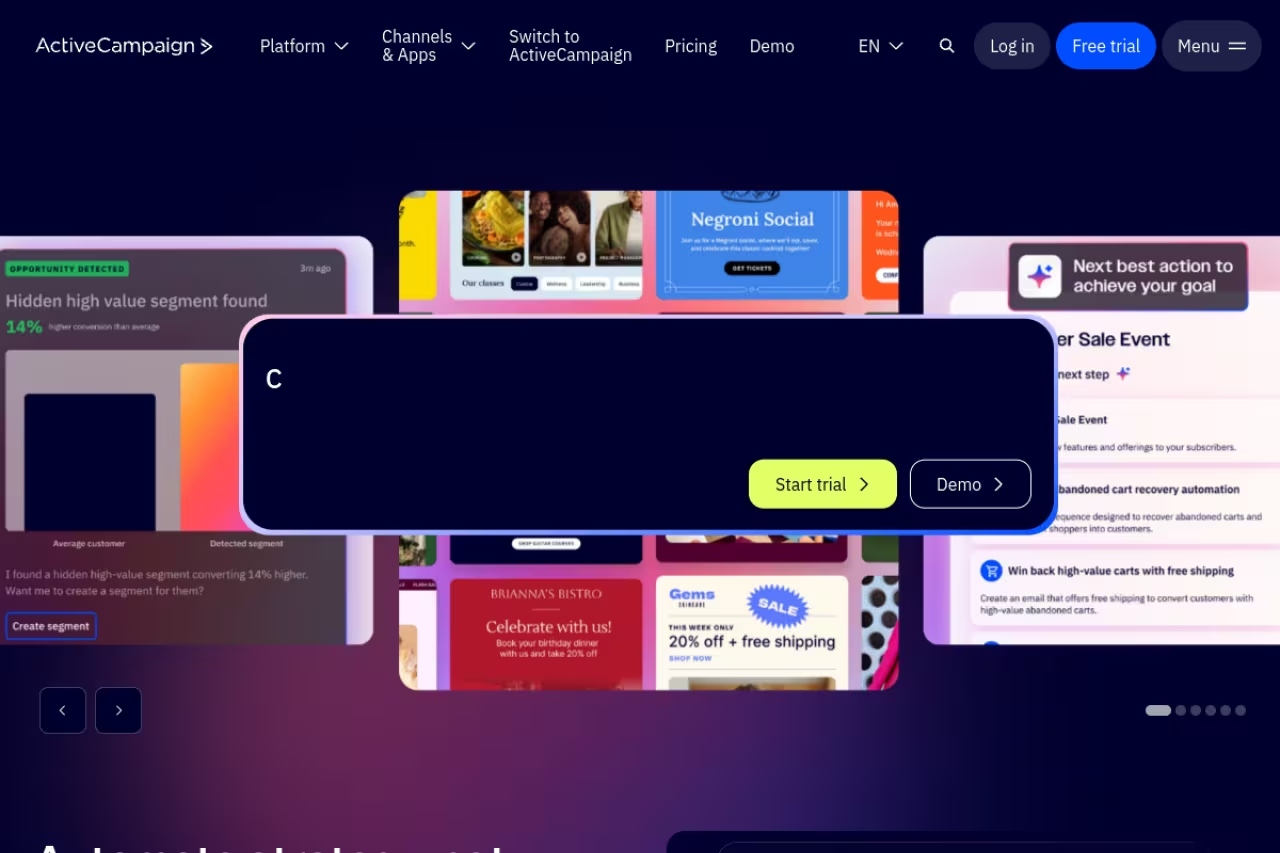
ActiveCampaign has the deepest automation builder in this list, and its AI layer ("Active Intelligence") is the one that meaningfully adapts to your account rather than just generating copy. The AI suggests segments, builds automations from a prompt, and does predictive sending based on each contact's behavior and your industry.
Who it's best for: marketers and small teams whose value lives in branching, multi-step automations (lead scoring, conditional content, long nurture sequences).
The deepest automation builder here, and the AI actually adapts to your account, scaffolding branching flows from a plain-English prompt. The meaningful AI is effectively a $79+/month feature, and contact-based pricing climbs as your list grows.
Pricing has four tiers. On annual billing for 1,000 contacts you're looking at Starter $15/mo, Plus $49/mo, Professional $79/mo, and Enterprise $145/mo. Monthly billing runs higher ($19 / $59 / $99 / $179). The catch with AI here: Starter and Plus get "limited" Active Intelligence, while Pro and Enterprise unlock the unlimited AI workspace.
The standout: the AI automation builder. Describe the flow you want in plain English and it scaffolds the whole branching logic, which saves real hours on complex setups.
The catch: the best AI features sit behind the Pro tier, so the meaningful AI is effectively a $79+/month feature. And contact-based pricing means costs climb as your list grows even if your sends don't.

Mailchimp: the safe, familiar all-rounder
Mailchimp is still the name most people reach for first, and its AI content tools (now branded Intuit Assist) are decent at brainstorming subject lines, drafting copy, and suggesting campaign ideas. It's the most beginner-friendly option here, with templates and an onboarding flow that hand-hold you through your first send.
Who it's best for: small businesses and first-timers who value a polished, familiar interface over raw automation depth.
Paid plans start at $13/month for Essentials and $20/month for Standard (both at 500 contacts), with the generative AI features landing on Standard. Premium jumps to $350/month. The free plan now caps at 500 contacts.
The standout: ease of use plus a genuinely useful creative assistant for people who hate writing.
The safe, familiar choice for small businesses and first-timers who want a polished, beginner-friendly interface and a handy creative assistant. It gets expensive fast as lists grow, and ActiveCampaign gives you more automation per dollar.
The catch: it gets expensive fast as your list grows, and a chunk of your "contacts" can include unsubscribed and non-subscribed profiles that still count toward your bill unless you manage your audience carefully. For the automation depth, ActiveCampaign gives you more per dollar.

GetResponse: the solopreneur's Swiss army knife
GetResponse packs email, landing pages, webinars, and even a course builder into one subscription, and its AI campaign generator can spin up a full email sequence, landing page, and subject lines from a short brief. For a one-person business that doesn't want five separate tools, that breadth is the whole pitch.
Who it's best for: solopreneurs, coaches, and course creators who want marketing plus a place to host and sell, without stitching together a stack.
The free plan covers 500 contacts and includes the AI campaign generator plus unlimited landing pages (capped at 1,000 monthly visitors). The Starter plan is $19/month for 1,000 contacts with unlimited sends. Higher tiers unlock unlimited AI email and subject-line generation.
The standout: the AI campaign generator that builds an entire funnel, not just an email, which is genuinely useful when you're starting from a blank page.
The catch: the free-tier AI is limited to a few uses, and the webinar and course features feel like add-ons rather than best-in-class tools. If you only need email, you're paying for breadth you won't touch.
A fit for solopreneurs, coaches and course creators who want email, landing pages and webinars in one subscription, plus an AI generator that builds a whole funnel. If you only need email, you are paying for breadth you will not touch.

Beehiiv: built for newsletters, not stores
If you're publishing a newsletter rather than running a store, the ecommerce platforms above are the wrong shape. Beehiiv is built for creators, with AI writing tools, a native referral and recommendation engine, paid subscriptions, and an ad network for monetizing your list. (Full disclosure: we run newsletters and have hands-on time here.)
Who it's best for: newsletter operators and media businesses who care about growth loops and monetization, not abandoned-cart flows.
The free Launch plan covers up to 2,500 subscribers with unlimited sends. Scale is $43/month and unlocks the ad network, paid subscriptions, automations, and advanced analytics; Max is $96/month. Every plan includes daily beehiiv AI credits (10/day on free, up to 50/day on Max).
The standout: growth and monetization tooling baked in. The referral program and recommendation network do real work to grow a list organically, which no general email tool offers.
The catch: it's not an automation platform. If you need branching behavioral flows or ecommerce triggers, this isn't your tool. The AI credits are also metered daily, so heavy writers hit the ceiling.
The right shape for newsletter operators who care about growth loops and monetization, with referrals, recommendations, paid subscriptions and an ad network built in. It is not an automation platform, and AI credits are metered daily.

Instantly: AI for cold B2B outreach
Instantly solves a completely different problem: sending personalized cold email at scale without torching your domain reputation. Its AI stack now includes a sales agent, a reply agent that drafts responses, a web-researcher agent for prospect data, and an email-writer agent, with access to multiple LLMs (OpenAI, Anthropic, and others).
Who it's best for: founders and sales teams doing outbound prospecting, where deliverability and inbox rotation matter more than newsletter design.
The outreach-only Growth plan is $47/month (5,000 emails, 1,000 contacts), Hypergrowth is $97/month, and the bundle plans that add lead data start at $94/month. There's a lot of pricing surface area here because it sells leads, sending, and AI as separate stacks.
The standout: the AI agents handle the grind of personalization and reply triage, which is the part of cold outreach that doesn't scale by hand.
Built for founders and sales teams doing outbound, where deliverability and inbox rotation matter more than newsletter design, with AI agents handling personalization and reply triage. Use it for anything else and you will hate it, and pricing gets confusing.
The catch: this is a cold-email tool, not a marketing-newsletter tool. Use it for the wrong job and you'll hate it. Pricing also gets confusing fast once you mix bundles, credits, and outreach plans.
If you're building an AI stack beyond email, it's worth seeing how these tools slot in next to the rest. Our best AI tools roundup and the best AI marketing tools guide cover the wider picture, and Dupple X bundles a set of them if you'd rather not subscribe to each one separately.
How to choose
Skip the feature checklists. Pick by what you actually sell.
- You run an online store: Omnisend for email plus SMS in one tool without the steep bill, and Klaviyo if the revenue justifies the price and you want best-in-class predictive data.
- You want the cheapest serious tool: Brevo, because volume-based pricing beats contact-based pricing for most lists that aren't mailed daily.
- Automation is the whole point: ActiveCampaign, and budget for at least the Pro tier so the AI is unlimited.
- You publish a newsletter: Beehiiv, full stop. The growth and monetization tooling is the differentiator.
- You do cold outbound: Instantly. It's a different category from everything else here.
- You want familiar and simple: Mailchimp, accepting that you'll pay a premium for the polish.
One rule that saves money: pay for the AI tier only if a specific feature changes a number you track. An AI subject-line generator alone is not worth jumping two pricing tiers. Predictive churn segments that feed a win-back flow often are.
FAQ
What is the best AI email marketing tool in 2026?
There's no single winner because it depends on what you send. For ecommerce, Klaviyo is the strongest pick thanks to its predictive analytics. For the best price-to-power ratio, Brevo wins with volume-based pricing. For deep automation, ActiveCampaign leads, and for newsletters, Beehiiv is purpose-built.
Are AI email marketing tools worth the higher price?
Sometimes. AI features that genuinely move revenue (predictive customer-value segments, behavioral send-time optimization, automated flow building) can pay for themselves quickly. Features that just generate copy (subject lines, draft emails) are nice but rarely worth jumping a whole pricing tier on their own. Judge each AI feature by whether it changes a metric you track.
Which AI email tool has the best free plan?
It depends on your shape. Brevo offers unlimited contacts with 300 emails a day, GetResponse gives 500 contacts plus its AI campaign generator and landing pages, and Beehiiv covers up to 2,500 newsletter subscribers with unlimited sends. For ecommerce testing, Klaviyo and Omnisend both have free tiers capped around 250 contacts.
Can AI write my marketing emails for me?
AI can draft subject lines, body copy, and full sequences in seconds, and tools like GetResponse and ActiveCampaign can scaffold entire campaigns from a short brief. But the output still needs a human edit. AI copy tends to be generic and on-the-nose, so treat it as a fast first draft, not a finished send.
Is Mailchimp still worth it in 2026?
Mailchimp is still a solid all-rounder for beginners who value an easy interface and a capable AI content assistant. The trade-off is price: it gets expensive as your list grows and counts non-subscribed profiles toward your bill. If you need deep automation, ActiveCampaign gives more per dollar; if you want lower cost, Brevo does.
What's the difference between email marketing and cold email tools?
Email marketing platforms (Klaviyo, Brevo, Mailchimp) send to people who opted in, and focus on automation, segmentation, and deliverability to engaged lists. Cold email tools like Instantly send to prospects who haven't subscribed, so they prioritize inbox rotation, domain warm-up, and reply handling. Using a newsletter tool for cold outreach will get your domain flagged fast.
Ready to stop juggling subscriptions? Dupple X bundles a stack of AI tools into one plan, so you can test the workflow before committing to a year of any single platform.
Related guides
Some offers on this page may be paid placements or contain affiliate links.
Across our whole catalogue the median is $24 a month and 33% of tools advertise a free tier. Figures are the lowest recurring monthly price quoted in our own review of each tool, read on 2026-08-19. Full method and every category.
