
Best CRM for B2B in 2026: 8 Tools I'd Actually Recommend

Key facts8 tools compared: Attio, HubSpot, Pipedrive, Salesforce, Close, Zoho CRM, Salesflare, folk
- 8 tools compared: Attio, HubSpot, Pipedrive, Salesforce, Close, Zoho CRM, Salesflare, folk
- Attio (best for: Modern startups & data-driven teams): Free, then $29/seat
- HubSpot (best for: Sales + marketing in one place): Free, then $15/seat
- Pipedrive (best for: Pure pipeline-first sales teams): $14/seat
- Salesforce (best for: Large or complex sales orgs): $25/seat (Starter)
Most "best B2B CRM" lists read like they were written by someone who has never had to migrate 12,000 contacts at 11pm before a board meeting. They rank by feature count and call it a day.
I've reviewed CRMs used by early-stage startups, seen public accounts of 40-person sales orgs strangled by Salesforce admin, and compared what it costs to rip one out when the value stops matching the price. The truth is that the "best" CRM depends almost entirely on how your team sells: high-velocity phone outreach, founder-led relationship deals, or a marketing engine feeding reps. A tool that's perfect for one is a tax on the other two.
If you want the short answer: Attio is my top pick for most modern B2B teams in 2026. It's fast, the data model bends to fit how you actually work, and the AI features are genuinely useful instead of bolted-on. If your sales and marketing live under one roof, HubSpot is the safer bet. And if you run a pure pipeline shop, Pipedrive still does one thing better than anyone. Below is who each tool fits, what it really costs, and where it bites you.
Quick comparison
| Tool | Best for | Starting price (annual) | Standout |
|---|---|---|---|
| Attio | Modern startups & data-driven teams | Free, then $29/seat | Flexible data model + real AI |
| HubSpot | Sales + marketing in one place | Free, then $15/seat | All-in-one ecosystem |
| Pipedrive | Pure pipeline-first sales teams | $14/seat | Visual pipeline, zero clutter |
| Salesforce | Large or complex sales orgs | $25/seat (Starter) | Endless customization |
| Close | Phone-heavy inside sales | $9/seat (Solo) | Built-in dialer + SMS |
| Zoho CRM | Budget teams in the Zoho stack | $14/seat | Cheap, deeply featured |
| Salesflare | Small B2B that hates data entry | $29/seat | Auto-fills the CRM for you |
| folk | Founder-led, network-driven sales | $24/seat | Lightweight, contact-first |
Attio: the CRM that fits how you actually work
Attio feels like what would happen if Notion and a CRM had a very competent child. Instead of forcing you into rigid "Leads, Contacts, Opportunities" buckets, it lets you build custom objects and link them relationally. So if your B2B motion involves partnerships, multiple deal types, or a weird multi-stakeholder buying process, you model it directly instead of fighting the tool.
Who it's best for: Seed to Series B startups, agencies, and anyone who outgrew a spreadsheet but doesn't want a six-month Salesforce rollout.
A flexible, modern choice for seed to Series B startups and agencies that have outgrown a spreadsheet but want no Salesforce rollout. The custom objects reward process-minded teams, but reps wanting a simple next-call button may face a blank page, and there is no built-in dialer.
The free plan covers 3 seats, which is enough to validate the thing. Plus is $29 per seat per month billed annually and removes seat limits while raising record capacity to 250,000. Pro is $69 per seat per month annually and adds Call Intelligence plus granular permissions, per Attio's pricing. Annual billing saves you 20 to 40 percent over monthly.
The standout: Speed and the AI attributes. Attio syncs your email and calendar in real time, then auto-enriches records. In 2026 it added AI attributes that pull and summarize data automatically, so a record can keep itself current without a human touching it.
The catch: It leans toward technical, process-minded teams. If your reps want a dead-simple "next call" button and nothing else, the flexibility becomes a blank-page problem. There's also no built-in dialer, so phone-first teams will bolt on something else.

HubSpot: the safe all-in-one bet
HubSpot wins on a simple premise: your sales and marketing data should live in the same place. If marketing runs email campaigns, landing pages, and lead scoring, and you want reps to see all of that context next to the deal, nothing else does it this cleanly out of the box.
Who it's best for: B2B teams where marketing generates a real chunk of pipeline, and revenue ops wants one system of record across the funnel.
The safe all-in-one for B2B teams where marketing generates real pipeline and revenue ops wants one system of record. The ecosystem is unmatched, but costs climb painfully past the free tier and the Starter-to-Pro gap catches many teams.
The core CRM is free for unlimited users with usage caps. Sales Hub Starter is $15 per seat per month on annual billing, and Professional jumps to $90 per seat per month annually, plus a one-time $1,500 onboarding fee, according to HubSpot's Sales Hub pricing. That Starter-to-Pro gap is the cliff everyone trips on.
The standout: The ecosystem. Thousands of integrations, a mature marketing suite, and HubSpot AI features layered across the platform. You can run an entire go-to-market motion without leaving it.
The catch: Cost scales painfully. The free tier is generous until you hit a contact tier or need a Pro feature, then your bill multiplies overnight. Marketing contact pricing in particular has surprised more than one finance team I've worked with. Budget for it before you commit.

Pipedrive: pipeline-first, no clutter
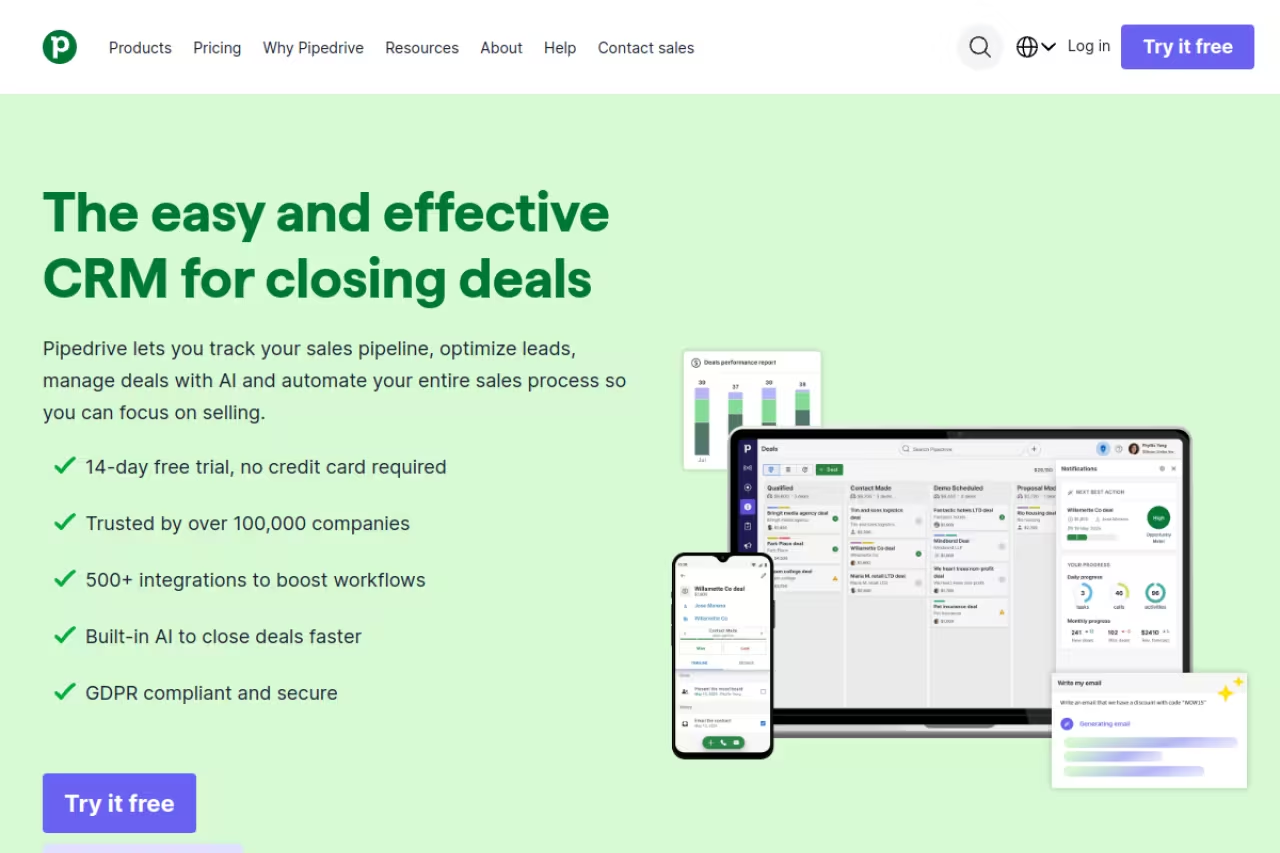
Pipedrive was built by salespeople who were tired of CRMs designed for managers to report on, rather than for reps to actually use. The whole product is organized around a visual pipeline and activity-based selling: every deal has a next action, or it's flagged as rotting.
Who it's best for: Sales-led SMBs and B2B teams with high-touch, relationship-driven deals who want to start selling on day one, not after a configuration sprint.
Pick Pipedrive for sales-led SMBs and relationship-driven B2B teams that want to start selling on day one. It is a sales tool, not a platform, so marketing automation and complex reporting will eventually force extra tools or a migration.
Four tiers on annual billing: Lite at $14, Growth at $39, Premium at $59, and Ultimate at $79 per seat per month, per Pipedrive's pricing. No free plan, but there's a 14-day trial on every tier. A 10-rep team on Growth runs about $4,680 a year, which undercuts HubSpot Pro by a wide margin.
The standout: Ease of use. SoftwareReviews has repeatedly ranked it at or near the top for usability, and you feel it. New reps are productive in an afternoon, not a week.
The catch: It's a sales tool, not a platform. Marketing automation, complex reporting, and customer service are weak or absent. As you grow past the core sales motion, you'll either add point tools or hit a ceiling and migrate. Plan your stack accordingly.
If you're still mapping out your broader tooling, our roundup of the top AI tools and our guide to the best AI agents pair well with whichever CRM you land on.

Salesforce: power, at a price
Salesforce is still the most customizable CRM on the planet, and that's both the pitch and the warning. If your sales process has genuine complexity, multiple business units, territories, intricate approval flows, then almost nothing it can't model.
Who it's best for: Mid-market to enterprise orgs with dedicated admins and a process too gnarly for anything lighter.
Still the most customizable CRM around, suited to mid-market and enterprise orgs with dedicated admins and a gnarly process. For a small startup the admin burden is a tax you do not need to pay yet.
Five tiers in 2026: Starter Suite at $25, Pro Suite at $100, Enterprise at $175, Unlimited at $350, and Agentforce 1 Sales at $550 per user per month, according to Salesforce's pricing. Most growing teams land on Enterprise at $175. Salesforce raised prices roughly 6 percent across Enterprise and Unlimited in August 2025, so factor that in.
The standout: The ecosystem and AgentForce. The AppExchange has thousands of integrations, and the AI agent layer is the most mature of the big platforms.
The catch: It's overkill for small teams, and the real cost isn't the license, it's the admin. You'll likely need a consultant or a full-time admin to keep it running well. For a 10-person startup, that's a tax you don't need to pay yet.

Close: built for the phone
Close is the CRM for teams that live on calls. The dialer, SMS, and email are native, not add-ons, so reps work an entire list without ever leaving the record. For high-velocity inside sales, that removes a real chunk of daily friction.
Who it's best for: SDR and inside-sales teams running outbound at volume.
The phone-first choice for SDR and inside-sales teams running outbound at volume, with dialer, SMS and email native. Calling usage costs extra, and email-first or product-led teams would pay for a phone engine they will not use.
Solo at $9, Essentials at $35, Growth at $99, and Scale at $139 per user per month on annual billing, per Close's pricing. The predictive dialer that dials multiple numbers and only connects you to live pickups sits on Growth and above.
The standout: Calling workflow. The power and predictive dialers genuinely multiply how many real conversations a rep has in a day.
The catch: Calling usage costs extra on top of the seat price, and if your motion is email-first or product-led, you're paying for a phone engine you won't use. It's also lighter on marketing features than the all-in-one options.
Zoho CRM: the budget workhorse
Zoho CRM gives you a startling amount of CRM for the money, especially if you already use other Zoho apps. Pipeline management, workflow automation, and reporting all come in at a fraction of what the big names charge.
Who it's best for: Cost-conscious SMBs, and teams already living inside the Zoho ecosystem.
A budget workhorse for cost-conscious SMBs and teams already in the Zoho ecosystem, with remarkable depth per dollar. Standalone it can feel busy and dated, and integrations outside Zoho are hit or miss.
Standard at $14, Professional at $23, Enterprise at $40, and Ultimate at $52 per user per month on annual billing, per Zoho's pricing. A 10-person team on Enterprise is about $4,800 a year, with far more depth than the price suggests.
The standout: Value per dollar. You get custom modules, Blueprint process automation, and Zia AI features at Enterprise that competitors charge double for.
The catch: The UI feels dated next to Attio or Pipedrive, and the experience gets noticeably better only once you adopt the wider Zoho suite. Standalone, it can feel busy. Integrations outside the Zoho world are hit or miss.

Salesflare: the CRM that fills itself in
Salesflare solves the oldest CRM problem: reps don't update it. It pulls contact details, company data, and email and meeting history automatically, so the pipeline stays current without anyone doing data entry.
Who it's best for: Small B2B teams, agencies, and consultancies where reps wear five hats and have no time to log activity.
Ideal for small B2B teams and agencies where reps have no time to log activity, since it fills itself in. It is deliberately narrow, so heavy reporting, marketing automation or a big app ecosystem will outgrow it.
Growth at $29, Pro at $49, and Enterprise at $99 per user per month on annual billing, with a five-user minimum on Enterprise, per Salesflare's pricing. A 30-day trial, no setup fees.
The standout: Automation of the boring stuff. The auto-enrichment and built-in email finder mean your CRM is populated before you've finished your coffee.
The catch: It's deliberately narrow. If you need heavy reporting, marketing automation, or a large app ecosystem, you'll outgrow it. It's a focused B2B sales tool, not a platform play.

folk: lightweight and relationship-first
folk is for the founder or small team whose pipeline is really a network. It's contact-centric rather than deal-centric, with a clean interface, strong LinkedIn and email integrations, and a messaging layer that makes outreach feel less like data entry.
Who it's best for: Founder-led sales, BD teams, agencies, and anyone whose deals come from relationships rather than a structured funnel.
A pleasant, contact-first CRM for founder-led sales, BD teams and anyone whose deals come from relationships. Once pipelines get multi-stage with heavy automation, you will want something with more structure.
Standard at $24, Premium at $48, and Custom at $80 per seat per month on annual billing, with a 14-day trial, per folk's pricing.
The standout: Speed and feel. It's one of the few CRMs people actually enjoy opening, and the contact-first model fits network-driven selling perfectly.
The catch: It's not built for complex, multi-stage B2B pipelines with heavy automation. As deal volume and process complexity grow, you'll want something with more structure.
How to choose without overthinking it
Skip the feature spreadsheet. Pick based on how your team actually sells:
- Marketing drives your pipeline? HubSpot. The unified data is worth the price jump.
- Pure sales motion, no marketing engine? Pipedrive or Attio. Pipedrive if you want simplicity today, Attio if you want flexibility as you scale.
- Phone-heavy outbound? Close. The native dialer pays for itself in conversations.
- Founder-led, relationship deals? folk or Attio. Both stay out of your way.
- Genuinely complex org with admins on staff? Salesforce. Otherwise it's a liability.
- Tight budget? Zoho or Salesflare. Both punch well above their price.
One rule that's saved me real money: don't buy for the team you'll be in three years, buy for the team you are now. Migrating CRMs is annoying but routine. Paying enterprise prices for capacity you won't use until 2028 is a guaranteed loss. Start lean, and if you're stitching AI into your sales workflow, our take on the best AI for sales covers the layer that sits on top of whichever CRM you choose.
Want a faster way to keep up with tools like these as they ship new features? Dupple X tracks the AI and software stack so you don't have to read 40 pricing pages yourself. Start a yearly trial and skip the research grind.
FAQ
What is the best CRM for a B2B startup in 2026?
For most early-stage B2B startups, Attio is the strongest pick. The free plan covers 3 seats, the data model flexes to fit unusual sales processes, and the modern interface means reps actually use it. If marketing is a major pipeline source from day one, HubSpot's free CRM is a better fit because it keeps sales and marketing in one system.
How much does a B2B CRM cost per user?
It ranges widely. Entry plans start around $9 to $15 per user per month (Close Solo, HubSpot Starter, Pipedrive Lite, Zoho Standard). Mid-tier sales plans run $29 to $99 per user per month, and enterprise tiers like Salesforce Enterprise hit $175 per user per month. Annual billing usually saves 20 to 40 percent over monthly.
Is HubSpot or Salesforce better for B2B sales?
HubSpot is easier to adopt, cheaper to start, and better when sales and marketing share a system. Salesforce is more powerful and customizable but needs a dedicated admin and costs more to run well. Pick HubSpot if you're under ~50 reps without a complex process. Choose Salesforce only when you've genuinely outgrown lighter tools.
Do I need a CRM with a built-in dialer?
Only if calling is central to how you sell. If your reps run high-volume outbound, a native dialer like Close offers removes real friction and boosts conversations per day. If your motion is email-first, inbound, or product-led, a built-in dialer is a feature you'll pay for and rarely touch.
Which B2B CRM is easiest to set up?
Pipedrive, folk, and Salesflare are the fastest to launch. Pipedrive's pipeline-first design gets reps selling within an afternoon, folk is contact-first and nearly instant, and Salesflare auto-populates itself so there's barely any manual setup. Salesforce sits at the opposite end and often needs weeks of configuration.
Can I migrate from a spreadsheet to a CRM without losing data?
Yes. Every tool here imports CSV files, and most offer guided migration. Attio, HubSpot, and Pipedrive have especially smooth importers that map your columns to fields and dedupe contacts. The bigger risk isn't lost data, it's importing messy data, so clean your spreadsheet before you import rather than after.
Related guides
Some offers on this page may be paid placements or contain affiliate links.
Across our whole catalogue the median is $24 a month and 33% of tools advertise a free tier. Figures are the lowest recurring monthly price quoted in our own review of each tool, read on 2026-08-19. Full method and every category.
