
Best Call Center CRM Software in 2026: 8 Tools I'd Actually Recommend

Key facts8 tools compared: HubSpot Service Hub, Zoho Desk, Freshdesk Omni, Five9, Zendesk Suite…
- 8 tools compared: HubSpot Service Hub, Zoho Desk, Freshdesk Omni, Five9, Zendesk Suite, CloudTalk, Salesforce Service Cloud Voice, Bitrix24
- HubSpot Service Hub (best for: All-around SMB/mid-market): $90/seat/mo (Pro)
- Zoho Desk (best for: Zoho-stack teams on a budget): $14/agent/mo
- Freshdesk Omni (best for: Omnichannel support with built-in voice): $29/agent/mo
- Five9 (best for: Large outbound/inbound contact centers): $119/seat/mo
The phrase "call center CRM" hides a trap. Half the products sold under that label are CRMs that bolt on a phone dialer. The other half are cloud contact center platforms that bolt on a thin contact record. Buy the wrong type and your agents end up tabbing between two tools while a customer waits on hold.
The thing that actually matters is whether the call and the customer record live in the same place. When an inbound call pops the right contact, their last three tickets, and their open deal on one screen, handle times drop and agents stop sounding like they have amnesia. When it doesn't, you've bought an expensive screen pop and nothing else.
I compared the main options for teams that take or make a lot of calls, based on their pricing pages and documentation. If you want the short answer: HubSpot Service Hub is the best all-around pick for most small and mid-size teams because the calling, ticketing, and CRM genuinely share one database. If you live inside the Zoho or Salesforce world already, the answer changes. Here's the full breakdown for founders, support leads, and sales ops people who have to make this call.
Quick comparison
| Tool | Best for | Starting price | Standout |
|---|---|---|---|
| HubSpot Service Hub | All-around SMB/mid-market | $90/seat/mo (Pro) | One database for calls, tickets, deals |
| Zoho Desk | Zoho-stack teams on a budget | $14/agent/mo | Cheapest serious option |
| Freshdesk Omni | Omnichannel support with built-in voice | $29/agent/mo | Telephony in every paid plan |
| Five9 | Large outbound/inbound contact centers | $119/seat/mo | Heavy-duty dialers + WFM |
| Zendesk Suite | Support-led teams with high ticket volume | $55/agent/mo | Best ticketing, deep app ecosystem |
| CloudTalk | Sales teams that mostly dial out | $25/user/mo | Power/smart dialers that just work |
| Salesforce Service Cloud Voice | Enterprises already on Salesforce | $50-200/user add-on | Native to the Salesforce record |
| Bitrix24 | Tiny teams wanting flat-rate everything | $49/mo (5 users) | No per-seat pricing |

HubSpot Service Hub: the best fit for most teams
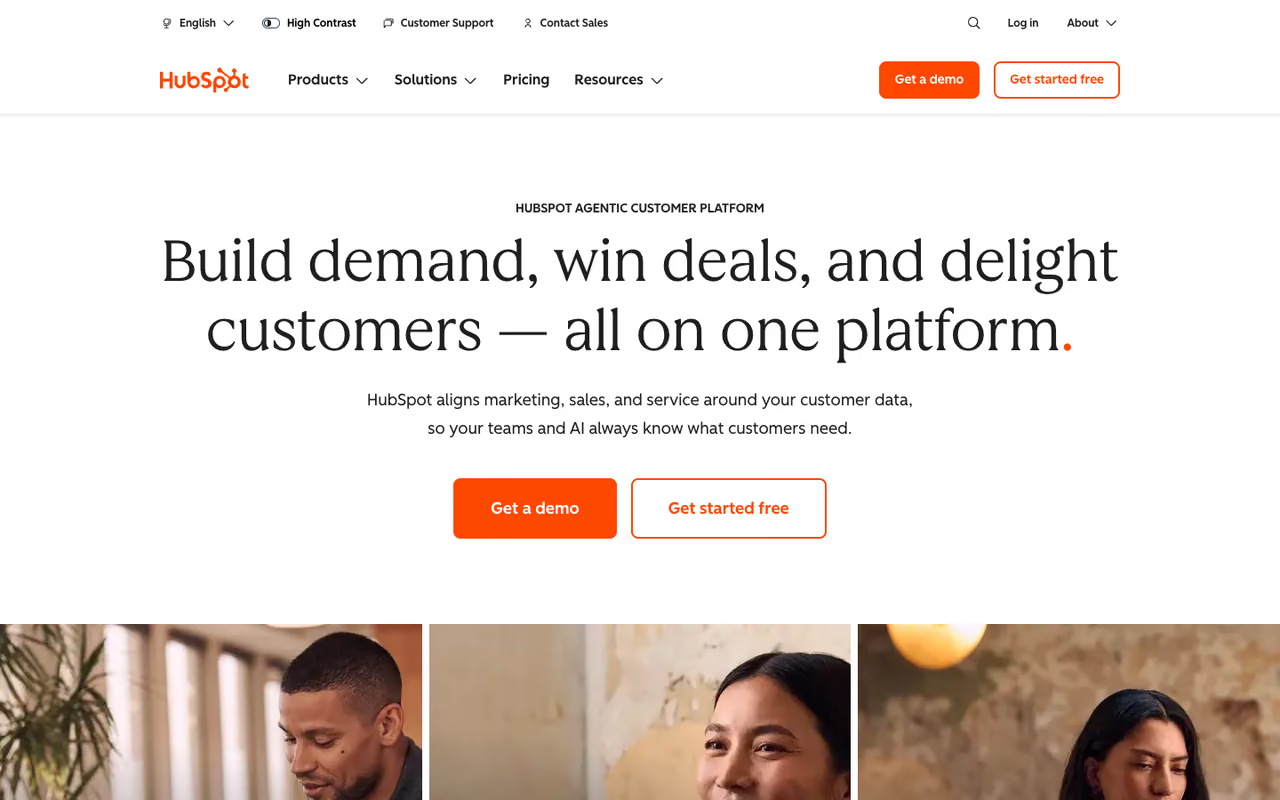
HubSpot wins for the same reason it usually does: the calling, the help desk, and the CRM are not three products stitched together, they're one. When a call comes in, the agent sees the full contact timeline, open tickets, and any associated deal without leaving the call window. Call recordings, transcripts, and notes log back to the record automatically.
Who it's best for: teams of 5 to 100 that want sales and support reading from the same customer data, and who don't want to babysit an integration between a phone system and a separate CRM.
The best fit for teams of 5 to 100 that want sales and support reading from one customer record, with calling, help desk and CRM as one product. At $90 a seat plus a $1,500 onboarding fee, it is a poor fit for budget-heavy call centers.
Pricing: the help desk and call tracking features that matter live in Service Hub Professional at $90 per seat per month on annual billing, with a one-time $1,500 onboarding fee. Enterprise runs $150 per seat. Calling minutes beyond the included allotment are billed on top.
The standout is the IVR and call routing built into Professional: you can build phone trees, route to teams, and transfer with full context attached, all logged to the contact.
The catch: that $90 seat and the $1,500 onboarding fee make HubSpot a poor fit for a 50-agent budget call center. It's priced for quality of data, not for cramming the cheapest possible phone seats. If you're running high-volume outbound, the per-minute and per-seat math gets expensive fast.
Zoho Desk: the cheapest option that still does the job
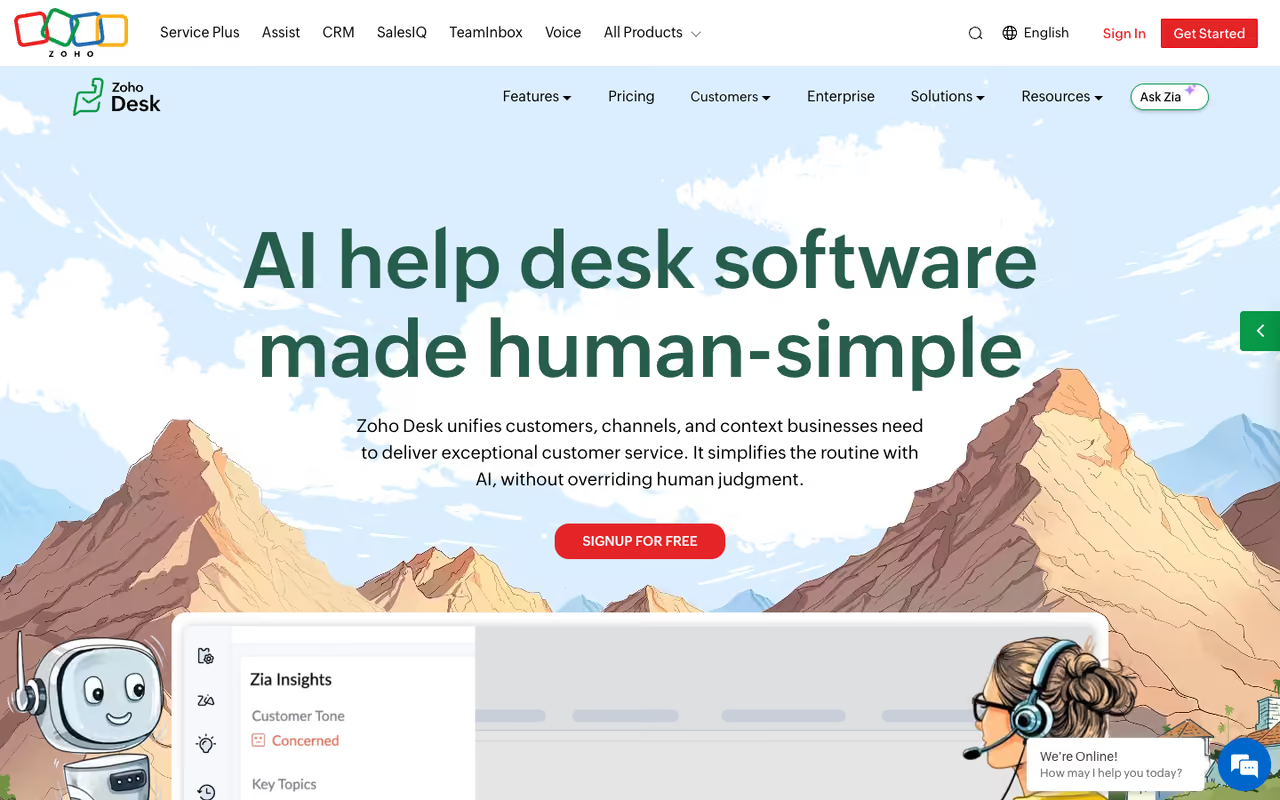
Zoho Desk is what I recommend when budget is the hard constraint. Paid plans start at $14 per agent per month, the free plan covers 3 agents, and if you already run Zoho CRM, the contact data flows between them without a paid connector.
Who it's best for: small teams already on Zoho, or anyone who wants a real help desk with CRM context for under $20 a seat.
The budget pick, with paid plans from $14 per agent per month and a free plan for 3 agents, especially if you already run Zoho CRM. The catch is phone: telephony is a separate Zoho Voice subscription, so true call center costs creep upward.
Pricing: Standard is around $20 per agent per month, Enterprise is about $40 per agent (or €50 billed monthly) and adds AI replies and multi-department routing, per Zoho's plan page.
The standout is the price-to-capability ratio. For $40 a seat you get AI-assisted responses that most competitors gate behind separate add-ons costing $29 to $50 extra per agent.
Where it falls short: the phone piece. Native telephony runs through Zoho Voice, a separate subscription at roughly $34 to $74 per user per month. So a true call center setup means stacking Desk plus Voice, and the total creeps toward what you'd pay for an all-in-one. Freshdesk, by contrast, includes voice in its paid plans.
Freshdesk Omni: voice included, not an afterthought
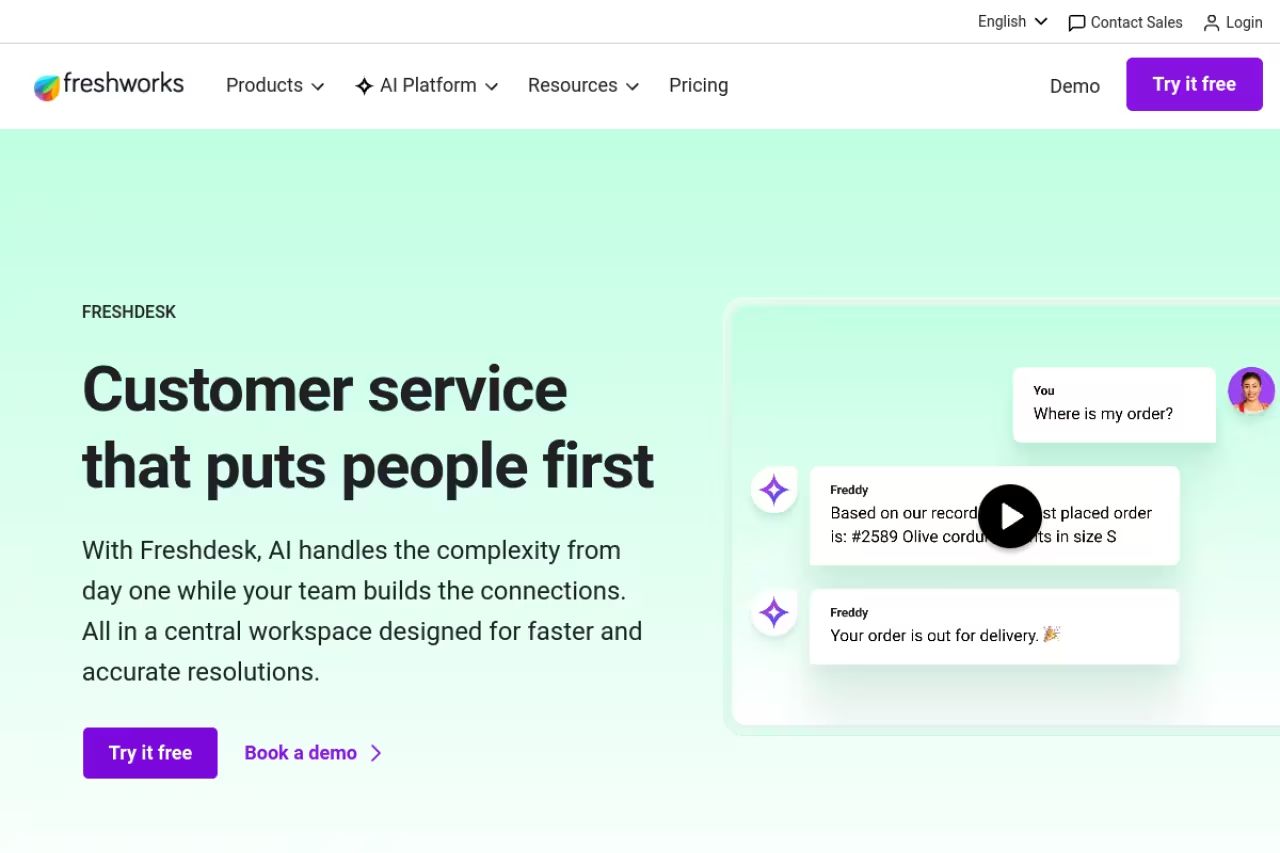
Freshdesk (now sold as Freshdesk Omni) treats the phone as core, not as a bolt-on. The Freshcaller engine is built in, and even the entry paid tier includes calling rather than pushing you to a separate product.
Who it's best for: support teams that handle phone, email, and chat together and want one omnichannel inbox without buying a phone system on the side.
Go with Freshdesk Omni if your team handles phone, email and chat together and wants calling built in rather than bolted on. The $29 sticker is a floor, because Copilot and customer-facing AI agents cost extra.
Pricing: the Growth plan starts at $29 per agent per month on annual billing, rising through Pro and Enterprise. The Freshcaller add-on, if you need the standalone version, starts at $15 per agent per month.
The standout is that omnichannel routing actually works across channels out of the box. A customer can email, then call, and the agent sees one continuous thread.
The catch: the AI costs add up. The agent-facing Copilot runs about $29 extra per agent per month, and customer-facing AI agents are billed in session packs (around $49 for 100 sessions). The $29 sticker is the floor, not the ceiling, once you turn on the AI features Freshworks markets hardest.

Five9: when you're running a real contact center
Five9 is in a different weight class. This is cloud contact center software (CCaaS) for teams running predictive dialers, workforce management, and quality monitoring at scale. It connects to Salesforce, HubSpot, Zendesk, and others rather than being the system of record itself.
Who it's best for: contact centers with 50-plus agents doing high-volume inbound or outbound, where dialer efficiency and shrinkage management move real money.
A different weight class: cloud contact center software for 50-plus agents running predictive dialers, workforce management and quality monitoring. The 50-seat minimum and quote-based pricing make it a non-starter for small teams.
Pricing: the Digital plan is $119 per seat per month, and there's a 50-seat minimum across all plans. Voice tiers and the advanced AI, WFM, and quality features sit behind custom quotes that typically clear $200 per user. Every plan includes 3,000 AI minutes per seat for transcription and summaries.
The standout is the dialer and workforce tooling. Predictive dialing, agent scripting, and real-time supervisor dashboards are genuinely best-in-class for outbound operations.
Where it falls short: the 50-seat minimum and quote-based pricing make Five9 a non-starter for small teams, and it's overkill for anyone who just wants click-to-call on their CRM. You're buying an operation, not a feature.

Zendesk Suite: the ticketing heavyweight
Zendesk earns its reputation on ticketing, and Zendesk Talk plugs phone support into that. The catch is structural: you can't buy Talk on its own. It rides on top of a Zendesk Suite subscription.
Who it's best for: support-led organizations with high ticket volume that want the deepest ticketing workflows and the largest app marketplace, with voice as one channel among many.
The ticketing heavyweight for support-led organizations with complex workflows and a big app marketplace, with voice as one channel. Talk cannot be bought alone, and add-ons stack up well beyond the headline $55 per agent.
Pricing: Suite plans start at $55 per agent per month on annual billing ($69 monthly), running up to $150 per agent for higher tiers. Talk voice and SMS usage adds roughly $5 to $20 per agent per month on consumption, and the Copilot AI add-on is its own $50-per-agent line item.
The standout is the ticketing engine and the app ecosystem. If your workflow is complex, Zendesk bends to fit it better than almost anything else.
The catch: the add-ons stack. Industry breakdowns put total add-on cost at 20 to 40 percent above the base subscription once you turn on voice, AI, and the extras most teams end up wanting. Budget for the real number, not the headline $55.

CloudTalk: built for teams that dial out
CloudTalk is the pick when calling is the main event and you want smart and power dialers that don't fight you. It integrates tightly with HubSpot, Salesforce, Pipedrive, and others, acting as the voice layer on top of your existing CRM.
Who it's best for: sales and outbound teams whose day is calls, who want dialer automation and call analytics without buying a full CCaaS platform.
A strong outbound engine for sales teams whose day is calls, with power and smart dialers and tight CRM integrations at $49 on the Expert tier. It is a phone system, not a CRM, so you still need one behind it.
Pricing: Starter is $25 per user per month on annual billing, Essential is $29, and Expert is $49 (the tier that unlocks power and smart dialers, Salesforce integration, and live monitoring). Monthly billing pushes Expert to $69.
The standout is dialer quality. The power and smart dialers in the Expert tier are smooth, and local presence plus call analytics make it a strong outbound engine.
Where it falls short: CloudTalk is a phone system, not a CRM. You still need a CRM behind it, which is fine if you have one, but it means CloudTalk alone won't give you the unified record that HubSpot or Zoho Desk do.
If you're assembling a sales stack rather than a support desk, our guide to the best CRM for startups covers the systems CloudTalk plugs into.
Salesforce Service Cloud Voice: native, if you're already there
Salesforce Service Cloud Voice puts the phone inside the Salesforce record. For organizations already standardized on Salesforce, that native integration is the whole pitch: telephony, transcripts, and AI surface directly on the case and contact your agents already work from.
Who it's best for: mid-market and enterprise teams already running Service Cloud, who want voice unified with the same data their service org lives in.
Makes sense only if you are already deep in Salesforce, since voice, transcripts and AI live right on the case record. The three-layer cost of seat license, per-minute telephony and consumption makes budgeting hard, and the total is brutal otherwise.
Pricing: Voice is an add-on SKU. List price adds roughly $50 to $200 per user per month on top of your Service Cloud license, plus per-minute Amazon Connect telephony (around $0.12/minute inbound, $0.35/minute outbound in the US). A loaded Service Cloud deployment with voice can reach $400 to $600 per user at list before discounts.
The standout is that nothing leaves Salesforce. Agentforce AI, routing, and analytics all read from one record, which is powerful if Salesforce is already your operating system.
The catch: the three-layer cost (seat license, per-minute telephony, feature consumption) makes budgeting genuinely hard, and it only makes sense if you're already deep in Salesforce. For everyone else, the total cost is brutal.

Bitrix24: flat-rate everything for tiny teams
Bitrix24 breaks the per-seat model. You pay a flat monthly fee for a set number of users, and the contact center, CRM, telephony, and project tools all come in the box.
Who it's best for: very small teams and bootstrapped operations that want CRM plus a contact center without per-agent math, and don't mind a busier interface.
A value play for very small teams that want CRM plus contact center on a flat rate, $49 a month for up to 5 users. It does many things adequately and few exceptionally, and telephony quality and support trail the specialists.
Pricing: the Basic plan is $49 per month for up to 5 users on annual billing, Standard is $99 per month for 50 users. Telephony minutes can cost extra on top of the flat fee.
The standout is the flat rate. If you have 5 people, $49 a month for CRM plus contact center is hard to beat on raw cost.
Where it falls short: the breadth is also the weakness. Bitrix24 does a lot of things adequately and few things exceptionally, and the interface reflects that. Telephony quality and support depth trail the specialists. It's a value play, not a best-in-class one.
How to choose
Skip the feature checklists for a second and answer three questions.
First, what's your primary motion? If you mostly take support tickets, start with HubSpot, Zendesk, or Freshdesk. If you mostly make outbound calls, start with CloudTalk or Five9. The wrong category wastes everything downstream.
Second, where does your customer data already live? If you're on Salesforce, Service Cloud Voice is the path of least resistance despite the cost. On Zoho, Zoho Desk plus Voice. Greenfield with no incumbent, HubSpot gives you the cleanest single database.
Third, how many agents? Under 10 and price-sensitive: Zoho Desk or Bitrix24. 10 to 100 wanting unified data: HubSpot. Over 50 running a real operation with dialers and WFM: Five9. Matching seat count to the tool's sweet spot matters more than any individual feature.
If you want a faster way to compare options like these side by side, our top tools directory tracks pricing and categories across the CRM and contact center space, and Dupple X curates the AI tools worth knowing for ops teams.
FAQ
What is the difference between call center software and a call center CRM?
Call center software handles the telephony: routing, IVR, dialers, queues, and recording. A call center CRM ties those calls to the customer record so agents see history, tickets, and deals during the call. Tools like Five9 and CloudTalk are primarily telephony and integrate with a separate CRM. HubSpot Service Hub and Zoho Desk combine both, so the call and the customer data live in one place.
What is the cheapest call center CRM software?
Zoho Desk is the cheapest serious option, with paid plans starting at $14 per agent per month and a free tier for 3 agents. Bitrix24 can be cheaper for tiny teams at $49 per month flat for 5 users since it doesn't charge per seat. Just remember that with both, true phone support often means a separate telephony cost on top.
Do I need a separate phone system for a call center CRM?
It depends on the tool. Freshdesk Omni and HubSpot include calling within their plans, so no separate phone system is required. Zoho Desk needs Zoho Voice as a separate subscription, and CloudTalk or Five9 are the phone system you'd pair with a standalone CRM. Always check whether voice is included or sold separately before comparing sticker prices.
Which call center CRM is best for outbound sales calls?
CloudTalk and Five9 are the strongest for outbound. CloudTalk's Expert plan ($49 per user per month) includes power and smart dialers that work well for smaller sales teams. Five9 is built for large-scale outbound with predictive dialing and workforce management, but it requires a 50-seat minimum and starts at $119 per seat for the digital tier.
Is HubSpot good for a call center?
HubSpot works well for small and mid-size teams (roughly 5 to 100 agents) that want calling, ticketing, and CRM in one database. The call routing and IVR features live in Service Hub Professional at $90 per seat per month. It's not built for high-volume 50-plus-agent operations where dialer efficiency and per-seat cost dominate. For that scale, a dedicated CCaaS platform like Five9 fits better.
How much does call center CRM software cost per agent?
Expect $14 to $50 per agent per month for CRM-led tools (Zoho Desk, Freshdesk, Zendesk Suite, CloudTalk), $90 and up for HubSpot Service Hub, and $119-plus per seat for full contact center platforms like Five9. Add 20 to 40 percent for AI add-ons, telephony minutes, and onboarding fees, which rarely show up in the headline price.
Ready to put the right tools in front of your team? Start a Dupple X trial and get the curated stack instead of the spreadsheet.
Related guides
Some offers on this page may be paid placements or contain affiliate links.
Across our whole catalogue the median is $24 a month and 33% of tools advertise a free tier. Figures are the lowest recurring monthly price quoted in our own review of each tool, read on 2026-08-19. Full method and every category.
