
Best Customer Satisfaction Software in 2026 (Compared and Ranked)

Key facts8 tools compared: Zonka Feedback, Survicate, Nicereply, SurveySparrow, Hotjar, AskNicely…
- 8 tools compared: Zonka Feedback, Survicate, Nicereply, SurveySparrow, Hotjar, AskNicely, Qualtrics, SurveyMonkey
- Zonka Feedback (best for: Omnichannel + kiosk/offline): 15-day trial, paid from ~$49/mo
- Survicate (best for: All-around multichannel feedback): Free, paid from $89/mo
- Nicereply (best for: Support teams in a helpdesk): $59/mo (annual)
- SurveySparrow (best for: Higher completion rates): From $19/mo
Most "customer satisfaction" tools fall into one of two traps. Either they're a glorified form builder that emails you a CSV once a quarter, or they're an enterprise suite that costs $28,000 a year and takes a six-week implementation to send a single NPS survey. Neither helps a small team actually move a satisfaction score.
I compared the main contenders on how fast you can ship a CSAT survey, whether the responses route to the right person, and what you actually pay once you cross a real response volume. The gap between marketing pages and reality is wide. Some "free" plans cap you at 20 responses a month. Some "starter" plans start at $89.
If you want one answer: Zonka Feedback is my top pick for teams that need automated, multi-channel CSAT wired into the tools they already use, surveys that fire at the right moment and route to the right person without manual work. If you'd rather start with a fast, self-serve all-rounder, Survicate covers NPS, CSAT, and CES across email, web, in-product, and mobile, with genuinely useful AI theme analysis and a free plan to test before paying. And if you run a support desk and live inside Zendesk or Help Scout, Nicereply is the more focused choice. Below are eight tools worth your shortlist, with the catches spelled out.
Quick comparison
| Tool | Best for | Starting price | Standout |
|---|---|---|---|
| Zonka Feedback | Omnichannel + kiosk/offline | 15-day trial, paid from ~$49/mo | Offline and on-site surveys |
| Survicate | All-around multichannel feedback | Free, paid from $89/mo | AI theme analysis across channels |
| Nicereply | Support teams in a helpdesk | $59/mo (annual) | Per-agent CSAT scoring |
| SurveySparrow | Higher completion rates | From $19/mo | Conversational chat-style surveys |
| Hotjar | Feedback plus behavior data | Free, Ask paid from $48/mo | Surveys tied to session recordings |
| AskNicely | Frontline service businesses | Custom (from ~$199/mo) | Agent coaching from feedback |
| Qualtrics | Enterprise CX programs | Custom (~$1,500+/mo) | Statistical depth, predictive models |
| SurveyMonkey | General-purpose surveys | From $30/user/mo | Familiarity and template library |

Zonka Feedback: omnichannel CSAT that triggers and closes the loop automatically
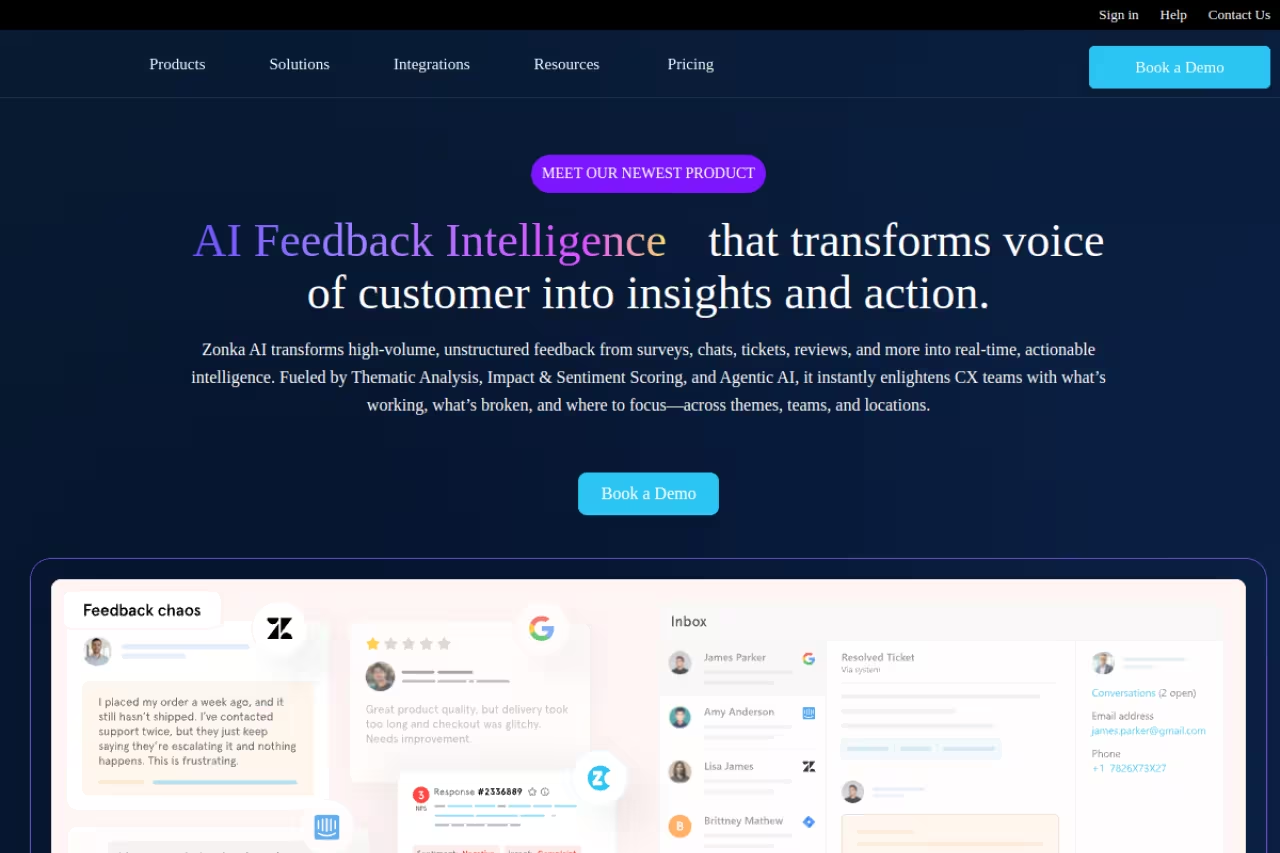
Zonka Feedback is the most complete CSAT platform here if you want surveys that fire at the right moment and route results to the right person without manual work. It triggers CSAT surveys automatically after the moments that matter (a resolved support ticket, a purchase, an onboarding milestone) and delivers them across email, SMS, in-app, WhatsApp, and web widgets, not just email like most of this list.
Who it's best for: support and CX teams that want automated, multi-channel CSAT wired into the tools they already use.
The intelligence layer is where it separates from simpler tools. AI categorizes open-text feedback into themes automatically instead of leaving you an unsorted pile of comments and a single score, and you can break CSAT trends out by agent, team, location, and product to find exactly where satisfaction is slipping. Native integrations with Zendesk, Freshdesk, and Intercom trigger surveys right after an interaction and sync the scores back into the helpdesk, so agents see satisfaction in context.
The standout: the helpdesk integrations plus automated triggering. Set it up once and CSAT runs itself (post-ticket, post-purchase, post-onboarding) with the themes and segmentation already done for you.
The most complete CSAT platform here for support and CX teams that want automated, multi-channel surveys wired into their helpdesk. Expect a short learning curve, and the cheapest plans gate the AI analysis that is much of the appeal.
Pricing: no free plan, but a 15-day free trial with no card. Paid feedback management starts around $49/month and scales up; the AI-heavy tier is meaningfully more. Confirm current tiers on their pricing page.
The catch: there's more surface area than a focused post-ticket tool, so expect a short learning curve, and the cheapest plans gate the AI analysis that's a big part of the appeal. For a team that wants automated, omnichannel CSAT with real routing, it's worth the ramp.

Survicate: the best all-around choice
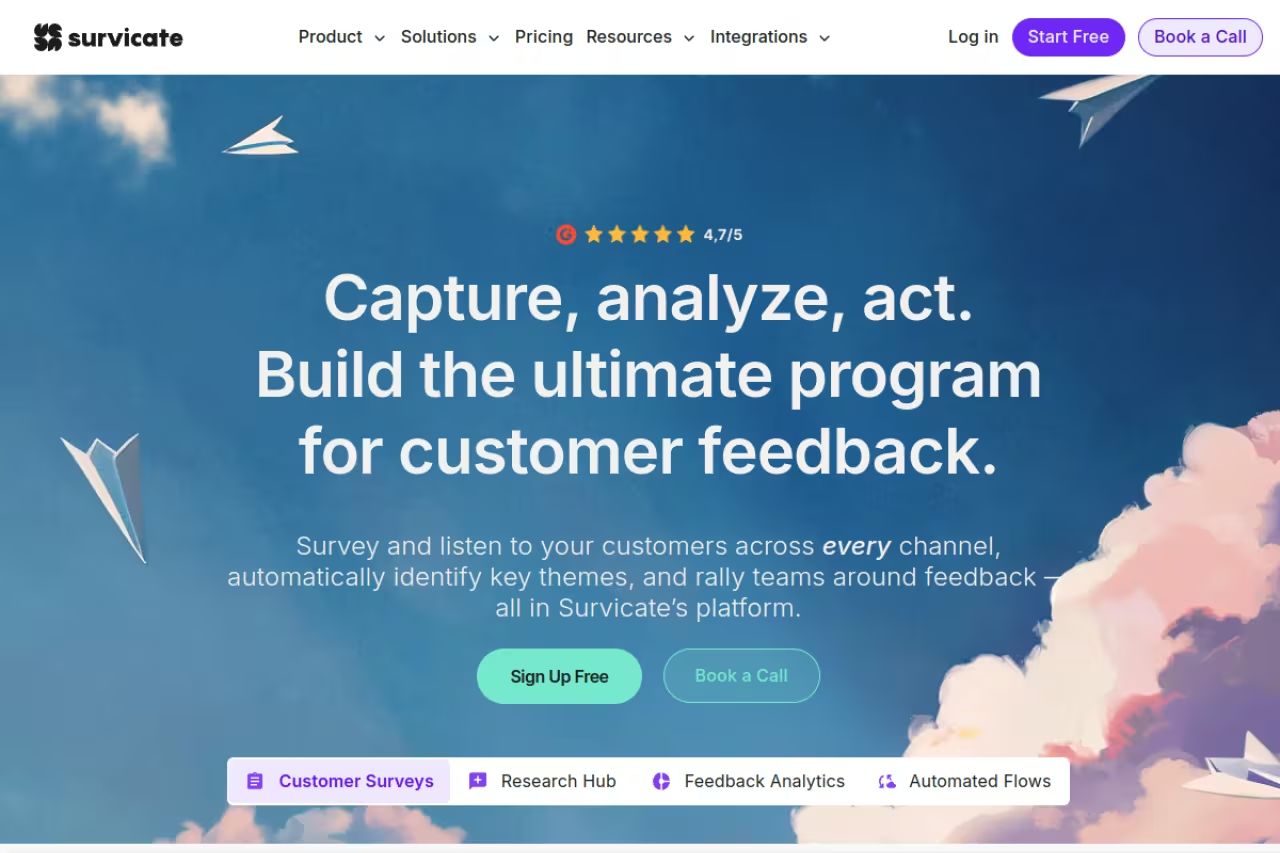
Survicate is the tool I'd hand to most teams without much caveat. It does the three core survey types (NPS, CSAT, CES) and ships them where your customers already are: website widgets, email, in-product prompts, mobile, and link surveys. The setup is fast. I had a CSAT survey live on a test site in under fifteen minutes.
What sets it apart in 2026 is the AI analysis. Open-text responses get grouped into themes automatically, so you're not reading 400 comments by hand to find the three things people keep complaining about. It also routes feedback into your stack: native integrations with HubSpot, Intercom, Salesforce, and Slack mean a low score can trigger a Slack alert or a CRM update without you wiring up Zapier.
Who it's best for: product and CX teams that collect feedback in more than one place and want it analyzed in one dashboard.
Survicate is the safe all-rounder for product and CX teams that collect feedback in several places and want one analyzed dashboard. Setup is fast, but response caps bite quickly, so price it against your real monthly volume.
Pricing: the free plan gives you 25 responses a month and three seats, which is enough to test the workflow properly. Paid starts at $89/month (Starter, 500 responses), Growth runs $114/month billed annually for 1,500 responses, and Pro lands at $349/month.
The catch: the response caps bite faster than you'd expect. If you survey a large list or a high-traffic site, you'll blow past the Starter tier's 500 responses quickly and the jump to Growth is real money. Price it against your actual monthly volume, not your wishful one.
Nicereply: built for support teams
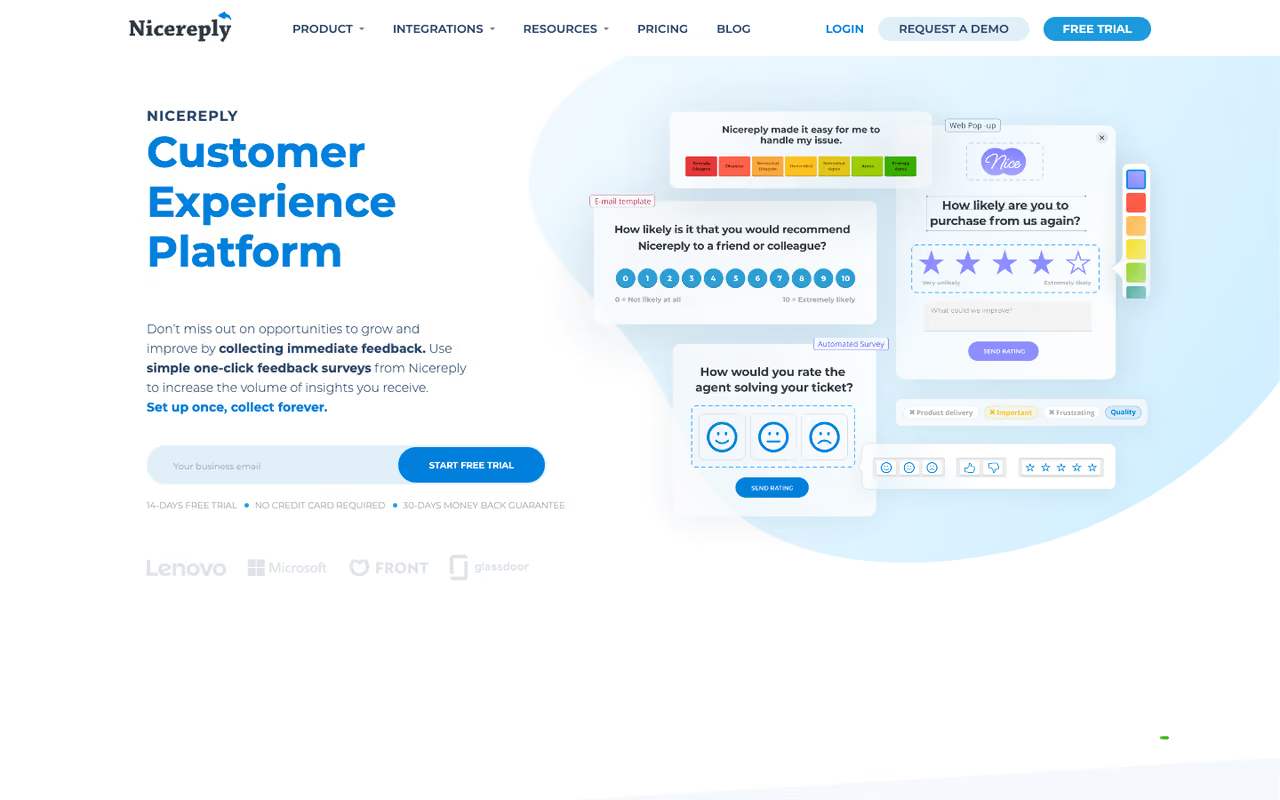
If your satisfaction program lives and dies inside a helpdesk, Nicereply is the sharper tool. It plugs one-click CSAT, NPS, and CES surveys directly into your support emails. The rating widget sits in the agent's signature, so customers can score the interaction without leaving their inbox. Response rates climb because there's zero friction.
The feature that earns its place is per-agent scoring. Nicereply attributes every rating to the agent, team, and company level, with a leaderboard that turns satisfaction into something a support lead can actually manage. It integrates with Zendesk, Help Scout, Front, Freshdesk, Intercom, and LiveAgent, and reports a 98% satisfaction rating across G2 and Capterra from its own 1,600+ customers.
Who it's best for: support and success teams that want satisfaction tied to individual agents and tickets, not anonymous survey blasts.
The sharper tool if your satisfaction program lives inside a helpdesk, with one-click surveys in agent signatures and per-agent scoring. It's not a general survey platform, and response limits on lower tiers are tight for a busy desk.
Pricing: Starter is $59/month billed annually (or $79 monthly). The business-usable Essential tier runs $119/month for 250 responses and 10 seats.
Where it falls short: it's a support-feedback tool, not a general survey platform. If you want product-led in-app surveys, market research questionnaires, or website intercepts beyond the post-ticket moment, you'll hit its edges fast. And the response limits on lower tiers are tight for a busy desk.
If your bottleneck is acting on feedback rather than collecting it, that's usually a workflow problem, not a survey-tool problem. A connected setup like Dupple X can sit between your feedback source and your team so low scores actually trigger follow-up instead of sitting in a dashboard.

SurveySparrow: when completion rate is the problem
SurveySparrow rebuilds the survey as a conversation. Instead of a wall of 12 questions, customers get a chat-style flow that asks one thing at a time. It feels less like homework, and that shows up in completion rates. It handles CSAT, NPS, and CES, and the text and sentiment analysis on open responses is solid.
Who it's best for: teams whose surveys get started but abandoned, where a friendlier format is worth more than raw feature count.
Choose SurveySparrow when surveys get started but abandoned and a friendlier chat-style format is worth more than raw feature count. It's great for short pulse surveys, but logic and customization feel shallower for long research questionnaires.
Pricing: plans start at $19/month for the basic survey tier, with Starter at $39/month. Higher tiers price on the number of responses collected per year, so read the response math before committing.
Where it falls short: the conversational format is great for short pulse surveys and less suited to long, branching research questionnaires. Power users sometimes find the logic and customization shallower than a dedicated research tool like Qualtrics.

Hotjar: satisfaction plus the "why"
A satisfaction score tells you something dropped. Hotjar tells you why, because its surveys (the "Ask" product) sit next to heatmaps and session recordings (the "Observe" product). A low CSAT on a checkout page becomes a recording of the customer fumbling the form. That context is the whole pitch.
Who it's best for: product and growth teams that want quantitative satisfaction signals wired to qualitative behavior on the same pages.
Hotjar suits product and growth teams that want satisfaction scores tied to heatmaps and session recordings that show why. Costs add up across two products, and packaging is migrating under Contentsquare, so confirm current tiers.
Pricing: Ask has a free tier with 20 responses a month. Paid Ask plans run $48/month (Plus, 250 responses), $64/month (Business), and $128/month (Scale, unlimited). Observe is priced separately, so most teams end up paying for both.
The catch: that two-product split adds up, and Hotjar was acquired by Contentsquare (deal closed mid-2025). Pricing and packaging are migrating to a unified Contentsquare platform through 2026, so the plan you sign up for today may get renamed and repriced. Confirm current tiers on their pricing page before budgeting.

AskNicely: for frontline service teams
AskNicely is purpose-built for businesses where the experience is delivered by a person: field service, franchises, home services, hospitality. It collects NPS, CSAT, and 5-star feedback, then does something most tools don't: it pushes coaching prompts to the frontline employee tied to the score they earned.
Who it's best for: multi-location or field-service operations that want satisfaction to drive frontline behavior, not just sit on a manager's dashboard.
Built for multi-location and field-service operations that want satisfaction scores to drive frontline coaching, not just sit on a dashboard. It's narrow by design, and opaque pricing makes it hard to compare.
Pricing: AskNicely doesn't publish clean public pricing. Third-party data puts entry plans around $199/month, scaling from there based on contacts and features. Expect a sales conversation.
Where it falls short: it's narrow by design. If you're a SaaS product team wanting in-app surveys and event-triggered prompts, this isn't built for you, and the opaque pricing makes it hard to compare on a spreadsheet.
Qualtrics: the enterprise heavyweight
Qualtrics is what large organizations buy when customer feedback is one input into a company-wide experience program covering CX, employee experience, product research, and brand. The statistical depth, predictive models, and survey logic go far beyond anything else here.
Who it's best for: enterprises with a dedicated insights or CX team, high response volumes, and budget to match.
Qualtrics is the enterprise heavyweight for organizations with a dedicated insights or CX team and the budget to match, with unmatched statistical depth. For a team that only needs CSAT and NPS it's overkill, and overpriced.
Pricing: no public price list. According to Vendr's marketplace data, the median buyer spends around $28,500 a year, with deals ranging from roughly $6,500 to $126,000 depending on scope.
The catch: it's overkill, and overpriced, for any team that just needs CSAT and NPS. The power comes with complexity and a real implementation. If three people in your company will ever touch it, look elsewhere.

SurveyMonkey: the familiar default
SurveyMonkey earns its spot on ubiquity. Almost everyone has filled one out, the template library is deep, and it's reliable for general-purpose surveys including CSAT and NPS. If your needs are broad and occasional rather than a continuous CX program, it's a safe, recognizable choice.
Who it's best for: teams that run varied surveys (not only satisfaction) and value a familiar, low-learning-curve tool.
SurveyMonkey is the familiar default for teams running varied, occasional surveys who value a low learning curve. It's a survey tool first and a CX platform second, and per-user pricing gets expensive for wider teams.
Pricing: Team Advantage runs $30/user/month billed annually with a 3-user minimum, so the real floor is about $1,080/year. Individual Advantage is $39/month billed annually. Watch the $0.15-per-response overage charge once you exceed plan limits.
Where it falls short: it's a survey tool first and a CX platform second. The real-time targeting, in-product triggers, and feedback routing that the specialists offer aren't its strength, and per-user pricing gets expensive for wider teams.
How to choose
Skip the feature checklist. Answer three questions instead.
Where do your customers live? If feedback happens inside a helpdesk, start with Nicereply. If it spans web, app, and email, pick Survicate. If any of it is offline or on-site, Zonka is the only real answer here. Match the tool to the touchpoint, not the brand.
What happens after a bad score? A satisfaction number nobody acts on is theater. Choose a tool that routes low scores to a person or a workflow automatically. Survicate, Nicereply, and AskNicely all do this in different ways. If the tool just charts the average, it's not helping.
What's your real response volume? Almost every plan here is gated by responses, not features. Estimate your monthly volume honestly, then price the tier that covers it. The "starter" price is rarely the price you pay. A free tier is for testing the workflow, not running a program.
For a quick gut check on which of these fits your stack, our top tools roundup and the best AI customer service tools guide cover adjacent options worth a look. If you're trying to wire feedback into a connected workflow, Dupple X is worth a free trial.
FAQ
What is the best customer satisfaction software in 2026?
For most teams, Survicate is the best all-around pick: it covers NPS, CSAT, and CES across web, email, in-app, and mobile, with AI theme analysis and a usable free plan. Support-heavy teams should look at Nicereply, businesses with offline touchpoints at Zonka Feedback, and enterprises at Qualtrics.
What's the difference between CSAT, NPS, and CES?
CSAT (Customer Satisfaction Score) measures how happy someone is with a specific interaction or product, usually on a 1-5 scale. NPS (Net Promoter Score) measures loyalty by asking how likely they are to recommend you, on a 0-10 scale. CES (Customer Effort Score) measures how hard it was to get something done. Most tools on this list run all three, and you typically want a mix.
Is there free customer satisfaction software?
Yes, but with caps. Survicate's free plan includes 25 responses a month and three seats, and Hotjar's free Ask tier allows 20 survey responses a month. These are fine for testing the workflow or a very small program, but real volume pushes you onto paid plans quickly.
How much does customer satisfaction software cost?
It ranges widely. Focused tools start around $19-$89/month (SurveySparrow, Survicate, Nicereply). Mid-market omnichannel platforms like Zonka run from roughly $49/month into the hundreds. Enterprise platforms like Qualtrics are custom-quoted and commonly land between $6,500 and $126,000 a year. Most plans are priced by response volume, so your actual cost depends on how many surveys you send.
Which customer satisfaction tool is best for support teams?
Nicereply, because it embeds one-click CSAT, NPS, and CES surveys into helpdesk emails and attributes every rating to a specific agent, team, and ticket. It integrates with Zendesk, Help Scout, Front, Freshdesk, and Intercom, which is where support feedback should originate.
Do I need a dedicated satisfaction tool if I already use Zendesk?
Zendesk includes CSAT surveys on its Professional and higher plans, which may be enough for basic post-ticket scoring. A dedicated tool like Nicereply or Survicate adds per-agent analytics, multichannel distribution, AI text analysis, and feedback routing that the built-in surveys don't match. If satisfaction is a real priority, the dedicated layer usually pays for itself.
Related guides
Some offers on this page may be paid placements or contain affiliate links.
Across our whole catalogue the median is $24 a month and 33% of tools advertise a free tier. Figures are the lowest recurring monthly price quoted in our own review of each tool, read on 2026-08-19. Full method and every category.
