
The 8 Best Sales Training Software Platforms in 2026

Key facts8 tools compared: Hyperbound, Second Nature, Gong, Mindtickle, Allego, PitchMonster, Trainual…
- 8 tools compared: Hyperbound, Second Nature, Gong, Mindtickle, Allego, PitchMonster, Trainual, Highspot
- Hyperbound (best for: AI roleplay for SDR teams): Free tier; custom from ~$15K/yr
- Second Nature (best for: Roleplay with lifelike avatars): ~$30-40/seat/mo, ~$20K min/yr
- Gong (best for: Coaching from real calls): ~$1,400-1,600/user/yr + platform fee
- Mindtickle (best for: Enterprise readiness & certs): ~$30-50/user/mo, 36-mo terms
Most sales training still happens the same way it did in 2015: a manager listens to a recorded call, scribbles notes, and delivers feedback three days later when the rep has already forgotten the deal. It doesn't scale, it's slow, and the average new rep takes months to hit quota while you wait.
What changed in the last two years is AI roleplay. Reps can now practice cold calls, discovery, and objection handling against a bot that talks back, then get scored in seconds. That shift split the market into two camps: the AI practice tools built for repetition (Hyperbound, Second Nature, PitchMonster) and the enterprise readiness platforms that wrap training, certification, and analytics into one system (Mindtickle, Allego, Gong). They solve different problems and cost wildly different amounts.
This is for founders, sales managers, and RevOps leads choosing a tool in 2026. If you want my short answer: for fast, practical rep practice without an enterprise contract, start with Hyperbound. It has a genuinely useful free tier, which almost nobody else in this list offers. If you're an enterprise that needs onboarding, certification, and coaching tied to pipeline, look at Mindtickle instead. Below is the full breakdown with real pricing and the catch on each.
Quick comparison
| Tool | Best for | Price | Standout |
|---|---|---|---|
| Hyperbound | AI roleplay for SDR teams | Free tier; custom from ~$15K/yr | Builds an AI buyer from your ICP in 2 min |
| Second Nature | Roleplay with lifelike avatars | ~$30-40/seat/mo, ~$20K min/yr | Video-call style 3D personas |
| Gong | Coaching from real calls | ~$1,400-1,600/user/yr + platform fee | Conversation intelligence on actual deals |
| Mindtickle | Enterprise readiness & certs | ~$30-50/user/mo, 36-mo terms | Onboarding, scoring, and coaching in one |
| Allego | Video-based coaching | From ~$30/user/mo | Async video practice and feedback |
| PitchMonster | Gamified SDR practice | Custom (demo required) | Voice cloning and 48 ready scenarios |
| Trainual | Small-team onboarding | From $249/mo (10 seats) | Centralized playbook and process docs |
| Highspot | Enablement + light coaching | ~$45-65/user/mo, custom | Content governance with Nexus AI |
Hyperbound: the best AI roleplay tool to start with
Hyperbound turns a description of your ideal customer into an interactive AI buyer you can call, in under two minutes. Reps run cold calls, discovery, and warm calls against bots that push back like real prospects, then get scored against a custom rubric. It's the tool I'd hand a new SDR on day one.
The tool to hand a new SDR on day one, and a good fit for outbound-heavy teams that want volume practice before touching a live lead. The free tier is real, but custom bots and scorecards need paid plans that start around $15,000 per year.
The bots are built from Hyperbound's library of real B2B call data, so the objections feel earned rather than scripted.
On pricing, this is the one that breaks the mold. Hyperbound has a real free tier with nine pre-built roleplay bots, unlimited call time, transcripts, and AI feedback. That's enough for a small team to genuinely test the workflow. Paid plans are quote-only and start around $15,000 per year, unlocking custom bots, the bot builder, real call scoring, integrations, and multilingual support. The company raised a $15M Series A in early 2026, so it's well funded and shipping fast.
The catch: every feature that makes Hyperbound interesting for a real org (custom bots, scorecards, integrations) sits behind that enterprise plan. The free tier is a great trial, not a forever plan. And like all roleplay tools, it trains the motion, not product depth, so pair it with real coaching.
Second Nature: roleplay that feels like a video call
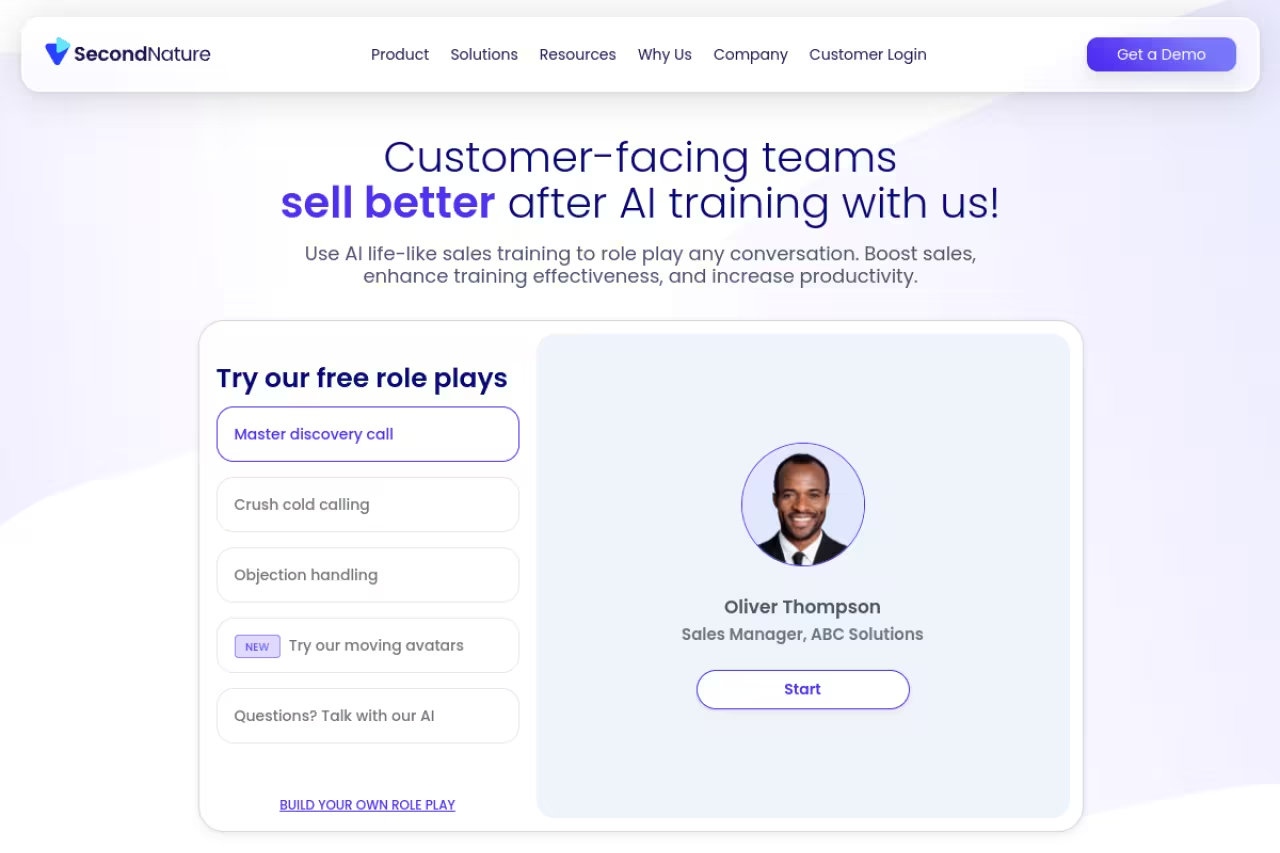
Second Nature takes a different angle on AI practice: instead of audio-only calls, you talk to 3D animated avatars in something closer to a face-to-face video meeting. You describe a scenario in plain text or upload your own content, and the AI builds a full roleplay with personas and evaluation topics.
Second Nature suits teams whose reps sell on video, with 3D avatars that make practice feel like a face-to-face meeting. It has no free tier or public pricing, and the avatar approach is polarizing, so trial it with skeptical reps first.
The avatar format raises the stakes in a useful way, since reading a "person" mid-pitch is part of the job.
Second Nature doesn't publish pricing. Based on multiple buyer reports, expect roughly $30 to $40 per seat per month with a minimum annual commitment near $20,000. It supports 20+ languages, which matters for global teams running the same program across regions.
The catch: no free tier and no public pricing, so you're booking a demo and negotiating before you see the product in your own workflow. The avatar approach is polarizing too. Some reps love it, others find it slightly uncanny and prefer the rawer phone-call feel of Hyperbound or PitchMonster. Trial it with skeptical reps, not just your champions.

Gong: coaching built on what actually happened in your deals
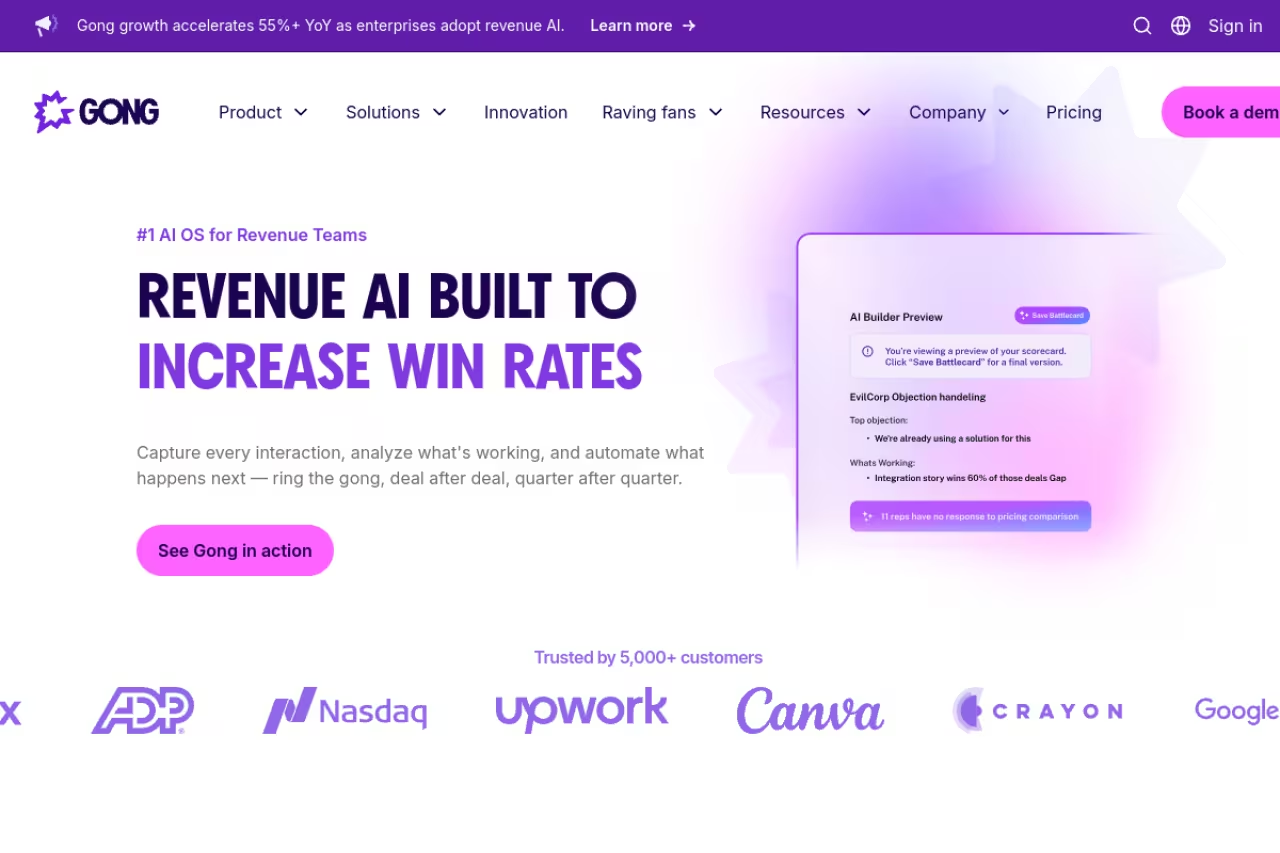
Gong isn't a roleplay tool. It records, transcribes, and analyzes real customer calls, then surfaces what your best reps do that the rest don't. For coaching, that's gold: you're working from actual deals instead of simulated ones, and managers can build training around real patterns.
Gong fits teams that already have call volume and want to coach off real deals rather than simulated ones. It analyzes rather than rehearses, and with platform fees and implementation the effective per-seat cost runs two to three times the quoted rate.
If your problem is "I don't know what's going wrong in our calls," Gong answers that better than any practice tool.
Pricing is where Gong gets heavy. The core conversation-intelligence plan runs roughly $1,400 to $1,600 per user per year, and bundles with outreach and forecasting push that to $2,880-$3,000. On top of seats there's a platform fee ($5,000 to $50,000/year) plus implementation. A 20-person team commonly pays $40,000 to $60,000+ in year one.
The catch: Gong shows you what happened, but it won't make reps practice before the call. It's analysis, not rehearsal. Effective per-seat cost runs two to three times the quoted rate once platform fees and implementation land, so it's overkill for small teams. For more on this category, see my guide to the best sales enablement tools.

Mindtickle: the enterprise readiness platform
Mindtickle is the full readiness stack: onboarding, content, role-play simulations, coaching workflows, certifications, and analytics tied to rep performance. If you're standardizing how hundreds of reps ramp and get certified, this is the category leader people benchmark against.
The enterprise readiness platform for revenue teams onboarding hundreds of reps at scale, with certification and scoring as the real draw. The multi-year commitment and setup time make it a poor fit under ~50 reps or if you want to start next week.
The certification and scoring engine is the real draw.
Pricing is quote-based, typically $30 to $50 per user per month on contracts that often run 36 months, with entry learning packages closer to $15/user. Budget another $3,000 to $5,000 for implementation, and expect a 6-8 week rollout.
The catch: the three-year commitment and setup time make Mindtickle a poor fit for anyone under ~50 reps or anyone who wants to start training next week. It's powerful, but it's a platform decision, not a quick purchase. If you're earlier-stage, the AI roleplay tools above get you 80% of the practice value at a fraction of the cost and commitment.

Allego: video-first coaching and practice
Allego centers everything on video. Reps record practice pitches, managers leave timestamped feedback, and the platform doubles as a content hub with AI-powered search to surface the right materials in context. It sits between pure training and full enablement.
Allego is a good match for distributed teams that learn well asynchronously, using record, review and re-record video practice. It only works if reps actually record themselves, and its content management overlaps with tools you may already own.
The video-practice loop (record, review, re-record) is genuinely effective for tightening talk tracks without scheduling live sessions.
Allego prices per user per month billed annually, starting around $30/user, with custom pricing for plans that add conversation intelligence. Like most enterprise tools here, the real number depends on seats and contract length, so you'll talk to sales.
The catch: Allego's async video model only works if your team actually uses it. Adoption is the failure point. Teams that won't record themselves get little value, and the content-management side overlaps with tools you may already own. Audit your stack before adding it.
PitchMonster: gamified practice for high-volume SDRs
PitchMonster is built for fast, fun, repeatable practice. It uses voice-cloning to make AI calls feel like real phone conversations and ships with 48 ready-made scenarios, plus instant feedback on pitches and filler words. It leans into the gamified, do-it-again loop that keeps SDRs engaged.
A gamified practice layer for high-volume SDR teams who need reps doing reps daily, with voice cloning that makes AI calls feel real and 48 ready-made scenarios. Pricing is not public, and it will not manage your onboarding curriculum.
The voice realism is a real differentiator against audio bots that sound robotic.
PitchMonster doesn't list public pricing, so plan on a demo and a custom quote. It positions as a lighter, more affordable option than the enterprise readiness platforms, which makes it worth a look for smaller teams alongside Hyperbound.
The catch: no transparent pricing and a narrower focus than the all-in-one platforms. It sharpens conversation quality but won't manage your onboarding curriculum or tie practice to pipeline data. Treat it as a practice layer, not your whole training system.
Trainual: onboarding and playbooks for small teams
Trainual isn't a sales-specific AI tool, and that's the point. It's a simple system for documenting your process and onboarding people, turning tribal knowledge into a searchable playbook. For a small team without a dedicated enablement function, it's often the right first step.
Start here if you are a startup or SMB that needs to systematize how you sell before investing in roleplay or conversation intelligence. Pricing is public, but it documents and onboards without making reps practice. It is the foundation, not the gym.
Pricing is refreshingly public: the Core plan is $249/month billed annually for 10 seats (about $25/user), Pro is $319, and Premium is $399. Extra seats run $3 to $5 each, plus a one-time $1,000 implementation fee. There's no free plan.
The catch: Trainual documents and onboards, but it won't make reps practice or coach them on live calls. It's the foundation, not the gym. Once your playbook is solid and your team grows, you'll want a dedicated practice tool on top. Pair it with a CRM from my best CRM for sales teams roundup for the full early-stage stack.

Highspot: enablement with coaching on the side
Highspot is primarily a sales-enablement and content-governance platform, with training and coaching as secondary features powered by its Nexus AI engine. I include it because plenty of teams already run Highspot and want to consolidate training into it rather than buy a separate tool.
Buy Highspot for content governance if you are a large GTM org where content sprawl is the real pain, and treat coaching as a bonus. If your actual problem is rep skill, it is the expensive, indirect fix, and its coaching trails dedicated platforms.
Note that Highspot and Seismic announced their intent to merge in February 2026, which may reshape pricing and roadmap.
Pricing is quote-only, landing roughly $45 to $65 per user per month based on procurement benchmarks, with implementation often $10,000 to $50,000+. Annual contracts commonly run well into six figures for larger teams.
The catch: if your actual problem is rep skill, Highspot is the expensive, indirect way to solve it. Its coaching tools trail dedicated platforms like Mindtickle and the roleplay tools above. Buy it for content governance, and treat better training as a bonus, not the reason.
How to choose
Skip the feature checklists and answer one question first: what's actually broken?
If reps are slow to ramp and you want them practicing before they touch a lead, buy an AI roleplay tool. Start with Hyperbound's free tier, then compare Second Nature (if you sell on video) or PitchMonster (for high-volume SDRs). These are the fastest, cheapest wins.
If you don't know what's going wrong in live calls, you need conversation intelligence, not practice. That's Gong, and you should only buy it if you have the call volume and budget to justify a five-figure year-one cost.
If you're an enterprise standardizing onboarding and certification across a big team, the platform decision is Mindtickle or Allego. Expect long contracts and a real implementation. And if you're a small team that hasn't even written down your process yet, start with Trainual and revisit the fancier tools in six months.
One rule across all of them: budget for adoption, not just the license. The best tool nobody uses loses to the mediocre tool your reps open daily. For a wider view of the AI tools reshaping selling, see my best AI sales tools guide, and if you want curated picks across categories, browse top tools.
If your team also runs on AI for content, research, and prospecting, a single subscription like Dupple X bundles the major models so reps aren't expensing five tools at once. You can start a yearly trial here.
FAQ
What is the best sales training software in 2026?
For most teams, Hyperbound is the best starting point because it offers real AI roleplay with a genuinely usable free tier. Enterprises that need onboarding, certification, and analytics tied to pipeline should look at Mindtickle. If your goal is coaching from real calls rather than simulated ones, Gong leads on conversation intelligence. The "best" depends on whether your problem is practice, readiness, or call analysis.
How much does sales training software cost?
It ranges widely. Trainual starts at a transparent $249/month for 10 seats. AI roleplay tools like Second Nature run roughly $30-$40 per seat per month with annual minimums near $20,000. Enterprise platforms cost more: Mindtickle is around $30-$50 per user per month on multi-year contracts, and Gong commonly hits $40,000 to $60,000+ in year one for a 20-person team once platform fees and implementation are included.
Does AI sales roleplay actually work?
Yes, for the specific skill of running through a conversation. Tools like Hyperbound and Second Nature let reps practice cold calls, discovery, and objection handling repeatedly without burning real leads, and they score performance instantly. The limit is that roleplay trains the motion, not deep product or industry knowledge, so it works best paired with real coaching and live-call review from a tool like Gong.
What's the difference between sales training and sales enablement software?
Sales training software focuses on building rep skill through practice, coaching, and certification. Sales enablement platforms like Highspot focus on managing and serving the content reps use, with training as a secondary feature. The categories overlap because vendors keep bundling them, but if your core problem is reps closing poorly, buy a training tool, not an enablement suite.
Which sales training tool is best for a small team?
For a small team, start with Hyperbound's free tier for practice and Trainual ($249/month) to document your process and onboard new hires. Both avoid the long enterprise contracts and five-figure implementations that come with Mindtickle, Gong, or Highspot. Once you've grown past 25-50 reps and have budget for a multi-year commitment, the enterprise readiness platforms start to make sense.
Related guides
Some offers on this page may be paid placements or contain affiliate links.
