
8 Best Generative Engine Optimization Tools in 2026

Key facts8 tools compared: Peec AI, Profound, Ahrefs Brand Radar, Otterly.ai, Scrunch, Semrush AI…
- 8 tools compared: Peec AI, Profound, Ahrefs Brand Radar, Otterly.ai, Scrunch, Semrush AI Toolkit, AthenaHQ, HubSpot AI Search Grader
- Peec AI (best for: Lean marketing teams): €85/mo annual
- Profound (best for: Enterprise brands): $399/mo (Growth)
- Ahrefs Brand Radar (best for: Existing Ahrefs users): $129 base + add-on
- Otterly.ai (best for: Solos and SMBs): $29/mo
A year ago, you could ignore how ChatGPT described your product. Now your buyers ask it before they ever touch Google. When someone types "best CRM for startups" into an AI assistant, the model spits back three or four names in a paragraph. If yours isn't one of them, you don't get a worse ranking. You don't exist.
That's the problem generative engine optimization tools solve. They run thousands of real prompts across ChatGPT, Perplexity, Gemini, Google AI Overviews, and Copilot, then tell you when your brand shows up, what the AI says about you, and which competitors are eating your share of the answer. Gartner expects traditional search traffic to drop roughly 25% by 2026 as more questions get answered without a click, so this is not a niche worth ignoring.
This guide is for marketers, founders, and SEO leads who need to track and improve AI visibility without lighting money on fire. The top pick for most teams is Peec AI for public pricing and self-serve setup. New users get 30% off for six months through our Peec link. If you're an enterprise with budget and a team, Profound is the deepest published option in this set.
Quick comparison
| Tool | Best for | Price (from) | Standout |
|---|---|---|---|
| Peec AI | Lean marketing teams | €85/mo annual | Transparent pricing, daily tracking |
| Profound | Enterprise brands | $399/mo (Growth) | Deepest analytics, 10+ engines |
| Ahrefs Brand Radar | Existing Ahrefs users | $129 base + add-on | Prompts from real search data |
| Otterly.ai | Solos and SMBs | $29/mo | Cheapest real monitoring |
| Scrunch | Agencies | $250/mo | Monitoring plus content delivery |
| Semrush AI Toolkit | SEO teams on Semrush | $99/mo add-on | Lives next to your SEO data |
| AthenaHQ | Action-oriented teams | $270/mo annual | Task workflows, not just dashboards |
| HubSpot AI Search Grader | A free first look | Free | One-time snapshot, no card |

Peec AI: the best value for most teams
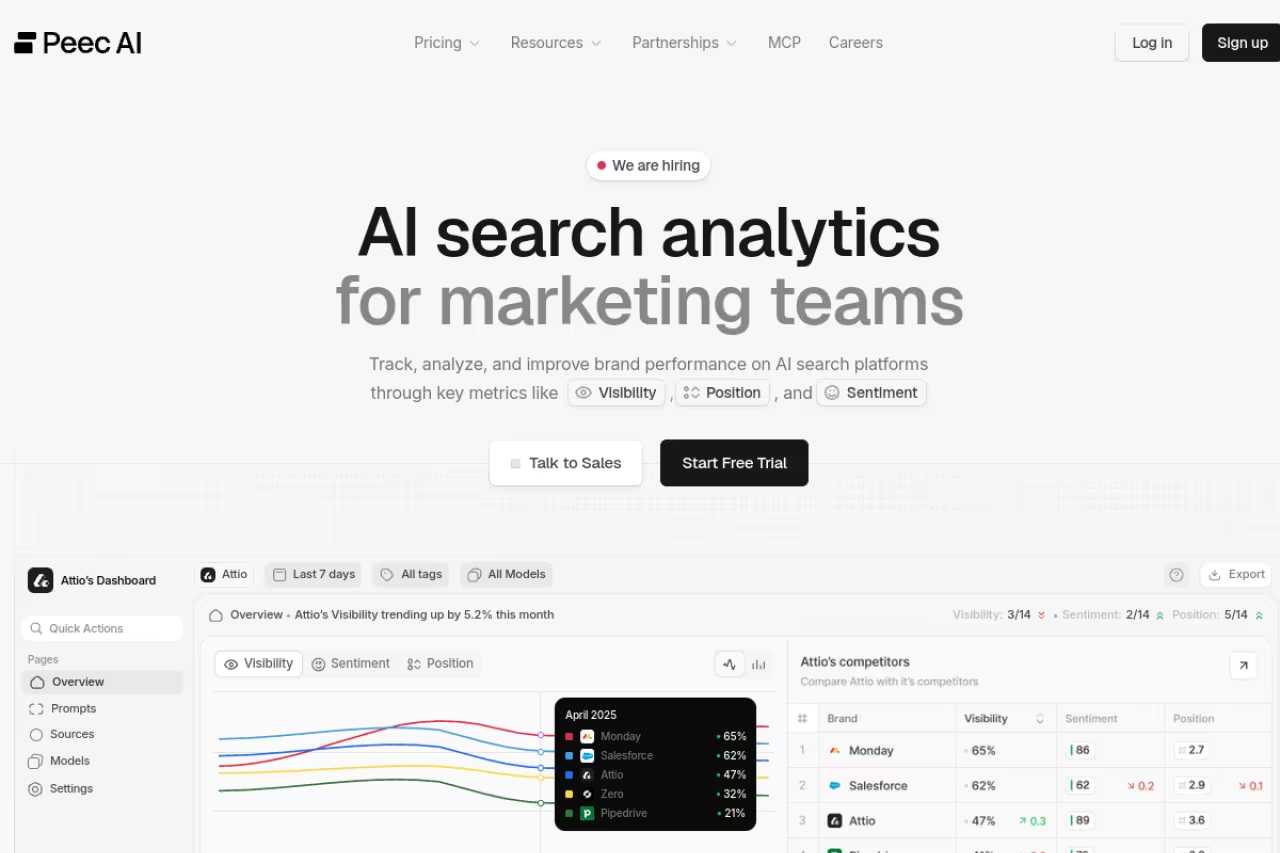
Peec AI is the tool to hand a five-person marketing team that wants answers this week, not after a sales call. It tracks your brand across ChatGPT, Perplexity, and Google AI Overviews daily, shows your visibility as a clean percentage, and flags which prompts you win or lose. Peec's own pitch is a short self-serve setup; time that on your account, not from this page.
Who it's best for: SEO and content managers at startups and mid-size companies who want real monitoring without enterprise overhead.
The sensible default for a small marketing team that wants GEO monitoring this week. Peec shows the actual AI answers behind your visibility score, with daily tracking and unlimited users, but extra models cost more and the cheaper tiers cap you at one project and one country.
Pricing is public and in euros. Billed monthly, Starter is €85 for 50 prompts, Pro is €205 for 150 prompts, and Advanced is €425 for 350. New users get 30% off for six months through our Peec link. There's a 7-day free trial with no credit card, and every plan includes daily tracking and unlimited users, which is rare at this price.
The standout is the mentions feed. Instead of just a score, you see the actual AI answers where your brand came up, so you read sentiment in context and spot where a competitor got recommended over you.
The catch: extra models cost more. Claude, Gemini, DeepSeek, and Grok each add roughly 20 to 30 euros per month. The cheaper tiers also cap you at one project and one country, so multi-market brands climb fast.

Profound: the enterprise heavyweight
Profound is the most serious GEO platform on this list, and the market agrees. The company raised a $96M Series C at a $1B valuation in early 2026 and counts Target, Walmart, and MongoDB among its 700-plus customers. It runs millions of prompts a day across more than ten engines, including ChatGPT, Claude, Perplexity, Gemini, Copilot, DeepSeek, Grok, Meta AI, and both Google AI Overviews and AI Mode.
Who it's best for: enterprise brands and agencies with a dedicated team and the budget to match.
Go with Profound if you are an enterprise brand or agency that must prove GEO ROI to a board. The depth across more than ten engines is unmatched, but it is overkill for small teams and the plans that matter require talking to sales.
Pricing starts at $99/month for a Starter plan, but that tier only watches ChatGPT, which makes it more teaser than tool. The real entry point is the Growth plan at $399/month, and full multi-engine access lands you in custom-priced Enterprise territory. Reviewers peg Profound at roughly 48% more expensive than the category average.
The standout is depth. Profound shows you the source pages AI models cite, conversation-level analytics, and competitive benchmarking that goes well past a single visibility number. If you need to prove GEO ROI to a board, this is the data set that does it.
The catch: it's overkill for small teams, and the price reflects that. You can't kick the tires without talking to sales on the plans that matter.

Ahrefs Brand Radar: best if you already pay Ahrefs
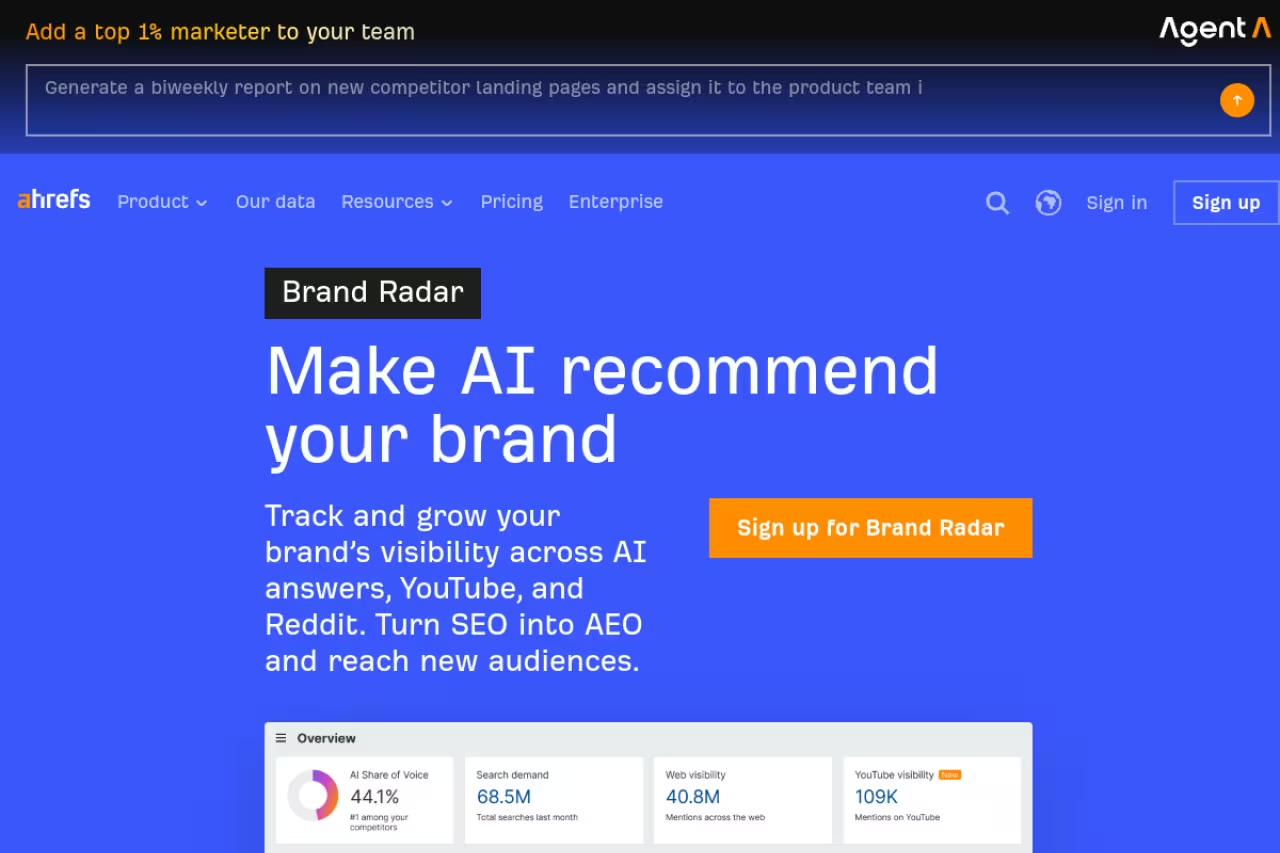
If you live in Ahrefs for backlinks and keywords, Brand Radar folds AI visibility into a dashboard you already know. It tracks brand mentions across six AI indexes: Google AI Overviews, Google AI Mode, ChatGPT, Perplexity, Gemini, and Microsoft Copilot. The clever bit is that it derives its prompts from real search behavior rather than ones you invent, which makes the data feel grounded.
Who it's best for: SEO teams already on Ahrefs who want AI tracking next to their organic data.
A natural add-on if your SEO team already lives in Ahrefs, since AI visibility sits beside your traffic, keywords and backlinks. The bundle pricing stacks up fast, there is no free trial for Brand Radar itself, and the math rarely works for non-customers.
Pricing is where it gets thorny. Brand Radar sits on top of an Ahrefs base plan that starts at $129/month. The AI indexes are sold per platform at $199/month each, or bundled across all six for $699/month. Add it up and full coverage runs about $828/month, which is real money for a layer on top of a subscription you already pay.
The standout is context: seeing AI visibility right beside your traffic, keywords, and backlinks means less time exporting CSVs and more time acting on the data.
The catch: the bundle pricing stacks up fast, and there's no free trial for Brand Radar itself. If you're not already an Ahrefs customer, the math rarely works.

Otterly.ai: the cheapest way in
Otterly.ai is where I'd send a solo founder or small agency testing the waters. It monitors ChatGPT, Gemini, AI Overviews, AI Mode, Perplexity, and Copilot, and gives every tier the full feature set. The only thing that changes between plans is how many prompts you track.
Who it's best for: solopreneurs, consultants, and SMBs who want genuine monitoring on a tight budget.
The Lite plan is $29/month for 15 prompts, Standard is $189/month for 100 prompts, and Premium is $489/month for 400. There's a 7-day trial that lets you watch 3 keywords free. That $29 entry point is the lowest real monitoring price I found from an established tool.
The standout is simplicity. You pick your prompts, you get your data, you move on, without paying for a suite you'll never touch.
The catch: Gemini and Google AI Mode aren't in the base plans and cost $9 to $149 extra depending on tier. Fifteen prompts also goes fast once you track competitors and variations.
The cheapest credible way into AI monitoring, ideal for solopreneurs, consultants and small agencies. Every tier has the full feature set and only the prompt count changes, but Gemini and Google AI Mode cost extra and 15 prompts disappears quickly.

Scrunch: built for agencies
Scrunch pairs multi-LLM monitoring with auditing, optimization, and AI content delivery, which makes it more of a workflow than a dashboard. It carries a 4.6/5 rating on G2 and leans hard into the agency use case.
Who it's best for: agencies managing GEO across multiple client brands.
The Core plan starts at $250/month for 125 prompts, five seats, one brand, and four of the nine model providers Scrunch tracks. Agency Core jumps to $500/month with multi-brand tooling and a partner program offering referral commissions up to 20% and free seats on referred client accounts.
The standout is the content delivery piece. Scrunch doesn't just tell you where you're losing, it helps you ship the content that gets you cited, closing the loop most monitoring tools leave open.
The catch: there's no free trial, so you commit real budget before you can test fit. The base brand plan also caps you at four model providers, so broad coverage costs more.
Pick Scrunch if you run GEO across several client brands and want monitoring tied to auditing and content delivery. It closes the loop most tools leave open, but there is no free trial and the base plan covers only four model providers.

Semrush AI Toolkit: for SEO teams already on Semrush
The Semrush AI Toolkit (sometimes called the AI Visibility Toolkit) is an add-on that shows how often an LLM mentions your brand and for which keywords, with competitor analysis and prompt research baked in. If your team already runs its SEO out of Semrush, this keeps AI data in the same place.
Who it's best for: SEO teams who want AI visibility folded into their existing Semrush stack.
The AI Toolkit is $99 per user per month as an add-on. Semrush One bundle plans, which package the broader toolset, run from about $199/month for Starter up to $549/month for Advanced, with annual billing knocking off roughly 17%.
The standout is integration. You get AI visibility next to keyword research, position tracking, and the rest of the Semrush machinery, so it feels like one operating system for search rather than a bolt-on.
The catch: it's per user, which adds up for bigger teams, and you're buying into the Semrush ecosystem. As a standalone GEO tool it's fine, not exceptional.
Choose the Semrush AI Toolkit if your team already runs SEO out of Semrush and wants AI visibility in the same place. It is billed per user, which adds up for bigger teams, and as a standalone GEO tool it is fine rather than exceptional.

AthenaHQ: turns insights into tasks
AthenaHQ is the most action-oriented platform on this list. Its Action Center generates structured GEO workflows that become assignable, trackable tasks instead of dashboards you stare at and forget. It covers eight platforms on every plan and carries a 4.6/5 G2 rating.
Who it's best for: teams that want a tool to tell them what to do next, not just what's happening.
A strong fit for teams that want to be told what to do next, since the Action Center turns insights into assignable tasks. Credit-based pricing makes monthly costs unpredictable, and it is likely too much tool for an early-stage startup or solo operator.
Pricing starts at $270/month annual for Lite, with Growth at $545/month and Enterprise north of $2,000. A Self-Serve plan runs $295/month for 3,600 credits, often with a discounted first month around $95.
The standout is the move from observation to action. Revenue attribution via Shopify and GA4 plus the Ask Athena copilot make it feel built for teams that want to ship changes, not just measure them.
The catch: credit-based pricing makes monthly costs unpredictable, and the Self-Serve plan limits you to one country. It's likely too much tool for an early-stage startup or solo operator.
HubSpot AI Search Grader: a free first look
If you just want to see where you stand before spending a cent, HubSpot's AI Search Grader is the easiest start. You type in a brand name and get a snapshot of visibility across ChatGPT, Perplexity, and Gemini, plus sentiment, share of voice, and a competitor comparison. No card, no trial limit.
Who it's best for: anyone who wants a one-time gut check before committing to a paid platform.
It's completely free, and the report runs in minutes. HubSpot also offers ongoing tracking from $50/month, or bundled into Marketing Hub Pro and Enterprise.
The standout is obvious: it costs nothing and takes two minutes. For many teams this is the right first move before deciding whether daily monitoring is worth paying for.
The catch: it's a snapshot, not a tracker. You get one moment in time, not the daily trend lines a real GEO program needs. Treat it as a starting line.
Start here if you want a free, two-minute gut check before paying for any GEO platform. It gives a one-time snapshot of visibility, sentiment and share of voice, but it is not a tracker, so it will not replace daily monitoring.
How to choose
Start with budget and team size, because that narrows the field fast.
If you're a solo founder or running a small site, begin with the free HubSpot grader to see if you even have a visibility problem. If you do, Otterly.ai at $29/month gives you ongoing monitoring without a real commitment.
If you're a lean marketing team that wants daily data and clear pricing, Peec AI is the sweet spot. You'll know your costs upfront and can start without a sales call. That is the pick for most companies under 50 people.
If you already pay for an SEO suite, check whether Ahrefs Brand Radar or the Semrush AI Toolkit covers you before buying a separate tool. Agencies should look at Scrunch and AthenaHQ, which are built for managing multiple brands. Enterprises that need board-level depth and every engine covered want Profound, budget permitting.
One more thing: tracking is only half the job. The other half is publishing the kind of clear, well-structured, genuinely useful content that AI models want to cite. A great GEO tool tells you where you're losing, but it can't write your way out of it. If you want a steady read on which AI tools and tactics are actually working right now, the Dupple X membership keeps you current without the noise.
On the writing side, our guides on the best AI SEO tools and the top AI tools overall pair well with whatever monitoring platform you land on. If you're building out an AI stack more broadly, the best AI agents guide is a useful companion read.
FAQ
What are generative engine optimization tools?
They're platforms that track how your brand appears in AI-generated answers across engines like ChatGPT, Perplexity, Gemini, and Google AI Overviews. They run real prompts at scale, record when and how your brand gets mentioned, analyze sentiment, and benchmark you against competitors so you can improve your share of AI answers.
How is GEO different from SEO?
SEO optimizes for ranking in a list of blue links. GEO optimizes for being cited inside an AI-generated answer, where the model picks a few sources and summarizes them. SEO still matters because many AI engines pull from search results, but GEO adds a new layer: you're competing to be one of the three or four brands a model names, not one of ten links on a page.
What is the best free GEO tool?
HubSpot's AI Search Grader is the strongest free option for a one-time snapshot across ChatGPT, Perplexity, and Gemini, with no credit card required. Some tools like Geoptie offer free open-beta access for ongoing monitoring, though beta features can be unstable. Free tools are great for a first look but rarely replace daily tracking.
How much do GEO tools cost?
Prices range widely. Otterly.ai starts at $29/month and HubSpot's grader is free for a snapshot. Mid-range tools like Peec AI (€85/month) and Semrush's AI Toolkit ($99/month) suit smaller teams. Enterprise platforms like Profound ($399/month and up) target larger budgets, and Ahrefs Brand Radar's full bundle can reach around $828/month.
Which AI engines should a GEO tool track?
At minimum, look for ChatGPT, Perplexity, and Google AI Overviews, since those drive the most AI-referred traffic today. Broader tools add Gemini, Copilot, Google AI Mode, Claude, Grok, DeepSeek, and Meta AI. Many tools charge extra per engine, so confirm which models your plan actually includes before you buy.
Can GEO tools improve my AI rankings, or just track them?
Most start with tracking, but the better ones go further. Platforms like AthenaHQ and Scrunch generate optimization tasks or help you produce content built to get cited. Tracking tells you where you stand. Acting on clear, authoritative content is what moves your brand into more AI answers over time.
Related guides
Some offers on this page may be paid placements or contain affiliate links.
