
Best AI Price Optimization Tools (2026)

Key facts8 tools compared: Competera, Prisync, Wiser, Intelligence Node, Omnia Retail, Pricefx, PROS…
- 8 tools compared: Competera, Prisync, Wiser, Intelligence Node, Omnia Retail, Pricefx, PROS, Buynomics
- Competera (best for: Mid-market & enterprise retail): Custom (demo)
- Prisync (best for: Small/mid ecommerce): From $99/mo
- Wiser (best for: Omnichannel + in-store): Custom (demo)
- Intelligence Node (best for: Enterprise price intelligence): Custom (demo)
Pricing is the fastest lever you have. Change a number on a page and margin moves the same day, no new product, no ad spend, no headcount. The problem is that "the right number" depends on competitor moves, demand, elasticity, stock, and a dozen other signals that shift hourly. Spreadsheets and gut feeling stopped keeping up years ago.
AI pricing tools close that gap. The good ones watch the market in near real time, model how demand reacts to a price change before you make it, and either recommend or automatically apply the optimal price per product, per channel. A Revionics analysis of enterprise deployments found retailers using AI-driven pricing consistently land 5-10% increases in gross profit, and Quicklizard reports customers seeing revenue lifts up to 15% while holding or improving margin.
If you run a mid-market or enterprise retail catalog and want the strongest demand-based optimization, Competera is my top pick. If you're a smaller ecommerce store that mostly needs competitor tracking with light automation, Prisync gets you live for $99 a month. Below are eight tools I'd actually shortlist in 2026, who each one is for, what they cost, and where each one falls short.
Quick comparison
| Tool | Best for | Price | Standout |
|---|---|---|---|
| Competera | Mid-market & enterprise retail | Custom (demo) | 20+ demand factors, 95%+ forecast accuracy |
| Prisync | Small/mid ecommerce | From $99/mo | Per-product transparent pricing |
| Wiser | Omnichannel + in-store | Custom (demo) | 10B+ products, 15-min refresh |
| Intelligence Node | Enterprise price intelligence | Custom (demo) | 99% match accuracy, 10s refresh |
| Omnia Retail | Rule + AI hybrid pricing | Custom (demo) | Strong strategy builder, G2 leader |
| Pricefx | B2B & complex pricing | $100k+/yr | Full price-to-CPQ suite |
| PROS | B2B / airline dynamic pricing | Custom (enterprise) | Sub-second quote-level pricing |
| Buynomics | RGM & price simulation | Custom (demo) | Virtual Shoppers AI simulations |
Competera: the strongest demand-based optimization
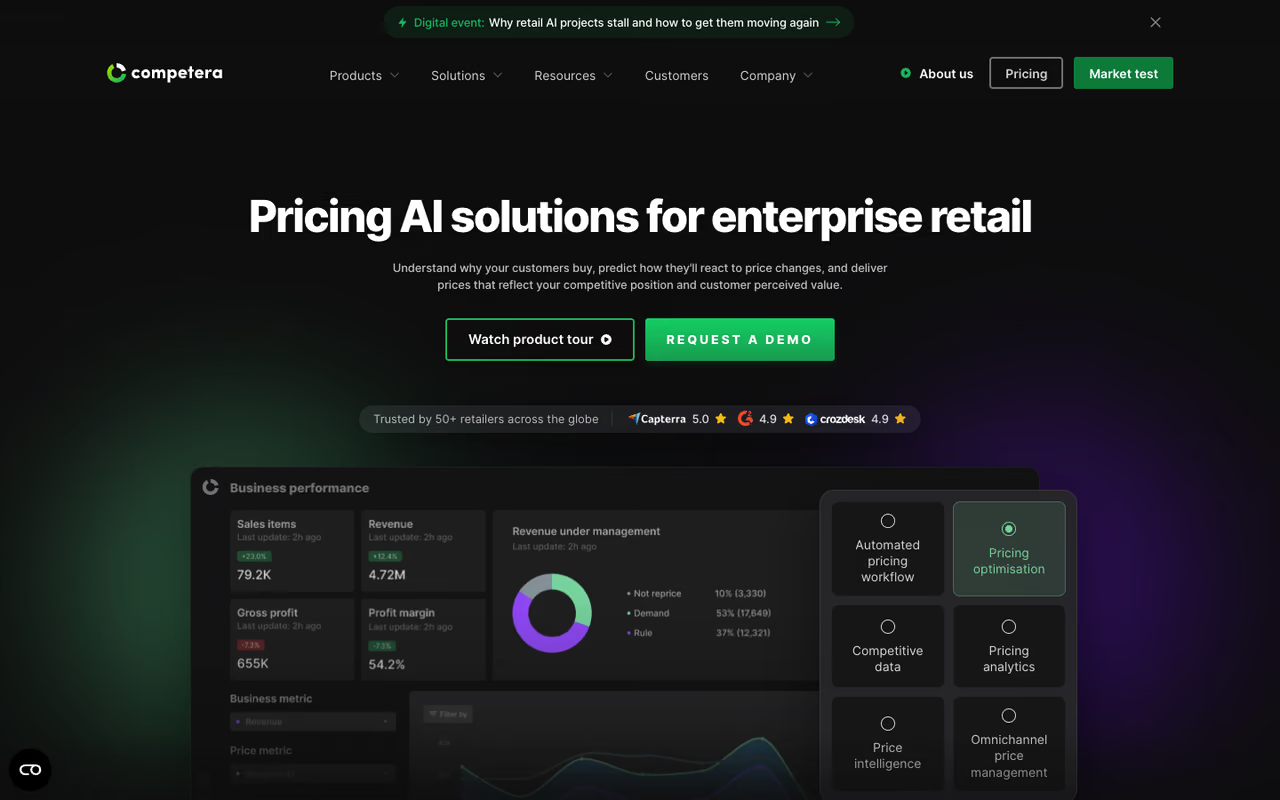
Competera is the tool I'd hand to a retail pricing team that has outgrown competitor-matching and wants to price on actual demand. Instead of "match the cheapest rival and hope," its AI models demand elasticity across more than 20 pricing and non-pricing factors: own elasticity, cross-elasticities, cannibalization, halo effects, stock, seasonality, and more.
Who it's best for: mid-market and enterprise retailers with deep catalogs (grocery, electronics, fashion, DIY) that need explainable, demand-aware prices rather than reactive rule sets. Customers include Sephora and Flaconi.
The standout is the forecasting. Before any recommendation is applied, Competera predicts the impact on margin, revenue, and volume with a claimed 95%+ accuracy, and shows you the demand curve behind each price so you understand why. The what-if simulations let you test scenarios with probability ratings before committing. It keeps a human in the loop, which pricing managers tend to want.
The strongest demand-based option for mid-market and enterprise retailers with deep catalogs that have outgrown competitor-matching. Pricing is quote-only with no self-serve trial, it needs clean product data, and it is overkill for a small store.
Pricing is custom and quote-based, so you book a demo. That tells you where this sits: it's an enterprise platform, not a weekend setup.
The catch: it's overkill for a small store, and there's no public price or self-serve trial, so you can't kick the tires before talking to sales. Plan for an onboarding period and clean product data, because the demand models are only as good as what you feed them.

Prisync: the easiest entry point for ecommerce
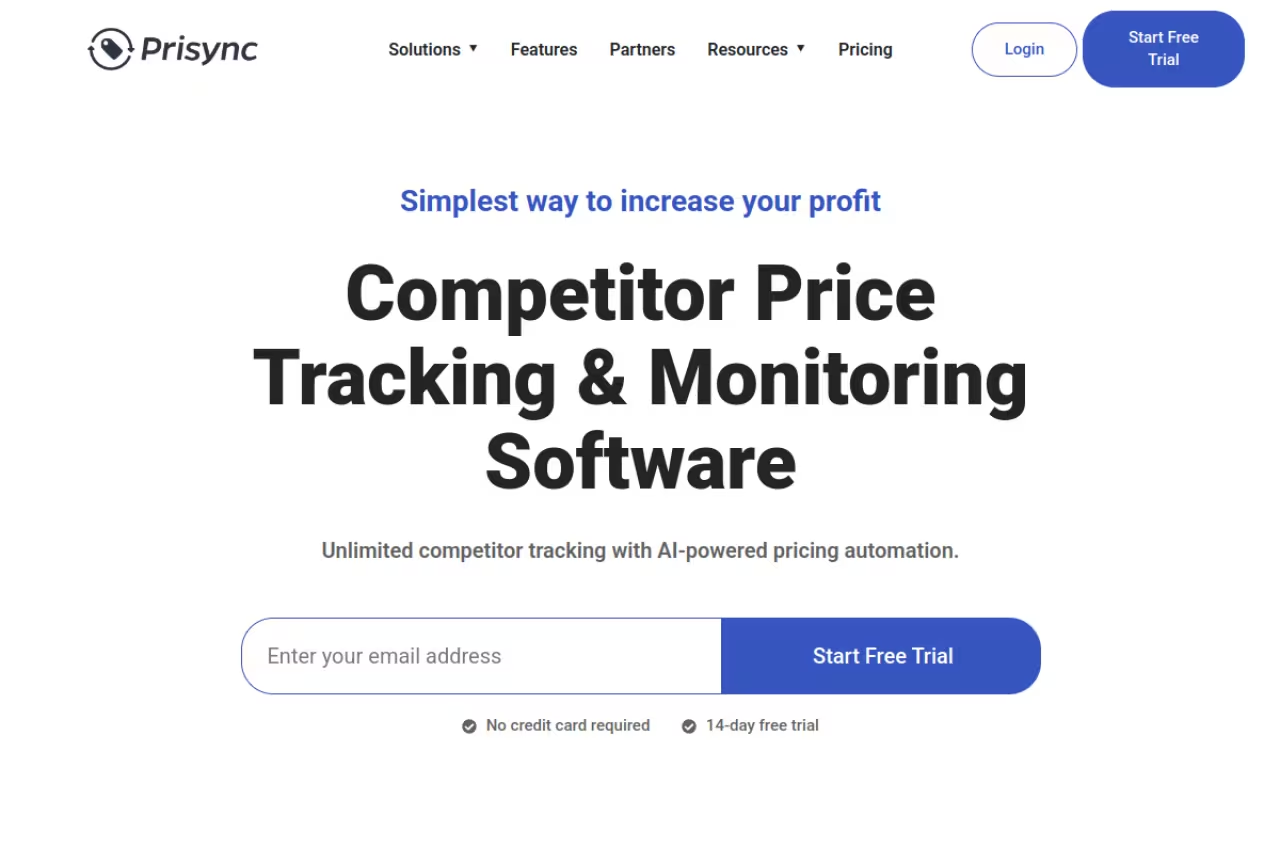
Prisync is where I'd start if you run a Shopify, WooCommerce, or marketplace store and mostly need to know what competitors charge, with optional automatic repricing on top. Pricing is refreshingly clear for this category.
Per the official pricing page, URL-based plans run $99/mo for up to 100 products (Professional), $199/mo for up to 1,000 (Premium), and $399/mo for up to 5,000 (Platinum). Channel-based and hybrid models cost more ($199 and $299 starting, respectively), and there's a 14-day free trial with no credit card. The dynamic pricing engine and API access kick in at the Premium tier.
Who it's best for: small and mid-size ecommerce teams that want competitor monitoring, stock tracking, and rule-based repricing without a six-figure contract or a long rollout.
The standout is transparency and speed. You see exactly what you pay per product band, you self-serve, and you're tracking competitors the same day.
The catch: this is competitor-driven repricing, not true demand-based optimization. There's no deep elasticity modeling here, so you're reacting to rivals more than predicting your own demand. API access adds 20% on top of the subscription, and per-product caps mean a large catalog gets expensive fast.
The easiest entry point for Shopify, WooCommerce and marketplace stores that mostly need to know what competitors charge, with clear plans from $99/mo and a 14-day free trial. It is competitor-driven rather than demand-based, and large catalogs get expensive fast.

Wiser: pricing intelligence across online and in-store
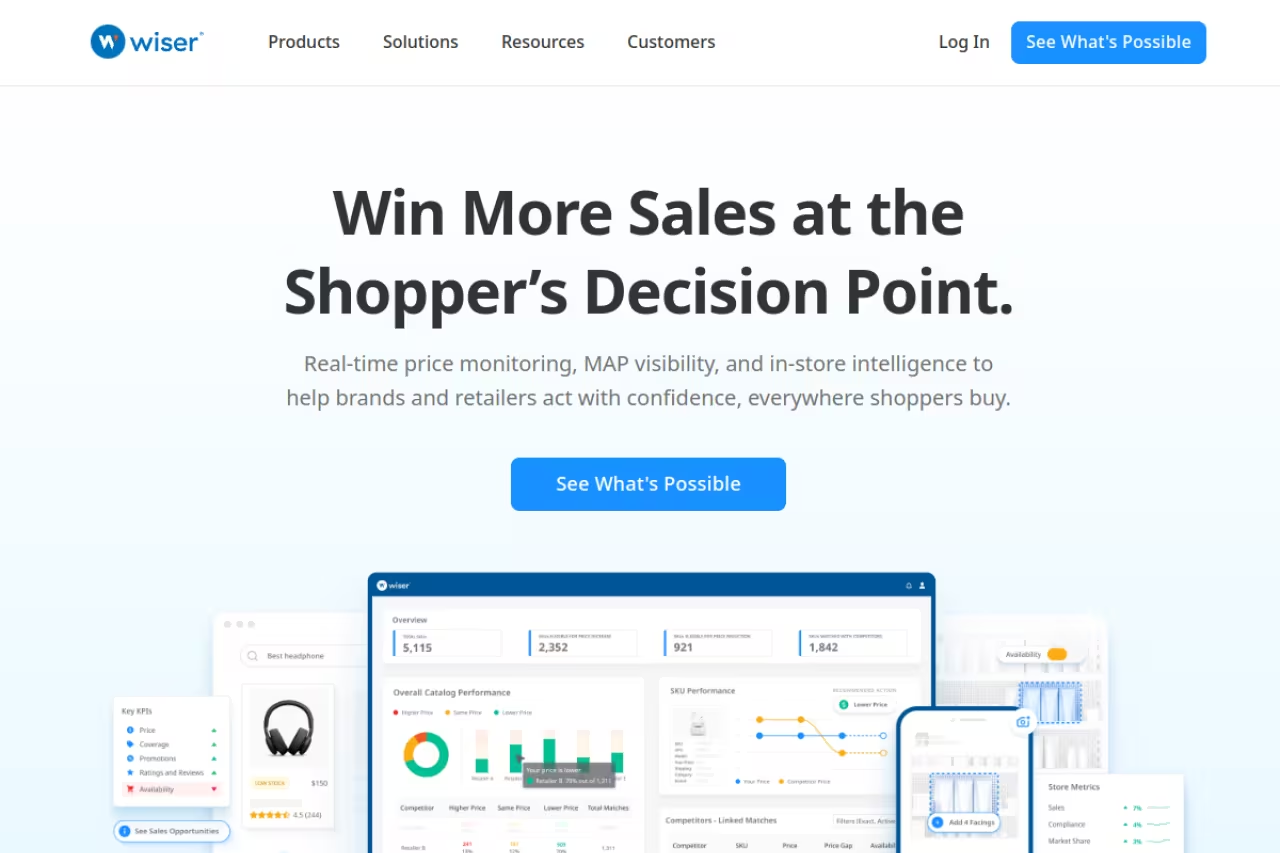
Wiser earns its place when your business straddles ecommerce and physical shelves. It splits into four pillars: price execution (monitoring plus automated repricing), in-store execution (audits, planogram compliance), digital shelf intelligence, and MAP execution for spotting advertised-price violations.
The data footprint is the reason to look here. Wiser reports tracking 10B+ products and 200M+ prices monitored daily, with refresh cycles as fast as 15 minutes and 13+ months of price history accessible in the UI. Its repricing engine updates prices automatically across Amazon, eBay, Walmart, and Magento based on competitor data, sales history, and customer behavior.
Who it's best for: omnichannel retailers and brands that need both online price intelligence and in-store audit data in one place, plus MAP enforcement for brand protection.
The standout is breadth: most competitors give you 30-60 days of history, Wiser gives you over a year, which makes year-over-year and promo ROI analysis far easier.
The catch: it's a broad suite, so you pay for and learn modules you may not use. Pricing is custom with no public tier, and the in-store features are wasted if you're online-only. For a pure DTC shop, that's a lot of platform.
Earns its place when your business straddles ecommerce and physical shelves, with over a year of price history and MAP enforcement. It is a broad suite with custom pricing, and a pure DTC shop would pay for modules it does not use.

Intelligence Node: enterprise-grade price intelligence at scale
Intelligence Node is built for accuracy at massive scale. It tracks 1.2 billion+ products across 190,000+ brands and claims 99% product-matching accuracy with refresh rates as fast as 10 seconds. For enterprises where a bad product match means mispricing thousands of SKUs, that matching accuracy is the whole game.
Beyond pricing, it covers digital shelf analytics, assortment and availability tracking, MAP monitoring, and brand protection, plus demand forecasting and elasticity analysis. API access lets you pipe data into your existing BI or ERP stack.
Who it's best for: large retailers and brands that need reliable competitive intelligence across millions of SKUs and multiple markets, and who care more about data quality than a turnkey repricing button.
The catch: it leans toward intelligence and analytics more than fully automated price-setting, so you may pair it with a separate execution layer. It's enterprise-priced and quote-based, which rules it out for smaller teams.
Built for accuracy at massive scale, where a bad product match means mispricing thousands of SKUs. It leans toward intelligence over automated price-setting, so you may need a separate execution layer, and it is enterprise-priced.
If you're still mapping which categories of AI tools fit your stack, our /top-tools roundup and the best AI agents guide are useful context before you commit to a six-figure pricing platform.

Omnia Retail: rules and AI in one strategy builder
Omnia Retail hits a sweet spot between rule-based control and AI automation. You build pricing strategies visually, then let the platform combine your business rules with AI recommendations and apply them across channels. In G2's Winter 2026 Grid for Retail Pricing Software, Omnia leads the category on customer satisfaction and market presence.
The newer Omnia Agent watches your pricing data continuously and surfaces what matters: competitor moves, margin risks, and opportunities you'd otherwise dig for manually. It pulls current data from competitors, resellers, and platforms like Amazon, eBay, and idealo.
Who it's best for: retailers and brands that want to keep tight rule-based control over pricing logic while layering AI on top, rather than handing the keys entirely to a black box.
The catch: pricing is custom and scales with assortment size, market count, and complexity, so there's no quick public number to compare. The strategy builder is powerful but has a learning curve, and you'll want someone who owns pricing internally to get real value out of it.
A sweet spot between rule-based control and AI, with a visual strategy builder and an agent that surfaces competitor moves and margin risks. It has a learning curve and works best if someone internal owns pricing.
Pricing is one lever. If you want a sharper view of the AI tools moving margins, growth, and ops across your whole stack, Dupple X curates what's actually worth your time so you skip the noise.
Pricefx: the full price-to-quote suite for B2B
Pricefx is the pick when pricing complexity, not just competitor tracking, is your problem. It's a cloud platform covering 360-degree pricing: data insights, price setting and management, rebates, promotions, optimization, and CPQ (configure-price-quote). That makes it a fit for B2B and DTC businesses with negotiated prices, contracts, and rebate structures.
Pricefx claims industry-fastest time-to-value, with typical activation in 6 months or less versus 12-18 months for legacy pricing software.
Who it's best for: mid-to-large B2B companies and manufacturers that need to manage list prices, deal pricing, rebates, and quotes in one system, not just react to retail competitors.
The catch: this is an enterprise investment. Per Pricefx's own learning center, subscriptions range from roughly $100,000 to $3.5 million per year, scaled to your revenue under management. That price tag and the implementation effort put it out of reach for small teams, and the breadth means you'll use a fraction of it unless you have genuinely complex pricing.
Pick Pricefx when pricing complexity, not just competitor tracking, is the problem, with rebates, quotes and CPQ in one system for B2B. Subscriptions run roughly $100,000 to $3.5 million per year, so it is out of reach for small teams.

PROS: dynamic pricing with deep B2B and travel roots
PROS brings decades of pricing science to AI-driven dynamic pricing, with particularly strong roots in B2B commerce and airline retailing. It centralizes pricing into a single source of truth, delivers market-relevant prices in real time at sub-second response, and gives sales reps negotiation guidance with explainable AI behind every recommendation.
PROS was named a Leader in the IDC MarketScape for Worldwide B2B Revenue and Profit Optimization Platforms 2025-2026, recognized for real-time, explainable pricing at enterprise scale.
Who it's best for: B2B sellers, distributors, and travel/transport companies that need optimized, personalized prices and quote-level guidance across complex catalogs and channels.
The catch: reviewers consistently flag cost. In analyzed reviews, 86% of those mentioning price reported subscriptions and maintenance as expensive. The platform is powerful but heavy, and if your pricing is straightforward retail competitor matching, you're paying for science you won't use.
A heavyweight for manufacturers, distributors and travel companies that need real-time, explainable prices and quote guidance. Reviewers consistently flag cost, and it is too much science if your pricing is simple competitor matching.
Buynomics: simulate prices before you set them
Buynomics takes a different angle. Instead of only reacting to live competitor data, it turns your data into "Virtual Shoppers" that mimic real buying decisions, then runs millions of simulated shoppers against any pricing or portfolio scenario. You see the predicted impact, including cannibalization and competitive response, before you change a single price.
Who it's best for: revenue growth management (RGM) teams at consumer brands and retailers who plan pricing, promotions, and portfolio moves and want to pressure-test them in simulation first.
The standout is the simulation engine. Running "what would customers actually do" across millions of virtual shoppers is a genuinely different way to de-risk a price change, and Buynomics reports onboarding in around three months with under a week of internal resource time.
The catch: it's a strategy and simulation platform more than an always-on repricing engine, so it complements rather than replaces execution tools. Pricing is custom and enterprise-oriented, and the value depends on having clean historical data to train the simulations.
A different angle for revenue growth management teams at consumer brands, using virtual shoppers to pressure-test price changes before you make them. It is a simulation platform rather than an always-on repricing engine, and needs clean historical data.
How to choose
Match the tool to the problem you actually have, not the most impressive demo.
- You run a small or mid ecommerce store. Start with Prisync. It's cheap, transparent, and live the same day. Move up only when competitor matching stops being enough.
- You're a retailer ready for true demand-based optimization. Look at Competera or Omnia. Competera if you want the deepest elasticity modeling, Omnia if you want to keep rule-based control.
- You sell online and in physical stores. Wiser or Intelligence Node, depending on whether you need in-store audits (Wiser) or maximum SKU-match accuracy (Intelligence Node).
- Your pricing is B2B, contract, or rebate-heavy. Pricefx or PROS. These handle quotes and negotiation, not just retail shelves.
- You want to test before you commit. Buynomics lets you simulate the outcome first.
One rule across all of them: your data quality sets the ceiling. The fanciest demand model produces garbage prices if your product catalog, costs, and competitor mappings are messy. Fix that first.
FAQ
What is AI price optimization?
AI price optimization uses machine learning to recommend or set the best price for each product based on signals like demand elasticity, competitor prices, stock, and seasonality. Instead of fixed rules ("always 5% below competitor"), it predicts how demand will respond to a price change and chooses the price that hits your goal, whether that's margin, revenue, or volume.
How much do AI pricing tools cost?
It splits in two. Self-serve ecommerce tools like Prisync start around $99/month and scale by product count. Enterprise platforms (Competera, Wiser, Pricefx, PROS, Intelligence Node, Buynomics) use custom quotes. Pricefx publicly notes subscriptions running from roughly $100,000 to $3.5 million a year depending on revenue under management, so enterprise pricing is a serious budget line.
Is AI dynamic pricing legal?
Yes, dynamic pricing is legal in most markets, and retailers from airlines to Amazon use it daily. The lines you cannot cross are price fixing or collusion with competitors, and in some regions there are rules against personalized pricing based on protected characteristics. Honoring MAP (minimum advertised price) agreements with brands also matters. Check local regulations and keep your pricing logic explainable.
Can small businesses use AI price optimization tools?
Yes. You don't need an enterprise budget. Tools like Prisync offer plans from $99/month with a 14-day free trial, which covers competitor tracking and rule-based repricing for a store of a few hundred to a few thousand products. The deep demand-modeling platforms are aimed at larger catalogs, but the entry-level tier of the market is very accessible.
What's the difference between price monitoring and price optimization?
Price monitoring tells you what competitors charge. Price optimization tells you what you should charge to hit a goal. Monitoring is the input; optimization is the decision. Many tools (Prisync, Wiser, Intelligence Node) do strong monitoring with rule-based repricing, while platforms like Competera and Buynomics add true demand-based optimization that predicts outcomes before you act.
Which AI pricing tool is best for ecommerce?
For most ecommerce stores, Prisync is the best starting point thanks to transparent per-product pricing and a same-day setup. If your catalog is large and you want demand-based optimization rather than competitor matching, Competera is the stronger choice, and Wiser fits if you also sell in physical stores. Want a wider view of the AI stack worth paying for? Dupple X tracks the tools actually moving the needle.
Related guides
Some offers on this page may be paid placements or contain affiliate links.
