
The Best ERP Software in 2026: 8 Systems I'd Actually Recommend

Key facts8 tools compared: NetSuite, Odoo, Dynamics 365 BC, Acumatica, ERPNext, SAP S/4HANA Public…
- 8 tools compared: NetSuite, Odoo, Dynamics 365 BC, Acumatica, ERPNext, SAP S/4HANA Public Cloud, Sage Intacct, Zoho One
- NetSuite (best for: Mid-market scaling fast): ~$999/mo base + ~$99-199/user
- Odoo (best for: SMBs wanting modular control): Free (1 app) / ~$24.90 user/mo
- Dynamics 365 BC (best for: Microsoft-stack companies): $80/user/mo (Essentials)
- Acumatica (best for: Unlimited-user operations): ~$20k-100k+/yr
ERP software is the system you bet your operations on, and it's also the one most likely to blow up your budget. Gartner expects 70% of ERP implementations over the next three years to miss their objectives, and in manufacturing the average project runs 215% over budget. Picking the right platform isn't a feature checklist exercise. It's risk management.
I've spent weeks pulling apart pricing pages, documentation, and customer reviews for the systems that actually win deals in 2026. Most "best ERP" lists are thinly veiled affiliate pages for whatever vendor pays the most. This one tells you who each system is genuinely for, what it costs in real numbers, and where it falls apart.
The short version: if you're a growing mid-market company that lives in financials, Oracle NetSuite is still the default pick and the one to beat. If you want to control your own budget, Odoo and ERPNext punch far above their price. If you're already deep in the Microsoft world, Dynamics 365 Business Central is the obvious move. Here's how they stack up.
Quick comparison
| Tool | Best for | Price (entry) | Standout |
|---|---|---|---|
| NetSuite | Mid-market scaling fast | ~$999/mo base + ~$99-199/user | Deep financials, one unified suite |
| Odoo | SMBs wanting modular control | Free (1 app) / ~$24.90 user/mo | Add modules as you grow |
| Dynamics 365 BC | Microsoft-stack companies | $80/user/mo (Essentials) | Native Office + Copilot |
| Acumatica | Unlimited-user operations | ~$20k-100k+/yr | No per-user fees |
| ERPNext | Technical teams, tight budgets | $0 self-hosted | Open source, no license fee |
| SAP S/4HANA Public Cloud | Larger enterprises | ~$180/user/mo list | Enterprise-grade depth |
| Sage Intacct | Finance-led organizations | ~$12k/yr (1 user) | Best-in-class accounting |
| Zoho One | Cost-conscious all-rounders | $37/employee/mo | 45+ apps for one price |
Oracle NetSuite: the mid-market default
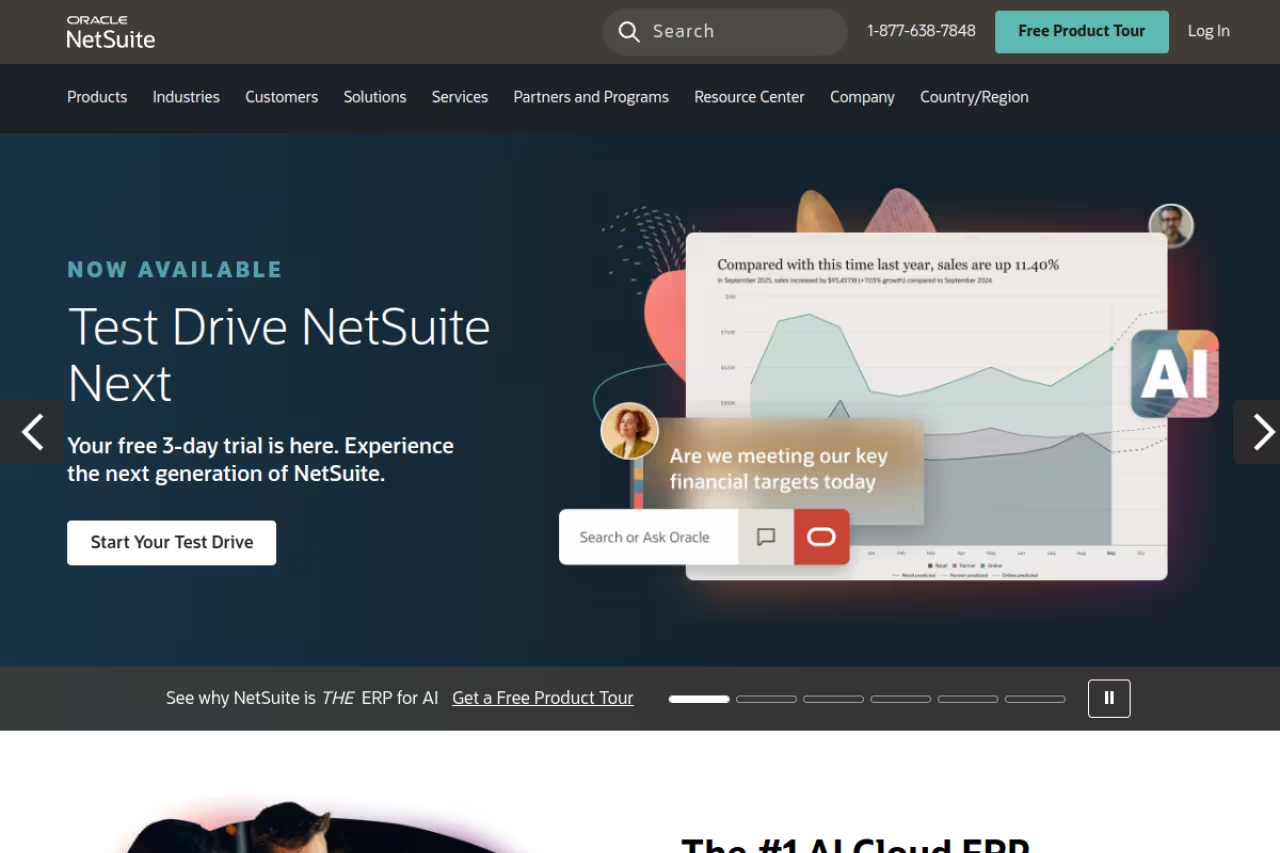
NetSuite is the cloud ERP that most growing companies end up comparing everything else against. It was born in the cloud in 1998, Oracle owns it now, and it runs financials, inventory, order management, CRM, and ecommerce out of one database. If you've outgrown QuickBooks and a pile of spreadsheets, this is usually the next stop.
Who it's best for: mid-market companies (roughly $10M to $1B in revenue) with real complexity, multiple subsidiaries, or international operations. The financial consolidation and multi-currency handling are genuinely strong.
The default next stop for mid-market companies of roughly $10M to $1B in revenue that have outgrown QuickBooks and spreadsheets, with genuinely strong consolidation and multi-currency. Contracts are sticky, renewals climb, and it needs a partner, so it is overkill for a 15-person shop.
Pricing is where people get surprised. Oracle doesn't publish a price list, but the structure is a base platform fee of around $999/month plus $99 to $199 per user per month, with modules like manufacturing or WMS billed separately on top. A modest deployment realistically lands at $25,000 to $50,000+ per year all in.
The standout: nothing else gives finance teams this much depth in a single suite. Real-time consolidation across entities is the feature people stay for.
The catch: NetSuite is notorious for sticky contracts and renewal price hikes. You negotiate hard up front, then watch the number climb at renewal. Implementation also needs a partner, and that's another $25k to $100k+ depending on scope. It's overkill for a 15-person shop.

Odoo: modular ERP that grows with you
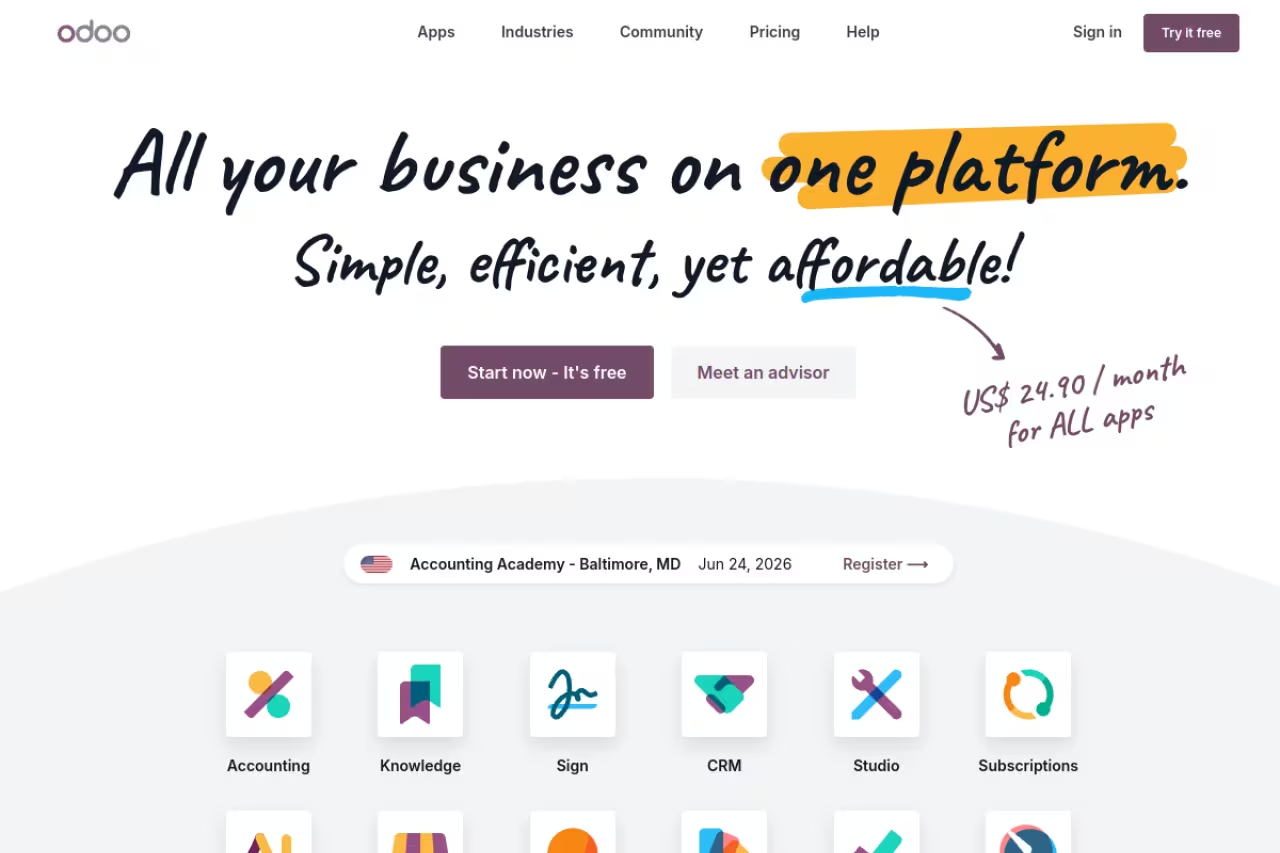
Odoo is my favorite recommendation for small and mid-sized businesses that want ERP without the enterprise tax. The model is simple: start with one app (accounting, say), then bolt on CRM, inventory, manufacturing, HR, or ecommerce as you need them. Same platform, no migration.
Who it's best for: SMBs that want to start small and scale, plus anyone who values flexibility over hand-holding. The open-source Community edition is genuinely usable if you have technical hands.
On pricing, Odoo publishes its numbers, which is refreshing. The One App Free plan covers a single app with unlimited users. The Standard plan runs about $24.90 per user/month billed yearly (renewing higher), and Custom sits around $37 per user/month and adds Odoo Studio, the external API, multi-company, and on-premise hosting. Both paid tiers include all apps.
The standout: you genuinely pay for what you grow into. A 10-person team can run real ERP for a few hundred dollars a month.
Where it falls short: the all-apps-included pricing sounds clean, but real Odoo deployments lean heavily on partners for setup and customization, and those bills add up. The out-of-the-box modules are good, not deep. Heavy manufacturing or complex finance will expose the edges.
A flexible pick for SMBs that want ERP without the enterprise tax: start with one app and add more as you grow, with a free single-app plan. Real deployments lean on partners for setup, and heavy manufacturing or complex finance will expose the edges.
If you're still mapping out which back-office systems to standardize on, our guide to the best CRM software pairs well here, since CRM is often the first non-finance module teams turn on.
Microsoft Dynamics 365 Business Central: the Microsoft-stack pick
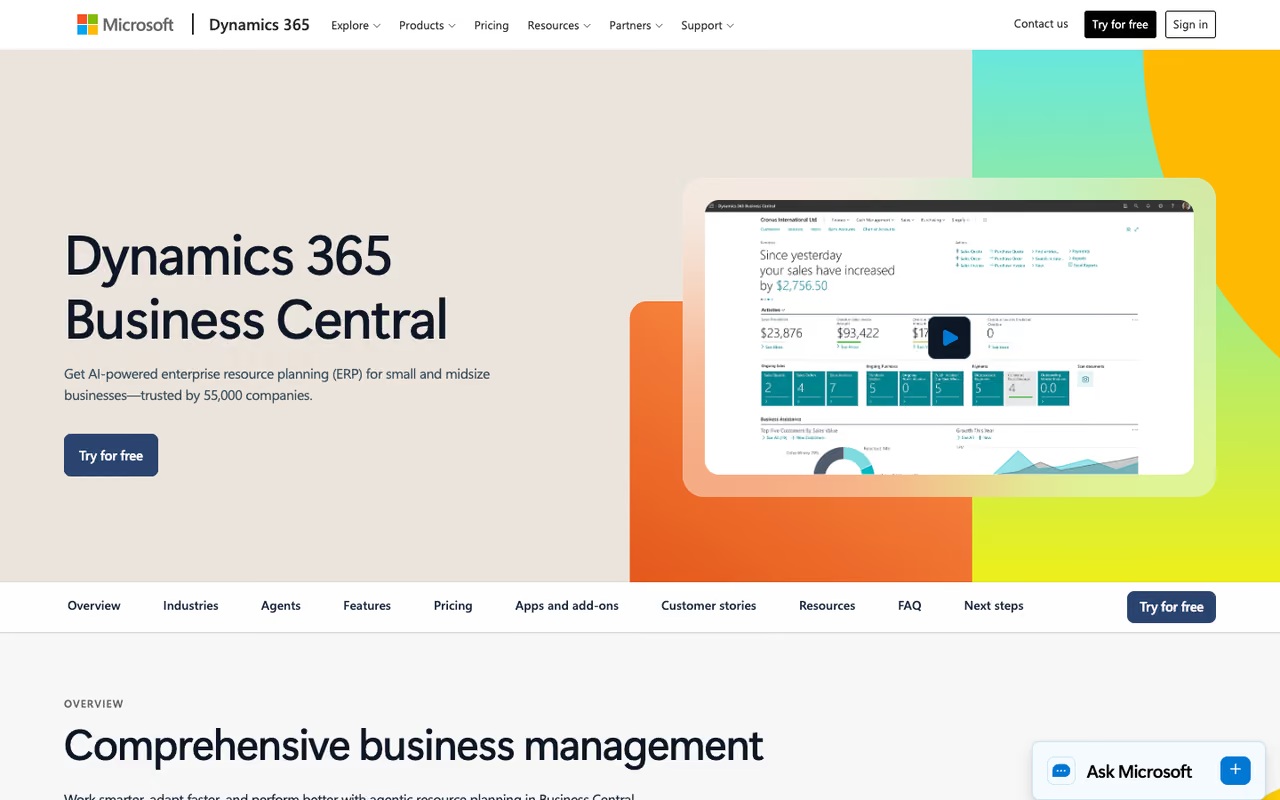
If your company already runs on Microsoft 365, Business Central is the path of least resistance. It handles finance, sales, operations, supply chain, and project management, and it talks to Outlook, Excel, Teams, and Power BI natively. Copilot is baked in across current plans now too.
Who it's best for: SMB and mid-market companies in the Microsoft ecosystem who want their ERP and productivity tools to feel like one thing.
Microsoft raised prices in late 2025. As of 2026, Essentials is $80 per user/month and Premium is $110, both billed annually, with $8/month Team Members licenses for light read-and-approve users. Essentials covers most needs; Premium adds manufacturing and service management.
The standout: the Excel and Outlook integration is so tight it barely feels like a separate app. For finance teams that live in spreadsheets, that's a real productivity win.
The catch: customization usually means bringing in a partner and AL development, so the sticker price isn't the whole story. And while it scales up, very large or highly specialized operations tend to hit a ceiling and look at the bigger Dynamics 365 Finance product instead.
The path of least resistance for SMB and mid-market firms already on Microsoft 365, with tight Excel and Outlook integration. Customization usually needs a partner and AL development, and very large operations tend to graduate to Dynamics 365 Finance.

Acumatica: ERP without per-user fees
Acumatica took the opposite bet from everyone else: no per-user licensing. You pay for computing resources and the modules you turn on, and you can add unlimited named users without the bill moving. For operations with lots of occasional users (warehouse staff, field techs, approvers), that math can be a game changer.
Who it's best for: distribution, manufacturing, and construction businesses where many people touch the system but only a few are heavy daily users.
Pick it for distribution, manufacturing or construction firms where many people touch the system but few are heavy daily users, since there are no per-user fees. Consumption pricing is harder to predict in high-transaction businesses, and results depend on the reseller you land.
Pricing is quote-based and consumption-driven, with typical annual costs from $20,000 to $100,000+ depending on resource tier and modules, plus implementation. There's no public per-seat number because there's no per-seat model.
The standout: unlimited users genuinely changes who you can put in the system. You stop rationing logins.
Where it falls short: because pricing scales with consumption, a high-transaction business can see the bill grow in ways that are harder to predict than a flat per-user fee. The partner network is smaller than NetSuite's or Microsoft's, so your implementation quality depends heavily on which reseller you land.
ERPNext: the open-source dark horse
ERPNext is the one I'd point any technical founder toward before they sign a six-figure contract. It's 100% open source under the MIT license, covers accounting, inventory, manufacturing, HR, CRM, and projects, and the license cost is exactly zero.
Who it's best for: technically capable teams and cost-conscious SMBs willing to trade some polish for control and a near-zero software bill.
You can self-host on a $10 to $100/month VPS, or use the official Frappe Cloud managed hosting starting around $25/month with no user limits and no per-module fees. That pricing model alone undercuts everything else on this list by an order of magnitude.
The standout: no per-user fees, no vendor lock-in, and you can read and modify the actual code. For a 50-person company, that's the difference between a $500/month bill and a $5,000/month one.
The catch: "free" software still needs people. You're trading license fees for implementation and maintenance effort, and the ecosystem of certified partners is thinner. If nobody on your team can run a Linux server or you need white-glove support, the savings evaporate fast.
The one for technical founders and cost-conscious SMBs willing to trade polish for control, with an MIT-licensed codebase and zero license cost. Free software still needs people, so if nobody can run a Linux server or you need white-glove support, the savings evaporate.
If you're evaluating open systems like this, it's worth seeing how the broader stack fits together. Our roundup of the best business intelligence tools covers the reporting layer that ERPNext leaves fairly basic out of the box.
SAP S/4HANA Public Cloud: enterprise depth, scaled down
SAP S/4HANA, delivered to mid-market buyers through the "GROW with SAP" packaging, is the public-cloud, standardized version of the system that runs a huge chunk of the Fortune 500. It brings genuine enterprise depth in finance, supply chain, and manufacturing, with SAP's Joule AI assistant layered in.
Who it's best for: larger or fast-scaling companies that need enterprise-grade processes and plan to grow into SAP's full stack.
List pricing runs around $180 per user/month and climbs toward $400 depending on user type and modules, and mid-market GROW deals typically start near $100k/year. This is not a small-business product.
The standout: when you genuinely need enterprise-grade financial and supply chain depth, few systems match SAP. The public-cloud edition gives you that on a faster, more standardized implementation path than the old on-premise route.
Where it falls short: the standardized public edition trades flexibility for speed, so heavy customization pushes you toward the pricier private edition. And SAP implementations have the industry's most fearsome reputation for cost and timeline overruns. For most SMBs, this is the wrong tool.
Go with it if you are a larger or fast-scaling company that needs enterprise-grade finance, supply chain and manufacturing on a more standardized path than old on-premise SAP. Mid-market deals start near $100k/year, so it is the wrong tool for most SMBs.
Sage Intacct: finance-first ERP
Sage Intacct isn't trying to be everything. It's a finance-led ERP that consistently wins awards for its accounting depth, and it's a favorite among CFOs, nonprofits, and professional services firms that care more about the general ledger than the shop floor.
Who it's best for: finance-driven and multi-entity organizations where accounting sophistication matters more than manufacturing or inventory.
A great finance engine for CFOs, nonprofits and professional services firms that care more about the general ledger than the shop floor. It is deliberately narrow, so product companies usually need to bolt on inventory and operations tools.
Pricing is quote-based and starts around $12,000/year for a single user on core financials, with most companies landing in the $25,000 to $60,000/year range once you add users and modules.
The standout: the dimensional general ledger and multi-entity consolidation are best-in-class. If complex financial reporting is your bottleneck, Intacct removes it.
The catch: it's deliberately narrow. Inventory, manufacturing, and operations are weaker than the all-in-one suites, so product companies usually need to bolt on other tools. You're buying a great finance engine, not a full operational ERP.
Zoho One: the budget all-rounder
Zoho One bundles 45+ integrated business apps (CRM, accounting, inventory, HR, projects, marketing) into a single subscription, and it does it for less per head than almost anything else serious. It's not a traditional ERP in the SAP sense, but for a small business it covers the same ground.
Who it's best for: cost-conscious small businesses that want broad coverage and are happy to assemble their stack from one vendor's apps.
The All Employee plan is about $37 per employee/month billed annually (you license everyone), and the Flexible plan runs higher per seat but lets you license only specific users. Either way, it's dramatically cheaper than the enterprise suites.
The standout: the breadth-to-price ratio is unmatched. For a sub-50-person company, you get an enormous amount of functionality for the price of a couple of standalone SaaS tools.
Where it falls short: the apps are good individually but the integration between them is less polished than a single-database ERP, and deep manufacturing or financial consolidation isn't really the point. It's a brilliant value play, not a system you'd run a complex global operation on.
A brilliant value play for cost-conscious small businesses that want broad coverage from one vendor, with 45+ integrated apps. Integration is less polished than a single-database ERP, so do not run a complex global operation on it.
If you're building out the rest of your go-to-market stack alongside this, Dupple X and our top tools directory are good next stops.
How to choose
Forget the feature matrices for a second. The decision really comes down to four questions.
Where does your complexity live? If it's in financials and consolidation, look at NetSuite, Sage Intacct, or SAP. If it's in operations and inventory, Acumatica or Dynamics 365 Business Central fit better.
How big are you, really? Under 50 people: start with Odoo, Zoho One, or ERPNext. 50 to 500: Business Central, Acumatica, or NetSuite. 500+: NetSuite or SAP.
What's your tolerance for vendor lock-in? If you want to own your data and code, ERPNext and Odoo Community are the only real answers. If you'd rather pay for someone else to own the problem, the proprietary suites are fine.
What does total cost actually look like? The license fee is the smallest number. Implementation often costs more than a year of subscription. Always model three years, including the partner, the renewal hike, and the internal hours. The cheapest sticker price rarely wins on total cost.
My honest default: most companies between 20 and 200 people should shortlist Odoo, Business Central, and NetSuite, run real demos with their own data, and pick based on which partner they trust more. The platform matters less than the implementation.
FAQ
What is the best ERP software for small businesses in 2026?
For most small businesses, Odoo, Zoho One, and ERPNext offer the best balance of capability and cost. Odoo lets you start with one free app and add modules as you grow, Zoho One bundles 45+ apps for about $37 per employee/month, and ERPNext is free and open source if you have technical resources. Dynamics 365 Business Central is the strongest pick if you already run on Microsoft 365.
How much does ERP software cost per user?
Cloud ERP subscriptions typically run $40 to $200 per user per month in 2026. Dynamics 365 Business Central Essentials is $80/user/month, NetSuite runs roughly $99 to $199 per user on top of a base fee, and SAP S/4HANA Public Cloud lists around $180. Acumatica and ERPNext break the per-user model entirely, charging by resources or nothing at all.
Is NetSuite better than SAP?
It depends on your size. NetSuite is the stronger fit for mid-market companies that want deep financials without enterprise-level complexity. SAP S/4HANA suits larger enterprises with sophisticated supply chain and manufacturing needs that plan to grow into a full enterprise stack. For most companies under a few hundred million in revenue, NetSuite is the more practical choice.
Why do so many ERP implementations fail?
Industry research puts the failure rate between 55% and 75%, with Gartner expecting 70% of implementations to miss their objectives. The usual culprits are underestimated staffing, scope creep, and data migration problems rather than the software itself. The platform you pick matters far less than the quality of your implementation partner and how disciplined you are about scope.
Can I get free ERP software?
Yes. ERPNext is fully open source under the MIT license with no license fee, and Odoo offers a free One App plan plus a free open-source Community edition. The software is free, but you'll still pay for hosting, implementation, and maintenance, so budget for people and infrastructure even when the license costs nothing.
What's the difference between ERP and CRM?
ERP runs your back office (finance, inventory, supply chain, HR), while CRM runs your front office (sales, marketing, customer relationships). Many modern platforms include both, and the line is blurring. If you mainly need to manage customers and pipeline rather than operations, start with a dedicated CRM. Our guide to the best CRM for small business covers those options in depth.
Ready to put the rest of your stack on autopilot? Try Dupple X free for a year and spend your time choosing the right ERP, not wrangling the tools around it.
Related guides
Some offers on this page may be paid placements or contain affiliate links.
