
Best CRM for Marketing Agencies in 2026: 8 Tools I'd Actually Recommend

Key facts8 tools compared: HighLevel, HubSpot, Pipedrive, monday CRM, Zoho CRM, ActiveCampaign…
- 8 tools compared: HighLevel, HubSpot, Pipedrive, monday CRM, Zoho CRM, ActiveCampaign, Capsule, Insightly
- HighLevel (best for: White-label, multi-client agencies): $97/mo
- HubSpot (best for: Reporting-heavy inbound agencies): $20/seat/mo
- Pipedrive (best for: Lean new-business pipelines): $14/seat/mo
- monday CRM (best for: Sales + project delivery in one place): $12/seat/mo
Running an agency means you live in two pipelines at once. There's your own new-business pipeline, the prospects you're trying to close. And there's everything that happens after the contract is signed: client accounts, their leads, their campaigns, their reporting. Most CRMs are built for one company selling one thing. Agencies need a CRM that can hold ten clients, keep their data separate, and still let you see the whole book of business.
I've spent the last few weeks comparing eight different CRMs from an agency's point of view: pricing pages, documentation, and public user reviews. I cared about three things most people skip in these roundups: can you manage multiple client accounts without chaos, can you white-label it so clients see your brand, and does the lead-to-revenue reporting actually tie back to campaigns. Price mattered too, because agency margins are thin and per-seat costs add up fast when you're staffing a team.
If you want the short answer: HighLevel is the pick for agencies that want sub-accounts and a resellable, white-labeled platform. If you'd rather have the deepest reporting and a real marketing automation engine, HubSpot wins. If you just need a clean sales pipeline for your own deals at the lowest cost, Pipedrive is hard to beat. The rest of this guide is the why, the catch, and who each one is wrong for.
Quick comparison
| Tool | Best for | Starting price | Standout |
|---|---|---|---|
| HighLevel | White-label, multi-client agencies | $97/mo | Resell the platform as your own SaaS |
| HubSpot | Reporting-heavy inbound agencies | $20/seat/mo | Marketing + CRM in one ecosystem |
| Pipedrive | Lean new-business pipelines | $14/seat/mo | Cleanest pipeline UX, low per-seat cost |
| monday CRM | Sales + project delivery in one place | $12/seat/mo | Deal closes flow straight into work boards |
| Zoho CRM | Budget-conscious teams that scale | $14/user/mo | Best feature-per-dollar at scale |
| ActiveCampaign | Email-led automation agencies | $15/mo | Visual automation builder depth |
| Capsule | Small relationship-driven shops | $18/user/mo | Simple, fast, generous free tier |
| Insightly | Mid-market with project handoff | Contact sales | Native project management built in |
HighLevel: the agency-native pick
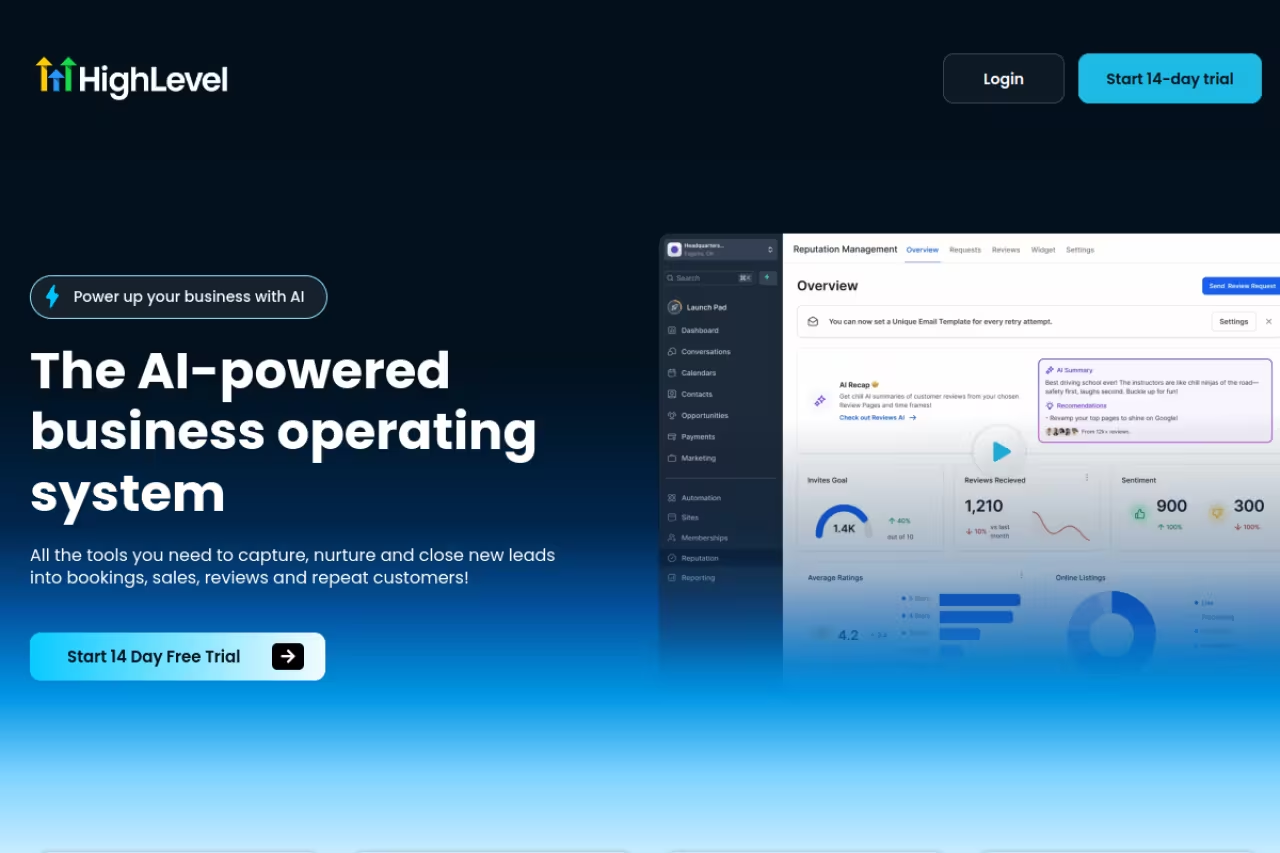
HighLevel (you'll also see it called GoHighLevel or GHL) was built for one buyer: the marketing agency. Everything else on this list adapted to agencies. This one started there. You get sub-accounts, one per client, each with its own CRM, funnels, email and SMS, booking calendar, and reputation tools, all sitting under your master account.
Who it's for: Agencies managing five or more client accounts that want to consolidate a stack of tools, and especially anyone who wants to resell software under their own brand.
The agency-native pick for agencies managing five or more client accounts, especially those wanting to resell software under their own brand through SaaS mode. It does a lot but nothing perfectly, usage fees add up, and setup takes weeks, not hours.
Three plans, billed monthly: $97 Starter (capped at 3 sub-accounts), $297 Unlimited (unlimited client accounts), and $497 Agency Pro, which unlocks SaaS mode and full white-labeling. Annual billing knocks off roughly two months. The catch on cost: SMS, calls, email sends, and AI actions are billed as usage on top, and per HighLevel's own pricing breakdowns agencies commonly add $100 to $200 a month in those extras.
The standout: SaaS mode. At $497 you can rebrand the entire platform, put it on your own domain, set your own prices, and resell it to clients as your product. That turns your CRM line item into a revenue line item, which no other tool here does natively.
The catch: It does a lot, which means it does very little perfectly. The funnel builder is fine, not great. The UI can feel cluttered, and the learning curve is real. New agencies often underestimate how long it takes to build out templates and snapshots before the platform pays off. Plan for a few weeks of setup, not a few hours.

HubSpot: the reporting and inbound engine
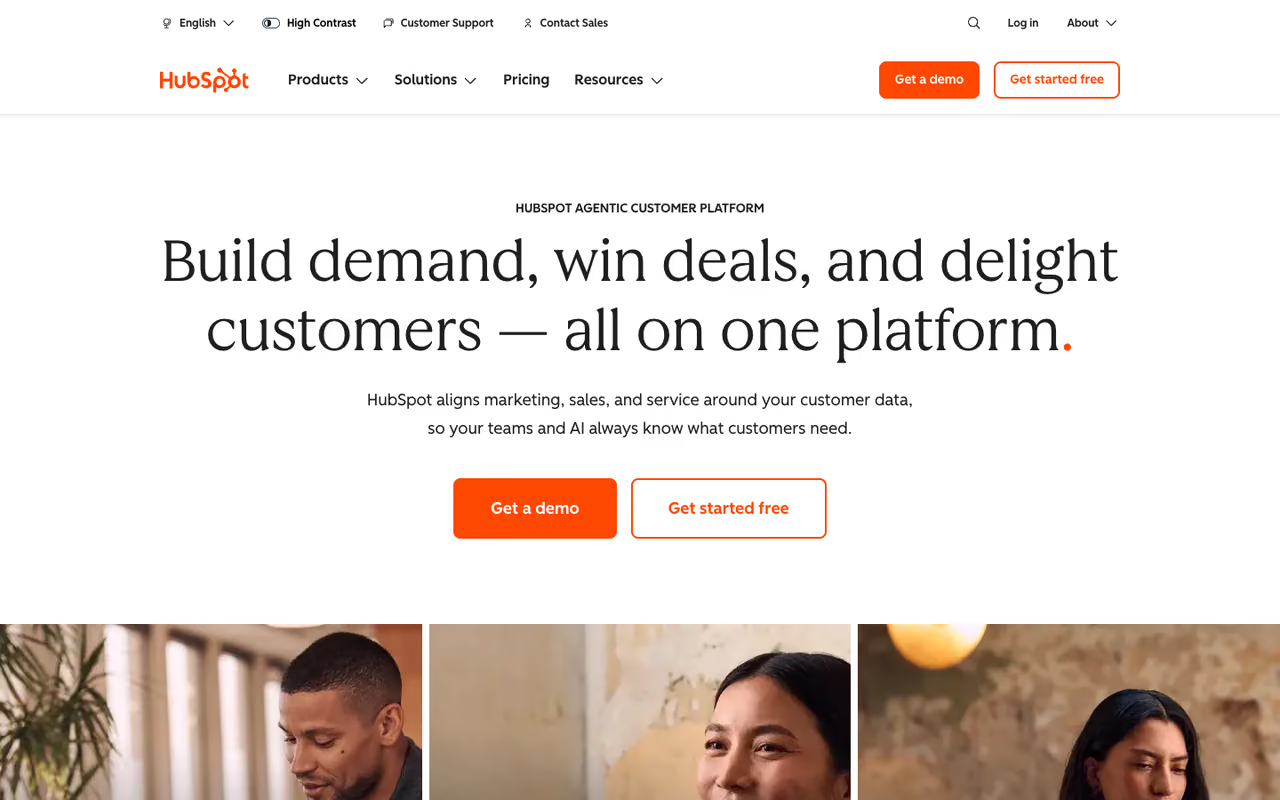
HubSpot is where agencies land when reporting is the deliverable. If you're bringing leads in through content, paid campaigns, forms, webinars, and referrals, HubSpot ties all of it to contacts and shows you which channel produced revenue. The free CRM is genuinely usable, and the HubSpot for Startups and Solutions Partner program gives agencies discounted access and client-management tooling.
Who it's for: Inbound-led agencies that sell on attribution, and teams that want one platform for marketing automation and sales rather than gluing two together.
Go with HubSpot when reporting is the deliverable and you sell on attribution as an inbound-led agency. The price cliff between Starter and Professional is steep, and per-client portals get expensive fast.
The CRM is free. Marketing Hub Starter is $20 per seat per month ($15 annual), which is fine for a small shop. The real power lives in Professional at $890/month including three seats, with extra seats at $45 each and a $3,000 onboarding fee. Contact limits matter too: Professional includes 2,000 marketing contacts before overage costs kick in.
The standout: The reporting and the ecosystem. Custom dashboards, multi-touch attribution, and roughly 1,700 integrations mean you rarely hit a wall. For client reporting, you can build a dashboard once and reuse it across accounts.
The catch: The price cliff between Starter and Professional is steep, and it's where most of the features agencies want actually live. Managing many separate client portals also gets expensive fast, since each portal is its own subscription. HubSpot is excellent value for your own agency and a tough sell as a per-client deployment. For a fuller breakdown of where it fits, see our best CRM for B2B guide.

Pipedrive: the cleanest pipeline at the lowest cost
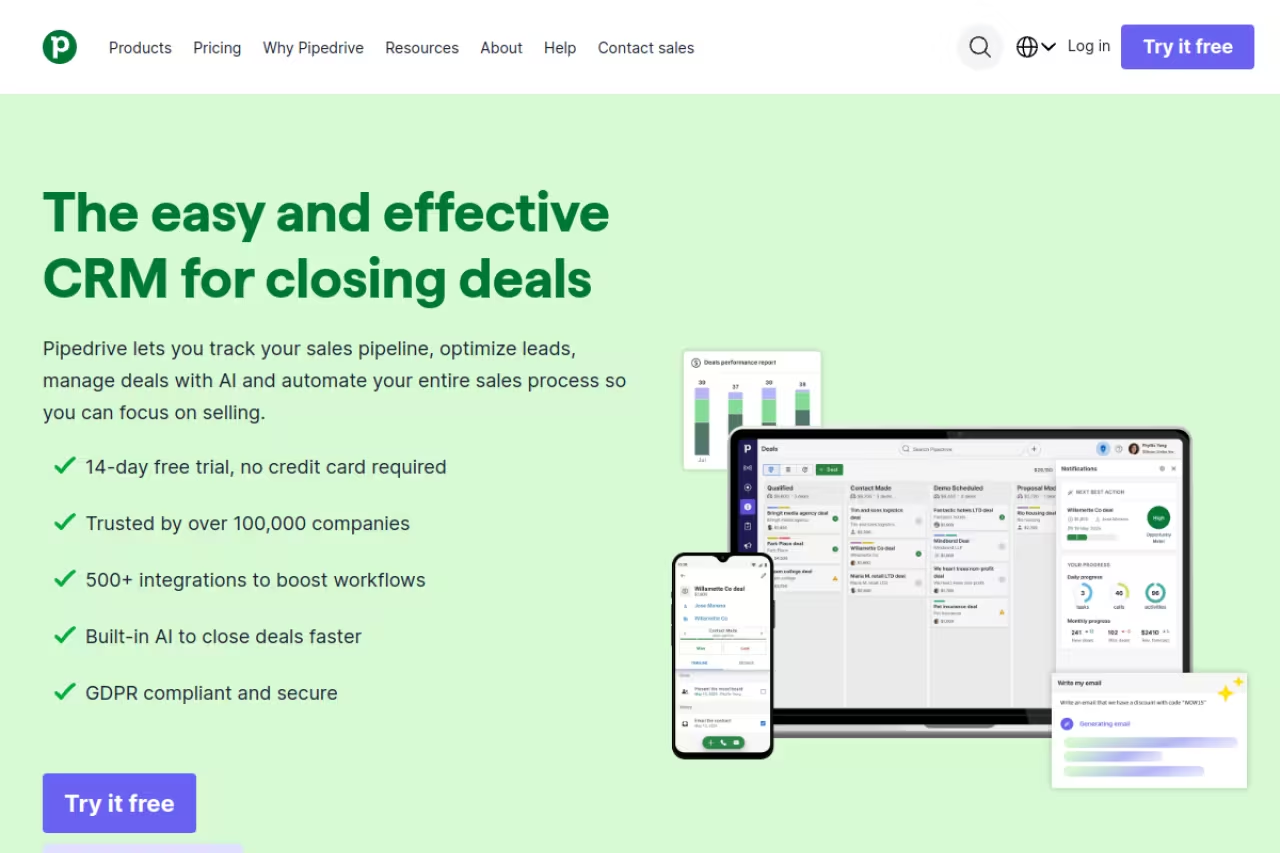
Pipedrive is the answer when you've overcomplicated your CRM and want to start over. It does one thing extremely well: visual sales pipelines that your team will actually keep updated. For tracking your agency's own new-business deals, it's the most pleasant tool here to use day to day.
Who it's for: Small and mid-sized agencies focused on closing their own deals who want low per-seat cost and zero learning curve.
The cleanest, lowest-cost pipeline for small and mid-sized agencies focused on closing their own deals, with almost no learning curve. It is a sales CRM only, so client campaigns need separate marketing tools.
Four plans on annual billing per Pipedrive's pricing page: Lite at $14/seat/month, Growth at $39, Premium at $59, and Ultimate at $79. Monthly billing runs higher (Lite is $24). Premium and Ultimate bundle the LeadBooster, Projects, and Smart Docs add-ons that would otherwise cost extra, so the total cost of ownership flips depending on the tier you need.
The standout: Drag-and-drop pipeline clarity and fast setup. You can import a deal list and be selling the same afternoon. The automation builder is approachable, and the activity reminders keep follow-ups from falling through.
The catch: It's a sales CRM, not a marketing platform. There's no real multi-client architecture, email marketing is a paid add-on (Campaigns), and you won't run client campaigns from inside it. Use Pipedrive for your pipeline and pair it with dedicated marketing automation tools for client work.
monday CRM: where deals turn into delivery
monday CRM solves a problem agencies feel hard: the handoff. A deal closes in the CRM, and then someone has to spin up the project, brief the team, and start the work. Because monday's CRM and its work-management boards live in the same workspace, a won deal can trigger the project board automatically. Sales and delivery stop being two disconnected systems.
Who it's for: Agencies that want their pipeline and their production workflow under one roof, and teams already using monday for project management.
Pick it if you want won deals to trigger project boards, and your agency already uses monday for delivery. It is a customizable platform first and a CRM second, and the 3-seat minimum stings for solo operators.
Per monday's CRM pricing, Basic is $12/seat/month, Standard $17, and Pro $28, all on annual billing with a three-seat minimum. Watch the tiers: email sync needs Standard, and lead scoring, sequences, and mass email require Pro. That minimum means the entry cost is really $36/month, not $12.
The standout: Visual flexibility and the deal-to-delivery bridge. You can shape boards to match exactly how your agency works, and automations connect the sales side to the production side without a separate integration.
The catch: It's a customizable platform first and a CRM second. There's no built-in marketing automation worth the name, and heavy customization can sprawl into something nobody maintains. The three-seat minimum also stings for solo operators and two-person shops.
Zoho CRM: the best feature-per-dollar at scale
Zoho CRM is the value play. It does most of what HubSpot does for a fraction of the price, and it plugs into the wider Zoho ecosystem (campaigns, social, books, projects) if you want an all-Zoho stack. For a growing agency watching every dollar of overhead, it's the most CRM you can buy per seat.
Who it's for: Budget-conscious agencies that still want automation, AI assistance, and room to scale across modules.
The value play for budget-conscious agencies that still want automation, AI assistance and room to scale. The interface feels dated, the better features sit behind Enterprise, and it rewards teams willing to invest setup hours.
Standard is $14/user/month, Professional $23, Enterprise $40, and Ultimate $52, all on annual billing per Zoho's pricing page. Monthly billing adds 20 to 40%. Enterprise is the tier where the AI assistant (Zia), advanced customization, and proper workflow automation open up.
The standout: Depth for the money. You get sales automation, multi-pipeline support, AI lead scoring, and customization that rivals tools costing twice as much. If you commit to the Zoho One suite, the per-app math gets even better.
The catch: The interface feels dated next to monday or Pipedrive, and the depth comes with a configuration tax. You'll spend time in settings, and the better features sit behind Enterprise. It rewards teams willing to invest setup hours, and frustrates anyone wanting plug-and-play.

ActiveCampaign: automation-first for email-led agencies
ActiveCampaign blurs the line between CRM and marketing automation, and that's the point. If your agency's value is nurturing leads through smart email and SMS sequences, its visual automation builder is one of the best in the category. The CRM piece is light but capable, and it sits right next to the automations driving your campaigns.
Who it's for: Agencies that lead with email and lifecycle marketing and want automation depth over pipeline polish.
A strong choice for agencies that lead with email and lifecycle marketing and want automation depth over pipeline polish. Contact-based pricing punishes growth, and the sales CRM is basic next to Pipedrive or HubSpot.
Contact-based, which is the thing to watch. Starter runs around $15/month annually, Plus $49, Professional $149, and Enterprise $259, all at low contact counts. The cost scales with your list: per ActiveCampaign's pricing, a plan that's cheap at 1,000 contacts gets expensive past 50,000. Extra user seats are roughly $12/month each.
The standout: The automation builder. Branching logic, conditional sends, goal tracking, and predictive sending are more sophisticated than what most CRMs bolt on. For agencies running complex nurture flows for clients, it's a genuine edge. Pair it with our roundup of AI email marketing tools and you've got a strong stack.
The catch: Contact-based pricing punishes you for success, since every client list you manage adds to your bill. The sales CRM is also basic next to Pipedrive or HubSpot, so it's a marketing tool that does CRM, not the other way around.

Capsule: simple, fast, and free to start
Capsule is the antidote to bloat. It's a relationship-focused CRM that small agencies and consultancies can set up in an afternoon and actually enjoy using. No 200-field setup, no certification course. Just contacts, pipelines, tasks, and clean reporting.
Who it's for: Small agencies, freelancers, and consultancies with 2 to 20 people who want a CRM that gets out of the way.
The antidote to bloat for small agencies and consultancies of 2 to 20 people, with a free tier and almost no learning curve. It tops out fast, so expect to migrate once you need real campaign tooling.
A free tier covers 2 users and 250 contacts, which is enough to test it properly. Paid plans, per Capsule's pricing, run Starter at $18/user/month, Growth $36, Advanced $54, and Ultimate $75 on annual billing. Workflow automation and advanced reporting open up at Growth.
The standout: Speed and simplicity. There's almost no learning curve, the contact management is genuinely good, and the free plan lets you start before committing a dollar. For a small shop, that's the right amount of CRM.
The catch: It tops out fast. There's no native marketing automation, no white-label, and the multi-pipeline support is limited compared to the heavier tools. Outgrow 20 users or start needing real campaign tooling and you'll be migrating. It's a great first CRM, not a forever one. If you're solo, our CRM for freelancers guide goes deeper on tools at this end.

Insightly: CRM with project management baked in
Insightly targets the same handoff problem as monday but from the CRM side. It pairs a real sales CRM with native project management, so when a deal closes you convert it into a project without leaving the system. For mid-market agencies that want sales and delivery in one record, it's a clean fit.
Who it's for: Mid-market agencies that want CRM and project delivery tightly linked, with marketing automation available as an add-on module.
A clean fit for mid-market agencies that want CRM and project delivery tightly linked, so a closed deal converts into a project with client data attached. Pricing is quote-based, marketing automation is an extra-cost module, and it rarely tops a head-to-head on any single dimension.
Insightly moved most plans to contact-sales quotes, so you'll need a conversation for current numbers. Historically it ran tiered per-user pricing with separate Marketing, Service, and CRM products you can bundle. Budget for a mid-market spend, not a starter one.
The standout: The project linkage. Opportunities convert into projects with the client data attached, which keeps account history in one place from pitch to delivery. The relationship-mapping feature is also a nice touch for agencies juggling multiple stakeholders per client.
The catch: The marketing automation is an extra-cost module rather than core, the UI is functional rather than modern, and opaque pricing makes it harder to compare on the spot. It's a solid mid-market option that rarely tops a head-to-head on any single dimension.
How to choose the right one
Skip the feature checklists and answer three questions in order.
Are you reselling or just organizing? If you want to put a CRM in front of clients under your own brand and bill for it, the conversation starts and ends with HighLevel. Nothing else here does white-label SaaS natively. If you only need to run your own agency, you have more freedom.
Is reporting the product or a byproduct? Agencies that sell on attribution and dashboards should pay the HubSpot tax, because the reporting is worth it. Agencies that just need to track deals and follow up should not overspend, and Pipedrive or Capsule will serve them better for less.
Where does the handoff break? If deals closing and work starting feels like two disconnected worlds, monday or Insightly close that gap by living next to your delivery boards. If your pain is nurturing leads before they convert, ActiveCampaign's automation matters more than pipeline polish.
For most agencies under ten people, I'd start with Pipedrive or Capsule for your own pipeline and add a dedicated marketing tool for client work. Agencies built around managing many client accounts should test-drive HighLevel's trial seriously before committing. And if you want a faster way to vet tools across categories, our top tools directory and the Dupple X bundle are built for exactly that kind of comparison shopping.
If keeping up with which tools are worth your time is a constant tax on your week, Dupple X hands you the shortlist so you can stop testing and start shipping.
FAQ
What is the best CRM for a small marketing agency?
For most small agencies, Pipedrive or Capsule hit the sweet spot. Both are inexpensive (Pipedrive from $14/seat/month, Capsule with a free tier and paid plans from $18/user), fast to set up, and focused on the pipeline work a small shop actually does. If you need white-label client accounts, HighLevel is the better fit even at a small size, but expect more setup time.
Which CRM is best for white-labeling to clients?
HighLevel is the standard here. On its $497/month Agency Pro plan you can rebrand the entire platform, host it on your own domain, set your own pricing, and resell it to clients as your own software. No other major CRM on this list offers native white-label SaaS resale, which is why agencies that want a recurring software revenue line gravitate to it.
How much should a marketing agency budget for a CRM?
It depends on the model. A small agency running its own pipeline can spend $14 to $40 per seat per month on Pipedrive, Zoho, or monday. Agencies built on HubSpot Professional should budget from $890/month plus onboarding. White-label agencies on HighLevel typically land at $297 to $497/month plus $100 to $200 in usage. Factor in onboarding fees and per-contact or usage overages, which trip up most first-time buyers.
Is HubSpot or HighLevel better for agencies?
They solve different problems. HubSpot is better if reporting, inbound attribution, and a deep integration ecosystem are central to how you sell, and you're running marketing for clients with serious budgets. HighLevel is better if you want to consolidate tools into client sub-accounts and resell a branded platform. Many agencies actually run HubSpot for their own marketing and deploy HighLevel for client accounts.
Do I need a separate CRM and marketing automation tool?
Not always. HubSpot, ActiveCampaign, Zoho, and HighLevel each combine CRM and marketing automation to varying degrees, so you can run both from one platform. Pipedrive, Capsule, and monday are CRM-first and pair better with a dedicated automation tool. The right call depends on whether your campaigns are simple enough for built-in automation or complex enough to need a specialist tool. Our marketing automation guide covers the dedicated options.
Related guides
Some offers on this page may be paid placements or contain affiliate links.
Across our whole catalogue the median is $24 a month and 33% of tools advertise a free tier. Figures are the lowest recurring monthly price quoted in our own review of each tool, read on 2026-08-19. Full method and every category.
