
Best AI Content Marketing Tools (2026)

Key facts8 tools compared: ChatGPT, Jasper, Surfer, Frase, Copy.ai, Writesonic, Opus Clip, Claude
- 8 tools compared: ChatGPT, Jasper, Surfer, Frase, Copy.ai, Writesonic, Opus Clip, Claude
- ChatGPT (best for: Drafting, ideation, research): $20/mo (Plus)
- Jasper (best for: On-brand content at scale): $59/mo (Pro, annual)
- Surfer (best for: SEO + AI-search optimization): ~$99/mo (Standard)
- Frase (best for: Briefs and SERP research): $49/mo (Starter)
Most "best AI tools" lists read like they were written by someone who opened a free trial, took a screenshot, and moved on. This guide compares pricing pages, documentation, and public user reports instead, and looks at what happens when a real deadline hits.
Here's the tension nobody admits: AI made it trivial to produce content, which means it made bad content cheaper and easier than ever. The tools that matter in 2026 aren't the ones that write fastest. They're the ones that help you research better, stay on-brand, and get found in both Google and AI answers like ChatGPT and Perplexity. That last part changed everything this year.
If you want the short version: ChatGPT is still the workhorse I open first, Jasper is the pick for teams that need brand-consistent content at scale, and Surfer is what I use to make sure a draft actually ranks. The rest of this guide is for when those three don't fit your exact job. This is written for marketers, founders, and operators who care more about output that performs than about hype.
Quick comparison
| Tool | Best for | Price | Standout |
|---|---|---|---|
| ChatGPT | Drafting, ideation, research | $20/mo (Plus) | The most flexible general writer |
| Jasper | On-brand content at scale | $59/mo (Pro, annual) | Brand voice + marketing agents |
| Surfer | SEO + AI-search optimization | ~$99/mo (Standard) | Data-driven content scoring |
| Frase | Briefs and SERP research | $49/mo (Starter) | Fast, cited content briefs |
| Copy.ai | GTM workflow automation | $29/mo (Chat) | Multi-step marketing workflows |
| Writesonic | Bulk SEO + GEO tracking | $20/mo (entry) | Tracks brand mentions in AI answers |
| Opus Clip | Repurposing video to clips | $15/mo (Starter) | Auto-finds viral moments |
| Claude | Long-form and editing | $20/mo (Pro) | Best at nuance and tone |
ChatGPT, the default I still reach for first
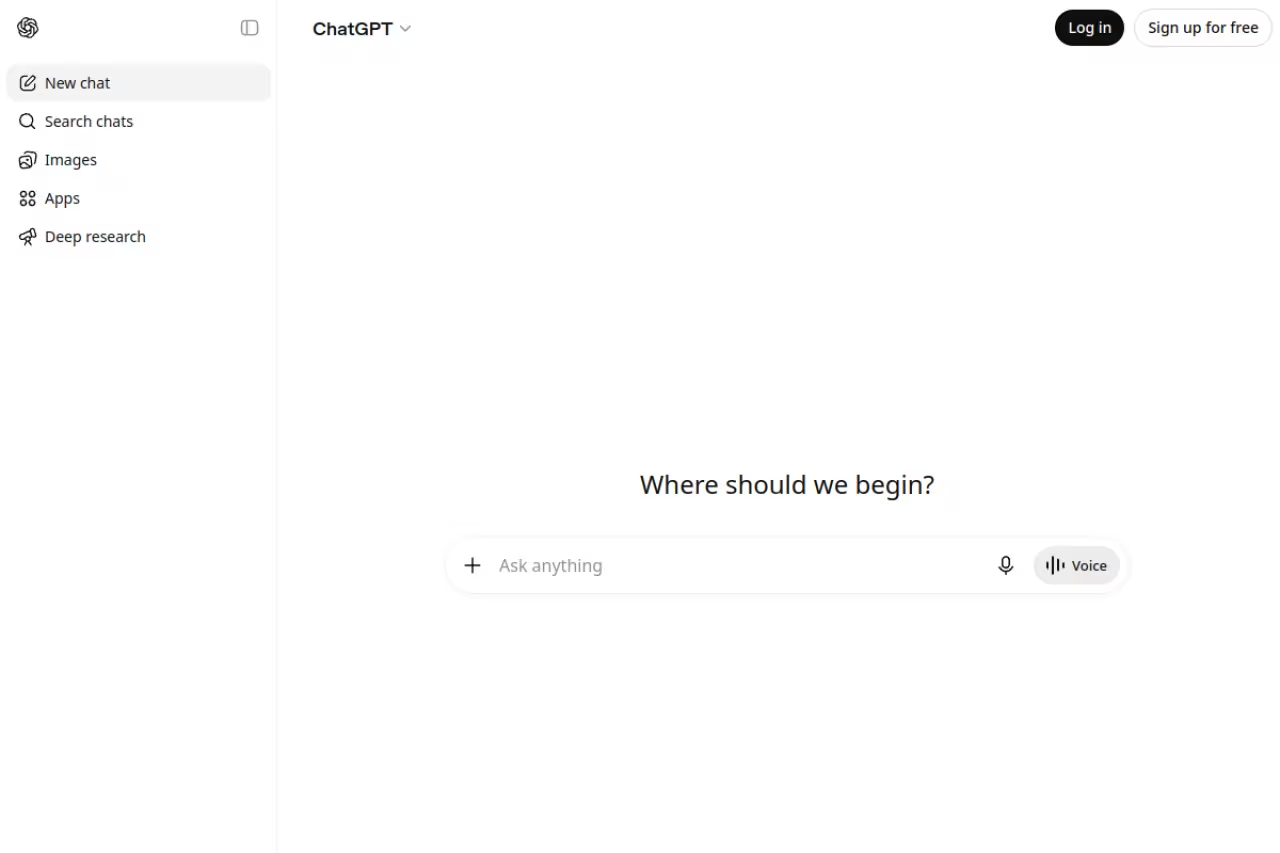
ChatGPT is the tool I open before any specialized platform, and I doubt that will change soon. For content marketing it does the unglamorous work well: outlines, first drafts, rewrites, headline variations, repurposing a blog post into a LinkedIn thread, summarizing a 40-page report into talking points.
Who it's best for: anyone who wants one flexible tool instead of five narrow ones. Solo marketers and small teams get the most value because it covers so much ground.
The flexible default for solo marketers and small teams who want one tool instead of five narrow ones, covering outlines, drafts, rewrites and repurposing. It has no idea what ranks and still invents statistics, so treat it as a brilliant intern, not an editor.
Pricing is straightforward. Free gets you the basic model. Plus is $20/month for the better models and higher limits, and Team runs $25/user/month on annual billing per OpenAI's pricing. For most content work, Plus is plenty.
The standout is range. Connected to web search, it can pull current information, draft against it, and adjust tone in the same conversation. Custom GPTs let you save a brand-voice setup you reuse daily.
The catch: it has no idea what ranks. ChatGPT will happily write a confident article that's structured nothing like the pages winning that search. It also still invents statistics, so every number it gives you needs a source check. Treat it as a brilliant intern, not an editor.

Jasper, built for marketing teams that live and die by brand voice
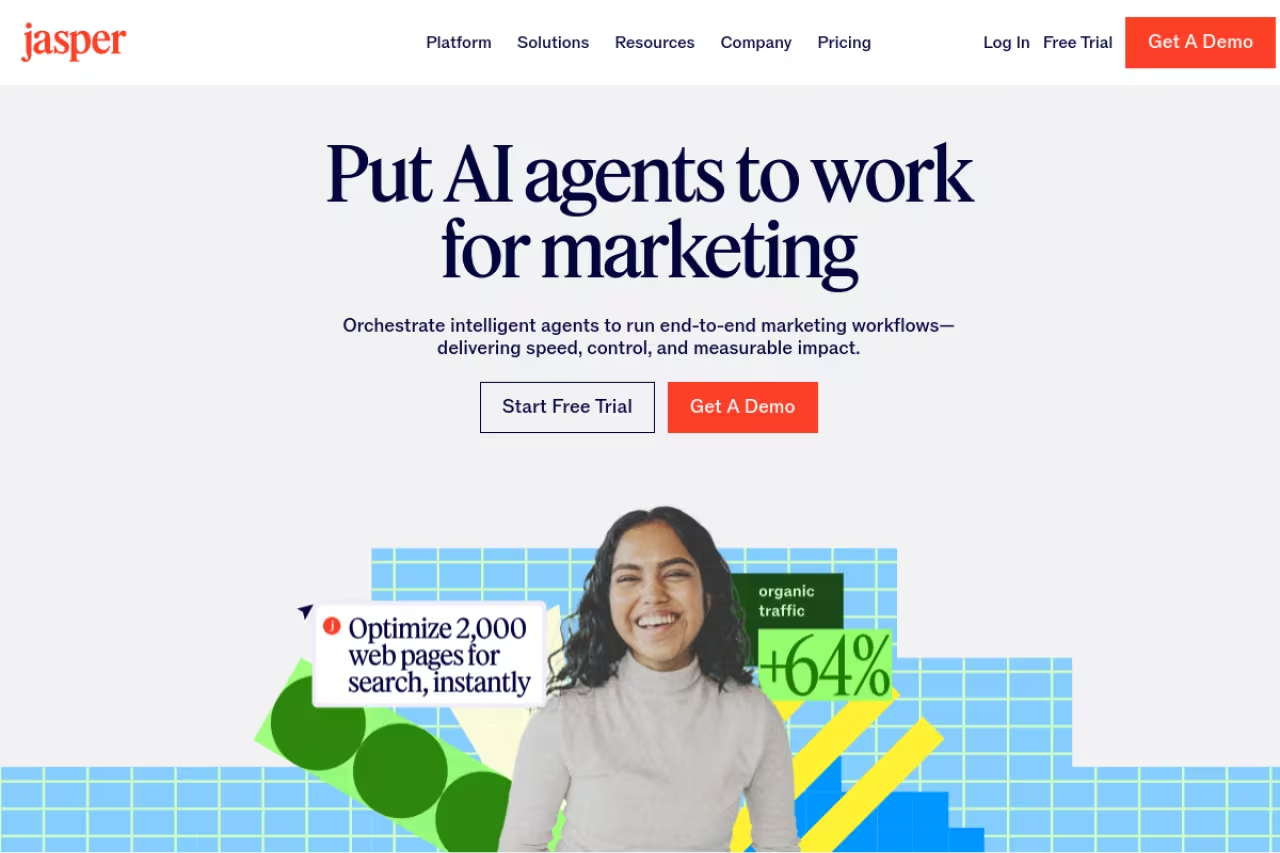
Jasper is what you graduate to when "the content sounds off-brand" becomes a recurring complaint. It's a marketing-first platform with brand voice controls, reusable knowledge assets, and agents that run campaign-style content jobs instead of one-off prompts.
Who it's best for: content and marketing teams of five-plus people producing a steady volume where consistency matters more than raw cost.
What you graduate to when off-brand content becomes a recurring complaint, built for teams of five-plus producing steady volume. Brand voice control is excellent, but per-seat pricing climbs fast and it is overkill for a solo blogger.
Pricing: the Pro plan is $69/month per seat monthly, or $59/month billed annually, which includes brand voices, knowledge assets, and audience profiles per Jasper's pricing page. Business pricing is custom and adds the no-code app builder, API access, and governance features.
The standout is brand control done properly. You feed it your style guide, tone, and product facts once, and every output stays inside those guardrails. For a team where ten people write, that consistency is worth real money.
Where it falls short: it's overkill for a solo blogger, and the per-seat pricing climbs fast. If your main need is one or two articles a week, you're paying for infrastructure you won't use. It also leans on you to bring SEO direction, which is why people pair it with Surfer.
Surfer, the tool that tells you if your draft will actually rank
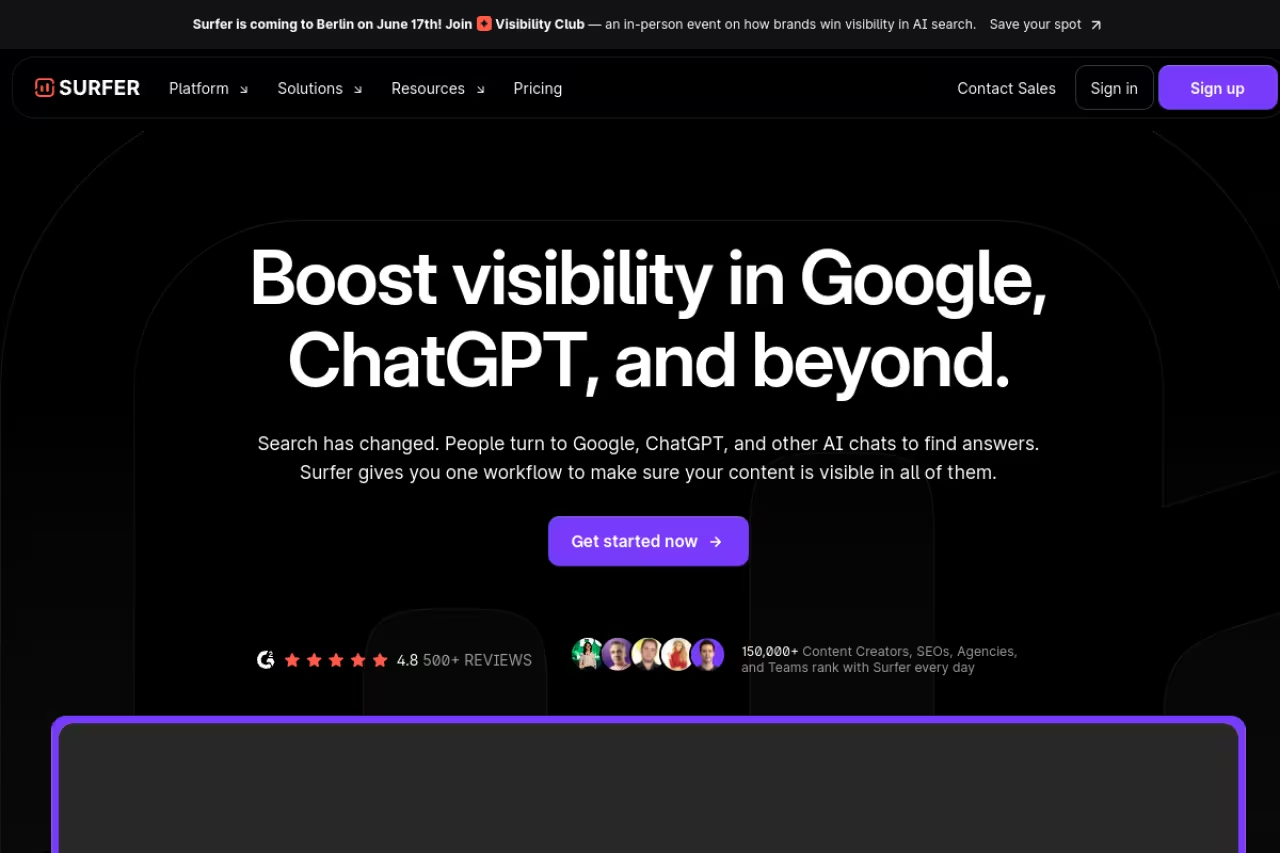
Surfer earns its spot because it closes the gap between "this reads well" and "this ranks." It analyzes the pages currently winning your target keyword and hands you a live content score based on terms, headings, length, and structure. In 2026 it added tracking for how your brand shows up across ChatGPT, Perplexity, and Google's AI Overviews.
Who it's best for: SEO-led content teams and anyone whose articles need to compete in search, not just exist.
The tool that closes the gap between reads well and ranks, scoring your draft in real time against pages winning the keyword. It suits SEO-led teams, but the score can become a crutch, and document caps on lower tiers bite if you publish daily.
Pricing changed this year. The Standard plan runs about €99/month (billed yearly) with 360 documents and AI visibility tracking, Pro is around €182/month, and there's a cheaper Discovery tier near €49/month for solo users, per Surfer's pricing page. No free plan, but a 7-day window to test.
The standout is the editor. You write or paste a draft, and Surfer scores it in real time against the competition. Hit the target and you've genuinely improved your odds. That feedback loop is hard to get anywhere else.
The catch: the score can become a crutch. Writers start stuffing in suggested terms to chase a number, and the result reads like it was optimized by a robot, because it was. Use it as a guide, not a grade. The document caps on lower tiers also bite if you publish daily.
If you're juggling all of this manually, it might be a sign your content ops needs a system, not just more tools. A Dupple X membership is one way teams keep their stack and workflow sane without testing forty products themselves.

Frase, the fastest way to a research-backed brief
Frase sits between research and writing. Give it a keyword and it pulls the top-ranking pages, extracts their questions and headings, and builds an outline you can hand to a writer in minutes. In 2026 it repositioned around the full content agent: research, optimization, AI-visibility tracking, audits, and publishing.
Who it's best for: teams that produce a lot of articles and need consistent, fast briefs without a researcher spending half a day per topic.
The fastest way to a research-backed brief, turning an afternoon of reading competitors into about ten minutes. Pick it if you publish many articles, but its raw writing trails ChatGPT and Jasper, and the 10-article cap on Starter is tight.
Pricing: Starter is $49/month for 1 site and 10 AI-optimized articles, Professional is $129/month with 3 seats and 40 articles, and Scale is $299/month per Frase's pricing. Annual billing knocks off 20%. Extra seats are $29 each.
The standout is speed to a usable brief. What used to take an afternoon of reading competitors takes about ten minutes, and the output is structured enough that a freelancer can run with it.
Where it falls short: its raw writing quality trails ChatGPT and Jasper, so I treat the AI drafts as scaffolding rather than finished copy. The 10-article cap on Starter is also tight if you're scaling.

Copy.ai, for marketers who want workflows, not just words
Copy.ai pivoted hard from "AI copywriter" to a go-to-market platform built around multi-step workflows. Instead of generating one blog post, you build a chain: research a prospect, draft outreach, repurpose a webinar into ten social posts, all triggered as one automation.
Who it's best for: GTM, sales, and ops teams that want to automate repetitive content and outreach tasks across a process, not write in a single editor.
A workflow engine for GTM, sales and ops teams that want repeatable content and outreach chains automated, not another editor. The value math only works at serious volume, because the workflows sit behind plans starting at $1,000/month.
Pricing shifted in 2026. The Chat plan is $29/month (or $24 annually) for 5 seats with unlimited chat, but the workflow-heavy tiers jump sharply: Growth starts at $1,000/month, per Copy.ai's pricing. There's a real gap between the cheap chat tier and the team plans.
The standout is automation. If you have a repeatable content process, Copy.ai turns it into a reusable workflow that runs without someone babysitting prompts.
The catch: that pricing jump is brutal. The $29 plan is a capable chat tool, but the workflows everyone praises live behind four-figure monthly plans. For a small team, the value math only works once you're automating serious volume.

Writesonic, the bulk SEO and GEO play
Writesonic is built around speed and search visibility. It generates SEO articles in bulk, includes built-in optimization, and added Generative Engine Optimization tracking to show how your brand appears in AI-generated answers across ChatGPT, Perplexity, and Google AI Overviews.
Who it's best for: teams chasing search volume who need many optimized articles and want to track AI-search presence in one place.
A bulk SEO and GEO play for teams chasing search volume who want AI-search tracking in the same place. The good features are gated behind higher tiers, and publishing unedited bulk output risks Google's spam updates.
Pricing tiers sit around $20, $99, $249, and $499/month. The honest caveat from reviewers: the GEO tracking most people buy it for lives behind the $249 tier, and the $99 plan caps AI articles despite "unlimited words" language. There's a free plan to test first.
The standout is the combination of bulk generation and GEO tracking under one roof, which is rare in 2026.
Where it falls short: bulk output is a trap if you don't edit. Publishing AI articles at volume without a human pass is how sites get hit by Google's spam updates. The good features being gated behind higher tiers also makes the entry plan feel like bait.

Opus Clip, for turning long video into a month of short-form
Opus Clip solves a different problem: you have a podcast, webinar, or YouTube video, and you need a week of clips from it. Paste a link, and it finds the strongest moments, adds captions, reframes for vertical, and gives you ready-to-post shorts.
Who it's best for: marketers and creators repurposing long video into TikTok, Reels, and Shorts without a video editor on staff.
Turns a podcast, webinar or YouTube video into ready-to-post shorts for marketers and creators without an editor on staff. It is only as good as your source, so flat webinars give flat clips, and captions need a proofread on technical terms.
Pricing: free gives you 60 credits a month, Starter is $15/month for watermark-free exports, and Pro is $29/month with advanced clipping, B-roll, and longer export windows, per Opus Clip's pricing. Business is custom.
The standout is the virality scoring and auto-reframing. It guesses which segments will perform and crops them so a talking head stays centered, which saves hours of manual editing.
The catch: it's only as good as your source video. A flat, low-energy webinar produces flat, low-energy clips. The AI finds moments, it can't manufacture energy that wasn't recorded. Captions also need a quick proofread on technical terms.

Claude, the one I trust with nuance and editing
Claude is my pick when the writing needs to be more than competent. It handles long documents well, follows detailed style instructions closely, and edits with a lighter, less robotic touch than most. For thought-leadership pieces and anything where tone carries weight, it's my first choice.
Who it's best for: writers and founders producing long-form content, ghostwriting, or careful editing where voice matters.
My pick when writing needs nuance, strong on long-form, ghostwriting and careful editing that keeps your voice intact. Like ChatGPT it does not know what ranks and can invent citations, and its marketing integrations are thinner than Jasper's.
Pricing: Pro is $20/month (or $17 annually), with Max tiers at $100 and $200/month for heavy users, per Anthropic's pricing. The Pro tier covers most content work.
The standout is editing quality. Hand Claude a messy draft with a clear brief and it tightens prose without flattening your voice into corporate mush, which is more than I can say for most.
Where it falls short: like ChatGPT, it doesn't know what ranks and will invent citations if you let it. Its ecosystem of marketing-specific integrations is also thinner than Jasper's. It's a writing partner, not a content platform.
How to choose
Don't buy all eight. Match the tool to your actual bottleneck.
If your problem is getting a first draft out, start with ChatGPT or Claude at $20/month and nothing else. Most solo marketers never need more than this plus a free SEO checker.
If your problem is content not ranking, add Surfer or Frase on top of a general writer. The writer drafts, the SEO tool tells you if it'll perform. That pairing beats any single all-in-one for under $150/month combined.
If your problem is consistency across a team, Jasper is worth the per-seat cost. Below five writers, it's hard to justify.
If your problem is repetitive process work (outreach, repurposing pipelines), look at Copy.ai's workflows, but only if you'll automate enough volume to clear the pricing gap.
And if your problem is video repurposing, Opus Clip is a cheap, obvious win that pairs with everything else.
The mistake I see most: teams buy a $200/month platform to solve a problem a $20 tool plus better process would fix. Audit your bottleneck first. If you'd rather skip the testing entirely, our top tools directory and a Dupple X membership exist to do that filtering for you.
FAQ
What is the best AI content marketing tool in 2026?
There's no single winner because the job varies. ChatGPT is the best all-around default for drafting and ideation at $20/month. Jasper is best for teams needing on-brand content at scale, and Surfer is best for making sure that content actually ranks. Pick based on your bottleneck, not the loudest brand.
Can AI content rank on Google in 2026?
Yes, but only if it's genuinely useful and well-edited. Google judges content quality and helpfulness, not whether AI was involved. Raw, unedited bulk AI articles get penalized in spam updates. The teams that win use AI to draft faster, then add real expertise, sources, and editing. See our guide on AI for SEO for the full approach.
What is GEO and why does it matter for content marketing?
GEO stands for Generative Engine Optimization: getting your brand cited in AI answers from ChatGPT, Perplexity, and Google's AI Overviews. As more people ask AI instead of searching, appearing in those answers matters as much as ranking on Google. Tools like Surfer and Writesonic now track your AI-search visibility directly.
Do I need a paid AI writing tool or is ChatGPT enough?
For most solo marketers and small teams, ChatGPT or Claude at $20/month covers drafting, ideation, and rewriting. You only need a specialized platform when you have a specific recurring problem a general tool can't solve, like brand consistency across a team (Jasper) or SEO scoring (Surfer). Start cheap and upgrade when you hit a real wall.
How much should a small team budget for AI content tools?
A practical small-team stack runs $40 to $150/month: one general writer like ChatGPT or Claude ($20), plus one SEO tool like Frase ($49) or Surfer (~$99). Avoid stacking overlapping all-in-one platforms. Most teams overspend by buying enterprise tools for solo-tool problems. For more on building a lean stack, see our best AI marketing tools roundup.
Related guides
Some offers on this page may be paid placements or contain affiliate links.
