
Best Spend Management Platforms in 2026 (Compared and Ranked)

Key facts8 platforms compared: Ramp, Brex, Spendesk, Airwallex, BILL Spend & Expense, Navan, Expensify…
- 8 platforms compared: Ramp, Brex, Spendesk, Airwallex, BILL Spend & Expense, Navan, Expensify, Procurify
- Ramp (best for: US startups & mid-market): Free core; Plus $15/user/mo
- Brex (best for: Funded startups, global teams): Free Essentials; Premium $12/user/mo
- Spendesk (best for: European finance teams): Custom quote
- Airwallex (best for: Cross-border / multi-currency): Free Explore; Grow $12/user/mo
"Spend management" is one of those phrases that means almost nothing until your company spend gets out of hand. Then it means everything. You have corporate cards floating around, contractors expensing things, three SaaS subscriptions nobody remembers signing up for, and a finance person who finds out about all of it three weeks too late. A real spend platform fixes the timing problem: it controls money before it leaves, not after.
The category split into two camps. On one side, all-in-one cards-plus-software players that give you the card and the controls for free and make money on interchange. On the other, subscription software that sits on top of your existing banking and charges per seat. Both work. Which one fits depends on where you are and how much of your spend runs through cards versus invoices and POs.
I've set this up for a small team and helped a few founders pick from scratch. My short answer: for most startups and mid-market companies in the US, Ramp is the one to beat. It's free at the core, the controls are good, and it pays for itself in cashback and caught out-of-policy spend. But the right pick changes fast once you go global, lean on procurement, or run travel. Here's the full breakdown, with pricing I verified on each vendor's own page in June 2026.
Quick comparison
| Platform | Best for | Price | Standout |
|---|---|---|---|
| Ramp | US startups & mid-market | Free core; Plus $15/user/mo | Free tier that actually controls spend |
| Brex | Funded startups, global teams | Free Essentials; Premium $12/user/mo | Built-in travel + global cards |
| Spendesk | European finance teams | Custom quote | Procure-to-pay + EU-native |
| Airwallex | Cross-border / multi-currency | Free Explore; Grow $12/user/mo | Multi-currency at 0.5% FX markup |
| BILL Spend & Expense | QuickBooks/Xero-first SMBs | Free | Free cards tied to native accounting sync |
| Navan | Travel-heavy teams | Free up to 5 users; then $15/user/mo | Travel booking + expense in one |
| Expensify | Solo to small teams | Free; Collect $5/member/mo | Cheapest paid tier, fast receipt scan |
| Procurify | Mid-market procurement | ~$10k-$25k/yr | Intake-to-pay purchasing controls |
Ramp: the default pick for most teams
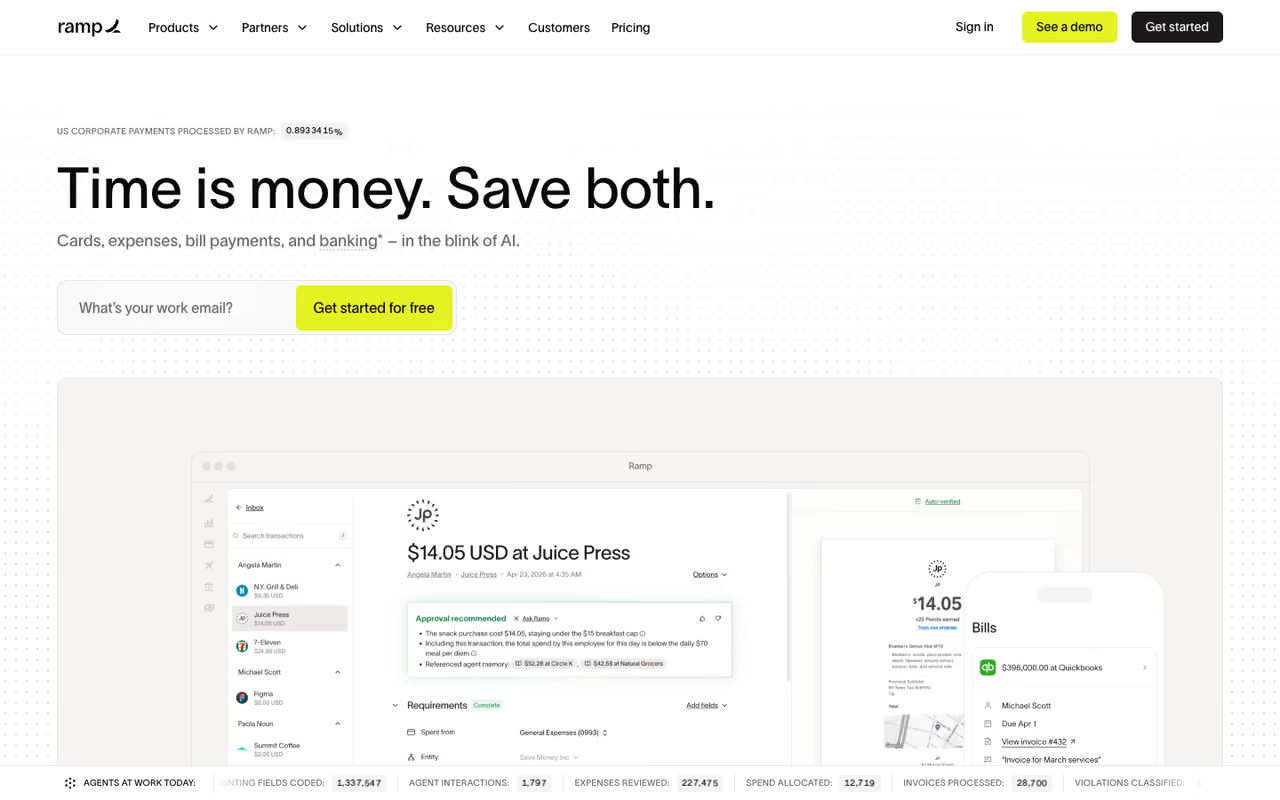
Ramp is the platform I point most people to first, and the reason is simple: the free plan does more than what some competitors charge for. You get corporate cards, expense management, bill pay, and accounting integrations with QuickBooks Online and Xero without paying a cent, because Ramp earns on card interchange.
Who it's for: US-based startups and mid-market companies that run most of their spend through cards and want savings flagged automatically. Ramp's whole pitch is helping you spend less, and the product nags you about duplicate subscriptions and price drops in a way that actually saves money.
The default for US-based startups and mid-market companies, with a free plan that covers cards, expenses, bill pay, and accounting sync. International card issuing and multi-currency sit behind Enterprise, so heavy euro spend will hit limits.
The free tier covers cards, T&E, AP automation, and treasury. Ramp Plus is $15 per user per month (20% off annual) and adds AI auto-coding, advanced NetSuite sync, real-time budget tracking, and PO workflows. Enterprise is custom and adds local-currency card issuing in 30+ countries.
The standout: Speed. Receipts auto-match, line items get coded by AI on Plus, and the month-end close gets noticeably shorter. The savings insights are underrated until they catch a $400/month tool you forgot existed.
The catch: Ramp is built for the US first. International card issuing and multi-currency are gated behind Enterprise, so if half your spend is in euros or you have entities abroad, you'll feel the limits fast.

Brex: global cards with travel baked in
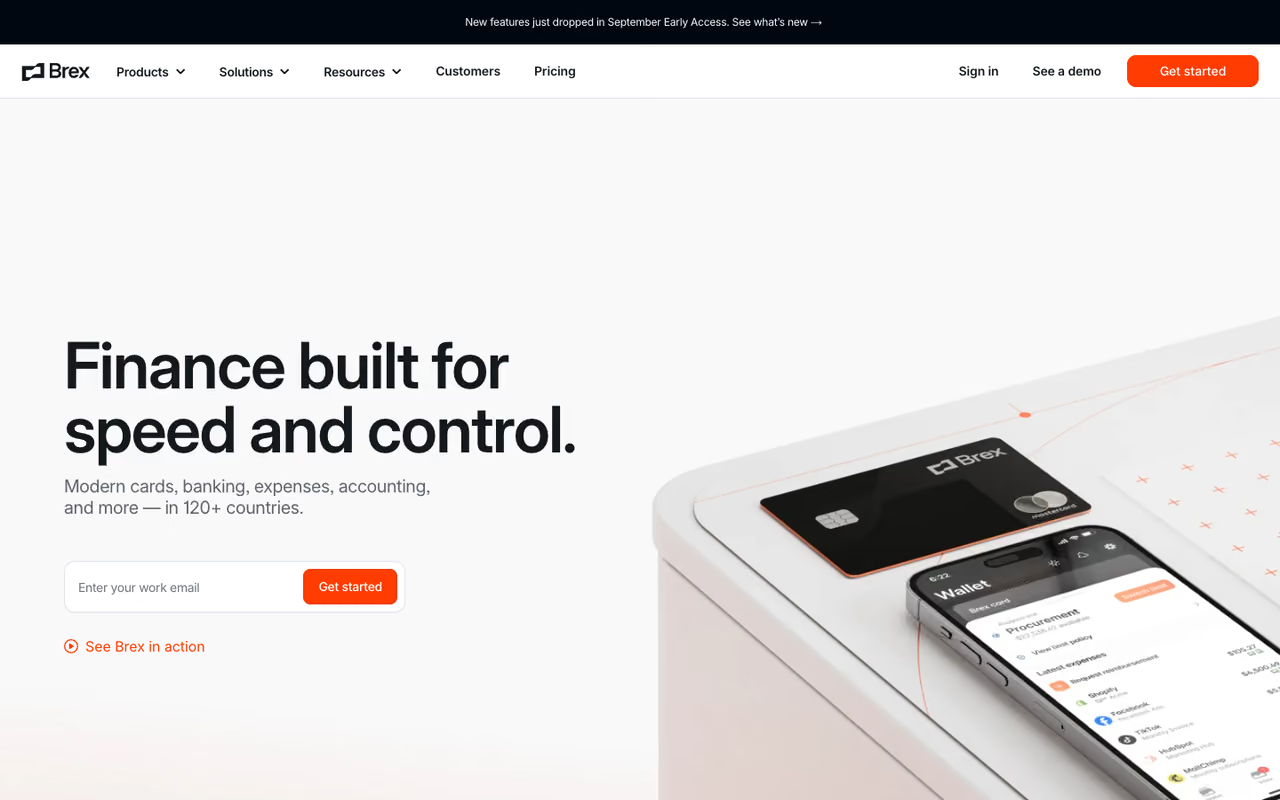
Brex is Ramp's closest rival and the better fit if you have international employees or want travel booking inside the same tool. One thing to know upfront: Capital One completed its $5.15 billion acquisition of Brex in April 2026. The product is unchanged for now, but it's worth watching how pricing and direction shift as it folds into a big bank.
Who it's for: Venture-backed startups and companies with global teams. Brex issues cards in more countries out of the box than Ramp does on a free plan, and its travel management is a real differentiator.
The better fit for international employees or built-in travel booking, with unlimited global cards on the free Essentials plan. The Capital One acquisition clouds the roadmap, and some founders remember it once dropped smaller businesses.
Essentials is free and includes unlimited global cards, reimbursements, cash management, bill pay, and trip booking. Premium is $12 per user per month and adds live budgets, policy compliance reporting, managed travel programs, and dedicated bookkeeper support. Enterprise is custom with VAT tracking and non-US entity setup.
The standout: Travel, expense, and global cards in one place. If your team books flights and hotels regularly, that flow into the same approval and reporting layer removes a whole tool from your stack.
The catch: Brex once dropped support for smaller businesses before walking it back, which still makes some founders cautious. And the Capital One deal adds a question mark over the next year of roadmap.

Spendesk: the European finance team's choice
Spendesk is the one I recommend to European companies, and it's genuinely better suited to EU finance workflows than the US-born players. It handles cards, invoices, expense claims, and procurement under one roof, with the VAT and multi-entity handling that European teams actually need.
Who it's for: European SMBs and mid-market finance teams that want procure-to-pay, not just cards. The approval workflows and accounts payable module are strong, and it integrates with the ERPs European accountants use.
The one to pick for European SMBs and mid-market finance teams that want procure-to-pay with VAT and multi-entity handling built in. Pricing is quote-based, and small teams wanting just a card will find it heavier than a free US tool.
Custom, quote-based. Spendesk uses a fixed monthly platform fee plus variable fees tied to transaction volume, with add-on modules for procure-to-pay, AP, advanced workflows, and multi-entity. There's no published per-seat price, so you'll need to request a quote. On the plus side, there are no physical card or active-user fees.
The standout: It's built for the European reality of VAT, multiple entities, and local accounting rules, instead of bolting that on afterward. The included CFO Connect community is a nice extra for finance leaders.
The catch: No transparent pricing means a sales call before you can even compare. For a small team that just wants a card and a dashboard, the platform-plus-usage model makes it heavier than a free US tool.
If you're weighing the broader category, our best expense management software guide goes deeper on the receipt-and-reimbursement side specifically.

Airwallex: for anyone spending across borders
Airwallex is the pick when your money moves between currencies. Most US spend platforms treat international as an edge case. Airwallex treats it as the main event, with multi-currency accounts, local transfers in 120+ countries, and FX at interbank rates with a small markup.
Who it's for: Companies with cross-border spend, foreign suppliers, or entities in multiple countries. If you're constantly converting currencies or paying overseas vendors, the FX savings alone can justify the switch.
The pick when money moves across currencies, with local transfers in 120+ countries and a 0.5% FX markup on major currencies. The spend layer is younger than Ramp's or Brex's, and per-transaction fees hide behind the free plan.
The Explore plan is $0/month and includes 10 free company cards, unlimited virtual employee cards, free local transfers across 120+ countries, and a 0.5% FX markup on major currencies. Grow is $12 per active spend user per month (first 10 included) and adds multi-conditional approvals, ERP integrations, and AI expense auditing. Accelerate is custom with FX spreads as low as 0.3%.
The standout: That 0.5% FX markup. For a company doing real international volume, the gap between Airwallex and a bank's 2-3% spread adds up to serious money over a year.
The catch: The spend layer is younger than Ramp's or Brex's. Approval workflows and reporting are solid but less polished, and you'll hit per-transaction fees on FX, SWIFT, and card payments that the headline "free" plan doesn't surface. Read the fee schedule closely.
BILL Spend & Expense: free cards for QuickBooks shops
BILL Spend & Expense (formerly Divvy) is the easy answer if you already live in QuickBooks or Xero. The corporate cards and budgeting software are free, funded by interchange, and the accounting sync is the cleanest part of the product.
Who it's for: Small and mid-sized businesses that want free cards with budget controls and tight native accounting integration. It connects to QuickBooks, NetSuite, Xero, Sage Intacct, and Microsoft Dynamics.
The easy answer for small and mid-sized businesses on QuickBooks or Xero, with free cards and hard budget caps. The interface feels dated, AI is thinner than Ramp, and moving between BILL's two products is not always smooth.
The Spend & Expense product is free. BILL makes money on interchange and on its separate AP/AR product. There's a rewards program with cashback, and pricing for the broader BILL suite is quote-based by user count.
The standout: Budget-first design. You set budgets, assign cards to them, and spend can't exceed the limit. For a team that struggles with overspend, that hard cap beats another dashboard.
The catch: The interface feels dated next to Ramp and the AI features are thinner. BILL is also two products stitched together (Spend & Expense plus the older BILL AP/AR), and moving between them isn't always smooth.

Navan: when travel is the spend
Navan (formerly TripActions) earns its spot for one reason: travel and expense in a single flow. If a big chunk of your spend is flights, hotels, and per diems, booking and expensing in the same tool removes a real headache.
Who it's for: Teams with meaningful travel spend. Sales orgs, consultancies, and any company sending people on the road regularly. Navan's booking experience is the best of the bunch and policy controls apply at booking time.
The pick when travel is the spend, for sales orgs and consultancies that want booking and expensing in one flow with policy enforced at booking. Low-travel teams are paying for a platform they barely use, and a card-first tool costs less.
Navan Expense is free for your first 5 monthly expensing users. After that it's $15 per active expense user per month for companies with 300 or fewer employees (you're billed only on users who actually submit transactions, not headcount). Above 300 employees, it's custom.
The standout: Policy enforcement happens before the booking, not after the expense report. Out-of-policy options are flagged or blocked in the moment, so employees book within policy by default.
The catch: If you don't travel much, you're paying for a travel platform you barely use. For low-travel teams, Navan is overkill and a card-first tool like Ramp covers expenses for less.

Expensify: cheapest paid tier for small teams
Expensify is the scrappy small-team option, and after its April 2025 pricing overhaul it's simpler than it used to be. The free plan covers solo users and tiny teams, and the receipt scanning (SmartScan) is fast and accurate.
Who it's for: Freelancers, small teams, and anyone who wants cheap, no-nonsense expense tracking. It's the lowest-cost paid plan on this list.
The scrappy, cheap choice for freelancers and small teams, with fast SmartScan receipt capture and paid plans from $5 per member per month. It is an expense tool first, so procurement and budget controls are thin and you will outgrow it.
There's a free plan for basic tracking, including free Expensify Visa cards for small companies. The Collect plan is $5 per member per month for unlimited SmartScans, ACH reimbursement, the Expensify Card, and QuickBooks/Xero sync. Control is $9 per user per month with policy enforcement and compliance. Using the Expensify Card can cut paid plans toward $0 depending on spend.
The standout: Receipt capture. SmartScan reads a photo in seconds and the mobile app is genuinely pleasant. For pure expense tracking, it's hard to beat at this price.
The catch: Expensify is an expense tool first, not a full spend platform. Procurement, advanced approvals, and budget controls are thin or absent compared to Ramp or Spendesk. You'll outgrow it as you scale.

Procurify: built for procurement, not just cards
Procurify is the pick when purchasing controls matter more than corporate cards. It's an intake-to-pay procurement platform: request, approve, PO, receive, pay. Mid-market teams with real procurement processes use it to put guardrails on spend before it's committed.
Who it's for: Mid-market organizations, often in manufacturing, healthcare, or education, where purchase requests and approvals need a paper trail. G2 has ranked it the top mid-market purchasing software.
Choose Procurify when purchasing controls matter more than cards, for mid-market organizations needing a request-to-pay paper trail. It is real procurement software with real prices, no free tier, and far more than a card-and-expense team needs.
Tiered and quote-based. A typical SMB should budget roughly $10,000 to $25,000 per year, with premium support adding 10-20% on top. It's a real software contract, not an interchange-funded free tool.
The standout: Request-to-pay workflow. Procurify is one of the few here that handles the full procurement cycle, including PO generation, vendor management, and receiving logs, with budget enforcement at the request stage.
The catch: It's procurement software, so you pay procurement-software prices. There's no free tier, implementation takes time, and for a team that just wants cards and expense tracking it's far more than you need. For that side, see our procurement software roundup.
How to choose
Skip the feature checklists. Start with where your spend actually goes.
If most of your spend runs through cards and you're US-based, default to Ramp's free plan. It controls spend, syncs to accounting, and costs nothing until you need the Plus automation. BILL Spend & Expense is the alternative if you want hard budget caps and live in QuickBooks.
If you're global or multi-currency, Airwallex for the FX savings, or Brex if you also want travel and a more mature spend layer. Don't force a US-first tool to handle euros.
If procurement is the bottleneck (purchase requests piling up, no PO trail), you need Procurify or Spendesk's procure-to-pay, not a card tool. Cards solve the wrong problem here.
If travel is the spend, Navan, full stop. The book-and-expense-in-one flow is worth it once travel is more than occasional.
If you're tiny and just need clean expense tracking, Expensify at $5/member is the cheapest real option.
One rule holds across all of them: match the tool to your dominant spend type today, not the longest feature list. You can layer a second tool later, and most teams do.
If you're building out the rest of your finance and ops stack, our top tools directory and the Dupple X toolkit are a good next stop. To cut wasted SaaS spend specifically, the cloud cost optimization tools guide pairs well with any platform here.
Want more tools like these landing in your inbox before everyone else? Dupple X gives you a curated AI and ops toolkit worth far more than the price.
FAQ
What is a spend management platform?
A spend management platform controls company money across its whole lifecycle: corporate cards, expense reports, bill pay, and often procurement, all in one system with policies and approvals built in. The point is to stop out-of-policy spend before it happens and give finance real-time visibility, instead of reconciling surprises at month-end. It's broader than a plain expense management tool, which mostly handles reimbursements after the fact.
What is the best spend management platform in 2026?
For most US startups and mid-market companies, Ramp is the strongest all-around pick because its free tier includes cards, expense management, bill pay, and accounting sync with no per-seat cost. Brex is the better choice for global teams that also want travel, Airwallex wins for cross-border and multi-currency spend, and Procurify leads if procurement and purchase orders are your bottleneck.
Are spend management platforms free?
Several are genuinely free at the core. Ramp, Brex Essentials, BILL Spend & Expense, and Airwallex's Explore plan all offer corporate cards and controls at $0 per user because they earn revenue on card interchange. Paid tiers (typically $12 to $15 per user per month) add AI automation, advanced approvals, and ERP integrations. Subscription-first tools like Spendesk and Procurify are quote-based with no free option.
How is Ramp different from Brex?
Both offer free corporate cards and spend software funded by interchange. Ramp focuses on US-based cost savings and automation, with strong AP automation and savings insights on the free plan. Brex issues cards in more countries by default, includes travel booking, and targets funded and global teams. Brex was also acquired by Capital One in April 2026, which may shift its roadmap. For a US team chasing savings, Ramp; for a global team that travels, Brex.
Does a small business need a spend management platform?
If you have more than a couple of people with company cards, yes, and a free one costs you nothing to try. Even a five-person team benefits from card-level budget limits, automatic receipt matching, and a clean accounting sync that saves hours each month. Start with a free tier like Ramp or Expensify's free plan, and only move to a paid or procurement-heavy tool when your approval and PO needs outgrow it.
Related guides
Some offers on this page may be paid placements or contain affiliate links.
Across our whole catalogue the median is $24 a month and 33% of tools advertise a free tier. Figures are the lowest recurring monthly price quoted in our own review of each tool, read on 2026-08-19. Full method and every category.
