
Best Agile Project Management Tools (2026)

Key facts8 tools compared: Linear, Jira, ClickUp, Shortcut, Asana, monday dev, Azure DevOps, Trello
- 8 tools compared: Linear, Jira, ClickUp, Shortcut, Asana, monday dev, Azure DevOps, Trello
- Linear (best for: Fast-moving software teams): Free / $10 Basic
- Jira (best for: Enterprise scrum at scale): Free (10 users) / $7.91
- ClickUp (best for: Hybrid agile + non-eng work): Free / $7 Unlimited
- Shortcut (best for: Engineering-led startups): Free (10 users) / $8.50
Most teams don't have an "agile" problem. They have a tool problem dressed up as one. The standup runs long because nobody trusts the board. Sprints slip because the backlog is a graveyard. And the project manager spends Friday afternoons copying ticket statuses into a slide deck for someone who will never open it.
The right tool won't make you agile. But the wrong one will fight you every sprint, and that tax compounds. So this isn't a feature dump scraped from vendor pages. It's what actually holds up under a real sprint cadence, based on documentation, pricing, and public user reports.
If you want the short version: for modern software teams that ship weekly, Linear is the one I reach for first. It's fast, opinionated, and gets out of your way. If you're a big org with compliance requirements and 12 teams that all do agile differently, Jira is still the safe call. Everyone else lands somewhere in between, and the rest of this guide is about finding your spot.
Quick comparison
| Tool | Best for | Price (per user/mo) | Standout |
|---|---|---|---|
| Linear | Fast-moving software teams | Free / $10 Basic | Speed and keyboard-first UX |
| Jira | Enterprise scrum at scale | Free (10 users) / $7.91 | Workflow depth, every integration |
| ClickUp | Hybrid agile + non-eng work | Free / $7 Unlimited | One tool for the whole company |
| Shortcut | Engineering-led startups | Free (10 users) / $8.50 | Clean scrum without the bloat |
| Asana | Cross-functional delivery | Free (2 users) / $10.99 | Timeline and dependency views |
| monday dev | Mixed dev + business teams | From $10 seat | Visual boards, low learning curve |
| Azure DevOps | Microsoft-stack engineering | Free (5 users) / ~$6 | Boards plus repos and pipelines |
| Trello | Tiny teams, light kanban | Free / $5 Standard | Dead-simple boards anyone gets |
Linear: the one I'd pick for most software teams
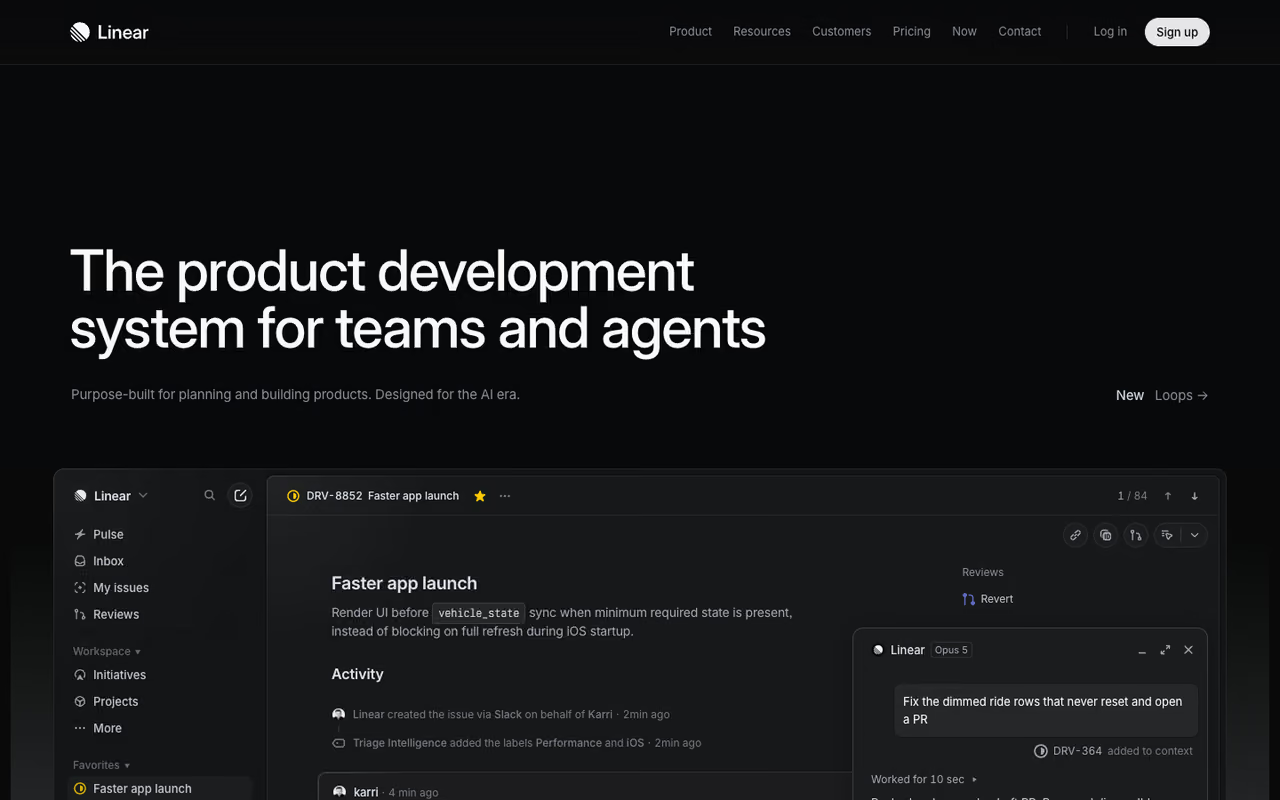
Linear is issue tracking and sprint planning built for engineers who hate slow software. It's the tool that made "the project management app feels fast" a selling point, and once you've lived in it, going back to a sluggish board is genuinely painful.
My pick for most software teams that ship on a tight cycle and hate sluggish tools. It is opinionated toward engineers, so marketing and ops people who need to share the tool will be frustrated.
Cycles (Linear's word for sprints) are automatic. The keyboard shortcuts mean you can triage a backlog without touching the mouse. Triage Intelligence and the Linear Agent automations now route incoming bugs and suggest assignees, which cuts the grunt work out of inbox-style triage.
Pricing is honest. The free plan covers 250 issues and 2 teams with unlimited members, which is plenty for a small startup. Basic is $10 per user/month billed yearly for unlimited issues and 5 teams. Business is $16 and adds private teams, guests, and the AI features. No per-seat minimum games.
The catch: Linear is opinionated on purpose, and that opinion is "software teams." If your marketing and ops people need to live in the same tool, Linear will frustrate them. It does projects and roadmaps well, but it's not trying to be your company-wide work hub. It's trying to be the best place for engineers to track work, and it succeeds by saying no to everything else.
Jira: still the enterprise default, for better and worse
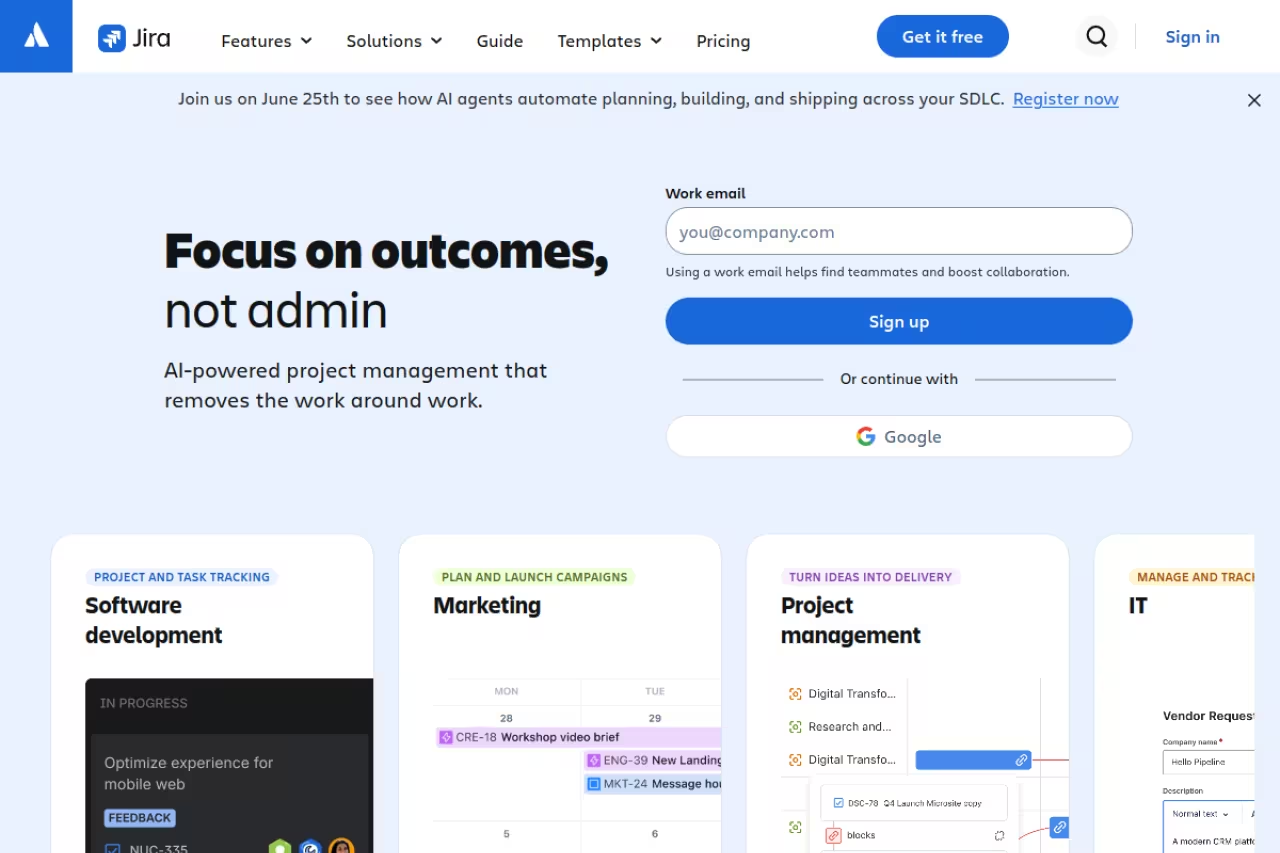
Jira runs agile for over 100,000 companies, and there's a reason it won't die: nothing else handles complex, multi-team scrum and the audit trails enterprises need quite as thoroughly. Custom workflows, fine-grained permissions, and an integration for literally every tool your security team already approved.
It's best for larger organizations, regulated industries, or any team where "we need to configure this exactly our way" is a hard requirement. The free plan now covers up to 10 users with unlimited projects and boards, which is more generous than Jira's reputation suggests. Standard is $7.91 per user/month and adds Rovo AI features and user roles. Premium at $14.54 brings cross-team planning and dependency management.
The newer Rovo AI layer is the most interesting recent change. It can summarize sprint progress and surface blockers across projects, which is the kind of thing PMs used to assemble by hand.
Where it falls short: Jira's power is also its weight. A five-person team will spend more time fighting configuration screens than shipping. Docs and wikis live in Confluence, a separate product at an extra $5.75 per user/month, so the "real" cost is higher than the sticker. If you don't have someone who actively enjoys administering Jira, it tends to rot into a board nobody trusts. Powerful, but it asks a lot back.
Still the enterprise default for complex multi-team scrum, audit trails and exact configuration, and the free plan now covers up to 10 users. The cost is complexity, so smaller teams may find it heavier than they need.
If you're weighing the big platforms against each other, our Jira alternatives breakdown goes deeper on when to switch and what to switch to.

ClickUp: the everything app that actually does agile
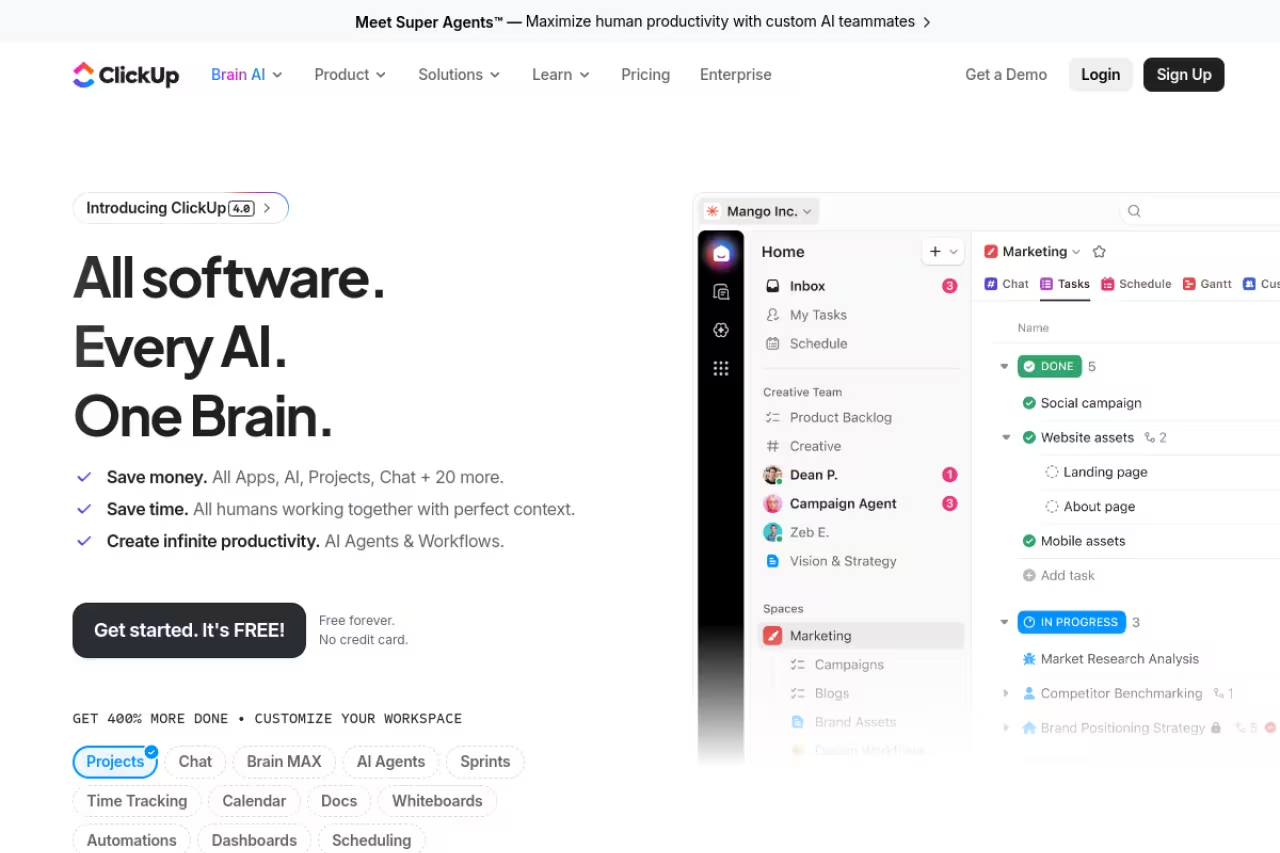
ClickUp wants to replace your whole stack: tasks, docs, whiteboards, goals, and now a pile of AI features. For agile specifically, it does sprints, backlogs, burndown charts, and custom statuses without forcing you into one rigid methodology.
The strongest option when one tool must serve the whole company, with sprints, burndown charts and docs included. Its flexibility is a double-edged sword, since a blank workspace overwhelms and it is heavier in the browser than Linear.
The free plan is unusually capable, with unlimited tasks and kanban boards. Unlimited is $7 per user/month and Business is $12, which adds the advanced dashboards and automations most agile teams actually want. Docs come included, which quietly undercuts the Jira-plus-Confluence math.
The catch: flexibility is a double-edged sword. ClickUp can do almost anything, which means a blank workspace is overwhelming and easy to set up badly. I've watched teams build a beautiful sprint board, then drown in custom fields nobody maintains. It's also heavier in the browser than Linear or Shortcut. If pure speed and engineering focus matter most, ClickUp will feel like it's doing too much. For "one tool for the whole company," it's the strongest pick here.

Shortcut: scrum without the ceremony tax
Shortcut (formerly Clubhouse) is what a lot of Jira refugees land on. It does stories, epics, sprints, and roadmaps with a clean interface that respects an engineer's time, without the configuration sprawl.
A sweet spot for startups and engineering-led teams of 10 to 50 who want real scrum structure without Jira's machinery. It sits in an awkward middle, less polished than Linear and less flexible than ClickUp.
The free plan covers up to 10 users with sprints, reports, and GitHub and Slack integrations. The Team plan is $8.50 per user/month billed yearly and adds automations and the full reporting suite. Business is $12 for unlimited objectives and advanced custom fields.
Where it falls short: Shortcut sits in an awkward middle. It's less polished and slightly less fast than Linear, but also less flexible than ClickUp. Its ecosystem of third-party integrations is smaller than Jira's, so if you depend on a niche tool, check first. For a team of 10 to 50 engineers who want structure without overhead, though, it nails the sweet spot.

Asana: when delivery crosses departments
Asana isn't a dev-first tool, and it doesn't pretend to be. But for cross-functional projects where engineering is one workstream among several (product launches, campaigns, ops rollouts), it's excellent at keeping everyone aligned.
Go with Asana when sprints are one piece of a bigger cross-team plan, such as launches, campaigns and ops rollouts. Its agile support is bolted on, with no native burndown or velocity tracking, so skip it if sprints are the heart of the work.
The free Personal plan supports up to 2 users. Starter is $10.99 per user/month billed annually with timeline and Gantt views and unlimited automations, and Advanced is $24.99 with portfolio management and goals.
The catch: Asana's agile support is real but bolted on. There's no native burndown chart or story-point velocity tracking the way Jira or Shortcut have. Engineers tend to find it too "task list" and not enough "issue tracker." If your sprints are the heart of the work, look elsewhere. If sprints are one piece of a bigger cross-team plan, Asana shines.
monday dev: visual boards for mixed teams
monday dev is the developer-focused product built on monday.com's colorful board engine. Sprint management, bug tracking, and roadmaps with the same drag-and-drop visual style that non-technical stakeholders find approachable.
A strong bridge for mixed orgs where developers and business stakeholders share boards and the business side recoils at Jira. Seat minimums sting small teams, and the board model gets unwieldy for deep technical backlogs.
Paid plans start around $10 per seat/month billed annually, climbing to $23 for the Pro tier with sprint management and time tracking. Worth noting: monday enforces seat minimums, so the real entry cost is higher than the per-seat number suggests.
Where it falls short: the seat-minimum pricing stings for small teams, and the board-centric model can get unwieldy for deep technical backlogs. It's a strong bridge tool for mixed orgs, less so for an engineering team that just wants to track issues fast.
Azure DevOps: agile glued to your repos and pipelines
Azure DevOps bundles Boards (the agile piece) with Repos, Pipelines, and Artifacts. If your team already lives in the Microsoft ecosystem, the integration story is hard to beat: your sprint board, source control, and CI/CD under one roof.
Buy Azure DevOps for the bundle of boards, repos and pipelines, especially on the Microsoft stack, with the first 5 users free. Boards itself feels dated, so without the repos and pipelines half a dedicated tracker is nicer.
The first 5 users are free with full Basic access, then it's roughly $6 per user/month, making it one of the cheaper options at scale.
The catch: Boards is functional but dated next to Linear or Shortcut. The UI feels like enterprise Microsoft, which is to say competent and a little joyless. You're really buying it for the bundle, not the board. If you don't need the repos-and-pipelines half, a dedicated tracker will feel nicer day to day.

Trello: the gateway board
Trello is the simplest tool here, and that's the point. Cards, lists, drag-and-drop. Anyone can understand it in 30 seconds, which makes it perfect for a tiny team running lightweight kanban.
The gateway board for very small teams, side projects and non-technical groups trying agile for the first time. It hits a ceiling fast, with no sprint velocity, story points or backlog hierarchy, so it is a poor home for serious scrum.
The free plan is genuinely usable with unlimited cards. Standard is $5 per user/month and Premium is $10 with timeline and dashboard views.
Where it falls short: Trello hits a ceiling fast. There's no native sprint velocity, no story points, no real backlog hierarchy without power-ups. Past a handful of people or a few dozen cards, you'll outgrow it. It's a great first board and a poor long-term home for a serious scrum team.
How to choose
Skip the feature matrix and answer three questions.
Who lives in the tool? If it's only engineers, go narrow and fast: Linear or Shortcut. If marketing, ops, and product all need in, go broad: ClickUp or Asana. Forcing non-engineers into Jira or engineers into Asana is how tools get abandoned.
How much process do you actually run? Real scrum with velocity tracking, story points, and burndowns needs Jira, Shortcut, or Linear. Lightweight kanban is happy in Trello or any of the above. Don't buy enterprise complexity to manage 20 tickets.
What's your real budget, including the hidden parts? Watch for the gotchas: Jira's Confluence add-on, monday's seat minimums, ClickUp's per-workspace upgrades. The sticker price and the invoice rarely match. Most teams under 15 people are best served by Linear's $10, Shortcut's $8.50, or ClickUp's $7.
My default advice: a modern software team should start with Linear and only leave if it can't bend to a hard requirement. A large or regulated org should start with Jira. Everyone in between should trial ClickUp and Shortcut side by side for one real sprint, not a demo.
If you're assembling a broader stack, our roundup of the best AI tools for teams and our guide to AI agents that automate workflows pair well with whichever tracker you land on. And if you want a curated feed of what's new in this space, Dupple X tracks the tools worth your attention so you're not auditing pricing pages yourself.
Want the shortlist without the research grind? Dupple X sends the AI and productivity tools actually worth trying, vetted, not hyped.
FAQ
What is the best agile project management tool in 2026?
For most modern software teams, Linear is the strongest pick thanks to its speed, automatic sprint cycles, and keyboard-first design. Large enterprises with complex multi-team workflows are usually better served by Jira. The "best" depends on team size and how much process you run, but Linear is the default I'd recommend to a startup shipping weekly.
Is Jira still worth it in 2026?
Yes, for the right team. Jira remains the deepest option for enterprise scrum, with unmatched workflow customization, permissions, and integrations. Its free plan now covers 10 users. But it's overkill for small teams, the configuration overhead is real, and docs require paying extra for Confluence. If you're under 15 people, lighter tools like Linear or Shortcut will serve you better.
What is the best free agile project management tool?
Several tools have genuinely usable free tiers. ClickUp and Trello offer unlimited tasks and boards for free. Jira's free plan covers 10 users, Shortcut's covers 10 users with full sprint features, and Azure DevOps gives 5 users free Basic access. Linear's free plan handles 250 issues with unlimited members, which is enough for a small team to run real sprints.
Linear vs Jira: which should I use?
Use Linear if you're a fast-moving software team that values speed and a clean interface, and you don't need heavy customization. Use Jira if you're a larger or regulated organization running complex scrum across many teams with strict permission and audit needs. Linear wins on day-to-day experience; Jira wins on depth and scale.
Do I need a dedicated agile tool, or can I use a general task manager?
If you run real scrum (sprints, story points, velocity, burndowns), a dedicated tool like Linear, Jira, or Shortcut will save you constant workarounds. General managers like Asana or Trello work for lightweight kanban or cross-functional delivery, but they lack native velocity tracking. Match the tool to how much agile process you actually run, not how much you aspire to.
How much do agile project management tools cost?
Most paid plans run $5 to $15 per user/month for the tier teams actually need. ClickUp Unlimited is $7, Shortcut Team is $8.50, Linear Basic is $10, and Asana Starter is $10.99, all billed annually. Jira Standard is $7.91 but often climbs higher with add-ons like Confluence. Azure DevOps is among the cheapest at roughly $6 after the first 5 free users.
Related guides
Some offers on this page may be paid placements or contain affiliate links.
Across our whole catalogue the median is $24 a month and 33% of tools advertise a free tier. Figures are the lowest recurring monthly price quoted in our own review of each tool, read on 2026-08-19. Full method and every category.
