
Best Headless CMS in 2026: 8 Platforms Compared

Key facts8 tools compared: Sanity, Payload, Strapi, Contentful, Storyblok, Prismic, Hygraph, Directus
- 8 tools compared: Sanity, Payload, Strapi, Contentful, Storyblok, Prismic, Hygraph, Directus
- Sanity (best for: Most teams, structured content): Free, then $15/seat/mo
- Payload (best for: Next.js / TypeScript teams): Free (self-hosted)
- Strapi (best for: Teams who want to self-host): Free core, Cloud from $18/mo
- Contentful (best for: Enterprise content ops): Free, then €300/mo
Picking a headless CMS used to be a developer's call. Now it's a budget decision, a hiring decision, and a "will my marketing team actually use this" decision all at once. The wrong pick shows up six months later as a $300 invoice nobody approved, or a content team that quietly went back to editing JSON files because the editor was built for engineers.
I've shipped sites on most of the platforms below, from a solo blog to a content-heavy marketing site with a non-technical team running it day to day. The differences are bigger than the marketing pages suggest. Some bill per seat and punish you for adding a writer. Some are free until you hit a wall that costs $300 a month to climb over. A few are genuinely open source and cost you only what you spend on hosting.
Short version for skimmers: Sanity is my default pick for most teams in 2026 because the free tier is absurdly generous and the editing experience is the best in the category. If you're a Next.js shop that wants the CMS to live inside your codebase, Payload is the one. If you need a free, self-hosted core with zero per-seat tax, go Strapi. Here's the full breakdown.
Quick comparison
| Tool | Best for | Price | Standout |
|---|---|---|---|
| Sanity | Most teams, structured content | Free, then $15/seat/mo | 20-seat free tier, real-time editor |
| Payload | Next.js / TypeScript teams | Free (self-hosted) | CMS lives in your codebase |
| Strapi | Teams who want to self-host | Free core, Cloud from $18/mo | No per-seat or per-API tax |
| Contentful | Enterprise content ops | Free, then €300/mo | Battle-tested at scale |
| Storyblok | Marketing teams who want visual editing | Free, then $99/mo | Visual editor non-devs love |
| Prismic | Landing pages, small teams | Free, then $10/mo | Slice-based page builder |
| Hygraph | GraphQL-first content federation | Free, then $199/mo | Pulls multiple sources into one API |
| Directus | Data-heavy apps on existing DBs | Free (self-hosted) | Wraps any SQL database |

Sanity: the one I reach for first
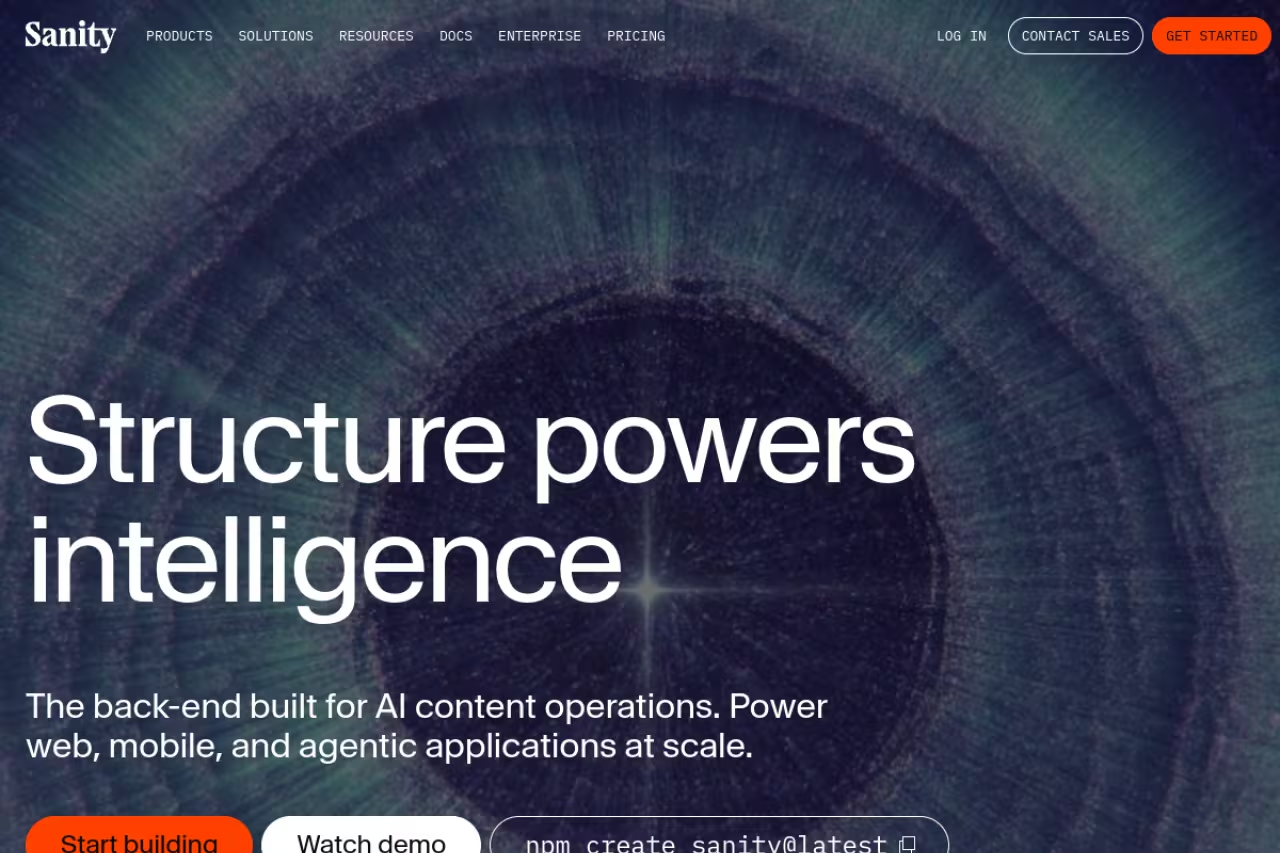
Sanity is a hosted CMS where you define your content schema in code (JavaScript or TypeScript) and editors work in a customizable studio you can shape to fit how your team thinks. Content lives as structured documents, queried through a query language called GROQ or via GraphQL.
Pick Sanity if structured content and a clean editor experience matter most. The free tier is generous, with 20 user seats, and editors publish without developer help, but GROQ is a learning curve and new content types need a developer.
User reports describe editors publishing daily without ever needing to ask a developer how the CMS works. That's the bar.
On pricing, the free tier is the headline. You get 20 user seats, 10,000 documents, 250,000 API requests a month, and 1,000 AI credits, all at $0 forever, per the Sanity pricing page. When you outgrow it, the Growth plan is $15 per seat per month for up to 50 seats. For a small team that needs more than the free tier's already-high ceiling, that's reasonable.
The standout is the editor. Real-time collaboration works the way you'd hope, the studio is fully customizable, and the structured-content model means your data stays clean even as the project grows. The AI features for content suggestions are useful rather than gimmicky.
The catch: GROQ is a learning curve. It's powerful, but it's a query language you and your team have to actually learn, and the schema-in-code setup means a non-developer can't spin up a new content type on their own. This is a developer-first tool that happens to have a great editor, not the other way around.

Payload: the CMS that lives in your app
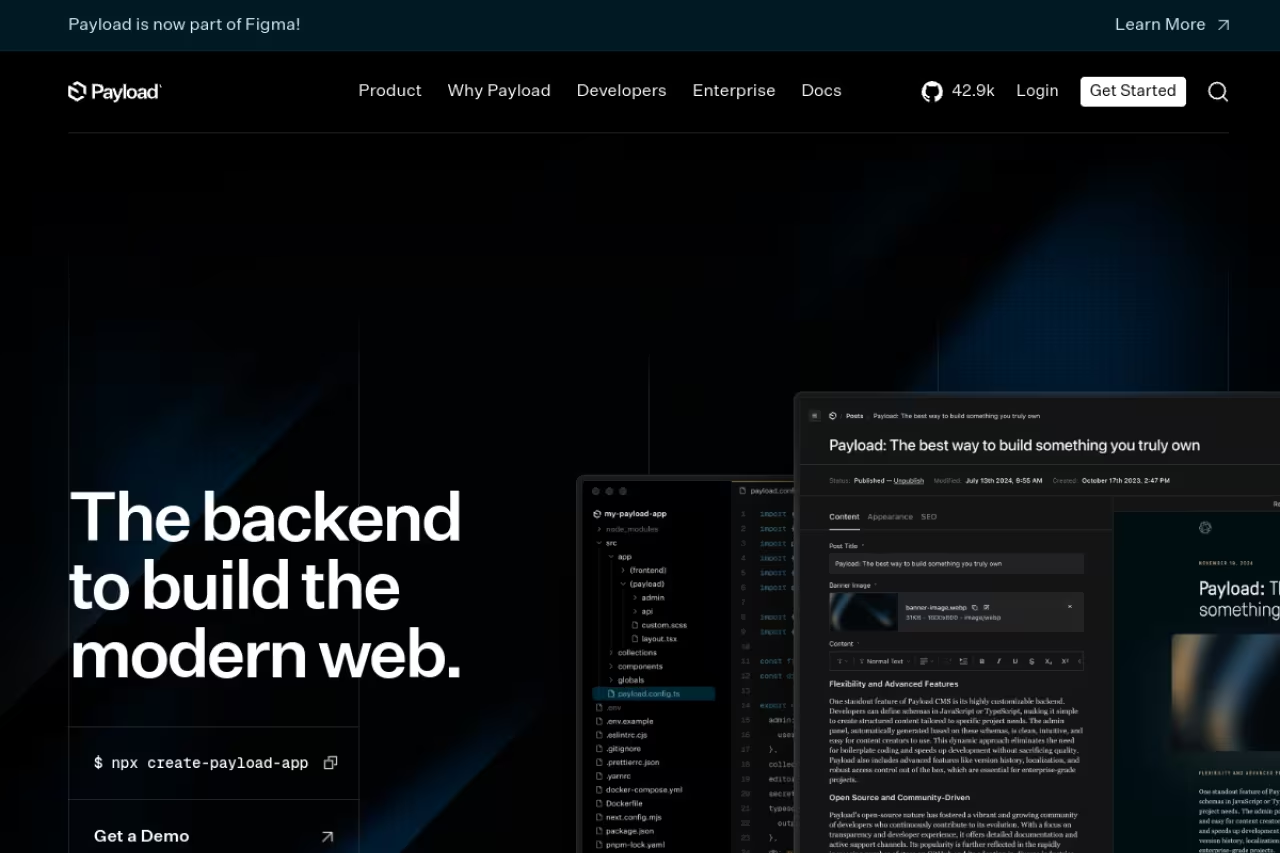
Payload is an open-source, TypeScript-native CMS that runs as a backend inside your Next.js app. You define collections in code, get an auto-generated admin panel, and own the whole stack: database, auth, file storage, all of it. No external SaaS to call, no per-seat billing, no API-request meter ticking.
The right call for developer teams already on Next.js who want the CMS inside the same repo and deploy. It is free and fully owned, but code-first only: someone must build and deploy it before an editor can write.
If you've ever been annoyed that your CMS and your app are two separate things you have to keep in sync, Payload fixes exactly that.
Pricing is the easy part: the core is open source and free under an MIT-style license. You pay for whatever you host it on (a database and a server), and that's it. There's a managed Payload Cloud option if you don't want to run infrastructure, but most teams self-host on something they already have.
The standout is the developer experience. Schemas are TypeScript, so your content types are typed end to end. Access control, localization, and authentication are built in. The admin UI is clean enough that non-technical editors can use it once it's set up. MongoDB grew it enough to acquire the company in 2025, which says something about its trajectory.
Where it falls short: it's code-first, full stop. There's no hosted "sign up and start writing" path. Someone has to build and deploy it before a single editor touches it, and if your team isn't on Next.js, a lot of the appeal evaporates. If you're weighing this against other code-first options, our roundup of the best AI tools for developers covers the surrounding stack.

Strapi: the self-hosted default
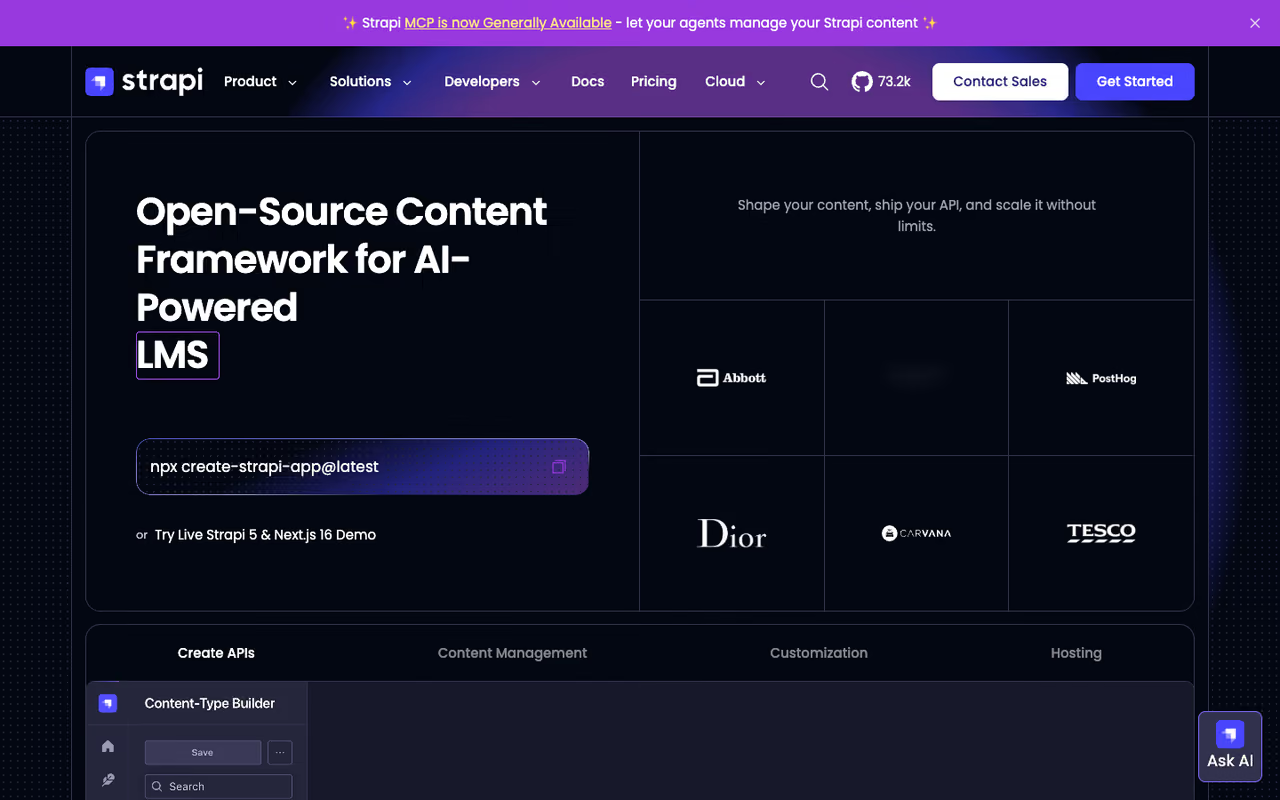
Strapi is the most popular open-source headless CMS, and for good reason. The core is free and self-hostable, you build content types through an admin UI (not just code), and there's a large plugin ecosystem. You can run it on your own infrastructure with no licensing cost and no per-seat or per-API pricing, which is the whole pitch.
A solid self-hosted default for teams with the DevOps capacity to own the stack and avoid usage-based SaaS bills. The core costs nothing, but self-hosting means scaling, patches and uptime are yours, and major upgrades have been bumpy.
If you're allergic to SaaS bills that scale with usage, Strapi removes that anxiety entirely.
For the free self-hosted core, your only cost is hosting. If you'd rather not manage servers, Strapi Cloud starts at $18 per project per month (or $15 with annual billing) for the Essential plan, with Pro at $90 per month, per Strapi's pricing. Worth noting: a new 50,000 API-requests-per-month limit applies to Essential subscriptions created after December 2025, and some features like Review Workflows and SSO are licensed separately.
The standout is control. You own the database, you own the deployment, you can customize the admin panel and extend it with plugins. No vendor can change your pricing out from under you on the self-hosted core.
The catch: self-hosting is real work. You're responsible for scaling, caching, security patches, and uptime. The upgrade path between major Strapi versions has historically been bumpy, and migrations can eat a sprint. This is freedom with a maintenance bill attached, not a free lunch.

Contentful: the enterprise default
Contentful is the platform large companies reach for when they need a CMS that's been proven at scale across dozens of teams and channels. It's a mature SaaS with strong multi-channel delivery, content modeling, and a deep app marketplace.
The enterprise choice for multiple brands, locales and teams with the budget to match, backed by solid uptime and a deep ecosystem. Overkill for a five-person startup, and the jump from free to the €300 Lite plan is steep.
If you're a five-person startup, this is overkill, and the pricing will tell you so.
Speaking of which: the free tier covers 10 users, 100,000 API calls a month, and one space, which is fine for a prototype. The jump to the next tier is the famous cliff. Contentful's Lite plan is €300 per month, per the Contentful pricing page. There's no $50 middle ground. You're either on the free tier or you're paying enterprise-adjacent money.
The standout is reliability and ecosystem. Contentful has been doing this longer than most, the uptime is solid, and the integrations cover nearly everything an enterprise stack needs. Personalization and AI Actions are available as add-ons on enterprise plans.
Where it falls short: price and complexity. The €300 cliff prices out exactly the small teams who'd benefit from a hosted CMS, and the platform's depth means a learning curve for editors. You're paying for capabilities most projects never use.

Storyblok: the one marketers actually like
Storyblok is a headless CMS with a genuine visual editor. Editors see a live preview of the page and click components to edit them in place, which is the thing most "headless" tools give up to be flexible. Storyblok keeps the flexibility and adds the preview back.
Go with Storyblok if your marketing team wants a real visual editor with live preview and no ticket for every layout change. Expect upfront dev work to wire the preview, and the single-seat free tier ends once a second person logs in.
If your bottleneck is "the content team can't see what they're building," this solves it.
The free Starter plan includes one seat, 100GB traffic, and 100,000 API requests a month. The Growth plan is $99 per month (or about $91 with annual billing) for five seats and 1 million API requests, per Storyblok's pricing. Growth Plus jumps to $349 per month. Extra seats run $15 each across paid tiers.
The standout is that visual editor. It's the closest a headless CMS gets to the page-building experience non-technical editors expect, without locking you into a coupled front end. If your team is also evaluating front-end-first tools, our best AI landing page builders guide covers that adjacent category.
The catch: the visual editor needs you to wire up the preview bridge in your front end, which is dev work upfront. And the single-seat free tier means you're paying the moment a second person needs to log in.

Prismic: built for landing pages
Prismic takes a different angle with its Slice system: reusable content sections that developers build once and marketers assemble into pages. It's a strong fit for landing-page-heavy sites where the same blocks get reused across dozens of pages.
A fast route to landing-page-heavy marketing sites, since developers build Slices once and marketers assemble pages. Pricing starts friendly at $10 per month, but the opinionated Slice model is a weaker fit for product catalogs or documentation.
The Slice model means your developers define the building blocks and your marketers stop bugging them for every new page.
Pricing is friendlier than most. The free tier covers one user and 4 million API calls. Paid tiers start at $10 per month for the Starter (3 users), then Small at $25, Medium at $150, and Platinum at $675, per Prismic's pricing. The low entry price makes it one of the few hosted options that doesn't force a big jump after free.
The standout is the page-building workflow. Slices hit a sweet spot between developer control and marketer independence, and the recent focus on AI search visibility is a smart bet for teams who care about being cited by AI assistants. Pair it with the right AI SEO tools and a marketing site becomes a lot less work to maintain.
Where it falls short: the Slice model is opinionated. It's great for landing pages and marketing sites, less natural for complex structured content like a product catalog or a documentation system. Per-repository billing can also add up if you run several sites.

Hygraph: GraphQL-native content federation
Hygraph is a GraphQL-native CMS whose real trick is content federation: pulling content from multiple sources (other CMSs, commerce platforms, custom APIs) into one unified GraphQL endpoint. For complex architectures, that's genuinely useful.
Buy Hygraph for content federation across several sources behind one GraphQL endpoint, or not at all. The jump from free to $199 per month is steep, and most projects will never use the federation layer.
If you've got product data in one system, editorial in another, and you want one API in front of it all, Hygraph is built for exactly that.
The free Hobby tier gives you three seats, 1,000 entries, and 500,000 API calls. The catch with Hygraph is the same cliff problem as Contentful: Growth starts at $199 per month, per Hygraph's pricing. There's nothing between free and $199.
The standout is the federation layer and the GraphQL-first design. The AI agents for translation, summarization, and SEO work are a real differentiator if your content operation is multilingual.
The catch: that $199 jump is steep, and GraphQL federation is a feature most projects don't need. If you're not actively combining multiple content sources, you're paying for capability you won't touch. Buy this for the federation or don't buy it at all.

Directus: a CMS on top of your database
Directus is open source and takes a unique approach: it wraps any existing SQL database and turns it into a headless CMS and REST/GraphQL API. Instead of forcing your content into its own model, it adapts to a database you already have.
An unusual and useful pick for teams with existing relational data that want an admin UI and API without migrating. It is closer to a data platform than a publishing tool, and marketers used to blog-style editors may struggle.
If your "content" is really structured application data, Directus fits where a document-based CMS would fight you.
The core is open source and free to self-host. There's a managed Directus Cloud with usage-based pricing if you'd rather not run it yourself, but the self-hosted route costs only your infrastructure.
The standout is the database-first model. You point Directus at a Postgres or MySQL database and it builds an admin interface and API around your existing schema. For data-heavy apps, that's a different and often better fit than a content-document CMS.
Where it falls short: it's more of a data platform than a publishing tool. Marketing teams used to a blog-style editor will find it less natural than Storyblok or Sanity, and like all self-hosted options, you own the maintenance.
How to choose
Forget the feature checklists. Three questions get you most of the way there.
Who edits the content? If it's a non-technical marketing team that wants to see what they're building, prioritize the editor: Storyblok or Sanity. If it's developers building structured data, Payload or Directus win.
What's your hosting appetite? If you have DevOps capacity and want zero per-seat billing, self-host Strapi, Payload, or Directus. If you want someone else to handle uptime, go hosted: Sanity, Contentful, Storyblok, or Prismic.
Where's your budget cliff? This is the one people miss. Sanity ($15/seat) and Prismic (from $10) scale gently. Contentful (€300) and Hygraph ($199) have a hard jump after free. Map the price to your team size before you commit, because migrating CMSs later is one of the most painful refactors there is.
For most teams in 2026, I'd start with Sanity's free tier, build a prototype, and only move once you hit a real limit. It's the lowest-regret path. If you want to keep up with which tools your competitors are adopting, the Techpresso newsletter tracks the AI and dev-tooling space daily, and our top tools directory is worth a browse for the wider stack.
FAQ
What is a headless CMS and how is it different from WordPress?
A traditional CMS like WordPress couples your content with how it's displayed: one system handles both the database and the front end. A headless CMS separates the two. It stores and manages content, then delivers it through an API to any front end you want: a website, a mobile app, a smart display. You bring your own front-end framework (Next.js, Astro, whatever) and the CMS just serves the data. That separation is what makes content reusable across channels.
What is the best free headless CMS in 2026?
For a hosted, no-maintenance option, Sanity has the most generous free tier I've found: 20 seats, 10,000 documents, and 250,000 API requests a month at $0. For a fully free self-hosted core with no usage limits at all, Strapi, Payload, and Directus are all open source. The trade-off is that self-hosting means you handle servers, scaling, and security yourself, so "free" still costs you in time and infrastructure.
Is a headless CMS worth it for a small business?
It depends on whether you need multi-channel delivery or a custom front end. If you just want a simple website your team updates occasionally, a traditional site builder is usually faster and cheaper. A headless CMS earns its keep when you have a developer building a custom site, want the same content on a site and an app, or need clean structured data. We cover the simpler end of this in our guide to content management for small business.
Which headless CMS is best for Next.js?
Payload is the most natural fit because it runs inside your Next.js app as a backend, sharing the same codebase and TypeScript types. Sanity and Contentful also have excellent Next.js support through their SDKs and work well if you'd rather keep the CMS as a separate hosted service. The deciding factor is whether you want the CMS in your repo (Payload) or as an external API (Sanity, Contentful).
How much does a headless CMS cost per month?
It ranges widely. Self-hosted open-source options (Strapi, Payload, Directus) cost only your hosting, often $5 to $50 a month for a small project. Hosted SaaS starts cheap and scales: Prismic from $10, Storyblok from $99, Sanity at $15 per seat. Then there are the enterprise-tier platforms where the first paid plan is a cliff: Hygraph at $199 and Contentful at €300 a month. Always check where the jump after the free tier lands before you commit.
Can non-technical people use a headless CMS?
Yes, but the experience varies a lot. Storyblok and Prismic are built for non-technical editors with visual, page-based editing. Sanity has a clean, customizable studio that writers pick up quickly once it's set up. Developer-first tools like Payload and Directus need someone technical to configure them first, after which editors can use the admin panel. The setup is always a developer job; the day-to-day editing doesn't have to be.
Related guides
Some offers on this page may be paid placements or contain affiliate links.
