
9 Best Influencer Marketing Platforms in 2026 (Compared and Priced)

Key facts9 tools compared: Modash, GRIN, Insense, Upfluence, HypeAuditor, Sprout Social, Brandwatch…
- 9 tools compared: Modash, GRIN, Insense, Upfluence, HypeAuditor, Sprout Social, Brandwatch Influence, CreatorIQ, Skeepers / smaller niche
- Modash (best for: Most brands and agencies): $199/mo
- GRIN (best for: DTC and ecommerce ambassador programs): $399/mo
- Insense (best for: Shopify brands running UGC + paid): $500/mo
- Upfluence (best for: Mid-market with ecommerce data needs): ~$478 to 2,000/mo
Most influencer marketing platforms look identical on a demo call. Big creator database, AI discovery, a CRM, payment rails, pretty dashboards. Then you sign the annual contract and find out the search filters miss half your niche, the "AI matching" surfaces the same 200 accounts everyone else uses, and the support team disappears the moment your card clears.
I compared discovery, outreach, and reporting features across the main tools in this space, plus pricing pages that change faster than the products do. The gap between the marketing site and the daily workflow is real, and it costs you either money or months.
If you want the short version: Modash is the best pick for most brands and agencies right now because it has the deepest creator database, transparent pricing, and a workflow that doesn't require a sales call to start. If you run a Shopify or DTC brand built on product gifting and UGC, Insense or GRIN will fit better. And if you're an enterprise with a seven-figure creator budget, you're going to end up on CreatorIQ whether you like the price or not. Here's the full breakdown.
Quick comparison
| Tool | Best for | Price (entry) | Standout |
|---|---|---|---|
| Modash | Most brands and agencies | $199/mo | 350M+ creator database, no sales call |
| GRIN | DTC and ecommerce ambassador programs | $399/mo | Deep Shopify integration, creator payments |
| Insense | Shopify brands running UGC + paid | $500/mo | UGC marketplace + Spark/Partnership Ads |
| Upfluence | Mid-market with ecommerce data needs | ~$478 to 2,000/mo | Live audience matching from your store |
| HypeAuditor | Fraud checks and audience quality | $299/mo | Best-in-class fake-follower detection |
| Sprout Social | Teams already on social management | Custom | Influencer + social suite in one |
| Brandwatch Influence | Large campaigns + social listening | Custom | 50M+ creators, listening data attached |
| CreatorIQ | Enterprise and Fortune 500 | ~$30k+/yr | Governance, global payments, scale |
| Skeepers / smaller niche | Regional UGC at volume | Custom | Localized creator pools |

Modash: the default pick for most teams
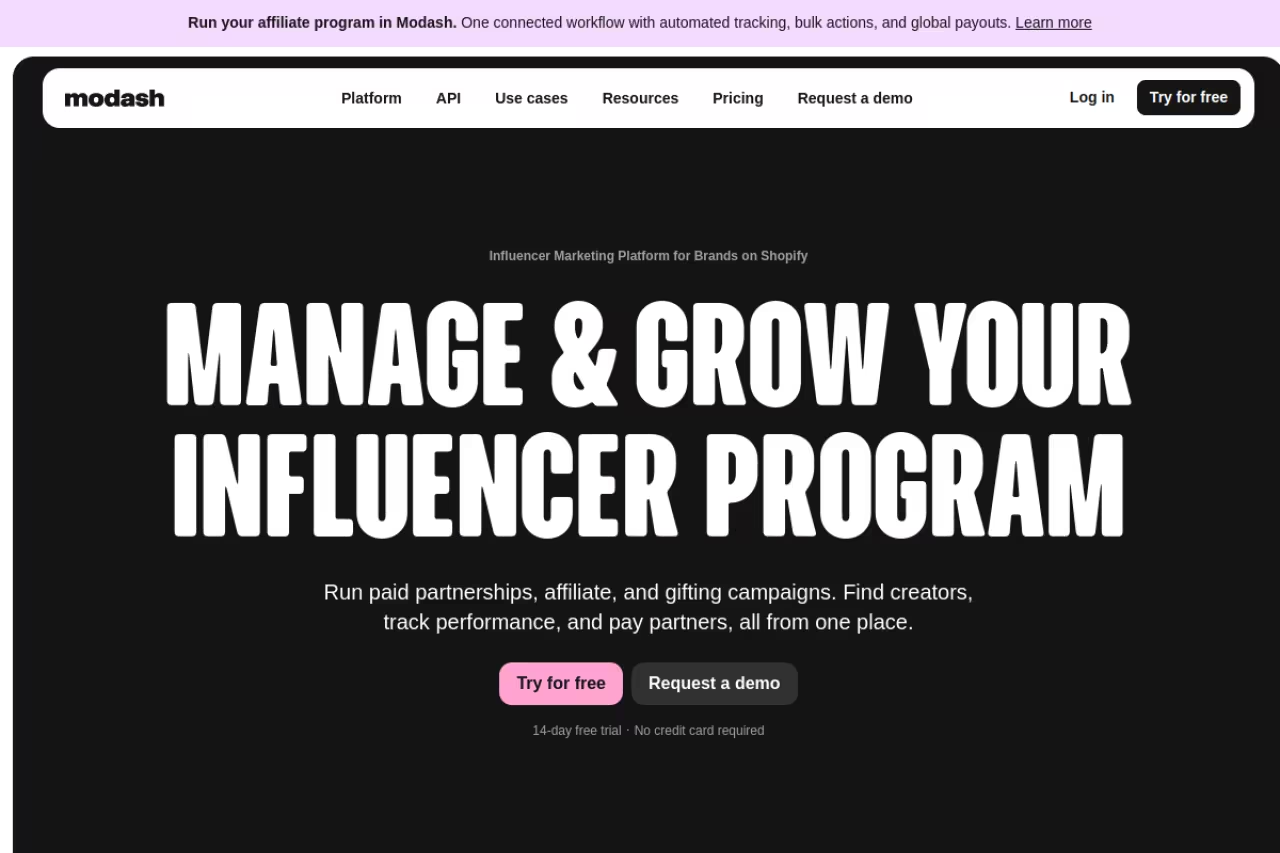
Modash is a discovery and tracking platform that lets you find creators, vet their audiences, run outreach from your own inbox, and monitor live campaign performance. It's the tool I'd hand to a brand or agency that wants to get moving this week instead of next quarter.
Who it's best for: Brands and agencies who want a serious database without an enterprise contract. It covers Instagram, TikTok, and YouTube creators with over 1K followers, and the company puts the count at 350M+ creators.
Pick it if you want serious creator discovery without an enterprise contract. Deep filters, Gmail or Outlook outreach and Shopify sales tracking come standard, but big ambassador programs needing contracts and 1099 processing will hit its ceiling.
The Essentials plan runs $199/month (billed annually, normally $299) and covers up to 100 creators per campaign. Performance is $499/month for up to 250 creators per campaign and adds affiliate management plus creator payments with 0% fee up to $10K a year. Enterprise starts at $14,700/year. You can see and start every tier without talking to sales, which is rarer in this category than it should be.
The standout: The database depth and filter precision. You can search by audience location, age, interests, and real engagement, then export and start outreach from Gmail or Outlook the same day. The Shopify integration tracks sales from each creator without a separate affiliate tool.
The catch: Modash is built for discovery and tracking, not heavy program management. There's no deep contract workflow or 1099 tax processing like GRIN has. If you're managing hundreds of ongoing ambassador relationships with payments and compliance, you'll feel the ceiling. For everyone else, that's a feature, not a bug.

GRIN: built for ecommerce ambassador programs
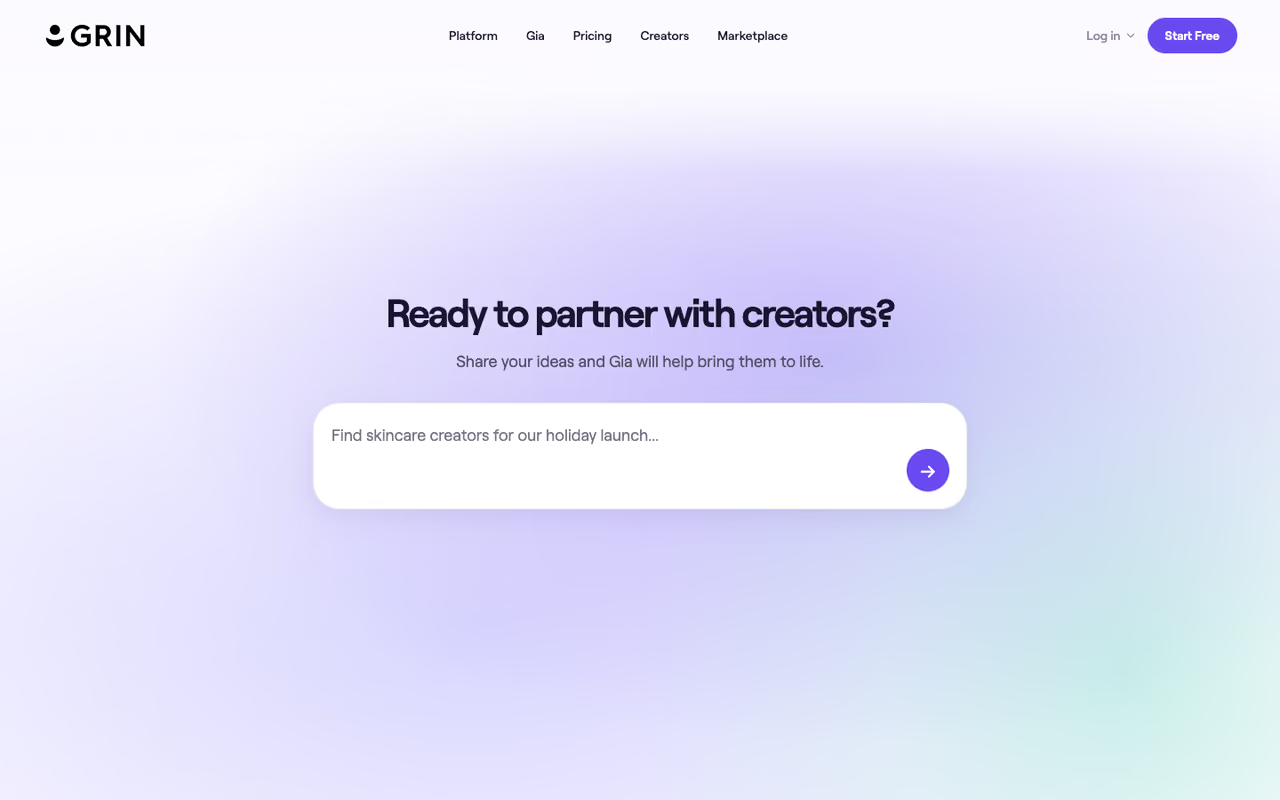
GRIN treats creators as long-term brand partners rather than one-off media buys. It's a creator management system with discovery, CRM, content briefs, automated payments, gifting, and affiliate tracking, aimed squarely at DTC brands that live and die by their Shopify store.
Who it's best for: Direct-to-consumer and ecommerce brands building a structured ambassador or affiliate program where the same creators come back campaign after campaign.
The relationship engine for DTC brands running structured, repeat ambassador programs, with Shopify gifting, payments and affiliate tracking built in. Its native discovery is weaker, so it is the wrong tool if finding creators is your main job.
GRIN publishes tiers starting at $399/month for Lite, $699/month for Essentials, $1,149/month for Growth, and $1,799/month for Complete, all month-to-month with no long-term contract. Historically GRIN was quote-only and pricey, so transparent monthly tiers are a genuine shift worth noting.
The standout: The ecommerce plumbing. GRIN pulls product data straight from Shopify, automates gifting and shipping, handles creator payments including 1099 processing for US creators, and ties affiliate revenue back to individual partners. For a brand running gifting at scale, that automation saves a person's worth of manual work.
The catch: GRIN's discovery is weaker than its management. The native creator database isn't as deep as Modash or Brandwatch, so a lot of teams import creators they found elsewhere. You're paying for the relationship engine, not the search engine. If discovery is your main job, this isn't the tool.

Insense: UGC and paid social in one workflow
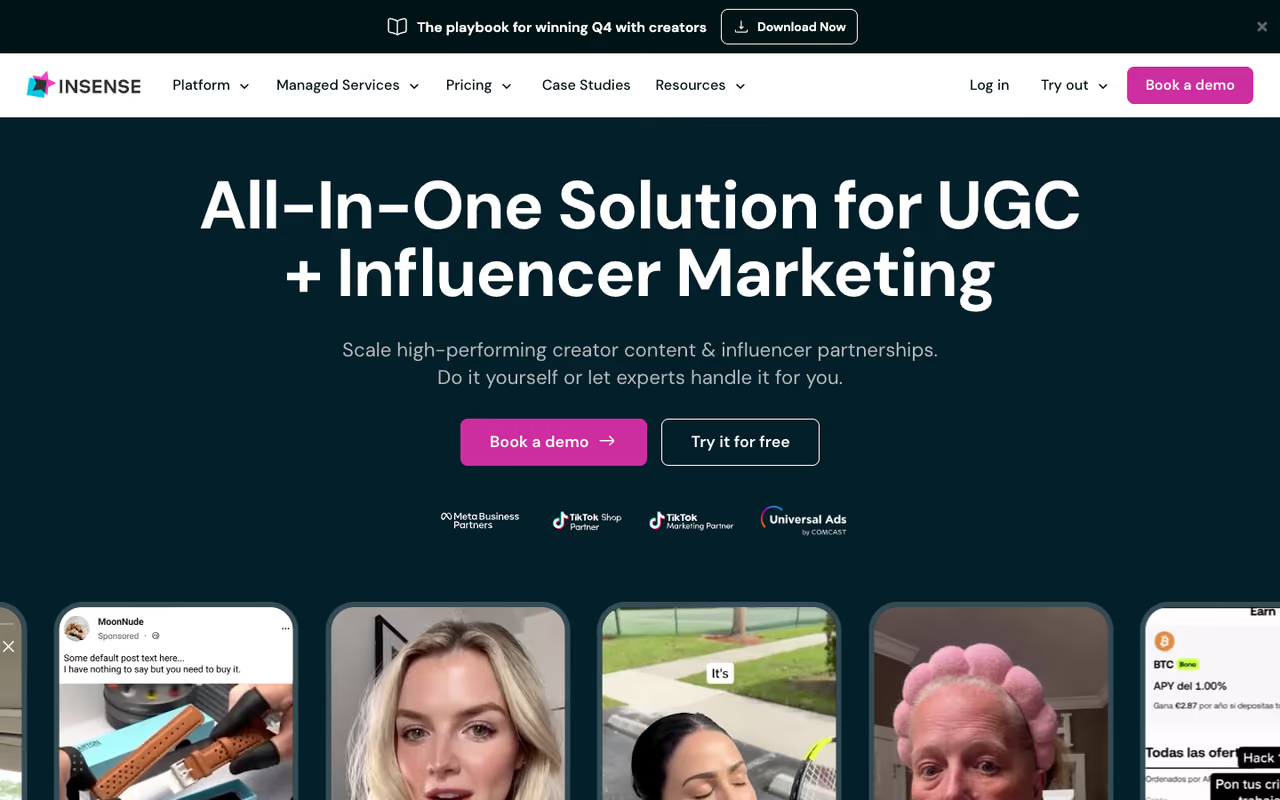
Insense connects brands with vetted micro-influencers and UGC creators, then pipes that content straight into Meta Partnership Ads and TikTok Spark Ads. It's the platform for performance marketers who care less about reach and more about ad creative that converts.
Who it's best for: Shopify and DTC brands that want a steady stream of UGC video plus the ability to whitelist creator accounts for paid social.
The choice for performance marketers who want UGC pushed straight into Spark Ads and Partnership Ads. It skews toward smaller creators, and marketplace fees on top of creator payments add up faster than the sticker price suggests.
Self-service plans start at $500/month, with managed service from $1,800/month. Creator payments are separate: UGC videos start around $100 each, and there's a marketplace fee of roughly 7 to 20% depending on your plan. A realistic monthly budget for a growth-stage brand running 2 to 3 campaigns is the $500 platform fee plus $1,500 to 3,000 in creator payments.
The standout: The UGC-to-paid-ads pipeline. You brief creators, approve content, get usage rights, and push it into Spark Ads and Partnership Ads without leaving the tool. The direct Shopify connection handles product seeding, shipping details, and order management in one place. For a paid-social team, that loop is the whole point.
The catch: Insense skews toward smaller creators and content production, not celebrity-tier reach campaigns. If you want to book a creator with two million followers for a brand awareness push, look elsewhere. And those marketplace fees on top of creator payments add up faster than the sticker price suggests.
Quick aside: if you're assembling a full marketing stack and not just an influencer tool, a single AI workspace can cover the research, briefing, and copy work that surrounds these campaigns. We put Dupple X together for exactly that. It pairs nicely with whatever influencer platform you land on.

Upfluence: discovery powered by your own store data
Upfluence is a mid-market platform with a clever trick: it can match creators against your existing customer and revenue data, so you can recruit people who already buy from you. Discovery, outreach, campaign management, and affiliate tracking all live in one suite.
Who it's best for: Mid-market brands with real ecommerce data who want to turn customers into creators.
Clever for mid-market brands with real ecommerce data, since it flags your own customers who have influence. The modular, opaque pricing and 12-month contract are the catch, and the final invoice often lands well above the entry number.
Upfluence is custom-quote based and famously opaque. Reported entry pricing starts around $478/month per module, with most brands landing closer to $2,000/month once seats and add-ons stack up, usually on a 12-month contract.
The standout: The "live audience matching" that scans your Shopify or WooCommerce customers and flags the ones with influence. Recruiting from your own buyers tends to produce more authentic partnerships than cold outreach.
The catch: The modular pricing. Every capability is a separate line item, so the quote balloons quickly and the contract locks you in for a year. Several reviews flag the gap between the entry number and the real invoice.
HypeAuditor: the fraud and audience-quality specialist
HypeAuditor made its name on one thing: telling you whether a creator's followers are real. It has grown into a full discovery and analytics suite, but the audience-quality reporting is still why people pay for it.
Who it's best for: Brands and agencies that have been burned by fake engagement and want hard data before they spend a dollar.
Go with it when fake engagement has burned you and you want hard audience-quality data before spending. It is pricey for what is essentially research, so many teams use it to vet creators found in a cheaper tool.
The Basic plan starts at $299/month billed annually. Pricing is usage-based, so the more you search and the deeper your reports, the higher the tier. Best rates require a two-year commitment.
The standout: Fake-follower and engagement-fraud detection. The Audience Quality Score and authenticity analysis are the most trusted in the category, which matters when a single bad creator can torch a campaign budget.
The catch: It's pricey for what amounts to research, and the usage-based model means heavy users hit limits and upsells fast. Many teams use HypeAuditor to vet creators they discovered in a cheaper tool, rather than as their primary platform.

Sprout Social: influencer marketing bolted onto a social suite
Sprout Social added influencer marketing (built on its Tagger acquisition) to its established social media management platform. If your team already lives in Sprout for scheduling and listening, running creator campaigns in the same place is a real convenience.
Who it's best for: Mid-market and enterprise teams already using Sprout for social management who want one less vendor.
A convenience buy for teams already living in Sprout, tying creator campaigns to first-party revenue analytics in one place. As a standalone influencer platform it is not the deepest, and cheaper specialists do the job better.
Influencer marketing is a custom-quote add-on, not part of the standard published Sprout tiers. Expect enterprise-level pricing and a sales process.
The standout: Tying creator activity to first-party revenue analytics inside a tool that also handles your owned social, plus AI-powered creator discovery by audience topic. The consolidation is the value.
The catch: As a standalone influencer platform it's not the deepest. You're really buying it because you already pay for Sprout. If you don't, cheaper specialists do influencer work better for the money.

Brandwatch Influence: scale plus social listening
Brandwatch Influence (the former Klear product line) pairs a 50M+ creator database with Brandwatch's social listening pedigree. It's a full influencer CRM: store contracts, monitor correspondence, and handle global payments in one place.
Who it's best for: Larger brands and agencies running high-volume campaigns who also want consumer and trend listening data attached.
A heavy, enterprise-tier option for large brands and agencies that want a 50M+ creator database alongside real social listening. Small brands will pay for capacity they never touch.
Custom quote, enterprise-tier. No public self-serve pricing.
The standout: The combination of a big creator index with genuine social listening, so you can spot trends and the creators driving them in the same workflow.
The catch: It's a heavier, pricier platform aimed at big teams. Small brands will pay for capacity they never touch.

CreatorIQ: the enterprise standard
CreatorIQ is where Fortune 500 brands and global agencies run their programs. It analyzes over a billion public social accounts, offers white-labeling, fraud analysis, governance controls, and global creator payments built for compliance at scale.
Who it's best for: Enterprises with $1M+ annual creator budgets and dedicated in-house teams.
The enterprise standard for governance, fraud analysis and global payments at scale, suited to $1M+ annual creator budgets. Anyone without a dedicated influencer team will use a fraction of what the $30,000/year entry price buys.
No public pricing. Reported figures start around $30,000/year with a median closer to $39,000, annual contract required.
The standout: Governance and scale. When you have many brands, many markets, and legal teams watching, CreatorIQ's controls and reporting justify the spend.
The catch: The price and the overhead. This is overkill for any brand without a dedicated influencer team and a budget to match. Smaller companies that buy it tend to use a fraction of what they pay for.
Niche and regional players worth a look
Skeepers and similar regional tools focus on localized UGC at volume, which can beat the big platforms in specific European or non-English markets. If your audience is concentrated in one region, a specialist with a deep local creator pool often outperforms a global database that's thin where you actually sell.
How to choose
Skip the feature checklist. Start with your actual job:
- You need to find and vet creators fast, on a normal budget. Modash. Best database for the money, no sales call, you start today.
- You run a Shopify/DTC brand on gifting and ambassador relationships. GRIN for the management engine, Insense if UGC-into-paid-ads is the goal.
- You care most about creators who are real and who already buy from you. HypeAuditor for fraud checks, Upfluence for customer matching.
- You already pay for a social suite. Sprout Social or Brandwatch, to avoid a second vendor.
- You're an enterprise with a seven-figure budget and a legal team. CreatorIQ, and budget for the overhead.
One rule that has saved me real money: never sign an annual contract before you've run one live campaign on a monthly or trial plan. The demo always works. Your niche and your filters are what break, and you only find that out by actually searching for the creators you need. Tools like Modash, GRIN, and Insense let you test before you commit, which tells you something about how confident they are.
If you want to compare these against the broader AI tooling that's reshaping marketing work, our top tools directory and our guide to the best AI marketing tools are good next stops.
FAQ
What is the best influencer marketing platform in 2026?
For most brands and agencies, Modash is the best all-around pick because it combines a 350M+ creator database, transparent pricing from $199/month, and a workflow you can start without a sales call. DTC and ecommerce teams often prefer GRIN or Insense, while enterprises with large budgets default to CreatorIQ.
How much do influencer marketing platforms cost?
Entry-level tools start around $199 to 500/month (Modash, GRIN, Insense). Mid-market platforms like Upfluence run roughly $478 to 2,000/month, usually on annual contracts. Enterprise platforms like CreatorIQ start near $30,000/year. Creator payments and marketplace fees are almost always separate from the software subscription.
What's the difference between an influencer platform and a UGC platform?
Influencer platforms focus on discovering creators with audiences and running campaigns for reach and engagement. UGC platforms like Insense focus on producing content (often without requiring the creator to post it) that you then use in your own paid ads. Many teams use both: one to find creators, one to generate ad creative.
Do I need a platform or can I just find creators manually?
For a handful of partnerships, manual outreach and a spreadsheet work fine. A platform earns its cost once you're vetting audience quality at scale, managing payments and contracts, or tracking revenue per creator. The break-even is usually somewhere around running 10+ creators per campaign or several campaigns at once.
Which platform is best for fake-follower detection?
HypeAuditor has the most trusted audience-quality and fraud-detection scoring in the category. Many teams use it specifically to vet creators they found in a cheaper discovery tool, rather than as their primary platform.
Are there free influencer marketing tools?
Most serious platforms are paid, but several offer free trials (GRIN runs a 30-day trial). For early-stage testing, manual search on TikTok and Instagram plus a vetting tool's free tier can get you started before you commit to a subscription.
Related guides
Some offers on this page may be paid placements or contain affiliate links.
