
Best CRM for Real Estate (2026): The Top Platforms for Agents and Teams Compared

Key facts8 tools compared: Follow Up Boss, Lofty, BoldTrail (kvCORE), Wise Agent, HubSpot, CINC, Real…
- 8 tools compared: Follow Up Boss, Lofty, BoldTrail (kvCORE), Wise Agent, HubSpot, CINC, Real Geeks, Pipedrive
- Follow Up Boss (best for: Teams serious about follow-up): $69/user/mo (Grow)
- Lofty (best for: Growth teams wanting one platform): Custom (request quote)
- BoldTrail (kvCORE) (best for: Brokerages and large teams): ~$499+/mo
- Wise Agent (best for: Solo agents on a budget): $49/mo (5 shared users)
A real estate CRM lives or dies on one thing: whether you actually open it every morning. I have watched agents pay $499 a month for a platform they log into twice a quarter, while a $49 tool quietly closes deals because the follow-up never stops. The fancy feature list rarely decides the winner. Speed of follow-up does.
The trouble is that every vendor claims to be the all-in-one answer. Some are CRMs with a lead-gen bolt-on. Some are lead-gen machines with a CRM stapled to the side. A few are genuinely just clean databases that get out of your way. Picking wrong means months of imported contacts you have to migrate again, plus a contract you cannot leave.
If you want the short version: Follow Up Boss is the best CRM for most real estate agents and teams in 2026. It does the boring follow-up work better than anything else, integrates with 250+ lead sources, and does not try to be your website too. The rest of this guide covers when something else fits you better, because a solo agent on a tight budget and a 40-agent brokerage are not shopping for the same thing.
Quick comparison
| Tool | Best for | Price | Standout |
|---|---|---|---|
| Follow Up Boss | Teams serious about follow-up | $69/user/mo (Grow) | Speed-to-lead + accountability |
| Lofty | Growth teams wanting one platform | Custom (request quote) | AI copilot + built-in lead gen |
| BoldTrail (kvCORE) | Brokerages and large teams | ~$499+/mo | Full ecosystem + IDX site |
| Wise Agent | Solo agents on a budget | $49/mo (5 shared users) | Cheapest real estate CRM that works |
| HubSpot | Agents who want free to start | Free; Starter $20/mo | Best free tier, scales up |
| CINC | Teams buying managed leads | Custom (contact sales) | Lead gen + CRM in one |
| Real Geeks | Agents wanting IDX + leads | ~$299/mo + ad spend | Website-first lead capture |
| Pipedrive | Sales-minded solo agents | $19/user/mo | Simple visual pipeline |

Follow Up Boss: the one I recommend to most agents
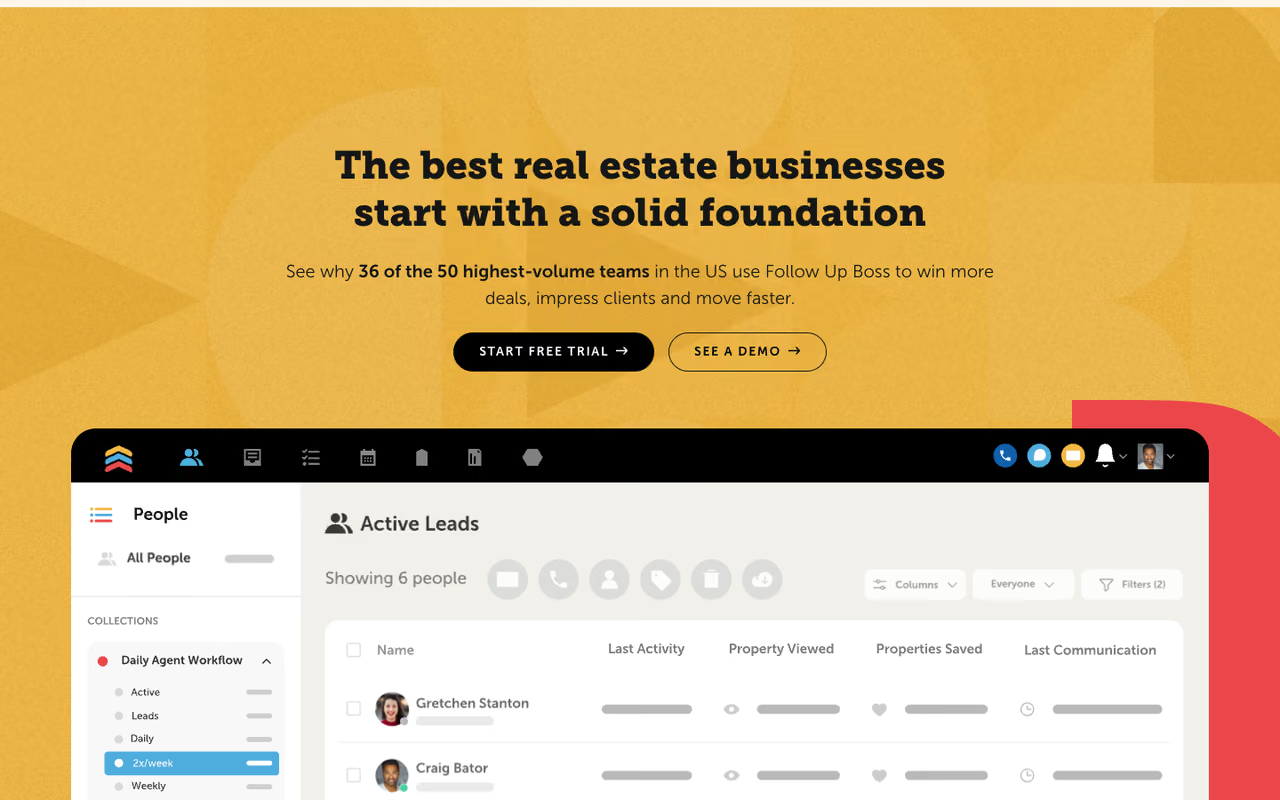
Follow Up Boss is what I point people to when they ask for a real estate CRM that just works. It is not the flashiest. It does not build your website. What it does is make sure no lead falls through the cracks, which is the actual job.
The moment a lead comes in from Zillow, Realtor.com, your IDX site, or any of the 250+ supported sources, it routes to the right agent and starts an action plan. Speed-to-lead is the whole pitch, and the team accountability features (who called, who texted, who ghosted a lead) are why broker-owners stick with it.
Pick it if you buy leads and need follow-up to be automatic, whether you are a solo agent or a team. The 250+ integrations let it sit at the center of your stack, but calling and texting on Grow cost extra and there is no built-in IDX website.
The Grow plan runs $69 per user per month, or $58 billed annually, per the official pricing page. The Pro plan is $499 a month and includes 10 users with unlimited calling and texting. Platform is $1,000 a month for 30 users. There is a 14-day free trial and no long-term contract.
The standout: The 250+ integrations mean it sits at the center of your stack without forcing you to abandon the lead sources and dialers you already pay for. Most "all-in-one" tools punish you for using outside services. This one assumes you will.
The catch: Calling and texting on the Grow plan is a $39-per-user add-on, so the real entry cost is closer to $108 a month if you want a dialer. And there is no built-in IDX website, so you will pay separately for lead capture pages.

Lofty: the all-in-one with real AI muscle

Lofty (formerly Chime) is the platform for teams that want one login for everything: CRM, IDX website, power dialer, mass email and text, a CMA tool, and an AI copilot that drafts follow-ups and scores leads. When a high-volume team wants to stop duct-taping five tools together, Lofty is usually the conversation.
The AI is not a gimmick here. Dynamic lead scoring surfaces who is actually close to transacting, and the AI assistant handles routine outreach so your agents spend time on warm conversations instead of cold dials.
The all-in-one for growth-oriented teams and brokerages with high lead volume that want marketing, lead gen and the CRM under one roof. Pricing is quote-only with likely onboarding fees, and a solo agent will be paying for a team platform they will not fill.
Lofty moved to a request-a-quote model. The pricing page lists four tiers (Agent, Team, Broker, Enterprise) without public numbers. Third-party reviews put the entry point around $449 a month, and lead-generation packages carry a 20% ad management fee on top.
The standout: The AI copilot and built-in lead generation. You can run paid buyer and seller lead campaigns directly through the platform and have those leads land in the same CRM that scores and nurtures them. No handoff, no lost data.
The catch: No public pricing means you negotiate, and you will likely face a setup or onboarding fee. For a solo agent, Lofty is overkill. You are paying for a team platform you will not fill.
BoldTrail (formerly kvCORE): the brokerage workhorse
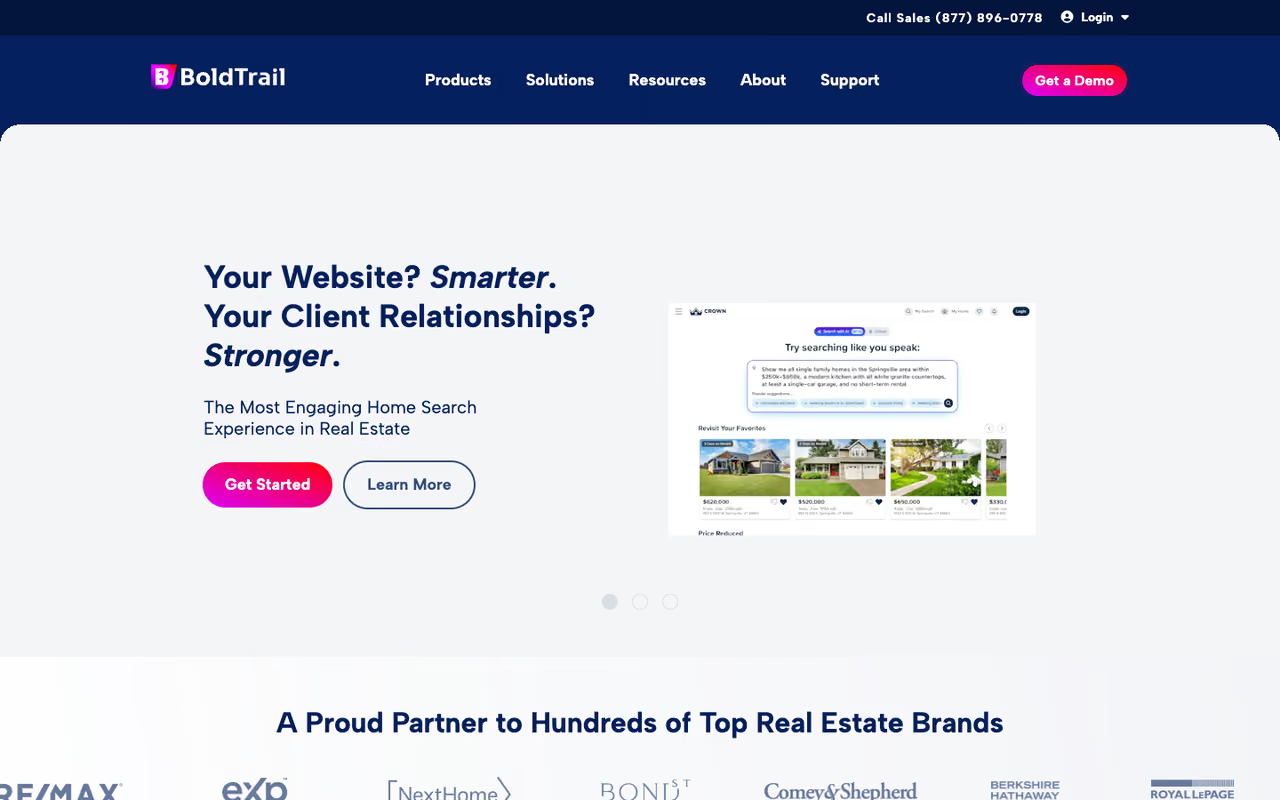
BoldTrail is the rebrand of kvCORE under Inside Real Estate, and it remains the default for large teams and brokerages. It bundles the CRM with an IDX website, behavioral lead scoring, Smart Campaigns, a mobile CMA, plus back-office and recruiting modules that matter once you are running an actual brokerage.
If you have ever toured a 30-agent office and seen everyone on the same branded platform, there is a good chance it was kvCORE. The rebrand unified kvCORE, BoldTrail BackOffice, and Buyside into one ecosystem, which is the selling point and the complication.
The default for brokerages and large teams that need recruiting, back office and agent tools in one system. It has a learning curve, add-on modules cost extra, and solo agents routinely pay for features they never touch.
BoldTrail does not publish universal rates. Reviews cite roughly $499 a month and up for individual agents, with brokerage pricing often running $1,000+ a month plus setup fees and minimum seat counts. Inside Real Estate sends buyers to request a demo, so verify your number directly.
The standout: Depth. Few platforms match the combination of lead gen, IDX, agent CRM, back office, and recruiting in one place. For a brokerage trying to standardize, that consolidation is worth real money.
The catch: The power comes with a learning curve, and add-on modules (Recruit, BackOffice) cost extra. Solo agents routinely report paying $499 a month for features they never touch. If you are not running a team, this is the wrong tool.
Wise Agent: the budget pick that punches up
Wise Agent is the cheapest real estate CRM I would actually recommend. At $49 a month for up to five shared team members, it is built specifically for agents and includes contact management, transaction management, drip campaigns, landing pages, and 24/7 US-based support.
The cheapest purpose-built real estate CRM worth recommending, ideal for solo agents and tiny teams avoiding a four-figure invoice. The interface looks dated, texting is a paid add-on, and it will not generate leads for you.
$49 a month month-to-month, or $42 a month billed annually ($499 a year). The CRM + WiseSocial tier is $69 a month and adds social media automation. There is a 14-day free trial and, notably, no contract and no setup fee.
The standout: Value. You get unlimited document storage, drip campaigns, and live support that newer venture-backed tools cannot match, all for less than the cost of a single Zillow lead.
The catch: The interface looks dated next to Lofty or Follow Up Boss, and texting is a paid add-on. It does not generate leads. This is a database and follow-up engine, not a growth machine.

HubSpot: start free, scale when you grow
HubSpot is not real estate software, and that is sometimes the point. Its free CRM tier is genuinely useful: contact management, deal tracking, email templates, and meeting scheduling at zero cost. For an agent who refuses to pay until they close, that is a real on-ramp.
A free on-ramp for new agents and tech-savvy agents who want a customizable system not locked to MLS conventions. It has no IDX, MLS integration or real estate templates, and the jump from Starter to Professional is steep.
The core CRM is free. Sales Hub Starter is $20 a month per the HubSpot pricing. Professional jumps to roughly $100 a month, which is the cliff most reviewers complain about.
The standout: The free tier is the best in the category, and HubSpot's automation and reporting outclass most real estate-specific tools once you upgrade.
The catch: No IDX, no MLS integration, no real estate templates out of the box. You build the workflows yourself, and the jump from Starter to Professional is steep enough to feel like a trap.
A quick aside: if you are layering AI assistants and lead-gen tools on top of whichever CRM you pick, a Dupple X subscription gets you the model access to draft listing descriptions, follow-up sequences, and market reports without a per-seat AI bill from every vendor.

CINC: lead generation first, CRM second
CINC is built around buying you leads. It combines IDX websites, a built-in CRM with a dialer and lead routing, and managed Google and Facebook ad campaigns into one subscription. Teams that want the leads handled for them gravitate here.
Choose CINC if you want managed paid lead generation bundled with the CRM that works those leads. Reviews flag high prices with frequent increases, so push hard on contract terms, and the CRM is secondary to the lead pipeline.
CINC uses custom quotes across four tiers, so you contact sales. Reviews consistently flag the pricing as high with frequent increases, so push hard on the contract terms.
The standout: Lead volume. CINC has spent years tuning its lead-gen process, and the CRM, dialer, and routing exist to make sure those leads get worked fast.
The catch: Cost and lock-in. Multiple reviewers report price hikes and say the value gets harder to justify over time. You are buying a lead pipeline, and the CRM quality is secondary to that pipeline.

Real Geeks: website-first lead capture
Real Geeks leads with the IDX website. You get home search sites, landing pages, and lead capture wired into a CRM, with optional managed Facebook advertising. It is a solid middle ground between a pure CRM and a full platform like Lofty.
A solid middle ground for agents who want a lead-capturing IDX website plus a CRM to nurture what it catches, without enterprise pricing. The base price is misleading once ad spend is added, and long contract terms remove flexibility.
Around $299 a month for the platform, but plan for ad spend on top. Most agents end up at $600 to $1,500 a month all-in, and Real Geeks commonly asks for a 6 to 12 month commitment.
The standout: The IDX site converts. Lead capture and the CRM are tightly connected, so traffic turns into trackable contacts without a separate integration.
The catch: The base $299 is misleading once you add the ad spend you need for the site to produce leads, and the contract length removes the flexibility month-to-month tools give you.

Pipedrive: for the agent who thinks like a salesperson
Pipedrive is not built for real estate, but its visual pipeline is so clean that sales-focused solo agents love it. If you think in deal stages (new lead, showing, offer, under contract, closed), dragging cards across a board feels natural.
Great for solo agents who want a dead-simple, affordable pipeline and do not need IDX or real estate templates. It has zero real estate features, so you adapt a general sales tool to property work.
The Essential plan starts at $19 per user per month billed annually, with a 14-day free trial and no card required to start.
The standout: Simplicity and price. It is the easiest CRM here to set up in an afternoon, and the mobile app is genuinely good.
The catch: Zero real estate features. No IDX, no MLS, no transaction templates. You adapt a general sales tool to property work, which suits some agents and frustrates others.
How to choose
Match the tool to your actual situation, not the demo that impressed you.
- Solo agent, tight budget: Start with Wise Agent ($49) or HubSpot free. You need follow-up discipline, not a platform.
- Solo agent who buys leads: Follow Up Boss Grow, and connect your existing lead sources.
- Growing team (3 to 15 agents): Follow Up Boss Pro for follow-up discipline, or Lofty if you want lead gen and the website bundled in.
- Brokerage (15+ agents): BoldTrail or CINC, depending on whether you value the back-office ecosystem (BoldTrail) or managed lead volume (CINC).
- You want a website that captures leads: Real Geeks or Lofty.
One rule above all: pick the tool your agents will open daily. A cheap CRM that gets used beats an expensive one that gathers dust. Take the free trial, import 20 real contacts, and run a week of actual follow-up before you sign anything.
If you are building out a fuller stack, our guides to AI tools for real estate and the best AI lead generation tools pair well with whichever CRM you land on. You can also browse our top AI tools directory to fill the gaps.
Frequently asked questions
What is the best CRM for real estate agents in 2026?
For most agents and teams, Follow Up Boss is the best real estate CRM in 2026 because of its speed-to-lead automation, 250+ lead source integrations, and team accountability features. Solo agents on a budget should look at Wise Agent ($49/month), and brokerages that want an all-in-one ecosystem should consider BoldTrail or Lofty.
How much does a real estate CRM cost?
Real estate CRMs range from free (HubSpot's base tier) to $49 a month (Wise Agent) for solo tools, up to $299 to $1,000+ a month for team and brokerage platforms like Real Geeks, CINC, and BoldTrail. Most agents who buy leads end up spending $600 to $1,500 a month all-in once ad spend is included.
Is there a free CRM for real estate?
Yes. HubSpot offers a genuinely useful free CRM with contact management, deal tracking, and email templates. It lacks IDX and MLS integration, so you build real estate workflows yourself, but it is the strongest free starting point if you do not want to pay until you close deals.
What is the difference between BoldTrail and kvCORE?
They are the same platform. BoldTrail is the rebrand of kvCORE under Inside Real Estate, completed in 2024. The rebrand unified kvCORE with BoldTrail BackOffice and Buyside, and added recruiting tools and expanded AI features. The underlying CRM remains the kvCORE engine agents already know.
Do I need a real estate-specific CRM or will a general one work?
It depends on your workflow. General CRMs like Pipedrive and HubSpot are cheaper and cleaner but lack IDX, MLS sync, and transaction management. Real estate-specific tools (Follow Up Boss, Lofty, BoldTrail) handle lead routing from Zillow and Realtor.com and understand the buyer/seller pipeline out of the box. If you buy property leads at volume, a real estate CRM saves you the setup work.
Which real estate CRM is best for teams?
Follow Up Boss is the strongest pick for teams that want follow-up discipline and accountability across agents. For teams that also want lead generation and an IDX website bundled in, Lofty is the better single-platform choice, while BoldTrail and CINC suit larger brokerages that need back-office or managed lead-gen features.
Ready to stop losing leads to slow follow-up? Pick a tool, take the free trial, and pair it with a Dupple X plan so your AI assistant handles the listing copy and follow-up drafts while your CRM handles the pipeline.
Related guides
Some offers on this page may be paid placements or contain affiliate links.
Across our whole catalogue the median is $24 a month and 33% of tools advertise a free tier. Figures are the lowest recurring monthly price quoted in our own review of each tool, read on 2026-08-19. Full method and every category.
