
Best EOR Services in 2026: 8 Employer of Record Platforms Compared

Key facts8 tools compared: Deel, Remote, Remofirst, Multiplier, Oyster, Rippling, Papaya Global…
- 8 tools compared: Deel, Remote, Remofirst, Multiplier, Oyster, Rippling, Papaya Global, Velocity Global
- Deel (best for: Most companies, broad coverage): $599
- Remote (best for: Compliance-first teams): $699 ($599 annual)
- Remofirst (best for: Budget global hiring): From $199
- Multiplier (best for: APAC and mid-market): From $400
Hiring someone in another country used to mean one of two ugly options: set up a local legal entity (think $25,000 to $100,000 and three to six months of lawyers), or hire them as a contractor and quietly hope nobody asks about misclassification. An Employer of Record kills that trade-off. The EOR becomes the legal employer on paper, handles payroll, taxes, and statutory benefits in-country, and you keep running the actual work.
The problem is that every EOR markets itself as the cheapest, fastest, and most compliant. They are not. Pricing ranges from $199 to over $1,000 per employee per month for what looks like the same service, and the difference between owning your legal entities and renting a partner's matters a lot the moment something goes wrong with a termination or a tax audit.
I dug through current pricing, country coverage, and the entity model behind eight of the biggest EOR platforms. If you want the short version: Deel is the safest default for most companies hiring across many countries, and Remofirst is the one to beat on price. This guide is for founders, ops leads, and anyone running a distributed team who needs to hire abroad without building a legal department first.
Quick comparison
| Tool | Best for | Price (EOR, per employee/mo) | Standout |
|---|---|---|---|
| Deel | Most companies, broad coverage | $599 | 150+ countries, ~50% owned entities |
| Remote | Compliance-first teams | $699 ($599 annual) | 100% owned entities |
| Remofirst | Budget global hiring | From $199 | Cheapest, flat-ish rate, 185+ countries |
| Multiplier | APAC and mid-market | From $400 | Strong Asia coverage, volume discounts |
| Oyster | Mission-driven SMBs | $699 | Clean UX, transparent pricing |
| Rippling | US-heavy teams already on Rippling | ~$499-$1,000 + base | One system for HR, IT, payroll |
| Papaya Global | Enterprise payroll consolidation | From $650 | Payments and analytics at scale |
| Velocity Global | White-glove enterprise | Custom | Hands-on advisory and support |

Deel: the default that's hard to argue against
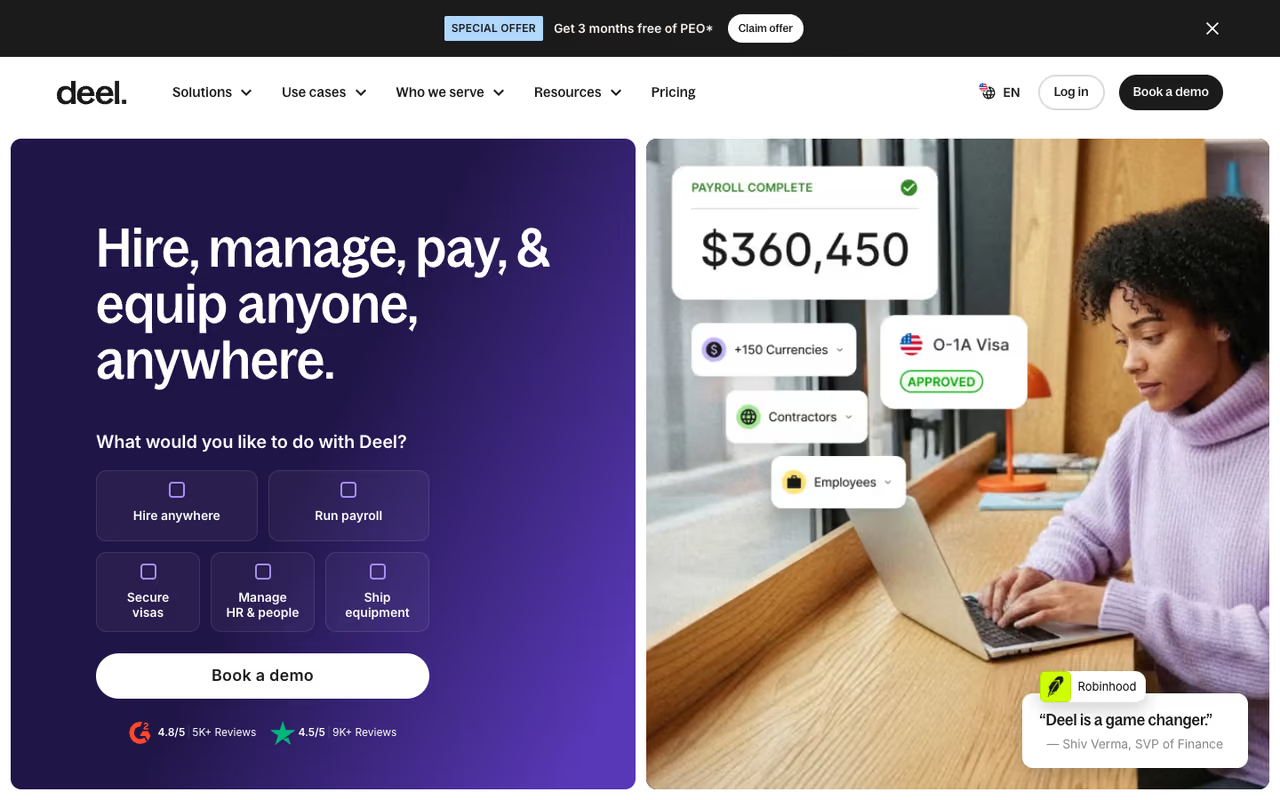
Deel is the EOR most companies should look at first, and not just because it's the loudest. It covers 150+ countries, owns roughly half of its legal entities outright, and bundles EOR, contractor management, global payroll, and immigration into one dashboard. When you're hiring in eight countries, having one vendor instead of eight is worth real money.
Who it's for: Companies scaling across many markets at once, especially if you also manage contractors and need visa support.
The EOR most companies should look at first, covering 150+ countries with EOR, contractors, payroll and immigration in one dashboard. Standard EOR is $599 per employee per month, fair but not cheap, so for one or two hires in low-complexity markets you can do better.
EOR runs $599 per employee per month on the standard plan, with an Enterprise tier at $899 that adds dedicated support. Contractor management is $49 per contractor, and global payroll (for countries where you already own an entity) is $29 per employee. That's competitive at the top of the market.
The standout: Breadth. Deel has owned entities in more places than almost anyone, which means fewer third-party partners sitting between you and your employee. It's also genuinely fast to onboard, often days rather than weeks.
The catch: Deel is huge, and support can feel like support at a huge company. Some users report slower responses on edge-case compliance questions once you're past onboarding. The base price is also fair, not cheap, so if you're hiring one or two people in low-complexity markets, you can do better.

Remote: the compliance purist
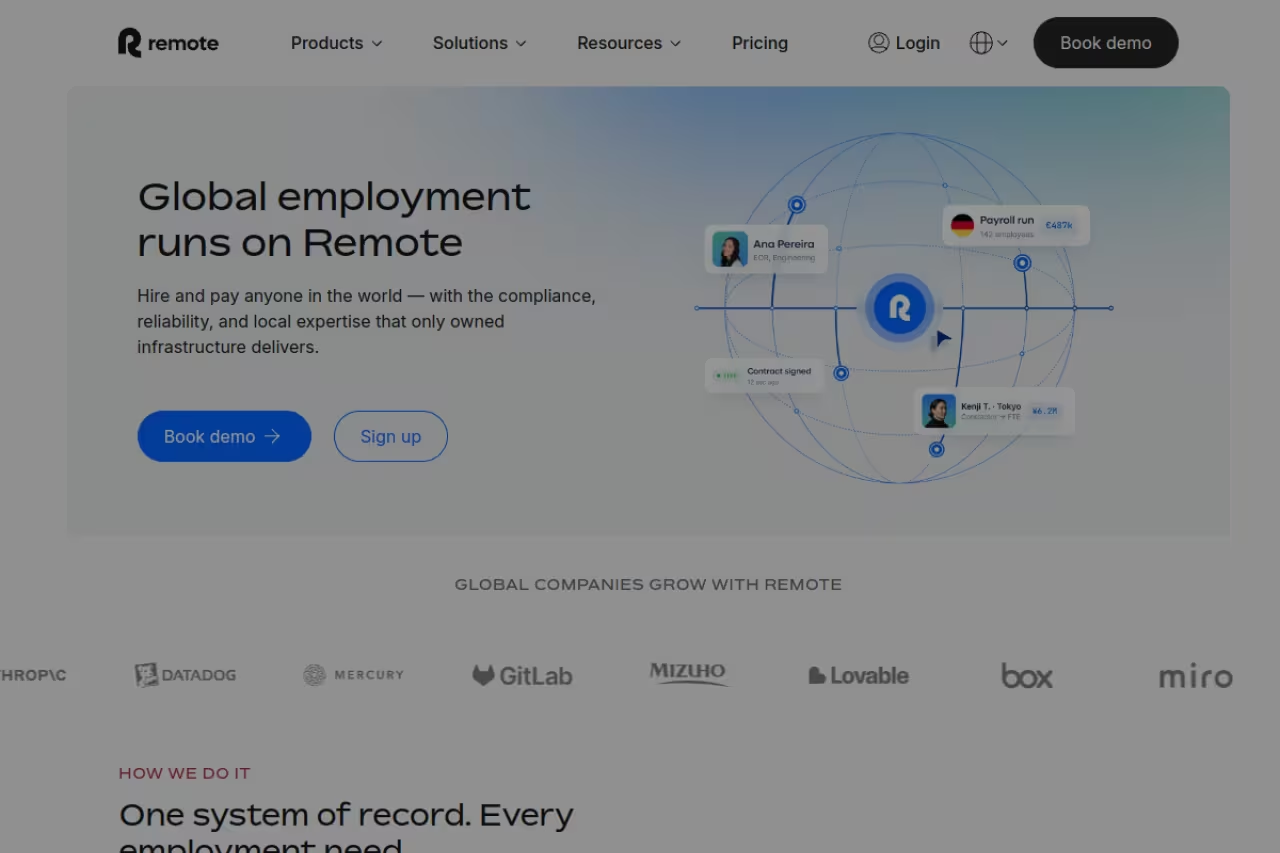
Remote built its reputation on owning 100% of its legal entities, no partner network. That sounds like marketing until you've dealt with a messy termination in a country where your EOR was actually just reselling someone else's entity. Direct ownership means clearer liability and usually better data security.
Who it's for: Teams that put compliance and IP protection above raw cost, especially in regulated industries.
The compliance purist's choice for teams that put IP protection above raw cost, since it owns every entity in its 90+ EOR countries. Coverage is narrower than Deel's, so if you need someone in a country it does not directly cover, you are stuck.
EOR is $699 per employee per month, dropping to $599 if you pay annually (a 14% discount). Contractor management is $29, and Remote publishes its full pricing publicly, which makes budgeting painless before you ever talk to sales.
The standout: The entity model. Because Remote owns every entity in its 90+ EOR countries, IP assignment and confidentiality are handled cleanly and there's no third party in the chain. Their open-source Employ guides are also some of the best free compliance reading on the internet.
The catch: Coverage is narrower than Deel's. With owned entities in 90+ countries, you'll hit gaps in smaller or more remote markets where Deel or Remofirst can still hire through partners. If you need someone in a country Remote doesn't directly cover, you're stuck.

Remofirst: the price disruptor
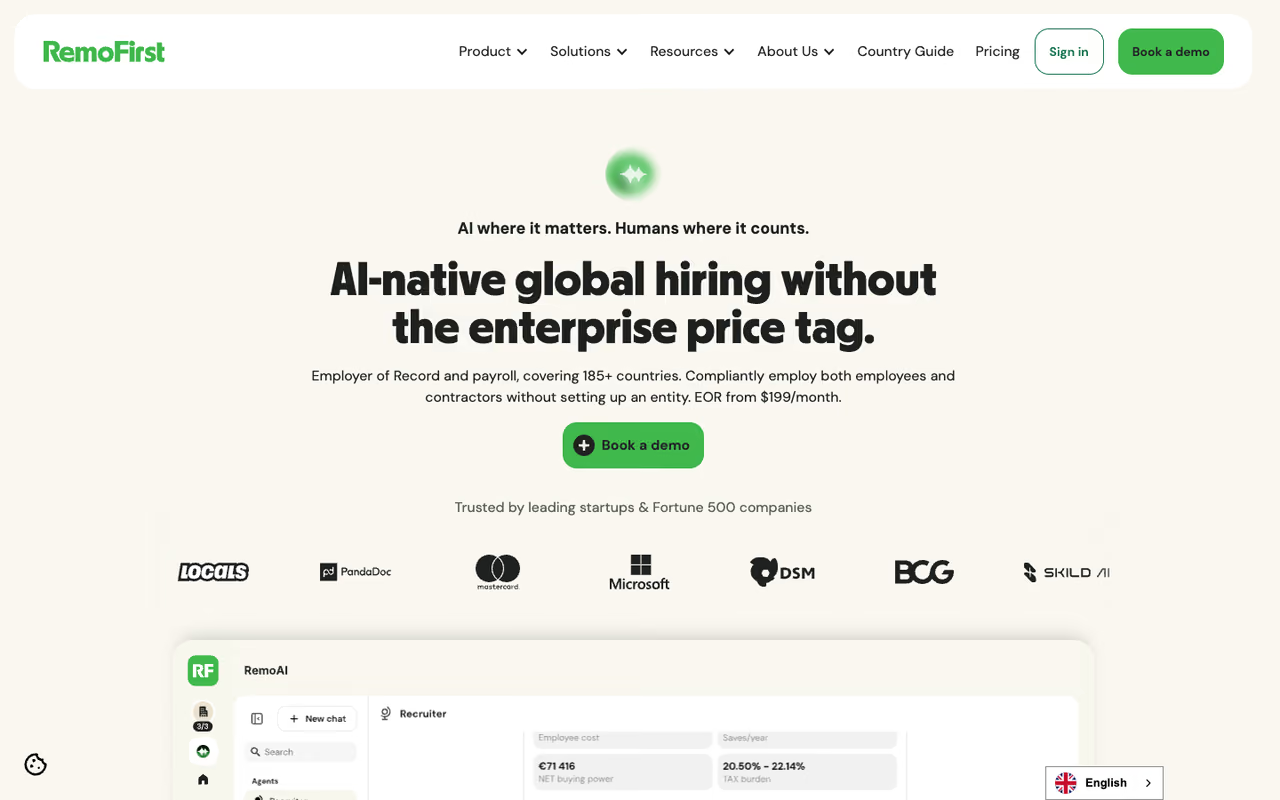
Remofirst is the one that makes the incumbents nervous. EOR starts at $199 per employee per month, which is roughly a third of what Deel or Remote charge, across 185+ countries. For a bootstrapped startup hiring its first international engineer, that gap is the difference between hiring now and waiting.
Who it's for: Startups and small teams watching every dollar, and anyone hiring in unusual markets that bigger platforms don't reach.
The budget disruptor for startups and small teams, starting at $199 per employee per month across 185+ countries. It leans on partner entities and the dashboard is functional rather than polished, so you trade some support depth for the savings.
From $199 per employee per month, though the rate varies by country because of local requirements. Contractor management is free to set up, with a $25 per person fee to process payments. Even at the high end, it undercuts most of this list.
The standout: Price plus reach. 185+ countries is wider than Deel, and the flat-ish base fee with no regional surcharges keeps the math simple. For commodity markets, you're paying for the same compliant employment at a fraction of the cost.
The catch: Remofirst relies more heavily on partner entities than the premium players, so you're trusting a network rather than a wall of owned subsidiaries. The platform is younger and leaner, the dashboard is functional rather than polished, and white-glove hand-holding is not the brand. You trade some support depth for the savings.
If you're still mapping out your remote-team stack beyond hiring, our guide to the best communication tools for remote teams pairs well with this one.

Multiplier: the APAC specialist
Multiplier covers 150+ countries with EOR pricing that starts around $400 per employee per month, sitting between Remofirst's budget tier and the $599-$699 club. Its real edge is Asia-Pacific coverage, where it tends to be deeper and faster than Western-built competitors.
Who it's for: Mid-market companies hiring heavily in APAC, or any team that wants strong volume discounts as it scales.
The APAC specialist for mid-market teams hiring heavily in the region, from $400 per employee per month with strong volume discounts. Outside its strongest regions support feels less complete than Deel's, and the FX markup adds up on large payrolls.
From $400 per employee per month, with contractor management at $40. At 50+ employees, rates reportedly drop to the $250-$300 range, which beats Deel and Remote at the same scale. Complex markets like Brazil, France, and Germany can run $450-$500.
The standout: Volume economics and Asia depth. If you're growing a team across Singapore, India, Indonesia, and the Philippines, Multiplier's coverage and pricing curve are hard to match.
The catch: Outside its strongest regions, coverage and support feel less complete than Deel's. Watch the FX markup too, roughly 0.5% to 1.5% above mid-market rates, which adds up on large payrolls and isn't always front of mind when you compare headline fees.

Oyster: the SMB-friendly option
Oyster covers 120+ countries for EOR at $699 per employee per month, with a clean interface and a reputation for being easy to actually use. It leans into the mission-driven, distributed-by-default crowd, and the product reflects that: less enterprise sprawl, more clarity.
Who it's for: Small and mid-size businesses that value a simple, well-designed experience over the maximum possible country count.
A friendly, easy-to-use option for small and mid-size businesses that value experience over the maximum country count, covering 120+ countries. At $699 it is priced like Remote with fewer owned entities, so you pay premium rates for UX rather than reach.
$699 per employee per month for EOR. Global contractor management is free for 30 days, then $29 per contractor. Pricing is published openly, which is a plus.
The standout: Usability. Oyster's onboarding flows and dashboard are among the most approachable here, and its content library (cost calculators, country guides) genuinely helps you plan before you commit.
The catch: At $699 it's priced like Remote but with fewer owned entities and narrower coverage than Deel. You're paying premium rates for a friendlier UX rather than for the widest reach, so the value depends on how much you weigh experience over scale.

Rippling: the all-in-one play
Rippling isn't really an EOR-first company. It's an HR, IT, and payroll platform that added EOR, which makes it compelling if you already run your workforce on Rippling and want international hires inside the same system.
Who it's for: US-heavy teams already standardized on Rippling that want to add a handful of international employees without bolting on a second vendor.
Makes sense only if your US-heavy team already runs on Rippling and wants a handful of international hires in the same system. EOR pricing is opaque and the base platform fee is mandatory, so for EOR-only use a focused provider like Deel or Remofirst is cheaper.
This is where it gets murky. EOR pricing isn't published and runs roughly $499 to $1,000 per employee per month depending on country and volume, all via custom quote. The base HRIS platform ($35/month plus $8 per user) is mandatory, so every employee, domestic or not, carries a base fee before EOR even applies.
The standout: Consolidation. Device management, app provisioning, payroll, and EOR in one place is a real operational win if you're already in the ecosystem.
The catch: For EOR-only use, you're paying for a platform you may not need, and the opaque pricing makes budgeting hard. If you just want to employ five people in Germany, a focused EOR like Deel or Remofirst is cheaper and simpler.
If you're building out your broader people stack, it's worth browsing the best AI tools for HR before locking in a single all-in-one.

Papaya Global: enterprise payroll at scale
Papaya Global is built for large organizations that treat global payroll as a data and payments problem. It covers 160+ countries and consolidates EOR, payroll, and contractor workflows into one AI-driven data stream, with payments infrastructure most competitors don't match.
Who it's for: Enterprises managing hundreds of people across many countries that need serious analytics and payment rails.
Built for enterprises managing hundreds of people across many countries who need serious analytics and payment rails in 160+ countries, with EOR from $650 per employee per month. It is overkill for small teams, since the complexity only pays off at scale.
EOR starts at $650 per employee per month, with a premium tier at $770. Global payroll (your own entities) is $25 per employee, and contractor management starts at $30. At 50+ and 100+ employees, per-head rates fall, though Papaya doesn't publish a fixed discount schedule.
The standout: Payments and reporting depth. Papaya moves money in 160+ countries with workforce analytics built for finance teams, not just HR.
The catch: It's overkill for small teams. The platform's complexity and price only pay off at scale, and smaller companies will find it heavier than they need.

Velocity Global: white-glove enterprise
Velocity Global sits at the high-touch end. Pricing is custom and not published, which tells you the target customer: larger enterprises that want an advisory relationship and hands-on support rather than a self-serve dashboard.
Who it's for: Enterprises entering complex markets that value human guidance over software speed, especially first-time global expanders.
The white-glove choice for enterprises entering complex markets, especially first-time global expanders who value human guidance over software speed. Pricing is custom and the process is sales-led, so it is the wrong pick if you want to onboard someone this week.
Custom quotes only, generally positioned as a premium service. Expect to talk to sales and negotiate based on countries and headcount.
The standout: Service. Velocity Global's reputation rests on personal support and expertise in tricky jurisdictions, the opposite of a fast self-serve flow.
The catch: No transparent pricing and a slower, sales-led process. If you want to onboard someone this week through a dashboard, this isn't it.
How to choose the right EOR
Skip the feature checklists and answer three questions in order.
Where are you hiring? Match coverage to your actual markets, not the biggest number. If your hires are all in countries an EOR owns directly, that's safer than a wide partner network. Remote wins on owned entities; Deel and Remofirst win on raw reach.
How many people, and how fast are you growing? One or two hires in standard markets? Remofirst's $199 base is hard to beat. Scaling past 50 in APAC? Multiplier's volume curve pulls ahead. Already on Rippling with mostly US staff? Adding EOR there may be simplest despite the cost.
Do you need EOR only, or the whole stack? If you just need compliant employment, a focused EOR beats an all-in-one on price every time. If you want payroll, devices, and contractors in one system, Rippling or Papaya start to justify their premiums.
One more thing: an EOR is for when you don't have a local entity. The rule of thumb is that once you pass roughly 15 to 25 employees in a single country, opening your own entity usually gets cheaper long-term than paying per-head EOR fees. EOR is the on-ramp, not always the destination.
If you'd rather keep the rest of your toolkit lean while you scale a distributed team, our Dupple X membership and the running list of top tools we track can help you avoid overbuying. For the contractor side of the equation, the best contractor accounting software guide covers what an EOR won't.
FAQ
What is an Employer of Record (EOR)?
An EOR is a company that legally employs workers on your behalf in countries where you don't have a legal entity. The EOR handles employment contracts, payroll, taxes, and statutory benefits in-country and takes on the compliance liability, while you direct the employee's day-to-day work. It lets you hire abroad in days instead of spending months and tens of thousands setting up your own entity.
How much do EOR services cost in 2026?
EOR pricing typically runs from $199 to over $1,000 per employee per month for the platform fee alone. Remofirst starts at $199, Multiplier around $400, and Deel, Remote, and Oyster sit at $599 to $699. That fee is on top of the employee's gross salary, employer social contributions, and any mandatory benefits, which vary by country and often cost more than the salary itself in places like France or Brazil.
What's the difference between an EOR and a PEO?
A PEO (Professional Employer Organization) co-employs your staff but requires you to already have a legal entity in that country, so it's used mainly for domestic US hiring. An EOR is the legal employer itself and needs no entity from you, which is what makes it the tool for international hiring. If you're hiring abroad with no local presence, you want an EOR, not a PEO.
Is it better to use an EOR or set up my own entity?
Use an EOR when you're hiring a small number of people in a country, testing a new market, or need to move fast. Setting up your own entity costs $25,000 to $100,000+ and takes three to six months, so it only pays off once you have meaningful headcount in one place, usually past 15 to 25 employees. Many companies start with an EOR and switch to an entity later as a team grows.
Which EOR has the most country coverage?
Remofirst advertises EOR coverage across 185+ countries, edging out Deel's 150+ and Papaya's 160+. Coverage numbers can be misleading though, because they often mix owned entities with partner relationships. Remote covers fewer countries (90+) but owns 100% of those entities, which some compliance-focused teams prefer over wider partner-based reach.
Are EOR fees the only cost of hiring internationally?
No, and this trips up a lot of first-time global hirers. The platform fee ($199-$1,000/month) is just the service charge. On top of it you pay the gross salary, mandatory employer contributions (social security, pension, healthcare), statutory benefits, and sometimes severance reserves. In high-cost-of-employment countries, those add-ons can exceed the salary, so always model the fully loaded cost before signing.
Related guides
Some offers on this page may be paid placements or contain affiliate links.
Across our whole catalogue the median is $24 a month and 33% of tools advertise a free tier. Figures are the lowest recurring monthly price quoted in our own review of each tool, read on 2026-08-19. Full method and every category.
