
The 8 Best AI Voice Generators in 2026 (Compared and Ranked)

Key facts8 tools compared: ElevenLabs, Fish Audio, Cartesia, Hume Octave, Murf AI, Speechify Studio…
- 8 tools compared: ElevenLabs, Fish Audio, Cartesia, Hume Octave, Murf AI, Speechify Studio, PlayHT, WellSaid Labs
- ElevenLabs (best for: All-around quality and ecosystem): Free / $22 Creator
- Fish Audio (best for: Quality on a budget): Free / ~$15/mo
- Cartesia (best for: Real-time voice agents): Usage-based API
- Hume Octave (best for: Emotional, expressive reads): ~$7.60/1M chars
A year ago you could spot an AI voice in three seconds. The breathing was wrong, the emphasis landed on the wrong word, and every sentence ended with the same flat downturn. That tell is mostly gone now.
The problem is no longer "does this sound robotic." It's "which tool fits what I'm actually making." A podcast intro, a 40-minute training module, a voice agent answering phone calls, a cloned version of your own voice for a course: those are four different jobs, and the tool that wins one loses another. Pricing models do not help. Some charge per character, some per credit, some per second of audio, and the same $22 buys wildly different amounts of speech depending on where you spend it.
Short version for skimmers: ElevenLabs is still the safest pick for most people who want the best-sounding voice with the least fuss. But Fish Audio now beats it in blind tests for a third of the price, Cartesia owns real-time voice agents, and Hume does emotion better than anyone. This is written for founders, creators, and operators who need finished audio, not a research paper on speech synthesis.
Quick comparison
| Tool | Best for | Price | Standout |
|---|---|---|---|
| ElevenLabs | All-around quality and ecosystem | Free / $22 Creator | Largest voice library, instant cloning |
| Fish Audio | Quality on a budget | Free / ~$15/mo | Beat ElevenLabs in blind tests, 15s cloning |
| Cartesia | Real-time voice agents | Usage-based API | Sub-100ms latency, fastest on the market |
| Hume Octave | Emotional, expressive reads | ~$7.60/1M chars | LLM-based voice that understands the text |
| Murf AI | Marketing and corporate video | $19/mo Creator | Clean studio editor, team workflow |
| Speechify Studio | Creators who also read articles | $19/mo Studio | Doubles as a reading app |
| PlayHT | Multilingual cloning at scale | Free / $31.20/mo | Strong language coverage, low-latency API |
| WellSaid Labs | Enterprise e-learning | $49/mo Maker | Consistent corporate voices, compliance focus |

ElevenLabs (best overall)
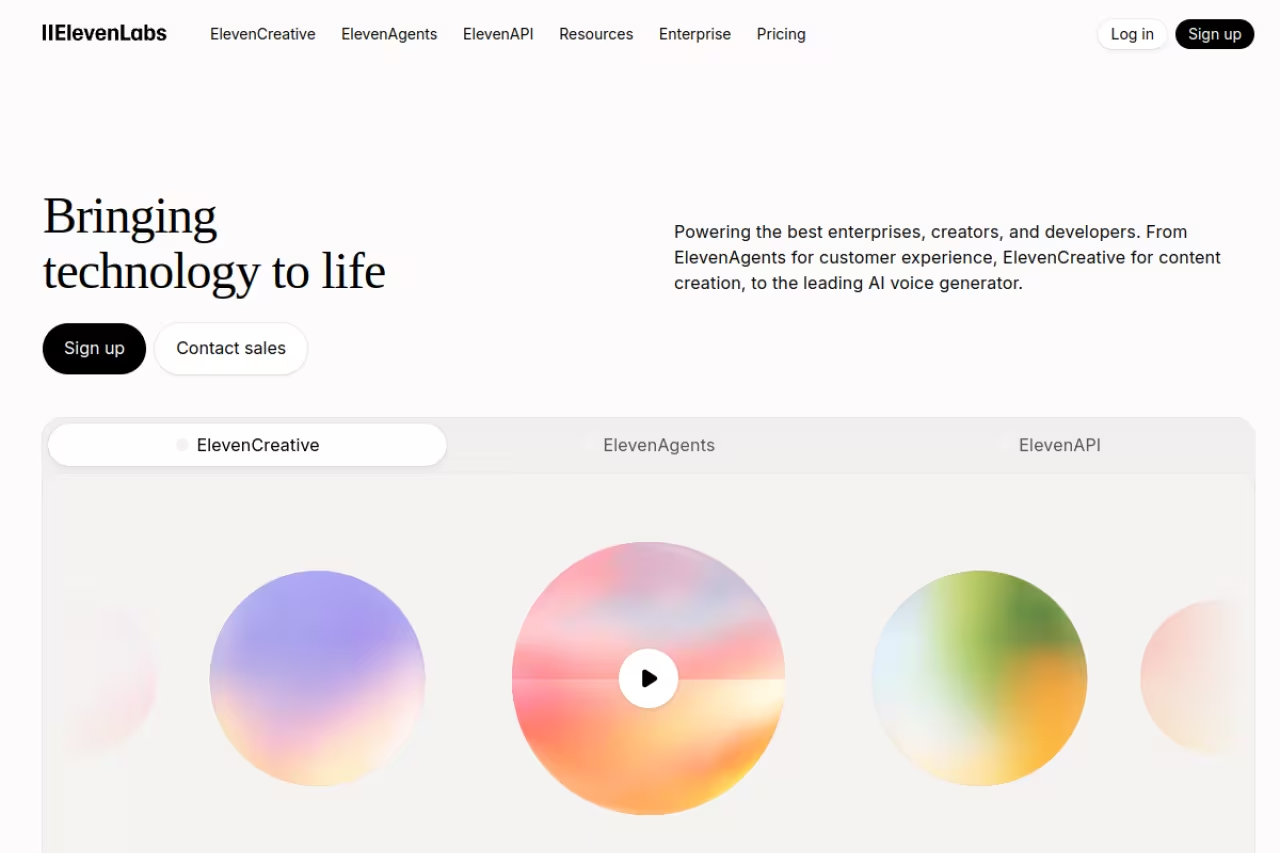
ElevenLabs is the tool everyone benchmarks against, and there's a reason it became the default. The voices have natural pacing, the cloning is fast, and the v3 model lets you drop performance notes directly into the text so you can tell a line to sound excited or tired. The voice library is the deepest in the field, and the API is mature enough that half the AI voice startups you'll find are quietly built on top of it.
The safe single-platform bet for audiobooks, voiceover, dubbing and voice agents, with the deepest voice library and a mature API. Credits vanish faster on higher-quality models, and the free tier's commercial restriction trips people up.
If you only learn one platform this year, this is the safe bet.
Pricing runs from a free tier with 10,000 credits a month (roughly ten minutes of speech, no commercial rights, and ElevenLabs attribution required) up through Starter at $6, Creator at $22 for 121,000 credits, Pro at $99 for 600,000, and Scale at $299. Instant voice cloning unlocks at Starter; professional cloning, which trains on a longer sample of your own voice, starts at Creator. You can see the full breakdown on the official pricing page.
The standout is breadth. No other tool covers this many use cases at this quality without making you stitch three products together.
The catch: credits vanish faster than you expect once you turn on the higher-quality models, and the free tier's commercial restriction trips people up. If you're producing long-form audio every week, you'll be on Pro sooner than the Creator price tag suggests.

Fish Audio (best value)
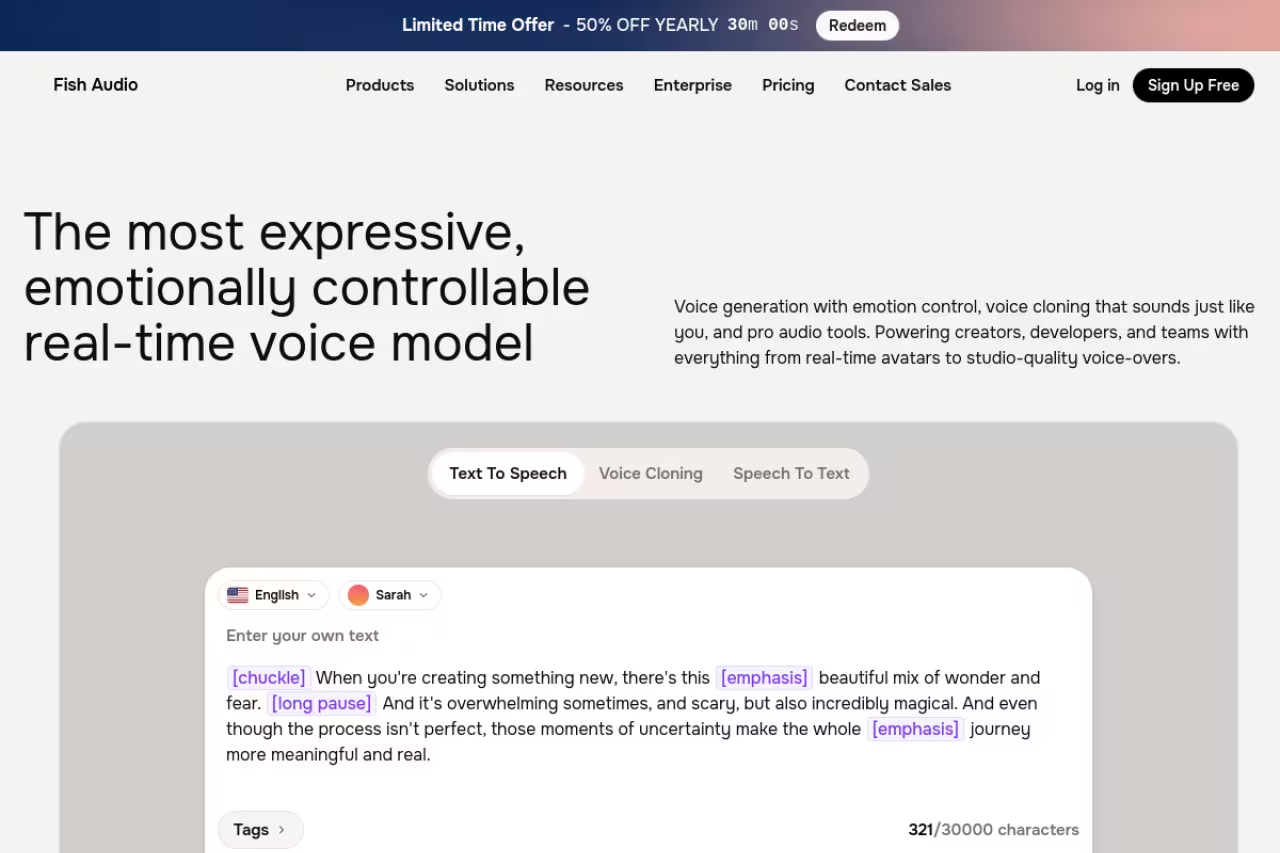
Fish Audio is the tool that made me re-rank this list. Its S2 Pro model beat ElevenLabs v3 in 60% of head-to-head blind tests run on real production traffic, finishing first overall, and it does this while costing a fraction of the price. Cloning needs only about 15 seconds of audio, one of the lowest sample requirements anywhere, and it handles 80+ languages with cross-lingual cloning so a voice recorded in French can speak English without a re-record.
The best deal here for creators, small teams and developers who want top-tier quality at a fraction of the ElevenLabs bill, with cloning from about 15 seconds of audio. Documentation has gaps and support is community-leaning, so skip it if you need hand-holding.
Pricing is freemium with a paid tier around $15 a month, and the API rate undercuts most competitors badly. In March 2026 the team also shipped the S2 model weights and inference code under Apache 2.0, so teams with the infrastructure can self-host (commercial deployment needs a separate license).
The standout is the price-to-quality ratio. Nothing else on this list gets this close to the top voices for this little money.
Where it falls short: the polish around the product is thinner than ElevenLabs. Documentation has gaps, the editor is less refined, and support is community-leaning. If you need hand-holding or an enterprise contract, look elsewhere. If you can read API docs, it's the best deal here.

Cartesia (best for real-time voice agents)
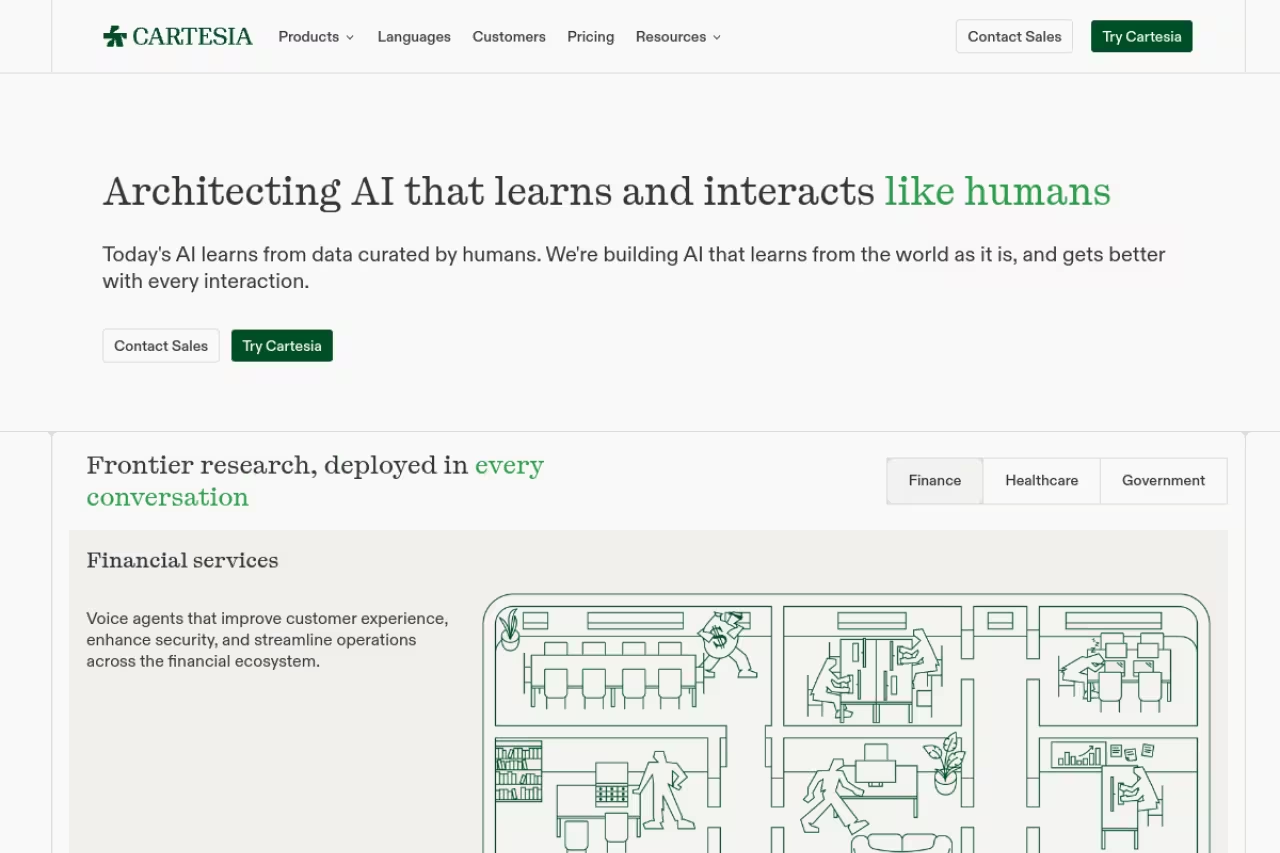
Cartesia plays a different game. Its Sonic model hits a time-to-first-audio as low as 40ms, the only product reporting model latency under 100ms, which is the difference between a voice agent that feels alive and one that makes callers think the line dropped. That speed comes from an unusual architecture (state space models instead of transformers) that holds latency steady even under heavy load.
The latency pick for phone agents, support bots and interactive voice apps, with time-to-first-audio as low as 40ms. It is a developer platform, not a point-and-click studio, so casual users should skip it.
This is not the tool you reach for to record a one-off podcast intro; it's the tool you build a product on.
Pricing is usage-based through the API rather than tidy consumer tiers, with a free allowance to start. Sonic 3, released late 2025, added stronger emotional expressiveness and clean multilingual support across 40+ languages while keeping the latency that made the company's name.
The standout is latency you can't get anywhere else, full stop.
The catch: this is a developer platform, not a point-and-click studio. If you don't have an engineer wiring it into an app, most of what makes Cartesia special is out of reach. Casual users should skip it.
A quick note before the second half: if keeping up with releases like Sonic 3 and Fish Audio S2 feels like a part-time job, Dupple X is the AI brief our team reads to catch model launches the week they ship instead of a month later.
Hume Octave (best for emotion)
Hume built Octave, the first text-to-speech model built on an LLM, which means it actually reads the meaning of a sentence before deciding how to say it. It knows when a line is a punchline, when it's a confession, and when it's a flat instruction, and it adjusts the delivery without you tagging anything. The VentureBeat coverage of the launch called out exactly this: emotion driven by comprehension, not manual sliders.
Go with Hume for narrative work where feeling carries the piece, like character voices and dramatic audiobook passages. It reads meaning to set emotion, but it can interpret a line differently than you intended, and it is overkill for dry corporate narration.
Octave 2 lands around $7.60 per million characters, which Hume positions at roughly half of ElevenLabs' comparable rate. Pricing scales by usage, and enterprise deployments can push the cost well under a cent per minute of audio.
The standout is emotional range that comes from understanding rather than guesswork.
Where it falls short: the trade-off for all that expression is occasional unpredictability. The model sometimes interprets a line differently than you intended, and pulling it back to a neutral read can take a few attempts. For dry corporate narration, that intelligence is overkill.

Murf AI (best for marketing and corporate video)
Murf AI is the one I hand to non-technical teammates. The studio editor is clean, you can sync voiceover to video and slides without leaving the tool, and the 200+ voices across 30+ languages cover most business needs without anyone touching an API. It's the spreadsheet-friendly choice: predictable, organized, built for people producing marketing assets rather than chasing the bleeding edge of voice quality.
The one to hand to non-technical teammates: a clean studio editor with 200+ voices across 30+ languages for explainers and training content. The voices are good, not class-leading, and sound a notch more produced next to Fish Audio or ElevenLabs.
Pricing starts free, with the Creator plan at $19 a month (annual billing) unlocking full commercial rights and around 24 hours of generation a year, and Business at roughly $66 a month for more. The API is billed separately at about $0.03 per 1,000 characters. Check Murf's pricing page before committing, since the hour allowances differ between monthly and annual billing.
The standout is the editor. For a team that wants to ship video voiceover without learning a new skill, it just works.
The catch: the voices are good, not class-leading. Next to Fish Audio or ElevenLabs v3 in a blind test, Murf sounds a notch more "produced." For corporate work that's fine; for a flagship brand spot you might want more.
Speechify Studio (best for creators who also read)
Speechify started as a reading app that turns articles and PDFs into audio, and Studio is its content-creation arm. That heritage is the pitch: you get a voiceover tool and a "read anything aloud" tool in one subscription, which is genuinely useful if you both produce content and consume a lot of written material on the go.
A two-in-one for solo creators and students who want voiceovers plus a read-anything-aloud app in a single subscription. Pure voice quality sits below the top of the list, and credit-per-second math gets expensive on long projects.
Studio plans start around $19 a month and run up to about $49, built on a credit model where one credit equals one second of generated audio (3,600 per hour). It includes 50+ studio voices plus voice cloning. Higher tiers and exact credit allowances often require a sales conversation, which is mildly annoying.
The standout is the two-in-one value: voice generation plus a polished text-to-speech reader.
Where it falls short: pure voice quality sits below the top of this list, and the credit-per-second math gets expensive for long projects. As a voiceover-only purchase it's beaten on price and quality; the reading-app combo is what justifies it.

PlayHT (best for multilingual cloning at scale)
PlayHT has leaned hard into languages and API delivery. It covers a wide spread of voices and tongues, clones from short samples, and ships a low-latency API that teams use to bolt voice onto their own products. If your audience is global and you need one voice speaking a dozen languages, this is a strong contender.
A strong contender for product teams that need multilingual output with a production-grade API at a fair price. Reviewers flag occasional glitches and slow support, so run a paid pilot before betting a launch on it.
Pricing includes a free plan with one voice clone and 12,500 characters a month, a Creator plan around $31.20 a month, and an Unlimited plan near $49, with enterprise pricing above that. Annual billing knocks roughly 25% off.
The standout is the combination of broad language support and a real, production-grade API at a fair price.
The catch: reliability and support draw the most complaints. Reviewers consistently flag occasional glitches and slow help, so I'd run a paid pilot before betting a launch on it. The tech is solid; the operational polish lags.
WellSaid Labs (best for enterprise e-learning)
WellSaid Labs is the buttoned-up option. It's built for training departments and e-learning teams that need the same voice to sound identical across hundreds of modules recorded over months. The voices are clean and consistent rather than flashy, and the company leans into the compliance and licensing details that enterprise buyers actually care about.
The procurement-friendly choice for L&D teams who need identical voices across hundreds of modules, with clear usage rights. It is expensive for solo creators and lacks the emotional range of Hume or the raw realism of Fish Audio.
Pricing runs from a free tier up through Maker at about $49 a month, Creative around $99, and Teams at roughly $249 per seat, with enterprise custom from there. The free and lower tiers cap your downloads per year, so model your volume before picking a plan.
The standout is reliability: a voice that won't surprise you halfway through a 200-module course.
Where it falls short: it's expensive for what it is if you're a solo creator, and the voices, while consistent, don't have the emotional range of Hume or the raw realism of Fish Audio. This is a procurement-friendly tool, not a creative playground.
How to choose
Skip the feature lists and answer one question: what are you making?
If you're building a voice agent or anything real-time, latency wins and quality comes second. Go straight to Cartesia, or ElevenLabs if you're already in its ecosystem. A voice that lags feels broken no matter how good it sounds.
If you're producing content where quality matters and budget is tight, test Fish Audio first and ElevenLabs second. Run the same script through both, blind-test the output on a coworker, and let your ears decide. Fish Audio's price advantage is large enough that it should win unless ElevenLabs clearly sounds better to you.
If emotion is the whole point (drama, characters, ads with a specific feel), Hume Octave is the only tool here designed around it. For everything else its unpredictability is a liability.
If you're a team shipping marketing or training video and you value a clean workflow over the last 5% of quality, Murf AI or WellSaid Labs will keep your producers happy and your legal team calm.
And if you want to clone your own voice, check the sample requirement and commercial terms before anything else. Fish Audio needs 15 seconds; ElevenLabs' professional cloning wants more but rewards it. Read the license, because "you can clone a voice" and "you can sell content made with that clone" are not the same sentence.
One more thing: pricing models matter more than headline prices. Per-second tools punish long projects, per-character tools punish chatty ones, and per-credit tools hide the real cost behind a conversion rate. Estimate your monthly volume in plain minutes of audio, then do the math for each tool. The cheapest sticker often isn't the cheapest bill.
For a broader view of the AI stack these voice tools plug into, browse our top tools roundup, and if you're assembling a content pipeline, our guides on the best AI agents and best AI avatar generators pair naturally with voice. Teams building automated workflows should also see the best AI agent platforms.
Frequently asked questions
What is the most realistic AI voice generator in 2026?
For pure realism, it's a two-horse race between ElevenLabs v3 and Fish Audio's S2 Pro. In recent blind tests run on real traffic, Fish Audio edged ahead in the majority of direct comparisons, which is why I'd test it first. ElevenLabs remains the most consistent across a wide range of use cases. For either one, the output is now good enough that most listeners can't reliably tell it from a human.
Are there any genuinely free AI voice generators?
Yes, but with strings. ElevenLabs gives 10,000 credits a month (about ten minutes) with no commercial rights and required attribution. Fish Audio, PlayHT, Murf, and Speechify all have free tiers too, usually capped at a small character or hour allowance and limited to one voice clone. Free tiers are fine for testing voices, but read the commercial-use terms before you publish anything made on one.
Can I legally clone my own voice and sell content made with it?
Cloning your own voice is allowed on every tool here, and most require explicit consent (a verification sentence) before training a clone. Selling the output is a separate question tied to your plan: free tiers usually forbid commercial use, while paid tiers grant it. Cloning someone else's voice without their consent is prohibited and, in many places, illegal. Always read the license tied to your specific plan.
Which AI voice generator is best for real-time voice agents?
Cartesia, by a clear margin. Its Sonic model reports time-to-first-audio as low as 40ms and is the only one claiming sub-100ms model latency, which is what a natural back-and-forth conversation needs. ElevenLabs is a capable second choice if you're already building in its ecosystem, but for latency-sensitive phone and support agents, Cartesia is purpose-built for the job.
How much does a good AI voice generator cost per month?
For most creators, $15 to $30 a month covers it: Fish Audio around $15, Murf and Speechify at $19, ElevenLabs Creator at $22, PlayHT near $31. Heavy producers and teams jump to the $99 to $299 range (ElevenLabs Pro and Scale, WellSaid Creative). API-first usage is billed by characters or seconds and can be cheaper or much more expensive depending on volume, so estimate your monthly minutes of audio before picking a plan.
Should I use a developer API or a studio editor?
Use a studio editor (Murf, Speechify, WellSaid, ElevenLabs' web app) if you're producing finished audio by hand and want a visual workflow. Use an API (Cartesia, Fish Audio, ElevenLabs, PlayHT) if you're embedding voice into your own product or generating audio programmatically at scale. Many people start in the studio to pick a voice, then move to the API once the volume justifies it.
Related guides
Some offers on this page may be paid placements or contain affiliate links.
Across our whole catalogue the median is $24 a month and 33% of tools advertise a free tier. Figures are the lowest recurring monthly price quoted in our own review of each tool, read on 2026-08-19. Full method and every category.
