
The 7 Best AI Avatar Generators in 2026 (Compared)

Key facts7 tools compared: HeyGen, Synthesia, D-ID, Argil, Creatify, Colossyan, HeadshotPro
- 7 tools compared: HeyGen, Synthesia, D-ID, Argil, Creatify, Colossyan, HeadshotPro
- HeyGen (best for: All-around talking-head video): Free; Creator €25/mo
- Synthesia (best for: Corporate training & L&D): Free; Starter $18/mo (yearly)
- D-ID (best for: Interactive / real-time agents): Lite $4.70/mo (yearly)
- Argil (best for: Personal-brand & UGC clips): Classic $39/mo
A lot of AI avatar videos are still bad: the mouth moves a beat behind the words, the eyes stare through you, and the whole thing lands somewhere in the uncanny valley. The 2026 crop is different: a few of these tools now produce talking heads good enough for a product demo or a sales follow-up without flinching.
The hard part isn't finding an avatar generator. It's that "avatar" means three different things depending on who you ask. Some people want a digital clone of themselves reading a script. Some want a stock presenter for training videos. Some just want a sharp LinkedIn headshot from a phone selfie. These are different products with different price tags, and the wrong pick wastes either money or a weekend.
If you want one answer: HeyGen is the best all-around AI avatar generator in 2026 for most people making talking-head video. It's the most natural-looking, the easiest to learn, and it scales from a free trial to a full content engine. But the right tool depends on what you're actually making, so here's how the field shakes out below.
Quick comparison
| Tool | Best for | Price | Standout |
|---|---|---|---|
| HeyGen | All-around talking-head video | Free; Creator €25/mo | Avatar IV realism |
| Synthesia | Corporate training & L&D | Free; Starter $18/mo (yearly) | EXPRESS-1 expressive avatars |
| D-ID | Interactive / real-time agents | Lite $4.70/mo (yearly) | Live conversational avatars |
| Argil | Personal-brand & UGC clips | Classic $39/mo | Clone yourself from a 2-min video |
| Creatify | UGC product ads at scale | Starter $39/mo | 1,500+ ad-ready AI actors |
| Colossyan | Training with branching/quizzes | Free; Starter $27/mo | Interactive learning workflows |
| HeadshotPro | Static professional headshots | $29 one-time | 40-200 studio-style shots, no subscription |

HeyGen: the best all-around avatar generator
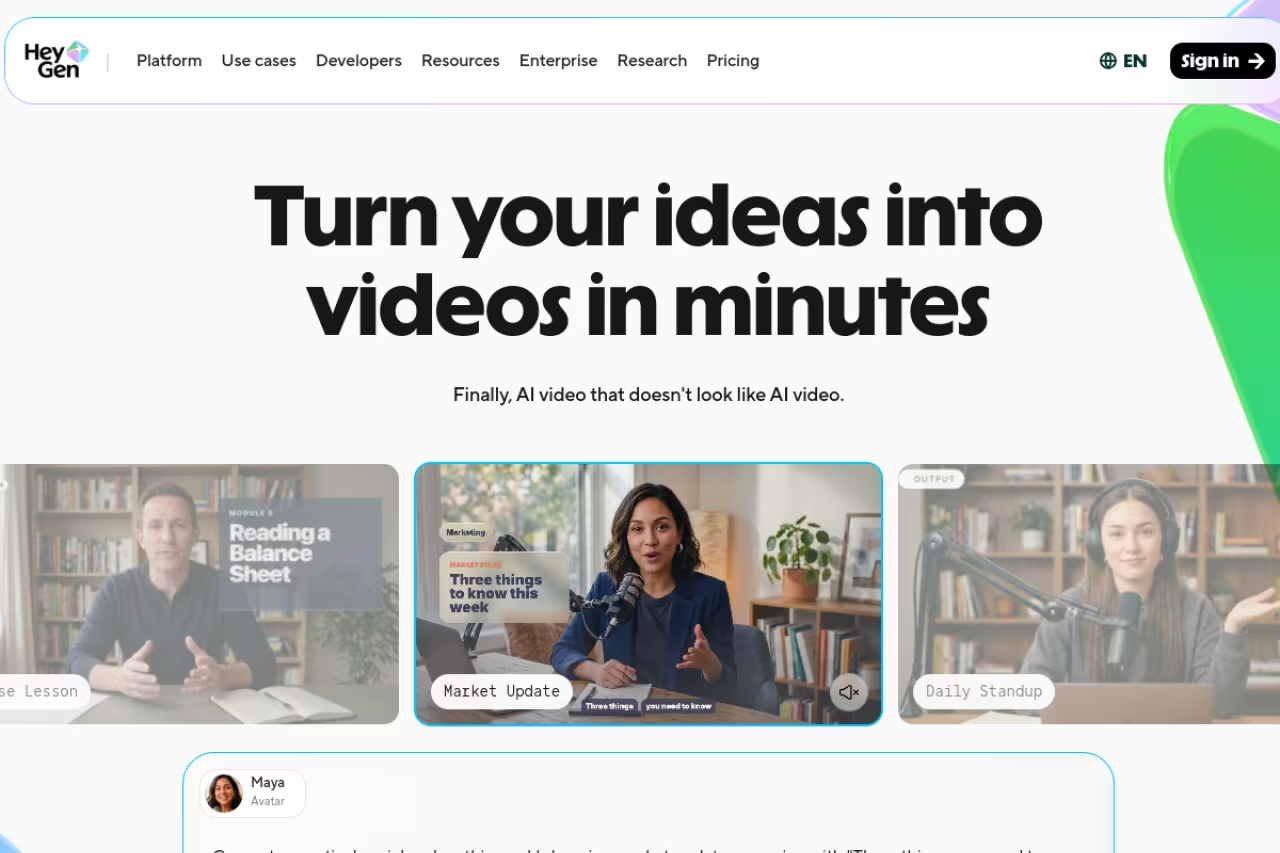
HeyGen is what I reach for first. It turns a script into a talking-head video with a stock or custom avatar, and the newer Avatar IV model fixed the thing that used to break the illusion: timing. Lip-sync actually tracks the words now, and the head moves like a person who's thinking, not a mannequin on a turntable.
Who it's for: creators, marketers, and sales teams who want video without a camera. If you're sending personalized outreach or spinning up explainer clips, this is the sweet spot.
My first reach for creators, marketers and sales teams who want video without a camera, with lip-sync that finally tracks the words. The trade-off is confusing credit math, since a 600-credit plan is really about 30 minutes of premium video.
the free plan gives you 3 videos a month at up to 1 minute each, with a watermark. The Creator plan runs €25/month for 600 credits, 700+ stock avatars, unlimited custom avatars, and 175+ languages. Pro is €42/month for 4K and 1,000 credits. The catch with credits: Avatar IV burns 20 per minute versus 3 for the older Avatar III, so a "600 credit" plan is really about 30 minutes of premium-quality video, not 600 minutes of anything.
The standout: voice cloning plus translation. You can record once and have your avatar deliver the same script in dozens of languages with your own voice, lip-synced. For anyone selling across markets, that's the feature that pays for the subscription.
Where it falls short: the credit math is genuinely confusing, and heavy users hit the wall faster than the price suggests. Read the per-minute credit costs before you commit, or you'll be surprised at the upgrade prompt.

Synthesia: built for corporate training
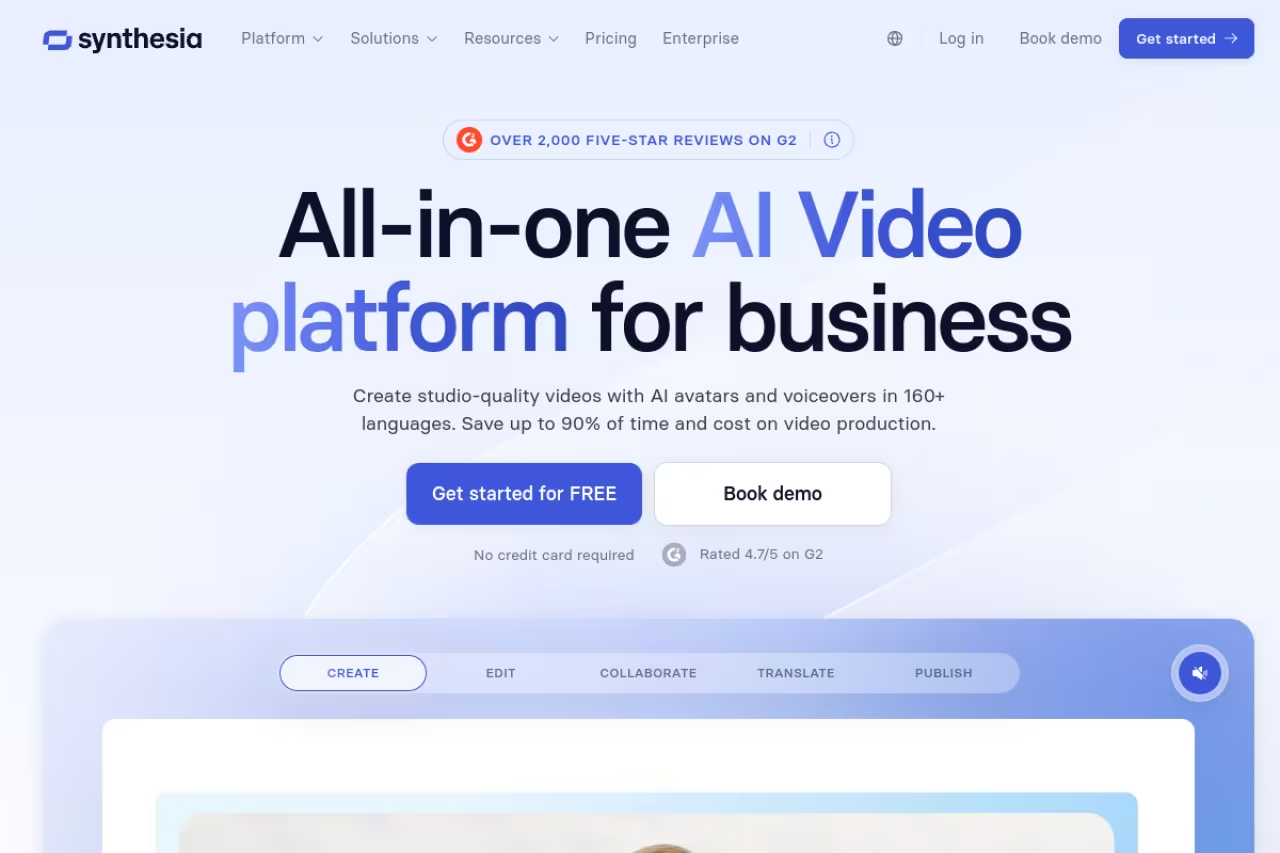
Synthesia basically invented the script-to-video avatar category for the enterprise, and it still feels like the most "grown-up" tool here. The interface is closer to a slide editor than a video timeline, which is exactly what an L&D team wants when they're updating an onboarding course for the fourth time this quarter.
Who it's for: companies producing training, onboarding, and internal comms at volume. If five people need to edit the same library of videos, Synthesia's structured editor wins.
The most grown-up option, with a slide-style editor that suits L&D teams updating training and onboarding at volume. It is also the priciest once you need avatar variety, and the top-quality Studio avatars are a costly yearly add-on, so a solo creator should skip it.
there's a free plan with 10 minutes a month and 9 avatars. Starter is $18/month billed yearly (or $29 monthly) with 120 minutes a year and 125+ avatars. Creator is $64/month yearly for 360 minutes and 180+ avatars. The full library of 240+ avatars and unlimited personal avatars lives on Enterprise.
The standout: the EXPRESS-1 model. Synthesia's expressive avatars adjust tone, facial expression, and body language to the meaning of the script, so a serious compliance line doesn't get delivered with the same chirpy smile as a welcome message. It's the closest any of these tools gets to a real performance.
Where it falls short: the highest-quality Studio avatars are a $1,000/year add-on for annual subscribers only, and they can take up to 10 days to process. Synthesia is also the most expensive option once you need real avatar variety. For a solo creator it's overkill.
D-ID: avatars that talk back
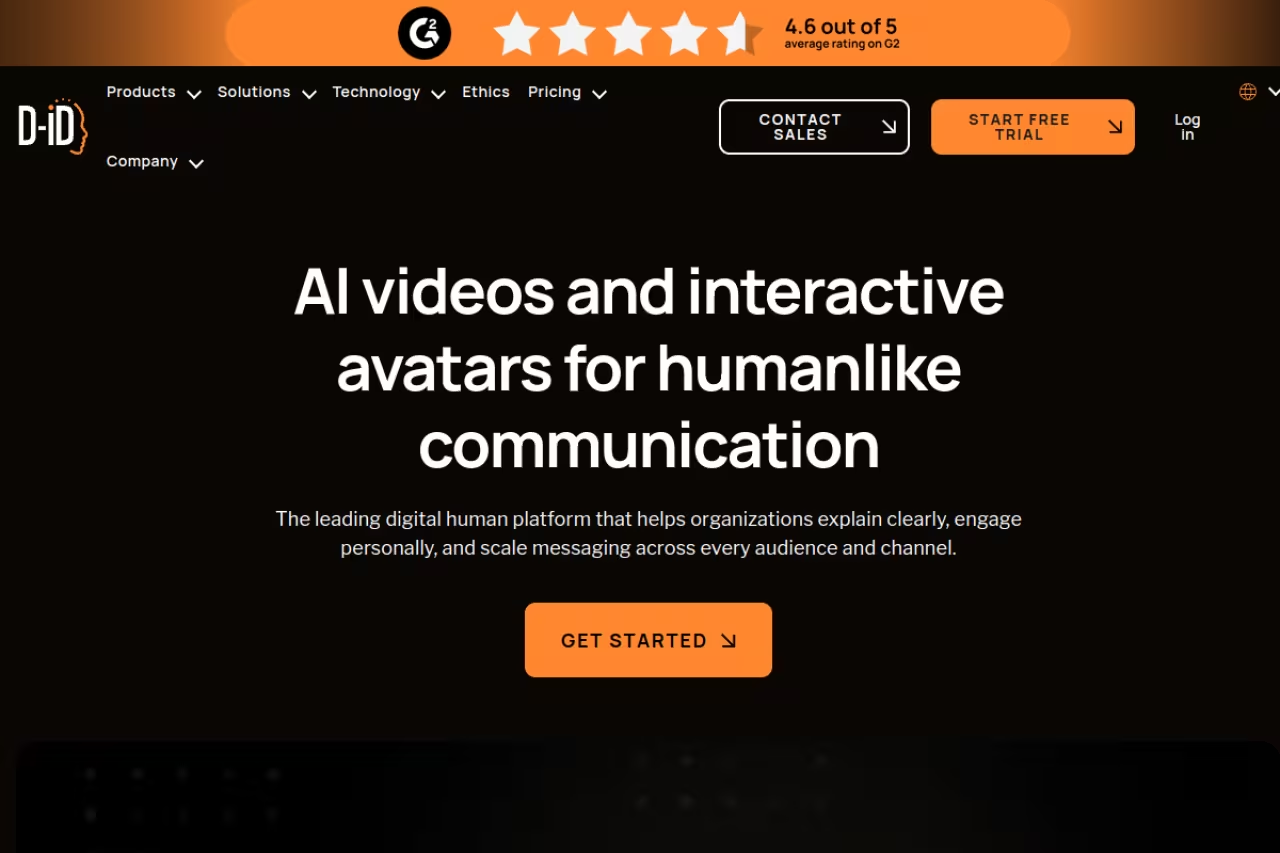
D-ID does the standard script-to-video thing, but its real edge is interactive avatars: a digital human you can actually have a conversation with, in real time. Think a face on your website that answers questions, or a virtual agent that talks instead of typing.
Who it's for: product teams and businesses building conversational experiences, plus anyone who wants to animate a single still photo into a talking presenter cheaply.
The pick when you want avatars that talk back, with real-time conversational agents most rivals cannot match. The entry price is low at $4.70/month billed annually, though credits are limited on the cheaper plans.
there's a 14-day trial, then Lite at $4.70/month billed annually for 40 credits, Pro at $16/month for 60 credits with premium 1080p presenters, and Advanced at $108/month for 400 credits. The entry price is the lowest of any serious tool on this list.
The standout: real-time conversational agents. Most tools here render a finished MP4. D-ID lets the avatar respond live, which opens up support bots, interactive kiosks, and on-site assistants that feel human.
Where it falls short: for pure pre-recorded talking-head quality, HeyGen and Synthesia look better. D-ID's strength is interactivity, so if you only want polished marketing videos, you're paying for capabilities you won't touch.
If you're building avatars into an actual product flow rather than just publishing clips, it's worth looking at how these connect to broader AI agents too.
Argil: clone yourself for personal-brand content
Argil is the tool I'd hand to a founder who wants to post daily but hates being on camera. You upload a two-minute video of yourself once, and Argil builds a clone that delivers any script you type. The output is short-form vertical video, captions and B-roll included.
Who it's for: solo creators, founders, and personal-brand builders churning out TikTok, Reels, and Shorts.
The tool I would hand a founder who wants to post daily but hates being on camera. It clones both face and voice for short-form vertical video, but it is narrow on purpose and no fit for long-form training or multi-avatar scenes.
the Classic plan is $39/month with one avatar clone and 25 minutes of video (roughly 50 thirty-second clips). Pro is $149/month with an AI Influencer builder and 100 minutes. There's a 5-day free trial.
The standout: the clone genuinely sounds like you. Argil uses ElevenLabs for voice, so the intonation matches, not just the face. For repurposing one talking point into a week of posts, it's faster than filming.
The catch: it's narrow on purpose. This is a short-form content machine, not a general video editor. If you need long-form training videos or multi-avatar scenes, look elsewhere.
Creatify: UGC ads on an assembly line
Creatify is built around one job: pumping out user-generated-content-style ads for products. Its AI actors look and sound like real people holding your product, which is the format that performs on TikTok and Meta right now.
Who it's for: performance marketers and DTC brands testing dozens of ad variations a week.
Built for performance marketers and DTC brands testing dozens of UGC-style ad variations a week, with direct launching to Meta and TikTok on Pro. The avatars lean casual, so do not expect boardroom polish.
the Starter plan is $39/month for 100 credits and 300 AI actors. Pro is $99/month for 300 credits, 1,500+ actors, 3 custom avatars, and an ad-launcher that pushes straight to Meta and TikTok. A free plan gives you 10 credits to try.
The standout: scale and ad-tech glue. The Pro tier includes a competitor ad tracker and direct campaign launching, so the loop from "generate creative" to "live ad" stays in one place.
The catch: the avatars are tuned for the casual UGC look, not corporate polish. That's the point, but don't expect a Synthesia-grade presenter for a boardroom video.
If avatars are one piece of a larger content stack, our roundup of the best AI tools for marketing covers the rest of the workflow. And if keeping up with which of these tools is worth your money each month sounds exhausting, Dupple X does that tracking for you.

Colossyan: training video with built-in interactivity
Colossyan sits next to Synthesia in the training niche, but it leans harder into interactivity: branching scenarios, in-video quizzes, and SCORM export for learning management systems. If your "video" is really a course, this is the one.
Who it's for: L&D and HR teams building interactive learning, not just talking-head explainers.
If your video is really a course, Colossyan is the one, thanks to branching scenarios, in-video quizzes and SCORM export. Outside training you pay for features you will ignore, and a general tool is cheaper for marketing clips.
a free plan covers 3 minutes a month with 20+ avatars. Starter is $27/month ($19 yearly) for 15 minutes and 70+ avatars. Business is $88/month ($70 yearly) for unlimited minutes, 170+ avatars, the newer NEO 2 model, and the interactive features.
The standout: branching and quizzes inside the video. Learners click choices and the video reacts, which is genuinely hard to build anywhere else without custom development.
The catch: outside of training, you're paying for features you'll ignore. For a marketing clip or a sales video, a general tool is cheaper and faster.
HeadshotPro: when you just want a photo
Not every "avatar" talks. Sometimes you need a clean professional headshot for LinkedIn, a bio, or a pitch deck, and HeadshotPro does exactly that. You upload selfies, it returns studio-style portraits, no monthly fee.
Who it's for: professionals, remote teams, and anyone who needs a polished profile picture without booking a photographer.
The pick when you just need a polished profile photo for LinkedIn or a pitch deck, priced as a one-time purchase instead of a subscription. Results vary with your selfies, so budget a few minutes to cull the odd hands and backgrounds.
it's one-time, not subscription. $29 gets 40 headshots across 4 styles, $39 gets 100 across 10 styles, and $59 gets 200 across 20 styles. Team pricing is $39 per person with a discount for groups of 5+.
The standout: speed and cost. A real headshot session averages over $200; here you get up to 200 usable shots in a couple hours for under $60.
The catch: results vary with your input photos, and AI headshots still occasionally produce odd hands or backgrounds. Budget a few minutes to cull the misses. For a deeper look at this category specifically, see our guide to the best AI for headshots.
How to choose
Skip the feature checklists and answer one question: what are you actually making?
- Talking-head video for marketing or sales? Start with HeyGen. It's the best balance of realism, ease, and price, and the free trial tells you fast whether AI video fits your workflow.
- Training, onboarding, or internal comms at scale? Synthesia if you want polish and a multi-editor team, Colossyan if you need quizzes and branching.
- A digital clone of yourself for daily short-form? Argil. Nothing else nails the "sounds like me" part as cheaply.
- UGC ads you'll test in bulk? Creatify, full stop.
- An interactive avatar inside a product? D-ID's real-time agents.
- Just a headshot? HeadshotPro, and pocket the difference.
One more honest note: the free tiers are good enough to make this decision for you. Make the same 30-second video in two finalists before you pay for either. The avatar that doesn't make you cringe is the right one.
Avatar tools are one slice of a much bigger AI stack. If you want a curated shortlist across categories, our top AI tools page is a faster starting point than testing everything yourself, and Dupple X keeps you current on what's actually worth switching to as these models keep improving every few weeks.
FAQ
What is the best AI avatar generator in 2026?
For most people making talking-head video, HeyGen is the best all-around choice thanks to its Avatar IV realism, easy editor, and voice-cloning translation. Synthesia is the better pick for corporate training teams, and HeadshotPro wins if you only need static professional photos. The "best" tool depends entirely on whether you're making video, training, ads, or images.
Are there free AI avatar generators?
Yes. HeyGen's free plan includes 3 videos a month, Synthesia offers 10 minutes monthly with 9 avatars, and Colossyan gives 3 minutes a month. These free tiers carry watermarks or tight limits but are enough to test quality before you pay. For static headshots, most photo tools charge a one-time fee rather than offering a free version.
Can I create an AI avatar of myself?
Yes, and it's gotten easy. HeyGen and Synthesia let you build a personal avatar from a webcam or studio recording, while Argil creates a full clone from a single two-minute video, including a voice that matches yours. Quality scales with your source footage: good lighting and a steady camera make a noticeable difference.
How much do AI avatar generators cost?
Entry pricing ranges widely. D-ID's Lite plan starts around $4.70/month billed annually, Synthesia's Starter is $18/month yearly, HeyGen's Creator is €25/month, and ad-focused Creatify and Argil start at $39/month. Watch the credit systems: a low headline price can mean very little premium-quality video, since the realistic avatar models burn credits fast.
Which AI avatar tool is most realistic?
Based on vendor demos and user reports, HeyGen's Avatar IV and Synthesia's EXPRESS-1 avatars look the most natural, with accurate lip-sync and expressions that match the script's meaning. Synthesia's highest-end Studio avatars are arguably the most lifelike but cost a $1,000/year add-on. For a single still photo brought to life, D-ID does the best job of the budget options.
Are AI avatar videos good for marketing?
They work well for personalized outreach, multilingual product demos, and short-form social content where speed matters more than cinematic production. They're less suited to high-stakes brand films where audiences expect a real human. The smart play is using avatars for volume and personalization, and saving live shoots for hero content.
Related guides
Some offers on this page may be paid placements or contain affiliate links.
