
The Best AI Music Generators in 2026 (Compared and Ranked)

Key facts8 tools compared: Suno, Udio, ElevenLabs Music, Soundraw, AIVA, Beatoven.ai, Soundful, Mubert
- 8 tools compared: Suno, Udio, ElevenLabs Music, Soundraw, AIVA, Beatoven.ai, Soundful, Mubert
- Suno (best for: Full songs with vocals, fast): Free; Pro $10/mo
- Udio (best for: Audiophiles who refine tracks): Free; Standard $10/mo
- ElevenLabs Music (best for: Commercial-safe, licensed): Starter $5/mo
- Soundraw (best for: Creators who want royalty-free beds): Creator $11.04/mo
A year ago, AI music sounded like a karaoke machine running through a fan. Now it can fool people. I played a Suno track to three musician friends last month and none of them clocked it as synthetic until the second chorus.
That jump creates a new problem: choosing. There are dozens of generators, and the gap between "fun toy" and "tool I'd put in a paid YouTube video" is wide. Some make full songs with vocals. Some make loopable background beds. A few are now trained on licensed catalogs, which matters a lot if you plan to monetize anything.
If you want one answer: Suno is the best all-around AI music generator for most people in 2026. It writes lyrics, sings them, and produces a finished song faster than anything else, and the free tier is generous enough to test properly. But "best for most" isn't "best for you," so here's how the field actually shakes out after comparing each one closely.
Quick comparison
| Tool | Best for | Price | Standout |
|---|---|---|---|
| Suno | Full songs with vocals, fast | Free; Pro $10/mo | Speed and song quality |
| Udio | Audiophiles who refine tracks | Free; Standard $10/mo | Audio fidelity, label-licensed model coming |
| ElevenLabs Music | Commercial-safe, licensed | Starter $5/mo | Cleared for commercial use |
| Soundraw | Creators who want royalty-free beds | Creator $11.04/mo | Edit by section, no copyright claims |
| AIVA | Cinematic and orchestral scores | Free; Standard €15/mo | Film and game composition |
| Beatoven.ai | Cheap background music | Creator $10/mo | Lowest cost with commercial rights |
| Soundful | Brand and template-based tracks | Premium $4.99/mo | Repeatable brand sound |
| Mubert | Streamers and looping ambient | Creator ~$11.69/mo | Continuous generative streams |

Suno: the best all-rounder

Suno is the one I'd hand to someone who has never made music. You type a description, it writes lyrics, picks a genre, and hands you a full song with vocals in under a minute. The current model, v5.5 (released March 2026), is the first version where the singing stopped sounding obviously machine-made to me. Vocals have real breath and phrasing.
Who it's best for: solo creators, marketers, and anyone who wants a finished track without touching a DAW. It's also the most fun to just mess around with.
The all-rounder for anyone who has never made music. Describe a song and get a full track with vocals in under a minute, and the singing finally sounds natural. Commercial rights require a paid plan.
Pricing: the free plan gives you 50 credits a day, renewed daily, for non-commercial use. Since September 3, 2026, free accounts that joined before then get only 7 downloads for life, so our is Suno free breakdown compares that cap with seven other services. Pro is $10/month ($8 annually) with 2,500 credits, roughly 500 songs, plus commercial rights, stem separation, and a priority queue. Premier is $30/month for 10,000 credits and Suno Studio. v5.5 also added Voices (record your own singing voice) and Custom Models, both limited to Pro and Premier. Free tools for splitting an existing track into vocals and instrumental are compared in our free vocal removers guide.
The standout is sheer throughput. You can generate ten variations of an idea in the time another tool renders one.
The catch: Suno is still being sued by the major labels (Universal, Sony, and Warner) over training data, per The Hollywood Reporter. Suno hasn't settled. If you're putting a Suno track behind a brand campaign, that legal cloud is real, and it's the main reason I steer commercial clients elsewhere.

Udio: the one for people who care about audio quality
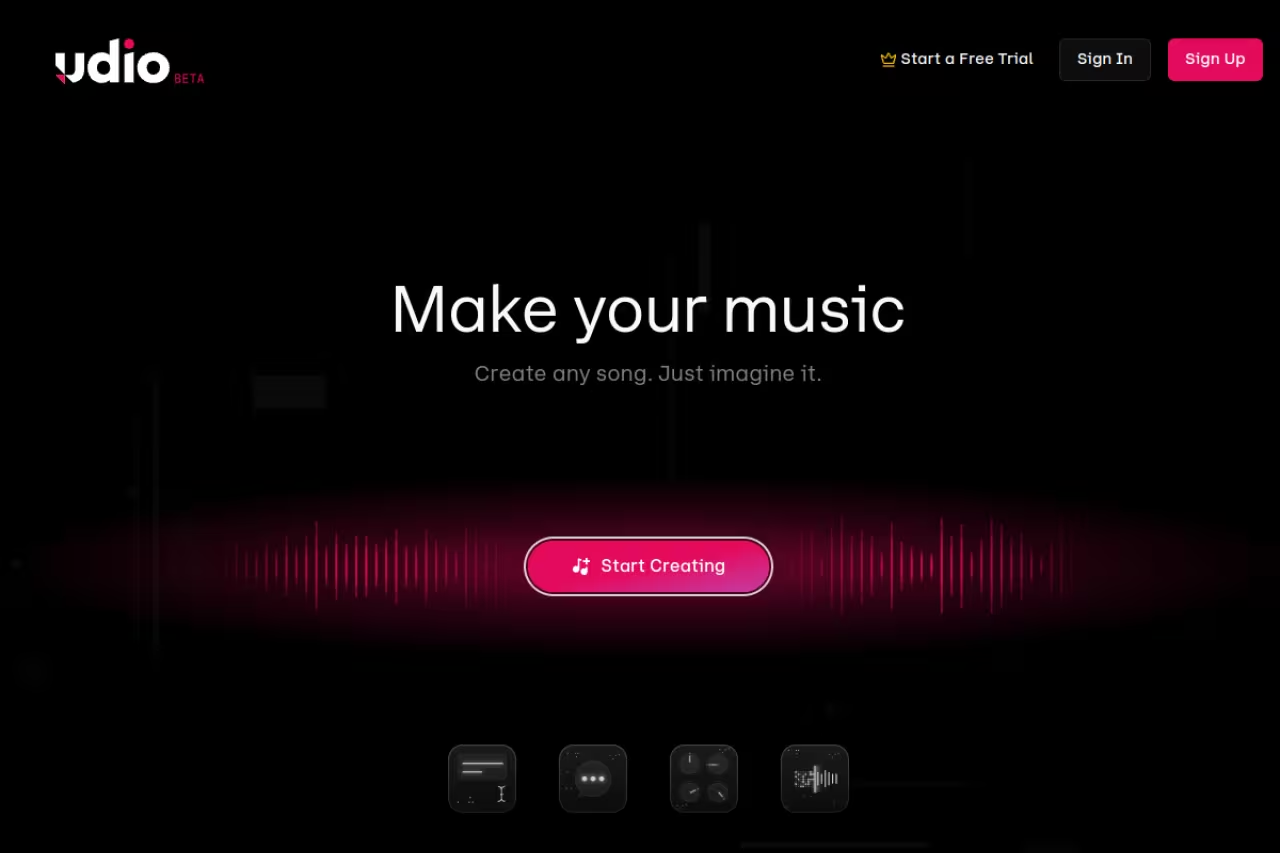
Udio is Suno's main rival, and it wins on raw fidelity. Where Suno gets you 80% of the way in one shot, Udio rewards patience. You generate in short clips, extend them, and refine sections. The output, especially instrumentals and acoustic textures, tends to sound cleaner and less compressed.
Who it's best for: musicians and producers who want to sculpt a track rather than accept a first draft, and anyone who cares about commercial safety going forward.
Pick Udio if audio quality matters most. It rewards patience with clip-by-clip extension and refinement, so it suits musicians and producers who want to sculpt a track, not accept a first draft.
Pricing: a free tier gives roughly 10 credits a day for non-commercial use. Standard is $10/month with 2,400 credits and private songs. Pro is $30/month with 6,000 credits and commercial rights. Each 32-second clip costs about a credit, so a finished song runs 8 to 20 credits depending on how much you extend and rework it.
The big differentiator: Udio settled with Universal Music Group and is building a jointly licensed platform trained on authorized catalogs, due later in 2026, according to Music Business Worldwide. For anyone nervous about copyright, that's a meaningful edge.
The catch: the clip-and-extend workflow has a learning curve. If you want a finished song in 60 seconds with zero fiddling, Suno is faster and less fussy. Udio asks for time.

ElevenLabs Music: the commercial-safe pick
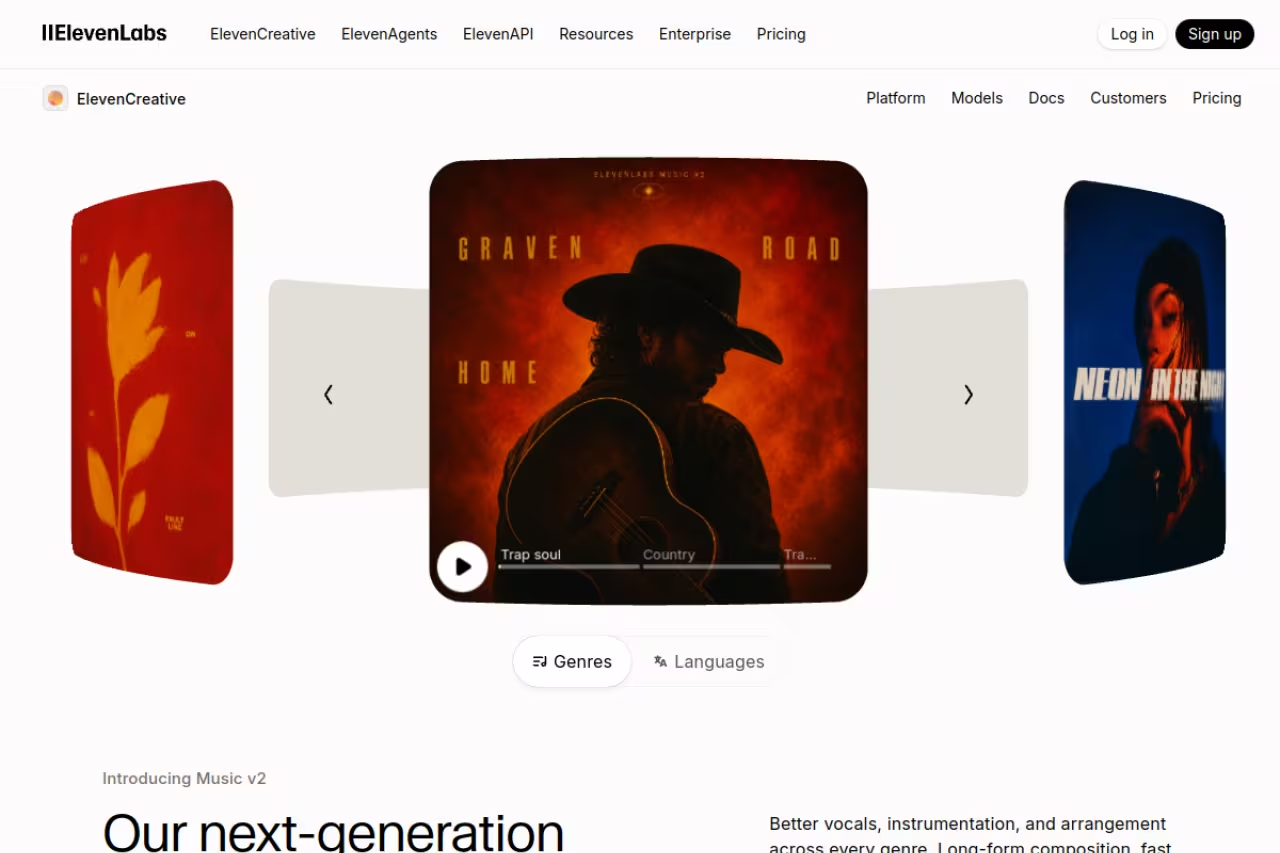
ElevenLabs built its name on voice AI, and its music product carries that same polish. The current Music v2 model handles genre, mood, instruments, and structure, plus inpainting (regenerate one section without redoing the whole track) and multilingual lyrics.
Who it's best for: agencies, businesses, and creators who need music they can legally monetize without losing sleep. This is the one I recommend when a client asks "but can I actually use this in an ad?"
The commercial-safe choice for agencies and businesses that need music they can legally monetize. Tracks are trained on licensed data only, though film, TV and studio games are excluded on self-serve plans.
Pricing: the Starter plan is $5/month and includes a commercial license along with 30,000 credits. The key line from ElevenLabs: every track is trained on licensed data only and cleared for commercial use, except film, TV, and studio games on self-serve plans. That clarity is rare in this category.
The standout is audio quality paired with legal cleanliness. You get professional-grade output and a license you can point a lawyer at.
The catch: ElevenLabs is a voice-first company, and the music tool, while strong, has fewer community features and presets than Suno or Udio. The credit system also gets shared across voice, dubbing, and music, so heavy use burns through your allowance faster than a music-only plan would. If you're building voice agents too, the best AI voice generators guide covers where ElevenLabs sits on that side.
A quick aside: if you're stitching AI music into a larger content workflow alongside writing, voiceover, and video, a single AI subscription like Dupple X bundles access to multiple models so you're not paying eight separate bills. Worth a look if music is one piece of a bigger stack.

Soundraw: royalty-free beds without the claims
Soundraw takes a different approach. Instead of generating a song from a prompt, it gives you a library of AI-composed tracks you customize by mood, genre, length, and energy, then edit section by section. Nothing it produces will ever trigger a YouTube copyright claim, because you generated it.
Who it's best for: YouTubers, podcasters, and video editors who need background music that won't get demonetized.
A smart pick for YouTubers, podcasters and video editors who need background music that will not get claimed. You customize AI-composed tracks section by section, but it is backing music, not songs.
Pricing: the Creator plan is $11.04/month with unlimited MP3 downloads and full royalty-free rights for video, podcasts, ads, and client work. Artist tiers ($19.49 and $23.39/month) add streaming distribution rights, WAV files, and stems but cap your monthly downloads.
The standout is control over structure. You can tell it to drop the intro, intensify the chorus, or shorten the bridge, and it re-edits in place.
The catch: it makes excellent backing tracks, not songs. There are no vocals and no lyrics. If you want something with a singer, this isn't it.

AIVA: for film, game, and orchestral scores
AIVA is the specialist. It was built for composition, leaning into orchestral, cinematic, and game-soundtrack work. If you need a swelling string section under a trailer or a tense loop for a level, AIVA understands that brief better than the generalist tools.
Who it's best for: indie filmmakers, game developers, and content creators who want score-style music rather than pop songs.
The specialist for indie filmmakers and game developers who want orchestral, score-style music. MIDI export and a proper editor appeal to composers, but it is narrow on purpose and weak at vocal pop.
Pricing: there's a free tier with attribution limits. Standard runs about €15/month and Pro about €49/month, with the Pro tier granting full commercial ownership of what you create. Students get a discount on both monthly and annual plans.
The standout is editability. AIVA exports to MIDI and lets you tweak compositions in a proper editor, which composers actually want.
The catch: it's narrow on purpose. Ask it for a catchy pop hook with vocals and you'll be disappointed. Stay in its cinematic lane and it shines.

Beatoven.ai: the budget background option
Beatoven.ai competes directly with Soundraw on background music but undercuts almost everyone on price. It composes royalty-free mood-based tracks for videos, podcasts, and games, with a non-exclusive perpetual license so you can monetize freely.
Who it's best for: budget-conscious creators who need clean background music and nothing fancier.
The budget background option for creators who need clean mood-based tracks and nothing fancier. The license-to-price ratio is hard to beat, but it is instrumental only with narrower variety.
Pricing: the Creator plan is $10/month (or $100/year) for 30 minutes of downloads, and Visionary is $20/month for 60 minutes. Extra minutes cost $3 each. You can generate unlimited tracks free, but downloading requires a plan.
The standout is the price-to-license ratio. Few tools give you commercial rights this cheaply.
The catch: like Soundraw, it's instrumental background music only, and the variety is narrower than the bigger players. Great for a podcast intro, not for a standalone release.

Soundful: consistent brand sound
Soundful is the pick if you need a repeatable sonic identity. Its template system generates multiple variations that keep the same core sound, so a brand can ship dozens of clips that feel like one family. It also offers full ownership and a "royalty-free for life" guarantee.
Who it's best for: brands, agencies, and businesses standardizing audio across many videos or ads.
Choose Soundful when you need a repeatable sonic identity across many clips, as brands and agencies do. The template approach keeps variations related, but it is less flexible for one-off creative songs.
Pricing: Premium is $4.99/month, Pro is $14.99/month, and Business starts at $49.99/month, with a free tier for personal projects. The Business tier adds API access and full ownership.
The standout is consistency. If you've ever needed twenty intro stings that all sound related, this solves it.
The catch: that same template-driven approach makes it less flexible for one-off creative songs. It's a brand-music engine first.

Mubert: generative streams for streamers
Mubert generates continuous, royalty-free music from text prompts, and it's built for situations where you need music that never stops: Twitch streams, store playlists, apps, and ambient backgrounds.
Who it's best for: streamers and developers who need endless, loop-safe audio rather than a single track.
Built for streamers and developers who need music that never stops. The generative stream keeps producing fresh audio, but no plan allows distribution on Spotify and the output is functional, not memorable.
Pricing: a free Ambassador plan gives 25 tracks a month with attribution. Creator is around $11.69/month (500 tracks, no attribution), with Pro at $39/month and Business at $199/month extending rights to ads and campaigns.
The standout is the generative stream model. It keeps producing fresh, on-brand audio indefinitely.
The catch: no plan lets you distribute Mubert tracks on Spotify or other streaming platforms, and the music skews functional rather than memorable. It's wallpaper audio, which is exactly the point for its use case but a limit if you wanted a hit.
How to choose
Match the tool to the job, not the hype:
- You want a full song with vocals, fast. Start with Suno. If you'll publish it commercially and want legal cover, use Udio (and watch for its licensed platform) or ElevenLabs Music instead.
- You need background music that won't get copyright-claimed. Soundraw or Beatoven.ai. Beatoven wins on price, Soundraw on section-level editing.
- You're scoring film or games. AIVA, full stop.
- You're a brand standardizing audio. Soundful's templates.
- You need endless ambient audio for a stream or app. Mubert.
The biggest decision in 2026 isn't quality anymore, it's licensing. Suno makes the best-sounding songs but carries active lawsuits. Udio and ElevenLabs Music are betting on licensed training data. If money rides on the output, weigh that before you weigh the sound. For a wider view of how these fit into a full creative stack, browse our top AI tools directory.
Want help wiring music into a broader content pipeline? Dupple X gives you one subscription across the models you'd otherwise juggle separately.
FAQ
What is the best AI music generator in 2026?
For most people, Suno is the best overall. It produces complete songs with vocals faster than anything else and has a free tier that's actually usable. If commercial licensing matters more than raw speed, ElevenLabs Music and Udio are stronger picks because both lean on licensed training data.
Can I legally use AI-generated music commercially?
It depends on the tool. ElevenLabs Music is trained on licensed data and explicitly cleared for commercial use on paid plans. Udio grants commercial rights on its Pro tier and is building a label-licensed platform. Suno grants commercial rights on Pro plans but faces active lawsuits from major labels, so there's more legal uncertainty around its output.
Is there a free AI music generator?
Yes. Suno offers 50 credits daily on its free plan, Udio gives about 10 credits a day, AIVA and Mubert have free tiers with attribution requirements, and Soundful has a free plan for personal use. Free tiers are non-commercial, so you'll need a paid plan to monetize anything.
Which AI music tool is best for YouTube background music?
Soundraw and Beatoven.ai are built for this. Both generate royalty-free tracks that won't trigger copyright claims, and both include commercial licenses on paid plans. Beatoven.ai is cheaper at $10/month; Soundraw offers more control over song structure for $11.04/month.
What's the difference between Suno and Udio?
Suno is faster and easier, giving you a finished song in one shot, which suits beginners and quick output. Udio produces cleaner audio quality and rewards refining tracks clip by clip, which suits producers. The other big difference is licensing: Udio settled with Universal Music Group and is building a licensed platform, while Suno is still in litigation with the major labels.
Can AI music generators clone my own voice?
Suno's v5.5 added a feature called Voices that lets Pro and Premier subscribers record or upload their own singing and use that vocal identity in generated tracks. It includes a verification layer to prevent misuse. Most other generators don't offer voice cloning for music yet.
Related guides
Some offers on this page may be paid placements or contain affiliate links.
Across our whole catalogue the median is $24 a month and 33% of tools advertise a free tier. Figures are the lowest recurring monthly price quoted in our own review of each tool, read on 2026-08-19. Full method and every category.
