
Best NPS Software in 2026: 8 Tools Compared for Net Promoter Score Surveys

Key facts8 tools compared: Zonka Feedback, Delighted, Retently, Refiner, Hotjar, AskNicely…
- 8 tools compared: Zonka Feedback, Delighted, Retently, Refiner, Hotjar, AskNicely, SurveySparrow, Qualtrics
- Zonka Feedback (best for: Omnichannel all-in-one): Custom (14-day trial)
- Delighted (best for: Fastest setup for any team): Free to $249/mo
- Retently (best for: SaaS product NPS): $99-$299/mo
- Refiner (best for: In-app SaaS microsurveys): Free to $99/mo
Net Promoter Score is one number from one question: how likely are you to recommend us, 0 to 10? Fred Reichheld introduced it in a 2003 Harvard Business Review article, and about two-thirds of the Fortune 1000 now run it. The question is simple. Picking the software to run it is not.
The mess is that "NPS tool" covers wildly different products. Some are dead-simple survey senders you set up in 30 minutes. Some are in-app widgets built for SaaS products. Some are enterprise CX suites that cost more than a junior hire's salary. Buy the wrong category and you either outgrow it in a month or drown in features you never touch.
I compared how the same NPS program, an email survey, an in-app survey, and a follow-up workflow, is handled across eight of these tools. If you just want the answer, Zonka Feedback is my top pick for a real multi-channel NPS program, because it measures loyalty across every channel and gives you the workflows to act on the score. For a smaller team that just wants a score this week, Delighted is the fastest starting point, because it gets you collecting real responses faster than anything else here. But the right pick depends on whether you're a product team, a service business, or an enterprise. This guide is for founders, marketers, and operators who want to measure loyalty without turning it into a six-week procurement project.
Quick comparison
| Tool | Best for | Price | Standout |
|---|---|---|---|
| Zonka Feedback | Omnichannel all-in-one | Custom (14-day trial) | Kiosk, SMS, email, in-app |
| Delighted | Fastest setup for any team | Free to $249/mo | Live in 30 minutes |
| Retently | SaaS product NPS | $99-$299/mo | AI feedback analysis |
| Refiner | In-app SaaS microsurveys | Free to $99/mo | Event-triggered targeting |
| Hotjar | NPS plus qualitative data | Free to $99/mo | Pairs surveys with recordings |
| AskNicely | Frontline service teams | Custom | Per-employee scores |
| SurveySparrow | Conversational surveys | Free to $19+/mo | Chat-style response rates |
| Qualtrics | Enterprise CX programs | $25k+/yr | Depth and text analytics |

Zonka Feedback: omnichannel NPS with AI analysis and built-in loop-closing
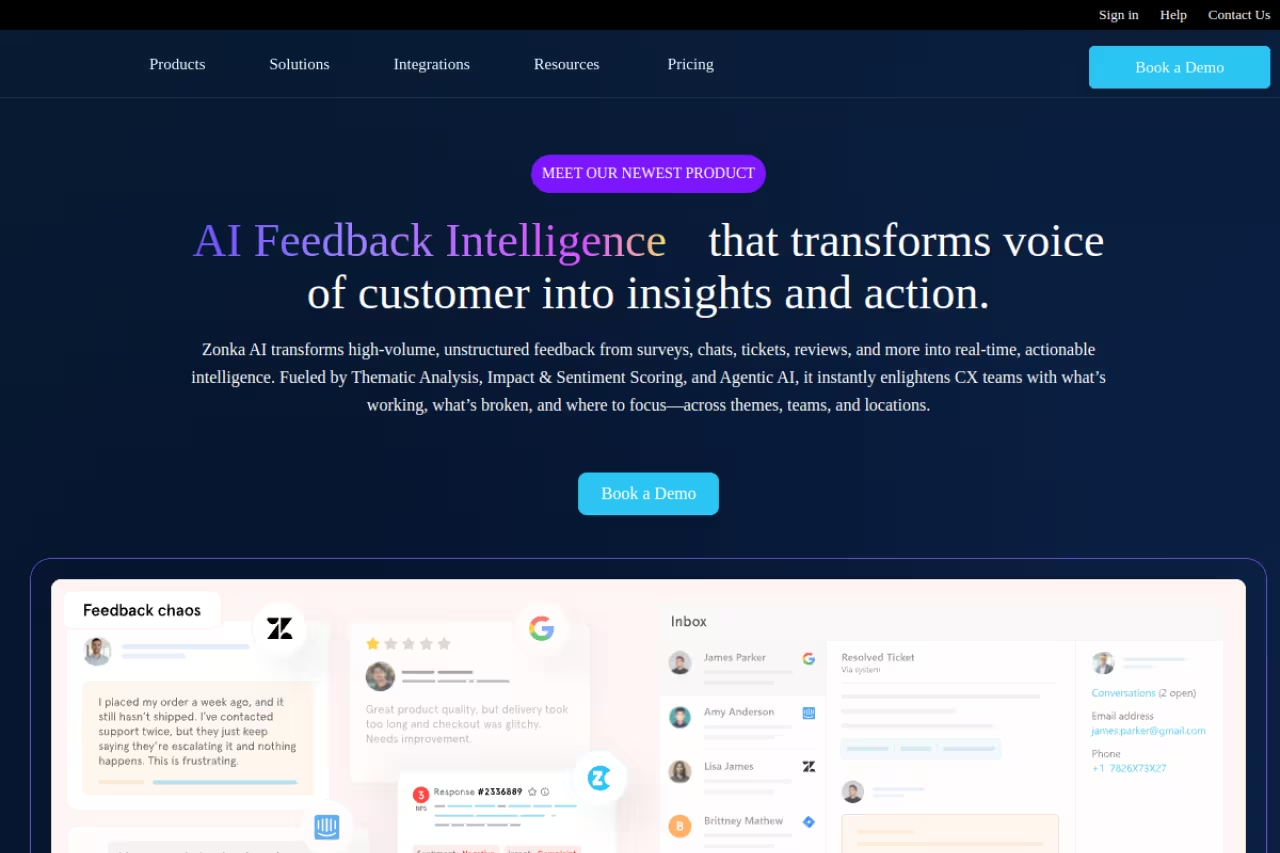
Zonka Feedback is the most complete NPS platform on this list if you measure loyalty across more than one channel. It runs both transactional and relationship NPS surveys across email, SMS, WhatsApp, web, in-app, and physical kiosks, so whether your customers are in an inbox, on their phone, or standing at a front desk, the same program reaches them.
The most complete pick if you measure loyalty across channels, with AI open-text analysis, real-time detractor alerts and built-in loop-closing. Custom pricing and more setup make it more platform than a small periodic email pulse needs.
Where it pulls ahead is what happens after the response lands. The AI analyzes open-text answers automatically and surfaces what's actually driving your score up or down, not just the number. Real-time detractor alerts route to the right person with full customer context, so follow-up happens within hours instead of at the next quarterly review. And you can break NPS trends out by location, team, product, and agent to see exactly where loyalty is being won or lost.
The standout: built-in loop-closing. A centralized inbox, case assignment, and automated follow-up mean the platform runs the response workflow, not just the measurement. Combined with eNPS for employee loyalty in the same tool, it's a full program rather than a survey sender.
custom, based on response volume and AI data credits, with a 14-day free trial (no card) to test before committing.
The catch: the breadth means more setup than a single-purpose email survey tool, and custom pricing means you'll need a quote rather than a public flat tier. If all you need is a periodic email pulse to a small list, that's more platform than the job requires, but for a real, multi-channel NPS program, it's the most capable option here.

Delighted: the fastest way to get a real NPS program running
Delighted is the one I'd hand to a non-technical founder and walk away. It's owned by Qualtrics but priced and built for people who want a score this week, not a CX transformation. You pick NPS, drop in your audience, choose email or link or web, and you're collecting. I had responses coming in under half an hour.
The one to hand a non-technical founder who wants a score this week, with a dashboard that needs no configuration. Response caps are tight and scale fast, with 500 responses for $249 getting expensive on large lists.
The free plan gives you 25 responses and one user, which is enough to test the waters. Paid plans run $19/mo for 50 responses (Starter), $39/mo for 100 (Growth), $149/mo for 250 (Advanced), and $249/mo for 500 (Premium). All paid tiers include unlimited surveys, branding, and 35+ integrations.
The standout: Speed and clarity. The dashboard shows your score, trend, and verbatim comments without you configuring anything. Templates for NPS, CSAT, and CES are built in.
The catch: the response caps are tight and they scale fast. If you're surveying a large list every month, 500 responses for $249 gets expensive, and you'll hit the ceiling sooner than you expect. Delighted is built for clean, periodic relationship surveys, not high-volume transactional firehoses.

Retently: NPS built for SaaS retention
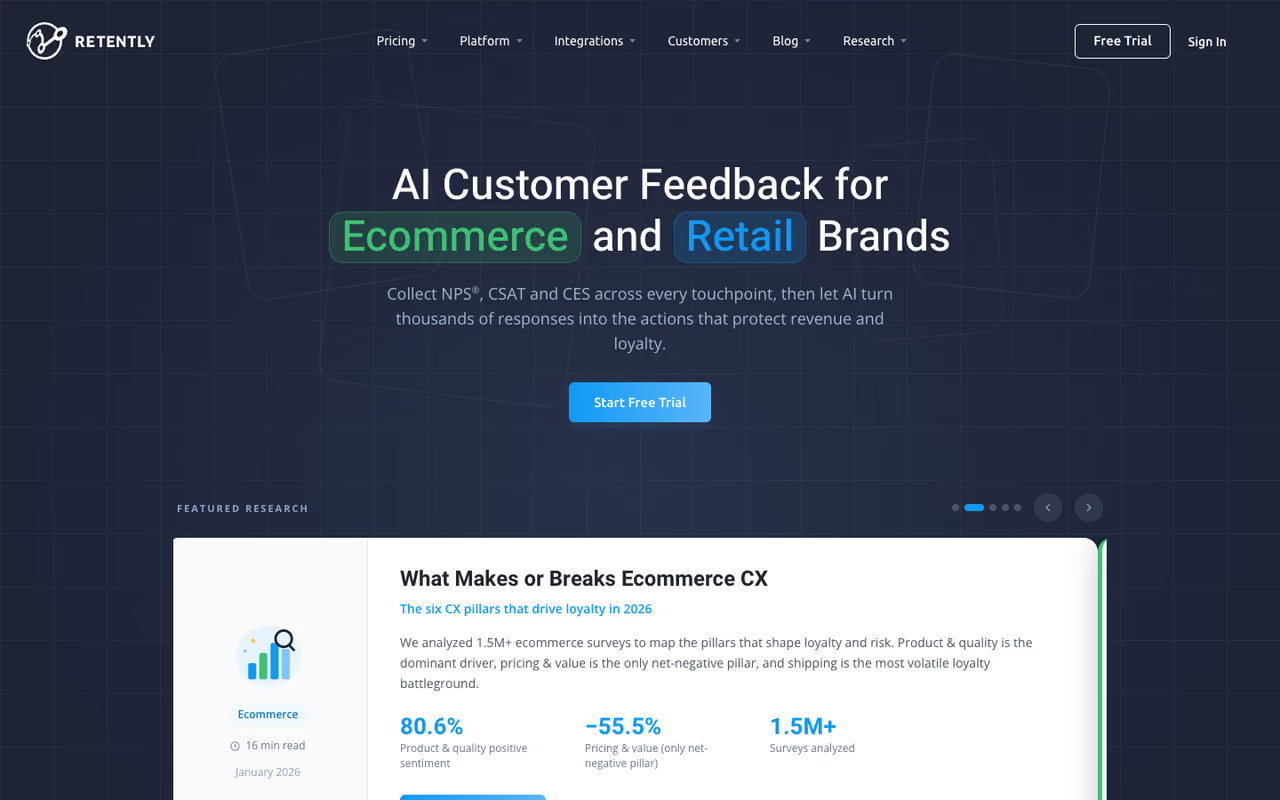
Retently is what I'd pick if I were running a subscription product and cared about churn. It's tuned for the SaaS playbook: survey by lifecycle stage, segment by plan, and tie the score back to who's at risk. The AI feedback analysis tags open-ended comments into themes automatically, which saved me from reading 200 responses by hand.
Pick it for a subscription product where churn matters, with lifecycle-stage surveys, AI tagging of comments and instant detractor alerts. The $99 entry price has no permanent free tier, and a big list can push you to the $299 tier.
The Ecommerce Basic plan is $99/mo for 2,500 surveys, 10 campaigns, and 3 seats. Ecommerce Pro jumps to $299/mo for 20,000 surveys and 10 seats. Enterprise is custom and adds Salesforce. There's a 14-day free trial with no card required.
The standout: Multi-channel campaigns plus genuinely useful AI tagging and benchmarking. Alerts fire to Slack, Teams, or email the moment a detractor comes in, so you can close the loop fast.
Where it falls short: the entry price is $99 with no permanent free tier, so it's not where you start if you have 50 customers. The survey-count model also means a big list can push you to the $299 tier quicker than the response counts at simpler tools.

Refiner: in-app surveys that product teams actually get answered
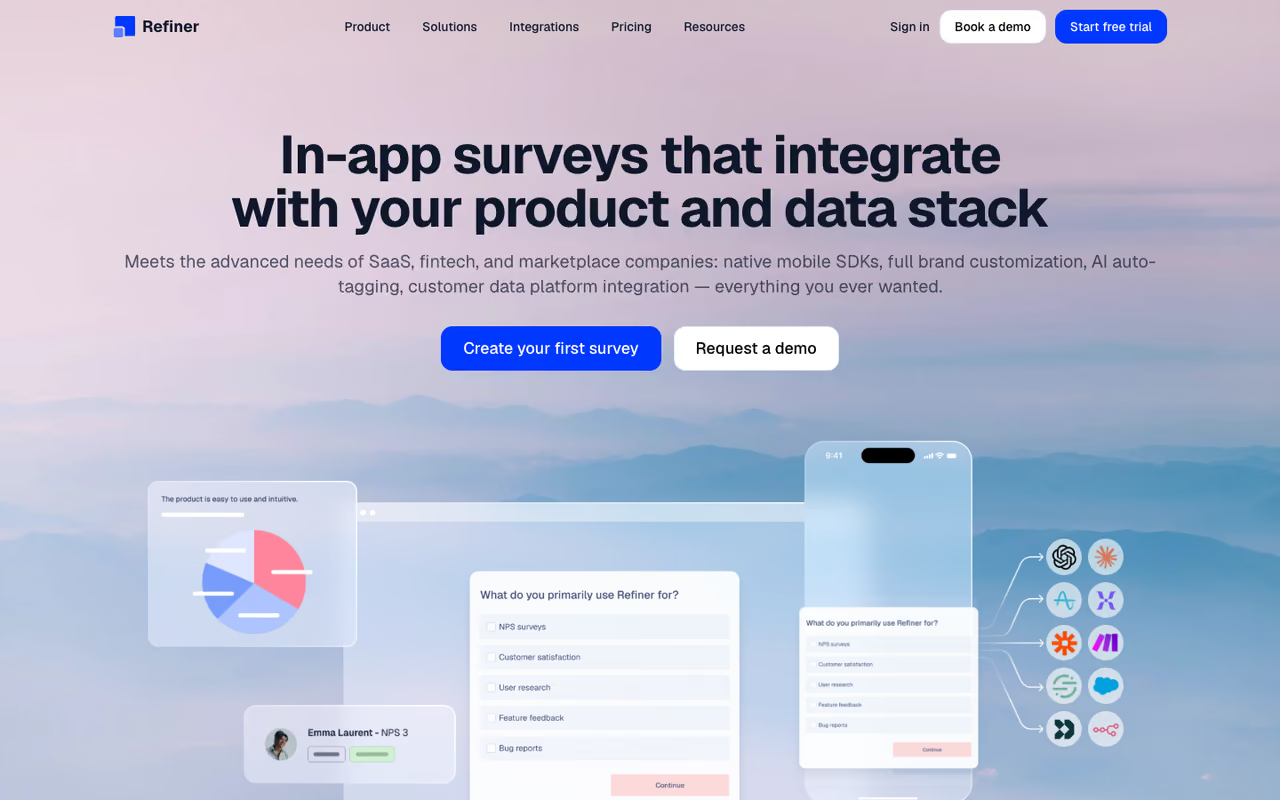
Refiner solves a specific problem: email NPS surveys get ignored, but a microsurvey that pops up while someone is using your product gets answered. It's built for web and mobile apps, and the targeting is the whole point. You can trigger an NPS prompt after a user hits a milestone, views a page, or matches an attribute you pass in.
Choose it when email NPS gets ignored and you want contextual in-app surveys triggered by user events, with unlimited responses on paid plans. It needs engineering involvement and is the wrong tool for a brochure site.
The free plan covers 25 responses per month, and paid plans start at $99/mo billed on monthly active users, with unlimited survey responses on every paid tier. That MAU-based model is honest: you pay for reach, not for each answer.
The standout: Event-triggered targeting and unlimited responses on paid plans. Because the survey appears in-context, response rates tend to beat email by a wide margin.
The catch: it needs engineering involvement. Installing the SDK and wiring up event triggers isn't a no-code afternoon, and if your "product" is a brochure site rather than an app, Refiner is the wrong tool. This is for teams with a real product surface to survey inside of.
If you're building a product-led motion and weighing the wider stack, our roundup of the best AI tools for startups covers the analytics and feedback layer that sits next to this.

Hotjar: NPS plus the "why" behind the score
Hotjar earns its place because it pairs NPS with session recordings and heatmaps. A score tells you something is wrong; Hotjar's recordings let you watch the friction that made someone a detractor. After the Contentsquare acquisition completed in 2025, the surveys live under the "Ask" product line.
Pick it for NPS plus the why, since you can watch the recording of a detractor's session. It is a behavior-analytics product with surveys attached, so score reporting is thinner than a dedicated tool, and pricing is a moving target during the migration.
There's a real free plan: Ask Basic gives you 20 survey responses per month, and Observe Basic captures 35 daily sessions. Paid Voice of Customer plans start around $99/mo, with the broader platform moving to a unified $49/mo Growth tier as the Contentsquare migration rolls out through 2026.
The standout: Context. Running an NPS poll and then watching the recording of a detractor's session is genuinely useful, and you can't do that in a pure survey tool.
Where it falls short: Hotjar is a behavior-analytics product with surveys attached, not an NPS-first platform. The reporting around scores, segmentation, and benchmarking is thinner than what a dedicated tool gives you. The ongoing platform migration also makes pricing a moving target right now.

AskNicely: the pick for frontline service businesses
AskNicely is the odd one out, in a good way. It's built for businesses with frontline staff: hospitality, home services, fitness, healthcare, property management. The differentiator is per-employee scores. Every technician or location sees their own NPS on a dashboard, which turns the metric into a coaching tool instead of a quarterly slide.
The pick for frontline service businesses, where per-employee and per-location scores turn NPS into a coaching tool. Pricing is custom only, and the model is overkill for a software team without a frontline workforce.
Custom only. You contact sales, and from public reports it tends to start around $300/mo for basic plans and scales up. There's no public self-serve tier.
The standout: Real-time coaching prompts and per-person dashboards. If your problem is "how do I get 40 technicians to care about customer feedback," this is the tool designed for exactly that.
The catch: no pricing transparency and overkill for a software product. If you're a SaaS team without a frontline workforce, the entire model misses your use case, and you'll pay for capabilities you don't need.

SurveySparrow: conversational surveys that get finished
SurveySparrow reframes the survey as a chat. Instead of a wall of questions, you get one prompt at a time in a conversational flow, which lifts completion rates. It's a full survey platform that does NPS, CSAT, and CES under its CX suite, not an NPS specialist.
Choose it for conversational surveys that lift completion and a broad toolkit beyond NPS, with a real free plan. Higher tiers are quote-only, and the quarterly response caps feel stingy if your volume is uneven.
A free plan covers 75 responses per quarter with one user. Paid plans start at $19/mo (Basic), with Starter, Business, and Enterprise tiers above it. Note the billing is on a quarterly-minimum cadence and higher tiers are quote-only, which complicates budgeting.
The standout: The conversational format genuinely improves completion, and you get a real free tier plus omnichannel distribution (email, web, SMS, link).
Where it falls short: the "contact us" wall on mid and upper tiers makes it hard to plan spend, and the quarterly response caps on lower plans feel stingy if your volume is uneven across months.
Qualtrics: enterprise depth (and enterprise price)
Qualtrics is the heavyweight. Its CustomerXM platform does NPS as one small piece of a much larger CX and research system, with text analytics, statistical rigor, and predictive modeling that nothing else here approaches.
The heavyweight for large enterprises running formal CX programs, with best-in-class text analysis and segmentation. Deployments start around $25,000/year, so it is absurd for anyone who just needs to know their NPS.
Meaningful deployments start around $25,000/year and climb into six figures once AI text-analytics modules are added. This is procurement-and-contract territory, not a credit card.
The standout: Analytical depth. The text-analysis engine and segmentation are genuinely best-in-class, and at enterprise scale that depth pays off.
Where it falls short: the price and complexity make it absurd for anyone under a few hundred employees. If you just need to know your NPS, buying Qualtrics is like renting a forklift to move a box. Start anywhere else on this list.
How to choose the right NPS tool
Skip the feature-comparison spreadsheet. Answer three questions instead.
Where do your customers live? If they're inside a web or mobile product, an in-app tool like Refiner or Hotjar gets dramatically higher response rates than email. If they're a list of contacts or a frontline you serve in person, Delighted or AskNicely fits better. If they're spread across both digital and physical touchpoints, Zonka Feedback is the one here built to span them, with kiosk, SMS, and on-site surveys alongside email and in-app.
What happens after the score? A number alone is vanity. If you'll act on detractor comments, prioritize tools with strong alerts and loop-closing (Retently, AskNicely). If you want to understand the why, pair NPS with behavioral data (Hotjar).
What's your scale and budget? Under 100 customers, start free with Delighted or Hotjar. SaaS with real volume, go Retently or Refiner. Enterprise with a CX team, Qualtrics. Most teams overestimate what they need on day one, so start smaller than you think and upgrade when you hit a wall.
For the broader stack around customer feedback and analytics, our top tools directory and the best AI customer service tools roundup are good next reads.
If you want a steady feed of which tools are actually worth your time, Dupple X tracks the AI and SaaS tooling our community is testing, so you're not learning about a better option six months late. Try it free for a year.
FAQ
What is the best NPS software for a small business?
For most small businesses, Delighted is the best starting point. The free plan covers 25 responses, setup takes under 30 minutes, and paid plans start at $19/mo. If your customers use a web or mobile product, Hotjar's free Ask plan (20 responses/month) or Refiner's free tier (25 responses/month) are strong alternatives that survey inside the product itself.
How much does NPS software cost?
It ranges enormously. Simple tools like Delighted start free and go to $249/mo. SaaS-focused tools like Retently and Refiner start at $99/mo. Enterprise platforms like Qualtrics begin around $25,000/year. Most teams under 100 customers can run a real NPS program for free or under $40/month.
What is a good NPS score?
NPS runs from -100 to +100. Anything above 0 means you have more promoters than detractors. Above +30 is generally considered good, above +50 is excellent, and above +70 is world-class. Benchmarks vary heavily by industry, so compare against your sector rather than a universal number.
Should I run NPS by email or in-app?
In-app surveys triggered while someone uses your product get far higher response rates than email, because you're catching users in context. If you have a web or mobile product, use an in-app tool like Refiner or Hotjar. For relationship surveys to a contact list, or for businesses without a digital product, email tools like Delighted work better.
Can I run NPS for free?
Yes. Delighted (25 responses), Hotjar Ask (20/month), Refiner (25/month), and SurveySparrow (75/quarter) all have permanent free plans that are enough to validate your NPS program before you pay. They cap responses, so you'll upgrade once you're surveying regularly, but they're real free tiers, not trials.
What's the difference between NPS and CSAT?
NPS measures long-term loyalty with one relationship question ("how likely are you to recommend us"). CSAT measures satisfaction with a specific interaction or transaction, usually right after it happens. Most tools here do both, so you don't have to choose, but they answer different questions: NPS tells you about the relationship, CSAT about the moment.
Related guides
Some offers on this page may be paid placements or contain affiliate links.
