
The Best Marketing Automation Software in 2026

Key facts9 tools compared: HubSpot, ActiveCampaign, Brevo, Klaviyo, Customer.io, Omnisend, Marketo, MC…
- 9 tools compared: HubSpot, ActiveCampaign, Brevo, Klaviyo, Customer.io, Omnisend, Marketo, MC Account Engagement, GetResponse
- HubSpot (best for: All-in-one B2B teams): Free, Pro from $890/mo
- ActiveCampaign (best for: Automation depth on a budget): $15/mo (annual)
- Brevo (best for: Budget senders, high volume): $9/mo
- Klaviyo (best for: Ecommerce): Free, paid from ~$30/mo
Marketing automation has a reputation problem. Half the tools that call themselves "automation platforms" are really just email senders with an if/then builder bolted on. The other half are enterprise machines that need a dedicated ops person and a six-month rollout before they send a single message.
I've spent the last few weeks comparing pricing pages, documentation, and public user reviews for each tool, tracking where each one either saves you hours or quietly bills you for contacts you forgot you had. The gap between the marketing site and the actual product is wider here than in almost any software category covered on this site. Pricing pages hide the overage math. "Unlimited" usually has an asterisk.
If you want the short version: for most small and mid-sized B2B teams, HubSpot is still the default for a reason, and ActiveCampaign is the better-value pick if you mainly care about the automation engine. Ecommerce brands should look at Klaviyo first. Below I break down nine tools, who each one actually fits, and where each one stings.
Quick comparison
| Tool | Best for | Starting price | Standout |
|---|---|---|---|
| HubSpot | All-in-one B2B teams | Free, Pro from $890/mo | CRM + marketing in one place |
| ActiveCampaign | Automation depth on a budget | $15/mo (annual) | Visual flow builder |
| Brevo | Budget senders, high volume | $9/mo | Pay by emails, not contacts |
| Klaviyo | Ecommerce | Free, paid from ~$30/mo | Predictive ecommerce flows |
| Customer.io | Product-led SaaS | $100/mo | Event-driven messaging |
| Omnisend | Small ecommerce | Free, paid from $16/mo | Email + SMS bundled |
| Marketo | Enterprise demand gen | Custom (~$895+/mo) | Account-based depth |
| MC Account Engagement | Salesforce shops | From $1,250/mo | Native Salesforce sync |
| GetResponse | Webinars + funnels | From ~$19/mo | Built-in webinar hosting |
HubSpot Marketing Hub
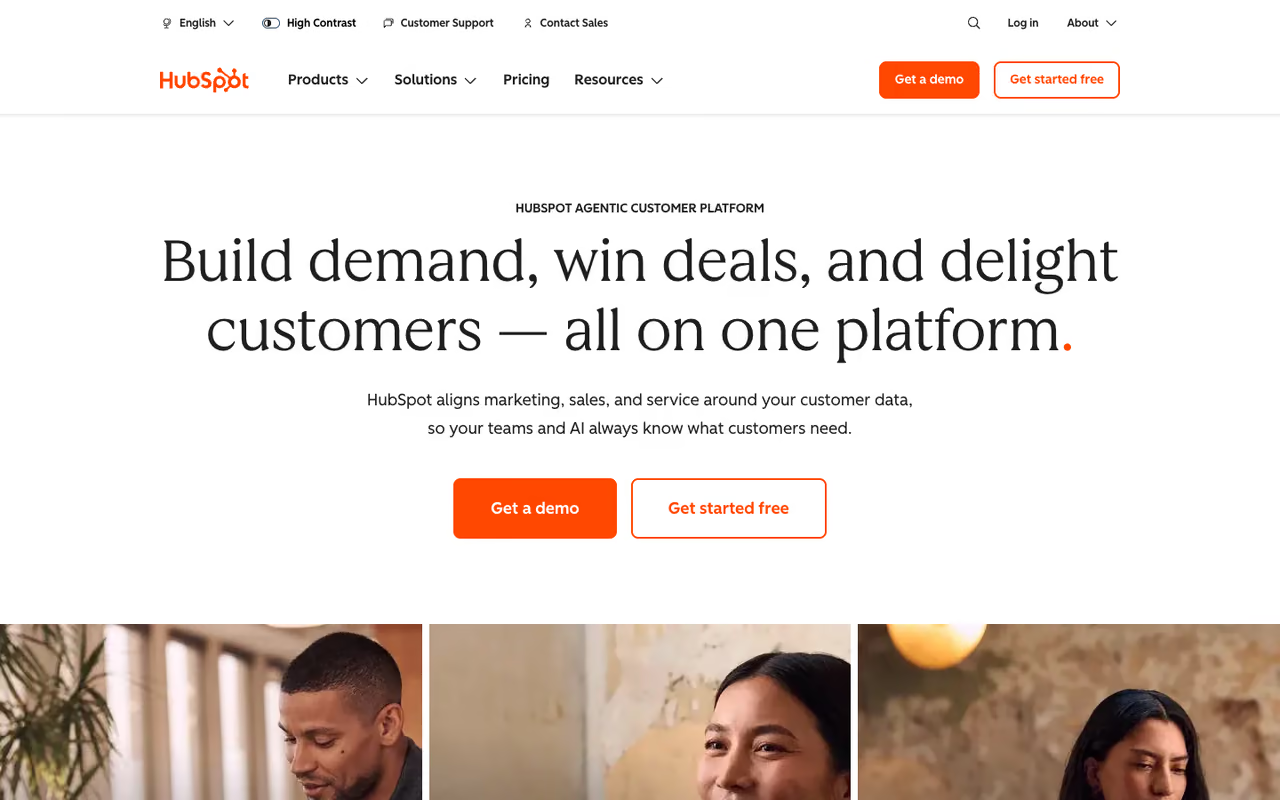
HubSpot is the tool people land on when they want marketing automation and a CRM that actually talk to each other without a Zapier graph holding it together. Email, forms, landing pages, lead scoring, and reporting all sit on top of the same contact record, so a sales rep sees exactly which campaigns a lead touched.
Who it's best for: B2B teams that want one system for marketing and sales and are willing to pay for the convenience. It's strongest when several people use it daily.
The pick for B2B teams that want marketing and sales on one system, with attribution and pipeline reports that are accurate out of the box. Real automation starts at Professional, and the mandatory onboarding fee there catches many buyers off guard.
There's a genuinely usable free tier. The Starter plan runs $20 per seat per month on annual billing. The real automation lives in Professional at $890/month (2,000 marketing contacts, 3 seats), and Enterprise jumps to $3,600/month. Note the mandatory $3,000 onboarding fee on Professional, which a lot of buyers don't see coming.
The standout: Reporting. Because everything runs on one data model, attribution and pipeline reports are accurate out of the box instead of being a quarterly reconciliation project.
The catch: Contacts get expensive fast. Going from 2,000 to 5,000 marketing contacts adds roughly $150/month in overages, and that's before add-ons. For a small team that just needs solid automation, Professional is overkill and overpriced.

ActiveCampaign
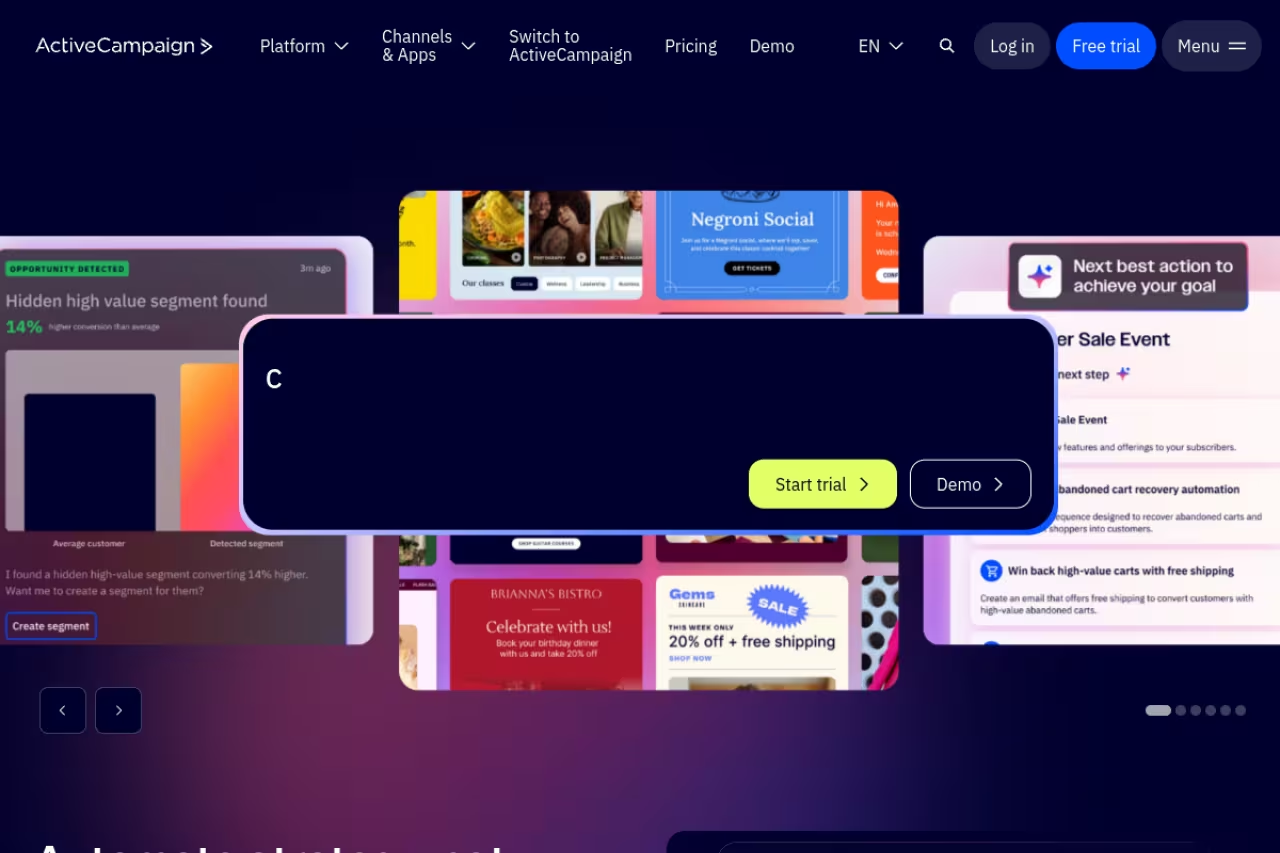
If your main job is building smart, behavior-driven automations and you don't need a full CRM suite, ActiveCampaign gives you most of HubSpot's automation power at a fraction of the cost. The visual flow builder is the one I reach for when a sequence has real branching logic: tag someone, wait for a click, split the path, send an SMS, update a deal stage.
Who it's best for: Small businesses and solo operators who want serious automation without enterprise pricing.
The choice for small businesses and solo operators who want serious behavior-driven automation without a full CRM suite or enterprise pricing. Pricing scales on contacts, so a large but lightly emailed list costs as much as an engaged one.
The Starter plan begins at $15/month for 1,000 contacts on annual billing ($19 monthly). Plus, Pro, and Enterprise add deeper segmentation, more users, and a contact multiplier that raises your effective limit. Pro is where most growing teams land.
The standout: Automations that combine email, SMS, and CRM actions in a single flow. You can build a lifecycle program that most "cheaper" tools simply can't express.
Where it falls short: Pricing scales on contacts, so a large but lightly-emailed list costs the same as an engaged one. The interface also has a learning curve, and the email template editor feels dated next to Klaviyo or Brevo.

Customer.io
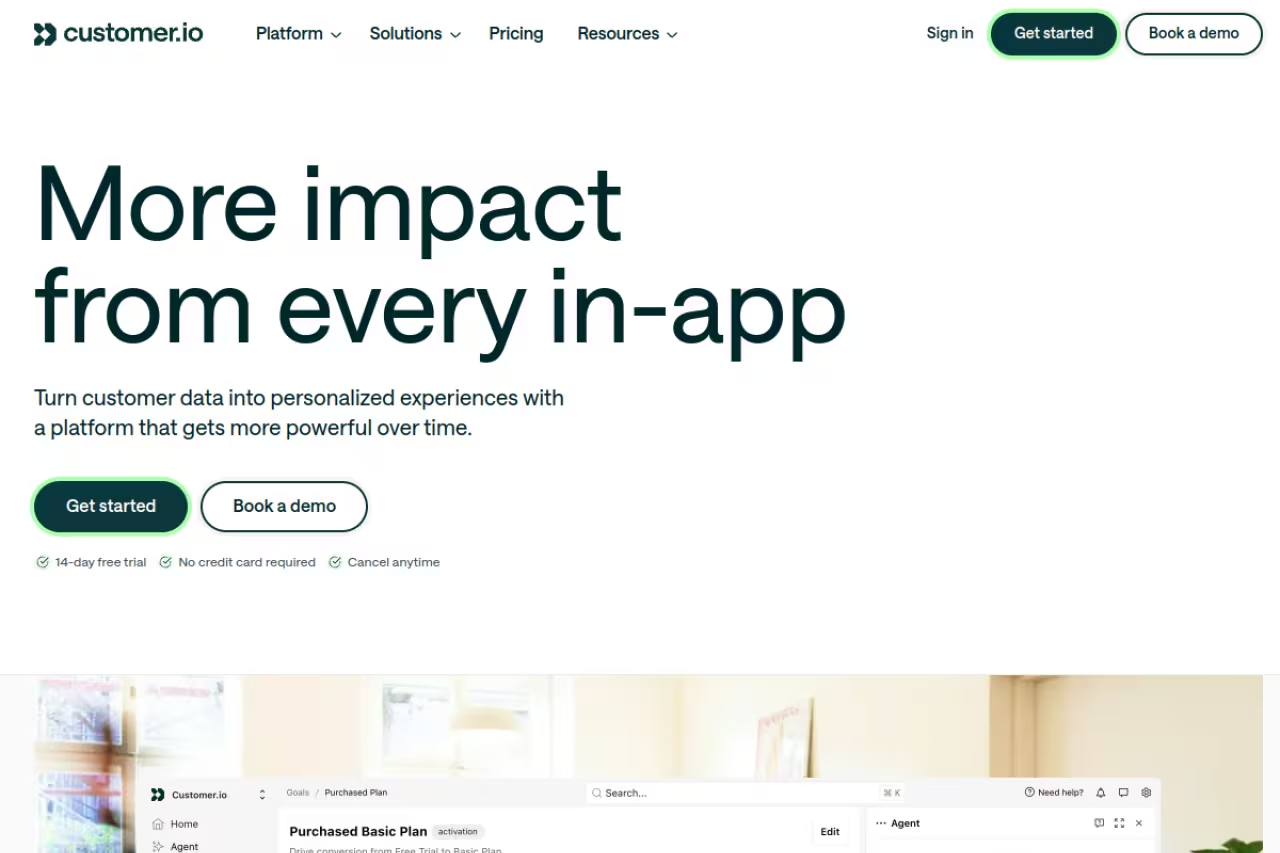
Customer.io is the pick for product-led companies that want to trigger messages off real product events, not just opens and clicks. Instead of importing a list and blasting it, you pipe in events like "completed onboarding step 3" or "hit usage limit" and build messaging around actual behavior across email, push, in-app, and SMS.
Who it's best for: SaaS and mobile teams with a developer or two who can wire up event tracking. This is lifecycle and behavioral messaging, not newsletter sending.
Pick it if you are a SaaS or mobile team with a developer or two who can wire up event tracking and trigger messages off real product behavior. It is lifecycle messaging, not newsletter sending, and it needs engineering help to deliver full value.
The Essentials plan starts at $100/month for up to 5,000 profiles and 1 million emails. Premium starts at $1,000/month billed annually. Eligible early-stage startups can get up to 12 months free through the startup program, which is worth checking before you commit.
The standout: The data layer. Because messaging is driven by events and attributes rather than static lists, your segments stay accurate as user behavior changes in real time.
The catch: You need engineering help to get full value. Without clean event data flowing in, Customer.io is an expensive way to send broadcasts. The $100 floor also makes it a poor fit for tiny lists.
If you're assembling a modern AI-and-automation stack and want a second opinion on what's worth paying for, the team behind Dupple X tracks this category closely.

Brevo
Brevo (formerly Sendinblue) flips the usual model: you pay for emails sent, not contacts stored. That single difference makes it dramatically cheaper for anyone with a big list they email occasionally, which describes a lot of B2C and content brands.
Who it's best for: Budget-conscious teams with large or growing contact lists and moderate send frequency.
The budget-friendly option for large or growing lists that you email occasionally, because you pay for emails sent, not contacts stored. The automation builder is not as deep as ActiveCampaign's, and SMS and WhatsApp are billed as separate credits.
A free tier covers up to 300 emails per day. The Starter plan begins at $9/month, and Business starts at $18/month for 5,000 emails with landing pages, multi-user access, and priority support. Higher volumes scale predictably.
The standout: The volume-based pricing. For a list of 50,000 contacts you email twice a month, Brevo can cost a fraction of what a per-contact tool charges.
Where it falls short: The automation builder is capable but not as deep as ActiveCampaign's, and deliverability on the cheapest shared-IP plans can wobble if you don't warm things up. SMS and WhatsApp are billed as separate credits.
Klaviyo
Klaviyo is the default for ecommerce, full stop. It plugs directly into Shopify, BigCommerce, and WooCommerce, then uses purchase and browse data to power flows like abandoned cart, post-purchase, and win-back that come pre-built and actually convert.
Who it's best for: Online stores that want revenue attribution per email and SMS, not just open rates.
The default for online stores that want revenue attribution per email and SMS, with pre-built flows like abandoned cart and win-back. Costs climb steeply as your list grows, and it is the wrong tool for B2B or non-commerce use.
Free up to 250 contacts and 500 sends. The Email plan runs about $30/month at 1,000 contacts and scales with your active profile count. SMS is billed separately on top. As of the February 2025 change, you're charged on active profiles (people you can actually email), which is fairer than counting suppressed contacts.
The standout: Predictive analytics. Klaviyo estimates customer lifetime value and predicted next order date, then lets you segment on those, which is genuinely useful for ecommerce.
The catch: Costs climb steeply as your list grows, and adding SMS roughly doubles the bill. For B2B or non-commerce use cases, you're paying for ecommerce features you'll never touch.

Omnisend
Omnisend is the lighter, cheaper ecommerce alternative to Klaviyo. It bundles email, SMS, and web push into one plan with the same core flows, aimed at smaller stores that find Klaviyo's pricing painful.
Who it's best for: Small and mid-sized ecommerce brands that want Klaviyo-style automation on a tighter budget.
A lighter, cheaper Klaviyo alternative for small and mid-sized ecommerce brands, with email, SMS and web push in one plan. Reporting and predictive features are not as deep, and very large brands eventually outgrow it.
A free plan covers 250 contacts, 500 emails/month, 60 SMS, and 500 web push. The Standard plan starts at $16/month for 500 contacts (6,000 emails), and Pro starts at $59/month with unlimited emails and bundled SMS credits.
The standout: SMS credits included in the plan price on Pro, which makes total cost easier to predict than Klaviyo's add-on model.
Where it falls short: The reporting and predictive features aren't as deep as Klaviyo's, and very large brands eventually outgrow it. The template library is smaller too.
Marketo Engage
Marketo (now Adobe Marketo Engage) is enterprise demand generation. If you run account-based marketing across a large sales org with complex lead routing and attribution, this is the heavyweight that handles it.
Who it's best for: Enterprise B2B marketing teams with dedicated ops staff and a real budget.
The enterprise demand generation heavyweight for B2B teams running account-based marketing with dedicated ops staff and a real budget. Cost and complexity are the price of depth, so it is massive overkill for smaller companies.
Adobe doesn't publish list prices. Reported tiers (Growth, Select, Prime, Ultimate) start around $895/month and climb past $3,200/month depending on database size, and that's before implementation, which commonly runs $10,000 to $50,000-plus through a certified partner.
The standout: Depth. Multi-touch attribution, advanced lead scoring, and account-based programs are best-in-class once configured.
The catch: Cost and complexity. Total annual spend with admin can reach six figures, and you will not run this without trained staff. Massive overkill for anyone under a few hundred employees.
Marketing Cloud Account Engagement (Pardot)
If your company already lives in Salesforce, Marketing Cloud Account Engagement (the platform formerly known as Pardot) is the path of least resistance. The Salesforce sync is native, so lead data flows both ways without a connector.
Who it's best for: B2B teams already standardized on Salesforce CRM.
The path of least resistance for B2B teams already standardized on Salesforce, with native two-way sync and no lag. Outside the Salesforce ecosystem there is little reason to choose it, and the email builder is dated.
Growth starts at $1,250/month, Plus at $2,750/month, and Advanced at $4,400/month, with Einstein AI scoring on the higher tiers.
The standout: The Salesforce integration. Sales and marketing share one source of truth with no sync lag, which is hard to overstate if your reps live in Salesforce.
Where it falls short: Outside the Salesforce ecosystem there's little reason to choose it. The email builder is dated, and the entry price is steep for what you get compared to ActiveCampaign or HubSpot.

GetResponse
GetResponse started as an email tool and grew into a full automation suite with one feature its rivals mostly lack: built-in webinar hosting. For course creators and coaches who run live sessions, that's a real reason to look.
Who it's best for: Solopreneurs, course creators, and small teams who want email, funnels, and webinars in one tool.
A good fit for solopreneurs, course creators and small teams who want email, funnels and built-in webinar hosting in one tool. It is a jack of all trades, so power users in any one area may want a specialist.
Paid plans start around $19/month and scale with list size, with webinar features on the higher tiers.
The standout: Webinars and conversion funnels native to the platform, so you're not paying for a separate Zoom-plus-landing-page stack.
The catch: It's a jack of all trades. Each individual piece (automation, webinars, landing pages) is good rather than best in class, so power users in any one area may want a specialist.
How to choose
Skip the feature checklists. Three questions get you to the right tool faster:
What's your business model? Ecommerce points to Klaviyo or Omnisend. Product-led SaaS points to Customer.io. B2B services point to HubSpot or ActiveCampaign. Enterprise demand gen points to Marketo or Account Engagement. Match the tool to how you actually make money.
How is the tool priced, and how will that scale? Per-contact pricing (HubSpot, Klaviyo, ActiveCampaign) punishes big lists. Per-email pricing (Brevo) punishes high-frequency senders. Project your list size and send volume 12 months out, then price both models. The cheaper one today is often the expensive one next year.
Who's going to run it? Customer.io and Marketo need technical help. HubSpot and Brevo a marketer can run alone. Be honest about your team before you buy a platform that needs staff you don't have.
My default recommendation: start on a free or low-cost tier, build two or three real flows, and only upgrade when you hit a wall you can name. For more picks across the broader stack, our top AI tools list and our guide to the best AI agents cover the automation layer that increasingly sits on top of these platforms. Dupple X subscribers can start a yearly trial here.
FAQ
What is the best marketing automation software in 2026?
For most B2B teams, HubSpot remains the strongest all-in-one option because marketing and CRM share one data model. ActiveCampaign is the better value if you mainly want automation depth. For ecommerce, Klaviyo leads. The "best" tool depends on your business model, list size, and who will run it day to day.
What's the difference between marketing automation and email marketing?
Email marketing sends campaigns to a list. Marketing automation triggers messages based on behavior and rules across multiple channels, then updates contact data automatically. Most modern tools do both, but a true automation platform like Customer.io or ActiveCampaign reacts to events (a signup, a purchase, an inactivity window) without you pressing send each time.
How much does marketing automation software cost?
It ranges widely. Entry plans start at $9 to $20/month (Brevo, ActiveCampaign, HubSpot Starter). Mid-market automation with real depth runs $100 to $900/month (Customer.io, HubSpot Professional). Enterprise platforms like Marketo and Salesforce Account Engagement start at $895 to $1,250/month and climb into six figures annually with implementation.
Is HubSpot worth the price for a small team?
The free and Starter tiers are worth it for small teams. The jump to Professional at $890/month plus a $3,000 onboarding fee is hard to justify unless you need its reporting and have several daily users. A small team that mainly wants automation usually gets more value from ActiveCampaign or Brevo.
Which marketing automation tool is best for ecommerce?
Klaviyo is the standard for ecommerce because of its native Shopify integration, prebuilt revenue-driving flows, and predictive analytics. Omnisend is the cheaper alternative for smaller stores, bundling email, SMS, and push into lower-priced plans. Both beat general-purpose tools for online retail.
Can I switch marketing automation tools later?
Yes, but it's work. Contacts and basic lists export cleanly. Automations, custom fields, and historical analytics usually don't, so you rebuild flows from scratch and lose some reporting continuity. This is why projecting your needs 12 months out before you commit matters more than the first month's price.
Related guides
Some offers on this page may be paid placements or contain affiliate links.
Across our whole catalogue the median is $24 a month and 33% of tools advertise a free tier. Figures are the lowest recurring monthly price quoted in our own review of each tool, read on 2026-08-19. Full method and every category.
