
Most email marketing tools do one thing well and make you bolt on extras for everything else. GetResponse bundles email marketing, automation, landing pages, webinars, sales funnels, and an online course builder into one platform. Whether that's brilliant or bloated depends on how many of those features you'll actually use.
Founded in 1998 in Poland, GetResponse has been around longer than most of its competitors. They serve 350,000+ customers in 183 countries. The Polish roots show in the pricing: it's noticeably cheaper than American-based alternatives like ActiveCampaign or HubSpot.
Try GetResponse Free Get started →The Feature Stack
Email marketing: The foundation. Visual email builder, templates, A/B testing, segmentation, autoresponders. Table stakes for 2026, but GetResponse does them well. Deliverability is consistently rated above average.
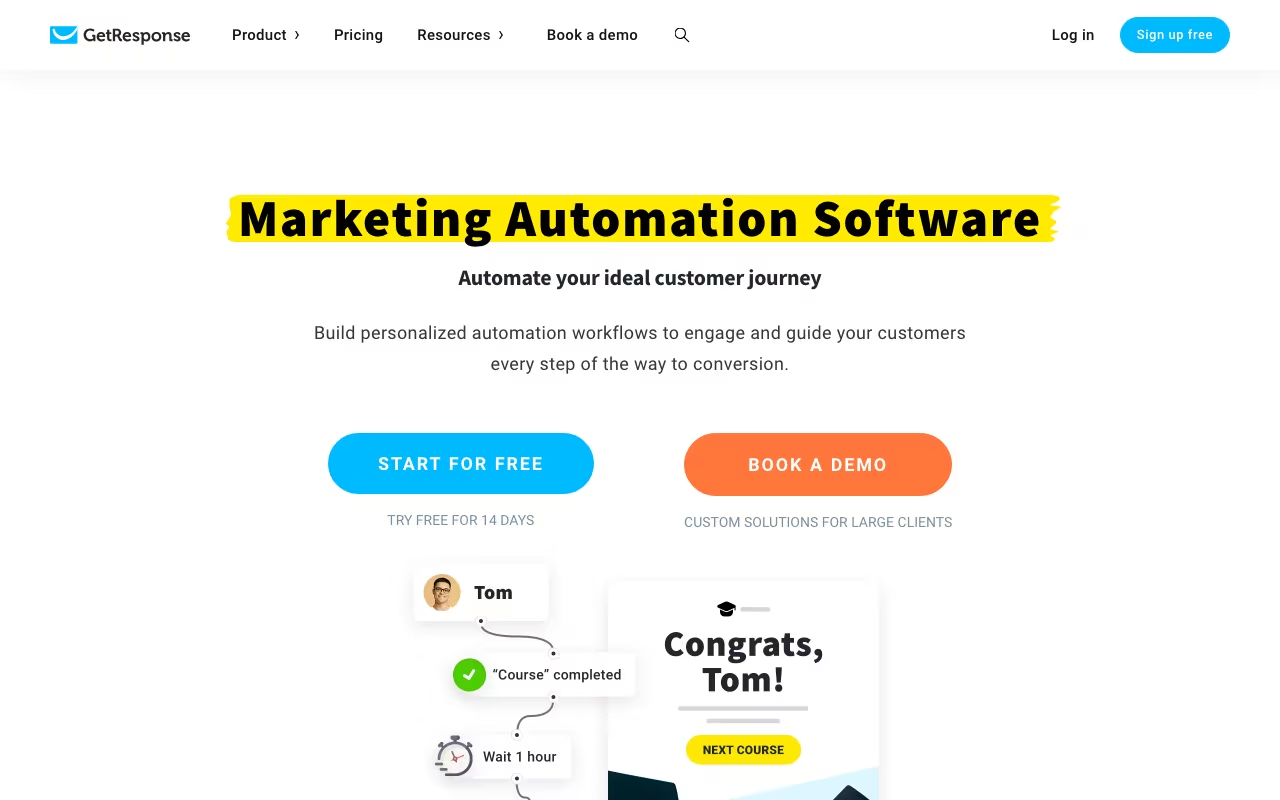
Marketing automation: Visual workflow builder for multi-step sequences. Trigger-based actions, scoring, tagging, conditional paths. This is where GetResponse competes with ActiveCampaign, and it holds up reasonably well for most use cases.
Landing pages: Built-in page builder with 200+ templates. Not as good as Unbounce or Instapage, but good enough that you don't need a separate tool. Free SSL, mobile responsive, A/B testing included.
Webinars: This is unique. No other email marketing tool at this price includes native webinar hosting. Up to 1,000 attendees, screen sharing, polls, recordings. Not Zoom, but adequate for most marketing webinars.
Website and course builder: Build simple websites and sell online courses directly through GetResponse. Neither will replace WordPress or Teachable, but for a quick landing site or a simple course, they work.
Pricing
14-day free trial with premium features. Paid plans for 1,000 contacts:
- Starter: ~$16/month (EUR 16). 3 users, unlimited emails, AI content generators, 1 automation workflow, landing pages.
- Marketer: ~$54/month (EUR 54). 5 users, unlimited automation workflows, advanced segmentation, abandoned cart recovery, sales funnels.
- Creator: ~$62/month (EUR 62). Adds website builder, AI course creator (500 students), webinars (100 attendees), paid newsletters.
- Enterprise: From ~$1,099/month. SMS, mobile push, AI product recommendations, dedicated account manager.
Annual billing saves 18%. Prices scale with contact count.
See GetResponse Pricing See plans →What It Does Well
- Value for money: $59/month gets you email, automation, landing pages, AND webinars. Try getting all that from Mailchimp or ActiveCampaign for the same price.
- Webinars are genuinely useful: The only email platform at this tier with native webinar hosting. For coaches and course creators, this eliminates one more subscription.
- Solid automation: The visual workflow builder handles complex sequences without being overwhelming.
- Good deliverability: Consistently scores well in third-party deliverability tests.
Where It Frustrates
- Jack of all trades, master of none: The landing page builder isn't as good as Unbounce. The webinars aren't as good as Zoom. The course builder isn't Teachable. You get breadth, not depth.
- Email builder can feel clunky: The drag-and-drop editor works but isn't as smooth as Mailchimp's or Brevo's.
- Free plan is very limited: 500 contacts and 2,500 emails. You'll outgrow it fast.
- Reporting could be deeper: Basic analytics are fine, but advanced reporting requires the higher tiers.
GetResponse vs. Alternatives
Marketing tools, published pricing
| Tool | Pricing | Model |
|---|---|---|
| GetResponse | Free (500 contacts), $19/mo (Starter), $59/mo (Marketer) | Freemium |
| TheTop | $99/mo (lowest published recurring price) | Subscription |
| Hopp for Business | $9/mo (lowest published recurring price) | Subscription |
| POWR | $9.99/mo (lowest published recurring price) | Subscription |
| Roster | $500/mo (lowest published recurring price) | Subscription |
| Recomaze AI | $99/mo (lowest published recurring price) | Subscription |
ActiveCampaign ($29/month for 1,000 contacts) has better automation but no webinars, no landing pages at that price. GetResponse offers more features per dollar.
Mailchimp ($13/month for 500 contacts) is simpler but more expensive at scale and lacks automation depth.
Brevo (reviewed separately) prices by email volume, not contacts. Better for large lists with infrequent sends.
ConvertKit ($29/month for 1,000) is built for creators. Simpler automation, no landing page builder or webinars.
Who Should Care
GetResponse is the best fit for marketers who want email + automation + landing pages + webinars in one platform without paying for four separate tools. Coaches, course creators, and small e-commerce brands get the most value. If you only need email marketing, simpler (and cheaper) tools exist.
Start With GetResponse Free Get started →How GetResponse works
GetResponse started as an email marketing tool and has grown well past email into a general "run your funnel here" platform. The core is still list management, newsletters, autoresponders and a visual automation workflow builder, all sitting on a contacts database with tagging and lead scoring. Around that core sit list-building tools (landing pages, signup forms, popups, a website builder, conversion funnels), ecommerce features (abandoned cart recovery, product recommendations, promo codes, revenue reports), and a creator monetization layer that is unusual for an email service provider: a course creator, paid premium newsletters, a public creator profile and native webinars. AI generators for emails, whole campaigns and copy are layered on top of all of it.
In practice you import or capture contacts into lists, then build campaigns in a drag-and-drop email creator. Automation happens on a visual canvas where you combine conditions, filters and actions to model a subscriber journey. Triggers fire on behaviour such as page visits, purchase history, tags and engagement score, with unlimited tags and point-based scoring driving your segments. Landing pages, forms and popups are built inside the app and can publish on a free custom domain if you are on a yearly plan. Webinars, courses and paid newsletters run inside the same account rather than through a third-party tool, which is the main reason people consolidate here.
Connections to the rest of your stack come from roughly 14 categories of native integrations: Forms and Surveys (47), Ecommerce (33), Ads and Conversions (22), Productivity (21), CRM (11), plus website builders, payment processors, webinar and video tools and course platforms. Shopify is the flagship ecommerce sync, Zapier covers the long tail, and there is a documented REST API v3 at apidocs.getresponse.com for custom work. One caveat worth knowing before you plan an integration: CRM sync to Pipedrive, HubSpot, Salesforce, Airtable or monday runs through a third-party connector (Outfunnel), not natively.
Where GetResponse wins
- Genuinely broad for the price. Webinars, a course creator (up to 500 students on Creator), paid premium newsletters and a website builder are bundled rather than being four separate SaaS subscriptions. The Creator plan is listed at 62 euros per month, or 50.84 euros per month billed annually.
- Unlimited monthly sends on every paid plan, including the 16 euro Starter tier. You are billed on list size (1k, 2.5k, 5k, 10k, 25k, 50k, 100k tiers), not on how much you send.
- Automation depth is real on Marketer and above: unlimited workflows, behaviour and ecommerce triggers, abandoned cart recovery, unlimited tags, engagement scoring, sales funnels, promo codes and revenue reports.
- A permanently free tier still exists (500 contacts, 2,500 emails per month, unlimited landing pages capped at 1,000 unique visits in total, website builder, forms), at a time when most direct competitors have capped or removed theirs.
- It is not a closed box. A documented public API v3, Zapier and 200+ native connectors give you a way out of most dead ends.
Where it falls short
- The 16 euro Starter plan is thinner than the headline suggests: one custom automation workflow, three uses of the AI generators, no contact tagging or scoring, no abandoned-cart triggers and no ecommerce tooling. Most buyers who actually want marketing automation end up on Marketer (54 euros per month) or higher.
- Key channels are Enterprise-only. SMS marketing, mobile push notifications, dedicated IP, dedicated sending domain, SSO, unlimited users and premium support all sit behind custom pricing with no published number, so budgeting means a sales call.
- CRM is a category of 11 partner integrations, not a product. Syncing to Salesforce, HubSpot or Pipedrive routes through Outfunnel, which adds another vendor and another cost to any serious sales-ops setup.
- The free plan is heavily branded and boxed in: a GetResponse badge on every send that only disappears when you upgrade, 1,000 total landing-page visits, webinars capped at 10 attendees, no A/B testing, and premium features that cut off after the first 14 days.
- Seat counts are low on standard plans (3 users on Starter, 5 on Marketer and Creator), which gets tight fast for an agency or a multi-brand team.
Who should use GetResponse
This is a good fit for solo creators, coaches and small ecommerce teams who want email, landing pages, webinars and paid courses on one bill instead of stitching four tools together, and who accept that the Marketer tier is the real entry point if automation matters to them. The consolidation argument is the strongest one here: the bundled webinar and course features would otherwise be separate subscriptions, and unlimited sends mean a growing send volume does not change the invoice.
Skip it if you need SMS or push notifications without signing an Enterprise contract, if native two-way sync with Salesforce or HubSpot is a hard requirement rather than a nice-to-have, or if you are a larger team that will run out of seats at five users. If your only need is plain broadcast email, the Starter plan will do the job, but you should compare it against simpler tools before paying for a suite you will not use.