
The 7 Best HRIS Systems in 2026 (Compared)

Key facts7 tools compared: Rippling, BambooHR, Gusto, Deel, HiBob, Personio, Workday
- 7 tools compared: Rippling, BambooHR, Gusto, Deel, HiBob, Personio, Workday
- Rippling (best for: All-in-one HR + IT + payroll): $8/employee/mo + $35 base, modular
- BambooHR (best for: US small business core HR): ~$10/employee/mo (Core), $250/mo floor under 25
- Gusto (best for: Small US teams, payroll-first): $49-$180/mo base + $6-$22/person
- Deel (best for: Global teams, contractors, EOR): Free HR to 200; EOR from $599/employee/mo
Picking an HRIS feels like a high-stakes bet because it is. You're choosing the system of record for every person you employ, the thing payroll runs through, the place compliance lives. Migrate to the wrong one and you'll spend a year regretting it and a weekend exporting CSVs to escape.
I've reviewed half a dozen of these systems, comparing the marketing pages against public user reports on the actual day-two experience, and the gap is wide. Sales decks promise an all-in-one platform. What you get depends entirely on your headcount, where your people sit, and how much you're willing to pay per head.
Here's the short version for skimmers: Rippling is my top pick for most growing companies that want HR, payroll, and IT in one place. If you just want clean, pleasant core HR for a US team, BambooHR is still the safe bet. And if your team is scattered across borders, Deel does things the others can't. Below I break down all seven, with real 2026 pricing and the catch for each.
Quick comparison
| Tool | Best for | Price (2026) | Standout |
|---|---|---|---|
| Rippling | All-in-one HR + IT + payroll | $8/employee/mo + $35 base, modular | Provisions apps and laptops, not just HR |
| BambooHR | US small business core HR | ~$10/employee/mo (Core), $250/mo floor under 25 | Cleanest UX in the category |
| Gusto | Small US teams, payroll-first | $49-$180/mo base + $6-$22/person | Effortless payroll and tax filing |
| Deel | Global teams, contractors, EOR | Free HR to 200; EOR from $599/employee/mo | Hire anywhere, free core HRIS |
| HiBob | Scaling 100-500 person teams | ~$8-$25/employee/mo (custom) | Culture and engagement built in |
| Personio | European SMBs | From €7.60/employee/mo | EU data residency, GDPR-native |
| Workday | Enterprise (1,000+) | Custom, six figures+ | Deepest analytics and planning |

Rippling: best all-in-one for growing companies
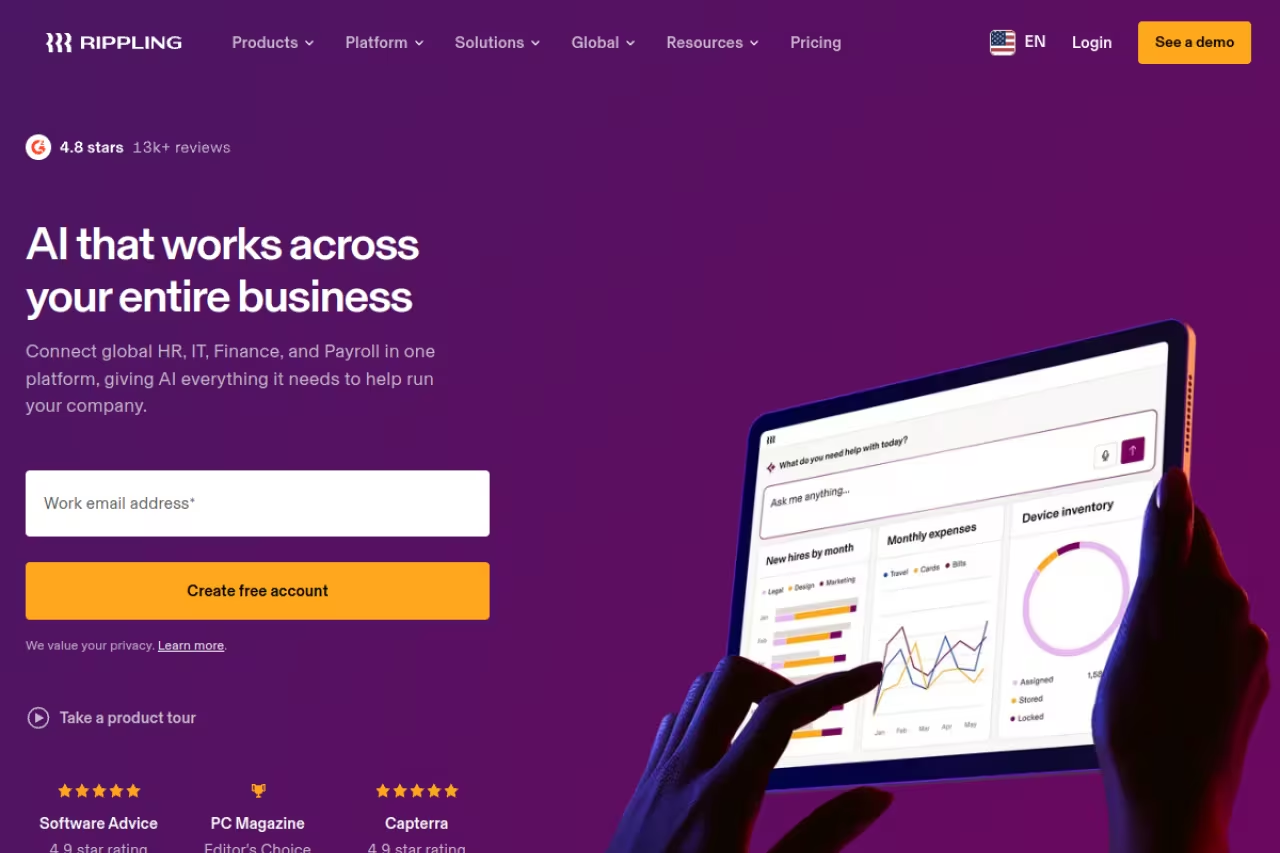
Rippling is the one I recommend most often, and it's because of a single idea executed well: your employee record drives everything. Hire someone in Rippling and you can provision their payroll, benefits, Google Workspace account, Slack, and a shipped laptop from the same screen. Offboard them and it all gets revoked at once. No other HRIS treats HR and IT as the same problem.
Who it's best for: companies between roughly 50 and 1,000 employees that are tired of stitching together five tools. If you have a real IT footprint (SaaS apps, devices, security), Rippling pays for itself in saved admin time.
The one to pick for companies of roughly 50 to 1,000 employees tired of stitching tools together, since the employee record drives payroll, benefits and IT. Modular pricing means the real price differs from the sticker, and it is more system than a 15-person shop needs.
the base HRIS module starts at $8 per employee per month with a $35 monthly platform fee, per Rippling's pricing. But that number is a starting line. Most companies land at $20 to $35 per employee per month once they add payroll, benefits, and time tracking. Vendr's purchase data puts the median annual contract around $40,000.
The standout: the device and app management. Watching a new hire get a fully configured laptop on day one, with every app already provisioned, is the closest thing to magic in this category.
The catch: modular pricing means the sticker price and the real price are different animals. Implementation runs $2,000 to $5,000 for standard onboarding and can climb past $20,000 with custom workflows and data migration. It's also genuinely more system than a 15-person shop needs. If that's you, scroll down to Gusto.

BambooHR: the safe bet for US small business
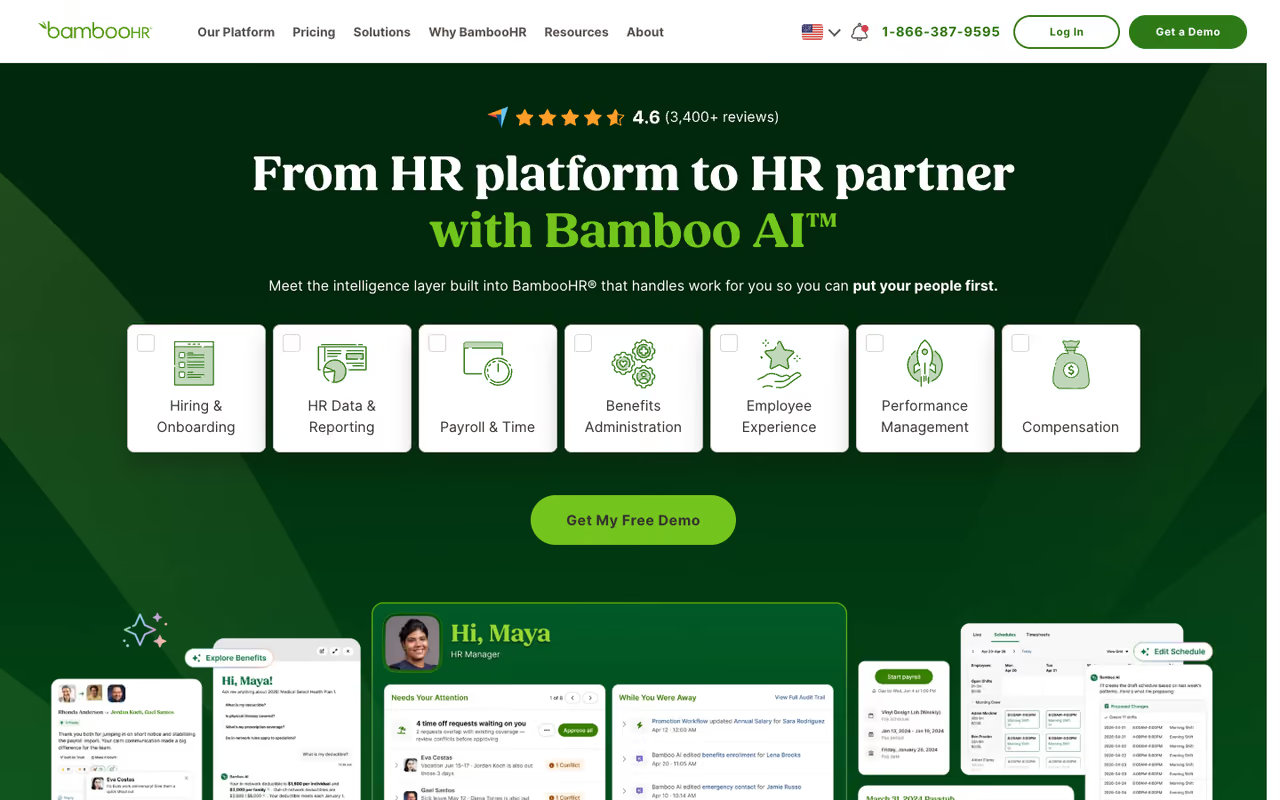
BambooHR has been the default answer for SMB core HR for over a decade, and the reason is boring in the best way: it works, and people actually like using it. The interface is clean, the learning curve is gentle, and your non-technical office manager can run it without a help desk ticket.
Who it's best for: US companies with 25 to 200 employees who want solid core HR (records, PTO, onboarding, reporting) without enterprise bloat. It's the gold standard for teams that don't have a dedicated HR ops person.
The safe bet for US companies with 25 to 200 employees that want solid core HR without enterprise bloat, and a UX that feels like a consumer app. Payroll and benefits are US-only add-ons, and past 200 people you may outgrow it.
BambooHR moved to two tiers. Core runs about $10 per employee per month and Pro about $17, which adds performance management, employee wellbeing tracking, and AI assistance. Companies with 25 or fewer employees pay a flat floor starting around $250 per month. There's a 7-day free trial with no card required.
The standout: the UX. In a category full of clunky enterprise software, BambooHR feels like a consumer app. Adoption is rarely a fight.
Where it falls short: payroll and benefits are add-ons, not included, and they're US-only. The reporting is fine but shallow if you want real workforce analytics. And once you push past 200 people, you may outgrow it. For deeper engagement features, pair it with one of the tools in my employee engagement software guide.

Gusto: payroll-first for small teams
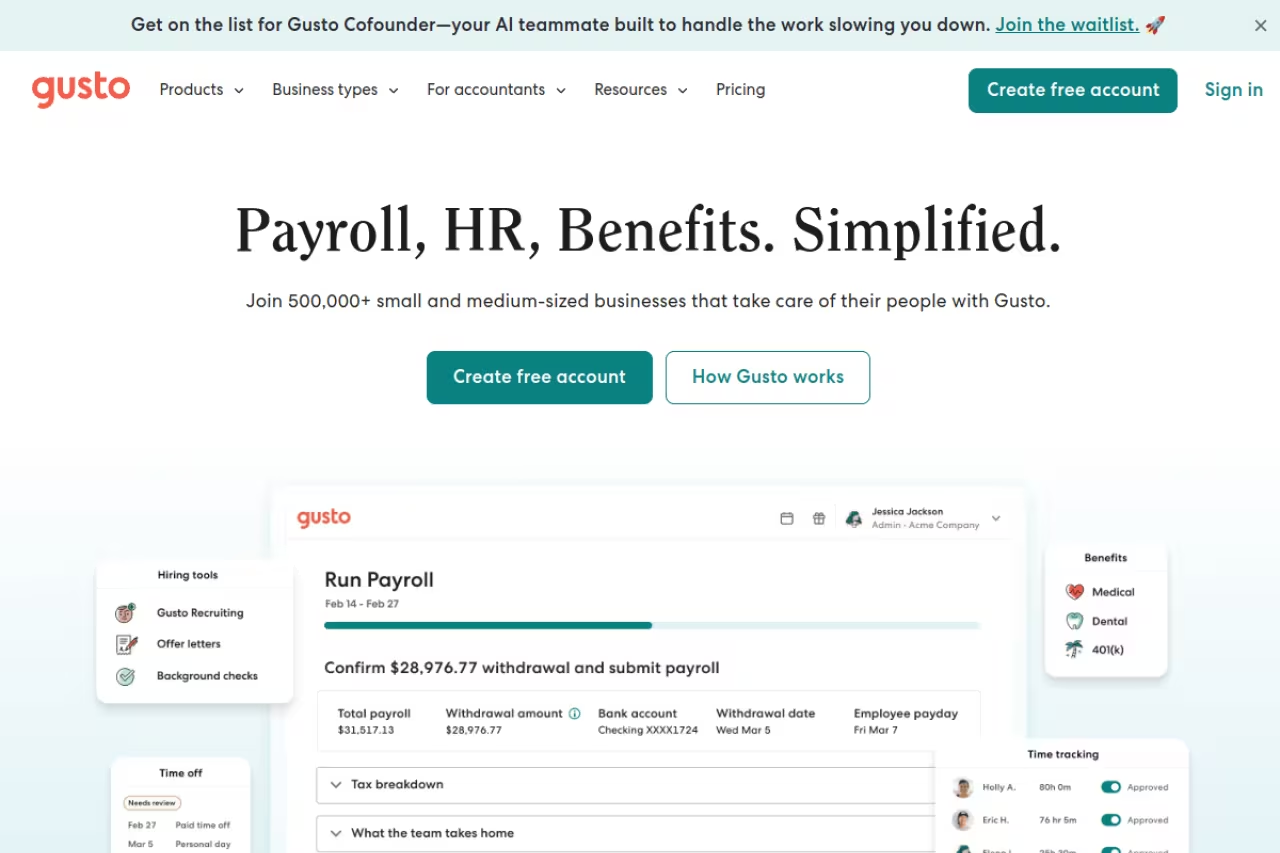
Gusto started as a payroll company and it shows. If your primary pain is running payroll, filing taxes, and managing benefits for a small US team, Gusto handles it with less friction than anything else here. The HR features are lighter than BambooHR's, but for a company under 50 people, you may not notice.
Who it's best for: US small businesses, especially first-time employers, where payroll is the main job and HR is secondary. Gusto was named a Leader across G2's Small-Business Grid reports for Core HR, Payroll, and Benefits in Spring 2026.
Payroll-first and nearly invisible, ideal for US small businesses and first-time employers where payroll is the main job. HR features are lighter than BambooHR's, tier gating has grown more aggressive, and global hiring is not its game.
three tiers per Gusto's pricing. Simple is $49 per month plus $6 per person, Plus is $80 plus $12, and Premium is $180 plus $22. Every plan includes unlimited payroll runs and automatic tax filing. A 10-person team on Simple pays about $109 a month, all in.
The standout: payroll that you genuinely don't think about. Tax filings happen automatically, and the employee self-service for pay stubs and W-2s is the best in the SMB tier.
The catch: Gusto raised the Simple base from $40 to $49 in 2025, and tier gating has gotten more aggressive. Features that used to be on lower plans now sit behind Plus or Premium. It's also US-focused, so global hiring isn't its game.

Deel: best for global and distributed teams
Deel solves a problem the US-centric tools mostly ignore: hiring people in countries where you don't have a legal entity. Through its Employer of Record service, Deel lets you employ someone in 150-plus countries without setting up shop there. It's the reason remote-first companies live in Deel.
Who it's best for: companies hiring contractors and full-time employees across borders. If half your team is outside your home country, this is non-negotiable.
Go with Deel when half your team sits outside your home country, using EOR in 150-plus countries. The free HRIS for up to 200 employees is a draw, but EOR hides 30 to 50 percent in extra costs and US payroll depth lags.
here's the surprise. Deel HR, the core HRIS, is free for up to 200 employees and includes records, PTO, and org charts, per Deel's pricing. Contractor management is $49 per contractor per month, global payroll is $29 per employee, and EOR starts at $599 per employee per month.
The standout: the free HRIS tier. Most EOR competitors charge separately for the HR system. Deel gives it away, which makes it a legitimate option even for fully domestic teams that want a no-cost system of record.
Where it falls short: the EOR sticker price hides real costs. Employer taxes, FX spreads, and deposits add 30 to 50 percent on top of the base fee. The free HR tier is also lighter on US payroll depth than Gusto or Rippling. Use Deel for global reach, not for deep domestic HR workflows.
If you're building out a distributed team, the right HRIS is only half the puzzle. The hiring and onboarding stack matters too. Dupple X is how a lot of the operators I know keep up with the tooling shifts that hit this space every quarter.
HiBob: for scaling, culture-driven companies
HiBob, usually just called Bob, sits in the gap between a basic SMB tool and a heavy enterprise suite. It's built for companies that have outgrown BambooHR but don't want to commit to Workday. The differentiator is culture: shoutouts, clubs, surveys, and a social homepage feed are baked into the core product, not bolted on.
Who it's best for: distributed, fast-growing teams in the 100 to 500 employee range, especially tech companies scaling internationally that care about engagement and retention.
A fit for distributed, fast-growing teams of 100 to 500 that have outgrown BambooHR and care about engagement and retention. Quote-based pricing complicates early budgeting, and below 100 people you are paying for capacity you cannot use yet.
custom and quote-based. For teams of 20 to 100, expect roughly $8 to $12 per employee per month for core HR. As you scale and add modules, that typically rises to $16 to $25 per employee. There's no public price list, so you'll talk to sales.
The standout: the engagement tooling and the global core. Multi-country compliance, localized workflows, and multi-language support make Bob a strong fit for teams scaling across Europe and beyond.
The catch: the quote-based pricing makes early budgeting hard, and the value really only unlocks above 100 people. Below that, you're paying for capacity you can't use yet. Smaller teams should start cheaper and migrate later.

Personio: the European default
Personio is what European SMBs reach for, and the reason is regulatory, not just feature-based. All customer data lives in EU data centers, and GDPR compliance is built into the product architecture rather than patched on. For a company headquartered in Berlin or Madrid, that's a real advantage over US-first tools.
Who it's best for: European small and mid-size businesses, roughly 10 to 2,000 employees, where compliance and data residency are first-order concerns.
The European default, with all customer data in EU data centers and GDPR built into the architecture. It suits SMBs of roughly 10 to 2,000 employees, but pricing is not public, payroll is often an add-on, and US coverage is thin.
quote-based across Core and Core Pro tiers, starting from €7.60 per employee per month. A fuller suite with recruiting, surveys, and performance modules runs €12 to €20 per employee depending on headcount and contract length.
The standout: EU data residency plus a built-in ATS and onboarding flow. It handles recruiting-to-onboarding in one place, which trims tool sprawl for European teams. For the recruiting side specifically, see my AI recruiting tools roundup.
Where it falls short: pricing isn't public, which slows down comparison shopping. Payroll is largely an add-on or partner integration depending on country, and US coverage is thin. This is a Europe-first tool, full stop.

Workday: for the enterprise
Workday is the system you graduate to, not the one you start with. It runs HR, payroll, talent, workforce planning, and analytics on a single data model across 190-plus countries. For organizations with thousands of employees and a real finance-HR planning function, nothing else has the depth.
Who it's best for: enterprises with 1,000-plus employees and dedicated HR operations teams. If you're running global workforce planning and need analytics that tie to finance, this is the tier.
The system you graduate to for enterprises with 1,000-plus employees and a real finance-HR planning function. The analytics depth is unmatched, but pricing is opaque, the interface is clunky, and most smaller companies will never use all of it.
fully custom and opaque. Real contracts run well into six figures annually, with implementation projects that take months and cost as much as the software.
The standout: analytics and AI direction. Workday Illuminate and HiredScore AI bring predictive workforce analytics and intelligent candidate scoring, trained on a transaction volume no competitor can match.
The catch: reviewers consistently call the interface clunky and the learning curve steep. Simple tasks take too many clicks. For most companies under 1,000 people, it's more system than you'll ever use. Don't buy Workday because it's impressive. Buy it because you've genuinely outgrown everything else. If you're near that line, my enterprise HR software breakdown goes deeper.
How to choose
Skip the feature matrices for a minute and answer three questions in order.
Where are your people? If your team is mostly one country, a US-first tool (Rippling, BambooHR, Gusto) or a regional one (Personio for Europe) works. If you're hiring across borders, Deel or HiBob earns its place fast. This single factor eliminates half the list.
What's your headcount, and where is it going? Under 50 and US-based: Gusto or BambooHR. 50 to 1,000 and growing fast: Rippling or HiBob. Over 1,000 with real complexity: Workday. Buy for where you'll be in 18 months, not where you are today, because migrating an HRIS is genuinely painful.
What's the main job? If payroll is the pain, Gusto. If you want HR and IT unified, Rippling. If it's engagement and culture at scale, HiBob. If it's just a clean, reliable system of record, BambooHR. Lead with your biggest pain and the rest follows.
One more thing: every quote-based vendor (Rippling, HiBob, Personio, Workday) negotiates. The first number is not the real number. Get competing quotes and use them.
FAQ
What is an HRIS and how is it different from payroll software?
An HRIS (Human Resources Information System) is the central system of record for employee data: records, PTO, onboarding, org charts, and reporting. Payroll software specifically handles paying people and filing taxes. Many modern tools like Rippling and Gusto bundle both, but they're distinct functions. An HRIS can exist without payroll, and vice versa.
How much does an HRIS cost per employee in 2026?
For small to mid-size businesses, expect $6 to $25 per employee per month depending on the tool and modules. Core HR sits at the low end (BambooHR Core around $10, Personio from €7.60). Bundled suites with payroll and benefits push toward $20 to $35 (Rippling's realistic all-in cost). Enterprise platforms like Workday are custom-quoted and run far higher.
What is the best HRIS for a small business?
For a US small business, BambooHR is the strongest pick for clean core HR, and Gusto wins if payroll is your main need. Both are affordable and easy to set up. Deel's free HR tier (up to 200 employees) is also worth considering if you want a no-cost system of record. For more options, see my small business HR software guide.
Which HRIS is best for hiring internationally?
Deel is the standout for global hiring through its Employer of Record service, covering 150-plus countries without requiring local entities. HiBob is strong for distributed teams that want engagement features alongside multi-country compliance. Workday handles global enterprise scale, but it's overkill unless you have thousands of employees.
Do I need an HRIS if I already use payroll software?
Not necessarily, but you'll likely want one as you grow. Payroll software handles pay and taxes, but it usually lacks proper PTO management, onboarding workflows, org charts, and reporting. Once you pass roughly 20 to 30 employees, a dedicated HRIS saves real time and reduces compliance risk. Tools like Rippling and Gusto combine both so you don't have to choose.
How long does it take to implement an HRIS?
For SMB tools like BambooHR and Gusto, you can be running in days to a couple of weeks. Mid-market platforms like Rippling and HiBob take a few weeks, especially with data migration and integrations. Enterprise systems like Workday are months-long projects with dedicated implementation partners. Budget for the migration, not just the subscription.
If you want to stay ahead of how this category keeps shifting (and AI is reshaping HR tooling fast), Dupple X tracks the tools and trends worth your attention so you don't have to read ten review sites yourself. For the AI-specific side of HR, my AI tools for HR roundup is a good next read.
Related guides
Some offers on this page may be paid placements or contain affiliate links.
