
Best HRIS for Midsize Companies (2026): 8 Platforms Compared

Key facts8 tools compared: Rippling, HiBob, BambooHR, Gusto, Deel, Personio, Paylocity, Workday
- 8 tools compared: Rippling, HiBob, BambooHR, Gusto, Deel, Personio, Paylocity, Workday
- Rippling (best for: US teams unifying HR + IT + payroll): ~$8 base, $20-35 realistic
- HiBob (best for: Culture-led, fast-growing teams): ~$8-18 (quote)
- BambooHR (best for: Simple, high-adoption core HR): $10 Core / $17 Pro
- Gusto (best for: US payroll-first smaller midmarket): $80+$12 (Plus)
Somewhere around 150 employees, the spreadsheet stops working. Onboarding gets dropped, PTO requests live in three different inboxes, and nobody can tell you the actual headcount without exporting four CSVs and arguing about it. That's the moment most companies start shopping for a real HRIS, and it's also the moment the buying process turns into a slog of vague demos and "contact sales" walls.
I've sat through more of those demos than I'd like to admit, and I've helped a few teams in the 100 to 1,000 range actually pick and roll out a system. The midmarket is the hardest segment to buy for. You've outgrown the simple stuff built for 20-person startups, but you're nowhere near needing the enterprise machinery that wants a six-month implementation and a dedicated admin. The right tool sits in that gap.
If you want the short version: Rippling is my default recommendation for most US-based midsize teams because it unifies HR, payroll, and IT in a way nothing else matches. HiBob wins if culture and employee experience are the priority, and BambooHR is the safe, beloved pick when you want something people will actually use without training. The rest of this guide covers who each one is genuinely for, what it costs, and where it bites you.
Quick comparison
| Tool | Best for | Price (PEPM) | Standout |
|---|---|---|---|
| Rippling | US teams unifying HR + IT + payroll | ~$8 base, $20-35 realistic | One system of record for people and devices |
| HiBob | Culture-led, fast-growing teams | ~$8-18 (quote) | Best-in-class employee experience and UX |
| BambooHR | Simple, high-adoption core HR | $10 Core / $17 Pro | Effortless usability, employees self-serve |
| Gusto | US payroll-first smaller midmarket | $80+$12 (Plus) | Cleanest payroll experience anywhere |
| Deel | Global / distributed workforces | $29 payroll, $599 EOR | Hiring and paying across 150+ countries |
| Personio | European midmarket | from €7.60 | EU compliance and local payroll built in |
| Paylocity | US payroll + engagement | Custom quote | Strong payroll with a modern feel |
| Workday | The top end of midmarket (1,000+) | ~$100-150/yr per emp | Deep analytics and workforce planning |

Rippling: the unified system most teams should default to
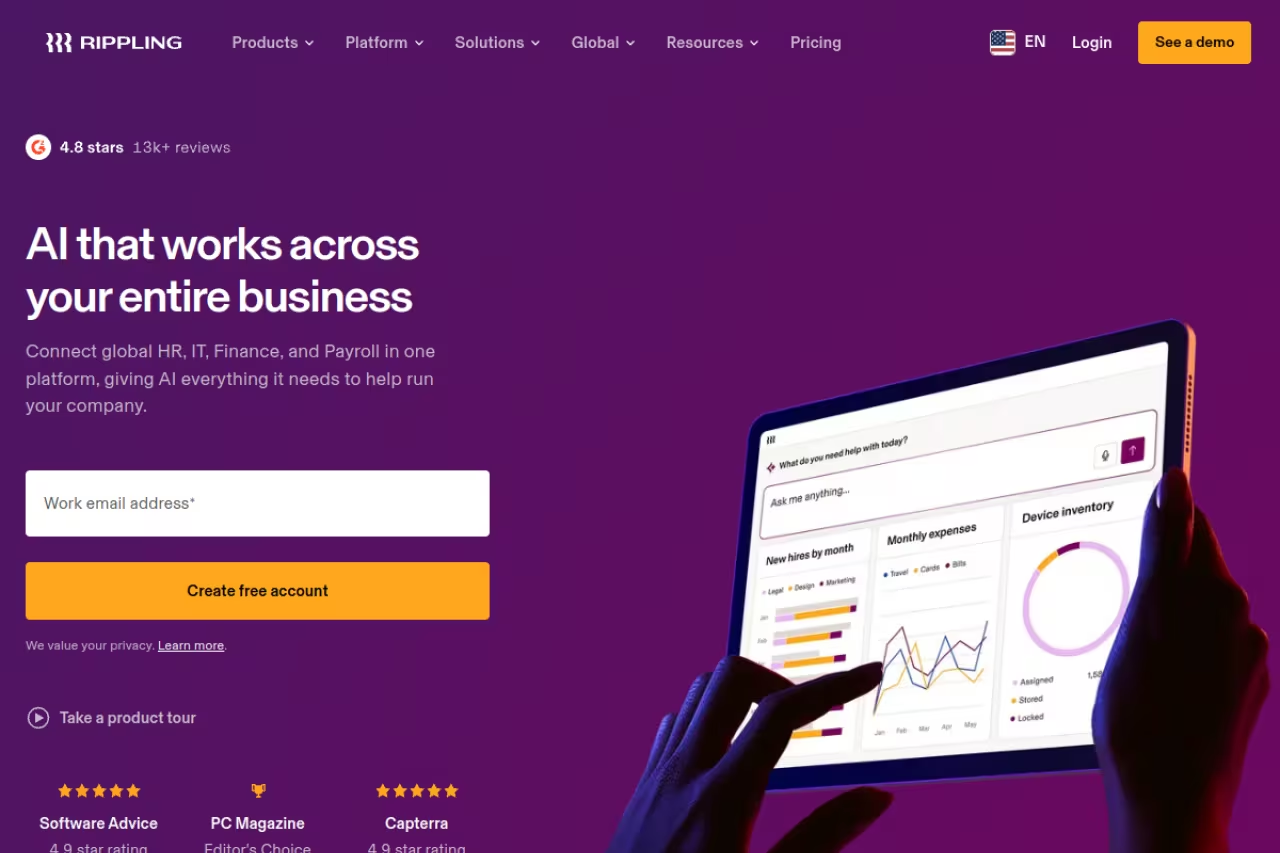
Rippling started as the answer to a specific annoyance: when someone joins or leaves, you're not just updating HR records, you're also provisioning a laptop, setting up a Google account, enrolling them in benefits, and adding them to payroll. Rippling ties all of that to one employee record, so an offboard click can disable accounts, wipe the device, run final pay, and end benefits in one move.
Who it's best for: US-based companies from roughly 50 to 1,000 people that want HR, payroll, and IT in one place instead of stitching together three vendors.
The unified system for US companies of roughly 50 to 1,000 people that want HR, payroll and IT in one place, with offboarding that disables accounts and wipes devices in one move. Modular pricing creeps, and smaller teams will find it overpriced.
The base Unity platform starts at $8 per employee per month, but that number is misleading. Once you add the modules most teams actually need (payroll, benefits, time tracking), realistic spend lands around $20 to $35 per employee per month, and the full stack with IT management pushes higher.
The standout: Nothing else makes the HR-IT connection this cleanly. If your security team cares about deprovisioning, Rippling pays for itself in reduced risk alone.
The catch: The modular pricing is a trap if you're not disciplined. Every feature is its own line item, quotes are custom, and the bill creeps. There's also a mandatory flat platform fee on top of per-employee costs. Smaller teams that only need basic HR will find it overkill and overpriced.
HiBob: the platform employees actually want to log into
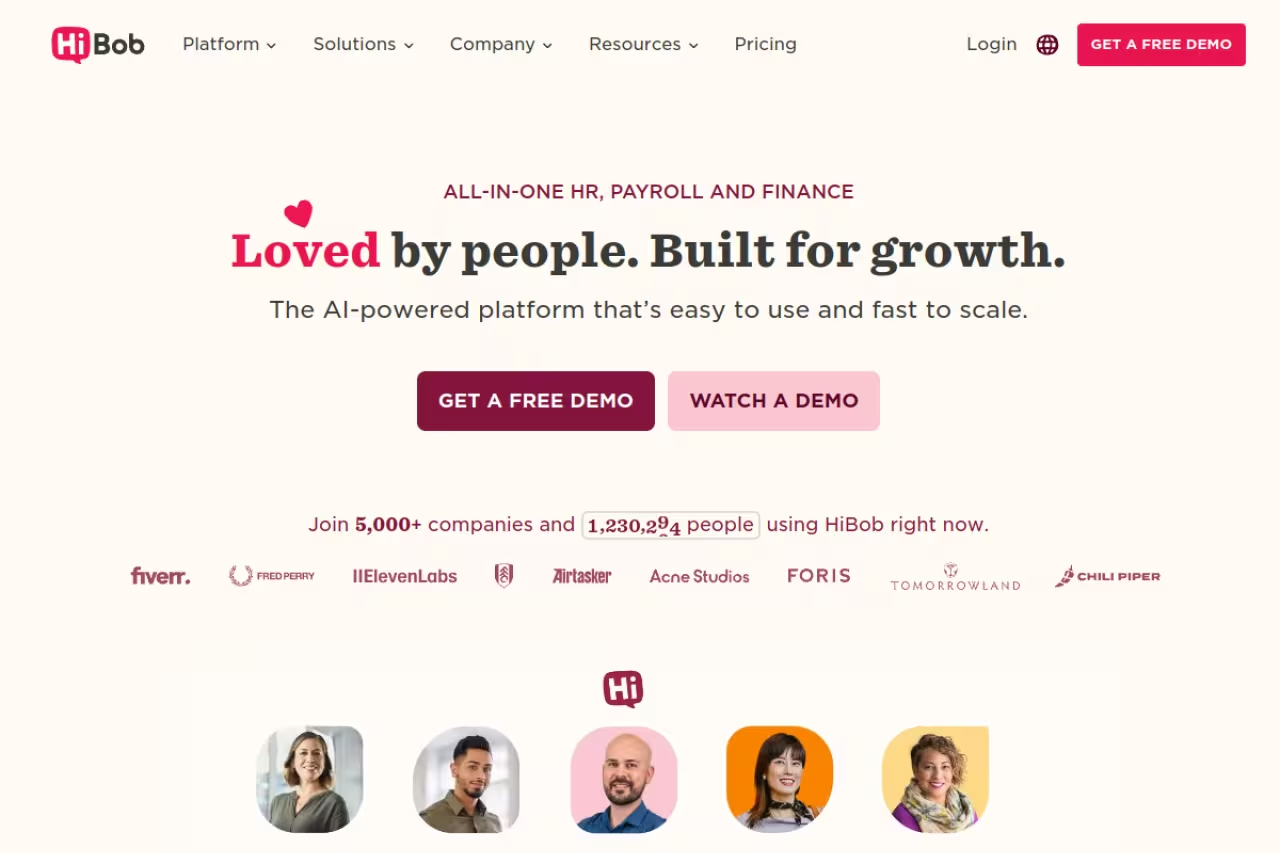
HiBob's product, Bob, is built around the idea that an HRIS should feel like a place people want to be, not a database they're forced to update. The homepage feed, org chart, kudos, and club features lean into culture. Under that polish sits a capable core: onboarding workflows, time off, performance, compensation, and analytics.
Who it's best for: Fast-growing, often distributed companies in the 100 to 1,000 range where culture and engagement are a real priority, not a slide in the all-hands deck.
The platform employees actually open voluntarily, aimed at fast-growing, often distributed companies of 100 to 1,000 where culture matters. US payroll is newer and less mature, and quote-based, annual-only billing makes budgeting harder.
HiBob doesn't publish prices. Buyer reports put most midmarket deals between $8 and $18 per employee per month for the core platform plus common modules, with a one-time implementation fee usually running 10 to 20 percent of your first-year contract.
The standout: The employee experience is genuinely the best in this list. Adoption is rarely a problem because people open Bob voluntarily.
Where it falls short: Native US payroll is newer and less mature than the dedicated payroll players, so many US teams still bolt on a separate provider. The quote-based pricing and annual-only billing also make it harder to budget than the transparent SMB tools.

BambooHR: the easy answer that's hard to regret
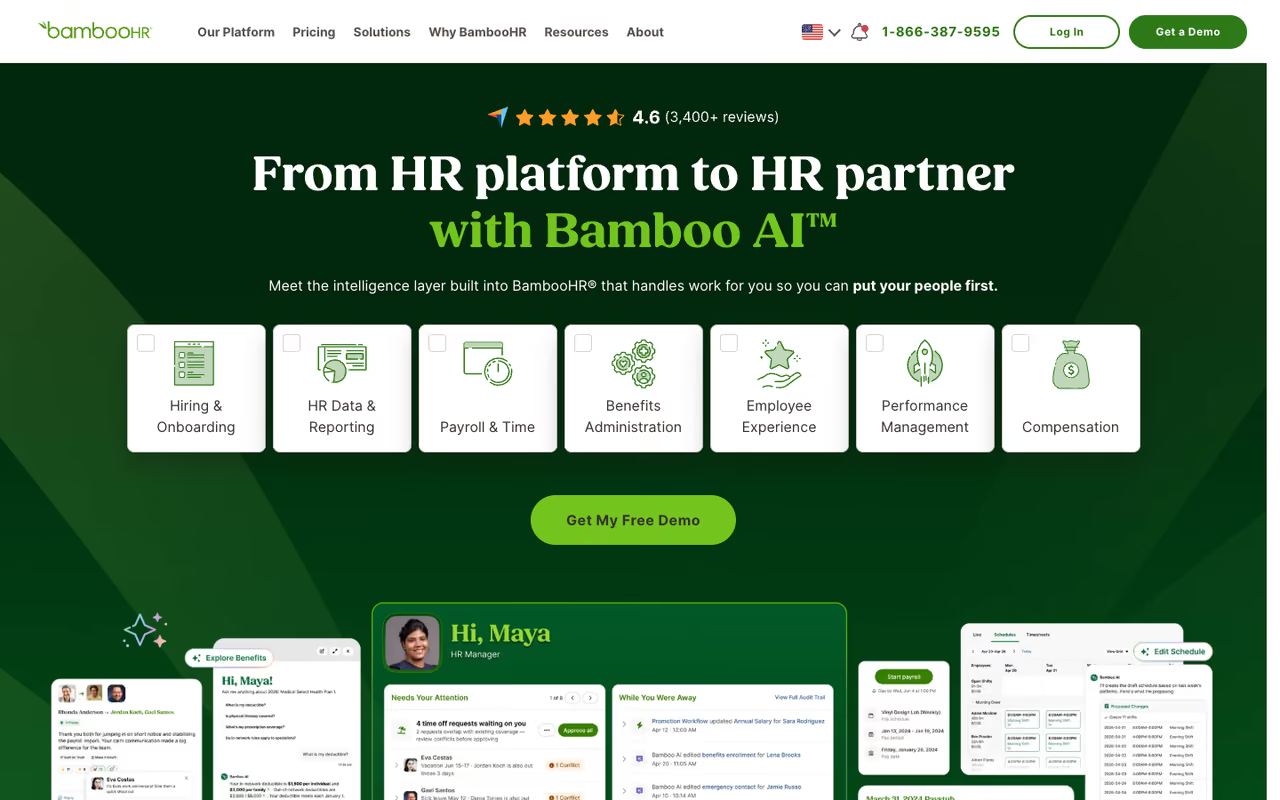
BambooHR has been the default midmarket recommendation for years, and it earns it by being unglamorous and dependable. Onboarding, an employee directory, PTO tracking, e-signatures, reporting, and performance reviews all work the way you'd expect, with almost no learning curve. It's the platform you pick when you want the rollout to be boring.
Who it's best for: Companies from about 50 to 500 employees that want solid, well-rounded core HR and value usability over depth.
The boring-rollout pick for companies from about 50 to 500 employees that value usability over depth, with almost no learning curve. Payroll and benefits are US-only paid add-ons, and complex needs will hit a ceiling past a few hundred people.
BambooHR publishes two tiers on its pricing page: Core at around $10 per employee per month and Pro at around $17, with an Elite option above that. Companies under 25 employees pay a flat monthly minimum starting near $250 rather than per-head.
The standout: Adoption. Employees and managers self-serve without anyone holding their hand, which is the whole point of an HRIS most companies miss.
The catch: Payroll and benefits are paid add-ons rather than deep native modules, and US-only at that. As you scale past a few hundred people with complex needs (multi-entity, advanced comp, heavy analytics), you'll start to feel the ceiling. It does the common things very well and the hard things not at all.

Gusto: payroll-first, and the payroll is excellent
Gusto built its reputation on making US payroll painless, and it shows. Running payroll is genuinely pleasant, tax filing is automatic across federal, state, and local, and the benefits and onboarding tools are clean. Over the years it grew into a fuller HR platform that works well for the smaller end of the midmarket.
Who it's best for: US companies up to a few hundred employees that want payroll as the foundation with light-to-moderate HR on top.
Payroll-first and genuinely pleasant, suited to US companies up to a few hundred employees with the most transparent pricing on this list. HR depth thins out as you grow, and past roughly 300 employees you may outgrow it.
The most transparent on this list. Gusto's plans run $49/month + $6 per person (Simple), $80 + $12 (Plus), and $180 + $22 (Premium). Unlimited payroll runs are included on every plan, which matters more than people expect.
The standout: The payroll experience itself. If your accountant or finance lead has used the alternatives, they'll thank you.
Where it falls short: It's US-only and the HR depth thins out as you grow. Performance, advanced analytics, and complex org structures aren't its strengths. Past 300 or so employees you may outgrow it.

Deel: the answer when your team is everywhere
Deel solves a different problem than the others: hiring and paying people across borders. If your midsize company employs contractors in Argentina, full-timers in Portugal, and a sales team in the US, Deel handles employer-of-record (EOR), global payroll, and contractor management in over 150 countries without you setting up local entities.
Who it's best for: Distributed and global-first companies where headcount is spread across many countries.
The answer when your team is everywhere, covering EOR, global payroll and contractors in over 150 countries without local entities. It is a global employment platform before an HRIS, and EOR gets expensive fast at scale.
Deel's pricing is structured by service: contractor management from $49 per contractor per month, global payroll around $29 per employee per month, and EOR from $599 per employee per month. Remember that EOR fees sit on top of salary, employer taxes, and statutory benefits, which can add 30 to 50 percent.
The standout: Country coverage and compliance. Few platforms make multi-country hiring this manageable for a company without an international legal team.
The catch: It's a global employment platform first and a traditional HRIS second. If most of your people are in one country, you're paying for breadth you won't use. EOR also gets expensive fast at scale.

Personio: the European specialist
If you're based in Europe, Personio is built for you in a way the US-first tools aren't. It handles the compliance, contract formats, and local payroll realities of European countries, with strong core HR, recruiting, and absence management across the EU.
Who it's best for: European SMBs and midmarket companies, roughly 10 to 2,000 employees, especially those operating in multiple EU countries.
The European specialist for SMBs and midmarket companies of roughly 10 to 2,000 employees, with local compliance and payroll across the EU. Outside Europe it loses its edge, and recruiting and payroll add-ons raise the headline price.
Quote-based across Essential, Professional, and Enterprise tiers, starting from around €7.60 per employee per month, with recruiting and payroll as separate add-ons and annual billing required.
The standout: EU compliance and localized payroll execution, which can lower total cost for multi-country European deployments versus retrofitting a US tool.
Where it falls short: Outside Europe it loses its edge. The add-on model for recruiting and payroll means the headline price isn't what you'll pay, and the platform is less polished than HiBob on the experience side.

Paylocity: payroll muscle with a modern face
Paylocity unifies HR, payroll, and benefits with a stronger engagement layer than most payroll-first vendors. It's a solid US midmarket option, particularly for companies that want solid payroll and a self-service portal employees don't hate.
Who it's best for: US midsize companies, often 100 to 1,000 employees, that want payroll depth plus modern HR and engagement features in one system.
A solid US midmarket option for companies of 100 to 1,000 employees that want battle-tested payroll plus decent self-service and engagement tools. Pricing is sales-led and opaque, and the interface still trails newer platforms.
Custom quotes only. Paylocity doesn't publish rates, so you'll need to talk to sales and expect per-employee pricing that scales with modules.
The standout: Payroll and tax compliance are battle-tested, and the engagement and self-service tools are better than you'd expect from a company that started in payroll.
The catch: No transparent pricing, a sales-led process, and an interface that, while improved, still feels a step behind the newer platforms. US-focused.

Workday: only if you're at the top of the range
Workday is enterprise software, and for most midsize companies it's too much. But the upper midmarket (think 1,000-plus employees with complex structures and a need to tie workforce data to financial planning) is exactly where its Launch package targets.
Who it's best for: Larger midsize and enterprise organizations with matrixed structures, deep analytics needs, and the budget plus internal resources to run it.
Only for the top of the range, think 1,000-plus employees with complex structures that tie workforce data to financial planning. The analytics are unmatched here, but cost and implementation are heavy and it is a sledgehammer for 200 people.
Workday Launch, the midmarket offering, typically starts around $60K to $100K per year for the 200 to 1,000 range, often cited near $100 to $150 per employee per year. Implementation commonly adds 1.5 to 2x your first-year subscription.
The standout: Analytics and workforce planning at a depth nobody else here approaches.
Where it falls short: Cost, complexity, and implementation time. For a 200-person company without complex needs, it's a sledgehammer for a finishing nail.
If you're still mapping out the rest of your stack while you sort out HR, our roundup of the best AI tools and the broader Dupple X library can save you a few more evaluation cycles.
How to choose
Skip the feature-checklist trap. Comparing 200-row spreadsheets just makes every tool look the same. Instead, answer three questions in order.
Where are your people? If they're spread across many countries, Deel or Personio (Europe) move to the top, full stop. Geography decides more than features do.
What's your biggest pain right now? If payroll is the mess, start with Gusto or Paylocity. If onboarding and people data are chaos, BambooHR or HiBob. If you're also drowning in IT provisioning and device management, Rippling's unified model is worth the premium.
How much complexity will you have in two years? Buy slightly ahead of your needs, not way ahead. A 200-person company on a steep growth curve toward 800 should look at Rippling, HiBob, or Workday Launch. A stable 150-person team should not pay enterprise prices for headroom it won't use.
One more thing: weight implementation heavily. The tool that takes three weeks to roll out beats the "better" tool that takes six months, because the six-month rollout often stalls and never finishes. Ask every vendor for a realistic go-live timeline and a named reference at your size.
FAQ
What is the best HRIS for a 200-person company?
For most US-based 200-person companies, Rippling is the strongest all-rounder because it unifies HR, payroll, and IT. If employee experience matters most, HiBob is the better fit, and if you want the simplest rollout, BambooHR is hard to beat. European teams should start with Personio.
How much does an HRIS cost for a midsize company?
Most midmarket HRIS platforms land between $8 and $35 per employee per month depending on which modules you add. Transparent tools like Gusto ($6 to $22 per person plus a base fee) and BambooHR ($10 to $17) are easy to budget, while Rippling, HiBob, and Personio use custom quotes that climb with add-ons. Factor in a one-time implementation fee, often 10 to 20 percent of year-one contract value.
What's the difference between an HRIS and payroll software?
Payroll software focuses narrowly on paying people and filing taxes. An HRIS is the broader system of record for employee data, onboarding, time off, performance, and reporting, usually with payroll as one module. Tools like Gusto blur the line by leading with payroll, while platforms like HiBob and BambooHR lead with core HR and add payroll on top.
Is Rippling or BambooHR better for midsize companies?
It depends on scope. BambooHR is better if you want straightforward core HR with the easiest adoption and clear pricing. Rippling is better if you need payroll, benefits, and IT unified in one system and you're willing to manage a more complex, modular setup and a higher bill.
Which HRIS is best for a global or remote team?
Deel is the standard pick for companies hiring across many countries, with employer-of-record coverage in 150-plus countries and contractor management built in. For teams concentrated in Europe, Personio handles local compliance and payroll more cleanly. If most of your people are in one country, a global platform is usually overkill.
How long does it take to implement an HRIS?
Simpler platforms like Gusto and BambooHR can go live in a few weeks. Mid-complexity tools like HiBob and Rippling typically take one to two months depending on modules and integrations. Workday and other enterprise systems can run several months, with implementation costing as much as the first-year subscription.
Picking the system is the hard part; running the evaluation doesn't have to be. If you want a faster way to shortlist and compare tools across your whole stack, Dupple X gives you the research and comparisons in one place so you can spend the time on the decision instead of the demos.
Related guides
Some offers on this page may be paid placements or contain affiliate links.
