
9 Best AI Recruiting Tools in 2026 (Compared and Ranked)

Key facts9 tools compared: Pin, Juicebox, Gem, Metaview, Ashby, Paradox (Olivia), SeekOut, Fetcher…
- 9 tools compared: Pin, Juicebox, Gem, Metaview, Ashby, Paradox (Olivia), SeekOut, Fetcher, hireEZ
- Pin (best for: In-house teams new to AI recruiting): Free / $99/mo
- Juicebox (best for: Solo recruiters and agencies sourcing passive talent): Free / $139/mo
- Gem (best for: Startups wanting sourcing + CRM + ATS in one): From $270/mo
- Metaview (best for: Interview notes and structured feedback): Free / $20/user/mo
Recruiting is the function where AI has actually changed the day-to-day job, not just the marketing deck. Sixty-nine percent of HR professionals now say they use AI for recruiting, up from 51% a year earlier (SelectSoftware Reviews). The boring parts of the role, writing Boolean strings, copy-pasting notes, chasing schedules, are the parts machines do well.
The problem is that every tool now claims to "AI-power" your hiring, and most of them slap a chatbot on an old database and call it a day. This guide compares the main players against real searches, real outreach, and real interview notes to see which ones earn the subscription.
Short version: if you want one tool to start with, Pin is an easy place to start, with a permanent free plan and sourcing, outreach and a CRM in one product. If sourcing is the only job, Juicebox is a simple entry point because it has a real free tier and natural-language search that works. But the right pick depends heavily on whether you're sourcing, screening, or trying to run the whole funnel. Here's the honest breakdown.
Quick comparison
| Tool | Best for | Price | Standout |
|---|---|---|---|
| Pin | In-house teams new to AI recruiting | Free / $99/mo | Sourcing, outreach and CRM in one product |
| Juicebox | Solo recruiters and agencies sourcing passive talent | Free / $139/mo | Natural-language search over 800M profiles |
| Gem | Startups wanting sourcing + CRM + ATS in one | From $270/mo | All-in-one with sourcing automation |
| Metaview | Interview notes and structured feedback | Free / $20/user/mo | AI notes pushed straight to your ATS |
| Ashby | Data-driven in-house TA teams | From $400/mo | Analytics-first ATS with embedded AI |
| Paradox (Olivia) | High-volume hourly and retail hiring | Custom | Conversational screening and scheduling |
| SeekOut | Enterprise diversity and technical sourcing | ~$20K/yr | Deep DEI and security-clearance filters |
| Fetcher | Hands-off sourcing with human QA | From $379/mo | AI sourcing batches reviewed by people |
| hireEZ | Outbound sourcing across public platforms | ~$169+/seat/mo | Multi-platform passive candidate search |
Pin: sourcing, outreach and CRM in one product
Pin is an AI recruiting tool aimed at teams setting up AI sourcing for the first time, from solo recruiters to in-house talent teams. You paste a job description, and it searches 850M+ profiles across professional networks, GitHub, Stack Overflow, patents and publications, then lets you refine results in plain English instead of Boolean strings. The same product runs outreach sequences, books interviews and tracks candidates in a recruiting CRM that syncs with 120+ ATS platforms.
Who it's best for: In-house talent teams of any size that want sourcing, outreach and scheduling in one place. SOC 2 Type II and SSO are available for larger teams.
A straightforward way to start with AI recruiting, with a permanent free plan and no sales call needed. Contact credits are capped below the Business tier, so very high-volume teams should budget for it.
There's a permanent free plan with no credit card (1 seat, 1 open role, 3 searches a day). Solo is $99/mo billed annually with 500 contact credits a month. Professional is $135/user/month billed annually ($179 month-to-month) and adds a shared team inbox and collaboration. Business is custom-priced, with unlimited seats and credits, SSO/SAML, SCIM, and a dedicated account manager (Pin pricing).
The standout: Time to first candidates. There's no demo or implementation project between signing up and seeing a shortlist. Pin reports a 4.8/5 rating on G2, and its 2026 user survey reports an average time-to-fill of 14 days, 12 hours saved per recruiter a week and 83% of recommended candidates accepted into pipelines.
The catch: ATS sync is a paid add-on below Business, so budget for it if you're keeping Greenhouse, Lever or Ashby. Pin also doesn't cover interview notes, so teams that want AI note-taking will need a tool like Metaview alongside it. Database size, rating and survey figures are reported by Pin and not independently audited.
Juicebox: the friendliest way into AI sourcing
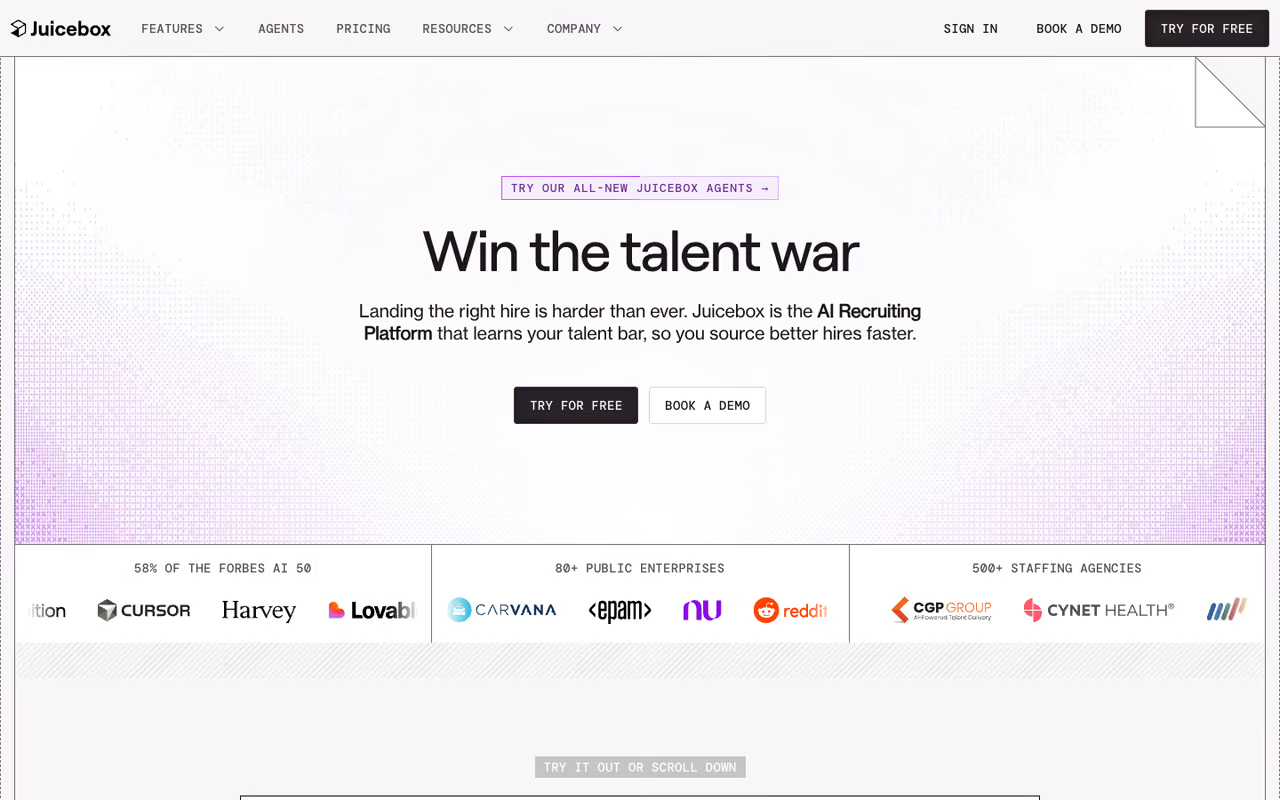
Juicebox (the company behind PeopleGPT) is where I'd send anyone new to AI sourcing. You type what you want in plain English, "senior backend engineer in Berlin who's worked at a fintech startup," and it searches across more than 800 million profiles from 30+ data sources. No Boolean gymnastics. The results are consistently good, and the outreach side writes decent first-touch emails you can edit.
The friendliest way into AI sourcing for solo recruiters, boutique agencies and small in-house teams, with plain-English search across 800 million profiles. Per-seat price climbed to $139 in 2026, credits run out at volume, and it is not an ATS.
there's a real free tier with limited searches. Paid starts at $139/mo (or $99/mo billed annually) for the Starter plan with 250 contact credits and 3 active projects. The Growth plan is $199/mo and adds phone numbers, 1,000 credits, and up to 5 seats. Autonomous sourcing Agents are a $199/agent/month add-on (Juicebox pricing).
The catch: the per-seat price climbed from around $99 to $139 in 2026 after PeopleGPT 2.0 shipped, and contact credits run out faster than you'd expect if you're sourcing at volume. The Agent add-on doubles your bill quickly. It's a sourcing tool, not an ATS, so you'll still need somewhere to track candidates.

Gem: the all-in-one for growing teams
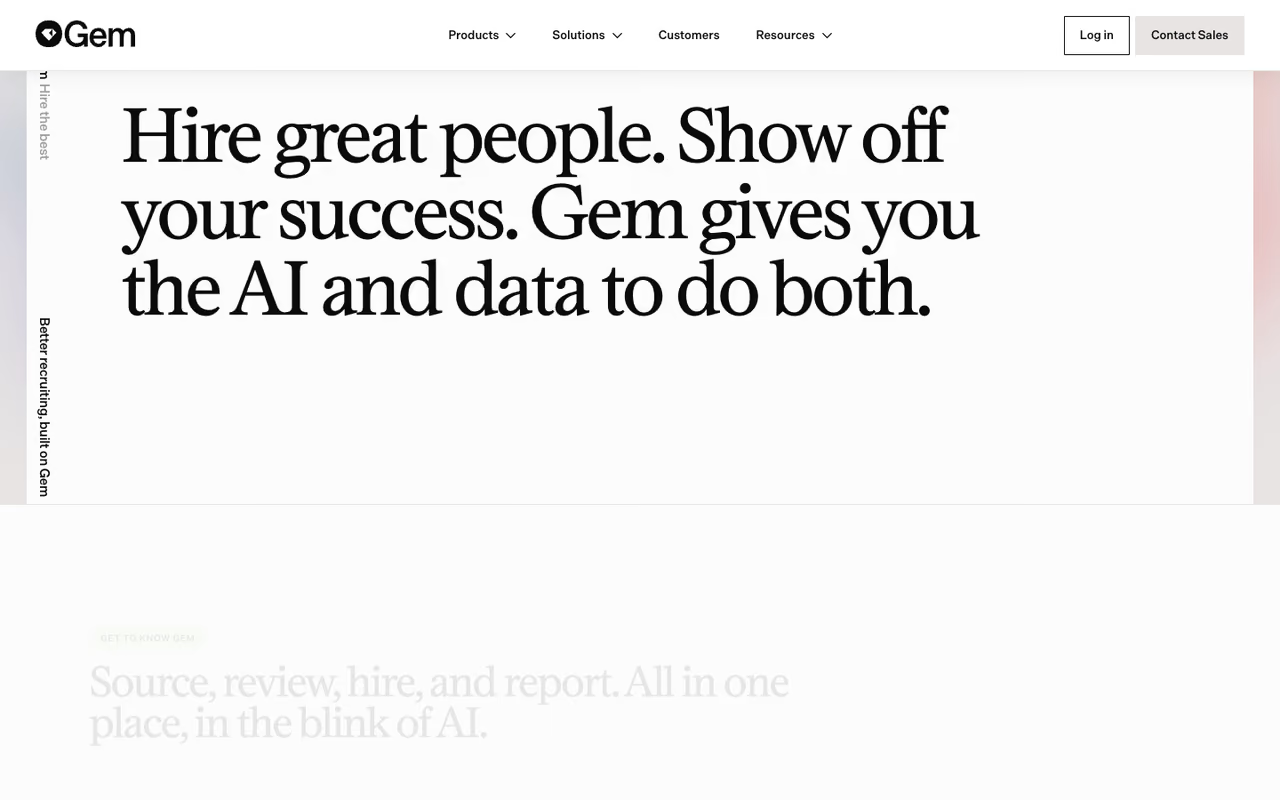
Gem started life as a recruiting CRM and has expanded into a full platform: ATS, CRM, sourcing, scheduling, and analytics, with AI threaded through each step and 800M+ profiles to source from. If you're tired of duct-taping a sourcing tool to a separate applicant tracker, Gem is the consolidation play. More than 1,200 companies use it, including DoorDash, Airbnb, and Wayfair.
The consolidation play for startups and mid-size teams tired of duct-taping a sourcer to a separate tracker, with ATS, CRM and sourcing under one roof. You pay for modules you may not use, and teams that love Ashby may find its tracker a downgrade.
Gem doesn't fully publish list prices, but reported rates start around $270/mo for the Startups in-house plan (500 AI sourcing credits, ATS, CRM, scheduling). The median annual contract sits near $24,900 per Vendr data, with deals ranging from $7,000 to roughly $71,000 (Vendr). Eligible startups under 100 employees can get 6 months free plus 50% off the first paid year.
Where it falls short: the all-in-one breadth means you pay for modules you might not use, and the real cost is opaque until you talk to sales. Teams that already love their ATS may find Gem's tracker a downgrade from a specialist like Ashby. For a wider view of platforms in this space, our guide to the best AI tools for HR covers the adjacent onboarding and performance tools.

Metaview: kill the interview note-taking
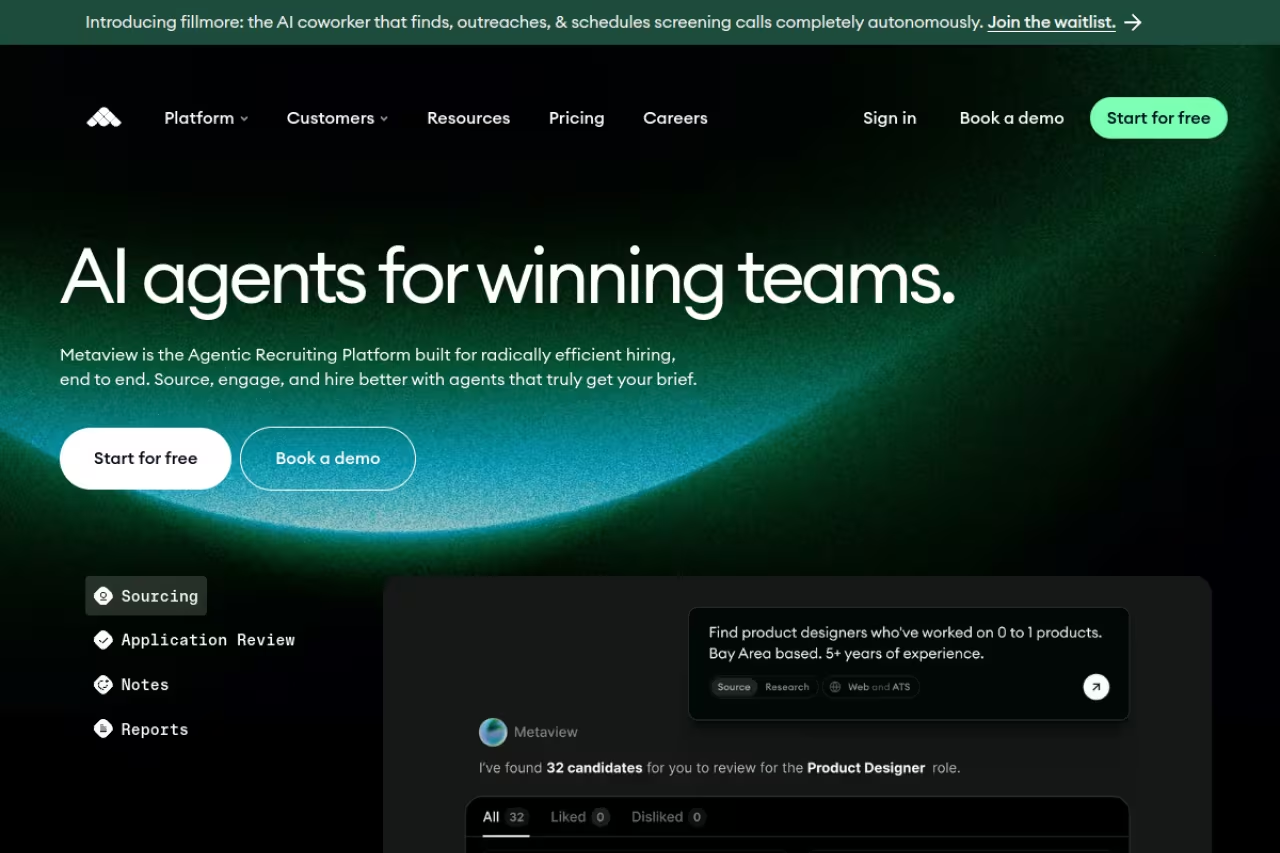
Metaview solves one specific, painful problem: writing up interviews. It joins your calls, transcribes everything, and produces structured notes and summaries you can push straight into your ATS. Recruiters I spoke to consistently said it claws back three to five hours a week. If your team's interview feedback is a mess of half-remembered Slack messages, this is the fix.
Pick Metaview if your team runs lots of interviews and wants consistent, structured feedback pushed into your ATS, with a free tier to start. It is a notes layer rather than a suite, and recording candidates needs a clear consent process.
there's a free tier (your first interviews, full experience). The Core plan is $20/user/month with unlimited interviews and transcripts; Pro runs higher with custom options. Metaview also sells a separate AI Sourcing agent starting free for the first 100 profiles, then $100/user/month (Metaview pricing). For deeper context on this category, see our roundup of the best AI meeting assistants.
The catch: it's a notes and intelligence layer, not a full recruiting suite, so it sits alongside your other tools rather than replacing them. And because it records candidate conversations, you need a clear consent process, which adds a small bit of admin and legal review before rollout.

Ashby: for teams that live in dashboards
Ashby is an all-in-one recruiting platform that combines ATS, CRM, scheduling, and analytics with embedded AI. Its reputation rests on analytics: if you care about pass-through rates, source-of-hire data, and pipeline conversion, Ashby's reporting is the best in the category. The AI helps with sourcing and summarization, but the dashboards are why people stay.
The choice for data-driven in-house TA teams at Series A through growth stage, thanks to the best reporting in the category. The $400 starting quote can balloon with hiring manager seats, and it is overkill for tiny teams.
the Foundations plan starts at $400/mo for companies up to 100 employees, with custom Plus and Enterprise tiers above that. Effective rates land around $800 per recruiter seat per year on the analytics-enabled tier, and buyer data puts the median contract near $10,000/year for a 12-user team (Ashby pricing breakdown).
Where it falls short: the real cost is driven by how many hiring managers need elevated seats, so the $400 starting quote can balloon. It's also overkill for tiny teams who'd be fine with a lighter tracker plus a sourcing tool. If you're on the candidate side of this, our guide on how to use AI for job search covers how applicants beat these screening systems.

Paradox (Olivia): high-volume hiring on autopilot
Paradox is built for the opposite end of the market from boutique sourcing. Its assistant, Olivia, handles candidate screening, interview scheduling, and follow-ups over SMS and chat, 24/7, in 100+ languages. For retail, hospitality, and hourly roles where you're processing thousands of applicants, it removes most of the manual back-and-forth. Chipotle reported 75% faster hiring, and GM cited around $2M saved annually.
Built for enterprises doing high-volume hourly and frontline hiring, with screening, scheduling and follow-ups handled over SMS and chat around the clock. It is an enterprise commitment with custom pricing, and the wrong shape for a 20-person company hiring knowledge workers.
custom only, with no public rates. Third-party estimates put entry deals around $1,000/mo, with most contracts landing in the $15,000 to $50,000+/year range and large enterprise deployments far higher (Index.dev review). No free trial.
The catch: it's an enterprise commitment with enterprise pricing and onboarding. For a 20-person company hiring knowledge workers, it's the wrong shape entirely. Conversational screening also works best for structured, high-volume roles, not nuanced senior hires.

SeekOut: enterprise sourcing with real DEI depth
SeekOut is the enterprise sourcing engine, strongest for technical and diversity hiring. Its DEI module lets teams set representation goals by department, track funnel equity, and generate OFCCP/EEOC-compliant audit reports. The diversity filters (gender, ethnicity, veteran status, and more) are widely considered the best in the category, and it has deep coverage of technical and security-cleared talent.
The enterprise sourcing engine for large organizations with formal diversity goals or hard-to-source technical roles, with the best diversity filters and audit reports. Pricing is gated behind sales and the platform is more than a small team needs.
custom, with a median annual contract around $20,000 and deals reported from roughly $5,800 to $55,000 depending on seats and modules (SeekOut pricing data).
Where it falls short: pricing is fully gated behind sales, and the platform is more than a small team needs. SeekOut launched a self-serve Recruit Lite tier to address this, but the headline product is built for organizations doing structured, compliance-heavy hiring at scale.

Fetcher: AI sourcing with a human in the loop
Fetcher is a hybrid: its AI scans 500M+ profiles and generates candidate batches, but humans review the output before it reaches you. That extra QA layer means fewer obviously-wrong matches, which appeals to teams that got burned by pure-automation tools surfacing irrelevant candidates.
Choose Fetcher if you want sourcing handled almost end-to-end without staffing a sourcer, since humans review AI batches before they reach you. Annual candidate caps feel tight for the price, and the review step adds latency versus Juicebox.
the Growth plan starts at $379/mo (or $499 monthly billing) with up to 500 sourced candidates a year; Amplify is $649/mo and adds a dedicated sourcer for several roles. Vendr data shows a median annual contract near $11,000 with most buyers negotiating around 24% off list (Fetcher pricing).
The catch: the annual candidate caps feel tight for the price if you hire in bursts, and the human-review step adds a little latency versus instant tools like Juicebox. You're paying a premium for the QA, so it only makes sense if accuracy matters more than speed. Many of these sourcing engines are really agentic systems under the hood; if that interests you, see our roundup of the best AI agents.

hireEZ: outbound sourcing across the open web
hireEZ (formerly Hiretual) is built for outbound recruiting: AI-powered sourcing across LinkedIn, GitHub, and dozens of public talent platforms, plus automated outreach sequences for passive candidates. It's a workhorse for sourcing teams that live in cold outreach.
A workhorse for sourcing-heavy teams running outbound at scale across LinkedIn, GitHub and other platforms. Pricing is opaque, the depth is wasted on small teams, and the newer AI screening features are less mature than its outbound engine.
quote-based, no public rates. Estimates put it around $169 to $250+ per seat per month, with a median annual contract near $13,000 (hireEZ pricing).
Where it falls short: like most enterprise tools here, the opaque pricing makes budgeting hard, and the platform's depth is wasted on small teams. The core sourcing is strong, but the newer AI screening features are less mature than the outbound engine that built its reputation.
How to choose
Don't buy by "best overall." Buy by the bottleneck you're trying to clear.
You're a small team or agency that sources its own candidates. Start with the free tier of Pin or Juicebox, then upgrade if the credits run out. Add Metaview's free plan to fix interview notes. Total cost to start: near zero.
You're a growing in-house team drowning in tools. Consolidate with Gem (sourcing + CRM + ATS) or Ashby if analytics is your obsession. Pick Gem for the sourcing-first workflow, Ashby for the reporting.
You hire hundreds of hourly workers a month. Paradox is the category answer. Nothing else handles conversational, high-volume screening as well.
You have formal diversity goals or niche technical roles. SeekOut or hireEZ for the sourcing depth and compliance reporting.
One rule that saved teams I talked to real money: buy the narrow tool that fixes your worst bottleneck before you buy the all-in-one. A $20/user notes tool that saves four hours a week beats a $30,000 platform you only half-use.
If you want to keep up with new recruiting AI as it ships, Dupple X tracks the tools and workflows the best teams adopt before they go mainstream. Try a yearly trial and skip the trial-and-error.
FAQ
What is the best AI recruiting tool in 2026?
There's no single winner, because the tools solve different jobs. For a first AI recruiting tool that covers sourcing, outreach and a CRM, Pin is an easy place to start. For sourcing passive candidates on their own, Juicebox is the easiest and cheapest to start with. For an all-in-one platform, Gem and Ashby lead. For interview notes, Metaview. For high-volume hourly hiring, Paradox. Match the tool to your biggest bottleneck rather than chasing a generic "best."
Are AI recruiting tools worth the cost?
For most teams, yes, if you pick the right one. The clearest ROI comes from narrow tools: a $20/user notes assistant like Metaview pays for itself by saving recruiters three to five hours a week. Expensive all-in-one platforms only pay off when you actually use most of their modules. Start small and expand once you've proven the time savings.
Do AI recruiting tools introduce hiring bias?
They can, which is why explainability and audit tools matter. AI trained on past hiring data can reproduce existing bias, so look for vendors that publish bias audits and give you controls, like SeekOut's OFCCP/EEOC reporting. Treat AI output as a shortlist to review, never an automatic accept-or-reject decision, and keep a human accountable for every hire.
Can AI recruiting tools replace recruiters?
No, and the good ones don't try to. They remove admin: Boolean searches, note-taking, scheduling, first-touch outreach. Judgment calls, relationship building, and closing candidates stay human. The recruiters getting the most value use AI to clear busywork so they can spend more time actually talking to people.
What's the difference between AI sourcing and AI screening tools?
Sourcing tools (Juicebox, Fetcher, hireEZ, SeekOut) find passive candidates who aren't applying, usually by searching large profile databases. Screening tools (Paradox, parts of Metaview and Ashby) evaluate and filter people who are already in your pipeline, through chat, assessments, or structured notes. Most teams need both, often from different vendors.
Do any AI recruiting tools have a free tier?
Yes. Pin has a permanent free plan, Juicebox offers a free plan with limited searches, and Metaview gives you your first interviews free. Most sourcing and all-in-one platforms (Gem, SeekOut, Paradox, hireEZ) are paid-only with custom or quote-based pricing, so expect to talk to sales for anything enterprise-grade.
Related guides
Some offers on this page may be paid placements or contain affiliate links.
Across our whole catalogue the median is $24 a month and 33% of tools advertise a free tier. Figures are the lowest recurring monthly price quoted in our own review of each tool, read on 2026-08-19. Full method and every category.
