
The 8 Best Customer Education Platforms in 2026

Key facts8 tools compared: Skilljar, Thought Industries, WorkRamp, Gainsight Customer Education…
- 8 tools compared: Skilljar, Thought Industries, WorkRamp, Gainsight Customer Education, LearnWorlds, Docebo, LearnUpon, Disco
- Skilljar (best for: Enterprise academies tied to retention): Custom (sales)
- Thought Industries (best for: Monetized / multi-brand training): From ~$2,500/mo
- WorkRamp (best for: Unified employee + customer learning): Custom (sales)
- Gainsight Customer Education (best for: SaaS teams tying education to renewals): Custom, fixed/unlimited learners
A churned customer rarely leaves because the product was bad. They leave because they never figured out how to get value from it. That gap, between sign-up and the "aha" moment, is exactly what a customer education platform is supposed to close. Build an academy, ship onboarding courses, certify power users, and you turn confused trial users into people who renew without thinking about it.
The problem is that "customer education platform" now covers everything from a $29/month course builder to a six-figure enterprise LMS wired into your CRM. Pick wrong and you either overpay for analytics you'll never read, or you outgrow a tool in eight months and migrate everything again. I compared these products on documentation, public user reviews from teams running real academies, and pricing that vendors mostly hide behind "book a demo" buttons.
If you want the short answer: Skilljar is the default pick for a serious customer academy with CRM-tied analytics, and it's hard to beat at the enterprise end. But it's overkill (and overpriced) for a lot of teams, so the rest of this list covers who should buy what instead. This guide is for customer success, product, and education leaders deciding where to put their training budget in 2026.
Quick comparison
| Tool | Best for | Price | Standout |
|---|---|---|---|
| Skilljar | Enterprise academies tied to retention | Custom (sales) | CRM + Gainsight health score integration |
| Thought Industries | Monetized / multi-brand training | From ~$2,500/mo | Multiple branded, revenue-generating hubs |
| WorkRamp | Unified employee + customer learning | Custom (sales) | One platform for internal and external |
| Gainsight Customer Education | SaaS teams tying education to renewals | Custom, fixed/unlimited learners | Fixed pricing, no per-learner charge |
| LearnWorlds | Course businesses and SMB academies | From $24/mo (annual) | Interactive video + storefront |
| Docebo | Large, complex global audiences | From ~$25k/yr | AI-driven enterprise LMS |
| LearnUpon | Multi-audience, multi-portal training | ~$15k/yr+ | Separate branded portals per audience |
| Disco | AI-native academies with community | From ~$399/mo | AI program builder + social learning |

Skilljar
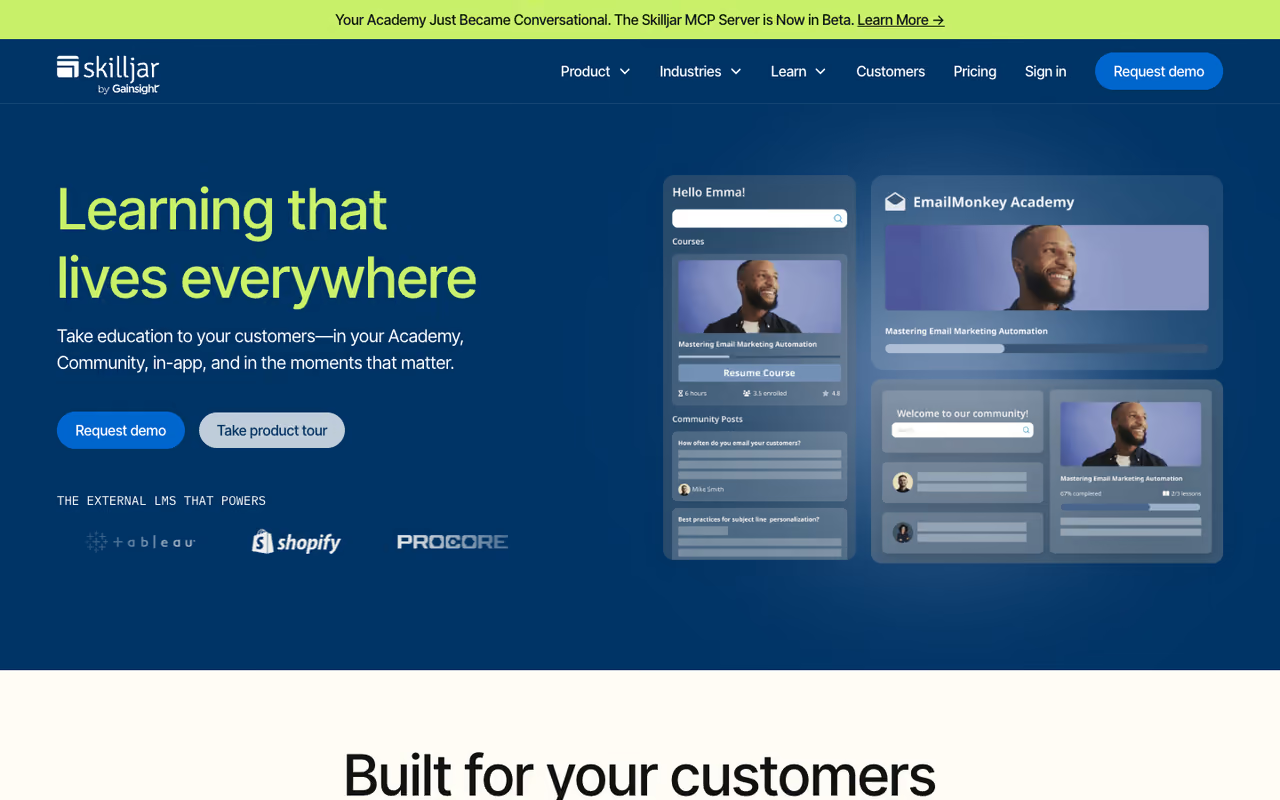
Skilljar is the platform most large customer education teams end up on, and now that it's owned by Gainsight (acquired in 2025), it sits inside one of the biggest customer success ecosystems out there. It runs branded academy portals, on-demand and live courses, certifications, and analytics that connect course completion to retention and revenue.
Who it's best for: Mid-market and enterprise SaaS companies that already track customer health and want education to feed those same dashboards. Smartsheet, Asana, and Shopify run on it, which tells you the ceiling.
Skilljar is the choice for mid-market and enterprise SaaS companies that want education feeding their customer health dashboards. Integration depth is the strength, but pricing is custom and high, so a small startup will feel the weight.
Custom only. Skilljar doesn't publish numbers, and per multiple buyer reports it lands in the mid-to-high five figures annually, climbing into six figures for large deployments. Expect a real sales cycle.
The standout: The integration depth. Course data flows into Gainsight health scores and Salesforce, so you can actually answer "do customers who finish onboarding churn less?" with data instead of a hunch. Few tools close that loop natively.
The catch: it's expensive and built for scale, so a 200-customer startup will feel the weight of features and price they don't need yet. Implementation takes time, and you're committing to a platform that assumes you have a dedicated education team.

Thought Industries
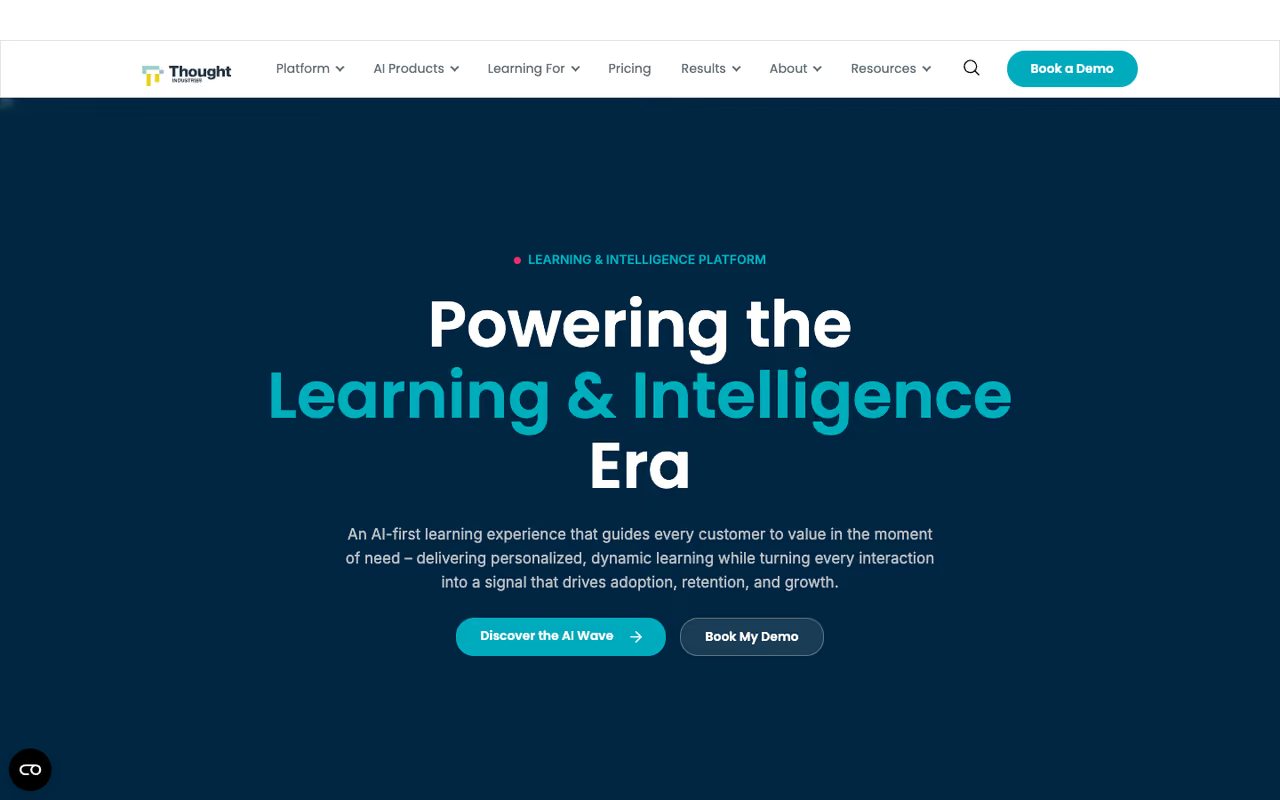
Thought Industries is built for companies that treat training as a product, not just an onboarding chore. If you're selling courses, certifications, or partner enablement and want several distinctly branded learning hubs, this is where it shines.
Who it's best for: Software companies and training organizations that monetize education or need to serve multiple audiences (customers, partners, professional learners) under separate brands.
The pick for companies that treat training as a product and want several distinctly branded academies. Thought Industries is a monetization engine, with pricing starting around $2,500/month, so it only pays off if you plan to sell education.
Custom, starting around $2,500/month for up to 100 active users per third-party pricing data, which works out near $25,000/year as a floor. It scales up from there and is reportedly negotiable if you bring a competing quote.
The standout: Monetization and multi-brand. You can run subscriptions, course bundles, and per-seat licensing across separate themed academies, with AI features now generating courses and video. Their case studies cite things like 20% adoption lifts and $500K in new training revenue.
Where it falls short: it's heavier to set up than the SMB tools, and the price tag rules it out for teams that just want a simple onboarding academy. You're paying for a revenue engine, so it only pays off if you actually plan to monetize.

WorkRamp
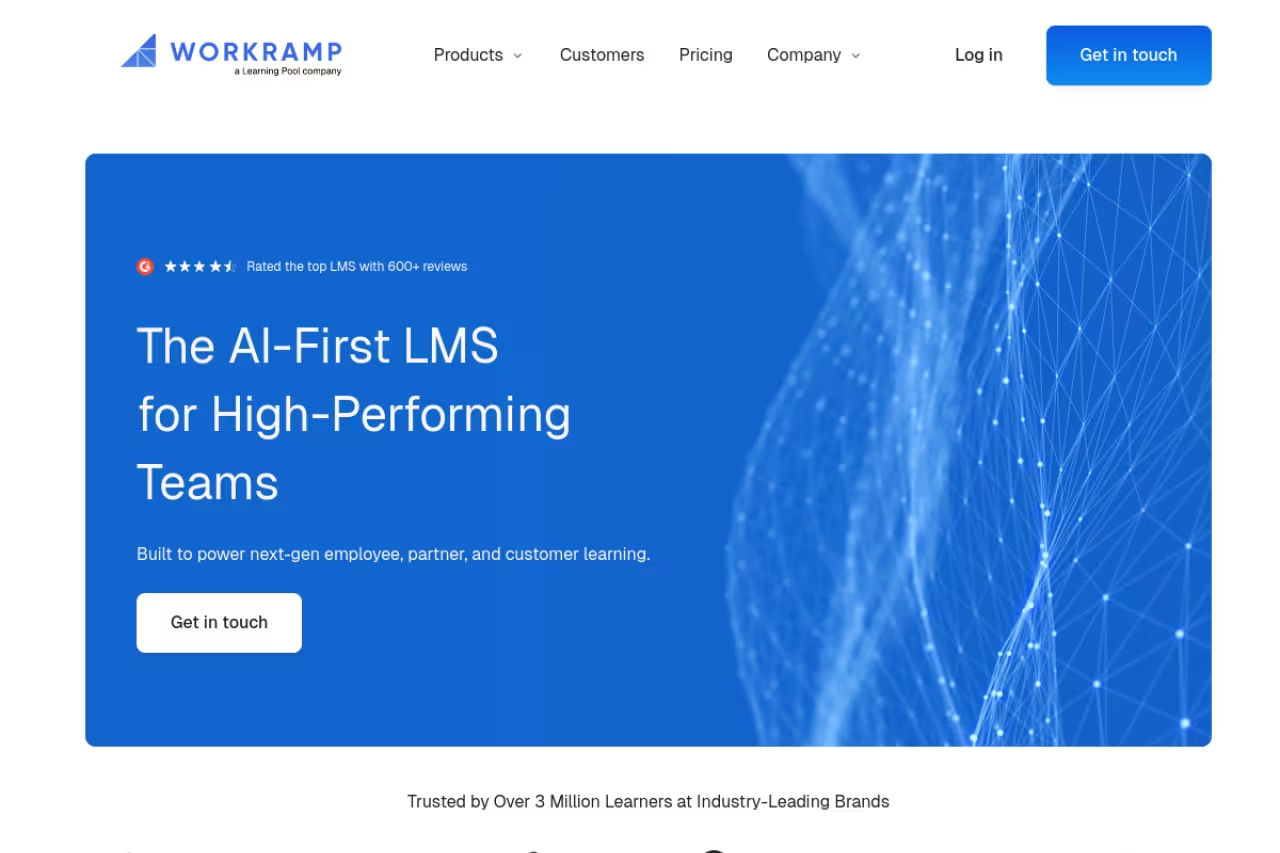
WorkRamp splits into two products: an Employee Learning Cloud and a Customer Learning Cloud. The pitch is that you run internal enablement and external customer training on one platform instead of buying two tools, which is genuinely useful if your CS and L&D teams keep stepping on each other.
Who it's best for: Companies that want both employee enablement and customer education in the same system, especially sales-led orgs that already think about onboarding and certification together.
A good fit for companies that want employee enablement and customer education in one system. The AI course tooling is a real head start, but customer-facing features can feel secondary and pricing is opaque.
Custom, not published. Buyer reports put most several-hundred-learner deployments in the low-to-mid five figures annually, with onboarding and migration fees that can add 10-20% to year one.
The standout: The AI tooling has gotten good. You can draft courses from existing files, auto-generate quizzes, handle captioning and translation, and run AI role-play simulations for customer-facing teams. For a content-thin team, that's a real head start.
The catch: the unified approach means you sometimes feel like the customer-facing side plays second fiddle to employee enablement, which is where WorkRamp started. And like the others here, the opaque pricing makes budgeting annoying until you're deep in a sales call.

Gainsight Customer Education (formerly Northpass)
Gainsight Customer Education, the product formerly known as Northpass, is built around one idea: tie learning directly to retention. Gainsight acquired Northpass in 2023, so it now sits next to the same customer health data Skilljar plugs into, which makes Gainsight's two-academy lineup a little confusing but very retention-focused.
Who it's best for: SaaS customer success teams that want a fast-to-launch branded academy without a giant implementation, and who care most about connecting education to renewals.
Choose it if you're a SaaS customer success team that wants a quick-launch branded academy tied to renewals. Unlimited-learner pricing keeps costs flat as you grow, but some value fades outside the Gainsight ecosystem.
Custom, but with a notable twist. Plans use fixed pricing for unlimited learners instead of charging per active learner, so your cost doesn't balloon as your user base grows. You still talk to sales for the actual number.
The standout: Unlimited-learner pricing. If you're educating tens of thousands of end users, per-seat LMS pricing gets brutal, and a fixed model removes that anxiety. Pair it with Gainsight's success platform and the retention story is tight.
Where it falls short: outside the Gainsight ecosystem, some of the strategic value evaporates, and the product overlaps awkwardly with Skilljar now that both live under the same roof. Worth asking sales directly which one fits your roadmap.
If you're building out the broader CS stack around this, our roundup of the best AI agents covers tools that automate the support and onboarding work sitting next to your academy.

LearnWorlds
LearnWorlds is the pick when you don't have enterprise money and you want something live this week. It's a course platform with a slick interactive video engine, built-in storefront, and certification, and it punches well above its price for smaller customer academies.
Who it's best for: SMBs, solo education teams, and anyone running a course-based academy or selling training as a side revenue stream.
The pick for SMBs and solo education teams that want something live this week without enterprise money. Pricing is transparent from $24/month, but it's a course platform first and lacks deep retention analytics.
Transparent and refreshingly so. The published plans run Starter at $24/month, Pro Trainer at $79/month, and Learning Center at $249/month on annual billing, with a 30-day trial. Note the Starter plan charges a 5% transaction fee on course sales; Pro Trainer drops it.
The standout: Interactive video. You can drop quizzes, buttons, and clickable elements straight into videos, which keeps learners doing things instead of passively watching. For onboarding content, that engagement matters.
The catch: it's a course platform first, so the deep CRM-tied retention analytics that enterprise CS teams want aren't really here. You'll outgrow it if education becomes a strategic, data-driven motion rather than a content library.

Docebo
Docebo is an enterprise LMS that has leaned hard into AI, and it handles large, messy, multi-audience training programs better than most. If you need certifications, compliance, deep analytics, and global scale in one system, it's a serious contender.
Who it's best for: Larger organizations with complex, diverse audiences across customers, partners, and employees who need real configurability and reporting.
Docebo is a serious enterprise LMS for complex, multi-audience programs with global scale and strong AI. Total cost typically starts around $25,000/year, and the configurability becomes a burden for smaller teams.
Custom and premium. Total cost of ownership typically starts around $25,000/year, with per-user rates commonly cited in the $7-$10/user/month range that drops with volume. SMB deployments often run into the high five figures.
The standout: AI and scale. Docebo's AI personalizes learning paths, automates content tagging, and surfaces analytics across huge user bases. When you're training tens of thousands of people across regions, that automation earns its keep.
Where it falls short: it's powerful enough to be overwhelming, and the configurability that enterprises love becomes a burden for smaller teams. It's not the tool you reach for if you just want a clean onboarding academy up by Friday.
LearnUpon
LearnUpon is a multi-audience LMS whose calling card is portals: you can spin up separate branded learning environments for customers, partners, and employees from one back end. That separation is genuinely handy when each audience needs different content and branding.
Who it's best for: Companies training several distinct audiences who want clean separation without managing multiple tools or logins.
Go with LearnUpon if you train several distinct audiences and want a separate branded portal for each. It's cleaner than permission hacks, but pricing climbs with learner count and setup has a learning curve.
Custom, based on active learners and tier. Buyer estimates put entry deployments (up to ~500 learners) around $15,000-$25,000/year, plus implementation that can run $5,000-$25,000 depending on scope.
The standout: The multi-portal architecture. Instead of cramming every audience into one academy and hiding content with permissions, you give each group its own branded home. For partner programs especially, that's cleaner than the alternatives.
The catch: pricing climbs with learner count, so high-volume customer education can get pricey compared to the fixed-learner models. And the breadth means there's a learning curve to configure it well.
Disco
Disco is the AI-native option, built around the idea that an academy should feel like a community, not a content vault. It pairs courses with live events, chat, groups, and gamification, then layers an AI program builder on top that genuinely cuts setup time.
Who it's best for: Teams that want social and cohort-based learning alongside self-paced courses, and who like the idea of AI drafting programs, quizzes, and member answers for them.
The most modern-feeling option here for teams that want an academy that behaves like a community, with an AI program builder. It's more accessible at around $399/month, but lighter on deep enterprise integrations and compliance.
More accessible than the enterprise pack. Third-party data puts the Organization plan around $399/month billed annually, with a free trial available. Higher tiers exist for larger operations.
The standout: The AI builder plus community. "Ask AI" gives members instant context-aware answers, the program generator spins up a course structure in minutes, and the social features (leaderboards, groups, live events) keep people coming back. It's the most modern-feeling product here.
Where it falls short: it's newer and lighter on the deep enterprise integrations and compliance features that Skilljar or Docebo offer. If your buyer is a CISO or you need airtight CRM data flows, it's not the safe pick yet.
Want a faster way to keep tabs on tools like these as they ship new features? Dupple X tracks the AI and SaaS releases that actually matter, so you're not finding out about a competitor's new academy from a customer.
How to choose
Skip the feature checklists for a second and answer three questions.
First, what's the goal? If education exists to reduce churn and you already track customer health, buy a tool that integrates with your CRM and success platform: Skilljar, Gainsight Customer Education, or Docebo. If you want to make money from training, Thought Industries or LearnWorlds. If you just need an onboarding academy live fast, LearnWorlds or Disco.
Second, how many learners, and how do they scale? Per-active-learner pricing (LearnUpon, Docebo) is fine at small scale but punishing if you educate tens of thousands of end users. In that case fixed-learner models like Gainsight Customer Education save you real money. Run the math on your projected user count, not today's.
Third, who else needs training? If you're also doing employee enablement or partner training, a multi-audience tool (WorkRamp, LearnUpon) beats buying two systems that don't talk to each other. If it's purely customers, a focused platform will be simpler.
My honest take: most teams overbuy. Start with the tool that fits this year's scale and motion, prove education moves retention, then upgrade once you have the data to justify a six-figure contract. The migration pain of going up a tier is real, but it's smaller than the pain of paying enterprise prices for a program you haven't validated.
For more on building the learning content itself, our guide to the best AI tools for course creation covers what to use before the content ever hits your LMS, and you can browse the wider top tools directory for adjacent CS software.
FAQ
What is a customer education platform?
A customer education platform is software for building and running training that helps your customers learn to use your product. It typically includes a branded academy portal, course and video authoring, certifications, and analytics that connect learning to outcomes like product adoption and retention. Think of it as an LMS aimed at external users rather than employees.
How much does a customer education platform cost in 2026?
It ranges widely. SMB course platforms like LearnWorlds start around $24-$79/month. Mid-market tools like Disco run a few hundred dollars monthly. Enterprise platforms (Skilljar, Thought Industries, Docebo) are custom-priced and usually start near $25,000/year, climbing into six figures for large deployments. Watch for separate implementation and migration fees that can add 10-25% to year one.
What's the difference between Skilljar and Gainsight Customer Education?
Both are now owned by Gainsight. Gainsight Customer Education (formerly Northpass) was acquired in 2023 and leans toward fast-to-launch academies with fixed unlimited-learner pricing. Skilljar was acquired in 2025 and is the heavier, enterprise-grade platform with deeper CRM and analytics integration. They overlap, so ask Gainsight's sales team directly which one fits your scale and roadmap.
Do I need a dedicated LMS, or can I just use help docs?
Help docs answer "how do I do X." A customer education platform changes behavior: structured onboarding paths, certifications, and progress tracking that you can tie to retention. If your product is simple, docs may be enough. If onboarding is complex or you're seeing churn from underuse, a real academy with completion data usually pays for itself.
Which customer education platform is best for a small SaaS team?
For small teams, LearnWorlds (transparent pricing from $24/month) or Disco (AI-native, around $399/month) give you a branded academy without an enterprise contract or a long implementation. Both let you launch quickly and upgrade later. Save the Skilljar or Docebo tier for when you have data proving education moves your retention numbers.
Related guides
Some offers on this page may be paid placements or contain affiliate links.
Across our whole catalogue the median is $24 a month and 33% of tools advertise a free tier. Figures are the lowest recurring monthly price quoted in our own review of each tool, read on 2026-08-19. Full method and every category.
