
Best VPN Services in 2026: 8 Picks Compared on Speed and Privacy

Key facts8 tools compared: NordVPN, Proton VPN, Surfshark, ExpressVPN, Mysterium VPN, Mullvad…
- 8 tools compared: NordVPN, Proton VPN, Surfshark, ExpressVPN, Mysterium VPN, Mullvad, Windscribe, IVPN
- NordVPN (best for: All-around use): ~$3.39/mo (2yr)
- Proton VPN (best for: Privacy + free tier): Free / ~$2.99/mo
- Surfshark (best for: Value, big households): $1.99/mo (2yr)
- ExpressVPN (best for: Beginners, simplicity): ~$2.49/mo (2yr)
I've watched the VPN market turn into a sponsorship arms race. Every podcast, every YouTuber, every "top 10" blog pushes the same three logos because those companies pay the most affiliate commission. That doesn't tell you which one is actually fast, which one has proven it keeps no logs, or which one you'll quietly cancel after a month.
So I went the other way. I looked at independent audits, real speed tests from labs that don't take VPN money, and the boring details that matter when you're connecting from a hotel in Lisbon or trying to reach a US server during peak hours. The short version: if you want one VPN that does everything well, get NordVPN. It's fast, it's been audited more times than almost any competitor, and the apps don't fight you.
This guide is for people who treat their connection as infrastructure. Founders working from coffee shops, remote operators on sketchy Wi-Fi, developers who need a clean IP in another region, and anyone who'd rather not have their ISP build a profile of their browsing. Here are the eight services worth your money in 2026, plus an honest note on where each one disappoints.
Quick comparison
| Tool | Best for | Price (cheapest) | Standout |
|---|---|---|---|
| NordVPN | All-around use | ~$3.39/mo (2yr) | NordLynx speed + 6 audits |
| Proton VPN | Privacy + free tier | Free / ~$2.99/mo | Swiss jurisdiction, real free plan |
| Surfshark | Value, big households | $1.99/mo (2yr) | Unlimited devices |
| ExpressVPN | Beginners, simplicity | ~$2.49/mo (2yr) | 19+ independent audits |
| Mysterium VPN | VPN blocks, CAPTCHAs, streaming | $2.59/mo (2yr) | Residential IP network |
| Mullvad | Anonymity | €5/mo flat | No account, cash signup |
| Windscribe | Free + power users | Free / from $1/mo | Build-a-plan pricing |
| IVPN | Minimalists who hate hype | ~$6/mo | Anti-marketing honesty |
NordVPN: the default pick for most people
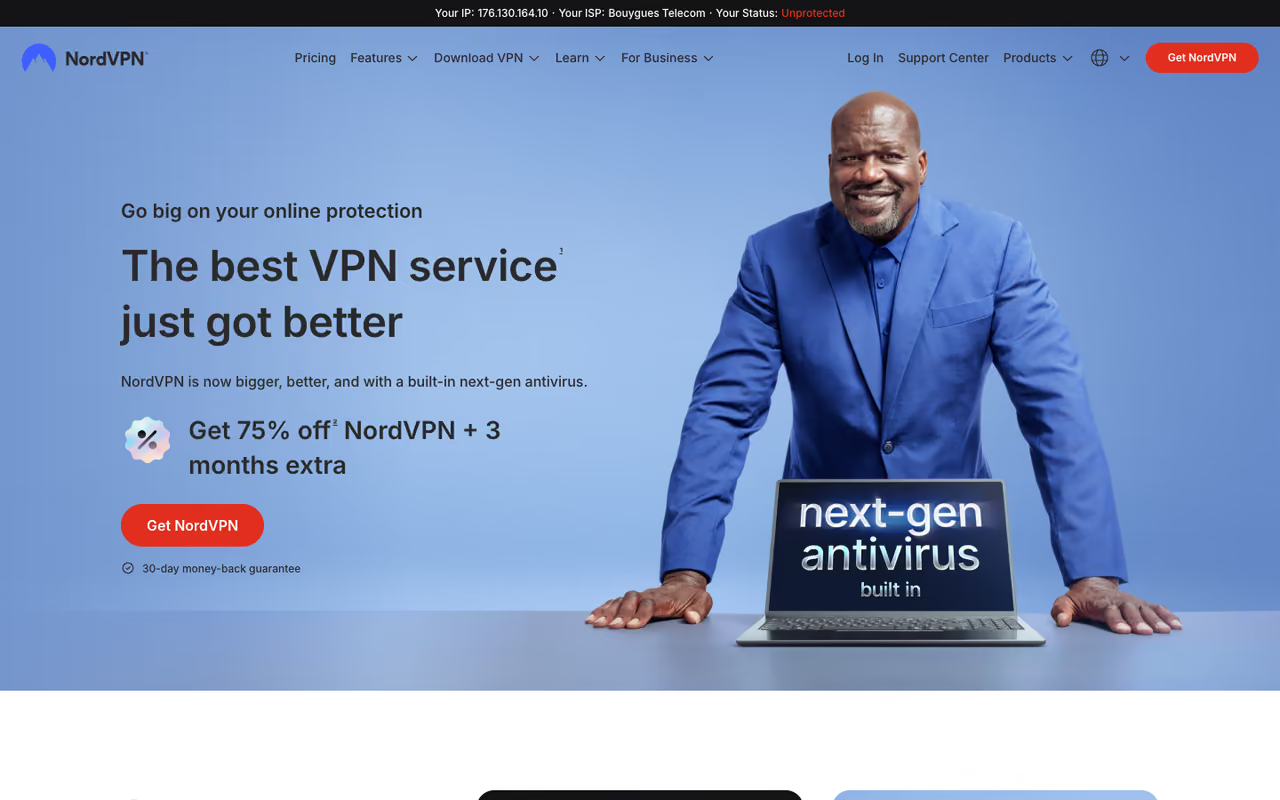
NordVPN is the one I recommend when someone asks "just tell me what to get." It runs about 9,300 servers across 137 countries, and its in-house NordLynx protocol (a WireGuard variant) consistently lands at the top of independent speed tests, holding well over 1,000 Mbps on nearby servers in lab conditions.
The default I point most people to when they just want to be told what to get. It combines speed, working streaming and a no-logs policy backed by six independent audits, but the headline price is introductory, renewals jump, and the upsell screens get old.
Nord has passed six independent audits, more than almost any consumer VPN, and runs RAM-only servers that wipe on reboot.
Pricing starts around $3.39/month on the two-year Basic plan, with a 30-day money-back guarantee. Higher tiers bundle a password manager and 1 TB of encrypted storage, which is decent value if you'd buy those anyway. You get 10 simultaneous connections.
The catch: that headline price is an introductory rate. Renewal jumps significantly, so set a calendar reminder to re-shop or grab a fresh long-term deal before it auto-charges. The constant upsell screens for extra products also get old.
Proton VPN: the privacy pick with a free tier that doesn't suck
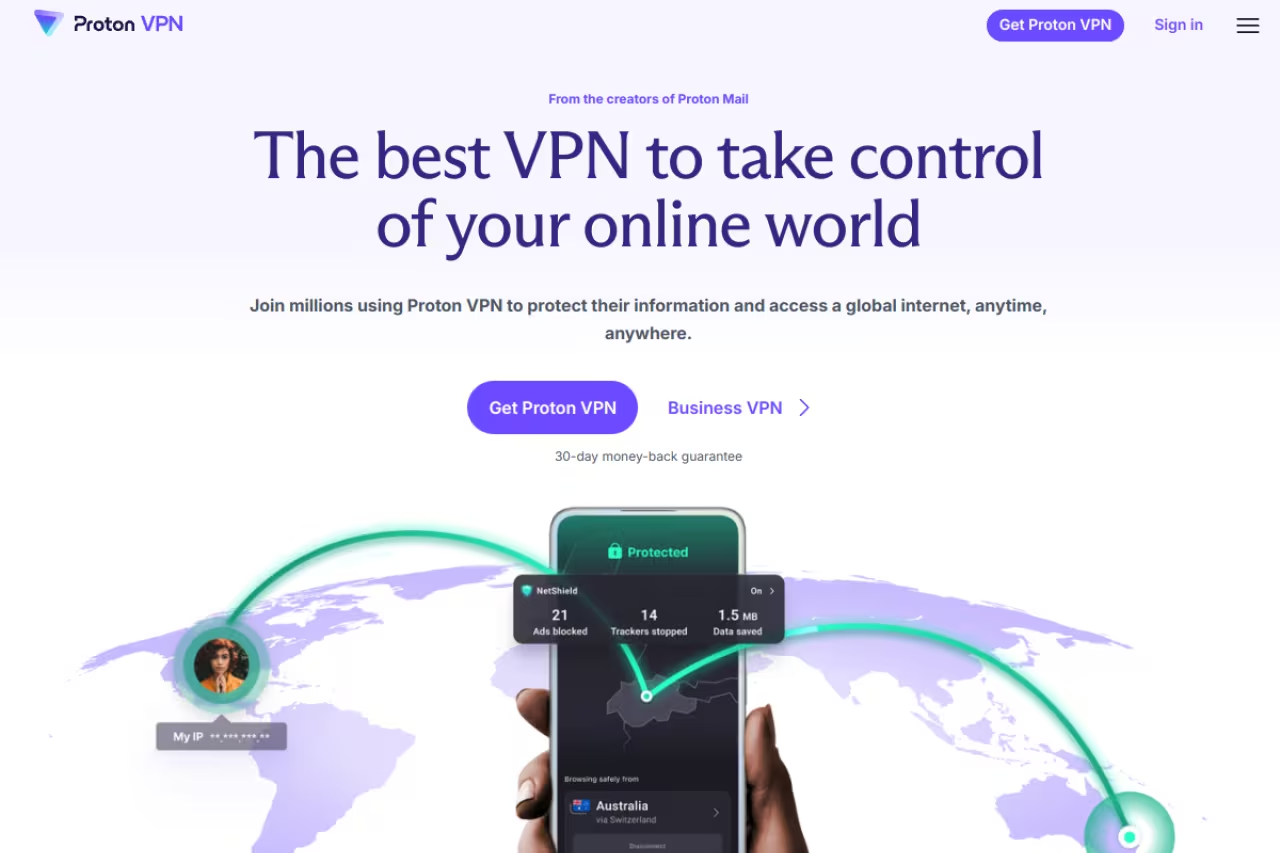
Proton VPN comes from the team behind Proton Mail, and it's built around Swiss privacy law, which sits outside the 14 Eyes intelligence-sharing alliance. In recent independent speed testing it placed first overall in upload speed and lost only single digits on download, so "privacy-focused" no longer means "slow."
Proton VPN is the privacy pick for anyone who wants a genuinely usable free plan or a provider whose whole business is privacy, with Swiss law, open-source apps and audits. The free tier skips streaming and the fastest servers, and the server picker is less polished than Nord's.
The free tier covers 10 countries on one device with no data cap, which is rare. Paid VPN Plus runs around $2.99/month on the two-year term and covers 10 devices across 140-plus countries.
The standout is trust. Proton is independently audited, publishes a SOC 2 Type II report, and open-sources its apps so anyone can inspect the code. Its Secure Core routing bounces traffic through hardened servers in privacy-friendly countries before it exits.
The catch: the free plan deliberately leaves out streaming unblocking and the fastest servers, so it's a tool for basic protection, not for watching geo-locked content. The app's server picker is also less polished than Nord's.
Surfshark: unlimited devices for the price of a coffee
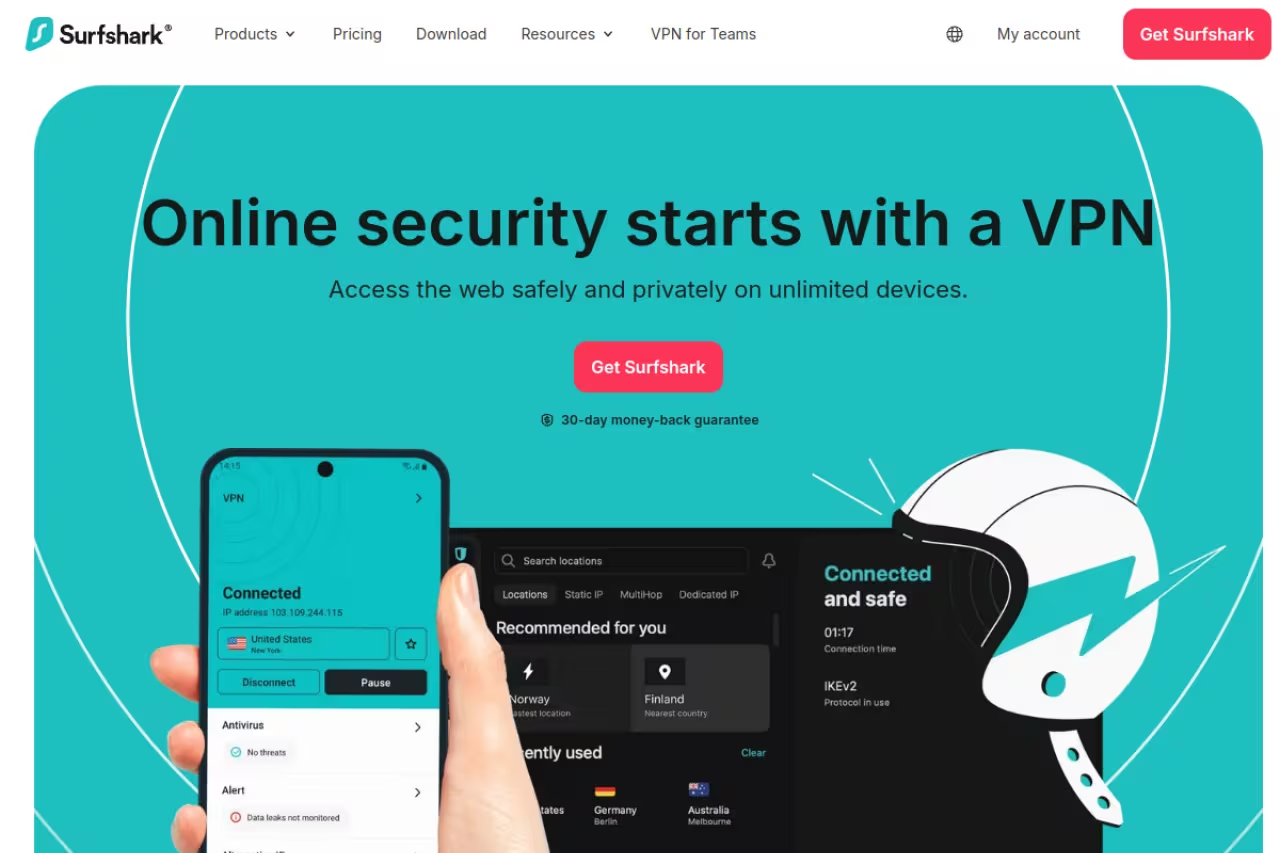
Surfshark made its name on one feature: unlimited simultaneous connections. One subscription covers your laptop, phone, tablet, partner's devices, the smart TV, and the work machine, with no per-device math.
Surfshark is the value choice for families and shared households, since unlimited simultaneous connections mean no per-device math. The cheap rate balloons at renewal, the Starter tier strips out the ad blocker, and speeds trail NordVPN and Proton.
The Starter plan drops to $1.99/month on the two-year term, one of the lowest prices in the market, with a 30-day refund window. You get 4,500-plus servers in 100 countries.
The standout is value per device. Where most rivals cap you at 5 to 10 connections, Surfshark just doesn't count. It also clears independent audits and runs on RAM-only infrastructure, so the cheap price doesn't come with a security asterisk.
The catch: same renewal trap as Nord, the cheap rate balloons after the intro term. The cheapest "Starter" tier also strips out the ad blocker and alternate-ID tools, which sit on pricier plans. Speeds are good but not quite NordVPN or Proton territory.

ExpressVPN: the one to hand a non-technical relative
ExpressVPN has spent years optimizing for one thing: you open the app, hit one button, and it works. The apps are the most beginner-proof in the category, and the in-house Lightway protocol keeps connections fast and stable when you switch networks.
Hand ExpressVPN to a non-technical relative: one button, beginner-proof apps and the longest audit trail of any consumer VPN. You pay a premium for that polish, as it tends to cost more than Surfshark or Nord, and desktop has no free trial.
ExpressVPN has commissioned more than 19 independent audits, the most of any consumer VPN, covering its no-logs policy, the TrustedServer architecture, and Lightway itself. Its servers run entirely in RAM.
Pricing starts around $2.49/month on the two-year Basic plan, with tiers going up to 14 device connections. Coverage spans 105 countries.
The catch: even on sale, Express tends to cost more than Surfshark or Nord for comparable terms, and there's no free trial on desktop (only a 30-day refund). You're paying a premium for polish and that audit history.
Mysterium VPN: residential IPs for more natural browsing
Mysterium VPN takes a different approach from the usual data-center VPN network. Alongside standard servers, it gives you access to thousands of residential IPs (addresses tied to real consumer connections) which makes your traffic look more like normal browsing and can help with sites that aggressively block traditional VPN IPs. Its network covers 100-plus countries on the Plus and Pro plans.
Mysterium suits travelers, streamers and researchers who keep hitting CAPTCHAs and VPN blocks, thanks to residential IPs that look like ordinary household connections. You need Plus or Pro for those features, and experience can vary more from one location to another.
Mysterium supports WireGuard and OpenVPN, while its Plus plan includes 7,500-plus residential IPs, city-level location selection, and up to 10 simultaneous connections.
The standout is the residential network. Most consumer VPNs send you through recognizable data-center IP ranges; Mysterium gives you the option of an IP that looks more like an ordinary household connection. Mysterium VPN pricing starts at $2.59/month for the two-year Basic plan, while Plus (the tier that adds residential IPs and 100-plus countries) runs $2.99/month on a two-year subscription.
The catch: the cheapest Basic plan doesn't include residential IPs or city-level server selection, so you need Plus or Pro to get the features that make Mysterium genuinely different. And because the network includes residential nodes rather than relying entirely on conventional VPN servers, the experience can be less predictable from one location to another than with a tightly controlled data-center network.

Mullvad: the choice when you actually need anonymity
Mullvad does something almost no other VPN does: it doesn't want to know who you are. You generate a random account number, pay with cash, crypto, or card, and that's it. No email, no name, no profile.
The choice when you actually need anonymity: no email, no name, just a random account number and a flat €5 a month. It costs more than a discounted two-year Nord or Surfshark plan, is weaker at streaming, and allows only 5 devices.
Mullvad runs roughly 700 servers across 49 countries, all RAM-only, all on hardware it controls rather than rents. As of January 2026 it's WireGuard-only, having dropped OpenVPN to simplify its attack surface.
The standout is its flat price: €5 a month, every month, forever. No two-year lock-in, no fake countdown timers, no "act now" psychology. When Swedish police raided Mullvad in 2023 looking for customer data, they left with nothing, because there was nothing to take.
The catch: at €5/month flat, Mullvad is more expensive than a discounted two-year Nord or Surfshark plan, and it's worse at streaming. You also only get 5 device connections, and the minimalist apps assume you know what a VPN is.

Windscribe: the most flexible free-to-paid ladder
Windscribe is the rare service that's genuinely useful for free and scales up sensibly. The free plan gives you 10 GB a month across servers in 10-plus countries, plus its ROBERT ad and tracker blocker, which is more generous than most.
Windscribe works for people who want to start free and pay only for what they use, with 10 GB a month free and Build-a-Plan locations at $1/month each. The free cap goes fast if you stream, and the many settings can overwhelm casual users.
The Pro plan runs about $5.75/month annually, but the clever part is Build-a-Plan: you pick individual server locations for $1/month each, so you can assemble a tiny custom plan for the regions you actually touch.
The standout is configurability. Windscribe gives you split tunneling, a real firewall, port forwarding, and unlimited device connections even on paid tiers. It's been audited by NCC Group, a firm that does deep technical work rather than checkbox attestations.
The catch: the 10 GB free cap goes fast if you stream, and the sheer number of settings can overwhelm anyone who just wants a connect button. Speeds are solid but inconsistent across locations.
IVPN: the anti-hype option
IVPN is refreshing precisely because it argues against itself. Its site includes a page literally titled "Do I need a VPN?" that talks you out of buying one if your real goal is something a VPN can't deliver. In an industry built on fear marketing, that honesty is the selling point.
IVPN is the anti-hype option for skeptics who want a no-nonsense provider, with anonymous signup, a hardened multi-hop network and a Trail of Bits audit. It has a smaller server network, no real free tier, and pricing that will not win a value comparison.
IVPN supports anonymous signup, runs a hardened multi-hop network, and has been audited by Trail of Bits, one of the most respected security firms doing this work.
Pricing sits around $6/month on its standard plan, with a "Pro" tier adding multi-hop and port forwarding. There's no marketing fluff and no countdown-timer discounts.
The catch: a smaller server network than the giants, no real free tier, and pricing that won't win a value comparison. You're paying for principles and a clean technical reputation, not the longest server list.
How to choose your VPN
Forget the affiliate rankings and answer three questions.
First, what's the actual job? If it's "protect my connection on public Wi-Fi and stream a few shows," NordVPN or Surfshark covers it cheaply. If it's "I cannot be linked to this traffic," that's Mullvad or IVPN, full stop, and you pay a premium for it.
Second, how many devices and people? A solo founder is fine with any plan. A household or small team should look at Surfshark or Windscribe for unlimited connections so you're not buying multiple subscriptions.
Third, do you trust the no-logs claim? A privacy policy is just a PDF until it's been audited. Prioritize providers with recent third-party audits (Nord, Proton, Express, Mullvad all qualify) over ones that only say the right words. Mullvad and IVPN go further by not collecting identity in the first place, which is the strongest guarantee: you can't hand over data you never had.
If you spend your day swimming in AI and SaaS tools, securing your connection is the cheap, boring layer that protects everything else. It pairs naturally with a good password manager and, on the offensive side, the kind of AI cybersecurity tools teams now run to spot threats. The same readers who follow Dupple X for AI signal tend to care about this stack too.
A quick reality check before you buy: a VPN hides your traffic from your ISP and shields you on untrusted networks, but it is not invisibility. It won't stop you from being tracked when you're logged into accounts, and it won't fix bad password hygiene. Treat it as one layer, not a force field.
FAQ
What is the best VPN service in 2026?
For most people, NordVPN is the best all-around choice. It combines top-tier speed via its NordLynx protocol, six independent no-logs audits, reliable streaming, and a price near $3.39/month on a two-year plan. If privacy is your single priority, Proton VPN (Swiss jurisdiction) or Mullvad (anonymous signup) are stronger picks.
Is a free VPN safe to use?
Some are, most aren't. Free VPNs from established companies like Proton VPN and Windscribe are safe because the free tier funds the paid one. Standalone "free" VPNs you've never heard of often make money by logging and selling your data, which defeats the entire point. Stick to free tiers from audited providers, and expect data caps or limited servers.
How much should a good VPN cost?
On a long-term plan, expect roughly $2 to $4 per month for mainstream providers like Surfshark, NordVPN, and ExpressVPN, with renewals running higher than the intro rate. Privacy-first services like Mullvad charge a flat €5/month with no discounts. Anything claiming to be completely free with no limits should make you suspicious.
Does a VPN actually make me anonymous?
No, and any provider that promises total anonymity is overselling. A VPN hides your traffic from your ISP and masks your IP from sites you visit, but you can still be identified through logins, cookies, and browser fingerprinting. For genuine anonymity you'd combine a no-identity VPN like Mullvad with tools like Tor and careful operational habits.
Will a VPN slow down my internet?
A little, always, because your traffic takes a longer route and gets encrypted. With modern protocols like WireGuard, NordLynx, and Lightway, the hit on a nearby server is often under 10 percent, which you won't notice for browsing or streaming. The slowdown grows the farther away the server is, so connect to something geographically close when speed matters.
Can I use one VPN on all my devices?
It depends on the provider. Most cap simultaneous connections at 5 to 10, but Surfshark and Windscribe allow unlimited devices on one account, which is why they win for households and teams. Check the connection limit before buying if you're planning to cover phones, laptops, tablets, and a TV.
Ready to lock down your stack? Start a Dupple X trial to stay on top of the tools, threats, and AI moves that matter, and browse our top tools directory for more vetted picks.
Related guides
Some offers on this page may be paid placements or contain affiliate links.
