
Best SMS Marketing Platforms in 2026

Key facts8 tools compared: Klaviyo, Attentive, Postscript, Omnisend, SimpleTexting, SlickText, EZ…
- 8 tools compared: Klaviyo, Attentive, Postscript, Omnisend, SimpleTexting, SlickText, EZ Texting, Twilio
- Klaviyo (best for: Shopify/ecommerce brands wanting email + SMS): Free tier, then ~$20/mo + SMS credits
- Attentive (best for: DTC brands scaling SMS as a top revenue line): Custom (usage-based)
- Postscript (best for: Shopify stores that want SMS-first): $0 (with $49 min) to $500/mo + per-message
- Omnisend (best for: Budget ecommerce automation): Free, Standard $16/mo, Pro $59/mo
SMS is the channel nobody loves running and everybody loves the numbers from. Open rates sit near 98%, and a well-timed text gets read in minutes, not hours. The catch is that texting your list is regulated, metered by the message, and easy to do badly. The platform you pick decides whether SMS becomes a reliable revenue line or an expensive way to annoy people.
I've spent the last few weeks pricing out and comparing the main contenders, from ecommerce-first suites to plain business texting tools. The pricing is genuinely confusing across the category. Some charge per credit, some per message, some bury carrier fees, and a couple just say "contact sales" and make you do a sales call to learn anything. So I dug into the actual numbers.
If you run a Shopify store and want one tool for email and SMS together, Klaviyo is the pick most people should start with. If you're an SMB or agency that just wants to text customers without ecommerce baggage, SimpleTexting is cleaner and cheaper. Below I break down eight platforms, who each one is for, what they really cost, and where each one bites you.
Quick comparison
| Tool | Best for | Price | Standout |
|---|---|---|---|
| Klaviyo | Shopify/ecommerce brands wanting email + SMS | Free tier, then ~$20/mo + SMS credits | Unified customer data across email and SMS |
| Attentive | DTC brands scaling SMS as a top revenue line | Custom (usage-based) | Aggressive list growth and deliverability |
| Postscript | Shopify stores that want SMS-first | $0 (with $49 min) to $500/mo + per-message | Built only for Shopify, predictable per-message |
| Omnisend | Budget ecommerce automation | Free, Standard $16/mo, Pro $59/mo | Email + SMS + push under one cheap plan |
| SimpleTexting | SMBs, agencies, non-ecommerce texting | From $39/mo (500 credits) | Simple UI, no ecommerce learning curve |
| SlickText | Local businesses and keyword campaigns | From $29/mo | Easy keyword/short-code opt-ins |
| EZ Texting | Small teams sending blasts | From $25/mo | Low entry price, fast setup |
| Twilio | Developers building custom messaging | ~$0.0079/SMS + carrier fees | Raw API, total control |

Klaviyo
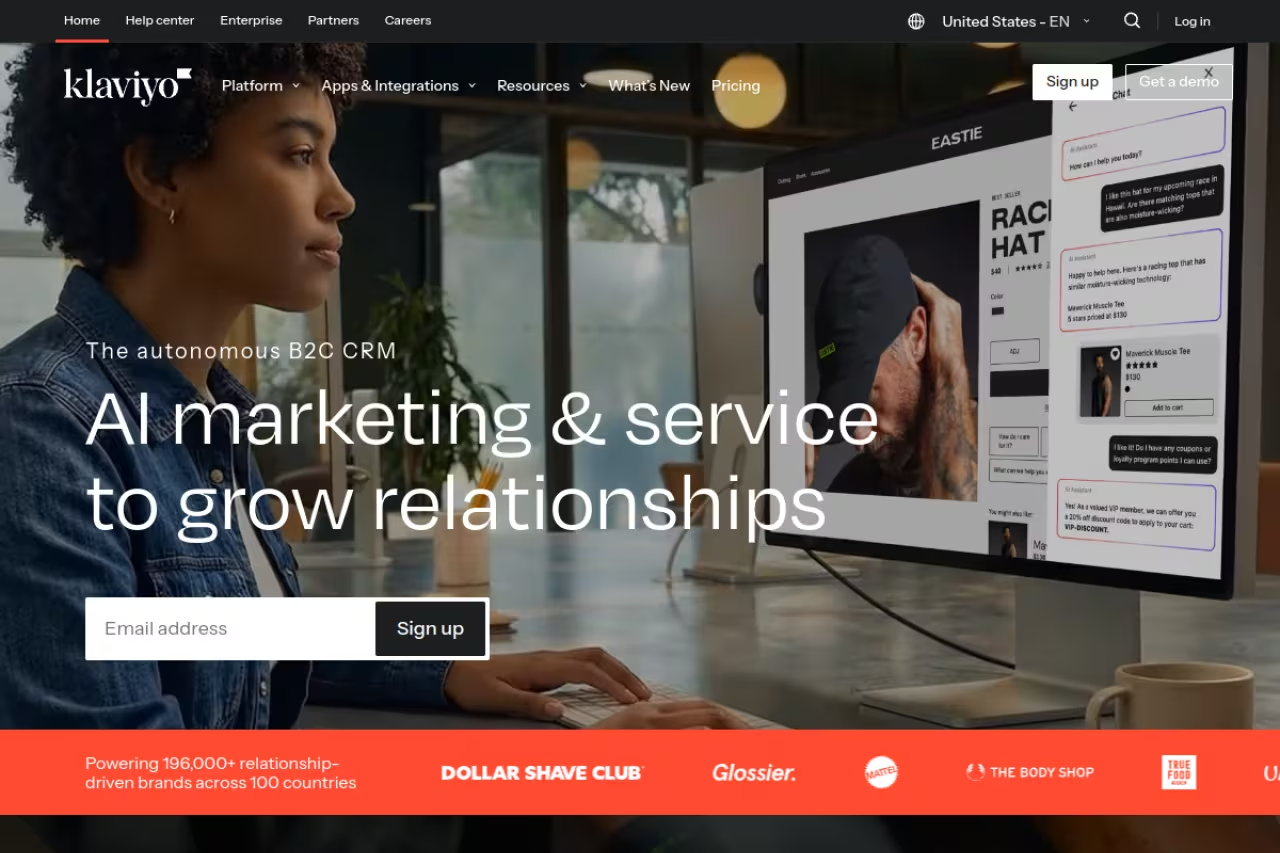
Klaviyo started as an email platform and added SMS later, which turns out to be the right order. The reason it wins for most ecommerce brands is that your email and text messages run off the same customer profiles, the same segments, and the same automations. You're not duplicating an abandoned-cart flow in two tools and hoping they stay in sync.
Klaviyo is the right choice for growing Shopify and ecommerce brands already doing email that want SMS on the same profiles and automations. Pricing is friendly at the start and sharp later, since the bill climbs fast past 10,000 contacts with SMS credits on top.
Pricing is the friendly part at the start and the sharp part later. The free plan covers up to 250 active profiles, 500 emails a month, and 150 mobile messaging credits, per Klaviyo's pricing page. Paid plans begin around $20/month, with SMS billed through a credit system on top. The honest warning: Klaviyo prices on your active profile count, so the bill climbs fast once you cross 10,000 contacts, and SMS credits stack on top of that.
The standout is the data model. Segmentation off purchase history, browse behavior, and predicted lifetime value is genuinely better than what the SMS-only tools offer, because Klaviyo sees the whole customer.
The catch: it can get expensive at scale, and the sheer number of features means the learning curve is real. If all you want is to text a list, this is overkill.

Attentive
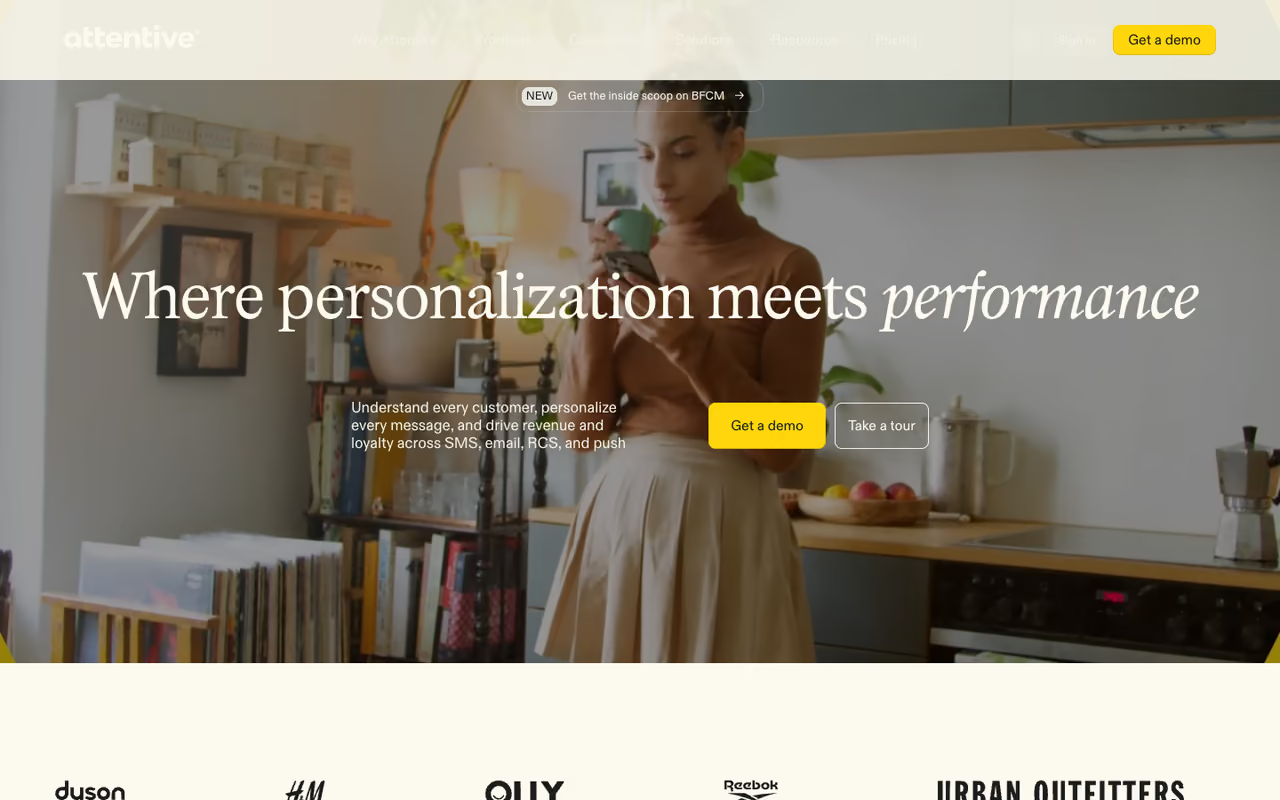
Attentive is the platform big DTC brands graduate to when SMS becomes a top-three revenue channel. It's used by more than 8,000 businesses, and it leans hard into list growth, deliverability, and now agentic AI that acts on real-time customer data across SMS, email, RCS, and push.
Attentive is the platform big DTC brands graduate to when SMS becomes a top-three revenue channel, with strong list growth and deliverability. There is no public starting price and spend lands in the four-figures-per-month range, so it is not a tool to test on a whim.
Pricing is the friction point. Attentive uses usage-based pricing tied to list size and messages sent, and there's no public starting price. Their pricing page says "you only pay for what you actually use, no credit system required," which sounds nice, but in practice you're booking a demo to get a number. Industry comparisons consistently put real-world spend in the four-figures-per-month range, so this is not a tool you test on a whim.
The standout is list growth. Attentive's opt-in units and two-tap signup flows are very good at converting site visitors into subscribers, and their deliverability operation is built for high volume.
Where it falls short: the price wall and the sales-led onboarding make it a poor fit for small brands. You also commit to a contract, so it's a real decision, not a quick trial.
Postscript
Postscript does one thing: SMS for Shopify. That focus is the whole pitch. It auto-syncs with your store, fires welcome series, abandoned carts, shipping updates, and cross-sells, and its email features are deliberately thin because email isn't the point.
Postscript does one thing, SMS for Shopify, and is best for stores that want it as a dedicated channel with email handled elsewhere. Per-message pricing makes costs predictable, but it is Shopify-only and SMS-only.
Pricing is refreshingly readable. Per Postscript's pricing, the Starter plan is $0/month with a $49 minimum spend at $0.009 per SMS, Growth is $100/month at $0.008 per message, and Professional is $500/month at $0.007. Carrier fees apply on top, but incoming messages and failed sends aren't charged. The free trial gives you a $100 credit for the first 30 days.
The standout is predictability. Because you pay per message rather than per contact, you can forecast costs from your send volume instead of watching the bill jump every time your list grows.
The catch: it's Shopify-only and SMS-only. If you're not on Shopify, it's not for you, and if you want email and texts unified, you're back to running two tools.

Omnisend
Omnisend is the value play for ecommerce. It bundles email, SMS, and push into contact-based plans that undercut Klaviyo at the same list size, and the automation library covers the standard ecommerce flows out of the box.
Omnisend is the value play for small to mid-size ecommerce brands watching the budget, bundling email, SMS and push at lower prices than Klaviyo for the same list size. Segmentation and reporting are less deep, and SMS pricing changed in May 2026.
The free plan covers 250 contacts and 500 emails. Standard starts at $16/month and scales by list size, and Pro starts at $59/month with unlimited emails. One important change: as of May 2026, SMS pricing moved to volume-based at around $0.007 per SMS with no included credits, and free-plan users who didn't have SMS before that date now need to upgrade to Pro to use it. Check the current terms in Omnisend's pricing docs before you commit.
The standout is price-to-features. For a brand under 10,000 contacts, you get a real omnichannel setup for a fraction of the enterprise tools. Where it falls short: segmentation and reporting aren't as deep as Klaviyo's, and very large brands tend to outgrow it.

SimpleTexting
SimpleTexting is what I'd hand to a non-ecommerce team that just wants to text its customers. No Shopify flows, no overwhelming dashboard, just a clean tool for campaigns, keywords, and two-way conversations.
SimpleTexting is what I'd hand to SMBs, agencies, clinics and gyms that just want to text customers, with little to learn and compliant campaigns within an hour. Credits are not forever, and overage runs about $0.055 each, so size your plan to real usage.
Pricing runs on credits. Plans start at $39/month for 500 credits and climb through tiers like 2,000 credits at $89/month up to 50,000 at $909/month, with cost per message dropping as volume rises (roughly $0.078 per SMS at the entry tier down to around $0.018 at the top). One SMS is one credit, an MMS is three, and each plan includes three user seats and a local number.
The standout is how little there is to learn. You can be sending compliant campaigns within an hour.
The catch: overage credits run about $0.055 each, and unused credits don't roll over forever, so size your plan to actual usage rather than buying big "just in case."

SlickText
SlickText is built around keyword opt-ins, the "text JOIN to 12345" mechanic, which makes it a natural fit for local businesses, events, and retail storefronts collecting subscribers in person.
SlickText is a natural fit for local businesses, events and storefronts that grow lists through keyword opt-ins. It is less suited to deep ecommerce automation, and credit-based pricing means heavy senders should model their volume before choosing a tier.
Plans start at $29/month, and paying yearly gets you two free months. Larger tiers run up to 50,000 credits for $939/month, and plans of 50,000 credits and above include a dedicated customer success manager. As with most of these tools, one SMS segment is one credit and an MMS is three. There's a 14-day free trial with no card required.
The standout is keyword and segmentation management. If your growth strategy is signs, receipts, and event opt-ins, SlickText makes that easy.
Where it falls short: it's less suited to deep ecommerce automation, and credit-based pricing means heavy senders should model their volume carefully before picking a tier.

EZ Texting
EZ Texting is the low-friction entry option. It's aimed at small teams that want to send a blast or run a basic campaign without much setup, and the starting price reflects that.
The low-friction entry option for small teams and first-timers sending straightforward broadcasts, with a Launch plan from $25 a month. Per-user fees, a telecom fee and credits that expire after 12 months mean the sticker price understates the real cost.
The Launch plan starts at $25/month, with Boost at $60 and Scale at $100, each including 500 credits, and per-message rates from about $0.030 down to $0.010 on higher tiers. Read the fine print though: there's a per-user fee of around $10/month each, a telecom fee that nudges the real Launch minimum closer to $30, and credits that expire after 12 months.
The standout is speed to first send. The catch: those add-on fees and credit expiration mean the sticker price understates what you'll actually pay once you add seats and volume.

Twilio
Twilio isn't a marketing app, it's the messaging infrastructure a lot of other tools are built on. You only want this if you have developers and a reason to build your own messaging logic.
Best for: engineering teams building custom messaging into their own product or workflows.
Twilio is messaging infrastructure rather than a marketing app, so choose it only if you have developers and a reason to build custom messaging logic. You get control and rock-bottom per-message rates, but no campaign UI, segment builder or opt-in widgets.
Pricing is pay-as-you-go and cheap per message: US SMS starts around $0.0079 per message on long codes, plus A2P 10DLC carrier fees of roughly $0.0025 to $0.0065 per message depending on the carrier, per Twilio's US SMS pricing. There are also one-time registration fees for brands and campaigns.
The standout is control. You build exactly the flows you want, integrate anything, and pay rock-bottom per-message rates at volume.
Where it falls short: there's no campaign UI, no segment builder, no opt-in widgets. You're building all of that. For a marketing team without engineers, it's the wrong tool.
If you're also wiring AI into these workflows, the Dupple X toolkit is a useful companion for the prompt and automation side of campaign work.
How to choose
Strip away the feature lists and the decision comes down to three questions.
First, are you ecommerce or not? If you sell on Shopify, you want a tool that reads order and browse data: Klaviyo for email plus SMS together, Postscript if you want SMS-only and predictable per-message billing, or Omnisend if budget is tight. If you're a service business, agency, or local shop, skip the ecommerce suites entirely and use SimpleTexting, SlickText, or EZ Texting.
Second, how big is your list and how often do you send? Credit-based tools (SimpleTexting, SlickText, EZ Texting) are predictable and cheap at low-to-mid volume. Contact-based tools (Klaviyo, Omnisend) get pricey as your list grows. Usage-based platforms (Attentive, Twilio) reward high volume but punish small senders.
Third, do you have developers? Only Twilio rewards that. Everyone else should pick a platform with a real campaign UI and opt-in tools so your marketers aren't blocked on engineering.
My honest default: most ecommerce brands should start on Klaviyo or Omnisend, most non-ecommerce teams should start on SimpleTexting, and only reach for Attentive once SMS is already proven and you have the volume to negotiate. For more tool breakdowns, browse our top tools directory, and if you're stacking SMS with AI assistants, see our guide to the best AI agents for automating the busywork around campaigns.
FAQ
What is the best SMS marketing platform in 2026?
For most ecommerce brands, Klaviyo is the best all-around pick because it unifies email and SMS on the same customer data. For non-ecommerce businesses, SimpleTexting is simpler and cheaper. Large DTC brands with high volume tend to land on Attentive. There's no single winner; it depends on whether you sell online, how big your list is, and whether you have developers.
How much does SMS marketing cost?
Expect roughly $0.007 to $0.08 per SMS depending on the platform and your volume, plus carrier fees. Entry plans run from about $25/month (EZ Texting) to $39/month (SimpleTexting), while ecommerce suites like Klaviyo start near $20/month plus SMS credits. High-volume tools like Attentive use custom pricing that typically lands in the four figures monthly.
Is Klaviyo or Postscript better for Shopify?
Klaviyo is better if you want email and SMS unified with deep segmentation and you're fine with contact-based pricing. Postscript is better if you want SMS-only, predictable per-message billing, and you already handle email elsewhere. Postscript's per-message model is easier to forecast; Klaviyo's data model is more powerful.
Do I need a separate tool for SMS and email?
Not necessarily. Klaviyo and Omnisend handle both channels under one plan with shared automations, which is usually the better setup because your flows stay in sync. Some brands still pair an email tool with an SMS-only tool like Postscript, but that means maintaining two systems.
Is SMS marketing legal and what are the rules?
Yes, but it's regulated. In the US you need explicit opt-in consent before texting, must honor opt-outs (STOP), and A2P messaging requires 10DLC registration with carriers, which adds small one-time fees. Every platform on this list helps with compliance, but the legal responsibility for proper consent is yours.
Related guides
Some offers on this page may be paid placements or contain affiliate links.
Across our whole catalogue the median is $24 a month and 33% of tools advertise a free tier. Figures are the lowest recurring monthly price quoted in our own review of each tool, read on 2026-08-19. Full method and every category.
