
The 8 Best Content Marketing Platforms in 2026

Key facts8 platforms compared: HubSpot Content Hub, Jasper, Surfer SEO, Semrush, Ahrefs, StoryChief…
- 8 platforms compared: HubSpot Content Hub, Jasper, Surfer SEO, Semrush, Ahrefs, StoryChief, CoSchedule, Contently
- HubSpot Content Hub (best for: All-in-one teams): Free; Pro $450/mo
- Jasper (best for: Fast on-brand copy): $59/mo per seat (annual)
- Surfer SEO (best for: Ranking-focused content): €49/mo (annual)
- Semrush (best for: SEO + content research): $139.95/mo
"Content marketing platform" means about six different things depending on who's selling. Some are publishing calendars. Some are AI writers. Some are SEO suites that bolted on a content module. A few are full editorial systems built for teams of fifty. Buy the wrong category and you'll either pay enterprise rates for a glorified scheduler or try to run an editorial team out of a Google Doc.
I've spent the last few months comparing these tools on documentation, pricing, and public reviews: how each one handles drafting, optimizing, scheduling, and measuring content for real audiences. The gap between the marketing copy and the daily reality is wide. A platform that demos beautifully can fall apart the moment you ask three people to collaborate on a post, or the moment you try to prove it moved a single metric.
If you want the short version: HubSpot Content Hub is the best all-around pick for teams that want creation, publishing, and analytics under one roof. Jasper is the strongest if your bottleneck is producing on-brand copy fast. And Surfer SEO is what you reach for when ranking is the whole point. Below is who each platform is actually for, what it costs in 2026, and where it lets you down.
Quick comparison
| Platform | Best for | Price (from) | Standout |
|---|---|---|---|
| HubSpot Content Hub | All-in-one teams | Free; Pro $450/mo | Content tied to CRM and analytics |
| Jasper | Fast on-brand copy | $59/mo per seat (annual) | Brand voice control at scale |
| Surfer SEO | Ranking-focused content | €49/mo (annual) | SERP-based on-page scoring |
| Semrush | SEO + content research | $139.95/mo | Keyword and competitor data depth |
| Ahrefs | Content performance + ideas | $129/mo | Content Explorer for proven topics |
| StoryChief | Multi-channel publishing | Free; €69/mo per seat | One draft, every channel |
| CoSchedule | Editorial calendars | Free; $19/user/mo | Marketing calendar coordination |
| Contently | Regulated enterprise content | Custom (demo only) | Vetted expert writer network |
HubSpot Content Hub

HubSpot Content Hub is the platform I recommend to most teams that have outgrown spreadsheets but don't want five separate subscriptions. It handles content creation, a CMS, blog hosting, landing pages, SEO recommendations, and analytics. The real advantage is that every piece of content sits next to your CRM data, so you can see which blog post actually generated a lead instead of guessing.
Who it's best for: marketing teams that already use HubSpot, or any team that wants creation and measurement in the same place instead of stitching tools together.
The pick for teams that outgrew spreadsheets and want creation and measurement next to their CRM data. The price jumps hard from Starter to Professional (a 30x leap), so solos and teams of two should look at Jasper or StoryChief first.
there's a genuinely usable free tier. Starter runs $15/month billed annually. The serious version, Professional, is $450/month billed annually and includes three seats, with extra seats at $50 each. Enterprise starts at $1,500/month. Those numbers come straight from HubSpot's Content Hub pricing. Content Hub was also named a Leader in the 2025 Gartner Magic Quadrant for content marketing platforms.
The standout: the CRM connection. When a sales team can see that a prospect read three of your articles before booking a call, content stops being a cost center on a slide and starts being something you can defend with numbers.
The catch: the price jumps hard. Going from Starter to Professional is a 30x leap, and most of the content features people actually want live in Professional. If you're a solo creator or a team of two, you'll pay for a lot of CRM machinery you won't touch. Smaller teams should look at Jasper or StoryChief first.

Jasper

Jasper is the content workspace I reach for when the problem is volume. It drafts blogs, ad copy, emails, and campaign assets, and its brand voice controls are the best on this list. You feed it your style guide and a few examples, and it produces copy that sounds like your brand instead of generic AI mush. According to HubSpot's 2026 State of Marketing data, 83% of marketers now use AI tools in their content workflows, and Jasper is built for the ones doing it seriously.
Who it's best for: marketing teams producing a high volume of on-brand copy, especially those juggling several brands or campaigns at once.
The workspace to reach for when volume is the problem, with the best brand voice controls on this list. It writes but doesn't understand what ranks, so pair it with an SEO tool, which is another subscription.
the Pro plan is $69/month per seat monthly, or $59/month per seat on annual billing, and includes two brand voices plus the core agents. Business is custom-priced with a 12-month minimum and adds API access, advanced agents, and governance features. There's a 7-day free trial. Pricing is on Jasper's pricing page.
The standout: brand voice. Most AI writers give you a single robotic tone. Jasper lets you store multiple voices and switch between them, which matters enormously when one writer is covering a fintech client in the morning and a streetwear brand in the afternoon.
Where it falls short: Jasper writes, but it doesn't deeply understand what ranks. It will happily produce a polished article that no one searching Google will ever find. You'll want to pair it with an SEO tool. Jasper does integrate with Surfer for real-time optimization scoring, which closes the gap, but that's another subscription. For more on AI writing options, see our guide to the best AI writing tools.

Surfer SEO
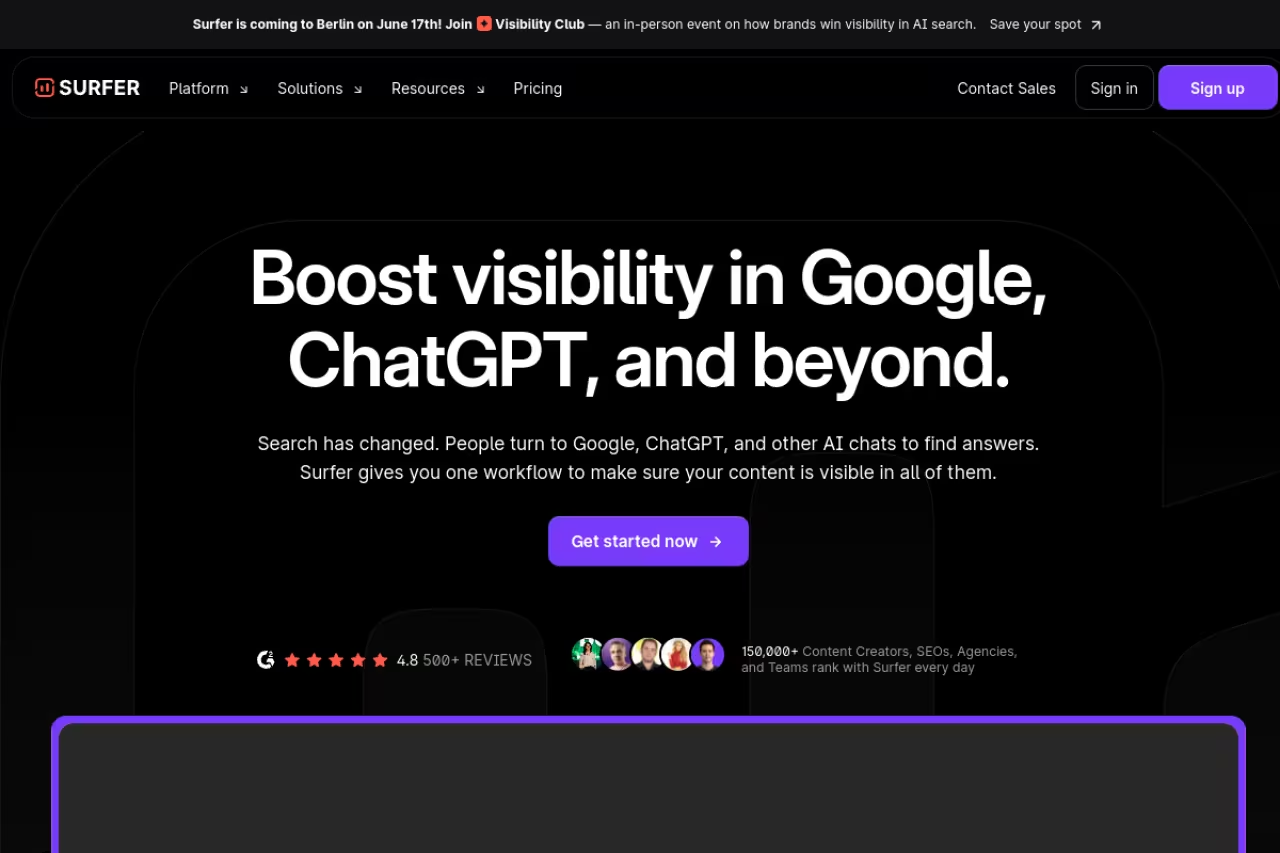
Surfer SEO answers a single question very well: what does my content need to rank for this keyword? It analyzes hundreds of on-page factors from the pages currently ranking and gives you a live score as you write, telling you which terms to add, how long the piece should be, and what topics you're missing.
Who it's best for: content teams and SEO writers whose primary goal is organic search traffic, not just publishing for its own sake.
Answers one question very well: what does my content need to rank? Great for SEO writers chasing organic traffic, but it is a guide, not gospel, and it won't manage your editorial calendar or publishing.
Discovery starts at €49/month billed yearly with 120 documents. Standard is €99/month, Pro is €182/month, and the top Peace of Mind tier is €299/month with unlimited documents. Full breakdown is on Surfer's pricing page. The 2026 plans also added AI search visibility tracking, so you can monitor how often ChatGPT and similar tools cite your content.
The standout: the content editor's real-time scoring. Watching your score climb as you add the right terms is oddly motivating, and the recommendations are concrete instead of vague "write better content" advice.
The catch: Surfer can turn writing into a checkbox exercise. Chase a perfect score and you'll produce keyword-stuffed articles that read like they were written for a robot, because they were. It's a guide, not gospel. The other limit is scope: Surfer optimizes individual pages but won't manage your editorial calendar or publishing, so it lives alongside other tools rather than replacing them.
If your team is trying to build an actual AI-assisted content engine rather than buying one tool at a time, the Dupple X yearly trial is worth a look before you commit to a stack.

Semrush
Semrush is the research backbone for a lot of content teams. It's primarily an SEO suite, but the content angle is strong: keyword research, competitor gap analysis, topic ideation, and a content toolkit (formerly ContentShake) that drafts SEO-optimized articles.
Who it's best for: teams that want to decide what to write based on data, not hunches, and who value competitor intelligence.
The research backbone for teams that decide what to write from data, with deep keyword and competitor intelligence. Costs climb fast with users or databases, the interface is dense, and it is overkill for a few blog posts a month.
the Pro plan is $139.95/month, Guru is $249.95/month, and Business is $499.95/month, per Semrush's pricing. The content toolkit features mostly live on Guru and above. The standalone ContentShake AI runs $60/month if you only want the writing layer.
The standout: the depth of keyword and competitor data. Few tools let you reverse-engineer exactly what's driving a competitor's organic traffic as cleanly as Semrush does.
Where it falls short: the price climbs fast once you add users or extra databases, and the interface is dense enough that new users feel lost for a week. It's a power tool, which means it's overkill if all you need is help writing a few blog posts a month.

Ahrefs
Ahrefs earns its place through Content Explorer, a feature that lets you search billions of pages to find content that already performs in your niche. Instead of guessing what topics will land, you see what's earned backlinks and traffic, then write something better.
Who it's best for: content strategists who want to validate topic ideas with proof before investing in production.
Pick Ahrefs to validate topics with proof via Content Explorer instead of guessing. The features content marketers want sit on Standard at $249/month, which prices out solos, and it won't help you draft or publish.
Starter is $29/month, Lite is $129/month, Standard is $249/month, and Advanced is $449/month, per Ahrefs' published plans. Content Explorer and portfolio tracking show up on the Standard plan, which is the realistic starting point for most agencies.
The standout: Content Explorer for topic validation. It turns "I think this topic will work" into "this topic earned 4,000 backlinks for three competitors, so it's proven."
The catch: Lite and Starter come with monthly credit limits, so heavy users hit walls and pay overages. The features content marketers really want sit on Standard at $249/month, which prices out solo creators. Ahrefs is also analysis-first; it tells you what to write but doesn't help you draft or publish it.

StoryChief
StoryChief solves the multi-channel distribution headache. You write a piece once, then publish it to your blog, LinkedIn, Facebook, your newsletter, and more from one editor, with each version formatted for its destination. It also handles editorial calendars and team approval workflows.
Who it's best for: small to mid-size teams and agencies that publish the same content across many channels and are tired of copy-pasting into five dashboards.
Great for small to mid-size teams and agencies publishing one piece across many channels from a single draft. It isn't built for deep SEO and AI features cost extra, so you may still want Surfer or Semrush alongside.
there's a free plan. The Team Editorial plan is €69/month per seat billed yearly, and agency plans start at €79/month per customer. Optional AI add-on packs run €49 to €99/month. Details are on StoryChief's pricing page.
The standout: true multi-channel publishing from a single draft. The time saved on distribution alone can justify the subscription for a team posting daily.
Where it falls short: it's not built for deep SEO optimization, and the AI features cost extra on top of the base plan. If organic search is your main channel, you'll still want Surfer or Semrush alongside it.

CoSchedule
CoSchedule is the platform for teams whose pain is coordination, not creation. Its marketing calendar gives you a single view of every campaign, blog post, social message, and email across the team, so nothing collides or slips.
Who it's best for: marketing teams that need a shared command center for everything in flight, especially those running multiple campaigns at once.
The coordination pick for teams drowning in spreadsheets, with one marketing calendar for everything in flight. It won't write or optimize content, and the useful content tiers need a sales call.
the Free Calendar covers one user and 15 scheduled social messages. The Social Calendar is $19/user/month billed annually, the Agency Calendar is $59/user/month, and the full Content Calendar and Marketing Suite are custom-priced. See CoSchedule's pricing.
The standout: the unified marketing calendar. For teams drowning in scattered spreadsheets and Slack threads about who's publishing what, the clarity is worth the price on its own.
The catch: CoSchedule is organizational, not creative. It won't write or optimize content for you, and the genuinely useful content management tiers require a sales call rather than transparent pricing. It's a scheduler and coordinator first.

Contently
Contently is the enterprise option, built for regulated industries where a single wrong claim creates legal exposure. It pairs an editorial workflow with a network of 165,000+ vetted creators, including CFAs, MDs, and FINRA-registered reviewers, plus compliance and legal review baked into the process.
Who it's best for: large brands in finance, healthcare, and insurance that need credentialed writers and an audit trail, not a DIY tool.
The enterprise option for finance, healthcare, and insurance brands needing credentialed writers and compliance review. Pricing is custom only, and it is far more platform than a startup or small team needs.
custom only, available through a demo. Expect enterprise figures. Clients include RBC, American Express, and Marriott, which tells you the tier.
The standout: the vetted talent network. When your content needs a registered financial professional to sign off, Contently provides both the writer and the compliance workflow, which almost nothing else does.
Where it falls short: it's priced and built for enterprises. If you're a startup or a small team, this is far more platform than you need, and the lack of public pricing signals you'll be talking to sales for a while.
How to choose
Match the tool to your actual bottleneck, not to a feature list.
- Your bottleneck is producing copy fast: start with Jasper. Pair it with Surfer if search traffic matters.
- You want one system for creation, publishing, and proof of ROI: HubSpot Content Hub, assuming you can justify the Professional tier.
- Ranking is the entire goal: Surfer SEO for on-page, Semrush or Ahrefs for research and competitor intelligence.
- You publish the same content everywhere: StoryChief for distribution, CoSchedule for calendar coordination.
- You're a regulated enterprise: Contently is in a category of its own.
A practical move for most teams: pick one creation tool and one SEO tool, and resist the urge to buy a third until you've felt a real gap. Most content stacks fail from too many half-used subscriptions, not too few. If you want a broader view of what's out there, browse our running list of the top AI tools and our guide to the best AI SEO tools.
Frequently asked questions
What is a content marketing platform?
A content marketing platform is software that helps you plan, create, optimize, publish, and measure content across channels and teams. Some focus on one stage (Surfer on optimization, CoSchedule on scheduling) while all-in-one platforms like HubSpot Content Hub cover the full lifecycle from idea to analytics.
What is the best content marketing platform for small teams?
For small teams, Jasper handles fast copy creation at $59/month per seat on annual billing, and StoryChief covers multi-channel publishing with a free tier and €69/month per-seat editorial plans. HubSpot's free tier is also a reasonable starting point. Avoid enterprise tools like Contently until you genuinely need credentialed writers and compliance workflows.
How much do content marketing platforms cost in 2026?
Pricing ranges widely. Entry plans start around $15 to $60/month (HubSpot Starter, ContentShake, Surfer Discovery), mid-tier team plans run $130 to $450/month (Ahrefs Standard, Semrush Pro, HubSpot Professional), and enterprise platforms run $1,500/month and up or quote custom pricing only.
Do I still need an SEO tool if I use an AI writer?
In most cases, yes. AI writers like Jasper produce on-brand copy but don't inherently know what ranks in Google. Pairing an AI writer with an SEO tool such as Surfer SEO, Semrush, or Ahrefs is the standard setup, which is why Jasper offers a direct Surfer integration.
Can one platform replace my entire content stack?
HubSpot Content Hub comes closest by combining creation, publishing, and analytics with CRM data, but even it usually sits alongside a dedicated SEO tool. Most teams run two or three tools: one for creation, one for SEO research, and sometimes one for distribution. Trying to force everything into a single platform often means settling for weaker features in the stages that matter most.
Building a content engine usually comes down to the right two or three tools plus a clear process. If you want a curated stack to start from instead of testing a dozen trials yourself, the Dupple X yearly trial is built for exactly that.
Related guides
Some offers on this page may be paid placements or contain affiliate links.
Across our whole catalogue the median is $24 a month and 33% of tools advertise a free tier. Figures are the lowest recurring monthly price quoted in our own review of each tool, read on 2026-08-19. Full method and every category.
