
Best AI Influencer Marketing Tools (2026)

Key facts9 tools compared: Modash, HypeAuditor, Favikon, GRIN, Upfluence, Aspire, CreatorIQ, Insense…
- 9 tools compared: Modash, HypeAuditor, Favikon, GRIN, Upfluence, Aspire, CreatorIQ, Insense, Influencer Hero
- Modash (best for: DTC / mid-market discovery + management): From $199/mo
- HypeAuditor (best for: Fraud and audience quality checks): From $299/mo
- Favikon (best for: AI content-based search): From €99/mo
- GRIN (best for: End-to-end DTC creator programs): Custom (high)
Influencer marketing crossed $32.55 billion in 2025, and the part nobody warns you about is how much of the work is unglamorous data entry. Finding creators who actually fit. Checking whether their followers are real. Sending 200 outreach emails. Tracking who posted, who didn't, and what it earned. The "AI" layer that got bolted onto these platforms over the last two years is mostly aimed at that grind.
I've compared most of the major platforms against each other, so I went back and checked current pricing and features instead of trusting last year's notes. The short version: if you're a DTC or mid-market brand and you want one clear answer, start with Modash. It has the deepest creator database I found, transparent pricing, and a free trial you can actually use before you talk to anyone.
This guide is for marketers and founders who run their own campaigns, not enterprise teams with a six-figure software budget (though I cover those tools too). Below is what each one is good at, what it costs, and where it lets you down.
Quick comparison
| Tool | Best for | Price | Standout |
|---|---|---|---|
| Modash | DTC / mid-market discovery + management | From $199/mo | 380M+ creator database, self-serve |
| HypeAuditor | Fraud and audience quality checks | From $299/mo | Account quality scoring |
| Favikon | AI content-based search | From €99/mo | Search 30M+ posts by topic |
| GRIN | End-to-end DTC creator programs | Custom (high) | Ecommerce + payments in one place |
| Upfluence | All-in-one for agencies/mid-market | Custom (~$800+/mo) | Live first-party data sync |
| Aspire | Long-term ambassador programs | Custom (~$2k/mo) | Image-recognition discovery |
| CreatorIQ | Enterprise / global brands | From ~$36k/yr | Scale and governance |
| Insense | UGC + paid social whitelisting | From $500/mo | Ad licensing built in |
| Influencer Hero | DTC outreach automation | From $649/mo | Automated email sequences |

Modash: best overall for discovery and management
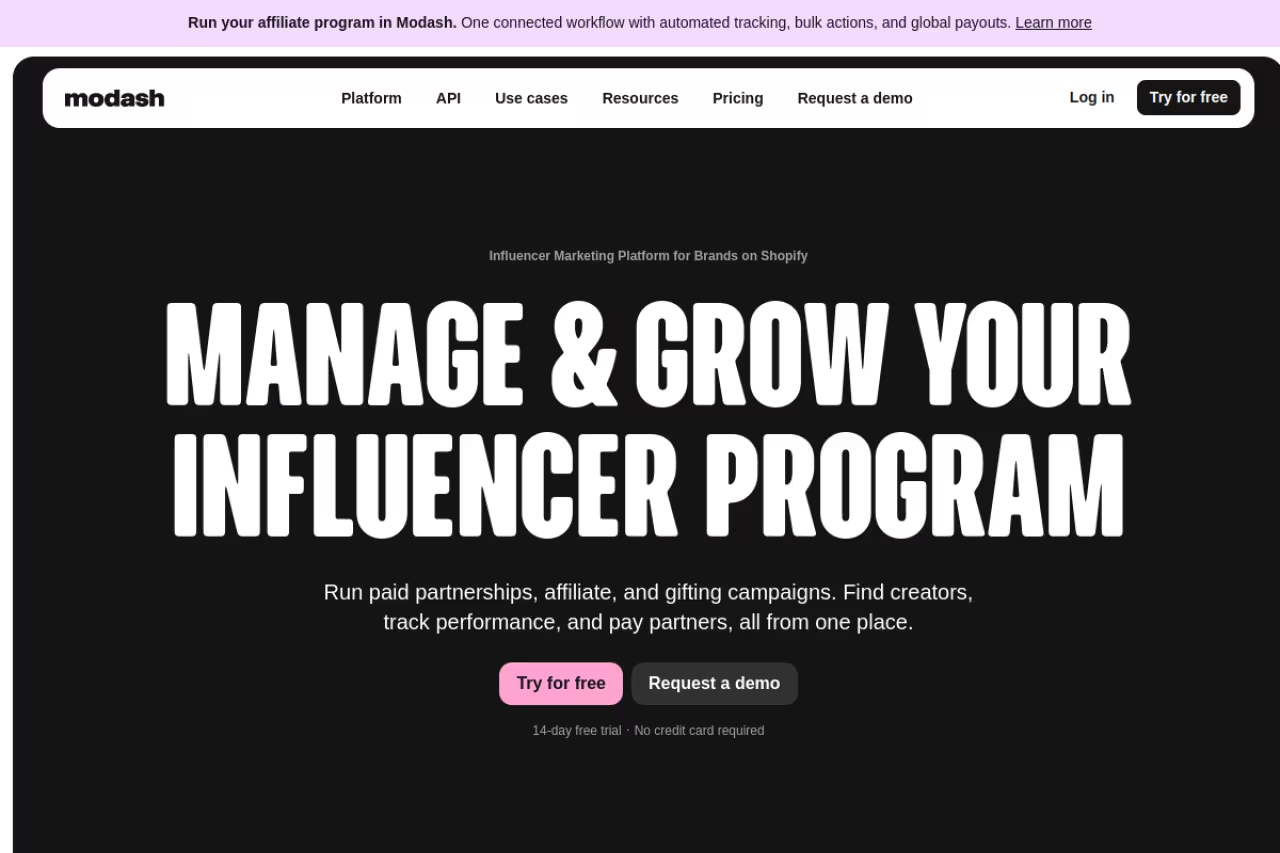
Modash indexes 380 million+ creators across Instagram, TikTok and YouTube, which is the widest reach I came across in this price range. It does the full loop: find creators, filter by audience demographics, pull their emails, run outreach, and track content and payments. The AI parts show up in search relevance and audience analysis, but what sells it is the data depth and the fact that you can sign up and poke around without a sales call.
A strong choice for ecommerce and mid-market brands running campaigns in-house without a $2,000/month contract. The 380 million+ creator database and public pricing are the draw, but monthly limits on profile views and email unlocks are tight on the entry plan.
Pricing is public and reasonable. The Essentials plan is $199/month and covers up to 100 creators, 300 profile views, and 150 unlocked emails monthly. Performance is $499/month with 250 creators, 800 profile views, and 0% payment fees up to $10K/year. There's a real 14-day free trial, no card required, with 20 profile views and 6 email unlocks so you can test the data quality first.
The standout is that database. User reports consistently point to Modash surfacing niche creators that cheaper tools simply don't have indexed.
The catch: the monthly limits on profile views and email unlocks are tight on the entry plan. If you're vetting hundreds of creators a week, you'll burn through Essentials fast and need Performance. Campaign management is solid but not as deep as a dedicated CRM like GRIN.
HypeAuditor: best for fraud detection and audience quality
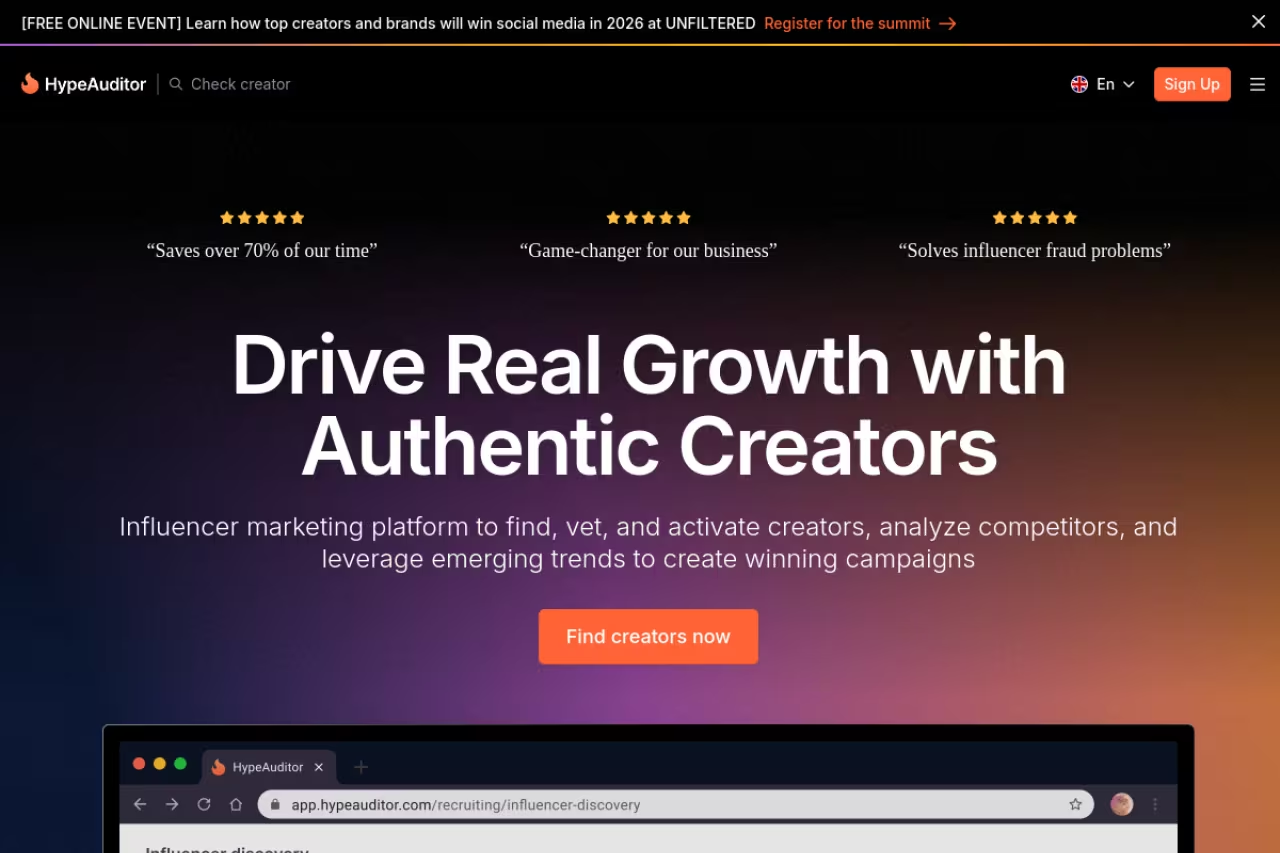
HypeAuditor built its name on one thing: telling you whether an influencer's audience is real. Its AI scores accounts for fake followers, engagement pods, and bought growth, then gives you an Account Quality Score you can filter on. If you've ever paid for a campaign that flopped because half the followers were bots, this is the tool that prevents the repeat.
The vetting layer for brands and agencies burned by inflated metrics, with the deepest fraud and authenticity analysis on this list. Basic limits discovery filters hard, so it works more as an audit tool than a discovery engine or campaign runner.
The Basic plan starts at $299/month on annual billing, with Pro around $499/month. There's a freemium tier and 40+ free audit tools you can use to spot-check a single creator before committing. Enterprise pricing is quote-only.
The standout is the depth of the fraud analysis. No other tool on this list goes as deep on audience authenticity scoring.
Where it falls short: the Basic plan limits your discovery filters hard. Features like AI Search and the Account Quality Score filter live in higher tiers, so the cheap plan is more of an audit tool than a discovery engine. It's strong on analysis, weaker on actually running and executing a campaign end to end.

Favikon: best AI content-based search
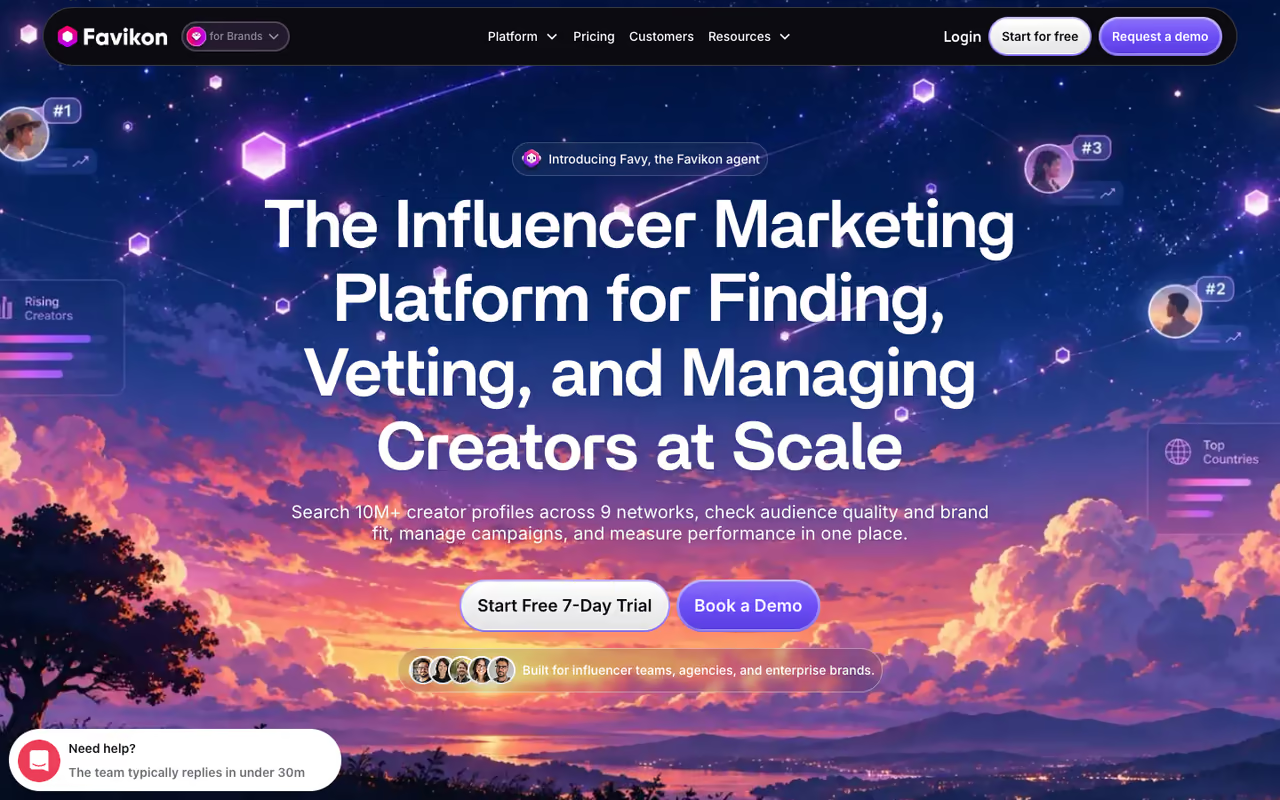
Favikon does something the older platforms don't: it lets you search by what creators actually post, not just by tags and follower counts. Its content search runs across 30 million+ posts in plain language, so you can type a topic or vibe and get creators who genuinely cover it. It also has an Authenticity Score that factors in how much AI-generated content a creator posts, which is a sharp signal in 2026.
Pick Favikon if you want content-aware creator discovery at a price that won't scare a small team. Plain-language search across 30 million+ posts is the standout, though credits drain fast and campaign management is lighter than GRIN or Modash.
Pricing is transparent and among the cheapest serious options. Starter is €99/month (€79/month billed annually) with 100 credits, Standard is €199/month with 600 credits, and Pro is €449/month with 1,200 credits. A 7-day free trial gets you in the door.
The standout is that plain-language content search across millions of posts. It surfaces creators that follower-count filters miss entirely.
The catch: the credit system means heavy discovery sessions eat through your monthly allowance, and the Starter plan's 100 credits go quickly if you're vetting a lot. It's strongest on discovery and analysis; the campaign management and payment side is lighter than GRIN or Modash.
Before we get to the heavier platforms, a quick aside. If your team is trying to figure out which AI tools to standardize on across marketing, Dupple X bundles access to a stack of them so you can test before you commit budget to any single subscription.

GRIN: best end-to-end platform for DTC brands
GRIN is the platform DTC brands graduate to when spreadsheets stop working. It pulls discovery (a 38M+ creator suite), relationship management, product seeding, affiliate links, discount codes, payments, and ROI reporting into one system, with deep ecommerce integrations that sync inventory and sales. The AI shows up in creator recommendations and reporting.
The platform for established ecommerce brands running always-on creator programs with real product seeding and sales tracking. Its ecommerce depth is the tightest here, but pricing is custom and steep, and it is overkill for two or three campaigns a quarter.
Pricing is custom and on the higher end, scaling with the number of users on your account. There's no public number and no free tier beyond a trial, so budget for a sales conversation. Expect this to cost meaningfully more than Modash or Favikon.
The standout is the ecommerce depth. The Shopify-style integrations, product seeding, and sales attribution are tighter than anything else here.
The catch: reviewers consistently flag the price as steep for small businesses, and some report occasional glitches. This is overkill if you run two or three campaigns a quarter. It earns its cost only when influencer marketing is a core, always-on channel.

Upfluence: best all-in-one for agencies and mid-market
Upfluence covers discovery, outreach, campaign management, and analytics, and its differentiator is first-party data: it can sync with your store to identify customers who are already influencers. That's a smart angle, because a customer who already loves your product converts better than a cold creator.
A good all-in-one for agencies and mid-market brands that value live commerce data, especially syncing with your store to find customers who already are influencers. It is expensive, with a 12-month commitment and paid add-ons, and there is no free plan to test.
Upfluence doesn't publish pricing. Based on consistent user reports, entry plans land around $800 to $1,200/month on a 12-month contract, with professional tiers climbing to $2,000 to $3,000. Extra seats and API access are paid add-ons, so the sticker price isn't the full cost.
The standout is that first-party data sync. Finding influencers inside your own customer base is genuinely useful and rare.
Where it falls short: the 12-month commitment and add-on pricing make it expensive and inflexible compared to month-to-month tools. There's no free plan, only a sales demo, so you can't test the data yourself before signing.

Aspire: best for long-term ambassador programs
Aspire (formerly AspireIQ) leans into the relationship side. Its AI includes image-recognition discovery that matches creators to your visual aesthetic, plus a recommendation engine that surfaces lookalike creators based on your best-performing partnerships. The focus is building communities of ambassadors, not one-off posts.
The call for brands that want durable ambassador relationships over transactional posts, with aesthetic-match discovery that finds creators by visual style. Pricing starts around $2,000/month on an annual commitment, which puts it out of reach for small brands.
Pricing is custom and starts around $2,000/month with an annual commitment, roughly $24,000/year minimum. Not published, quote-only.
The standout is the aesthetic-match discovery. Finding creators by visual style instead of keywords is a different and often better way to build a cohesive brand presence.
The catch: the annual commitment and high floor put this out of reach for small brands testing the waters. You're paying for relationship infrastructure, which is wasted if you're not running long-term programs.

CreatorIQ: best for enterprise and global brands
CreatorIQ is what Disney, Unilever, and Sephora use. It analyzes over a billion public accounts, offers governance and compliance tooling, and handles the scale and reporting that global teams need. The AI discovery matches across a massive indexed database.
Built for Fortune 500 brands with $1M+ influencer budgets and dedicated in-house teams, with scale and governance nothing else here matches. Pricing starts around $36,000/year, so it is wrong for DTC or mid-market brands paying for capacity they will never use.
Pricing starts around $36,000/year and climbs from there, annual contract required, sales call before you see a number. This is enterprise software priced like enterprise software.
The standout is scale and governance. If you're running hundreds of creators across markets with legal and compliance requirements, nothing here matches it.
Where it falls short: it's wrong for almost everyone reading this. For DTC or mid-market brands, you'd pay enterprise rates for capacity you'll never use. Skip it unless your budget has a comma in it.

Insense: best for UGC and paid social
Insense is built for a specific job: getting creator content you can run as ads. It connects you with 250,000+ creators, and critically, it bakes whitelisting (ad licensing rights) into the deal, so you can run creator content through your own ad accounts without legal headaches.
Pick Insense if you're a performance marketer treating creator content as ad creative, with whitelisting built into every deal. The platform fee plus creator payments adds up, and the AI and discovery features are thinner than Modash or Favikon.
The platform fee starts around $500/month (billed quarterly), with an Agency plan near $800/month. On top of that, creator payments start around $100 per UGC video plus a 7 to 20% marketplace fee. So your real monthly spend is the platform fee plus creator costs.
The standout is the built-in whitelisting. Getting paid-ad rights baked into every collaboration saves a real amount of friction.
The catch: the AI features are thinner than Modash or Favikon, and the marketplace fee on top of creator payments adds up. This is a content-and-ads tool, not a deep discovery or analytics platform.
Influencer Hero: best for DTC outreach automation
Influencer Hero is an all-in-one aimed at DTC brands, with a database of 450M+ creators, a built-in CRM, affiliate tooling, and automated email outreach sequences that can contact up to 1,000 creators a month on the entry plan.
Go with it if you're a DTC team that wants to automate high-volume outreach and manage relationships in one place, with sequences reaching up to 1,000 creators a month. Per-brand pricing and the 3-month minimum get expensive and inflexible fast.
The Standard plan starts at $649/month with a 3-month commitment (about $1,947 to start), and Pro is $1,049/month. Note it prices per brand, so multi-brand teams pay multiples.
The standout is the outreach automation. If volume is your bottleneck, the email sequencing does real work.
Where it falls short: the per-brand pricing gets expensive fast for agencies or holding companies, and the 3-month minimum means you can't test it for a single campaign and bail.
How to choose
Don't pick by feature list. Pick by what's actually slowing you down.
If discovery is your problem (you can't find the right creators), start with Modash or Favikon. Both are self-serve and affordable, and Favikon's content search is the better fit if you care about what creators post over raw follower counts.
If you keep getting burned by fake audiences, add HypeAuditor as a vetting layer. You don't even need to replace your main tool; the free audit tools cover spot-checks.
If you're scaling an always-on program with product seeding and sales attribution, GRIN or Upfluence justify the jump. If you want ambassadors over one-off posts, Aspire.
If you're buying creator content to run as ads, Insense is the specialist. And if you're a global enterprise with a dedicated team, CreatorIQ is the only one built for that scale.
A useful rule: never pay for an annual contract on a channel you haven't proven yet. Start with a month-to-month or free-trial tool, run two campaigns, measure the return, then commit. For a wider view of the AI tools worth standardizing on, our top tools list and the guide to the best AI agents are good next reads. If you also handle the creative side, the best AI video generators and best AI tools for marketing pair well with any of these platforms.
You can sign up for Dupple X to test a stack of AI marketing tools on one plan before locking into separate subscriptions.
FAQ
What is the best AI influencer marketing tool in 2026?
For most DTC and mid-market brands, Modash is the best overall pick. It has a 380M+ creator database, transparent pricing from $199/month, and a free trial you can use without a sales call. If your priority is detecting fake audiences, HypeAuditor is the stronger choice, and Favikon wins on AI content-based search at a lower price.
How much do AI influencer marketing tools cost?
Pricing ranges widely. Self-serve tools like Favikon (from €99/month) and Modash (from $199/month) are affordable for small teams. Mid-market platforms like Upfluence and Influencer Hero run $650 to $3,000/month, usually on annual or multi-month contracts. Enterprise tools like CreatorIQ start around $36,000/year. Many also charge separately for creator payments.
Can AI tools detect fake influencer followers?
Yes. HypeAuditor specializes in this, scoring accounts for fake followers, engagement pods, and bought growth, then giving an Account Quality Score you can filter on. Favikon's Authenticity Score adds a check on how much AI-generated content a creator posts. Running creators through one of these before you pay is the single best way to avoid wasting budget.
Do I need a separate tool for influencer discovery and campaign management?
Not necessarily. All-in-one platforms like Modash, GRIN, and Upfluence handle discovery, outreach, and campaign management in one place. But many teams pair a discovery tool (Favikon or Modash) with a dedicated vetting tool (HypeAuditor) for better fraud checks. The right setup depends on volume: light campaigns need one tool, always-on programs often benefit from two.
Are free influencer marketing tools any good?
For full campaigns, no, but free tiers are useful for testing. HypeAuditor offers 40+ free audit tools to spot-check individual creators, and Modash and Favikon both have free trials that let you sample data quality before paying. Use these to validate that a platform's creator data actually covers your niche before committing to a paid plan.
Related guides
Some offers on this page may be paid placements or contain affiliate links.
Across our whole catalogue the median is $24 a month and 33% of tools advertise a free tier. Figures are the lowest recurring monthly price quoted in our own review of each tool, read on 2026-08-19. Full method and every category.
