
The 8 Best HR Compliance Software Tools in 2026

Key facts8 tools compared: Deel, Rippling, Gusto, BambooHR, Remote, Paycor, SixFifty, ADP Workforce Now
- 8 tools compared: Deel, Rippling, Gusto, BambooHR, Remote, Paycor, SixFifty, ADP Workforce Now
- Deel (best for: Global teams, contractors): Free HRIS; EOR from $599/mo
- Rippling (best for: All-in-one HR + IT + payroll): From $8/employee/mo
- Gusto (best for: US small business): $49/mo + $6/employee
- BambooHR (best for: Growing mid-size teams): ~$10-25/employee/mo
HR compliance is the kind of work nobody notices until it goes wrong. A misclassified contractor in California, a missing pay-transparency disclosure in Colorado, a handbook that hasn't been updated since the last set of state laws changed. Any one of those can turn into a fine, a lawsuit, or a very awkward audit. The software in this space exists to keep those mistakes from happening in the first place.
The problem is that "HR compliance software" means about six different things depending on who you ask. For a 12-person startup hiring in three states, it means automated payroll tax and a current employee handbook. For a company hiring engineers in Portugal and Brazil, it means employment contracts and misclassification protection across borders. For a 600-person mid-market firm, it means a real HRIS with audit trails and a compliance engine that tracks law changes for you.
This guide compares the major platforms across all of those buckets. If you want the short answer: Deel is the strongest pick for teams hiring across countries, because its free HRIS bakes local compliance into every workflow across 150+ countries. For US-only small businesses, Gusto is still the one I'd hand to a founder. Below is the full breakdown, with real prices and the honest catches.
Quick comparison
| Tool | Best for | Price | Standout |
|---|---|---|---|
| Deel | Global teams, contractors | Free HRIS; EOR from $599/mo | Compliance across 150+ countries |
| Rippling | All-in-one HR + IT + payroll | From $8/employee/mo | Automated compliance workflows |
| Gusto | US small business | $49/mo + $6/employee | 50-state payroll tax + handbooks |
| BambooHR | Growing mid-size teams | ~$10-25/employee/mo | Compliance intelligence + training |
| Remote | Transparent global EOR | EOR $599/employee/mo (annual) | Owned entities, published rates |
| Paycor | Multi-state mid-market | ~$19-27/employee/mo | Automated multi-state tax compliance |
| SixFifty | Handbooks and HR policies | $399-$25,000/year | Attorney-drafted 50-state documents |
| ADP Workforce Now | Enterprise | ~$23-30/employee/mo | Tax and compliance engine at scale |

Deel: best for global and contractor compliance
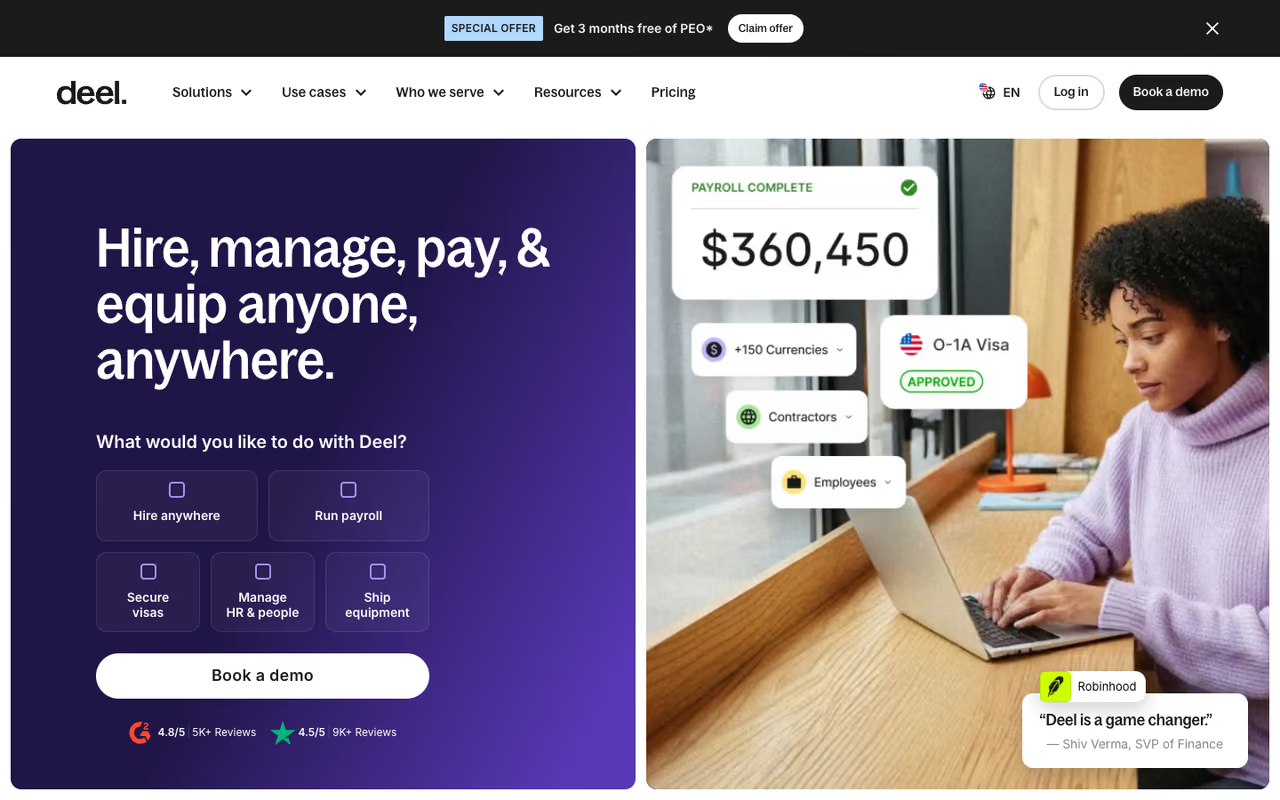
Deel started as a contractor-payments tool and grew into the default platform for companies that hire across borders. The reason it sits at the top of this list: compliance is the product, not a bolt-on. When you onboard someone in another country, Deel generates a locally compliant contract, applies the right time-off rules, and handles tax filings for you.
The default for distributed teams hiring contractors and employees across borders, where compliance is the product. Coverage spans more than 300 legal and finance professionals, but EOR at $599 a head adds up fast and the Rippling lawsuit warrants your own diligence.
If everyone you employ is in one US state, this is more than you need.
On pricing, the Deel HR platform is free as an HRIS for onboarding, time off, and document management. Contractor management runs $49 per person per month, global payroll starts at $29 per employee per month, and full Employer of Record (EOR) coverage starts at $599 per employee per month. The free misclassification quiz is genuinely useful even if you never become a customer.
The standout is the scale of the legal coverage. Deel runs more than 300 legal and finance professionals across 150+ countries, so when a labor law shifts in a market you operate in, the platform updates the rules rather than leaving you to track it.
The catch: EOR at $599 a head adds up fast, and Deel has faced public scrutiny over a corporate-espionage lawsuit filed by Rippling in 2025. The compliance product works, but do your own diligence on the company if that matters to your procurement team.

Rippling: best all-in-one with automated compliance
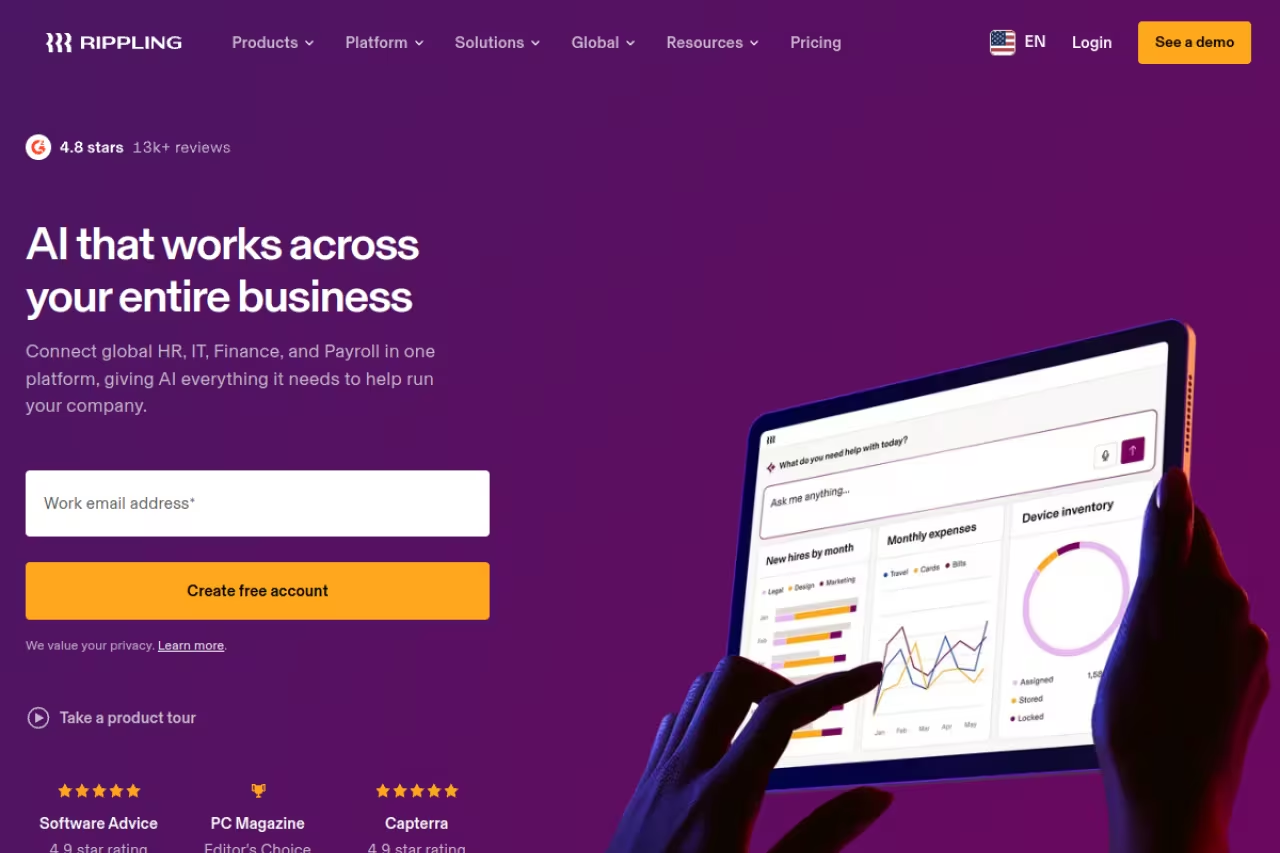
Rippling ties HR, IT, and payroll into one system built on a single employee record. That architecture is what makes its compliance features work: change someone's role or location once, and the policy, tax, and access rules update everywhere. For a growing company juggling onboarding, device management, and multi-state payroll, that single source of truth removes a lot of manual reconciliation.
Pick Rippling if you are a tech-forward company that wants HR and IT on one employee record and has someone who enjoys configuring software. Pricing is opaque and modular, and for a five-person team it is overkill.
Rippling starts at $8 per employee per month for the base workforce platform, with payroll, IT, and PEO services billed as separate modules. Most teams adding payroll land somewhere between $25 and $50 per employee per month once modules stack up. The downside everyone mentions: Rippling does not publish full pricing, so you request a quote and discover the real number later.
The standout is automation depth. Rippling's workflow engine can enforce compliance steps automatically, like blocking an onboarding until a required document is signed or flagging overtime issues before they hit payroll.
Where it falls short: the modular pricing is opaque, and the platform is genuinely complex. For a five-person team it's overkill. You're paying for power you won't use until you scale.

Gusto: best for US small business
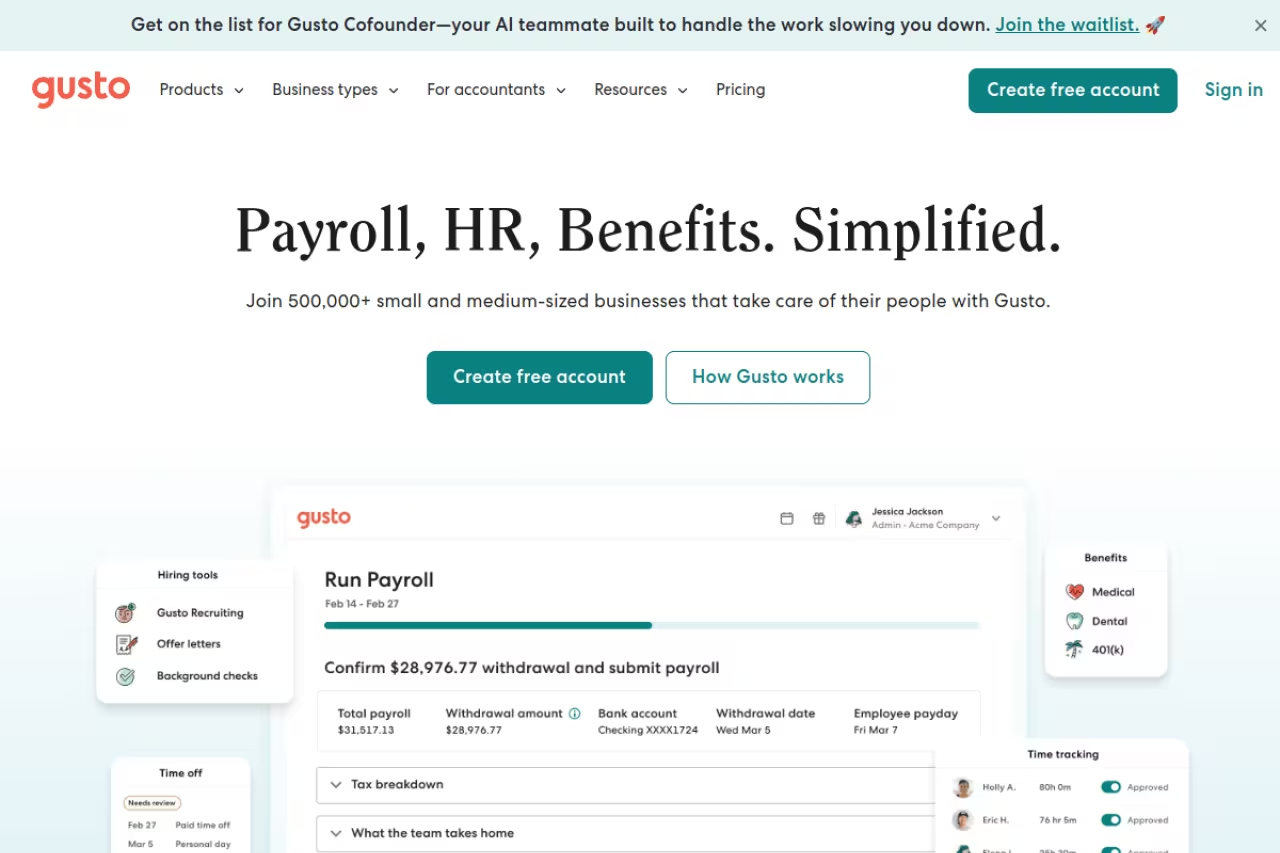
If a founder asks me what to use for their first 30 US hires, the answer is usually Gusto. It handles full-service payroll with automatic federal, state, and local tax filings, and it layers in 50-state compliance monitoring, handbook tools, and document workflows without making you think about any of it.
The usual answer for US small businesses and startups making their first 30 hires, with automatic tax filing and 50-state compliance monitoring. It is US-only, so hiring abroad means outgrowing it, and setup fees can push real cost above the sticker.
Per Gusto's pricing page, the Simple plan is $49 per month plus $6 per person, Plus is $80 per month plus $12 per person, and Premium is $180 per month plus $22 per employee. Compliance alerts and HR advisor access live in the Plus and Premium tiers. A contractor-only plan runs $35 per month plus $6 per contractor for US payments.
The standout is how little compliance work lands on you. Tax filings are automatic, new-hire reporting is handled, and the handbook builder keeps you current as state rules change.
The catch: Gusto is US-only. The moment you hire someone abroad, you've outgrown it and need an EOR like Deel or Remote. Multi-state setup fees and benefits premiums can also push the real cost above the sticker.

BambooHR: best for growing mid-size teams
BambooHR is the HRIS a lot of companies graduate to once a spreadsheet stops working. It centralizes employee records, time off, and document storage, and its compliance intelligence flags issues and surfaces required training as you grow.
A strong HRIS for companies in the 25 to 500 range that need a system of record with compliance baked in, and people actually like using it. There is no published rate card, and payroll, benefits and time tracking add real cost.
BambooHR runs roughly $10 per employee per month on Core, $17 on Pro, and $25 on Elite, with a flat $250 monthly minimum for teams of 25 or fewer. The Core plan includes compliance intelligence and one training course; Pro adds 15 courses; Elite adds automated compliance recommendations and predictive analytics.
The standout is the balance of usability and depth. BambooHR is one of the few HR systems people actually like using, and the compliance features don't require a specialist to operate.
Where it falls short: BambooHR doesn't publish a rate card, so you need a sales call for a real quote. And the base per-employee rate understates the true cost by a wide margin once payroll, benefits administration, and time tracking are added as paid modules at every tier.

Remote: best transparent global EOR
Remote is the cleanest alternative to Deel for international hiring, and its main advantage is honesty about pricing. Where most EOR providers hide rates behind a quote, Remote publishes them.
Best for teams hiring abroad that want owned-entity compliance and want to know the price before a sales call.
Per Remote's pricing page, EOR is $699 per employee per month, dropping to $599 on annual plans. Global payroll is $29 per employee per month, and contractor management is $29 per contractor per month, with a $99 Plus tier that adds misclassification protection.
The standout is that Remote owns its local entities in roughly 85 countries rather than renting third-party partners. That means in-house legal specialists handle compliance directly, which reduces the finger-pointing that happens when something goes wrong in a partner-based model.
The catch: owned entities mean a shorter country list than Deel's partner-backed 150+. If you're hiring in a market Remote doesn't directly cover, you'll need a provider with broader reach.
The transparent alternative to Deel for teams hiring abroad that want to know the price before a sales call. Owned entities in roughly 85 countries mean in-house compliance, but a shorter country list than Deel's partner-backed 150+.
If you're building a small but globally distributed team and want a curated read on the tools that hold it together, our /dupple-x bundle and the broader /top-tools directory are a decent starting point.

Paycor: best for multi-state mid-market
Paycor is built for mid-sized US companies operating across several states, where payroll tax and labor law get messy fast. Its automated multi-state compliance handles location-specific tax calculations, garnishments, and wage adjustments without manual tracking.
Built for 50 to 1,000-employee US companies with staff spread across multiple states, where its tax and labor-law automation can justify the cost. Public pricing is gone, implementation takes time, and small teams should look elsewhere.
Paycor pulled its public pricing in 2025 and now quotes every deal, but reported rates land around $19 to $27 per employee per month depending on company size and modules. Paychex completed its $4.1 billion acquisition of Paycor in April 2025, though Paycor continues to operate as a standalone unit with no announced pricing changes.
The standout is multi-state automation. If you have employees in eight states, the tax and labor-law handling alone can justify the cost.
Where it falls short: the lack of public pricing makes budgeting harder, and like most enterprise HR platforms, implementation takes time and the modules add up. Small teams should look elsewhere.
SixFifty: best for handbooks and HR policies
SixFifty is the specialist on this list. It doesn't run payroll. It generates attorney-drafted, state-specific HR documents: employee handbooks, hiring policies, pay-transparency disclosures, leave policies, and separation procedures, each tailored to where your employees actually work.
The specialist for multi-state employers who need attorney-drafted handbooks and policies without hourly legal fees. It does not run payroll, so you must pair it with an HRIS, and full pricing runs from around $2,000 to $25,000 per year.
Pricing runs from around $2,000 to $25,000 per year depending on employee count and states covered. Through a partnership with HRCI announced in late 2025, members can get the employee handbook builder for all 50 states plus D.C. at $399 a year, which is the cheapest legitimate way I've seen to keep a compliant handbook.
The standout is the legal grounding. The content is drafted by employment attorneys and updated as state laws change, so your handbook stays current automatically.
The catch: it's a document tool, not a full HR system. You'll pair it with a payroll or HRIS platform from this list rather than use it on its own.
ADP Workforce Now: best for enterprise
ADP Workforce Now is the incumbent for mid-sized and large companies, and its compliance and tax-filing engine handles changing state laws and tax codes at a scale the startups can't match.
The incumbent for companies with 50 to 1,000-plus employees that need proven, audit-ready compliance at scale. Under 25 employees it is almost certainly overpriced and overbuilt, and the interface feels dated next to Rippling or Gusto.
ADP Workforce Now runs roughly $23 to $30 per employee per month depending on company size and modules, plus base platform fees. The HR Assist add-on, which gives access to HR professionals and compliance reporting, runs $5 to $8 per employee per month.
The standout is reliability at scale. ADP has been processing payroll and compliance for decades, and that track record matters when an auditor comes knocking.
Where it falls short: for companies under 25 employees, ADP is almost certainly overpriced and overbuilt. The interface feels dated next to Rippling or Gusto, and you're paying for enterprise infrastructure a small team won't touch.
How to choose
Skip the feature checklists and start with two questions.
Where are your people? If everyone is in one US state, Gusto covers you for the least money. If they're spread across multiple US states, Paycor or BambooHR handle the multi-state tax and labor-law complexity. If you're hiring across countries, you need an EOR: Deel for the widest reach, Remote for the most transparent pricing.
What's the real risk you're managing? If it's payroll tax and filings, a payroll-first platform like Gusto or ADP is the core. If it's misclassification and cross-border employment law, Deel and Remote exist for exactly that. If it's outdated policies and handbooks, SixFifty solves a problem none of the others do well, and it's cheap enough to add alongside whatever else you run.
One more rule: don't over-buy. Rippling and ADP are powerful, but a 15-person company will pay for capability it won't use for two years. Match the tool to where you are now, and re-evaluate when you cross 50 employees or your first international hire. For more curated tool picks across categories, our best AI agents and best AI tools for startups guides are worth a look, and a Dupple X membership gets you the rest.
FAQ
What is HR compliance software?
HR compliance software helps employers follow labor laws, tax rules, and reporting requirements automatically. Depending on the tool, that can mean filing payroll taxes, generating state-specific employment contracts and handbooks, tracking law changes, or managing international hiring through an Employer of Record. The goal is to prevent the fines and lawsuits that come from getting any of those wrong.
How much does HR compliance software cost?
It ranges widely. US small-business payroll platforms like Gusto start around $49 per month plus $6 per employee. Mid-market HRIS tools like BambooHR run $10 to $25 per employee per month. Document tools like SixFifty start at $399 a year through HRCI. Global Employer of Record coverage from Deel or Remote starts around $599 per employee per month, which reflects the legal infrastructure of employing someone in another country.
What's the best HR compliance software for a small business?
For US-only small businesses, Gusto is the strongest pick because it handles payroll tax filing, 50-state compliance monitoring, and handbooks without needing a dedicated HR person. If you're a small team hiring internationally, Deel's free HRIS plus contractor management is a better fit because it builds local compliance into every contract.
Do I need HR compliance software if I only hire contractors?
Yes, arguably more than employers of full-time staff. Misclassifying a contractor as not-an-employee is one of the most common and expensive HR mistakes, and the rules differ by state and country. Deel and Remote both offer contractor management with misclassification protection, and Deel's free misclassification quiz is a fast way to check your current exposure.
What's the difference between an HRIS and an EOR?
An HRIS (human resources information system) is the software that stores employee records, manages time off, and handles documents for people you already employ. An EOR (Employer of Record) is a service that legally employs workers on your behalf in a country where you don't have a registered entity, taking on the local tax, payroll, and compliance liability. Deel and Remote offer both; tools like BambooHR are HRIS only.
Related guides
Some offers on this page may be paid placements or contain affiliate links.
