
The Best Feature Flag Tools in 2026 (Compared and Ranked)

Key facts8 tools compared: Statsig, LaunchDarkly, PostHog, Flagsmith, ConfigCat, GrowthBook, Unleash…
- 8 tools compared: Statsig, LaunchDarkly, PostHog, Flagsmith, ConfigCat, GrowthBook, Unleash, Split (Harness)
- Statsig (best for: Teams that want flags + experiments): Free up to 2M events, Pro $150/mo
- LaunchDarkly (best for: Large orgs that need governance): Free dev tier, usage-based after
- PostHog (best for: Teams already doing analytics): Free up to 1M flag requests/mo
- Flagsmith (best for: Open-source / self-host first): Free 50k requests, $40/mo paid
Shipping a feature behind a flag is the difference between a calm Tuesday and a 2am rollback. Wrap the risky code in a toggle, release it to 1% of users, watch your error rate, and turn it off in a click if anything looks wrong. No redeploy, no panic.
The problem is that "feature flag tool" now covers everything from a $0 open-source toggle to a $50k enterprise experimentation platform that also does session replay. They are not interchangeable. Pick the wrong one and you either outgrow it in six months or pay enterprise money for a glorified on/off switch.
I compared the SDKs, the fine print on pricing pages, and public user reports across eight platforms. If you want the short answer: Statsig is the best all-rounder for most teams in 2026 because the free tier is genuinely usable and flags come bolted to real experimentation. If you need the safest, most battle-tested enterprise option, it's still LaunchDarkly. And if you already run analytics, PostHog might mean you don't need a separate tool at all. Here's the full breakdown.
Quick comparison
| Tool | Best for | Price | Standout |
|---|---|---|---|
| Statsig | Teams that want flags + experiments | Free up to 2M events, Pro $150/mo | Real stats engine on a free plan |
| LaunchDarkly | Large orgs that need governance | Free dev tier, usage-based after | Targeting depth and reliability |
| PostHog | Teams already doing analytics | Free up to 1M flag requests/mo | One tool for flags, analytics, replay |
| Flagsmith | Open-source / self-host first | Free 50k requests, $40/mo paid | Easy self-hosting, no MAU billing |
| ConfigCat | Simple toggles, predictable cost | Free 10 flags, $110/mo Pro | No per-seat, no MAU fees |
| GrowthBook | Warehouse-native experimentation | Free open source, $40/seat Pro | Reads straight from your data warehouse |
| Unleash | Enterprise self-hosting | $75/seat/mo, open-source core | Mature OSS with progressive delivery |
| Split (Harness) | Existing Harness shops | Free dev tier, custom after | Flags tied to a full delivery platform |

Statsig: the best all-rounder for most teams
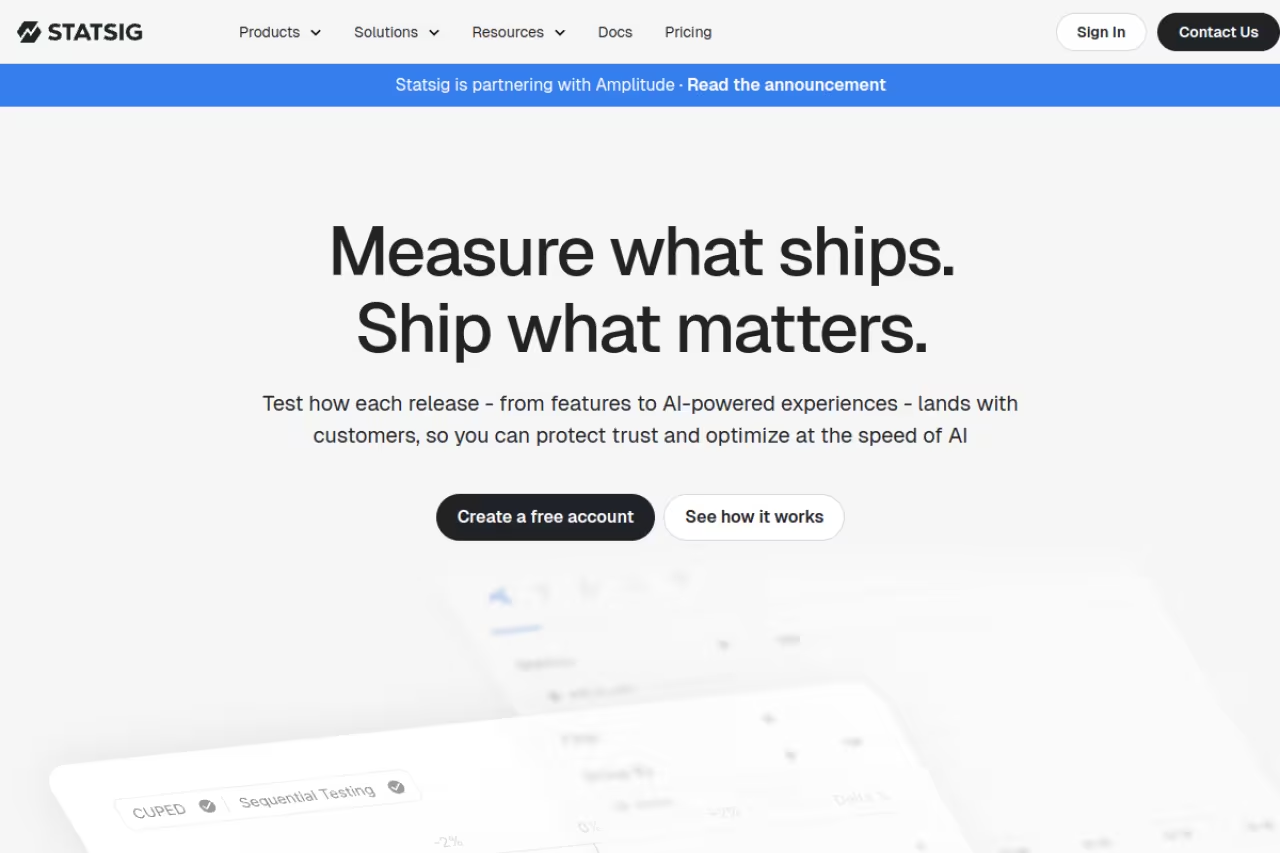
Statsig started as the experimentation tool Facebook engineers wished they had, and it shows. Flags, A/B tests, product analytics and session replay all live in one place, and the parts talk to each other. You flip a flag, and Statsig can tell you whether the cohort that got the feature converted better. That loop is the whole point of feature flags, and most cheaper tools make you build it yourself.
The strongest all-rounder for product teams that want to ship behind flags and then measure the result, with CUPED and sequential testing free. Event-based pricing can climb fast for high-traffic apps, and simple-toggle teams will not use the power.
the Developer tier is free with 2M events a month, unlimited flag checks, unlimited seats and 50,000 session replays. Pro is $150/month with 5M events included and $0.05 per extra 1,000 events (Statsig pricing). Enterprise moves to event- or experiment-based contracts.
The standout: a real statistics engine on the free plan. CUPED, sequential testing and proper significance math usually sit behind enterprise paywalls elsewhere. Here you get them while paying nothing.
The catch: the pricing is event-based, so if you're a high-traffic consumer app firing millions of analytics events, the bill climbs fast and gets hard to predict. Teams that only want simple toggles and no analytics are paying (in complexity) for power they won't touch.

LaunchDarkly: the enterprise default
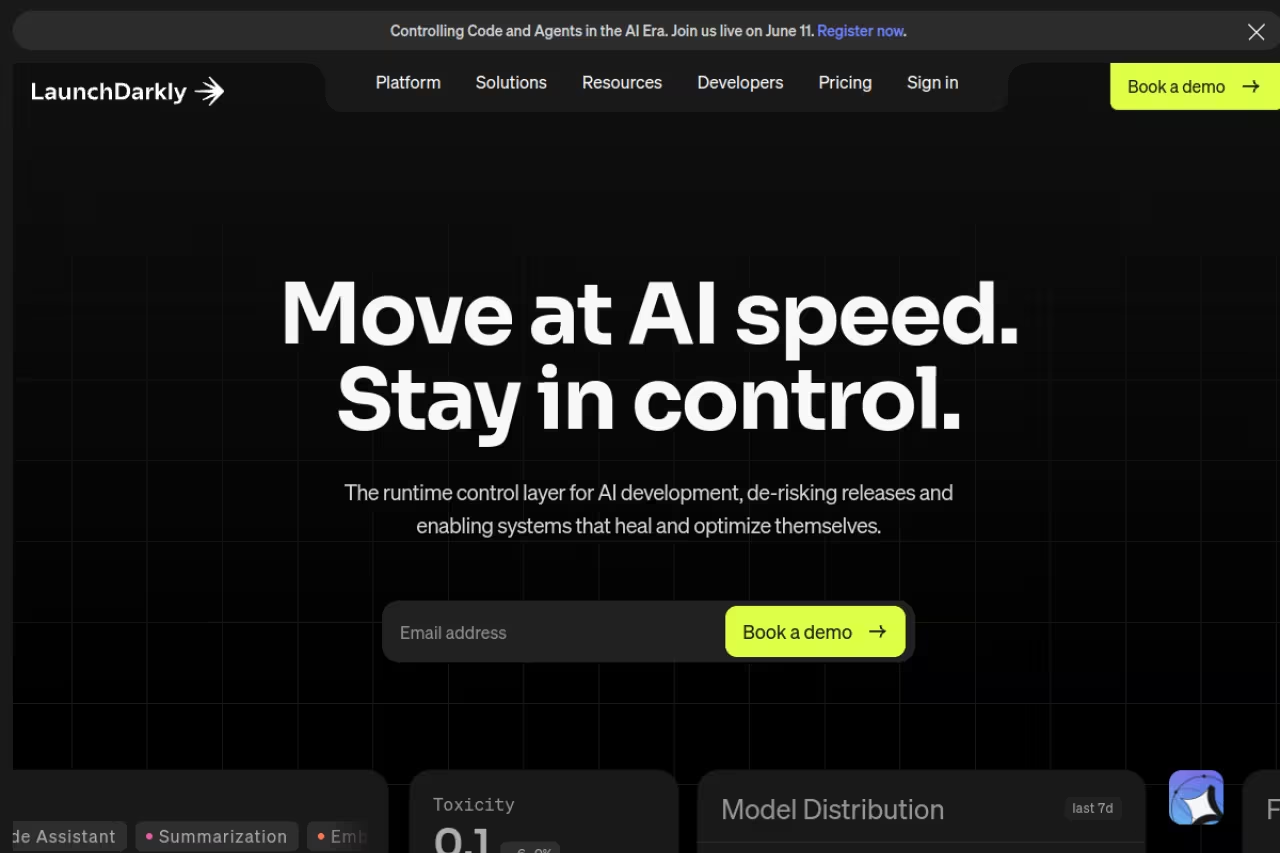
LaunchDarkly is the tool other tools position against, which tells you something. It's been the category leader for years, and for big organizations with compliance requirements and dozens of teams touching the same flags, nothing else feels as solid. The targeting is the deepest of the tools compared here: you can slice releases by user attribute, segment, percentage, and chained rules without fighting the UI.
The enterprise default for large orgs that need SSO, audit trails and approval workflows, with the deepest targeting here and a Guardian tier that can auto-pause a bad release. Per-MAU pricing gets expensive quickly, and it is overkill for a five-person startup.
there's now a free Developer tier with unlimited seats, unlimited flags across 30 SDKs, and 5,000 AI runs a month. Paid moves to usage-based: the Foundation tier runs $10 per service connection plus $8.33 per 1,000 client-side monthly active users, billed yearly (LaunchDarkly pricing). Enterprise and Guardian tiers are custom-quoted.
The standout: release automation and the new Guardian tier, which watches your guardrail metrics and can auto-pause or roll back a release when things degrade. That's the kind of safety net that justifies the price for a team shipping to millions.
Where it falls short: cost and opacity. The per-MAU model means a successful consumer product gets expensive quickly, and the historic complaints about unclear pricing and vendor lock-in haven't fully gone away. For a five-person startup, it's overkill.

PostHog: flags bundled with your analytics
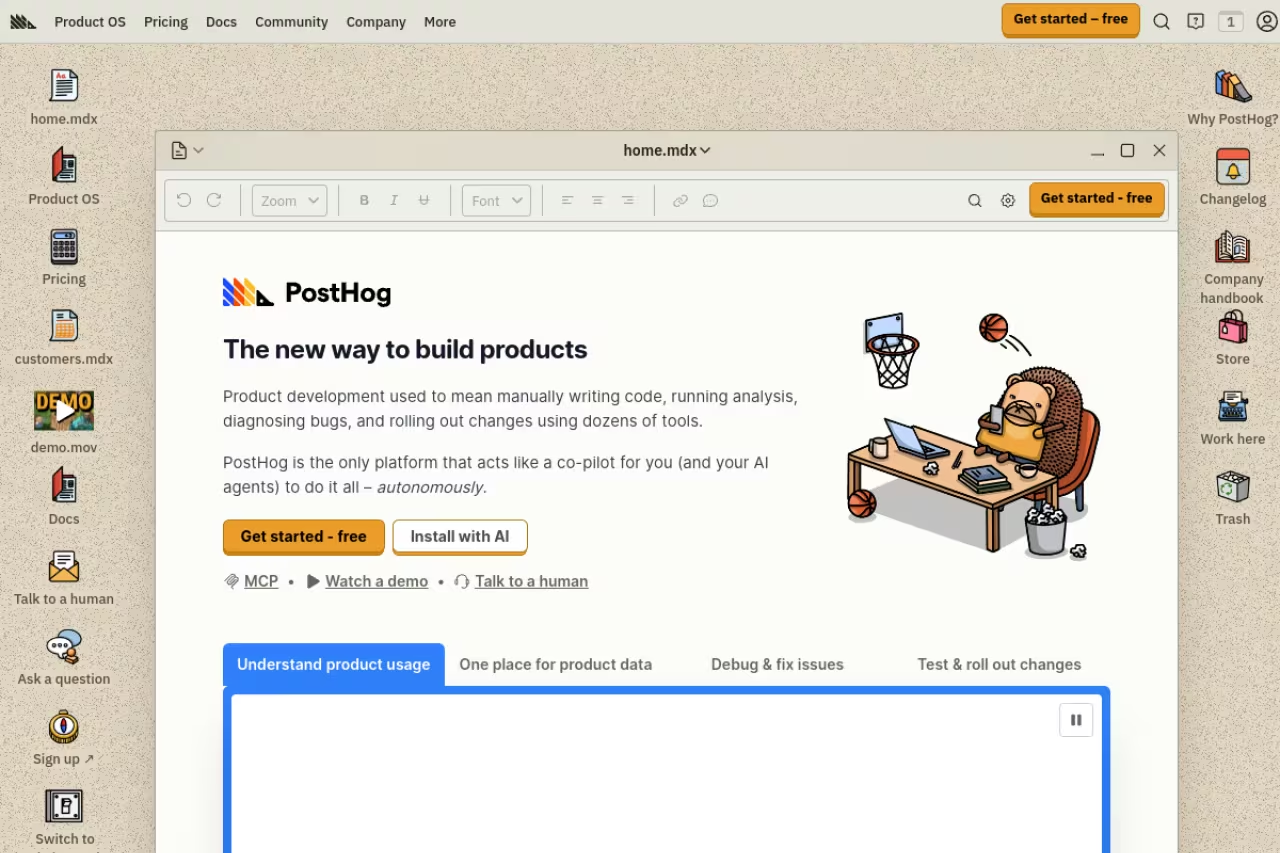
If you're already using PostHog for product analytics, you may not need a dedicated flag tool at all. Feature flags are one product in its bundle, sitting next to analytics, session replay, surveys and experiments. The win is context: you can look at a flag, the experiment running on it, and the session replays of users who hit it, all in one tab.
A smart pick if you already use PostHog analytics, since flags, experiments and session replays sit in one tab with spending caps you can set. The flagging engine is good rather than class-leading, so flag-first teams get more from a dedicated platform.
the free tier gives you 1 million feature flag requests a month, then it's roughly $0.0001 per request with steep volume discounts as you scale (PostHog pricing). You only pay for the products you enable, and you can set hard spending caps so a traffic spike doesn't produce a surprise invoice.
The standout: the all-in-one model. One SDK, one bill, one place to reason about what a feature did. For a small team, consolidating four tools into one is worth more than any single best-in-class feature.
The catch: the flagging engine is less specialized than a pure-play tool. Targeting rules and rollout controls are good, not class-leading, and if flags are your core need rather than a side benefit of analytics, a dedicated platform gives you more rope.
If you're putting together the rest of your stack, our roundup of the best AI agents and our top tools directory pair well with whatever flagging platform you land on.

Flagsmith: the open-source pick
Flagsmith is the tool I'd reach for if self-hosting matters to you. The whole platform is open source, so you can run it on your own infrastructure with no licensing cost, or use their cloud if you'd rather not babysit servers. It handles flags, remote config and segments across web, mobile and server SDKs.
Reach for Flagsmith if self-hosting or data residency matters, since it is open source and bills by API requests rather than MAUs. The experimentation side is thinner than Statsig or LaunchDarkly, so rigorous A/B testing means bolting on another tool.
the free cloud tier covers 50,000 requests a month with one team member and unlimited flags. Start-Up is $40/month (annual) for 1M requests and three seats; Scale-Up is $250/month for 5M+ requests (Flagsmith pricing). Self-hosting the open-source edition is free.
The standout: billing by API requests, not monthly active users. For a product with a big user base but modest flag-check volume, that math works out far cheaper than per-MAU competitors.
Where it falls short: the experimentation and analytics side is thinner than Statsig or LaunchDarkly. If you want to run rigorous A/B tests with a proper stats engine, you'll likely bolt on another tool.

ConfigCat: simple toggles, predictable bills
ConfigCat does one thing and refuses to get clever about it. It's a feature flag service with unlimited seats, no per-user fees, and pricing based on config fetches rather than monthly active users. If your team mostly wants reliable on/off switches and percentage rollouts without a learning curve, this is the calm choice.
The calm choice for straightforward flags and flat, predictable bills, with unlimited seats and no MAU billing. The free plan's 10-flag cap is tight, and there is no built-in experimentation.
the Forever Free plan covers 10 flags, two environments and 5 million config downloads a month. Pro is $110/month for 100 flags, and the Smart plan is $325/month for unlimited flags (ConfigCat pricing). Every plan includes unlimited seats and unlimited MAUs.
The standout: no per-seat and no MAU billing. You can add your whole company and your entire user base without watching a meter spin, which makes it noticeably cheaper than LaunchDarkly for a growing team.
The catch: the 10-flag cap on the free tier is tight, and there's no built-in experimentation. This is a toggle manager, not a product-decision platform, and it's honest about that.

GrowthBook: experimentation that reads your warehouse
GrowthBook flips the usual order: experimentation comes first, flags are the delivery mechanism. Its trick is reading metrics straight out of your existing data warehouse (BigQuery, Snowflake, Redshift), so you never ship event data to a third party and your experiment results match your source of truth.
Pick GrowthBook if you are a data-led team with a warehouse and want serious A/B testing on your own numbers rather than a black box. Setup is heavier without clean data, and the flagging itself is competent rather than remarkable.
the open-source self-hosted edition is free with unlimited flags and experiments. Cloud Starter is free for up to three users; Pro is $40/seat/month with advanced stats, CUPED and sequential testing (GrowthBook pricing).
The standout: warehouse-native architecture. Your numbers come from your data, not a black box, which is a real trust advantage when an experiment result is about to change a roadmap decision.
Where it falls short: it assumes you have a clean warehouse and the data discipline to use it. Teams without that foundation will find setup heavier than a plug-and-play tool, and the flagging side is competent rather than remarkable.

Unleash: mature open source for the enterprise
Unleash came out of FINN.no (now part of Schibsted) and has grown into one of the most respected open-source flag platforms. The free self-hosted core is genuinely capable, and the focus is on progressive delivery: gradual rollouts, advanced targeting and operational control for teams that take releases seriously.
A mature open-source option for engineering orgs that also want SSO and SAML, with 25+ SDKs and a clear path from free self-hosted to managed. Per-seat pricing adds up for bigger teams, and self-hosting means you own the uptime.
Pay-As-You-Go is $75/seat/month (five-seat minimum for self-hosted) with a 14-day trial. The open-source edition is free on GitHub, and custom Enterprise is quote-based (Unleash pricing).
The standout: a mature OSS codebase with 25+ SDKs and 90-day flag metrics retention. You get a real upgrade path from free self-hosted to managed enterprise without changing tools.
The catch: the per-seat pricing on the paid tiers adds up for bigger teams, and self-hosting means you own the uptime, scaling and upgrades. That's the open-source bargain: free software, your operational time.

Split (now Harness): flags inside a delivery platform
Split pioneered tying flag changes directly to metric movements, and it was acquired by Harness in 2024. It now lives inside the broader Harness software-delivery platform, which is a plus if you already use Harness for CI/CD and a question mark if you don't.
Makes sense mainly if you already run Harness for CI/CD, and its experimentation heritage still ties a flag flip to a measurable outcome. Outside the Harness ecosystem you are making a platform decision, and pricing transparency has taken a hit.
there's a free Developer tier, then a usage-based Growth tier and custom Enterprise pricing. Specifics now sit behind the Harness sales motion rather than a clean public table.
The standout: the experimentation heritage. Split was built from day one to connect a flag flip to a measurable outcome, and that DNA carries through.
Where it falls short: the acquisition. Standalone roadmap clarity and pricing transparency have both taken a hit, and if you're not in the Harness ecosystem, you're buying into a platform decision, not just a flag tool.
How to choose
Strip away the marketing and the decision comes down to three questions.
Do you need experimentation, or just toggles? If you want to measure what a feature actually did, go to Statsig, GrowthBook, or PostHog. If you just need a reliable on/off switch with percentage rollouts, ConfigCat or Flagsmith will cost you far less and frustrate you far less.
What's your billing reality? Per-MAU pricing (LaunchDarkly) punishes consumer apps with big user bases. Per-request (Flagsmith, PostHog) or per-config-fetch (ConfigCat) is friendlier for high-user, low-flag-volume products. Per-seat (Unleash, GrowthBook Pro) suits small teams with lots of traffic.
Do you need to self-host? If data residency or cost control pushes you to run it yourself, Flagsmith, Unleash and GrowthBook all have real open-source editions. Most teams don't need this and should take the managed cloud tier to save the operational headache.
My honest take: most teams under 50 people should start on Statsig's or PostHog's free tier, ship a few flags, and only graduate to LaunchDarkly when governance and scale genuinely demand it. Pay for the problem you have, not the one you might have in two years.
If you want more breakdowns like this, Dupple X sends a short brief on the tools and AI workflows that actually move the needle, without the hype. You can also browse our wider top tools collection and our guide to the best AI coding tools.
FAQ
What is a feature flag tool actually for?
A feature flag tool lets you turn pieces of your code on or off without deploying again. You wrap new functionality in a flag, release it to a small slice of users, watch how it behaves, and either roll it out fully or switch it off instantly if something breaks. It separates "deploy" from "release," which is what makes risky changes safe.
What is the best free feature flag tool in 2026?
Statsig and PostHog have the most usable free tiers. Statsig gives you 2 million events a month plus a real experimentation engine, and PostHog includes 1 million feature flag requests a month. For pure self-hosting, the open-source editions of Flagsmith, Unleash and GrowthBook cost nothing but your own server time.
Is LaunchDarkly worth the price?
For large organizations with compliance needs, deep targeting requirements and many teams, yes. The reliability, governance and release-automation features justify the cost when a bad release is expensive. For small teams just starting with flags, LaunchDarkly is usually overkill, and a free tier from Statsig, PostHog or ConfigCat does the job.
Do I need a feature flag tool if I already use PostHog?
Probably not. PostHog includes feature flags alongside its analytics, session replay and experiments, so for most teams already on it, adding a separate flag tool is redundant. Look at a dedicated platform only if flag targeting and rollout control are your core need rather than a side benefit of analytics.
Open source or hosted feature flags: which should I pick?
Pick hosted unless you have a specific reason not to. Self-hosting an open-source tool like Flagsmith or Unleash saves licensing money but costs you uptime, scaling and upgrade work. If you have data-residency rules or a strong platform team, open source is great. Otherwise the managed cloud tier is usually cheaper once you price in engineering time.
Related guides
Some offers on this page may be paid placements or contain affiliate links.
