
The 8 Best Applicant Tracking Systems in 2026

Key facts8 tools compared: Greenhouse, Ashby, Workable, Gem, Lever, Zoho Recruit, Breezy HR, Manatal
- 8 tools compared: Greenhouse, Ashby, Workable, Gem, Lever, Zoho Recruit, Breezy HR, Manatal
- Greenhouse (best for: Structured hiring at scale): Custom, ~$6,500+/yr
- Ashby (best for: Data-driven growth-stage teams): $400/mo flat (up to 100)
- Workable (best for: SMBs that want transparent pricing): From $299/mo
- Gem (best for: AI sourcing plus ATS in one): From $135/mo
Most hiring teams pick an applicant tracking system the same way they pick a dentist: someone recommended one, the demo looked fine, and switching later feels like a root canal. Two years in, recruiters are pasting candidate notes into Slack because the ATS reporting is unreadable and the AI screening flags the wrong people.
The market in 2026 is crowded and the gaps between tools are real. Some are built for structured hiring at 500-person companies. Some are flat-fee tools a five-person startup can run from a Kanban board. AI screening, resume parsing, and interview scheduling are now table stakes, so the real differences come down to pricing model, analytics depth, and how much setup the thing demands before it pays off.
If you want the short answer: Greenhouse is the best all-around ATS for teams that hire seriously and care about process. Ashby wins on analytics. Workable is the most honest mid-market pick because the pricing is right there on the page. Below I break down eight systems I'd actually recommend, who each one fits, and where each one bites you.
Quick comparison
| Tool | Best for | Price | Standout |
|---|---|---|---|
| Greenhouse | Structured hiring at scale | Custom, ~$6,500+/yr | Interview kits and scorecards |
| Ashby | Data-driven growth-stage teams | $400/mo flat (up to 100) | Best-in-class analytics |
| Workable | SMBs that want transparent pricing | From $299/mo | Published flat pricing |
| Gem | AI sourcing plus ATS in one | From $135/mo | 800M+ profile sourcing |
| Lever | Mid-market CRM-heavy recruiting | From ~$6,000/yr | Unified ATS + talent CRM |
| Zoho Recruit | Budget teams and agencies | Free tier, paid from ~$25/user | Genuine free plan |
| Breezy HR | Small teams, unlimited users | Free tier, paid from ~$157/mo | Flat fee, no per-seat cost |
| Manatal | Agencies and lean in-house teams | From $15/user/mo | Cheapest AI-capable ATS |
Greenhouse: the default for serious, structured hiring
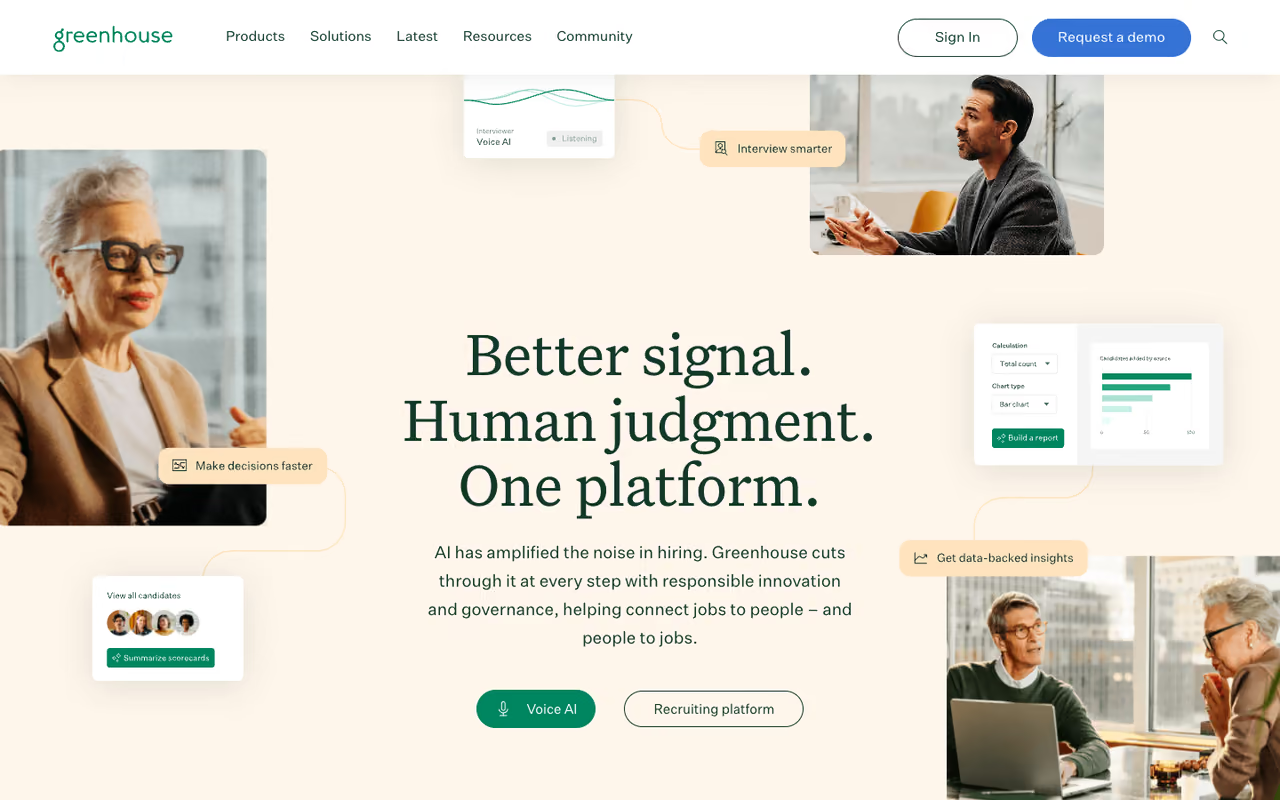
Greenhouse is the system most people mean when they say "a real ATS." It topped G2's Winter 2026 rankings for user satisfaction in mid-market and enterprise, and the reason is consistency: structured interview kits, scorecards, and approval workflows that force a hiring process instead of letting one happen by accident.
The default for companies hiring 20+ roles a year that want every interviewer scoring against the same rubric. Greenhouse enforces structure well, but there is no free tier, pricing is custom and climbs per employee, and it is overkill for five hires a year.
The 2026 release added AI candidate insights that summarize scorecards and feedback, plus a Greenhouse MCP connection that pipes hiring data into approved AI tools like Claude and Gemini. They also run monthly third-party bias audits through Warden AI and hold ISO 42001 certification for AI governance, which matters if your legal team asks hard questions about automated screening.
Pricing is custom and not published. Independent breakdowns put the entry Essential tier around $6,500/yr for small teams, with mid-market deals landing between $20,000 and $40,000 a year. You contact sales for a quote.
The catch: there's no free tier, the per-employee pricing climbs as you grow regardless of how many recruiters you actually have, and the setup is heavier than a small team needs. If you're hiring five people a year, this is overkill.

Ashby: the analytics nerd's ATS
Ashby is what you reach for when you want to know your actual time-to-hire by source, your pass-through rate at every stage, and which interviewers are bottlenecking your pipeline, without exporting anything to a spreadsheet. The reporting is the best in this category, full stop.
It fits growth-stage companies (think Series A through C) that are data-driven and run a tight recruiting funnel. Everything lives in one product: ATS, scheduling, sourcing, and analytics, so you're not stitching three tools together.
Ashby is the analytics-first ATS for data-driven growth-stage companies, with ATS, scheduling, sourcing and reporting in one product. The $400/month entry price is steep for a 15-person startup, and the depth means real configuration time.
Pricing is unusually clear at the bottom. The Foundations plan is $400/month flat for companies up to 100 employees, with a 10% discount on annual billing. Above that, the Plus and Enterprise tiers are custom-quoted, and they get expensive: companies in the 100-300 employee range often land in the $30,000-$70,000/yr band.
The catch: that $400/month entry price is steep for a 15-person startup, roughly double what some competitors charge at the same size. And the analytics depth that makes Ashby great also means a learning curve. You'll spend real time configuring it before the dashboards earn their keep.

Workable: the most transparent mid-market option
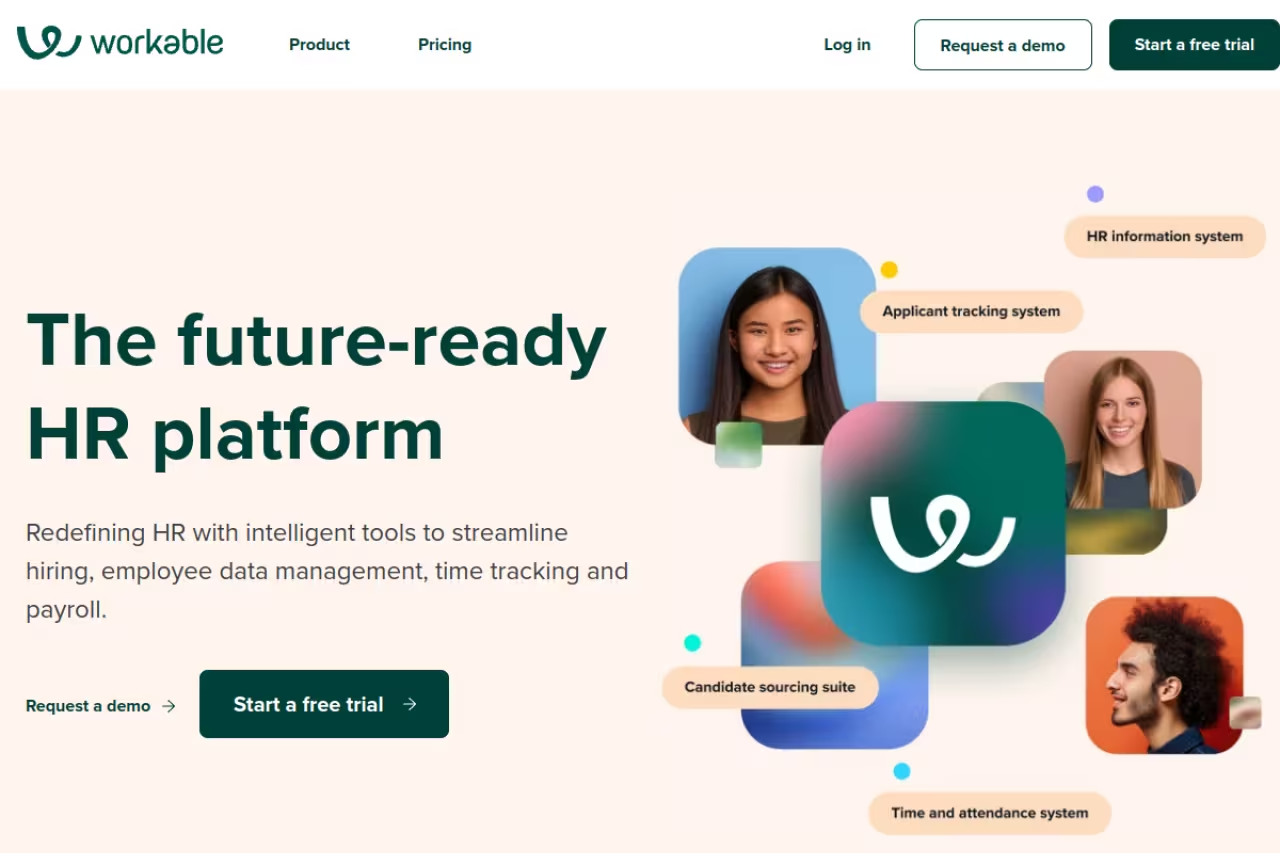
Workable's superpower is that you can see exactly what it costs without booking a demo. That sounds small. After three sales calls with "contact us" vendors, it feels like a gift.
The most transparent mid-market option, with published pricing and a 15-day free trial for growing SMBs. Watch the add-ons: texting and video interviews stack up fast, and three of them push a Standard plan toward Premier money.
Job posting to 200+ boards, AI-assisted sourcing, and a clean candidate pipeline all come standard.
Pricing is published: the Standard plan is $299/month (or $3,588/yr with the 20% annual discount) for up to 20 employees, Premier is $599/month, and Enterprise runs $719/month with bundled texting, video interviews, and assessments. There's a 15-day free trial, no card required. The newer Workable Agent runs on a credit system (1 credit equals one candidate worked by the AI), and every paid plan starts with 1,000 free credits.
The catch: on the Standard plan the good stuff (texting, video interviews, assessments) is paid add-ons that stack up fast: $89/mo for texting, $109/mo for video. Add three of them and you're paying Premier money on a Standard plan. Check the math before you commit.

Gem: AI sourcing and an ATS in the same box
Gem is the rare tool that started as a sourcing and recruiting CRM and grew a full ATS around it, rather than the other way round. If your bottleneck is finding candidates, not tracking them, that origin story matters.
Gem suits in-house teams doing heavy outbound recruiting, with sourcing, outreach, scheduling and an ATS in one place. Pay for the sourcing engine, though, because it is less compelling for structured-hiring shops that live in scorecards.
Gem markets itself as the only AI-first all-in-one recruiting platform, and the 800M+ profile database it sources from is the real draw.
The Startups plan starts at $135/month with 500 AI sourcing credits, ATS, CRM, scheduling, and analytics. The standard in-house plan runs $270/month billed annually. Enterprise contracts, per Vendr's 2026 data across 218 verified purchases, sit at a $24,900 median, ranging from $7,000 to nearly $71,000.
The catch: Gem shines for high-volume outbound sourcing and is less compelling if you're a structured-hiring shop that lives in scorecards and approval chains. Pay for the sourcing engine, or you're overpaying for an ordinary ATS.

Lever: a CRM-first ATS for the mid-market
Lever blends an ATS with a talent CRM in a way that suits teams nurturing passive candidates over months, not just processing active applicants. The 2026 version added an AI Interview Companion and AI screening to the core product.
It fits mid-market companies (roughly 150-1,000 employees) that want one system for both active pipelines and long-term relationship building. The unified ATS-plus-CRM model is the selling point.
A CRM-first ATS for mid-market teams nurturing passive candidates over months, with AI screening added in 2026. Per-employee pricing means a contract can roughly double as you grow, and several useful features are locked to Enterprise.
Pricing starts around $6,000/yr for small teams and climbs past $144,000 for large enterprises. Mid-market organizations typically pay $12,000-$37,000/yr, and discounts of 15-25% off the initial quote are common with volume or multi-year terms.
The catch: Lever prices per employee, so a company that grows from 150 to 300 people sees its contract roughly double even if the recruiting team never changes size. Several genuinely useful features (data warehouse sync, custom API access, AI analytics) are locked to the Enterprise tier, which runs 2-3x the base rate.
Zoho Recruit: the genuine free tier
Zoho Recruit is the best option if "free" needs to mean free, not a 14-day trial with a countdown. The forever-free plan handles one active job posting with basic candidate management, email, and interview scheduling.
The pick when free has to mean free, for tiny teams, solo founders and staffing agencies, especially inside the Zoho ecosystem. The one-active-job cap makes the free plan a sandbox, and the interface feels dated next to Ashby or Gem.
If you're already in the Zoho ecosystem, the integration with Zoho CRM and the rest of the suite is a real bonus.
The free plan caps at one active job. Paid tiers scale by active postings (Standard at 100, Professional at 250, Enterprise at 750), with per-user pricing starting around $25/user/month and AI candidate matching landing at the Professional level. There's a 15-day trial on paid plans and a 45-day money-back guarantee.
The catch: the free plan's one-job limit makes it a sandbox, not a working ATS for anyone hiring more than one role at a time. And the interface, while functional, feels dated next to Ashby or Gem. You trade polish for price.

Breezy HR: flat-fee hiring for small teams
Breezy HR charges a flat monthly fee with unlimited users at every tier, which is a quietly big deal if you have lots of hiring managers and don't want to pay per seat. The drag-and-drop pipeline is genuinely pleasant to use.
Breezy HR fits small businesses and startups that want a clean, visual pipeline with unlimited users at every tier and no per-recruiter pricing. Skip the free plan, which is barely usable, and budget for at least the Startup tier.
Everyone who touches hiring can have a login at no extra cost.
The free Bootstrap plan covers one active position. Paid plans, per 2026 breakdowns, run roughly $157/month for Startup, $273/month for Growth, and $439/month for Business on annual billing, all with unlimited users.
The catch: the free tier is barely usable. One active job, 30-day candidate data retention, no email integration, no scheduling, no analytics. It's a demo, not a free ATS. Budget for at least the Startup plan if you're hiring for real.
Manatal: the cheapest AI-capable ATS
Manatal is the value play. It's aimed at recruitment agencies and lean in-house teams, and the entry price undercuts almost everything else here.
It fits agencies juggling many clients and small companies that want AI candidate matching without an enterprise invoice. The interface is modern and the setup is fast.
The Professional plan starts at $15/user/month on annual billing ($19 monthly), Enterprise is $35/user/month, and Enterprise Plus is $55/user/month. AI features and unlimited jobs live on the Enterprise tier and up.
The catch: that $15 plan caps you at 15 active jobs and 10,000 candidates, and the AI matching that makes the tool interesting isn't included until you reach the $35 Enterprise tier. The headline price is real, but the useful price is higher.
Manatal is the value play for agencies and lean in-house teams that want AI candidate matching without an enterprise invoice. The $15 headline price caps you at 15 active jobs, and the AI only arrives at the $35 tier.
How to choose
Skip the feature-checklist trap. Every tool here parses resumes and schedules interviews. Decide on three things instead.
Pricing model first. If your headcount is about to jump, avoid per-employee pricing (Lever, Greenhouse at scale) unless you've negotiated a cap, or you'll pay more next year for the same recruiting. Flat-fee tools (Breezy, Workable) protect you from that.
Then your actual bottleneck. Can't find candidates? Buy a sourcing-first tool (Gem). Can't see what's working? Buy analytics-first (Ashby). Interviewers going rogue? Buy structure (Greenhouse). Don't pay for a sourcing engine you won't use.
Then setup tolerance. Greenhouse and Ashby reward configuration work with real payoff but punish teams that want to be live by Friday. Workable, Breezy, and Manatal get you running in an afternoon. Be honest about which kind of team you are.
If you're a founder making your first handful of hires, start free with Zoho Recruit or Breezy and upgrade when one open job stops being enough. If you're building a real recruiting function, Greenhouse or Ashby will serve you for years. The ATS is the spine of your hiring stack, but the AI recruiting tools and HR platforms you bolt on around it matter just as much.
Want a faster way to keep up with which tools are actually worth your time? Dupple X tracks the AI and software tools moving fastest, so you're not finding out about a better ATS from a competitor's careers page.
Frequently asked questions
What is the best applicant tracking system in 2026?
For most teams hiring at scale, Greenhouse is the best all-around choice thanks to structured interview kits, scorecards, and strong AI governance. Ashby is the better pick if analytics are your priority, and Workable is the easiest entry point for SMBs because its pricing is published and transparent. The "best" depends on your size, budget, and whether your bottleneck is sourcing or process.
How much does an applicant tracking system cost?
It ranges widely. Free tiers exist (Zoho Recruit, Breezy HR) but cap you at one active job. Flat-fee tools start around $135-$299/month (Gem, Workable). Per-user tools like Manatal start at $15/user/month. Enterprise systems like Greenhouse and Lever are custom-quoted and typically run $6,500 to $40,000+ a year for mid-market teams, climbing past $100,000 for large organizations.
Do applicant tracking systems use AI in 2026?
Yes, and it's now standard rather than a differentiator. Expect resume parsing, candidate scoring, interview scheduling, and job description optimization in nearly every paid plan. The differences are in governance and depth. Greenhouse runs monthly third-party bias audits and holds ISO 42001 certification, while Gem and Lever lean harder into AI sourcing. You can see why on the candidate side here.
Is a free applicant tracking system good enough for a startup?
For your first one or two hires, yes. Zoho Recruit and Breezy HR both offer permanent free plans that handle a single active position with basic pipeline management. The moment you're hiring for two or more roles at once, you'll hit the one-job ceiling and need a paid plan. Treat the free tier as a starting point, not a destination.
What's the difference between a standalone ATS and an HCM-embedded one?
A standalone ATS (Greenhouse, Workable, Ashby) focuses only on recruiting and usually offers deeper sourcing, CRM, and analytics. An HCM-embedded ATS (inside Workday, Paycor, or ADP) bundles recruiting with payroll, benefits, and onboarding in one platform. Standalone tools win on recruiting depth; embedded ones win on having a single system of record once someone is hired. Pair your ATS with solid onboarding tools to close that gap.
Which ATS is best for high-volume sourcing?
Gem, because it grew out of a sourcing and recruiting CRM and sources from a database of 800M+ profiles with AI-assisted outreach automation built in. If most of your hires come from outbound rather than inbound applications, Gem's sourcing engine justifies its price in a way a process-first tool like Greenhouse can't match. For more options, see our best AI recruiting tools roundup and the full top tools directory.
Related guides
Some offers on this page may be paid placements or contain affiliate links.
Across our whole catalogue the median is $24 a month and 33% of tools advertise a free tier. Figures are the lowest recurring monthly price quoted in our own review of each tool, read on 2026-08-19. Full method and every category.
