
Best API Testing Tools in 2026: 8 I Actually Run

Key facts8 tools compared: Postman, Bruno, Apidog, Insomnia, Hoppscotch, k6, Karate, SoapUI / ReadyAPI
- 8 tools compared: Postman, Bruno, Apidog, Insomnia, Hoppscotch, k6, Karate, SoapUI / ReadyAPI
- Postman (best for: All-in-one teams that want everything in one app): Free (1 user); Team $19/user/mo
- Bruno (best for: Privacy-first teams who want collections in Git): Open source; Pro $6/user/mo
- Apidog (best for: Design-first teams who want testing + docs + AI): Free (4 users); Team $19/user/mo
- Insomnia (best for: GraphQL-heavy devs wanting a lean client): Free (3 users); Pro $12/user/mo
For about a decade, "API testing tool" meant Postman, and the conversation ended there. That's over. In March 2026 Postman cut its free plan to a single user and moved any shared workspace onto a $19/user/month Team plan, and the whole market reorganized around that move. The real debate now isn't about features. It's about where your collections live and who you pay to sync them.
I spend a lot of my week poking at REST and GraphQL endpoints, writing contract tests, and load-testing things before they meet real traffic. So I pulled the tools people keep recommending in 2026 and ran them against actual APIs to see which ones earn a place in a working stack.
Short version for skimmers: if you want one tool and don't mind paying, Postman still does the most. If you care about privacy, Git, and not renting your test suite, Bruno is the pick I reach for first. And if you want design, mocking, testing, and docs in one app with AI baked in for free, Apidog is the surprise of the year. The rest of this list covers the specialists.
Quick comparison
| Tool | Best for | Price | Standout |
|---|---|---|---|
| Postman | All-in-one teams that want everything in one app | Free (1 user); Team $19/user/mo | Huge feature set, biggest ecosystem |
| Bruno | Privacy-first teams who want collections in Git | Open source; Pro $6/user/mo | Plain-text .bru files, no cloud account |
| Apidog | Design-first teams who want testing + docs + AI | Free (4 users); Team $19/user/mo | Whole API lifecycle in one workspace |
| Insomnia | GraphQL-heavy devs wanting a lean client | Free (3 users); Pro $12/user/mo | Clean UI, free Git Sync on the free tier |
| Hoppscotch | Self-hosters who want an open-source platform | Free, MIT (self-host or cloud) | Browser-native, REST/GraphQL/gRPC |
| k6 | Engineers load-testing APIs in CI | Open source; Grafana Cloud paid | JavaScript tests piped into Grafana |
| Karate | Teams writing automated API tests in plain English | Open source (Apache 2.0) | BDD syntax, no boilerplate Java |
| SoapUI / ReadyAPI | SOAP shops and enterprise data-driven testing | SoapUI free; ReadyAPI from $749/user/yr | Deep SOAP and security scanning |

Postman: still the one that does everything
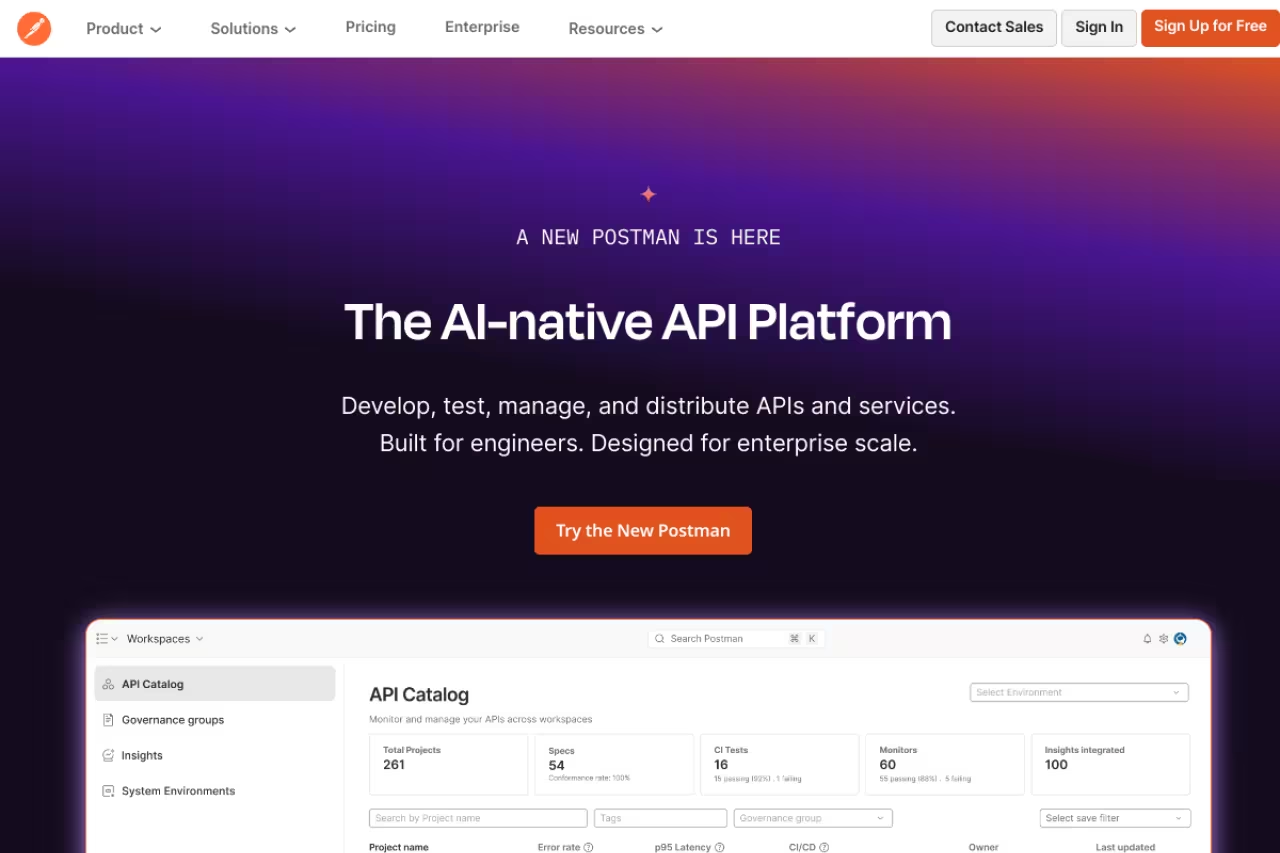
Postman is the tool everyone learned API testing on, and it's still the most capable single app here: API client, collection runner, mock servers, native Git, contract testing, monitors, and an AI assistant under one roof. Best for teams that want the full lifecycle in one place and have the budget for it.
The free plan now covers one user with the client, specs, mock servers, native Git, and 50 AI credits a month. Solo is $9/month with 400 AI credits. The Team plan is $19/user/month billed annually and unlocks real collaboration plus role-based access. Enterprise runs $49/user/month with governance and audit logs.
The standout is breadth. Nothing else packs this much into one interface, the ecosystem of public collections and integrations is unmatched, and new hires already know it.
The catch: the 2026 free-tier squeeze made Postman expensive for small teams overnight. A five-person team now pays $1,140 a year for what used to be free collaboration. The app has also grown heavy and cloud-first, which is exactly the friction the newer tools sell against.
The most capable single app here if you want the full lifecycle in one place and have the budget. Postman's breadth is unmatched, but the free-tier squeeze means a five-person team now pays $1,140 a year, and the app has grown heavy.

Bruno: the one I'd hand a privacy-conscious team
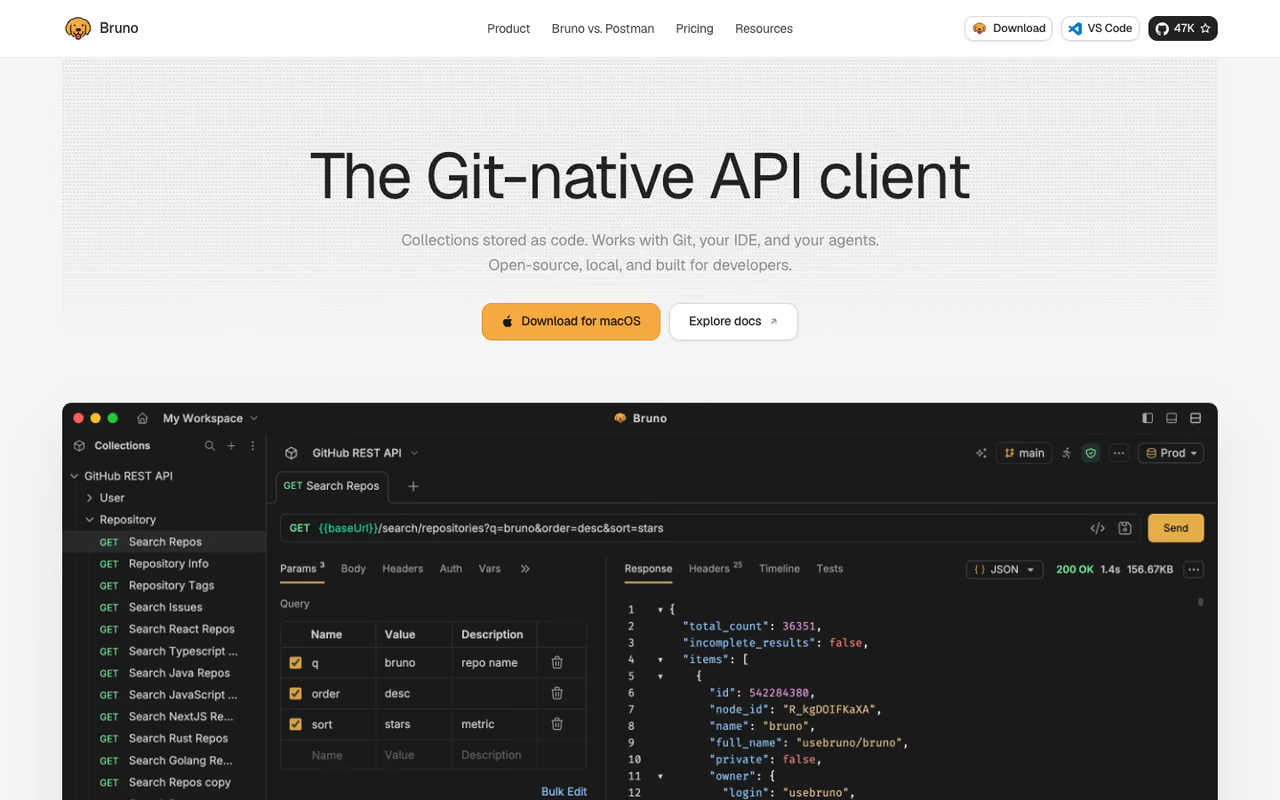
Bruno took the simplest idea and ran with it: store your API collections as plain-text files in your repo, no cloud account, no sync server, no login. Each request is a .bru file you commit alongside your code, so code review, branching, and history just work. Best for teams that don't want their requests, secrets, or environments living on someone else's server.
It's open source and free at the core. The paid tiers are Pro at $6/user/month and Ultimate at $11/user/month, both billed annually, adding Git collaboration, automation, and support. There's a 14-day Ultimate trial with no card. A five-person team runs the open-source tier at zero cost, which is the whole pitch against Postman's $1,140.
The standout is the offline-first, Git-native model. Your collections are diffable text, so a pull request shows exactly which request changed. No sync-conflict dialogs, no lock-in on your own tests.
Where it falls short: Bruno is younger, so the polish and integration list are thinner than Postman's. Some advanced protocol support sits behind the paid tiers, and if your team actually wants cloud collaboration, the Git-only model is more setup than a hosted workspace.
Hand Bruno to a privacy-conscious team that wants collections as plain-text files in the repo, with no cloud account or login. It is younger and less polished than Postman, and teams wanting hosted collaboration will find the Git-only model more setup.

Apidog: the all-in-one that surprised me
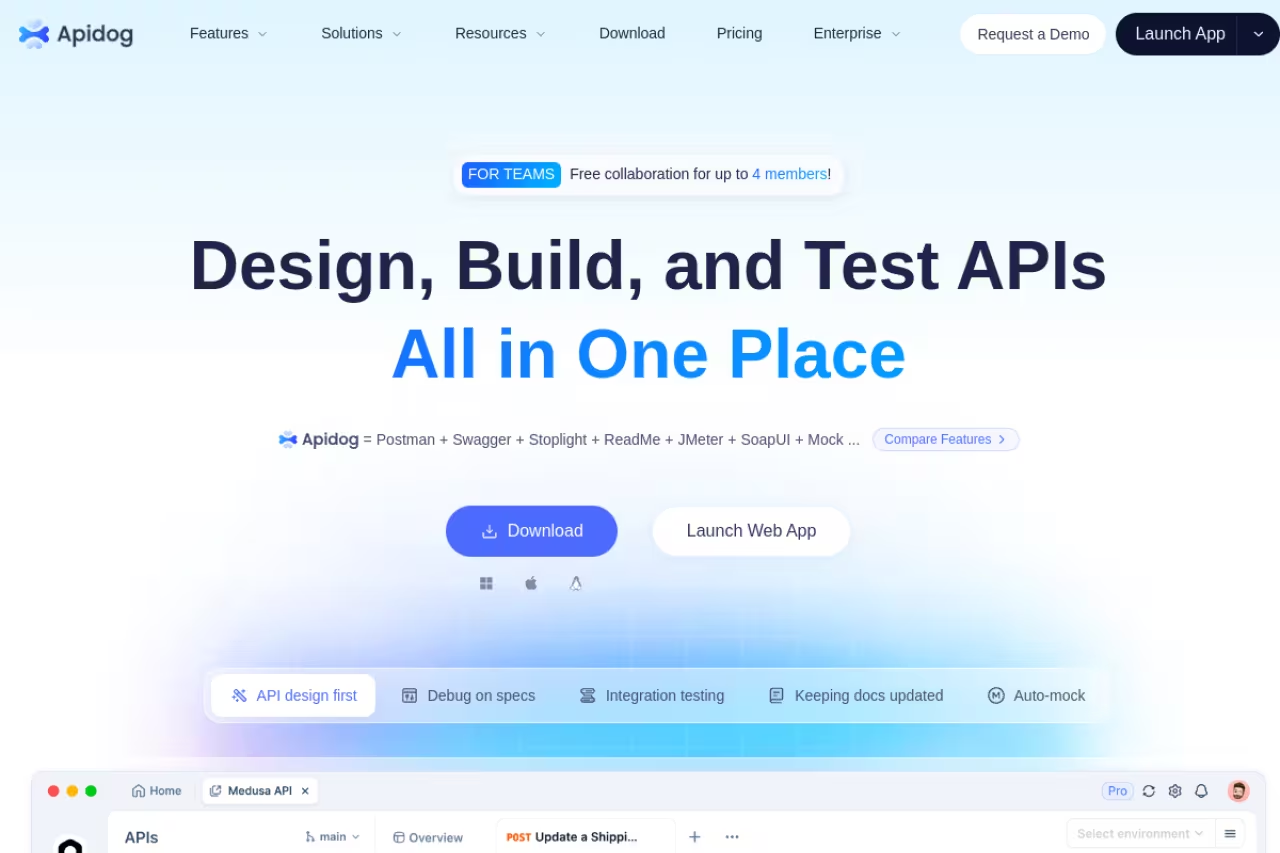
I expected Apidog to be a Postman clone. It isn't. It's a design-first platform that folds API design, mocking, debugging, automated testing, and documentation into one workspace, so the spec, the mock, the tests, and the docs stay in sync instead of drifting apart across four tools. Best for teams that design APIs before building them and want testing and docs from one source of truth.
The free plan covers four users, which already beats Postman's single-seat free tier. The Basic plan is $9/month for one user, and the Team plan is $19/user/month with 400 AI credits per month. The pricing tracks Postman at the top, but you get more in the box at the bottom.
The standout is how much AI is built into every layer for free, where Postman and Insomnia meter it or gate it to higher tiers. Auto-generated test cases from your schema, smart mock data, and assertion suggestions are genuinely useful, not demo-ware.
The catch: you're trading Postman lock-in for Apidog lock-in. Some advanced features lean on its cloud, and a few menus still read like a translation. If you only need a quick request client, the design-first framing is more tool than you want.
A design-first platform that keeps the spec, mock, tests and docs in sync, with free AI built in and a free plan covering four users. The trade-off is Apidog lock-in, and it is more tool than you need for a quick request client.
If you're building developer tooling like this and want it in front of the founders and engineers who buy it, that's the Techpresso audience. More on that later.

Insomnia: the lean client for GraphQL work
Insomnia is the calm, focused alternative to Postman's everything-app. It's long been the client GraphQL-heavy developers reach for, because schema introspection and query building feel native rather than tacked on. Best for developers who want a fast, clean client and do a lot of GraphQL.
The Essentials plan is free for up to three users with unlimited Git Sync projects, unlimited collection runs, the Inso CLI, and 1,000 mock server requests a month. Pro is $12/user/month with unlimited users and role-based access. Enterprise is $45/user/month with SSO, SCIM, and Kong Konnect.
The standout is that Git Sync sits on the free tier, which is rare. You version collections properly without paying, and the app stays light while you do it. Where it falls short: the forced-account-login era a few years back burned trust and drove a lot of people to Bruno and Hoppscotch. Insomnia walked back the worst of it, but the three-user free cap and Kong's ownership still make some teams wary.
The lean, focused client for GraphQL-heavy developers, with Git Sync on the free tier, which is rare. Pick it if you want a clean alternative to Postman, but the three-user free cap and past forced-login history make some teams wary.

Hoppscotch: open source you can self-host
Hoppscotch is the browser-native, MIT-licensed platform for teams that want to own their stack outright. It runs in a tab, as a desktop app, or as a CLI, and covers REST, GraphQL, gRPC, and WebSockets. The self-hosted edition gives you workspaces, an admin dashboard, and collaboration without sending a single request through someone else's cloud. Best for engineers who want a free platform they can deploy behind their own firewall.
It's free. Self-hosting needs a frontend PWA, a backend, an admin dashboard, plus PostgreSQL and Redis, and the containers are stateless, so it slots into Kubernetes cleanly. Recent 2026 releases (changelog on GitHub) added collection-level pre-request scripts, OpenAPI 3.1 export, and SMTP OAuth2 for self-hosted instances.
The standout is the genuinely open, self-hostable model: no seat math, no per-request limits you didn't set yourself. The catch is that self-hosting is real infrastructure you now own and patch, and the hosted free version is lighter on advanced testing than Postman or Apidog. This is a platform you grow into rather than a turnkey suite.
The open-source platform to choose if you want to deploy behind your own firewall, with no seat math. Self-hosting is real infrastructure you own and patch, and the hosted free version is lighter on advanced testing than Postman or Apidog.
k6: when you need to break it on purpose
k6 isn't a request client, it's a load-testing tool, and it's the modern default for hammering an API before real users do. You write tests in JavaScript, run them locally with unlimited virtual users, and pipe the results straight into Grafana dashboards. Grafana Labs has owned it since 2021, and the observability integration shows. Best for engineers who want performance tests that live in Git and run in CI.
The open-source tool is free, with unlimited local virtual users and the full feature set. Managed Grafana Cloud k6 adds hosted load generators across 20+ regions and real-time dashboards, with enterprise pricing that starts high (a minimum annual commit is involved), so the cloud is for serious scale only. Converters from Postman collections and OpenAPI specs mean you don't start from scratch.
The standout is strong REST, gRPC, and GraphQL support plus first-class Grafana integration: load-test results sit next to your production metrics, which makes regressions obvious. Where it falls short: it's scripting, not clicking, so there's a learning curve if your team isn't comfortable in JavaScript, and it's load testing only, so you still need a separate client for functional and contract work.
The modern default for load testing an API before real users do, with tests in JavaScript that live in Git and results sitting next to Grafana metrics. It is scripting only and load testing only, so you still need a separate client.
Karate: plain-English test automation
Karate solves a specific problem: writing automated API tests without drowning in Java boilerplate. It uses Gherkin syntax, so tests read like "Given, When, Then" plain English, the same format anyone who's touched Cucumber knows. One framework covers REST, SOAP, GraphQL, and WebSocket, plus mocks, performance testing, and even some UI automation. Best for QA teams that want readable, maintainable tests without a heavy coding lift.
It's open source under Apache 2.0, so it's free. Peter Thomas built it at Intuit specifically to make API test automation more accessible, and that origin shows in how little ceremony it demands next to raw REST Assured.
The standout is combining API test automation, mocks, and performance testing in one BDD-friendly framework, where tests double as living documentation because they read like specs. The catch: it lives in the JVM world, so you need a Java toolchain even though you barely write Java, and it's a framework, not an app, so there's no GUI for exploratory poking. This is for codified test suites, not ad-hoc debugging.
Choose Karate if your QA team wants readable Gherkin-style tests across REST, SOAP, GraphQL and WebSocket without heavy coding. It needs a Java toolchain and has no GUI, so it suits codified suites rather than ad-hoc debugging.

SoapUI / ReadyAPI: the SOAP and enterprise pick
If you still maintain SOAP services, this is the one place that takes them seriously. SoapUI open source covers functional testing for SOAP and REST and is free on GitHub. SmartBear's commercial ReadyAPI is the next generation of it, adding load testing, security scanning, and data-driven testing from external sources. Best for SOAP-heavy shops and enterprises that need security scans and data-driven testing in one paid platform.
SoapUI open source stays free, though updates land less often than they used to. ReadyAPI starts at $749 per user per year, firmly enterprise territory. SoapUI Pro no longer exists as a standalone product; SmartBear folded it into ReadyAPI.
The standout is depth on SOAP plus enterprise security and data-driven testing the lighter tools don't attempt. Where it falls short: the interface feels dated next to Postman or Apidog, the open-source version gets sporadic attention, and ReadyAPI's per-seat price is steep unless you genuinely need its enterprise muscle. For a modern REST-only team, this is overkill.
The one that takes SOAP seriously, and the enterprise pick for security scans and data-driven testing. The interface feels dated, the open-source version gets sporadic attention, and ReadyAPI at $749 per user per year is overkill for a modern REST-only team.
How to choose
Start with your storage model, because in 2026 that's the real fork in the road. If you want collections in your repo and nothing on a vendor's server, go Bruno or self-hosted Hoppscotch. If you want a hosted workspace and don't mind paying per seat, Postman or Insomnia fit.
Then match the job:
- Designing and documenting APIs, not just calling them? Apidog, because design, mocks, tests, and docs share one source.
- Drowning in a Postman bill for a small team? Bruno's open-source tier costs nothing for five people.
- Living in GraphQL? Insomnia's client still feels the most native.
- Need to load-test before launch? k6, full stop.
- Want readable automated suites in CI? Karate.
- Stuck supporting SOAP? SoapUI or ReadyAPI.
Most real teams end up with two tools, not one: a client for building and debugging requests, and a separate load or automation tool for CI. Don't fight that. Pick the client your developers actually open every day, then add k6 or Karate when you need to test at scale. If you also want the AI layer on top of all this, our guides to the best AI QA testing tools and the best API documentation tools cover the adjacent pieces.
If you build developer tools and want them in front of the people on this list, that's literally our audience. Dupple X gets your product in front of the founders, engineers, and operators who read Techpresso, and you can browse our top tools directory to see who else is reaching them.
FAQ
What is the best API testing tool in 2026?
There's no single winner; it depends on your storage model and budget. Postman does the most in one app but charges $19/user/month for teams. Bruno is the best free, Git-native pick. Apidog is the strongest all-in-one if you design APIs and want testing plus docs in one place.
Is Postman still free in 2026?
Partly. As of March 2026, Postman's free plan covers only one user. Any shared workspace now requires the Team plan at $19/user/month billed annually. That change is the main reason teams started moving to Bruno, Apidog, and Insomnia.
What is the best free alternative to Postman?
Bruno and Hoppscotch are the strongest free options. Bruno is open source and stores collections as plain-text files in your Git repo, so a five-person team pays nothing. Hoppscotch is MIT-licensed and self-hostable. Insomnia's free tier also covers up to three users with Git Sync.
Which API testing tool is best for load testing?
k6 from Grafana Labs is the modern default. It's open source, you write tests in JavaScript, and results pipe into Grafana dashboards. It supports REST, gRPC, and GraphQL, with converters from Postman collections and OpenAPI specs so you don't start from scratch.
Should I use Bruno or Postman?
Use Bruno if you want collections in Git, no cloud account, and no per-seat bill, and you're fine with a younger app. Use Postman if you want the biggest feature set, mock servers, monitors, and AI in one polished workspace, and the budget to pay for collaboration.
What's the best tool for automated API testing in CI?
For codified test suites, Karate gives you readable Gherkin syntax covering REST, SOAP, and GraphQL with little boilerplate. For load and performance gates in the pipeline, k6 runs from CI and fails builds on regressions. Many teams run both. If you're also adding AI to the pipeline, see our guide to the best AI DevOps tools and best AI testing tools.
Related guides
Some offers on this page may be paid placements or contain affiliate links.
