
The Best A/B Testing Tools in 2026 (Compared and Ranked)

Key facts7 tools compared: PostHog, Statsig, GrowthBook, VWO, Optimizely, Convert, Unbounce
- 7 tools compared: PostHog, Statsig, GrowthBook, VWO, Optimizely, Convert, Unbounce
- PostHog (best for: Product teams who already track events): Free up to 1M flag requests/mo
- Statsig (best for: High-velocity product experimentation): Free up to 2M events/mo, Pro $150/mo
- GrowthBook (best for: Warehouse-native, privacy-conscious teams): Open source free; Cloud Pro $40/user/mo
- VWO (best for: Marketers who want a visual editor): From ~$299/mo, limited free plan
The A/B testing market looks nothing like it did two years ago. Google Optimize shut down for good on September 30, 2023, leaving millions of sites scrambling. Then in January 2026, VWO and AB Tasty announced they were merging into one company worth north of $100M ARR. The two biggest stories in this space are a tool dying and two rivals fusing. So picking the right platform right now is genuinely confusing.
This guide compares most of these tools against how companies actually run experiments. The short version: if you have any engineering resources at all, my top pick is PostHog. Its experiments run on the same feature flags and analytics you're probably already using, and the free tier is large enough that small teams never pay. If you want a dedicated experimentation engine with serious stats baked in, Statsig is the one I'd reach for next.
This guide is written for founders, product teams, and marketers who follow AI and tech, not for enterprise CRO departments with $75K budgets. I'll tell you what each tool is good at, what it actually costs, and where it falls short. Real numbers, no fluff.
Quick comparison
| Tool | Best for | Price | Standout |
|---|---|---|---|
| PostHog | Product teams who already track events | Free up to 1M flag requests/mo | Experiments, analytics and flags in one app |
| Statsig | High-velocity product experimentation | Free up to 2M events/mo, Pro $150/mo | CUPED and sequential testing on the free tier |
| GrowthBook | Warehouse-native, privacy-conscious teams | Open source free; Cloud Pro $40/user/mo | Runs on your own data warehouse |
| VWO | Marketers who want a visual editor | From ~$299/mo, limited free plan | Point-and-click test builder |
| Optimizely | Large enterprises with budget | From ~$50K/year, custom | Multi-arm bandits, stats accelerator |
| Convert | Agencies and privacy-first CRO | $299/mo (100K users) | GDPR-friendly, affordable for the category |
| Unbounce | Landing page testing without code | From $99/mo, A/B at $149/mo | Smart Traffic AI auto-routing |

PostHog
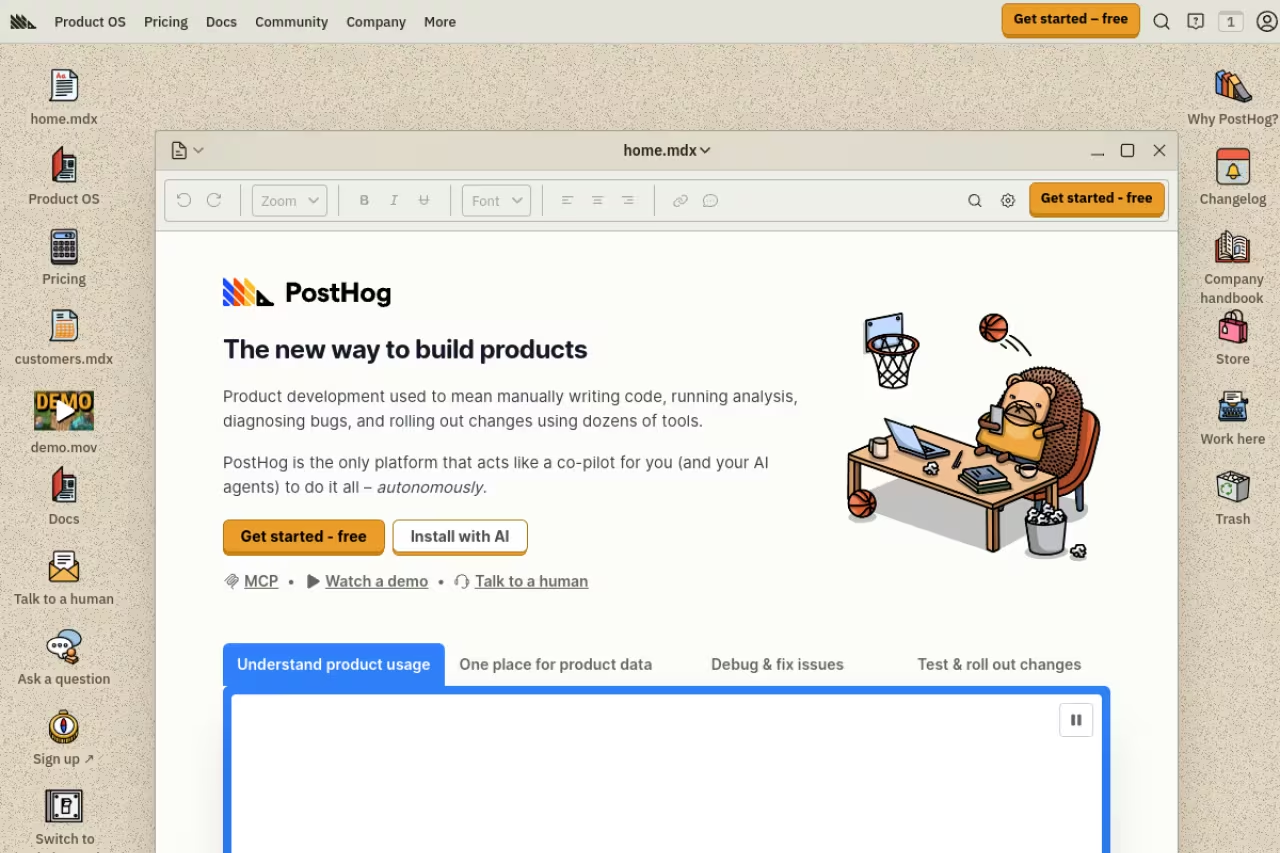
PostHog started as product analytics and grew into an all-in-one product platform. Experiments sit right next to your event data, session replays, and feature flags, which means you don't have to wire up a separate tool just to run a test. You define a flag, attach a goal metric you're already tracking, and PostHog handles the stats.
This is the tool I recommend to most startups. The reason is integration. When a test wins, you flip the same flag to 100% and ship. When it loses, you can drop into session replays and watch why people bounced, without leaving the app.
The one I would hand to most startups, since experiments, flags, replays and analytics share a single tool. It suits product-led and engineering teams comfortable with instrumentation, but marketers who want point-and-click edits will find the visual editor secondary.
Pricing: experiments are billed together with feature flags, and the free tier covers 1 million flag requests per month plus 1 million analytics events. After that it's pure pay-as-you-go, starting at $0.0001 per flag request and dropping fast at volume. There's no monthly platform fee, and you can set billing caps so a traffic spike never produces a surprise invoice.
The catch: PostHog assumes you're comfortable with events and a bit of instrumentation. If you want a marketer to point at a button and change its color without touching code, this isn't the smoothest path. The visual experiment editor exists but it's clearly the second-class citizen next to the developer workflow.

Statsig
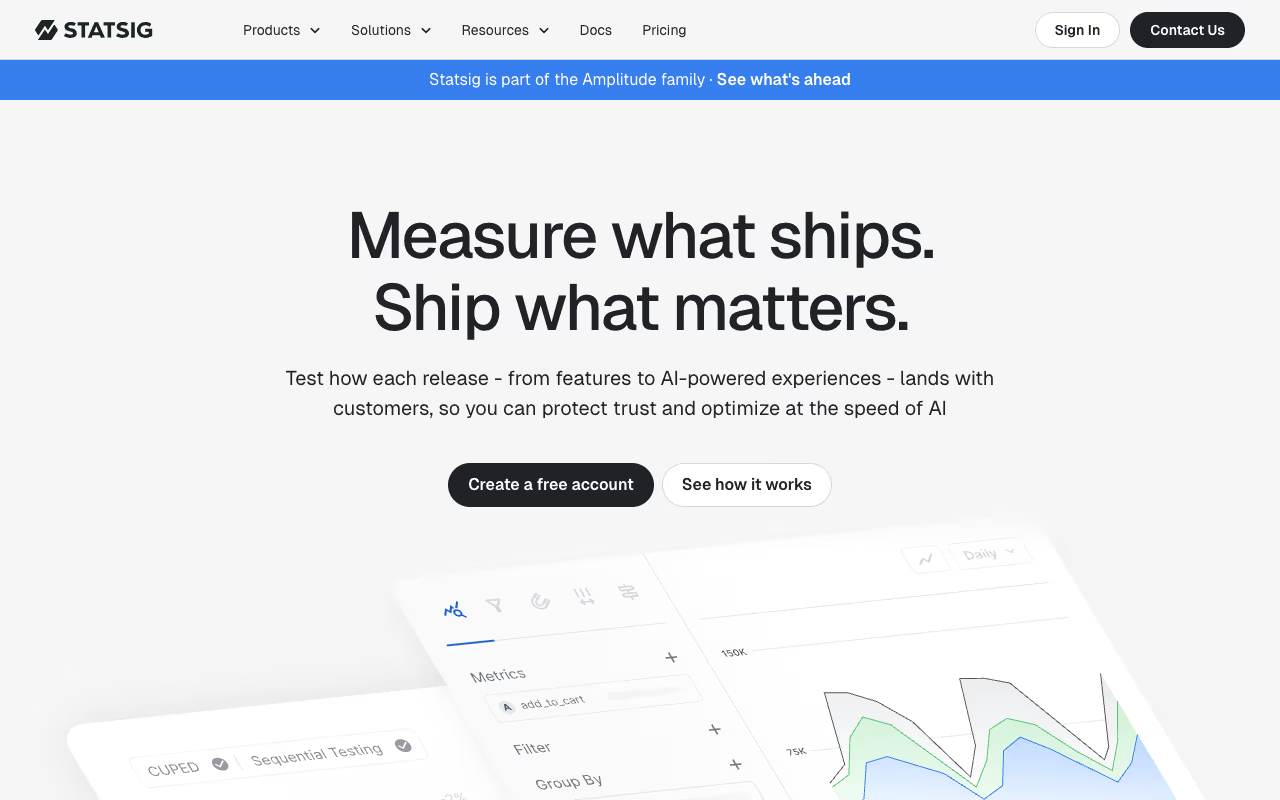
Statsig was built by ex-Facebook engineers who wanted to bring Meta-style experimentation to everyone else. It shows. The statistics are the real draw here: CUPED variance reduction, sequential testing, and Bonferroni corrections are all available, and unusually, they're on the free tier rather than locked behind an enterprise contract.
If you care about experiment velocity (running dozens of tests at once without your stats falling apart), this is the platform I'd pick. Companies like OpenAI and Notion run on it, which tells you it scales.
A strong choice for teams running experiments constantly, with CUPED, sequential testing and Bonferroni corrections on the free tier. Marketers wanting a simple visual split test will find the analytics depth heavy and the editor lacking.
Pricing: the free Developer plan includes 2 million events per month, 100,000 session replays, unlimited flag checks, and unlimited seats. Pro starts at $150/month with 5 million events, and overages run $0.05 per 1,000 events. For a small team that's effectively free for a long time.
Where it falls short: Statsig is a product analytics and experimentation tool, not a marketing CRO suite. There's no slick visual editor for non-technical marketers, and the breadth of analytics can feel like a lot if all you wanted was a simple split test on a pricing page. The depth is the point, but it's also the friction.

GrowthBook
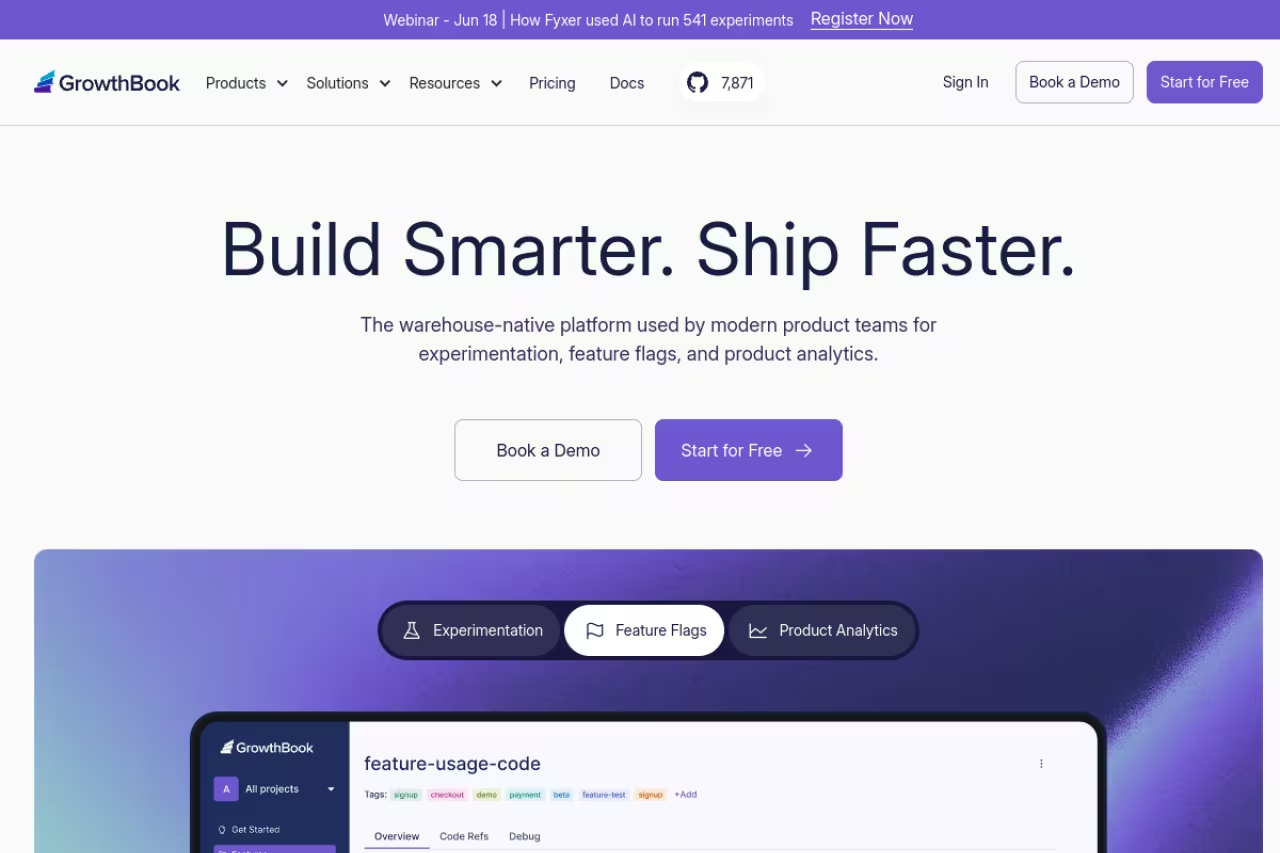
GrowthBook is the open-source option I keep recommending to teams that care about data ownership. The self-hosted edition is MIT-licensed and free with unlimited users, flags, and experiments. The clever part: instead of duplicating your data, GrowthBook queries your existing warehouse (BigQuery, Snowflake, Redshift, ClickHouse) to compute results. Your experiment data never leaves your infrastructure.
For privacy-conscious teams, or anyone allergic to per-user pricing, this is a strong fit. You pay for the people running tests, not for every visitor who sees one.
Best for: data teams with a warehouse who want full control and predictable costs.
The open-source pick for data teams that want control. Self-hosting is free and your data stays in your warehouse, but you need the infrastructure and skills to run it, and Cloud Pro costs $40 per user per month.
Pricing: self-hosted is free forever. GrowthBook Cloud has a free Starter plan (up to 3 users, 1M events), and Pro is $40 per user per month, which adds advanced stats and the visual editor. Enterprise with SSO and audit logs is quote-based.
The catch: self-hosting means you own the ops. Someone has to deploy it, keep it running, and connect the warehouse. If your team can't spare that, the Cloud plan removes the headache but the per-seat math can climb once you add more than a few people. It's also less polished for pure marketers than VWO or Convert.
If you're still mapping out which tools belong in your stack, our roundup of the best AI agents and the broader top tools directory are worth a look alongside this one.

VWO
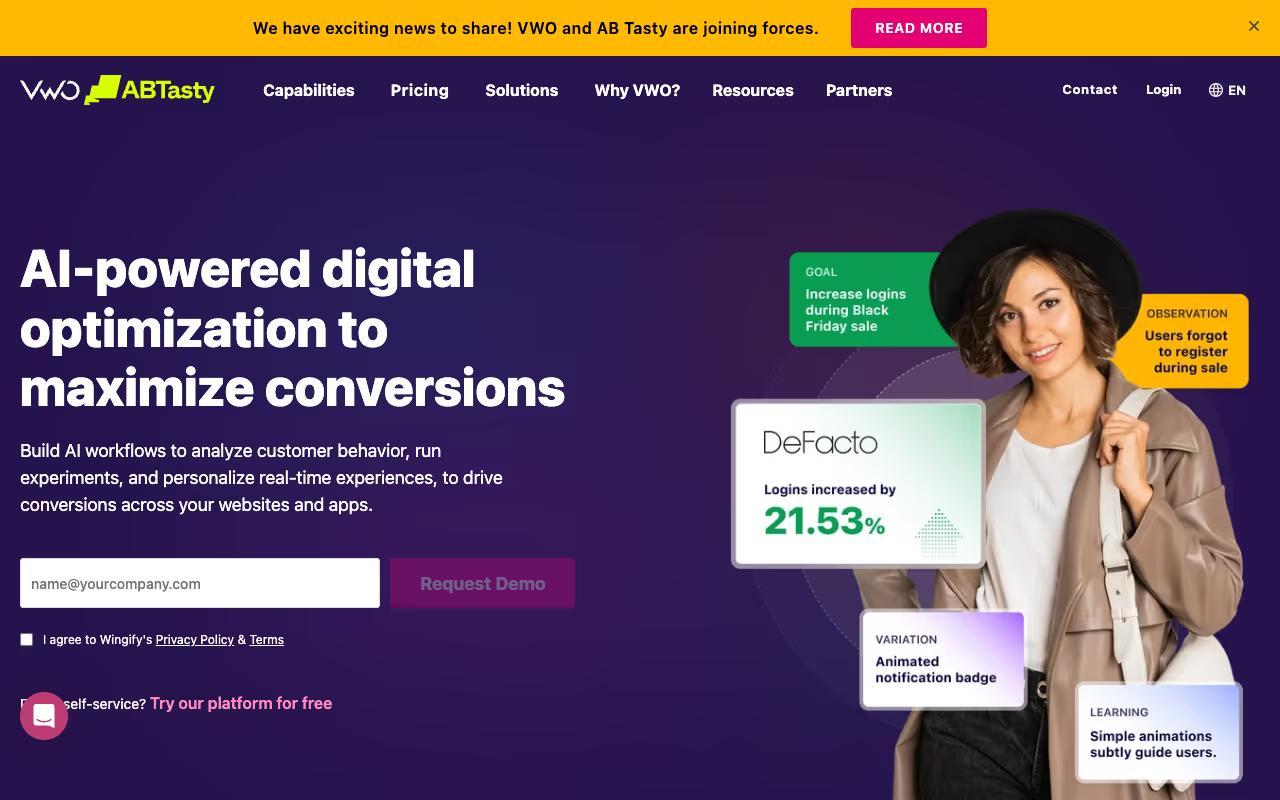
VWO is the visual-editor heavyweight that most marketers know. You can build a test by clicking on elements and editing them in place, no developer required, then target by audience and watch a clean reporting dashboard. After the merger with AB Tasty, it sits in the middle of the market: more approachable than Optimizely, more full-featured than the lightweight tools.
The polished point-and-click option for marketing teams that do not want to write code. Traffic-based pricing from around $299/month climbs fast at volume, and the merger with AB Tasty leaves some roadmap uncertainty.
Pricing: VWO starts around $299/month and scales by traffic, with a limited free plan for low-traffic sites. The Growth, Pro, and Enterprise tiers add multivariate testing, advanced targeting, and faster support as you climb.
Where it falls short: the traffic-based pricing gets expensive fast if you have real volume, and the free plan is tight enough that most serious users outgrow it quickly. There's also some uncertainty about the product roadmap while the VWO and AB Tasty teams integrate. I'd want to see how the combined company prices things once the dust settles.

Optimizely
Optimizely is the enterprise gold standard and prices like it. This is the platform you choose when you have a dedicated experimentation team, run thousands of tests a year, and need features like multi-arm bandits and the stats accelerator that dynamically shifts traffic to winning variations. It's trusted by over 9,000 companies including the kind of brands with their own optimization departments.
Enterprise experimentation at enterprise prices, built for large organizations with a full-time testing team. Entry deals reportedly start around $50,000+ per year, so it is overkill for startups and lean marketing teams.
Pricing: gated and custom. Industry estimates put entry-level deals around $50,000+ per year, and large contracts run well past $100K. You won't find a number on the site.
The catch: it's overkill for almost everyone reading this. The power is real, but so is the cost and the implementation overhead. If you're a startup or a lean marketing team, you'll pay enterprise prices for capacity you'll never touch. Pick this when you've genuinely outgrown everything cheaper, not before.
Convert
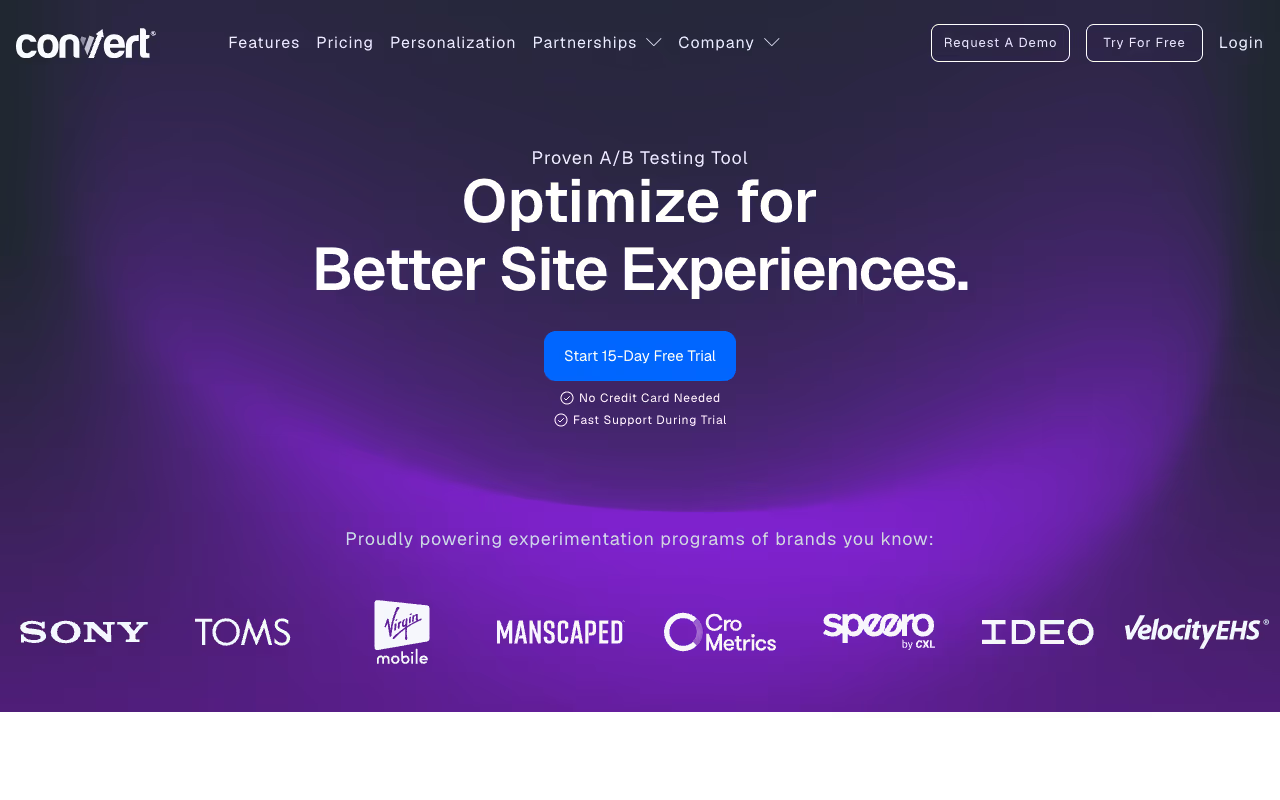
Convert (Convert Experiences) is the affordable, privacy-first pick in the marketer-friendly tier. It does clean visual A/B testing with strong GDPR and consent handling, which is why a lot of agencies and EU-based teams favor it. It hits a sweet spot between VWO's polish and a budget you can actually defend.
A sensible choice for agencies and privacy-conscious teams that want a visual editor without enterprise pricing. Expect client-side flicker and tested-user costs that grow with traffic, plus none of the product analytics PostHog or Statsig offer.
Pricing: the Growth plan is $299/month for 100,000 tested users (monthly billing), and Pro is $499/month for 250,000 users on annual billing. Each additional 100K tested users adds $299/month. Enterprise is custom.
Where it falls short: it's still a flicker-prone client-side testing tool at heart, like most visual editors, and the tested-user pricing means a high-traffic site can rack up real costs. It also lacks the deep product-analytics layer you get from PostHog or Statsig, so it's a CRO tool more than an experimentation platform.

Unbounce
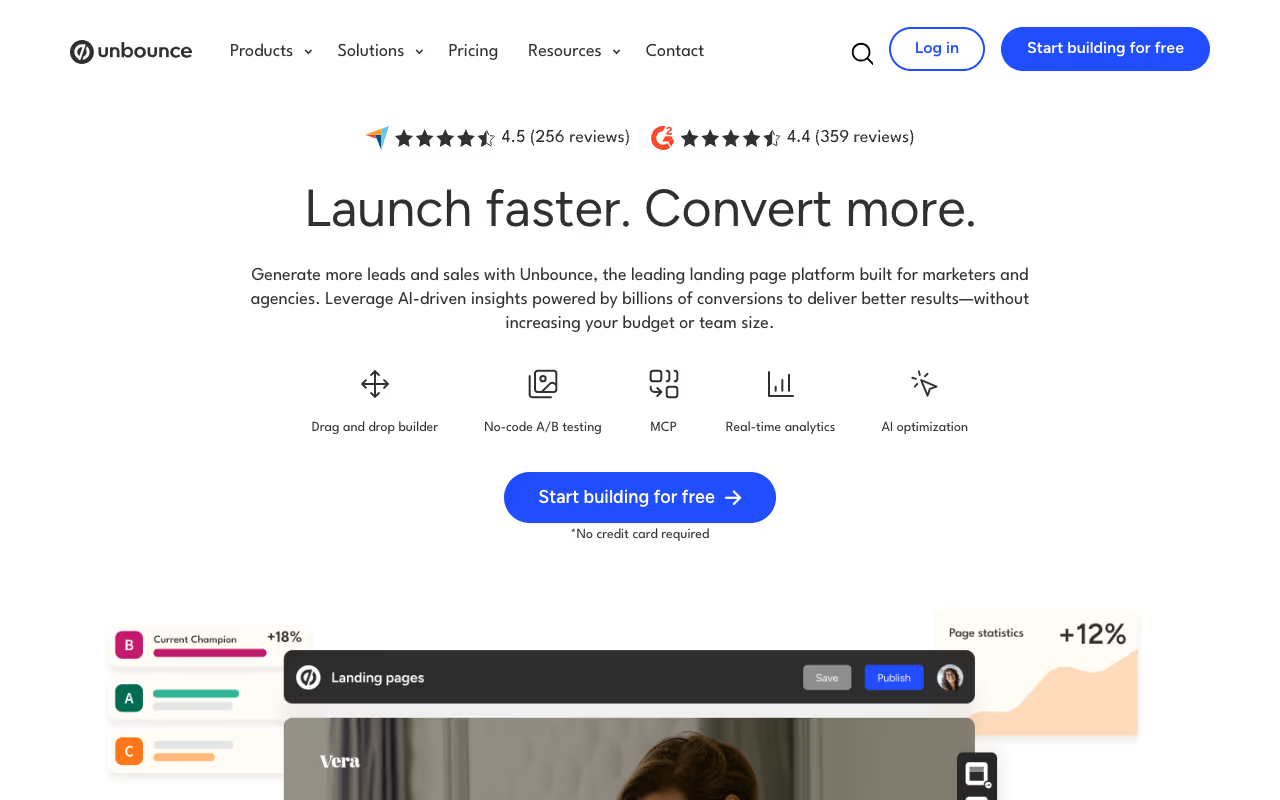
Unbounce isn't a general A/B testing tool, it's a landing page builder with testing built in, and that focus is exactly why it's here. If your experiments are mostly about landing pages for paid campaigns, Unbounce lets you build variants and test them without touching your main site. Its Smart Traffic AI automatically routes each visitor to the variant most likely to convert them, which the company claims lifts conversions roughly 30% over a plain 50/50 split.
Pick Unbounce if your experiments are mostly paid-campaign landing pages. Smart Traffic is the headline feature but sits on the $249 tier, and it only tests pages built inside Unbounce, never your product or existing site.
Pricing: plans start at $99/month (Build), with classic A/B testing on the Experiment plan at $149/month, and Smart Traffic on Optimize at $249/month. Annual billing knocks 25% off, and there's a 14-day trial.
The catch: it only tests pages you build inside Unbounce. You can't run an experiment on your existing app or product. And Smart Traffic, the headline feature, is gated to the $249 tier, so the cheaper plans are just standard split testing.
How to choose
Skip the feature checklists and answer three questions instead.
First, who runs the tests? If it's engineers and product managers, go developer-first: PostHog if you want analytics in the same place, Statsig if you want the best stats, GrowthBook if data ownership matters. If it's marketers who don't code, go visual-editor: VWO or Convert.
Second, what are you testing? Whole product flows and onboarding point to PostHog or Statsig. Marketing pages and copy point to VWO or Convert. Standalone campaign landing pages point to Unbounce.
Third, what's the budget reality? Most teams reading this should start free. PostHog, Statsig, and GrowthBook all have free tiers generous enough to run real experiments before you pay a cent. Only move to VWO, Convert, or Optimizely when you've hit a wall those free tools can't clear. Once you've shipped a few wins, Dupple X can help you turn those learnings into a repeatable growth motion.
FAQ
What is the best free A/B testing tool in 2026?
For most teams it's PostHog, Statsig, or GrowthBook. PostHog's free tier covers 1 million feature flag requests a month, Statsig gives you 2 million events plus advanced stats, and GrowthBook's self-hosted version is open source and free with unlimited everything. All three let you run real experiments without a credit card, which the paid visual editors don't.
What replaced Google Optimize after it shut down?
Google Optimize shut down on September 30, 2023, and Google never built a true replacement, pointing users to A/B testing inside Google Analytics 4. In practice, most teams moved to dedicated tools instead: developer-led teams to PostHog, Statsig, or GrowthBook, and marketing teams to VWO, Convert, or Optimizely.
How much do A/B testing tools cost?
It ranges enormously. The developer-first tools (PostHog, Statsig, GrowthBook) are free until you hit real volume, then charge by usage or seats. Visual marketing tools like VWO and Convert start around $299/month and scale with traffic. Optimizely sits at the enterprise end, with deals that typically start around $50,000 a year.
Is the VWO and AB Tasty merger going to change pricing?
The two companies announced their merger in January 2026 under Everstone Capital, forming a single platform serving more than 4,000 customers. Pricing on the existing products hasn't changed overnight, but a combined roadmap usually means eventual repackaging. If you're evaluating either tool right now, I'd ask their sales team directly about long-term plan and price stability before signing a multi-year contract.
Do I need a separate A/B testing tool if I already use product analytics?
Often no. If you use PostHog or Statsig, experimentation is already built in and runs on the same events you track, so adding a separate testing tool just duplicates data and cost. A dedicated tool makes sense when marketers need a visual editor your analytics platform doesn't offer, or when you're testing pages outside your core product.
Whatever you pick, the tool matters less than the discipline of actually running tests, shipping the winners, and killing the losers. Start with a free tier, get a few experiments under your belt, and upgrade only when you can name the exact limit you've hit. If you want help building that growth habit into your team, Dupple X is built for exactly that.
Related guides
Some offers on this page may be paid placements or contain affiliate links.
Across our whole catalogue the median is $24 a month and 33% of tools advertise a free tier. Figures are the lowest recurring monthly price quoted in our own review of each tool, read on 2026-08-19. Full method and every category.
