
Best Load Testing Tools in 2026: 8 Compared

Key facts8 tools compared: k6, Gatling, Locust, JMeter, Artillery, Grafana Cloud k6, BlazeMeter…
- 8 tools compared: k6, Gatling, Locust, JMeter, Artillery, Grafana Cloud k6, BlazeMeter, OpenText LoadRunner
- k6 (best for: Developer-first teams in CI/CD): Free OSS; Cloud from $19/mo + usage
- Gatling (best for: High concurrency per machine): Free OSS; Enterprise from €89/mo
- Locust (best for: Python shops): Free, open source
- JMeter (best for: Legacy protocols (SOAP, JMS, JDBC)): Free, open source
The first time a launch took down our staging environment at 400 concurrent users, I learned that "it works on my machine" tells you nothing about what happens under real traffic. Load testing is the part of engineering everyone agrees matters and almost nobody does until something breaks.
The problem is the tools. Some are GUI relics from 2005. Some lock the useful parts behind a $25,000 annual contract. A few are genuinely good and free, but you have to know which. I've spent the last few months comparing eight of them on pricing, protocols, and documentation, and the differences are bigger than the marketing suggests.
If you write tests in code and want the fastest path to a CI-integrated load test, k6 is my top pick. It's free, scriptable in JavaScript, and the output is clean enough to read at a glance. But the right tool depends on your stack and your protocols, so here's the full rundown for anyone shipping software real users will hit.
Quick comparison
| Tool | Best for | Price | Standout |
|---|---|---|---|
| k6 | Developer-first teams in CI/CD | Free OSS; Cloud from $19/mo + usage | JS scripting, Grafana integration |
| Gatling | High concurrency per machine | Free OSS; Enterprise from €89/mo | 5,000+ VUs per instance |
| Locust | Python shops | Free, open source | Tests are plain Python files |
| JMeter | Legacy protocols (SOAP, JMS, JDBC) | Free, open source | 1,000+ plugins, 20 years mature |
| Artillery | Node teams testing APIs + browsers | Free OSS; Cloud paid tiers | YAML configs, Playwright support |
| Grafana Cloud k6 | k6 users who need scale | From $19/mo, 500 VUh free | Up to 1M virtual users |
| BlazeMeter | Running multiple tools in one UI | From ~$149/mo | Runs JMeter, k6, Gatling, Locust |
| OpenText LoadRunner | Large enterprises, every protocol | Custom (high) | Protocol breadth, vendor support |
k6: the one I reach for first
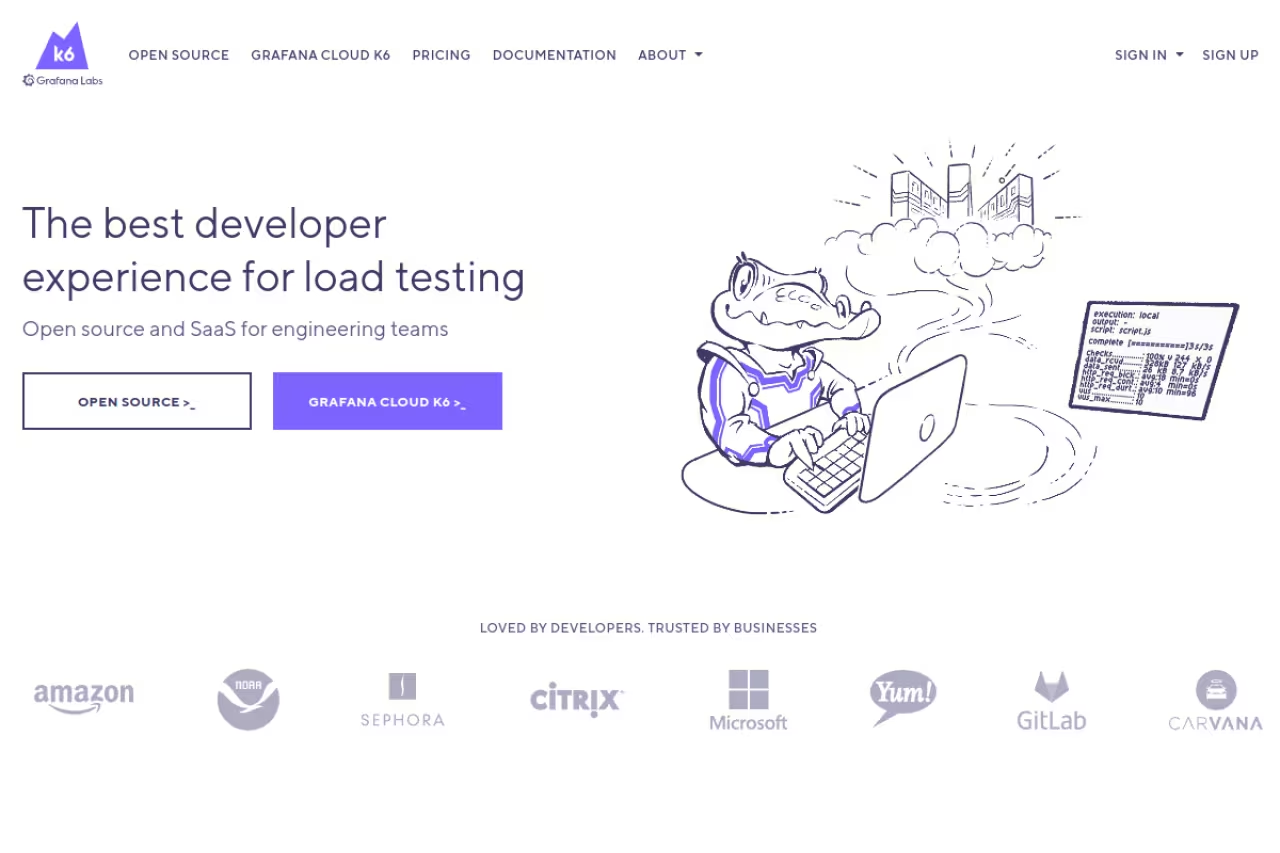
k6 is what happens when load testing gets built for developers instead of QA departments. It's an open-source tool from Grafana Labs, written in Go for speed but scripted in JavaScript and TypeScript, so your tests read like normal code. You define a virtual user's behavior in a function, set how many of them ramp up over what period, and run it from the command line.
What sold me was how little friction there is to a first result. You install the binary, write a 15-line script, and you get latency percentiles, request rates, and pass/fail thresholds in your terminal. Tests live in your repo and run in CI like any other check.
Who it's best for: engineering teams that treat tests as code and want load testing in their pipeline without a separate tool to learn.
The one to reach for first if your team treats tests as code, with JavaScript scripts that run from the command line and in CI. The core is free and open source, with a paid cloud option when you need hosted runs and stored results.
the core tool is free and open source forever. If you need to run from the cloud and store results, Grafana Cloud k6 has a free tier with 500 virtual user hours per month, then a Pro plan at a $19/month platform fee plus roughly $0.15 per virtual user hour (Grafana's pricing page).
The standout: protocol coverage you can actually use. Beyond HTTP, k6 handles WebSockets, gRPC, and even real browser testing through a Chromium module, so you can mix protocol-level load with browser journeys in one script (k6 protocols docs).
The catch: k6 isn't built for distributed load generation out of the box. To push past what a single machine can generate, you either move to Grafana Cloud or run k6 on Kubernetes with their operator. The local-only ceiling is real if you need millions of concurrent users.

Gatling: brutal scalability per machine
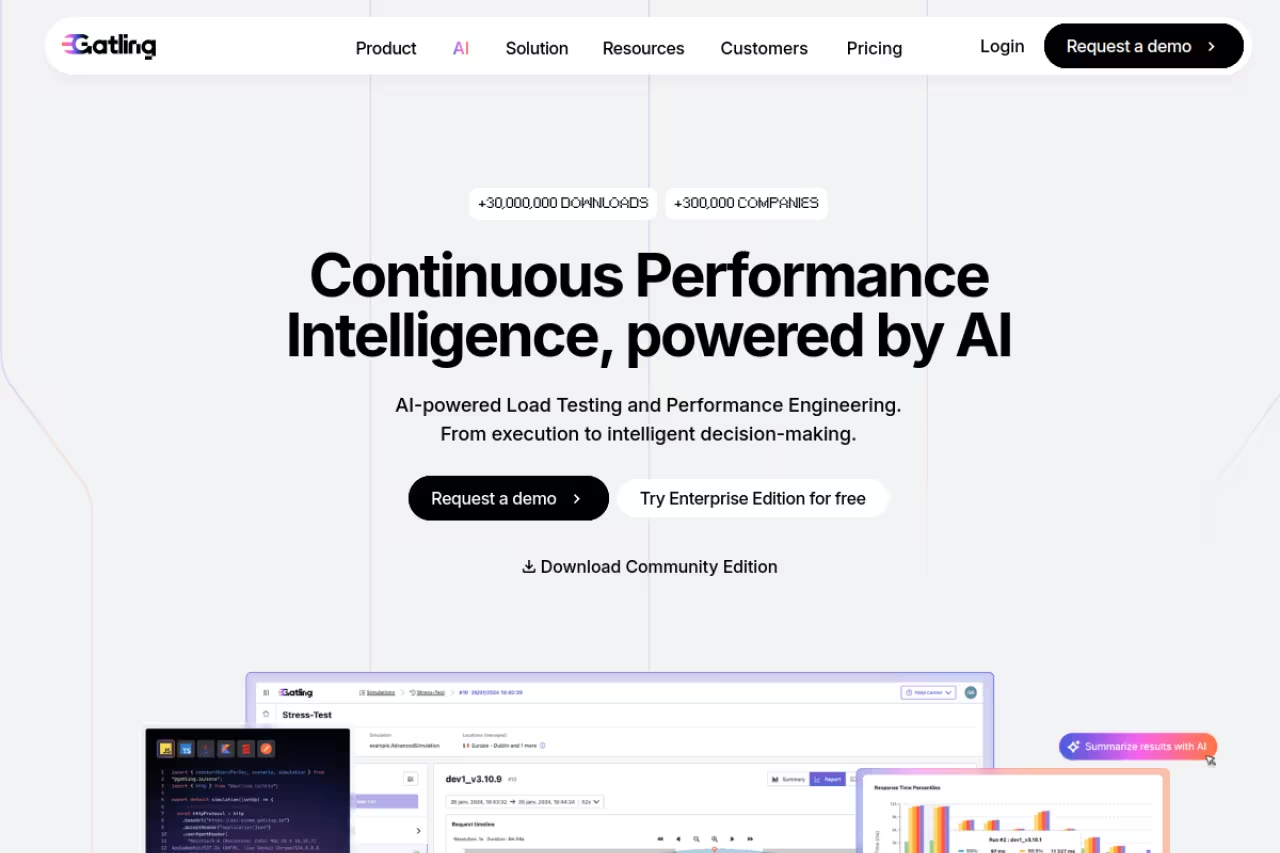
Gatling earns its place by being savagely efficient. Where JMeter spins up a real OS thread per virtual user, Gatling uses an async, non-blocking model that lets a single instance sustain 3,000 to 5,000+ virtual users. When you're testing at high concurrency, that efficiency is the difference between one load generator and a fleet of them.
The Community Edition is free and you write tests as code in Java, Scala, Kotlin, JavaScript, or TypeScript. The reports it generates are genuinely good, with response-time distributions and percentile breakdowns that don't need a separate dashboard to interpret.
Who it's best for: teams running high-concurrency tests who want to keep infrastructure costs down, and anyone already comfortable in the JVM ecosystem.
Pick it for high-concurrency tests where per-machine efficiency keeps load generator costs down, especially if your team is comfortable in the JVM ecosystem. The Community Edition is free, while distributed testing sits in the paid Enterprise plans.
the open-source Community Edition is free for local use. Gatling Enterprise starts at €89/month (billed annually) for the Basic plan with up to 60,000 virtual users and one load generator, rising to €356/month for the Team plan with distributed testing and up to 180,000 virtual users (Gatling pricing).
The standout: raw throughput per agent. If your goal is to simulate massive load without paying for a dozen cloud machines, Gatling's per-instance ceiling is among the best you'll find in open source.
Where it falls short: distributed testing across multiple machines is a paid Enterprise feature. The free version runs from a single instance, so once you exceed what one box can generate, you're either scripting your own orchestration or opening your wallet.
Locust: load testing in plain Python
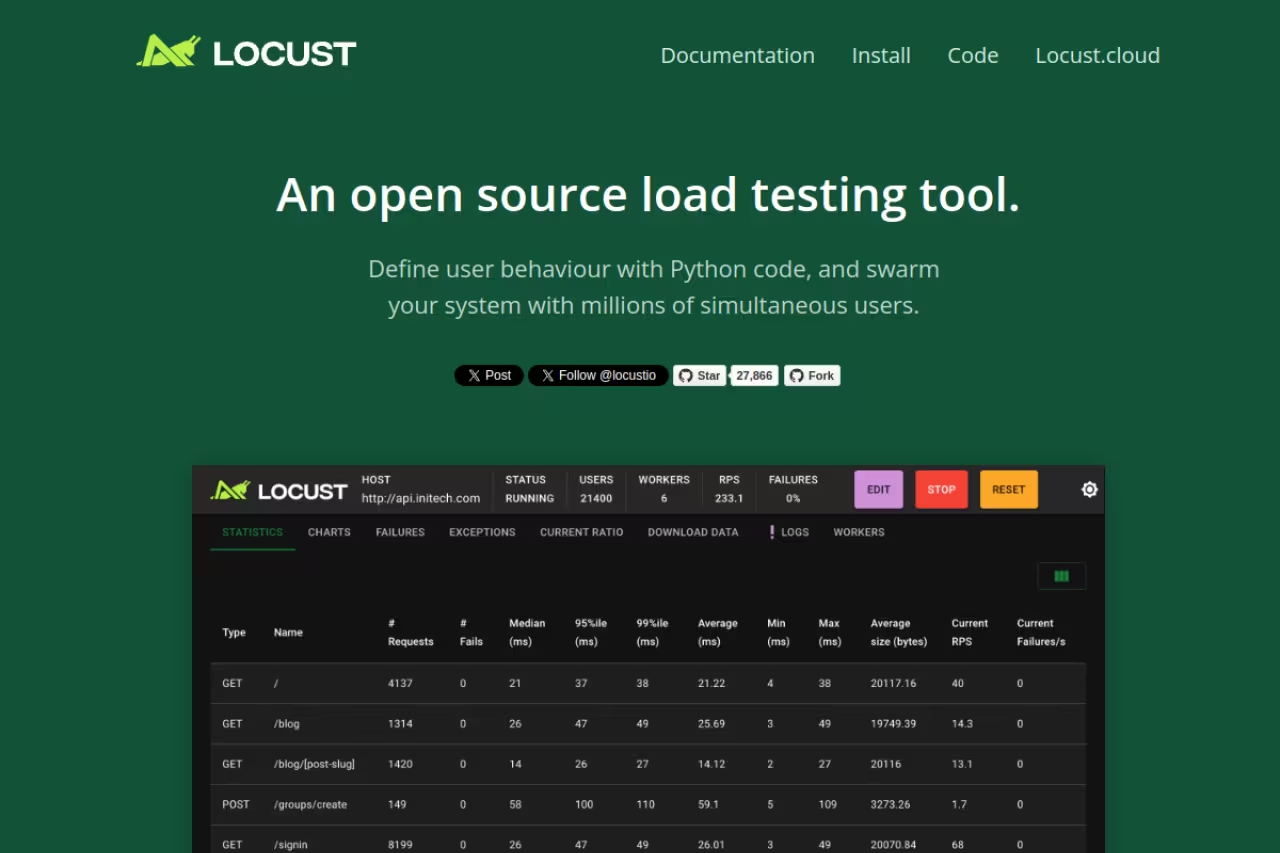
If your team lives in Python, Locust feels like home. Your tests are regular .py files where you describe user behavior as classes and methods. That means loops, conditionals, and any library from PyPI are fair game inside a test, which is liberating when your scenarios get complicated.
Under the hood, Locust uses gevent greenlets instead of OS threads, so a single process can simulate thousands of users at low memory overhead. There's a clean web UI that shows request rates and response times live, and you can crank the load up or down mid-test without restarting.
Who it's best for: Python-heavy teams, and anyone whose test scenarios involve enough custom logic that a YAML or GUI tool would fight them.
The natural choice for Python-heavy teams with complex scenarios, since tests are plain Python files and distributed mode is built in. It is completely free, with no paid tier or cloud upsell from the project itself.
completely free and open source. No paid tier, no cloud upsell from the project itself.
The standout: distributed mode is built in and straightforward. Point worker processes at a master and Locust spreads the load across machines, scaling to millions of simulated users when you need it (Locust distributed docs).
The catch: the default HTTP client is fine but not the fastest, and at extreme single-machine load you'll want the faster FastHttpUser client. Reporting is also more basic than Gatling's. You get the numbers, but you'll likely pipe them into Grafana or Prometheus for anything pretty.
If you're assembling a wider testing and observability stack, it's worth browsing our top tools directory to see what pairs well with these.
Apache JMeter: the old reliable
Apache JMeter has been around for over 20 years, and that maturity cuts both ways. The interface looks its age, and each virtual user is a real OS thread, so a single machine maxes out at a fraction of what k6 or Gatling can push. But nothing else touches its protocol breadth.
JMeter natively handles HTTP, HTTPS, FTP, JDBC, LDAP, JMS, SOAP, SMTP, TCP, and more, with over 1,000 community plugins on top. If you need to load test a database connection, a message queue, or some SOAP service a bank insists on keeping, JMeter is often the only open-source tool that can.
Who it's best for: organizations with legacy systems and unusual protocols, or teams that already have years of JMeter test plans they don't want to rewrite.
The old reliable for legacy systems and unusual protocols, with coverage no other free tool matches. The interface looks its age and each virtual user is a real OS thread, so one machine tops out well below k6 or Gatling.
free and open source under the Apache Software Foundation. The current stable release is 5.6.3.
The standout: protocol coverage no other free tool matches, plus the plugin marketplace. The 5.6 release also added a Java/Kotlin DSL so you can finally write test plans as code instead of clicking through the GUI.
Where it falls short: resource hunger. Thread-per-user scaling means you need beefy machines or a distributed setup for serious load, and the GUI-first workflow feels clunky next to code-defined tools.

Artillery: APIs and browsers in one toolkit
Artillery is the Node.js answer to load testing. You define scenarios in declarative YAML, which keeps simple tests genuinely simple, and you drop into JavaScript processors when you need dynamic payloads or custom auth. It tests HTTP, GraphQL, WebSocket, Socket.IO, and more.
The feature I like most is browser load testing through Playwright. You can run real browser sessions as part of a load test, which matters for single-page apps where client-side rendering is half the performance story. Running tests on AWS Lambda is open-source and free, which is a clever way to get distributed scale without managing servers.
Who it's best for: Node teams testing modern APIs, and anyone who wants protocol load and real-browser testing from a single toolkit.
A good fit for Node teams that want protocol load tests and real browser testing through Playwright in one toolkit, configured in simple YAML. The core is open source, while result visualization and trend analysis live in paid Artillery Cloud.
the core toolkit is open source under MPL-2.0 with around 8.5k GitHub stars. Artillery Cloud adds result visualization and trend analysis with paid tiers; the free signup gets you started.
The standout: the YAML-first config plus Playwright browser testing. Few tools cover both protocol-level load and real browser journeys this cleanly.
The catch: the YAML approach that makes simple tests easy gets awkward for complex logic, where you end up writing a lot of JavaScript anyway. And the deepest reporting features live in the paid Cloud tier.
Grafana Cloud k6: k6 when you need scale
This is the managed version of pick number one, listed separately because it solves k6's main weakness. Grafana Cloud k6 runs your load generators in the cloud, stores results, and scales up to a million concurrent virtual users without provisioning a single machine. Your existing k6 scripts run unchanged: you add a flag, and the test executes from Grafana's infrastructure with results flowing into your dashboards.
Who it's best for: teams already using open-source k6 who hit the single-machine ceiling and don't want to manage Kubernetes.
The upgrade for teams already on open-source k6 who hit the single-machine ceiling, since existing scripts run unchanged. The trade-off is usage-based pricing that is hard to predict, with real bills often landing above first estimates.
free tier includes 500 virtual user hours per month. Pro starts at the $19/month platform fee plus usage at roughly $0.15 per VUh. Enterprise drops to as low as $0.05 per VUh but requires a $25,000 annual minimum.
The standout: zero migration cost from open-source k6, plus deep integration with Grafana dashboards, logs, and traces.
Where it falls short: usage-based pricing is hard to predict. Several teardowns note that real bills land two to five times higher than first estimates once VUh and data charges stack up (CloudZero's Grafana Cloud teardown).

BlazeMeter: one platform, every engine
BlazeMeter, now part of Perforce, takes a different angle: instead of being a test runner, it's a cloud platform that runs other tools' tests. You can execute JMeter, k6, Gatling, and Locust scripts in BlazeMeter's cloud, which is handy if your teams use different tools and you want one place to manage runs and reports.
Who it's best for: larger orgs with mixed tooling who want a single managed platform for execution, scheduling, and reporting across teams.
A fit for larger orgs with mixed tooling that want one managed place to run JMeter, k6, Gatling and Locust scripts. You pay for orchestration on top of free tools, so the value is thin for a single team that can run k6 or Gatling itself.
paid platform. Performance plans start around $149/month for a Basic tier (roughly 1,000 concurrent users), with enterprise tiers adding SSO, audit trails, and SOC 2 compliance (BlazeMeter pricing).
The standout: multi-engine support. Bring whatever test scripts you already have and run them at scale without rebuilding.
The catch: you're paying for orchestration on top of free open-source tools. For a single team comfortable running k6 or Gatling themselves, the value is thin. The free tier is also tightly capped.
OpenText LoadRunner: the enterprise heavyweight
OpenText LoadRunner (formerly Micro Focus, formerly HP) is the tool procurement departments know. It supports an enormous range of protocols, comes with serious vendor support, and is built for the kind of large-scale, compliance-heavy testing that big enterprises run before a major release.
Who it's best for: large enterprises with complex protocol needs, dedicated performance engineering teams, and the budget to match.
The enterprise heavyweight for large organizations with complex protocol needs and a vendor on the hook when things break. Cost and complexity make it overkill for startups and most product teams who could get by with k6 or Gatling.
custom and generally expensive. The cloud version (Core Performance Engineering) uses an hourly usage model that's more flexible than the on-premise licensing, but you'll be talking to a sales team either way.
The standout: breadth and support. If you need to test legacy enterprise protocols with a vendor on the hook when things break, LoadRunner has decades of pedigree.
Where it falls short: cost and complexity. For startups and most product teams, it's overkill. The licensing alone rules it out for anyone who can get the job done with k6 or Gatling.
How to choose
Skip the feature checklists and answer three questions instead.
What protocols do you actually test? If it's plain HTTP APIs, almost any tool here works and you should pick on developer experience. If you need SOAP, JMS, JDBC, or other legacy protocols, JMeter or LoadRunner are your realistic options. For modern setups with WebSockets, gRPC, or browser testing, k6 and Artillery lead.
Code or GUI? Teams that write tests as code (and want them in CI) should look at k6, Gatling, Locust, or Artillery. The pick usually follows your language: JavaScript leans k6 or Artillery, Python leans Locust, JVM leans Gatling. If you need a GUI or have existing test plans, JMeter or a managed platform like BlazeMeter fits better.
Self-host or managed? If you can run load generators on your own machines or Kubernetes, the open-source tools cost nothing. If you need to simulate huge load without managing infrastructure, Grafana Cloud k6, Gatling Enterprise, or BlazeMeter handle the heavy lifting for a fee.
For most product teams shipping web apps in 2026, I'd start with k6 open source, prove out your tests locally, and only move to a paid cloud tier when you genuinely outgrow a single machine. If your team is debating which engineering and AI tools to standardize on, Dupple X is how I keep up with what's actually worth adopting without reading ten newsletters a week.
Frequently asked questions
What is the best free load testing tool?
For most teams, k6 is the best free load testing tool. It's open source, scripts in JavaScript, integrates with CI/CD cleanly, and produces readable results out of the box. If your stack is Python, Locust is the better free pick, and for the widest protocol support JMeter is unmatched among free tools. All three cost nothing to self-host.
Is k6 better than JMeter?
For modern web APIs, yes, in most cases. k6 is lighter, scripts in code, and fits CI pipelines naturally, while JMeter's thread-per-user model is heavier and its GUI feels dated. But JMeter still wins on raw protocol breadth, supporting SOAP, JMS, JDBC, and LDAP that k6 doesn't, so legacy systems may force JMeter regardless.
How many virtual users do I need to simulate?
Base it on your real peak traffic plus headroom. Check your analytics for concurrent-user peaks, then test at roughly 2x to 3x that number to find your breaking point before customers do. There's no universal figure. Testing 10,000 users when you peak at 200 wastes time and money.
What's the difference between load testing and stress testing?
Load testing checks how your system behaves under expected traffic to confirm it meets performance targets. Stress testing deliberately pushes past normal limits to find the breaking point and see how the system fails. Most tools here do both. You change the load profile, not the tool.
Can I run load tests in CI/CD pipelines?
Yes, and you should. k6, Gatling, Locust, and Artillery all run from the command line and return pass/fail exit codes based on thresholds you set, which makes them straightforward to wire into GitHub Actions, GitLab CI, or Jenkins. Running a small load test on every deploy catches regressions before they reach production.
Which load testing tool scales to millions of users?
Locust scales to millions through its built-in distributed mode across multiple machines. Grafana Cloud k6 reaches up to 1 million virtual users on managed infrastructure, and OpenText LoadRunner handles enterprise-scale distributed tests. Gatling Enterprise also scales high with distributed load generators. For most teams, though, you'll hit your application's limits long before the tool's.
Related guides
Some offers on this page may be paid placements or contain affiliate links.
