
The 8 Best AI Sourcing Tools in 2026 (Compared and Ranked)

Key facts8 tools compared: Pin, SeekOut, Juicebox (PeopleGPT), hireEZ, Gem, Fetcher, AmazingHiring…
- 8 tools compared: Pin, SeekOut, Juicebox (PeopleGPT), hireEZ, Gem, Fetcher, AmazingHiring, Findem
- Pin (best for: In-house teams, agencies and founders): Free plan; from $99/mo
- SeekOut (best for: Technical and specialized roles): ~$2,150/yr (Lite); custom enterprise
- Juicebox (PeopleGPT) (best for: Solo recruiters and startups): From $139/seat/mo
- hireEZ (best for: Diversity and open-web sourcing): Custom (mid-tier ~$169/mo)
Sourcing used to mean living inside LinkedIn Recruiter, writing Boolean strings that looked like regex, and praying the right person hadn't hidden their profile. In 2026 that job has quietly shifted. The good AI sourcing tools now read a role description, search across hundreds of millions of profiles from sources LinkedIn never touches, rank candidates by actual fit, and pull verified contact details before you've finished your coffee.
The problem is that "AI sourcing" is now stamped on every recruiting product with an autocomplete box. Some of these tools genuinely cut your sourcing time in half. Others are a keyword search wearing a chatbot costume, priced like enterprise software. I've spent the last few weeks comparing the main contenders to separate the two.
Short version for skimmers: Pin is the easiest place to start if you want sourcing and outreach in one tool with a free plan, SeekOut has the deepest data for technical and hard-to-find roles, and Juicebox is a good entry point for natural-language search without an enterprise contract. This guide is for in-house recruiters, agency owners, and founders doing their own hiring who want to know what each tool actually costs and where it falls short.
Quick comparison
| Tool | Best for | Price | Standout |
|---|---|---|---|
| Pin | In-house teams, agencies and founders | Free plan; from $99/mo | 850M+ profiles, outreach and CRM built in |
| SeekOut | Technical and specialized roles | ~$2,150/yr (Lite); custom enterprise | GitHub, patents, publications signal |
| Juicebox (PeopleGPT) | Solo recruiters and startups | From $139/seat/mo | Plain-English search, free tier |
| hireEZ | Diversity and open-web sourcing | Custom (mid-tier ~$169/mo) | EZ Agent + ATS rediscovery |
| Gem | Teams wanting one unified platform | Custom by company size | Sourcing + ATS + CRM in one |
| Fetcher | Always-on, hands-off sourcing | ~$149/seat/mo range | Sourcing-as-a-service batches |
| AmazingHiring | Pure tech and engineering hiring | Custom (~$3,600-$4,800/yr) | 50+ developer networks |
| Findem | Enterprise talent intelligence | Custom (~$6,000/user/yr) | Attribute-based search |

Pin
Pin is an AI sourcing platform that puts candidate search, outreach sequences and a recruiting CRM in one product. You paste a job description or describe the role in plain English, and Pin searches a database of 850M+ profiles built from professional networks, GitHub, Stack Overflow, patents, publications and the wider web. Matched candidates can go straight into email sequences and a shared team inbox, so you don't need a separate outreach tool.
Who it's best for: in-house talent teams, agencies and founders doing their own sourcing. Teams with security reviews can get SOC 2 Type II and SSO on the Business plan.
The standout is that there's no Boolean to learn. Results are refined in plain English, and a small team can start on the free plan before moving to paid seats. Pin reports a 4.8/5 rating on G2, and its 2026 user survey reports an average time-to-fill of 14 days, 12 hours saved per recruiter a week and 83% of recommended candidates accepted into pipelines.
A practical all-in-one pick for teams that want sourcing and outreach in the same tool, with a free plan to test it. Contact credits are capped below the Business tier, so heavy outreach months need some planning.
Pricing is public. There's a free plan with no credit card (5 contact credits a week). Solo is $99 per month billed annually, with 500 credits a month. Professional is $135 per user per month billed annually ($179 month-to-month), with 1,000 credits per user a month. Business is custom-priced, with unlimited credits, SSO/SAML, and SCIM, per the Pin pricing page.
The catch: Pin is not an ATS, and ATS sync is a paid add-on below Business. Database size, rating and survey figures are reported by Pin and not independently audited.
SeekOut
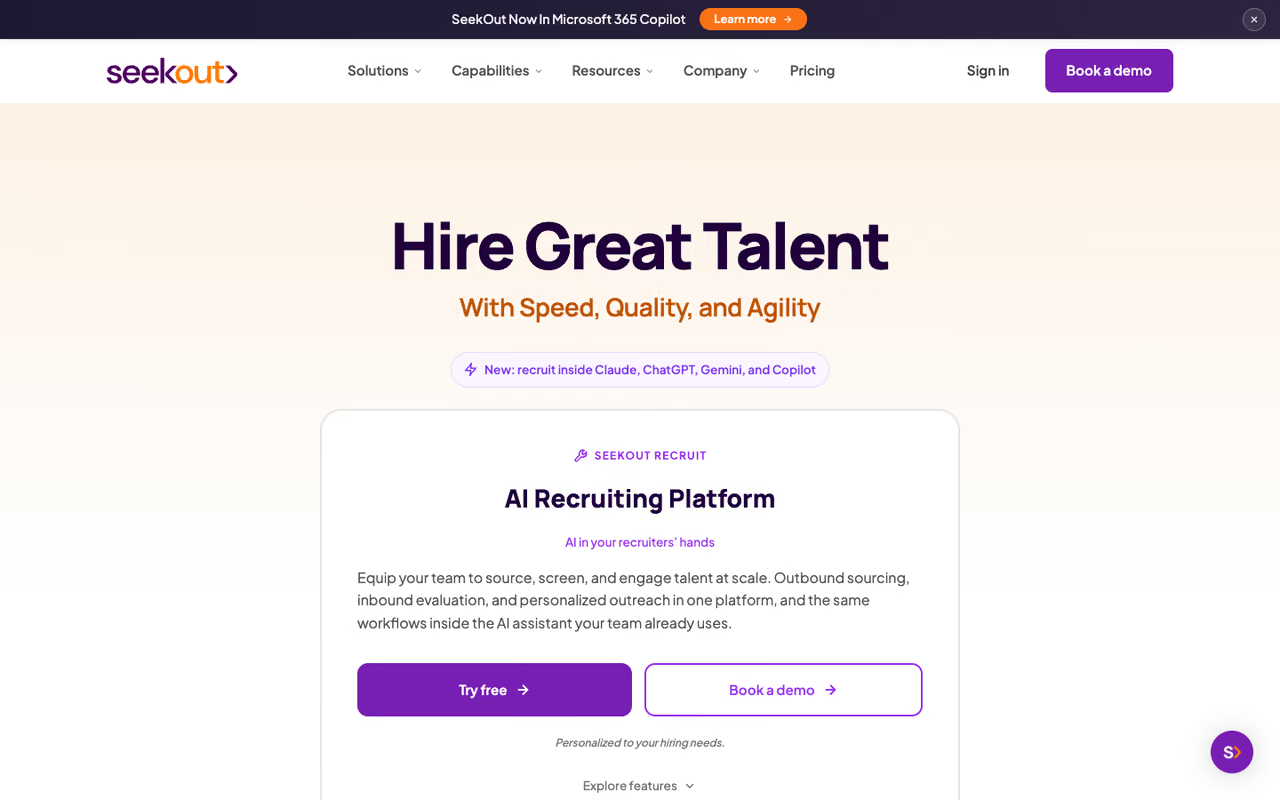
SeekOut is the tool I reach for when a role is hard. It indexes over 1 billion candidate profiles and pulls signal that most sourcing engines ignore: GitHub contributions, patents, research publications, security clearances, and academic background. If you're hiring a senior ML engineer or a niche specialist, that depth is the difference between three real candidates and three hundred lookalikes.
Who it's best for: in-house tech recruiters and talent teams hiring engineers, researchers, and specialized professionals where a LinkedIn title tells you almost nothing.
The standout is the technical talent search. You can filter by specific programming languages a developer actually uses (verified from their repos, not a self-reported skills list), by published papers, or by patent activity. The 30+ advanced filters let you build a search that would take an hour of manual Boolean work in seconds.
The tool I reach for when a role is hard, ideal for in-house tech recruiters hiring engineers and specialists where a LinkedIn title says little. Pricing needs attention, since only Recruit Lite is self-serve and everything above is sales-led with a three-seat minimum.
Pricing is where you have to pay attention. The only published self-serve plan is Recruit Lite at roughly $2,150 per year for a single license. Everything above that is sales-led, with a three-seat minimum and annual billing. According to procurement data tracked by Vendr, the median SeekOut annual contract sits around $20,000, with real deals ranging from about $5,790 to $54,940, plus onboarding fees of $2,000 to $10,000.
The catch: this is enterprise software with enterprise friction. For a solo recruiter or small agency, the contract minimums and onboarding cost make SeekOut hard to justify unless technical sourcing is your whole job. The product is excellent. The buying experience is heavy.
Juicebox (PeopleGPT)
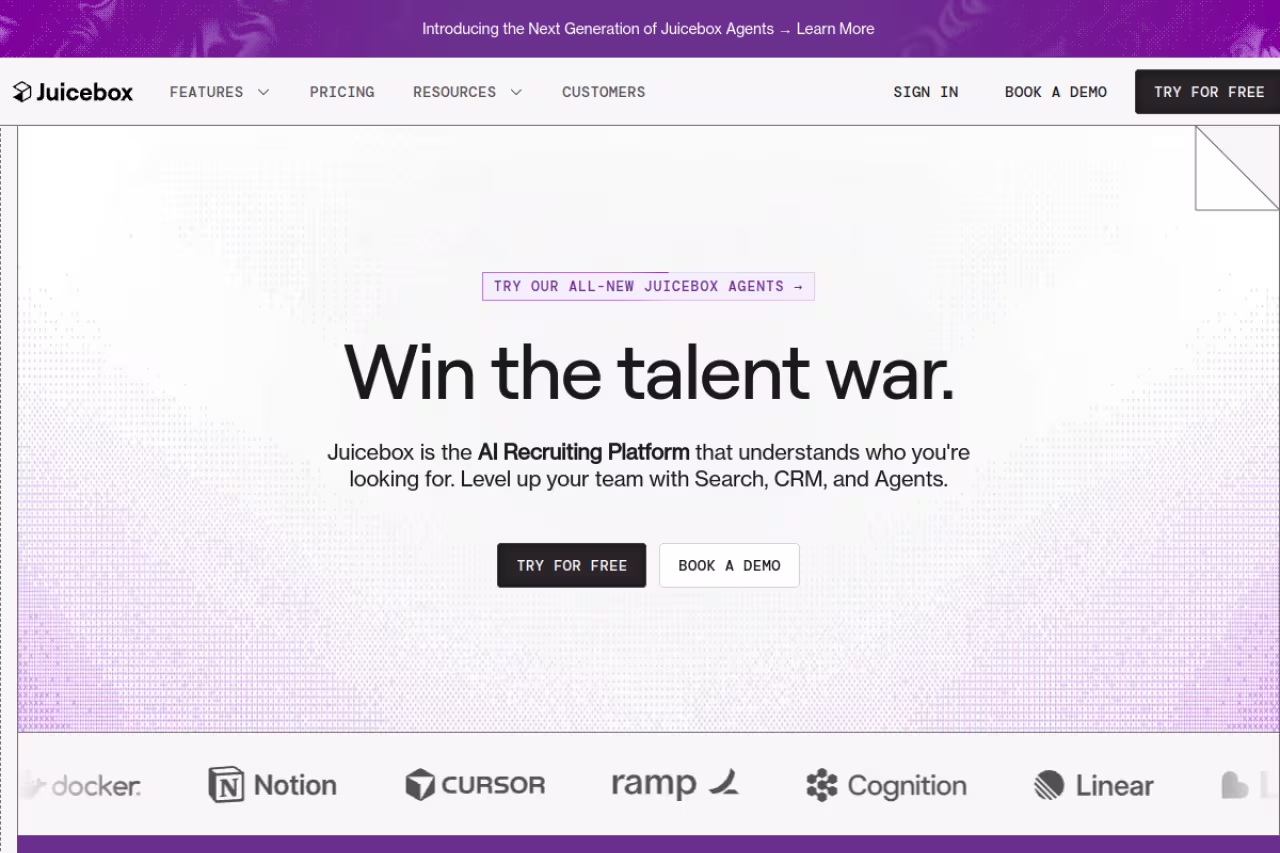
Juicebox, which most people still call PeopleGPT, is the tool that made natural-language sourcing feel normal. You type "senior backend engineers in Berlin who've worked at a fintech startup and contributed to open source" and it searches across 800M+ profiles from 30+ sources, returning ranked matches with match percentages. No Boolean, no field-by-field filtering.
Who it's best for: solo recruiters, staffing agencies, and startup teams who want a real alternative to LinkedIn Recruiter without an enterprise commitment.
The standout is how fast you go from a vague brief to a usable shortlist. The company claims roughly 5x faster shortlists than LinkedIn at about a tenth of LinkedIn Recruiter's cost. There's also a free plan, which almost no serious competitor offers, so you can test the search quality before paying anything.
The tool that made natural-language sourcing feel normal, a real LinkedIn Recruiter alternative for solo recruiters, agencies and startups without an enterprise commitment. Contact data is not always complete, so you will often pair it with an enrichment tool.
Pricing is published, which I appreciate. Plans start at $139 per seat per month on Starter and go to $199 per seat per month on Pro, both billed annually, per the Juicebox pricing page. The AI Agent that automates sourcing and outreach is a separate $199/month add-on.
Where it falls short: the contact data isn't always complete, so you'll often pair Juicebox with a separate enrichment tool to get verified emails. And the AI Agent add-on roughly doubles your bill if you want true automation rather than search.
If you're building a wider outbound motion around your sourcing, our guide to the best AI lead generation tools covers the enrichment and outreach layers that pair well with a search engine like this.
hireEZ
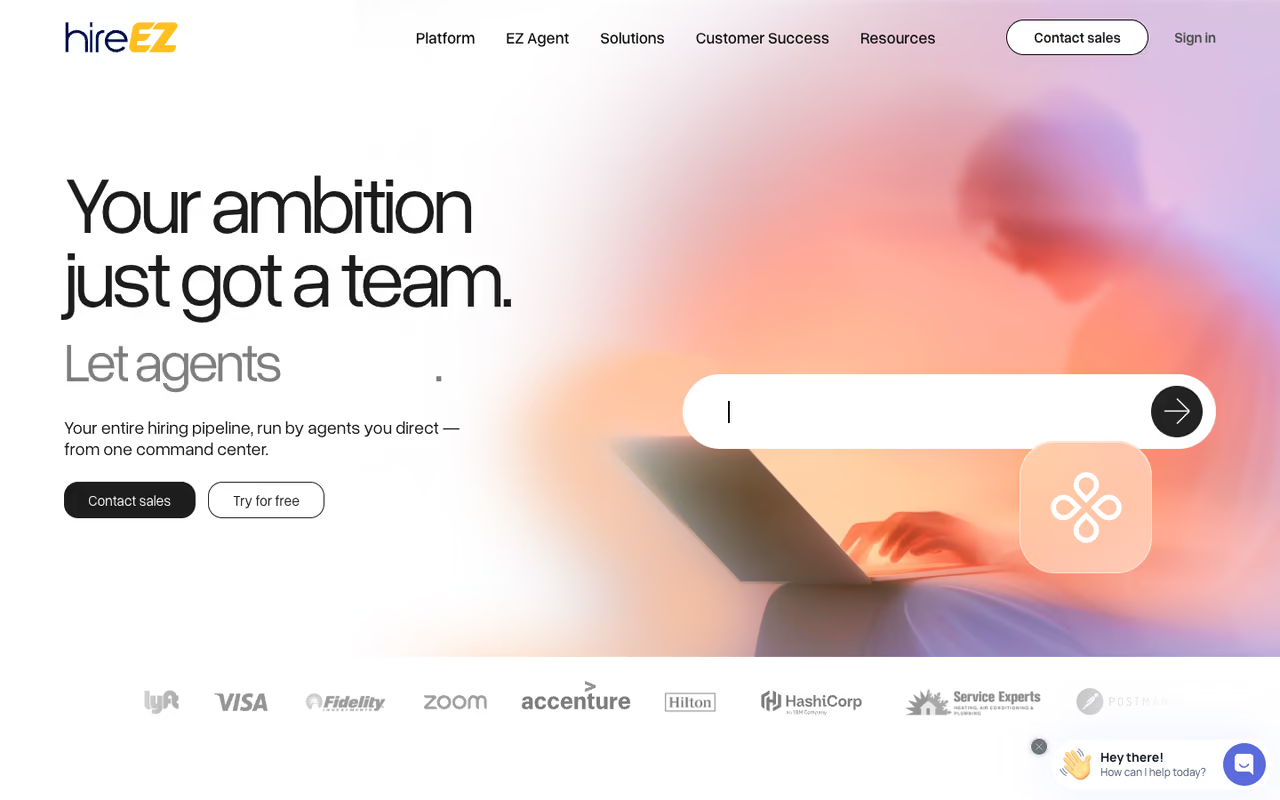
hireEZ built its reputation on open-web sourcing: pulling candidates from 45+ external platforms instead of leaning on LinkedIn alone. Its database reaches over 1 billion candidates, and the platform pairs external discovery with "Rediscovery," which surfaces qualified people already buried inside your ATS that nobody followed up with.
Who it's best for: teams that care about diversity sourcing and reaching passive talent outside the usual channels.
The standout in 2026 is EZ Agent, hireEZ's agentic system. Instead of just returning a list, it reads the role, maps available talent supply, pulls salary benchmarks, and hands you a sourcing strategy with candidates ranked by job fit. hireEZ reports 7x qualified talent and 2x engagement performance versus manual sourcing, and the diversity and compliance filters are some of the strongest in this category.
Go with hireEZ if you care about diversity sourcing and reaching passive talent beyond LinkedIn, with strong compliance filters and the EZ Agent. Pricing is quote-based, so smaller teams cannot try before talking to sales, and budgeting is awkward.
Pricing is custom and quote-based. Third-party reviews put the mid-tier around $169 per user per month, with Growth and Amplify plans climbing from there, but you won't find official numbers without a sales call.
The catch: like most quote-based tools here, you can't try before you talk to sales, and the lack of published pricing makes budgeting awkward for smaller teams. The breadth is real, but you pay for it in both money and a sales cycle.

Gem
Gem's pitch in 2026 is consolidation. Most teams run a sourcing tool, a separate ATS, a CRM, and an analytics layer, and the data never quite lines up. Gem puts sourcing, ATS, CRM, and analytics on one set of unified candidate data, with AI agents searching across 800M+ profiles using natural language.
Who it's best for: companies up to around 5,000 employees that are tired of stitching four tools together and want sourcing built into the system they already use for outreach and pipeline tracking.
The standout is that unified data model. Because Gem knows your full candidate history, it prevents duplicate outreach (no more emailing someone a colleague contacted last month) and personalizes messages using real context. Teams report doubling sourcing capacity without adding headcount and 30-50% cost savings from consolidating tools, per Gem's own write-up.
A platform decision for companies up to around 5,000 employees tired of stitching four tools together, with sourcing, ATS, CRM and analytics on unified data. If you only want sourcing and like your current ATS, you are buying software you will not use.
Pricing is custom, based on company size and needs, with no published rates.
Where it falls short: Gem is a platform decision, not a point tool. If you only want sourcing and you're happy with your current ATS, you're buying a lot of software you won't use. It shines when you adopt the whole stack and looks expensive when you don't.
Fetcher
Fetcher takes a different approach from everything above. Instead of handing you a search box, it works like sourcing-as-a-service. You define your criteria, and the AI continuously finds vetted candidates that match, then delivers curated batches straight to your inbox along with personalized email sequences. You review, approve, and the outreach runs.
Who it's best for: lean teams and recruiters who want sourcing to happen in the background rather than something they sit down and do.
The standout is the always-on autopilot model. You're not running searches; you're reviewing a steady stream of pre-matched people. For a hiring manager who isn't a full-time recruiter, that hands-off rhythm is genuinely useful, and the built-in outreach means sourcing and first contact live in the same place.
Sourcing-as-a-service for lean teams and recruiters who want candidates delivered in the background with outreach built in. You trade control for convenience, and the batch model can feel slow to steer if your criteria keep shifting.
Pricing sits in the ~$149 per seat per month range based on third-party reviews, though Fetcher uses custom quotes for larger teams.
The catch: you trade control for convenience. Because the AI curates the batches, you have less granular say over each search than you'd get in SeekOut or Juicebox. If your role is unusual or your criteria shift constantly, the batch model can feel slow to steer.
AmazingHiring
AmazingHiring is the specialist's specialist. It ignores the generalist crowd and focuses entirely on technical talent, aggregating profiles from 50+ niche networks including GitHub, Stack Overflow, and Kaggle. For finding the developer who never updated their LinkedIn but has 2,000 GitHub stars, this is the tool.
Who it's best for: technical recruiters and engineering-heavy companies sourcing developers, data scientists, and other hard-to-find specialists.
The standout is the depth of developer signal. AmazingHiring builds an aggregated profile from a candidate's actual technical footprint across dozens of platforms, so you're evaluating real contributions, not a resume. It also estimates contact details, which saves the usual enrichment step.
The specialist's specialist for technical recruiters and engineering-heavy companies sourcing developers and data scientists from 50+ niche networks. If you hire across sales, marketing, ops and finance, it covers only a slice of your pipeline.
Pricing is custom and not public. Third-party estimates land roughly in the $3,600 to $4,800 per year range, but you'll need a demo to get a real quote.
Where it falls short: the narrow focus is the whole point, and also the limitation. If you hire across sales, marketing, ops, and finance, AmazingHiring covers only a slice of your pipeline. It's a scalpel, not a Swiss Army knife.

Findem
Findem is talent intelligence aimed at the enterprise. Its differentiator is the attribute layer: instead of searching by job title, you search by the traits a role actually requires. "People who've scaled a team from 10 to 100" or "engineers who joined pre-Series A and stayed through IPO" are searchable attributes, not keywords. That's a different way of thinking about sourcing.
Who it's best for: large talent teams that combine sourcing with workforce planning and want intelligence on their pipeline, not just a list of names.
The standout is attribute-based search at scale. Findem has also been expanding aggressively, acquiring Getro in December 2025 and signing an agreement to acquire skills-validation platform Glider AI in early 2026, pushing it toward an end-to-end talent intelligence suite.
Talent intelligence for large talent teams that combine sourcing with workforce planning, searching by traits rather than job titles. It is custom-priced and steep, and overkill for a small agency that will never touch the planning features.
Pricing is custom and steep. Estimates put the core platform around $6,000 per user per year, with minimum contracts, though Findem offers shorter sourcing-only engagements.
The catch: this is overkill for small teams. Findem makes sense when sourcing is one part of a broader talent-strategy mandate with real budget behind it. For a five-person agency, the price and the planning features you won't touch make it the wrong call.
How to choose
Don't start with the tool. Start with what you actually hire for.
If you hire technical roles and budget exists, SeekOut or AmazingHiring give you signal no generalist tool can match. SeekOut if you also hire some non-engineering roles; AmazingHiring if it's developers all the way down.
If you're a solo recruiter or a startup founder doing your own hiring, Juicebox or Pin get you 80% of the capability at a fraction of the cost, and both have free tiers so you can test before committing.
If you want sourcing built into one system rather than bolted on, Gem is the consolidation play, and hireEZ is the strongest pick when diversity sourcing and open-web reach matter most.
If you want sourcing to run without you, Fetcher is the autopilot. And if you're an enterprise treating talent as a strategic function, Findem is the intelligence layer.
One honest note: almost no single tool covers the entire funnel well. The best stacks I've seen pair a sourcing engine with a separate enrichment tool for verified contacts and an outreach layer on top. If outbound is a big part of your motion, our roundup of the best AI tools for sales prospecting covers that enrichment-and-outreach side, and the best AI agents guide is worth a look if you want to automate the repetitive steps around sourcing entirely.
If you want to stay ahead of which recruiting and sourcing tools are actually shipping useful AI versus marketing fluff, Dupple X tracks the releases worth your attention, and you can browse our running list of the top AI tools by category.
FAQ
What are AI sourcing tools and how do they work?
AI sourcing tools find job candidates automatically by searching across large profile databases (often hundreds of millions to over a billion profiles) pulled from sources like LinkedIn, GitHub, Stack Overflow, patents, and publications. You describe the role, usually in plain English, and the AI ranks candidates by fit, surfaces passive talent who aren't actively job hunting, and often pulls verified contact details so you can reach out directly.
What is the best AI sourcing tool in 2026?
For most teams, Pin is a practical place to start, with a free plan and outreach and a CRM built in. For technical and specialized roles, SeekOut is a strong pick because of its depth of GitHub, patent, and publication data. For solo recruiters and startups who want natural-language search without an enterprise contract, Juicebox is good value. The right answer depends on what you hire for and your budget.
How much do AI sourcing tools cost?
Pricing varies widely. Entry-level tools like Pin start at $99 per user per month billed annually and Juicebox at $139 per seat per month, both with free tiers. Mid-market tools like hireEZ and Fetcher land roughly in the $150-$170 per month range. Enterprise platforms like SeekOut, Findem, and Gem use custom annual contracts that commonly run from $6,000 to over $20,000 per year.
Are AI sourcing tools better than LinkedIn Recruiter?
For pure sourcing reach and speed, yes, in most cases. AI tools search far more sources than LinkedIn alone and use natural language instead of Boolean strings, often at a fraction of LinkedIn Recruiter's price. Juicebox, for example, claims roughly 5x faster shortlists at about a tenth of the cost. LinkedIn still wins on profile freshness and InMail reach, so many teams use both together.
Can AI sourcing tools find passive candidates?
Yes, and this is one of their main advantages. By indexing profiles from across the open web (code repositories, research databases, and dozens of niche networks) these tools surface people who aren't on job boards and would never appear in a standard LinkedIn search. hireEZ's Rediscovery feature even finds qualified passive candidates already sitting unused inside your own ATS.
Do I still need a separate outreach tool?
Often, yes. Some platforms like Fetcher, hireEZ, and Pin include outreach automation, but search-first tools like SeekOut and AmazingHiring focus on finding and ranking candidates. Many teams pair a sourcing engine with a dedicated enrichment tool for verified emails and a separate outreach sequencer, since no single tool tends to do all three exceptionally well.
Related guides
Some offers on this page may be paid placements or contain affiliate links.
