
Best AI Lead Generation Tools (2026)

Key facts8 tools compared: Clay, Apollo, Instantly, Cognism, Lusha, Smooth.AI, Smartlead, Ocean.io
- 8 tools compared: Clay, Apollo, Instantly, Cognism, Lusha, Smooth.AI, Smartlead, Ocean.io
- Clay (best for: Custom enrichment workflows): Free; paid from $134/mo (annual)
- Apollo (best for: All-in-one outbound): Free; paid from $49/user/mo
- Instantly (best for: Cold email at volume): Paid from $37/mo
- Cognism (best for: Phone-verified EU/US data): Custom, ~$1,500+/user/yr
Most "AI lead generation" tools are just a contact database with a chatbot bolted on. A few are genuinely changing how outbound works: they enrich a name into a full profile, read a company's recent funding round, and draft a first line that doesn't sound like a mail merge. The gap between those two groups is wide, and the marketing copy makes them look identical.
I've compared the tools below on their pricing pages, documentation, and public user reports. Generic cold email reply rates sit around 1 to 5 percent. Well-targeted, properly enriched campaigns push that to 15 percent or more, according to Amplemarket's 2026 benchmarks. That delta is the whole game.
If you want the short answer: Clay is the most powerful tool here and what I'd pick for any team serious about custom enrichment. If you want one platform that does data, sequencing, and dialing without a learning curve, start with Apollo. This guide is for founders, RevOps people, and sales teams who'd rather build a pipeline than buy another list that bounces.
Quick comparison
| Tool | Best for | Price | Standout |
|---|---|---|---|
| Clay | Custom enrichment workflows | Free; paid from $134/mo (annual) | Waterfall enrichment across 150+ providers |
| Apollo | All-in-one outbound | Free; paid from $49/user/mo | 275M contacts plus built-in sequencing |
| Instantly | Cold email at volume | Paid from $37/mo | 450M-lead database tied to sending |
| Cognism | Phone-verified EU/US data | Custom, ~$1,500+/user/yr | GDPR-compliant mobile numbers |
| Lusha | Quick prospecting on a budget | Free; paid ~$29/user/mo | Fast Chrome extension lookups |
| Smooth.AI | Real-time contact search | Free; paid ~$147/mo | Live search engine for leads |
| Smartlead | Deliverability-first sending | Paid from $39/mo | Unlimited mailboxes, strong warmup |
| Ocean.io | Lookalike account discovery | Custom | Find companies similar to your best customers |

Clay
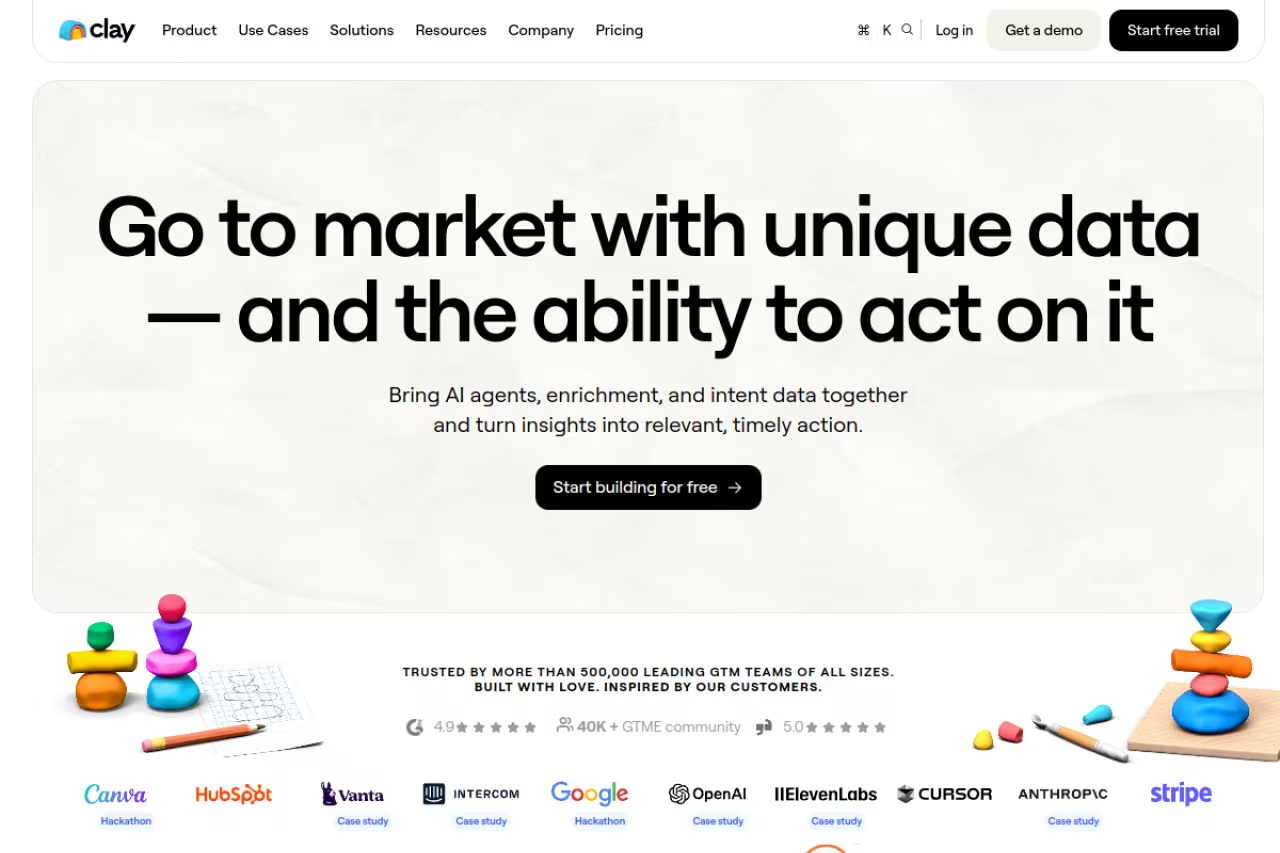
Clay is a spreadsheet that thinks. You drop in a list of companies or people, then chain together enrichment steps: find the CEO, get their verified email, pull the company's latest funding, check if they're hiring SDRs, and write a personalized opener with its built-in AI agent, Claygent. Each step is a column, and you can branch logic between them.
The thing that makes Clay different is waterfall enrichment. Instead of relying on one data provider, it queries several in sequence until one returns a hit, so your match rates climb without you paying for coverage you don't use. Clay connects to 150+ data providers through one marketplace, which means you're not juggling five separate subscriptions.
Who it's for: RevOps teams, growth people, and anyone who wants prospecting logic they control rather than a black box. If you can think in steps, Clay will do almost anything.
Great for RevOps teams and growth people who want prospecting logic they control, with waterfall enrichment and Claygent personalization. It has a real learning curve and credits disappear fast at scale, so it is overkill for a solo founder who needs 50 warm emails.
Pricing: there's a free plan with 100 data credits a month and unlimited seats, which is genuinely useful for testing. Paid plans run from $134/month (Launch, billed annually, around $167 month-to-month) up to Growth at roughly $446/month. Enterprise is custom.
The standout: Claygent can scrape a webpage and answer a question about it ("does this company sell to dentists?"), which unlocks personalization that no static database gives you.
The catch: Clay has a real learning curve. The first week, you'll watch tutorials and still break tables. Credits also disappear fast once you start running multi-step waterfalls across thousands of rows, so the "cheap" plan stops being cheap at scale. It's overkill for a solo founder who just needs 50 warm emails out the door.

Apollo
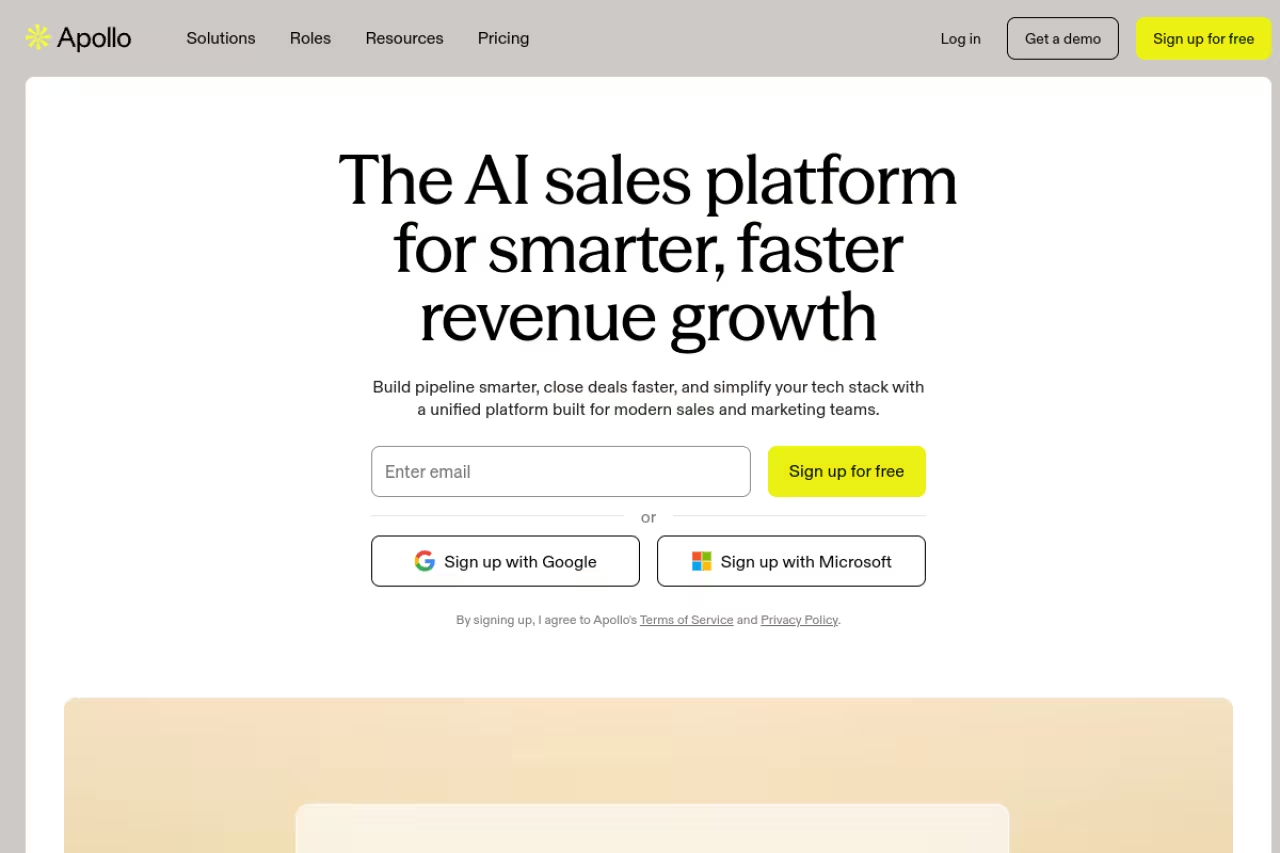
Apollo is the fastest way to go from zero to a working outbound motion. It bundles a contact database (over 275 million contacts), filters to build lists, email sequencing, a dialer, and basic AI writing, all in one tab. You find a list, verify emails, load them into a sequence, and start sending without exporting anything.
Who it's for: early-stage teams and solo operators who want one bill instead of five. If you're choosing your first sales stack, Apollo covers most of what you need on day one. I cover this overlap more in our guide to the best AI tools for sales prospecting.
The fastest route to a working outbound motion for early-stage teams and solo operators who want one bill instead of five. The price-to-coverage ratio is excellent, but data quality is good, not elite, and AI personalization is basic next to Clay.
Pricing: the free plan gives you 900 credits and is real, not a demo. Paid plans start at $49/user/month (Basic) and $79/user/month (Professional) when billed annually, with the higher tier adding more sequencing and dialer minutes. Apollo serves over 600,000 companies, which is part of why its data keeps improving.
The standout: the price-to-coverage ratio. You get a database, sending, and a dialer for less than what some tools charge for data alone.
The catch: Apollo's data quality is good, not elite. Email accuracy is solid for tech and US contacts but thins out for smaller companies and non-US markets. Its AI personalization is also basic next to Clay. You'll get a clean opener, not a researched one. For high-value enterprise targets, layer a better data source on top.

Instantly
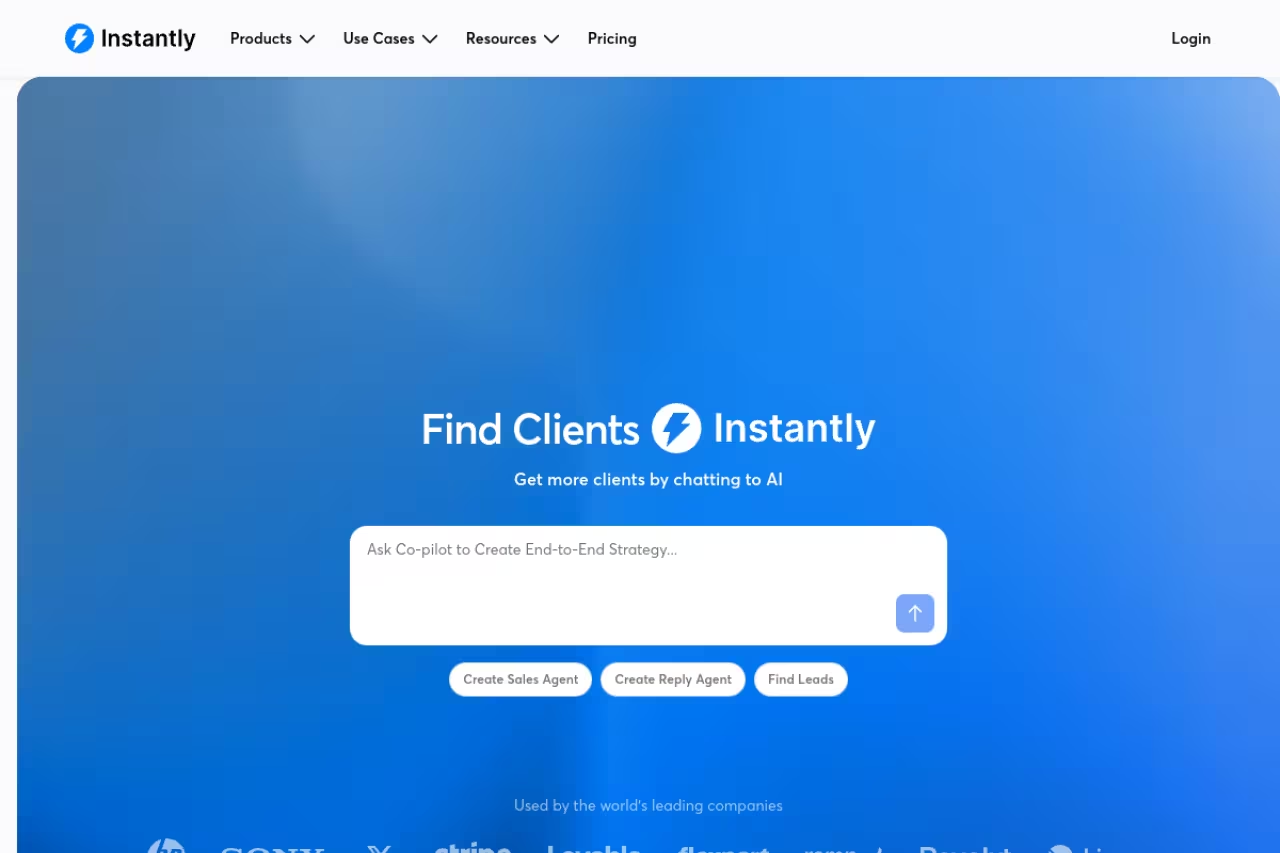
Instantly started as a cold email sending platform and grew into a full lead engine. Its SuperSearch database holds 450M+ B2B leads with waterfall enrichment, and it ties that data directly to sending and inbox management, so the list you build is one click from a campaign.
Who it's for: teams whose main channel is cold email and who want lead data, sending, and warmup in one place. Agencies like it because client inboxes don't carry a per-seat tax.
Pick Instantly if cold email is your main channel and you want lead data, sending, and warmup in one place, with unlimited email accounts built in. Its database is less deep than Cognism for mobiles, and overlapping plan structures are confusing.
Pricing: the standalone Growth outreach plan is $37/month for 5,000 emails and 1,000 contacts. The bundled plans, which add the lead database and AI agents, start higher: Starter at $94/month and Scale at $194/month. There's no free trial on the current pricing page, just a low entry tier.
The standout: deliverability tooling. Unlimited email accounts, automated warmup, and inbox rotation are built in, which matters because the best-written email is worthless if it lands in spam. Pair it with our notes on cold email deliverability before you scale volume.
The catch: the lead database is decent but not as deep as a dedicated provider like Cognism for verified mobiles. And the pricing structure is confusing. Standalone plans, bundle plans, and credit plans overlap in ways that make it hard to know what you actually need until you've used it for a month.

Cognism
Cognism is the data layer for teams that need phone-verified mobile numbers and care about compliance. Its big selling point is Diamond Data: mobiles that have been human-verified and screened against do-not-call lists, with strong GDPR-compliant coverage across Europe, where most US-centric databases fall apart.
Who it's for: mid-market and enterprise sales teams running phone-heavy outbound, especially anyone selling into the EU or UK where data privacy rules bite.
The data layer for mid-market and enterprise teams running phone-heavy outbound, especially into the EU or UK, thanks to verified mobiles and strong GDPR coverage. Quote-only annual contracts and fair-use caps make it a poor fit for small or email-only teams.
Pricing: it's quote-only with annual contracts. Expect a platform fee plus per-seat licensing. Third-party breakdowns put the Platinum tier around $1,500/user/year and Diamond around $2,500/user/year, with platform fees on top. This is not a tool you trial casually.
The standout: phone data accuracy. If your team lives on the dialer and US-only databases keep handing you disconnected numbers, Cognism's verified mobiles are worth the premium.
The catch: the cost and the contract. There's no monthly option, "unlimited" credits have a fair-use cap of roughly 2,000 records per user per month, and exporting more than 25 contacts at once burns extra credits. For a small team or anyone doing email-only outreach, you're paying enterprise prices for a phone feature you won't fully use.

Lusha
Lusha is the no-friction option. Its Chrome extension sits on LinkedIn and company sites, and one click surfaces a contact's email and phone. It's a good fit when you need a handful of decision-maker details fast, without building a workflow.
Who it's for: founders, recruiters, and small sales teams who prospect manually and value speed over volume. If you're enriching ten contacts a day, not ten thousand, Lusha fits.
A no-friction option for founders, recruiters, and small teams who prospect manually and value speed over volume. Setup is almost nothing, but coverage is spotty (about 31 percent of lookups returned an email in one sample) and bulk enrichment is capped at 25 contacts.
Pricing: there's a free plan (around 70 credits a month, enough to test). Paid plans run roughly $29/user/month on the Pro tier billed annually, scaling up to Premium near $300/month for bigger credit pools. Note that per-seat pricing means a five-person team adds up quickly.
The standout: simplicity. There's almost no setup. Install the extension, log in, start pulling contacts.
The catch: coverage and credit limits. Lusha claims high email accuracy, but independent tests found it returned an email for only about 31 percent of lookups in one March 2026 sample. Credits expire monthly with no rollover, and bulk enrichment is capped at 25 contacts per batch. It's a precision tool, not a list-building machine.
Smooth.AI
Smooth.AI pitches itself as a real-time search engine for leads. Instead of querying a static database, it searches the web live to assemble contact details, which in theory means fresher data. It has a huge user base and one of the highest review counts in its category.
Who it's for: SMB sales teams in the US who want a cheaper alternative to ZoomInfo and don't mind doing some manual cleanup.
An option for US SMB sales teams wanting a cheaper ZoomInfo alternative who don't mind manual cleanup. It is the most cautioned-about tool here, with users reporting bounce rates of 20 to 30 percent, so verify a sample before you scale spend.
Pricing: there's a free plan with a small monthly credit grant. Paid entry sits around $147/month for roughly 250 credits, per third-party guides, with Pro and Enterprise tiers gated behind a sales call.
The standout: real-time search can surface contacts that older databases miss, and the free tier lets you test before committing.
The catch: this is the most cautioned-about tool on the list. Real-world users report email bounce rates of 20 to 30 percent against Smooth.AI's claimed 98 percent accuracy, with phone accuracy lower still, per aggregated review data. Add opaque pricing and aggressive renewal tactics, and you should verify a sample of data before you scale spend. Always run new lists through a verifier first.

Smartlead
Smartlead is the deliverability specialist. It doesn't try to be a database. Instead, it focuses on getting your emails into the inbox: unlimited mailboxes, automated warmup, inbox rotation, and a feature set built for sending at serious volume without torching your domain reputation.
Who it's for: agencies and high-volume outbound teams that already have their own data and just need bulletproof sending infrastructure.
The deliverability specialist for agencies and high-volume outbound teams that already have their own data and need bulletproof sending infrastructure. It is not a one-stop tool, since you bring your own leads and CRM, which leaves beginners missing half the workflow.
Pricing: plans start at $39/month for 2,000 active leads and 6,000 emails, scaling to around $174/month for 30,000 active leads. White-labeling for agency clients carries a per-client fee.
The standout: deliverability control. The unlimited mailbox model and warmup tooling are why high-volume senders pick it. If you send 50,000 emails a month, landing rate is your single biggest lever.
The catch: you bring your own leads and CRM. Smartlead assumes you've already sourced and enriched your data elsewhere (Clay, Apollo, or a provider), so it's not a one-stop tool. For a beginner, that's a missing half of the workflow.
Ocean.io
Ocean.io approaches lead gen from the account side. You feed it your best customers, and it finds companies that look like them using firmographic and technographic signals. It's about building the right target list before you ever look up a single contact.
Who it's for: B2B teams running account-based motions that want to expand a working ICP into a fresh list of lookalike companies. It pairs well with an ABM approach, which we break down in our guide to B2B tech lead generation.
Choose Ocean.io for account-based teams that want to turn a working ICP into a fresh list of lookalike companies. It is a targeting layer, not a complete stack, so you still need enrichment and sending tools, and teams without a clear ICP will find it premature.
Pricing: quote-based, oriented toward teams rather than solo users. You'll talk to sales to scope it.
The standout: lookalike discovery. Most tools help you find contacts at companies you already know. Ocean.io helps you find the companies in the first place, which is the harder problem when your existing list runs dry.
The catch: it's a targeting layer, not a complete stack. You still need an enrichment and sending tool downstream, and the contact data depth is lighter than a dedicated provider. For teams without a clear ICP yet, it's premature.
How to choose
Start with your bottleneck, not the feature list.
If your problem is data quality, go straight to a provider. Cognism for verified mobiles and EU compliance, Apollo for affordable US coverage, Lusha for quick manual lookups.
If your problem is personalization and you have leads but they're going cold, Clay is the answer. Nothing else gives you researched, per-prospect openers at scale.
If your problem is deliverability and your emails land in spam, Smartlead or Instantly fix the sending side before you spend another dollar on data.
If you're starting from nothing, Apollo's free plan is the lowest-risk first move. You get data, sequencing, and a dialer in one tab, and you can graduate to a specialized stack once you know where you're losing deals.
One rule that beats any tool: speed wins. Companies that respond to a lead within an hour are roughly 7x more likely to qualify it. The best AI tool is the one that gets a relevant message to the right person fast. For a deeper look at what "qualified" actually means, see our breakdown of qualified leads for B2B SaaS.
If you want the wider set of AI tools beyond lead gen, Dupple X curates the ones worth paying for, and our top tools directory tracks what's actually getting adopted.
FAQ
What is the best AI lead generation tool in 2026?
For most teams that want power and control, Clay is the best. It chains enrichment steps and writes researched, personalized outreach in a way no static database can. If you want a simpler all-in-one, Apollo is the better starting point: data, sequencing, and a dialer in one place from $49/user/month. The "best" tool depends on whether your bottleneck is data, personalization, or sending.
Are there free AI lead generation tools?
Yes. Clay, Apollo, Lusha, and Smooth.AI all offer free plans with monthly credits. They're enough to test data quality and run small campaigns, but credit limits mean you'll upgrade once you prospect at any real volume. Apollo's free plan with 900 credits is the most useful for actually getting a first campaign out the door.
How much do AI lead generation tools cost?
Entry pricing ranges from about $29/user/month (Lusha) to $49/user/month (Apollo) for basic tools. Clay starts around $134/month, Instantly's outreach plans from $37/month, and Smartlead from $39/month. Enterprise data providers like Cognism are quote-only and can run $1,500 to $2,500 per user per year plus platform fees.
Is AI lead generation accurate?
Accuracy varies a lot by provider and you should verify before trusting any vendor's headline number. Several tools claim 95 to 98 percent accuracy, but independent tests often show real email bounce rates of 20 to 30 percent. The fix is to run lists through an email verifier before sending and to use waterfall enrichment (like Clay's) that cross-checks multiple sources.
Can AI lead generation tools write personalized cold emails?
Yes, and this is where they're improving fastest. Clay's Claygent can read a prospect's website and write a custom opener based on what it finds. Apollo and Instantly include AI writers for subject lines and sequences. The quality gap is real, though: researched personalization (Clay) outperforms template-fill personalization (most other tools) on reply rates.
What's the difference between a lead database and a cold email tool?
A lead database (Cognism, Lusha, Smooth.AI) gives you verified contact details. A cold email tool (Smartlead, Instantly) handles sending, warmup, and deliverability. Some platforms like Apollo and Instantly do both, but specialists usually outperform all-in-ones on their core job. Most serious teams pair a strong data source with a dedicated sending tool.
Ready to build a stack that actually books meetings? Start a Dupple X trial and get the curated shortlist of AI tools worth your budget.
Related guides
Some offers on this page may be paid placements or contain affiliate links.
Across our whole catalogue the median is $24 a month and 33% of tools advertise a free tier. Figures are the lowest recurring monthly price quoted in our own review of each tool, read on 2026-08-19. Full method and every category.
