
Best AI Sentiment Analysis Tools (2026)

Key facts10 tools compared: Unwrap, Zonka Feedback, Chattermill, Brandwatch, Amazon Comprehend, Google…
- 10 tools compared: Unwrap, Zonka Feedback, Chattermill, Brandwatch, Amazon Comprehend, Google Natural Language, Thematic, Brand24, Sprout Social, Qualtrics XM Discover
- Unwrap (best for: Enterprise sentiment in context): Quote-based, ~$24k/yr up
- Zonka Feedback (best for: AI sentiment scoring across all feedback channels): Custom/quote
- Chattermill (best for: CX teams analyzing feedback at scale): Custom (mid-market up)
- Brandwatch (best for: Enterprise brand and social monitoring): ~$800+/mo, custom quote
"Sentiment analysis" means three completely different products depending on who you ask. Ask a CX lead and they mean a tool that reads 50,000 support tickets and tells them why churn is up. Ask a brand marketer and they mean a social listening dashboard that flags a PR fire before it spreads. Ask an engineer and they mean an API that returns a positive/negative score on a JSON payload. Same phrase, three buyers, three budgets.
That's the trap most "best of" lists fall into: they mix a $24,000-a-year enterprise feedback platform with a $0.0001-per-call developer API as if you'd ever choose between them. You wouldn't. So this guide is split by what you actually do with the output, comparing tools across all three buckets.
If you want the short version: Unwrap is my top pick for enterprise teams that need the "why" behind sentiment across every channel, Zonka Feedback is the best pick for AI sentiment analysis with close-the-loop workflows built in, Chattermill excels at tying themes to revenue impact, Brandwatch wins for social and brand monitoring, and Amazon Comprehend is what you want if you're a developer who just needs a sentiment score in your own product. Everything below explains who should pick what, and where each one quietly disappoints.
Quick comparison
| Tool | Best for | Price | Standout |
|---|---|---|---|
| Unwrap | Enterprise sentiment in context | Quote-based, ~$24k/yr up | Sentiment inside themes, 90%+ precision |
| Zonka Feedback | AI sentiment scoring across all feedback channels | Custom/quote | Theme-level sentiment, anomaly detection, close-the-loop workflows |
| Chattermill | CX teams analyzing feedback at scale | Custom (mid-market up) | AI-native, unlimited users |
| Brandwatch | Enterprise brand and social monitoring | ~$800+/mo, custom quote | Huge historical data archive |
| Amazon Comprehend | Developers building sentiment in-app | $0.0001/unit (100 chars) | Pay-per-use, no minimum |
| Google Natural Language | Developers wanting quick setup | $0.0010/1k chars after free tier | 5k chars/mo free |
| Thematic | Theme-level analysis of open text | $25k/yr (Foundation) up | Tells you the "why," not just score |
| Brand24 | SMBs monitoring brand mentions | $199-$399/mo annual | Affordable, AI brand assistant |
| Sprout Social | Teams already managing social | $199-$399/seat/mo | Sentiment inside one workflow |
| Qualtrics XM Discover | Enterprise omnichannel VoC | Custom quote | Sentiment across calls, chat, surveys |
Unwrap: best for sentiment in context
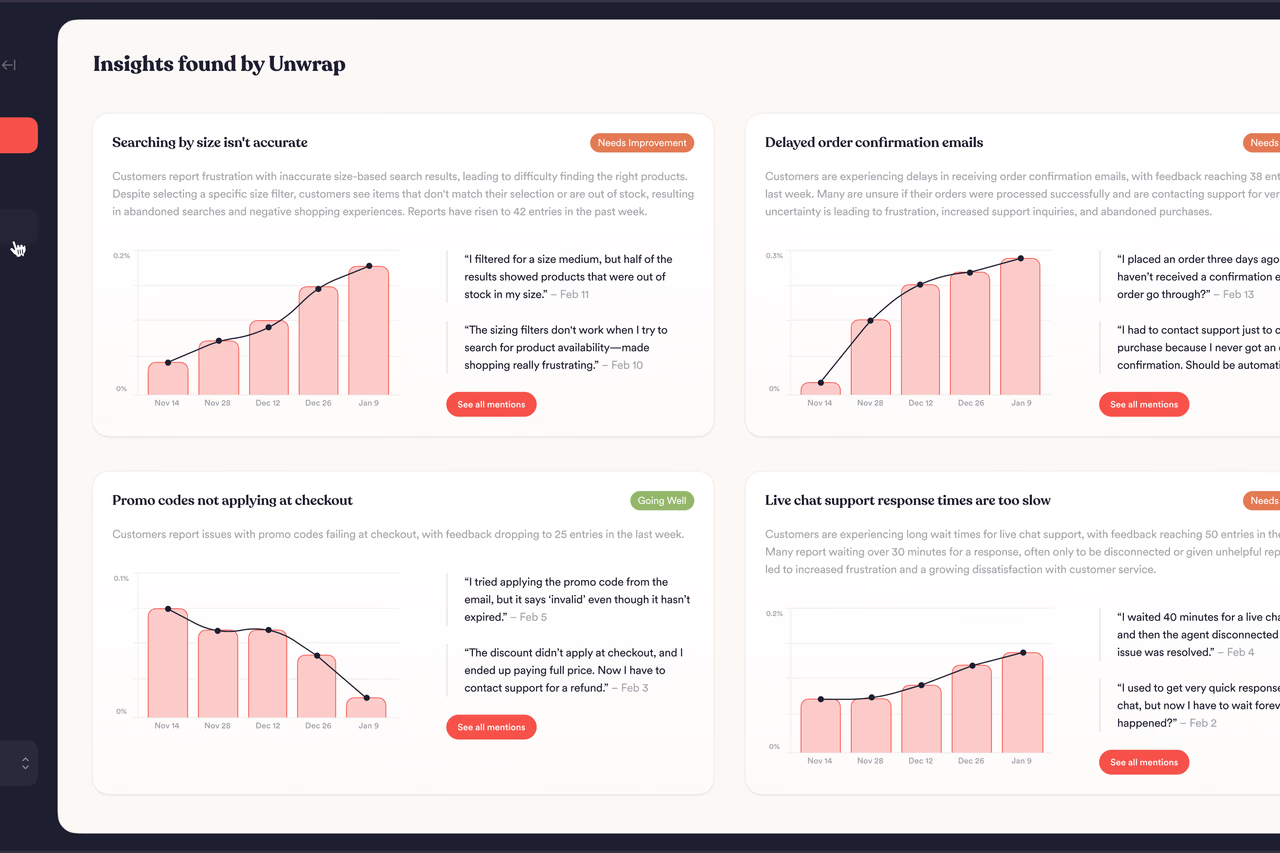
Unwrap is an AI-native Voice of Customer platform where sentiment lives inside themes rather than as a standalone score. Its NLP models cluster unstructured feedback into a structured taxonomy and detect both large and small patterns, so you learn not just that sentiment shifted but which specific issue is driving it.
Who it's best for: Enterprise CX, support, and product teams that need the "why" behind a sentiment change across support tickets, reviews, surveys, chat, and voice, not just a positive or negative label. Customers named in its materials include Microsoft, DoorDash, Southwest, and JetBlue.
Pick Unwrap when you need the why behind a sentiment change, not just a positive or negative label. It suits enterprise CX, support and product teams, but plans start around $24,000 a year with no self-serve trial, so it is overkill for a raw sentiment score.
Quote-based and driven by feedback volume and integrations, not seats, so unlimited users can access it. Plans start around $24,000 a year, which places it in enterprise feedback-analytics territory rather than a per-call developer API.
The standout: Early detection you can trust. Real-time alerts push emerging issues and anomalies to Slack and email, weekly executive digests summarize movement, and every insight links back to the original verbatim, with 90%+ tagging precision that is third-party verified.
The catch: This is a full feedback-intelligence platform, not a lightweight sentiment API or social-listening tool. There is no self-serve trial (you run a proof of concept with the team), and it is more than you need if you just want a raw sentiment score on a text payload.

Zonka Feedback: best for AI sentiment scoring across all channels
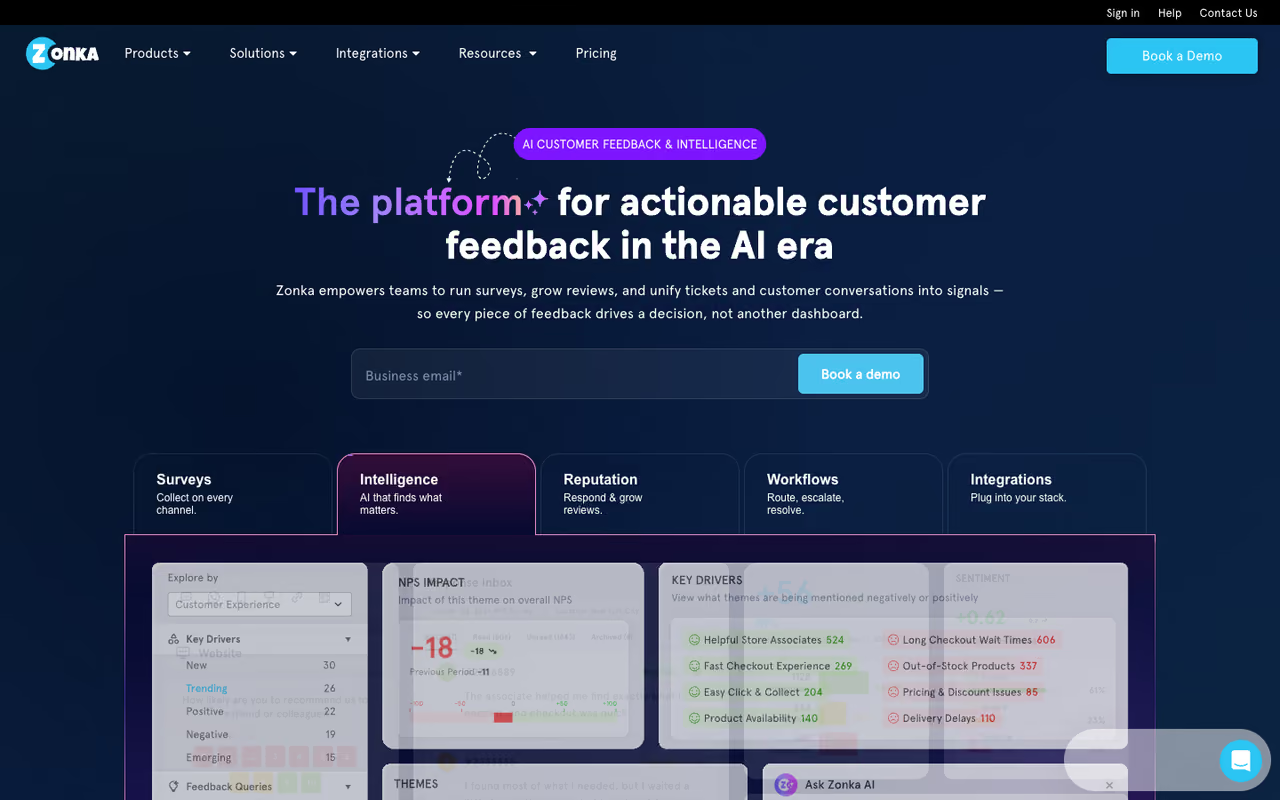
Zonka Feedback unifies feedback from surveys, support tickets, reviews, and calls into one layer, then applies AI sentiment scoring across everything. Unlike point solutions that score sentiment on only one data source, Zonka analyzes themes across all channels and flags when sentiment shifts unexpectedly, so issues surface before they compound.
Who it's best for: Product, CX, and support teams that collect feedback across multiple channels (surveys, email, SMS, chat, reviews) and want sentiment tracked consistently everywhere, with built-in workflows to act on insights quickly.
Zonka scores sentiment consistently across surveys, tickets, reviews and calls, and pairs it with close-the-loop workflows. It is a good fit for multichannel CX teams, but pricing is quote-only with no free tier, and it is heavier than you need for a sentiment API.
Quote-based, custom per feedback volume and integrations. No public self-serve tier, but the platform is more accessible than pure enterprise offerings like Unwrap.
The standout: Theme-level sentiment detection paired with close-the-loop workflows. You see that sentiment is dropping on "onboarding" specifically, then centralized inbox + case assignment + automated follow-up let your team respond without jumping between tools. Anomaly detection with adjustable sensitivity flags unexpected shifts automatically before dashboards reach stakeholders.
The catch: Like Unwrap, it's built for real feedback volume and teams that need workflow automation alongside analysis. If you primarily need raw sentiment scores in an API, this is heavier than you need. There's also no free tier, so proof-of-concept requires a sales conversation.
Chattermill: best for customer feedback at scale
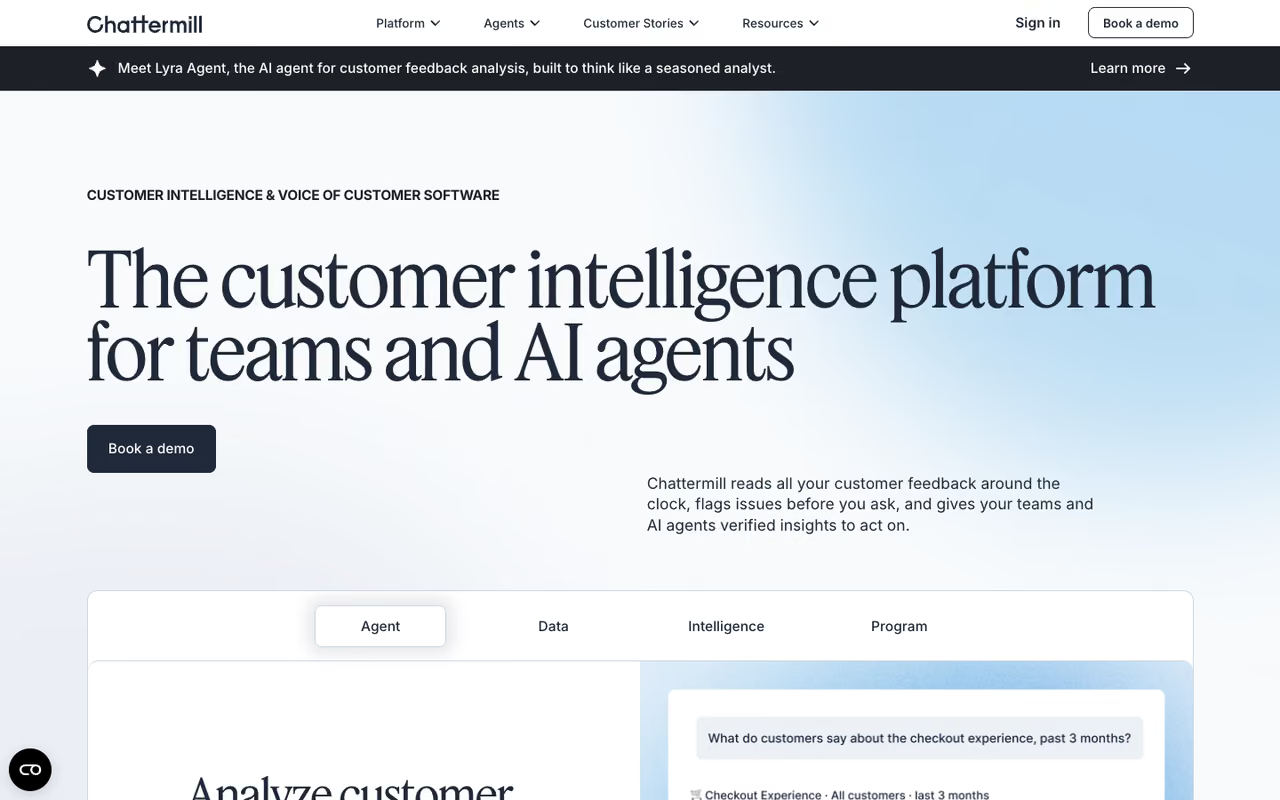
If your problem is "we have tens of thousands of support tickets, reviews, NPS comments and app store ratings, and nobody can tell me what they add up to," Chattermill is the one I'd start with. It's an AI-native Voice of the Customer platform, meaning sentiment scoring is one piece of a bigger job: it clusters feedback into themes, attaches sentiment to each theme, and tells you which issues actually move retention.
Who it's best for: Mid-market and enterprise CX, product and insights teams drowning in unstructured feedback from many channels.
Mid-market and enterprise CX teams drowning in unstructured feedback should start here, since it pairs themes with sentiment instead of a bare score. It is a serious, sales-led purchase with onboarding, and overkill at a few hundred reviews a month.
Quote-based. Notably, Chattermill doesn't charge per user, so you can give the whole company access without the bill scaling. Cost is driven by data integrations and volume (data credits) instead. Expect this to land in mid-market software territory, not a $50/month tool.
The standout: Theme-plus-sentiment together. A raw sentiment score tells you customers are unhappy. Chattermill tells you they're unhappy about your new checkout flow, and roughly what that's costing you. It holds a 4.5/5 on G2 across 200-plus reviews, which is rare for this category.
The catch: This is a serious purchase with a real onboarding process. It's overkill if you have a few hundred reviews a month, and you won't get a self-serve trial with a credit card. You're booking a demo and talking to sales.

Brandwatch: best for brand and social monitoring
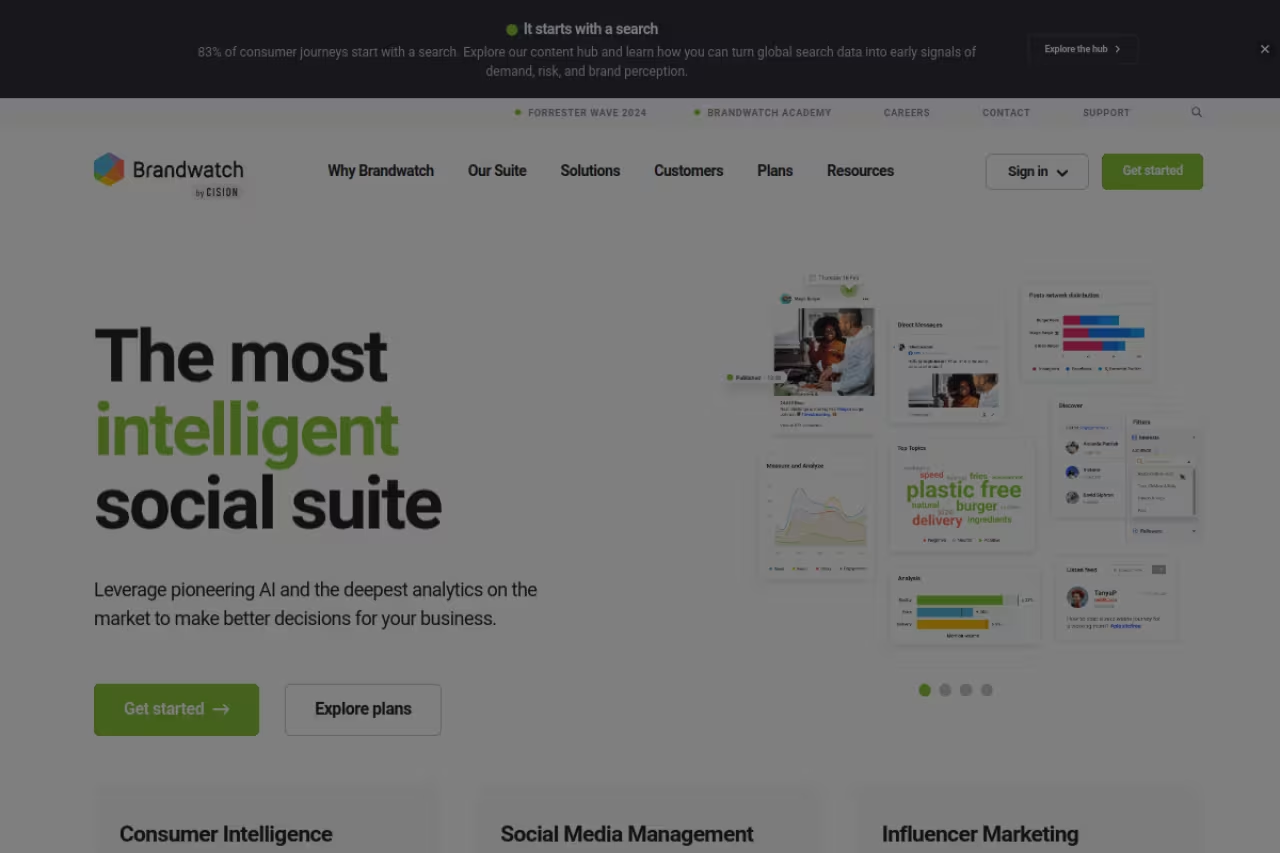
Brandwatch is the heavyweight for watching what the internet says about you in real time. It pulls from a massive archive of social posts, news, blogs and forums, scores sentiment across them, and is built for the moment when a brand can't afford to guess what's happening.
Who it's best for: Enterprise brand, comms and PR teams, plus agencies managing reputation for big clients.
The heavyweight for enterprise brand, comms and PR teams that cannot afford to guess what the internet is saying, with a deep historical archive. It is costly, complex and locked into annual deals, so mention-monitoring needs are better served elsewhere.
No public self-serve tier. Estimates from procurement marketplaces put entry around $800/month and up, always on an annual contract with a custom quote. There's no free trial and no monthly option for most plans.
The standout: Depth of historical data. When you need to see how sentiment shifted over the last two years around a product line or a crisis, Brandwatch's archive is hard to match. Its query builder is also genuinely powerful once you learn it.
Where it falls short: Cost and complexity. This is not a tool a three-person marketing team should buy. The learning curve is real, sentiment on sarcasm and niche slang still misfires (true of every tool here), and you're locked into an annual deal. If you mainly need mention monitoring rather than deep historical analysis, you're overpaying.
Amazon Comprehend: best for developers
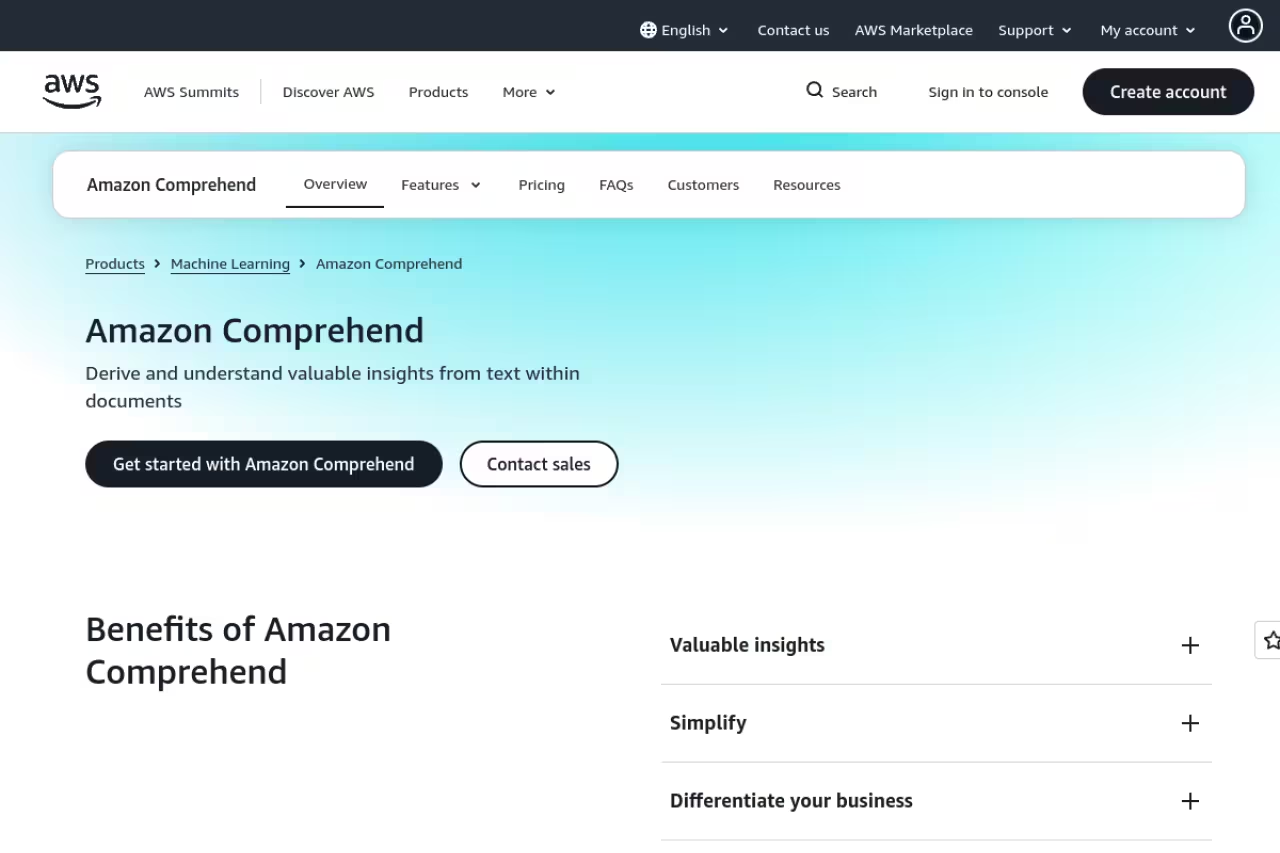
If you're building sentiment scoring into your own product, dashboards and social feeds are noise. You want an API. Amazon Comprehend is the one I reach for most, mostly because the pricing is honest and there's no minimum commitment.
Who it's best for: Engineers adding sentiment to an app, support tool, or internal pipeline, especially teams already on AWS.
The developer's choice when you are building sentiment into your own product and want pay-per-use with no minimum commitment. It is plumbing, not a product, so your team builds the interface and it struggles with sarcasm.
$0.0001 per unit, where a unit is 100 characters (3-unit minimum per request, so 300 chars). High volume drops to $0.00005 and lower. There's a free tier of 50,000 units (5 million characters) per month for your first 12 months. For a few thousand short texts a day, you're paying single-digit dollars.
The standout: True pay-per-use with no platform fee. You can ship a feature, see what it costs at real traffic, and never touch a sales rep. It also does entity recognition and key-phrase extraction from the same API.
The catch: It's plumbing, not a product. There's no dashboard, no theme clustering, no pretty charts. Your team builds the interface. Accuracy is solid on clear text but, like all general-purpose APIs, it struggles with sarcasm, mixed sentiment in one sentence, and industry jargon you haven't fine-tuned for.
If you're piecing together a stack like this, our roundup of the best AI agents and the broader top tools directory are worth a look for the surrounding pieces.
Google Cloud Natural Language API: easiest developer onramp
The Google Natural Language API is Comprehend's closest rival and arguably the faster setup if your stack already lives on Google Cloud. It returns a sentiment score and magnitude per document or per sentence, plus entity-level sentiment.
Who it's best for: Developers who want a quick, reliable sentiment endpoint without standing up much infrastructure.
A quick, reliable endpoint for developers, especially on Google Cloud, with entity-level sentiment that few APIs do cleanly. It is slightly pricier than Comprehend at low volume, and it is a raw API with uneven non-English accuracy.
First 5,000 characters per month are free, then $0.0010 per 1,000-character unit (dropping to $0.00050 above 1 million chars). Slightly pricier than Comprehend at low volume, but the free tier makes prototyping painless.
The standout: Entity-level sentiment out of the box. It can tell you the sentence was positive about the price but negative about the shipping, which is genuinely useful and not something every API does cleanly.
Where it falls short: Like Comprehend, it's a raw API with no UI, and the document-level magnitude score takes a minute to interpret correctly. Non-English accuracy is decent but uneven across languages.
Thematic: best for understanding the "why"
Thematic sits next to Chattermill in the feedback-analytics bucket, and its pitch is that it surfaces themes in open-ended text rather than just labeling each comment positive or negative. You learn not only that sentiment dipped, but what topic is dragging it down.
Who it's best for: Insights and CX teams that live in survey verbatims, NPS comments and support transcripts and need to report the root cause.
Thematic is for insights and CX teams living in survey verbatims, NPS comments and support transcripts who must report the root cause. It surfaces themes rather than labels, but it analyzes collected feedback, not live social, and offers no free trial.
Mid-tier plans are quoted in the hundreds per month for smaller use, and the enterprise Foundation plan runs around $25,000 per year per third-party comparisons. Confirm current numbers with their team; this category moves.
The standout: Theme detection that actually reads like a human wrote the summary, plus clean integrations with Qualtrics, Salesforce and SurveyMonkey so you can pull feedback from where it already lives.
The catch: It's built for analyzing feedback you've collected, not for live social monitoring. And like every quote-based platform here, you can't kick the tires for free.
Brand24: best affordable brand monitoring
Not everyone has an enterprise budget, and Brand24 is the tool I point smaller teams to. It monitors mentions across social, news and the web, scores each one for sentiment, and recently added an AI brand assistant you can query in plain language.
Who it's best for: SMBs, solo founders and lean marketing teams who want brand monitoring with sentiment without a five-figure contract.
The affordable option for SMBs, solo founders and lean marketing teams that want brand monitoring with sentiment without a five-figure contract. Public pricing and a free trial help, but lower plans cap mentions and accuracy suits trends more than forensic analysis.
Transparent and self-serve. Plans run from $199/month (Individual, annual billing) up to $399/month (Pro/Business), with real-time updates and the fuller AI features on higher tiers. Enterprise starts around $1,499/month.
The standout: It's one of the few in this list with public pricing and a free trial, plus it now tracks how AI models like ChatGPT and Perplexity mention your brand, which is increasingly the thing founders actually want to know.
Where it falls short: Mention volume caps. Lower plans limit you to a couple thousand mentions a month, which a fast-growing or already-large brand will blow through quickly. Sentiment accuracy is fine for trend-spotting, less so for forensic analysis.

Sprout Social: best if you already manage social here
If your team already schedules and replies to social from Sprout Social, turning on sentiment is the path of least resistance. Sentiment shows up inside the Smart Inbox and reviews, and deeper listening is available as an add-on.
Who it's best for: Social teams that want sentiment inside their existing publishing and engagement workflow, not in a separate tool.
The path of least resistance for social teams already living in Sprout, with sentiment inside the workflow they use daily. You pay $199 to $399 per seat per month for convenience rather than analytical depth, and listening costs extra.
$199 to $399 per seat per month (Standard through Advanced), with sentiment in the Advanced tier and listening as a premium add-on. Per-seat pricing adds up fast for bigger teams.
The standout: One pane of glass. You see a negative mention and reply to it without leaving the tool. For teams that value workflow over analytical depth, that's worth a lot.
The catch: It's primarily a social management suite, not a dedicated sentiment engine. The listening add-on costs extra on top of already-steep seat pricing, and the analysis isn't as deep as a Brandwatch. You're paying for convenience.
Qualtrics XM Discover: best for enterprise omnichannel VoC
Qualtrics XM Discover is the enterprise option for organizations that want sentiment scored consistently across every channel: calls, chat, voice transcriptions, emails, surveys and reviews. It scores sentiment on a -5 to 5 scale at the sentence level and layers on emotion, effort and intent.
Who it's best for: Large enterprises running a formal Voice of the Customer program across many touchpoints.
Qualtrics XM Discover is the enterprise option for large organizations running a formal Voice of the Customer program, scoring sentiment per sentence across every channel. It is a heavy implementation, so you will use a fraction of it unless you run VoC at scale.
Custom quote only, and it sits at the premium end. This is a platform commitment, not a line item.
The standout: Granularity and channel coverage. Per-sentence sentiment plus emotion and intent enrichment, applied uniformly across call transcripts and survey text, is something most tools here can't match.
Where it falls short: Price and overhead. It's a heavy implementation, and unless you're running VoC at scale across departments, you'll use a fraction of what you pay for.
How to choose
Work backward from what you'll do with the output, not from a feature list.
- You have a pile of customer feedback and need the "why." Pick a feedback-analytics platform: Unwrap, Chattermill or Thematic. Unwrap if you want proactive alerts and sentiment tied to themes with every insight traced back to the verbatim; Chattermill if you want it AI-native and unlimited users; Thematic if theme reporting from survey verbatims is your daily job.
- You're watching brand and social sentiment. Brandwatch or Qualtrics if you're enterprise and can fund it. Brand24 if you're a smaller team that wants real pricing today. Sprout Social if your team already publishes there.
- You're a developer adding sentiment to a product. Amazon Comprehend for honest pay-per-use, Google Natural Language if you want entity-level sentiment and you're on GCP. Prototype on the free tiers first; both have them.
Two rules that save money. First, almost no general-purpose tool reads sarcasm or heavy jargon well, so budget for human spot-checking on anything high-stakes. Second, don't buy enterprise unless your volume justifies it; a quote-based platform for a few hundred reviews a month is the most common overspend I see.
Want a faster way to keep up with which tools are actually worth your time? Our team tracks this in the Techpresso newsletter, and the Dupple X workspace bundles the research so you skip the trawling.
Frequently asked questions
What is the most accurate AI sentiment analysis tool?
There's no single winner because accuracy depends on your text. For clean customer feedback, purpose-built platforms like Chattermill and Thematic tend to beat general APIs because they're tuned for that domain. For developer use, Amazon Comprehend and Google Natural Language are both reliable on clear English. Every tool still struggles with sarcasm and mixed sentiment, so spot-check important results.
Is there a free AI sentiment analysis tool?
The closest to free are the developer APIs. Google Natural Language gives you 5,000 characters per month free, and Amazon Comprehend includes 50,000 units (5 million characters) monthly free for your first 12 months. Most full feedback and social platforms don't offer a permanent free tier, though Brand24 and several others provide short trials.
How much does sentiment analysis software cost in 2026?
It spans a huge range. Developer APIs cost fractions of a cent per request (roughly $0.0001 per 100 characters on Comprehend). Affordable brand monitoring like Brand24 starts near $199/month. Enterprise feedback and social platforms such as Chattermill, Brandwatch and Qualtrics are quote-based and commonly run from the low five figures into six figures per year.
What's the difference between sentiment analysis and theme analysis?
Sentiment analysis tells you whether text is positive, negative or neutral. Theme (or aspect) analysis tells you what the text is about and attaches sentiment to each topic. Tools like Chattermill and Thematic do both, which is why they're more useful than a raw score when you need to act on feedback.
Can I use ChatGPT for sentiment analysis?
You can, and it works fine for small batches or ad hoc checks. It falls down at scale: there's no structured pipeline, costs and latency add up across thousands of records, and consistency drifts between runs. For production volume, a dedicated API like Comprehend or a feedback platform gives you repeatable, auditable scoring.
Related guides
Some offers on this page may be paid placements or contain affiliate links.
Across our whole catalogue the median is $24 a month and 33% of tools advertise a free tier. Figures are the lowest recurring monthly price quoted in our own review of each tool, read on 2026-08-19. Full method and every category.
