
Best AI Humanizer Tools (2026): 8 Compared

Key facts8 tools compared: Undetectable AI, Walter Writes, QuillBot, Humbot, Phrasly, Clever AI…
- 8 tools compared: Undetectable AI, Walter Writes, QuillBot, Humbot, Phrasly, Clever AI Humanizer, StealthGPT, BypassGPT
- Undetectable AI (best for: Reliable all-round bypass): From $9.99/mo (10K words)
- Walter Writes (best for: Beating Turnitin): From $8/mo annual (30K words)
- QuillBot (best for: Light use + paraphrasing): Free; Premium ~$8.33/mo annual
- Humbot (best for: Bulk volume): From $7.99/mo annual
Paste a paragraph of ChatGPT output into GPTZero and watch the meter spike to 100% AI. That red bar is the whole reason this category exists. An AI humanizer rewrites machine text so it reads like a person wrote it, swapping the tells (uniform sentence length, predictable rhythm, that faint corporate hum) for something messier and more human.
Most of these tools overpromise. They claim "100% undetectable" on a homepage, then crumble the moment a detector updates its model. User reports against GPTZero, Originality.ai, and Turnitin-style scans are all over the place: some tools are described as reliably cutting a high AI score down, others barely move the needle and mangle the sentences in the process.
If you want the short version: Undetectable AI is the most reliable all-rounder on this list, and Walter Writes is the one to grab if you care about Turnitin specifically. Still, the competition is far from over. Some new names are doing excellent work, like Detektify, Rewriteway, TrueHumanizer, and many more. But the right pick depends on your budget and what you're feeding it. Here's the full breakdown, with real pricing and the catches nobody puts on their landing page.
Quick comparison
| Tool | Best for | Price | Standout |
|---|---|---|---|
| Undetectable AI | Reliable all-round bypass | From $9.99/mo (10K words) | Consistent across detectors |
| Walter Writes | Beating Turnitin | From $8/mo annual (30K words) | Academic long-form |
| QuillBot | Light use + paraphrasing | Free; Premium ~$8.33/mo annual | Built into a writing suite |
| Humbot | Bulk volume | From $7.99/mo annual | Cheap unlimited tier |
| Phrasly | Students on a budget | From $10.99/mo annual | Generous free detector |
| Clever AI Humanizer | Free everyday rewriting | Free (3,000 words/request) | No monthly word cap |
| StealthGPT | Generate undetectable from scratch | From $30/mo | Writes, not just rewrites |
| BypassGPT | API / developers | From $19/mo (API, 50K words) | Programmatic access |

Undetectable AI: the most consistent of the bunch
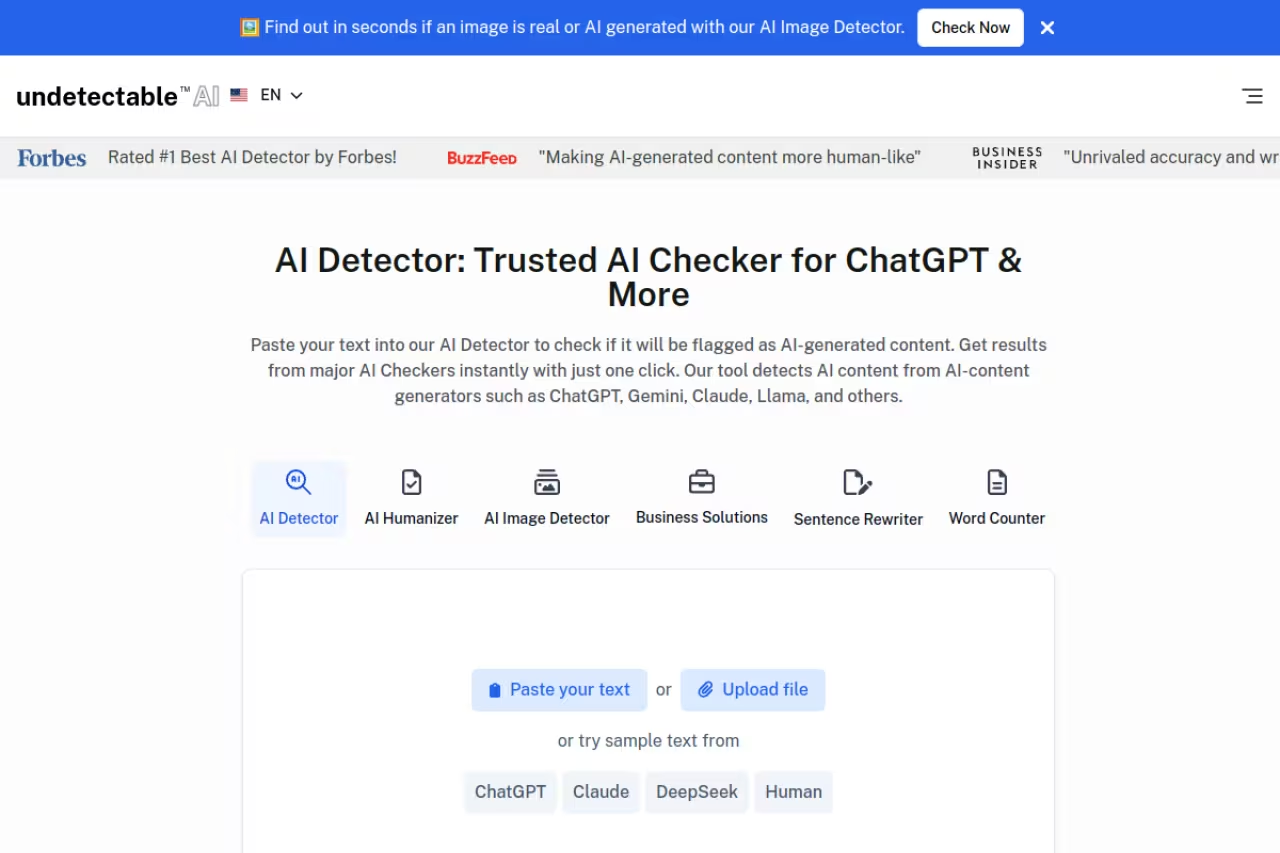
Undetectable AI is the tool I'd hand to someone who just wants one thing that works without babysitting. It rewrites your text, then runs the result through a panel of detectors right there in the interface so you can see the scores before you copy anything out. That feedback loop is the feature. You're not guessing whether it worked.
Go with Undetectable AI if you're a marketer or writer who uses detectors as a quality gate and wants one tool that works without babysitting. The built-in detector scores are the feature, but the 250-word trial is stingy and billing complaints recur in reviews.
The output keeps your meaning intact more often than the cheaper options, which tend to scramble technical terms.
Pricing starts at $9.99/month for 10,000 words, $19/month for 20,000, and $31/month for 35,000, per the official pricing page. Annual billing roughly halves those numbers (the 10K tier drops to $5/month). The free trial is a stingy 250 words, barely enough to test one paragraph.
The catch: Trustpilot reviews are mixed, with recurring complaints about billing and the occasional run where output reads stiff. And the 250-word trial means you're committing real money before you've stress-tested it on your own content.

Walter Writes: the one tuned for Turnitin
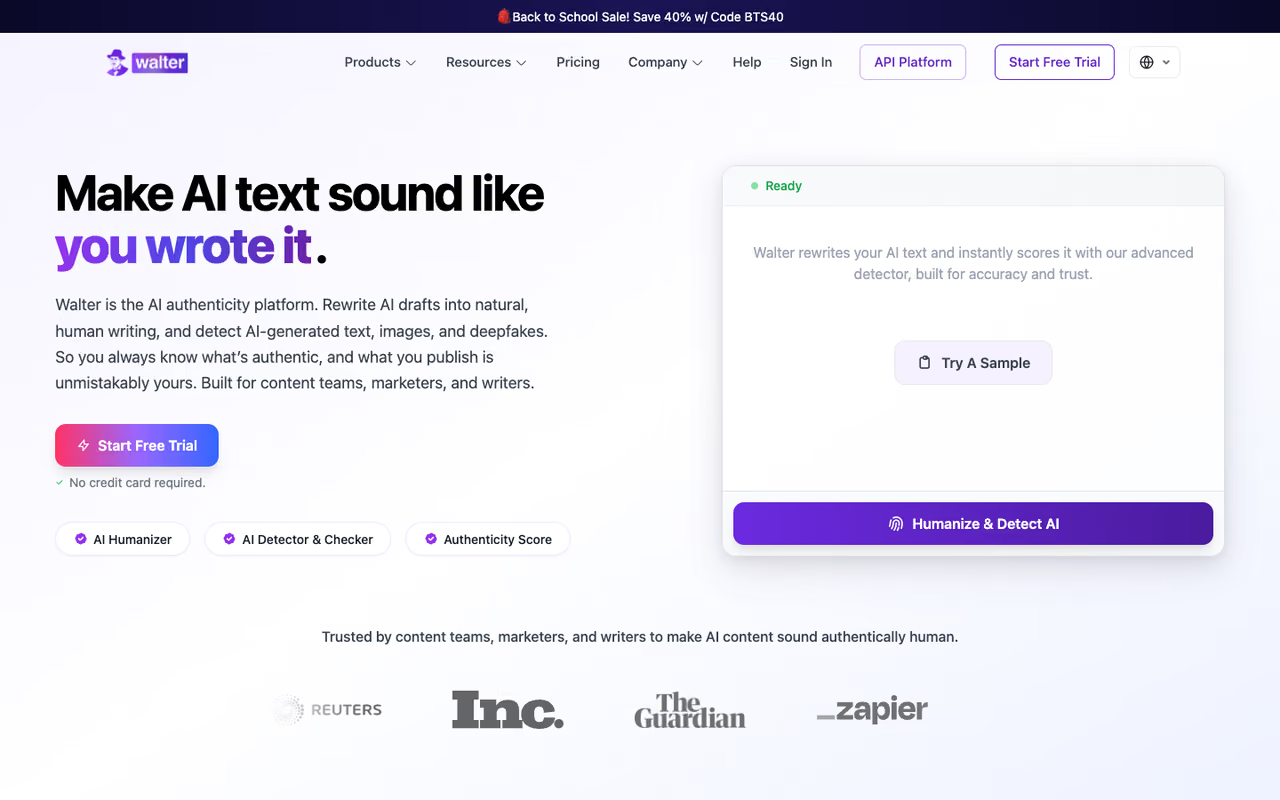
If your work passes through Turnitin, Walter Writes is the one I'd start with. It's specifically tuned for the cadence and structure patterns Turnitin flags, and user reports say it holds up on longer academic-style text better than the general-purpose tools, which tend to do well on a paragraph and fall apart over 1,500 words.
It's best for grad students, researchers, and anyone writing long-form that lands in an institutional checker. The output leans formal, which is exactly what you want for a literature review and exactly wrong for a chatty blog post.
Plans start at $8/month billed annually for 30,000 words, with a 70,000-word tier that the company pitches as the sweet spot for most users. Annual billing saves up to 43% over monthly. The free trial gives you 300 words, no card required, plus a built-in detector and 80+ language support.
Where it falls short: it's a one-trick specialist. For casual marketing copy or social posts, the academic tone is overkill, and you're paying for Turnitin-specific tuning you won't use. The 300-word trial also runs out fast on long documents.
The one to start with if your work goes through Turnitin. It holds up on long academic text and suits grad students and researchers, though the formal tone is overkill for casual copy and the 300-word trial runs out fast.

QuillBot: the humanizer you might already own
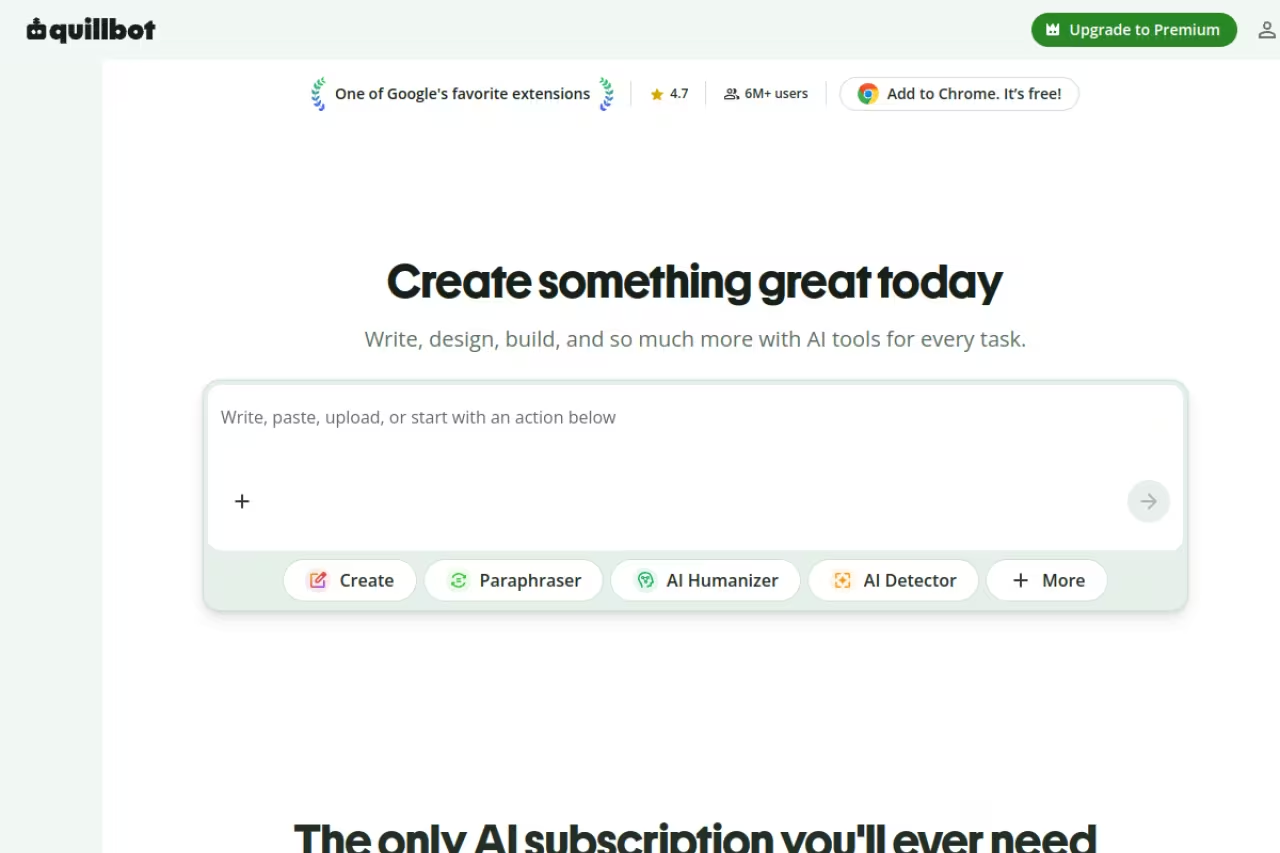
QuillBot didn't start as a humanizer. It's a paraphrasing and grammar suite that bolted on an AI Humanizer once the category took off. If you already pay for QuillBot Premium, you have a decent humanizer sitting in your toolbar right now, and that's the real argument for it.
It's best for writers who want humanizing as one feature among many (paraphraser, grammar checker, summarizer) rather than a standalone purchase. For heavy stealth work it's not the strongest, but for cleaning up the AI sheen on everyday writing it's fine.
The free tier humanizes up to 125 words with 6 uses a day, per QuillBot's plans. Premium runs about €8.33/month billed annually (a 58% discount off monthly) and unlocks unlimited humanization plus human-score and tone insights.
The catch: 125 words and 6 daily uses on the free plan is barely a teaser, and the humanizer is weaker against aggressive detectors than the purpose-built tools above. You're buying QuillBot for the whole suite, not for best-in-class bypass.
Worth it if you already pay for QuillBot Premium and want humanizing as one feature among many. For heavy stealth work it is not the strongest, and the 125-word free tier is barely a teaser.
If you're still assembling your AI writing stack, our roundup of the best AI tools for writing and the best AI grammar checkers pairs well with whichever humanizer you land on.

Humbot: cheapest path to high volume
Humbot competes almost entirely on price. If you're humanizing a lot of text every month and don't want to ration words, its unlimited tier is one of the better deals in the category.
The cheap route for content shops and SEO teams running volume where a per-word cap would bite. Bypass quality is solid mid-tier rather than the strongest, the basic versus advanced word split is confusing, and the free tier is too small to evaluate properly.
The bypass quality is solid mid-tier: good enough for most detectors, not the absolute strongest I saw.
Annual pricing starts at $7.99/month (3,000 basic words), $9.99/month for the Pro tier (30,000 basic words), and the Unlimited plan also lands around $9.99/month annually with unlimited basic words plus a 10,000 advanced-word cap. Monthly billing is roughly double. The free allowance is tiny, a couple hundred words at most, so plan to pay to test it properly.
Where it falls short: the "basic" versus "advanced" word split is confusing, and the stronger advanced engine is capped even on Unlimited. The free tier is too small to evaluate output quality before you commit.

Phrasly: built for students who hate paying
Phrasly leans into the student market with the most usable free experience here. The free AI detector handles up to 2,000 words per scan with unlimited scans, so you can check before you spend, and the free humanizer covers a few hundred words per check.
A friendly option for students and budget-conscious writers who want to detect and humanize in one place without a subscription on day one. The free detector helps you check before you spend, though free-plan limits vary by source and bypass quality moves with detector updates.
The interface is clean and the detector-plus-humanizer combo saves you bouncing between tabs.
Paid plans run about $20/month monthly, dropping to roughly $10.99/month billed annually for unlimited humanization with up to 5,000 words per request and no monthly cap. That's competitive with Humbot and cheaper than Undetectable AI's mid-tier.
The catch: reported free-plan word limits vary by source (somewhere between 300 and 550), so check the live numbers before relying on them. And like every tool here, the bypass quality moves with detector updates, so a clean score today is not a guarantee next month.
Clever AI Humanizer: the free option for everyday writing
Clever AI Humanizer is worth a look if you want to humanize AI-assisted writing without paying for another subscription. It focuses on sentence variety, tone, and readability rather than simply swapping words around, which makes it useful for polishing blog posts, articles, and marketing copy.
A strong starting point if you want a free humanizer for everyday content. The lack of a monthly word cap is a real advantage, though longer documents need multiple runs and every rewrite deserves a careful edit.
It's best for bloggers, freelance writers, and small content teams who want a quick rewrite without losing the original meaning. The tool supports English, Spanish, and Portuguese.
Pricing is simple: the core humanizer is free, with up to 3,000 words per request and no fixed monthly word allowance. Unlike many competitors here, it doesn't put the humanizer behind a paywall.
Where it falls short: the 3,000-word limit means longer documents need to be split into sections, and the output still needs a human review. Rewriting can change nuance or introduce inaccuracies, so don't publish the result without checking it. It also isn't a substitute for original research, fact-checking, or your own editorial judgment.

StealthGPT: generate undetectable instead of rewriting
StealthGPT takes a different angle. Instead of only humanizing text you already have, it can generate content designed to read as human from the first draft, then humanize on top. Its premium "Samurai" engine is marketed specifically for beating Turnitin.
Choose StealthGPT if you'd rather generate stealthy drafts directly than write first and humanize after. The Samurai engine posts respectable Turnitin numbers, but pricing is steep, plans hide daily caps, and the generated text still needs human editing.
In third-party testing it posts respectable Turnitin numbers, and the built-in editor with citations is a genuinely useful touch for academic work.
Pricing is steeper. Plans start around $30/month for the Pro tier (100 requests/day, 1,500 words per request), scaling to Essential, Business, and Enterprise tiers. The Samurai engine costs an extra $5/month unless you're on Pro or higher.
Where it falls short: those "unlimited" plans hide daily usage caps (the Essential plan limits you to 50 daily uses), and the entry price is double what most rivals charge. Generated text also still needs human editing, so the "undetectable from scratch" pitch oversells how hands-off it is.

BypassGPT: the developer's pick
BypassGPT earns its spot mostly for the API. If you're wiring humanization into a content pipeline rather than pasting into a web app, it has the cleanest programmatic offering of the tools I checked.
The developer's pick for teams wiring humanization into a content pipeline through its API, which starts at $19/month for 50,000 words. The consumer free tier is too small to be useful, so non-technical users get less out of it.
The web free plan is a token 150 words per month with an 80-word input cap. The API has a sliding annual scale starting at $19/month for 50,000 words and climbing to $479/month for 5,000,000 words, with the first 250 API words free to test.
The catch: the consumer free tier is too small to be useful, and the API is where the value is, which means non-technical users get less out of it than they would from Undetectable AI or Phrasly. You're paying for integration, not a polished web experience.
How to choose
Skip the marketing scores on these homepages and match the tool to your actual situation.
If you write for SEO or marketing: get Undetectable AI or Humbot. You want consistent bypass across detectors and enough volume to not ration words. Undetectable AI for quality, Humbot for cheap bulk.
If you're a student or researcher: Walter Writes for Turnitin-heavy work, Phrasly if budget is the deciding factor and you want a free detector built in.
If you already pay for a writing suite: check whether you own a humanizer first. QuillBot Premium includes one. No reason to double up.
If you're a developer: BypassGPT's API is the straightforward choice for pipeline work.
One rule that survives every test: humanized text still needs a human read before it ships. Every tool here occasionally swaps a word for a wrong synonym or smooths a sentence into nonsense. Run the output, then read it like an editor.
If your goal is content that ranks and reads well rather than content that sneaks past a checker, the honest move is to write with AI and edit hard, not to launder a draft. That's the workflow we build Dupple X around, and you can browse our top AI picks to assemble the rest of your stack.
Try Dupple X free for a year and skip the humanizer arms race entirely.
FAQ
What is the best AI humanizer in 2026?
For all-round reliability across multiple detectors, Undetectable AI is the most consistent pick on this list. For Turnitin specifically, Walter Writes holds up best on long academic text. The "best" depends on whether you're writing marketing copy, academic work, or running content at volume, so match the tool to the detector you actually face.
Do AI humanizers actually bypass AI detectors?
Often, but not always, and not forever. The best tools reliably flipped my 99% AI scores down to single digits on GPTZero and Originality.ai. But detection is an arms race: a tool that passes today can fail after the detector retrains. AI detection itself is shaky. OpenAI shut down its own classifier over low accuracy, and it correctly flagged only 26% of AI text while mislabeling 9% of human writing.
Are AI humanizers free?
Most offer a free tier, but the limits are tight. QuillBot gives 125 words with 6 daily uses, Walter Writes and Phrasly offer around 300 words to test, and BypassGPT caps its free plan at 150 words a month. Clever AI Humanizer is free with up to 3,000 words per request and no monthly cap. For the other tools, humanizing real documents takes a paid plan, which typically starts around $8 to $10 a month on annual billing.
Will an AI humanizer hurt my SEO?
Not directly. Google's guidance focuses on content quality and helpfulness, not on how text was produced. The risk is that low-effort humanized AI content is often thin and repetitive, which is what actually gets penalized. If you're optimizing for search, focus on usefulness first. Our guide to the best AI content detectors covers what these tools are really measuring.
Can a humanizer fool Turnitin?
Some do, some of the time. Walter Writes and StealthGPT's Samurai engine are tuned for Turnitin and post the strongest results I've seen. But no tool guarantees it, and Turnitin updates its model regularly. Treat any clean score as a snapshot, not a promise, and never rely on one for high-stakes academic submissions.
Is using an AI humanizer cheating?
That depends entirely on your context and the rules you're operating under. For marketing and business writing, where the goal is publishable copy, it's just an editing step. In academic settings, submitting AI work as your own usually violates integrity policies regardless of whether a detector catches it. Know the rules of the room you're in before you reach for one.
Related guides
Some offers on this page may be paid placements or contain affiliate links.
Across our whole catalogue the median is $24 a month and 33% of tools advertise a free tier. Figures are the lowest recurring monthly price quoted in our own review of each tool, read on 2026-08-19. Full method and every category.
