
Best AI Data Catalog Tools in 2026

Key facts8 tools compared: Atlan, DataHub, Secoda, Collibra, Alation, Microsoft Purview, Collate…
- 8 tools compared: Atlan, DataHub, Secoda, Collibra, Alation, Microsoft Purview, Collate (OpenMetadata), Databricks Unity Catalog
- Atlan (best for: Modern mid-to-large data teams): Custom (per active user)
- DataHub (best for: Engineering-led teams who want open source): Free (self-host) / Cloud custom
- Secoda (best for: Lean teams who want fast setup): From ~$50/user/mo, Business ~$800/mo
- Collibra (best for: Regulated enterprises): Custom, ~6 figures/yr
A data catalog used to be a glorified spreadsheet of table names. Then AI agents showed up asking your warehouse questions, and the catalog quietly became the most important piece of infrastructure nobody outside the data team thinks about. If your model doesn't know which of your seven "revenue" tables is the real one, it will confidently pick the wrong one.
That's the tension in 2026. Every vendor in this space rebranded around the same idea: the catalog is now a "context layer" that feeds humans and AI agents the metadata, lineage, and governance rules they need at runtime. The marketing got noisy fast. Underneath it, the actual products still differ a lot in price, setup time, and who they're built for.
I compared most of these tools based on their pricing pages, documentation, and public reports from teams running them in production, instead of the homepage hand-waving. If you want the short answer: Atlan is the best all-around pick for a mid-sized data team that wants something modern without a 9-month rollout. If you have engineers who like owning their stack, DataHub open source is hard to beat for free. The rest depends on your constraints, and I'll get into all of them.
Quick comparison
| Tool | Best for | Price | Standout |
|---|---|---|---|
| Atlan | Modern mid-to-large data teams | Custom (per active user) | Active metadata that pushes context back into your stack |
| DataHub | Engineering-led teams who want open source | Free (self-host) / Cloud custom | GraphQL API over every metadata object |
| Secoda | Lean teams who want fast setup | From ~$50/user/mo, Business ~$800/mo | AI data analyst that answers questions in Slack |
| Collibra | Regulated enterprises | Custom, ~6 figures/yr | Formal governance workflows and policy management |
| Alation | Analytics-first orgs | ~$60k-$198k+/yr | Data literacy and search adoption |
| Microsoft Purview | Azure-heavy shops | Pay-as-you-go, ~$150-200/mo mid-size | Governs your whole Microsoft estate |
| Collate (OpenMetadata) | Open source with a semantic layer | Free self-host / Cloud custom | Semantic context graph for AI agents |
| Databricks Unity Catalog | Lakehouse and Databricks users | Free (open source) | Unified governance for data and AI assets |

Atlan
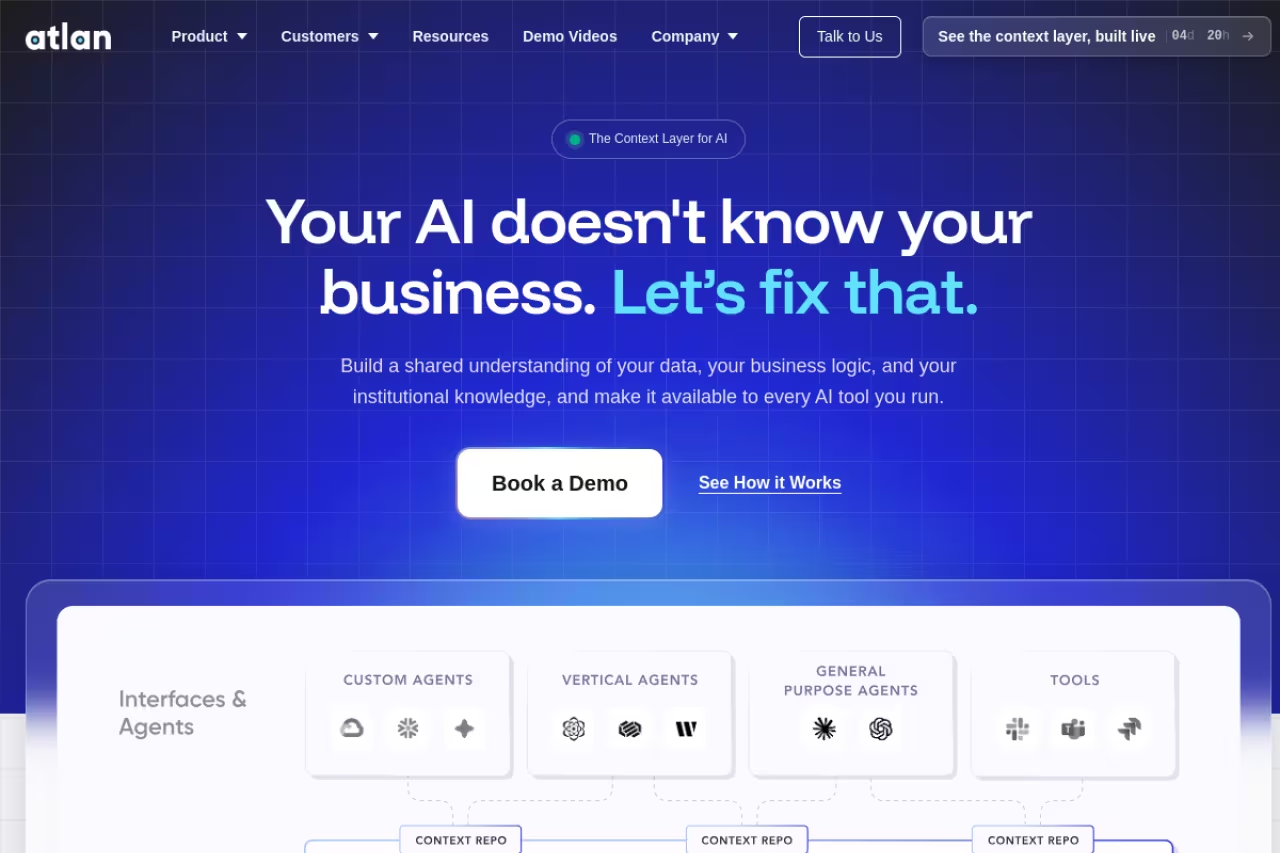
Atlan is the one I point most teams to first. It's a cloud-native catalog built around what they call active metadata, which is a fancy way of saying the catalog doesn't just sit there documenting your data. It pushes context back into the tools you already use: Snowflake, Databricks, dbt, Tableau, and Slack all get enriched instead of forcing people into yet another tab.
In 2026 Atlan leaned hard into the AI angle. The homepage tagline is literally "The Context Layer for AI," and the product now includes context agents that hand your AI systems queryable metadata and lineage at runtime. Atlan moved up to Leader in the Gartner Magic Quadrant for D&A Governance Platforms and holds a Leader spot in the Forrester Wave for data governance. That's not nothing in a category where analyst placement actually drives enterprise shortlists.
The catalog I would point most mid-to-large data teams to first, from about 20 users up to a few hundred. Active metadata enriches Snowflake, dbt and Slack, and a mid-sized team can be live in weeks, though pricing is custom per active user with no public sheet.
A mid-sized team can be functional in a few weeks.
custom, billed per active user, with different rates for data practitioners versus business consumers. There's no public price sheet, which is the usual enterprise frustration. Third-party marketplace data puts most deals in the five-to-six-figure annual range depending on seats and scope.
The catch: because it prices per active user and gates advanced governance behind higher tiers, costs climb fast once business users start logging in. And the lack of transparent pricing means you're negotiating blind unless you've done your homework.
DataHub
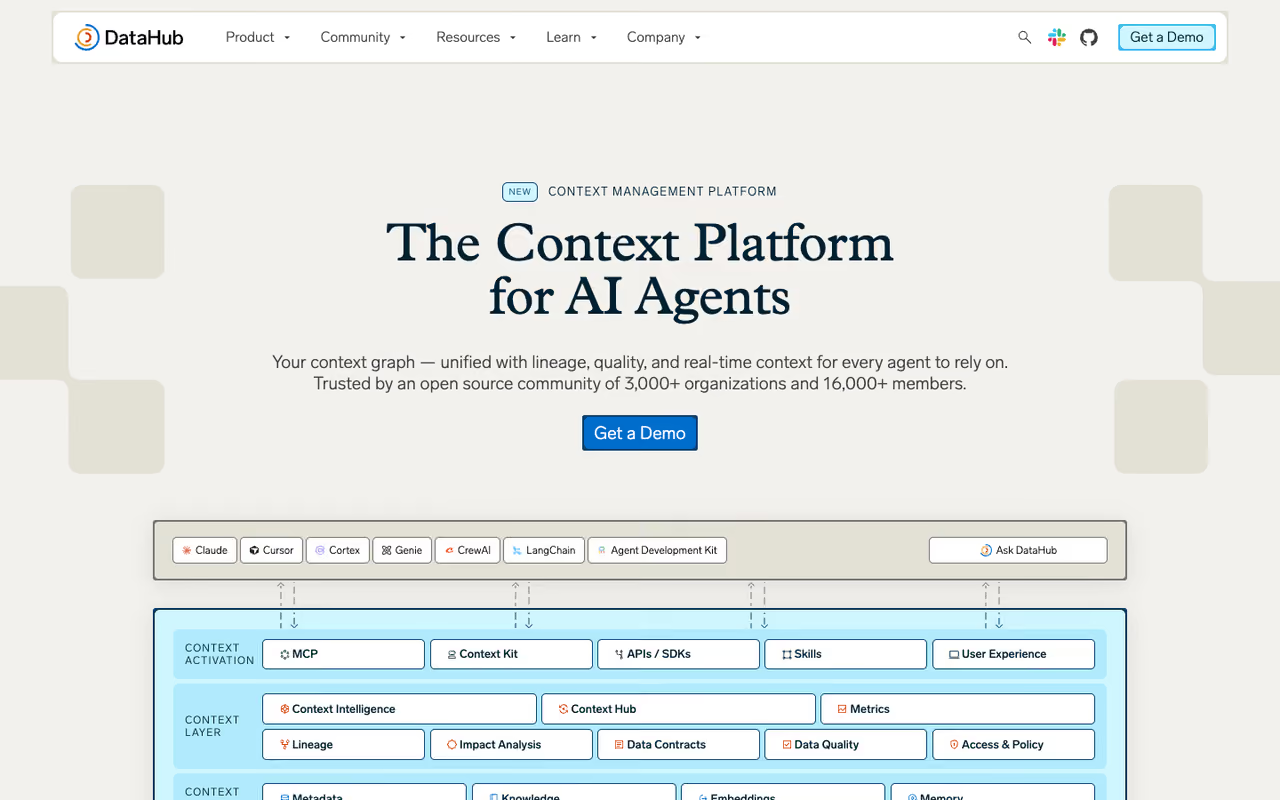
DataHub is the open-source heavyweight, maintained by Acryl Data and used by Netflix, Visa, Slack, Apple, and Pinterest. It calls itself the #1 open source AI data catalog, and the adoption numbers back it up: 3,000+ organizations and millions of downloads a month.
What makes it different from the SaaS crowd is the architecture. Every piece of metadata is queryable through a GraphQL API, so your engineers can build internal tools, automation, and custom integrations without waiting for a vendor roadmap. It supports 70+ native connectors across warehouses, lakes, dashboards, and ML platforms, and the metadata-graph model connects datasets, dashboards, and pipelines into one searchable web. The April 2026 release pushed it further as a context layer for AI agents.
The open-source heavyweight for engineering-led teams who would rather own their stack than pay per seat. A GraphQL API and 70+ connectors give you real flexibility, but self-hosting means running Kafka, Elasticsearch and a metadata service, and the UI is less polished.
the open source version is genuinely free to self-host. Acryl also sells DataHub Cloud (managed SaaS) with custom pricing for teams who don't want to babysit infrastructure.
Where it falls short: self-hosting is real work. You need engineers comfortable running Kafka, Elasticsearch, and a metadata service in production. The UI is less polished than Atlan or Secoda, and onboarding non-technical users takes more hand-holding. Free isn't free when it costs you two engineers' time.

Secoda
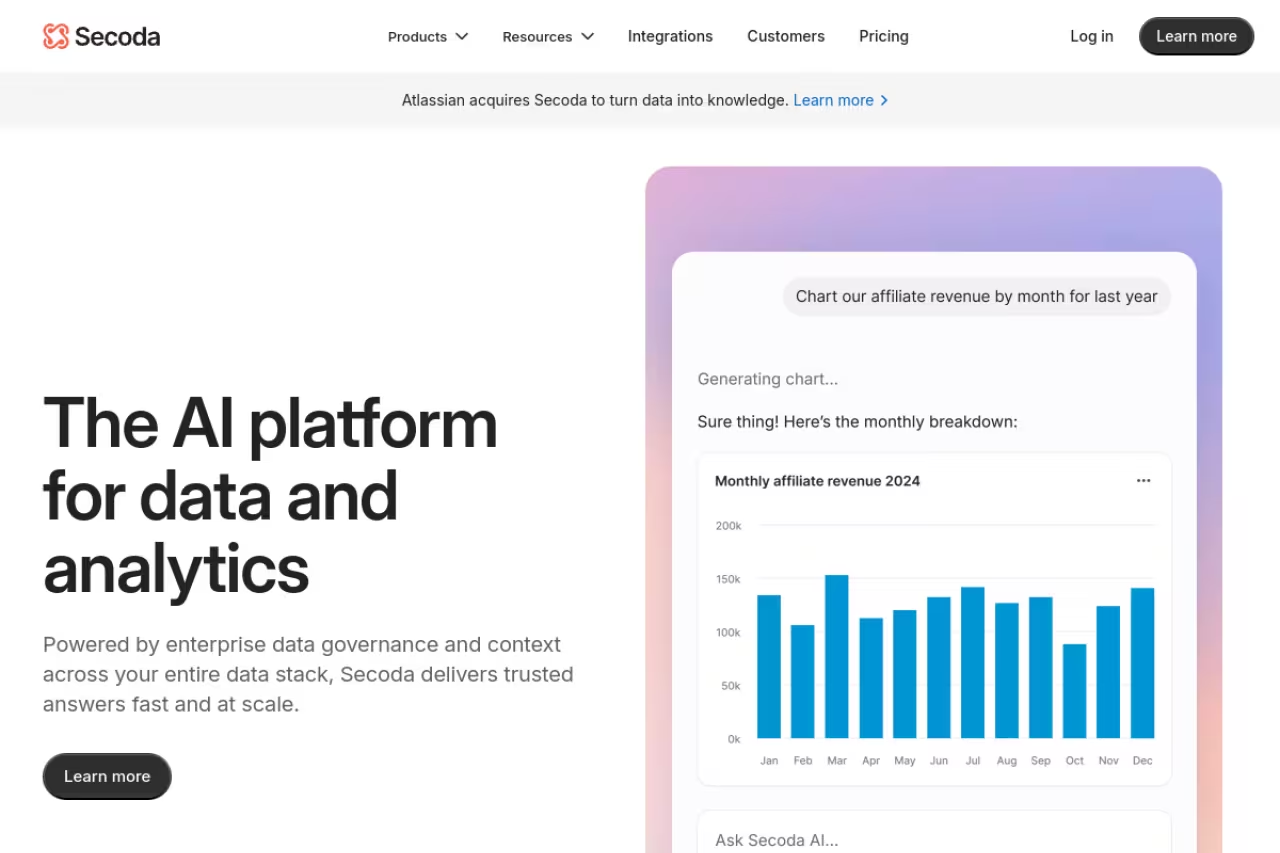
Secoda is the tool I recommend when speed matters more than enterprise bells and whistles. It's a lighter, AI-first catalog that lean teams can stand up in days, not months. The whole pitch is approachability: column and table-level lineage, full catalog, monitoring, and automations without the implementation slog.
The AI piece is the differentiator. Secoda AI is positioned as a 24/7 data analyst that writes documentation automatically and answers questions right inside Slack. For a small data team drowning in "where does this number come from" pings, that alone can pay for the tool. It's part of every tier, not an upsell.
Pick Secoda when speed matters more than enterprise governance. Lean teams of 5 to 50 can stand it up in days, and the built-in AI answers questions in Slack, but the move away from published pricing is a real annoyance.
Secoda doesn't publish a price sheet on its pricing page anymore, but reported pricing puts entry plans around $50 per user per month, with a Business plan often cited near $800 per month. Three tiers: Core, Premium (adds data quality scoring, PII scanning, single-tenant), and Enterprise (self-hosted, custom roles, SIEM logging).
The catch: the move away from transparent pricing is a recent and slightly annoying change. And while Secoda nails fast setup, it's not the tool for a bank with a 200-person governance org. You'll outgrow it if your compliance needs get heavy.
If you're building out a data and AI stack and want a steady read on which tools are actually worth your team's time, the Dupple X briefing is where I'd start.

Collibra
Collibra is the catalog for organizations where governance isn't optional. Banks, insurers, healthcare, pharma: anyone with regulators looking over their shoulder. It's built around formal workflows, policy management, a business glossary, and the kind of approval chains compliance teams actually want.
The catalog for regulated enterprises where governance is not optional, with formal workflows, policy management and approval chains. Expect six-figure annual pricing and rollouts of 6 to 12 months, so skip it without a dedicated governance function.
custom and firmly in six-figure-per-year territory for most deployments. Implementation is a project, not a setup.
Where it falls short: the rollout. Collibra deployments commonly run 6 to 12 months, and that's before your team is fully productive. It's heavyweight by design, which means it's overkill for a 15-person startup. If you don't have a dedicated governance function, you'll feel the weight without getting the payoff.

Alation
Alation pioneered a lot of the modern catalog playbook and still does data literacy and search better than most. Its strength is adoption: it's the tool that gets analysts and business users actually searching for and trusting data instead of pinging the data team. In 2026 it rolled out an agentic AI suite for governing critical data, priced on usage.
A strong choice for analytics-first organizations whose goal is getting more people to self-serve trusted data. Budget carefully, though: base subscriptions reportedly run $60k to $198k per year, and quality and AI modules are priced as separate add-ons.
base subscriptions reportedly run roughly $60k to $198k per year, with governance, data quality, and AI workflows priced as separate add-ons. Consumption-based for the newer AI features.
The catch: typical implementation runs 3 to 6 months, and the add-on pricing model means the sticker number you negotiate isn't the number you end up paying once you bolt on quality and AI modules. Budget for the extras.
Microsoft Purview
Microsoft Purview is the obvious answer if your shop already lives in Azure and Microsoft 365. It governs your full estate (Azure, M365, multi-cloud, on-prem) and integrates natively with the Microsoft tools your org already pays for. The Unified Catalog and new pricing model landed in 2024-2025.
The obvious answer if your shop already lives in Azure and Microsoft 365, with native integration and affordable pay-as-you-go pricing. It gets clunkier the further you stray from Microsoft, and consumption pricing is hard to forecast.
pay-as-you-go and genuinely affordable for the category. Scanning assets into the data map is free; you pay for governed assets and data governance processing units. A mid-sized org with 200 governed assets lands around $150 to $200 per month per Microsoft's pricing model.
Where it falls short: it's at its best inside the Microsoft world and gets clunkier the further you stray from it. The consumption pricing is hard to forecast, and the experience can feel sprawling because Purview tries to be a security, compliance, and governance suite all at once.

Collate (OpenMetadata)
Collate is the commercial layer on top of OpenMetadata, the open-source metadata platform with 3,000+ deployments and 120+ connectors. In 2026 Collate pushed a semantic context graph built from schemas, ontologies, and lineage that's designed to give AI agents enough context to cut down on hallucinations.
Go with Collate if you want open source flexibility plus a real semantic layer for AI without going fully DIY. The trade-off is operational overhead when self-hosting, or a contact-sales deal if you go managed, from a younger commercial vendor.
OpenMetadata core is free to self-host. Collate sells managed service and enterprise support with custom pricing.
The catch: same trade-off as DataHub. Self-hosting OpenMetadata means real operational overhead, and if you go the managed route you're back to "contact sales." It's a younger commercial offering than Collibra or Alation, so the enterprise support muscle is still maturing.
Databricks Unity Catalog
Databricks Unity Catalog became the default governance layer for anyone on the Databricks lakehouse, and Databricks open-sourced it under Apache 2.0 in 2024. It governs structured and unstructured data plus AI assets like ML models, with fine-grained access control and broad format support (Delta, Iceberg via UniForm, Parquet, CSV).
The default governance layer for teams already on Databricks, and an open universal catalog for everyone else. It is governance first, not discovery and collaboration, so many shops pair it with Atlan or Purview, and it fits less well outside the lakehouse.
More than 14,000 organizations now govern data and AI on it.
the open source version is free. It's included with Databricks if you're already a customer.
Where it falls short: it's a governance catalog, not a discovery-and-collaboration catalog in the Atlan or Secoda sense. Most Databricks shops actually pair it with a tool like Atlan or Purview rather than treating it as their full catalog. Outside the lakehouse, it's less of a fit.
How to choose
Skip the feature checklists. Three questions get you most of the way there.
Who is the catalog for? If it's mainly engineers and you have the talent to run infrastructure, DataHub or OpenMetadata give you the most power for zero license cost. If it's analysts and business users who need to self-serve, Atlan, Secoda, or Alation will get adoption that an open source tool won't.
How regulated are you? Heavy compliance (finance, healthcare, regulated data) pushes you toward Collibra or Purview, where formal workflows and audit trails are the whole point. Light governance needs? Collibra is overkill, and you'll resent the rollout.
What does your stack already look like? All-in on Databricks: Unity Catalog is your foundation, possibly with Atlan on top. Deep in Microsoft: Purview is the path of least resistance. Modern cloud-agnostic stack with no strong allegiance: Atlan or Secoda based on team size.
One more thing: weigh time-to-value, not just price. A "cheap" tool that takes nine months to deploy costs more than a pricier one running in three weeks, once you count the salary of everyone waiting on it. If you're still mapping out your broader AI stack, our roundup of the best AI agents and the top AI tools directory are useful next stops.
Frequently asked questions
What is an AI data catalog?
An AI data catalog is a metadata platform that inventories your data assets (tables, dashboards, pipelines, ML models) and adds two AI layers on top. First, it uses machine learning to auto-classify, tag, and document data so humans find what they need faster. Second, it is a context layer that feeds AI agents trustworthy metadata, lineage, and governance rules at runtime, so the agents query the right data instead of guessing.
Which is the best AI data catalog tool in 2026?
For most mid-sized data teams, Atlan is the best all-around choice: modern, fast to deploy, and a Gartner and Forrester leader. If you have strong engineering and want open source, DataHub is the top free option. Lean teams that want the fastest setup should look at Secoda, and heavily regulated enterprises usually land on Collibra or Microsoft Purview.
Are there free or open-source data catalogs?
Yes. DataHub, OpenMetadata (the core behind Collate), and Databricks Unity Catalog are all free and open source under permissive licenses. They're genuinely capable, but "free" means you take on the cost of self-hosting, infrastructure, and maintenance. For teams without spare engineering capacity, a managed SaaS catalog often works out cheaper in total.
How much does a data catalog cost?
It ranges enormously. Open source tools are free to license but cost engineering time to run. Secoda starts around $50 per user per month. Microsoft Purview runs roughly $150 to $200 per month for a mid-sized org on pay-as-you-go. Alation's base subscriptions reportedly run $60k to $198k per year, and Collibra typically lands in six figures annually. Always factor implementation and add-ons into the real total.
How long does it take to deploy a data catalog?
It depends on the tool and your governance complexity. Secoda can be live in days to a couple of weeks. Atlan is usually functional in a few weeks for a mid-sized team. Alation commonly runs 3 to 6 months, and Collibra or Informatica can take 6 to 12 months for full enterprise rollouts. Faster time-to-value is often worth paying for.
Do I still need a data catalog if I use Databricks Unity Catalog?
Often yes. Unity Catalog is excellent at governance and access control across your lakehouse, but it's not built for data discovery, collaboration, and business-user adoption the way Atlan or Secoda are. Many Databricks shops run Unity Catalog as the governance foundation and layer a discovery-focused catalog on top for the wider team.
Ready to make the rest of your AI stack as sharp as your catalog? Dupple X keeps you ahead of which tools are actually worth adopting, without the vendor noise.
Related guides
Some offers on this page may be paid placements or contain affiliate links.
